
Creating an authentic cottage kitchen means understanding that rustic charm and modern convenience need not compete. They can dance together beautifully when you know which elements to preserve and which to update.
What Defines an English Cottage Kitchen
English cottage kitchens emerged from practical necessity in rural homes across the countryside. These spaces served as the heart of daily life, where cooking, preservation, and family gatherings happened simultaneously. The style reflects centuries of evolution, blending functional requirements with the materials readily available in each region.
The cottage kitchen aesthetic celebrates imperfection and accumulated charm. Unlike modern kitchens that prize uniformity, these spaces embrace character marks, gentle wear patterns, and the patina that only time can create. This philosophy extends beyond mere decoration into a lifestyle approach that values substance over flash.
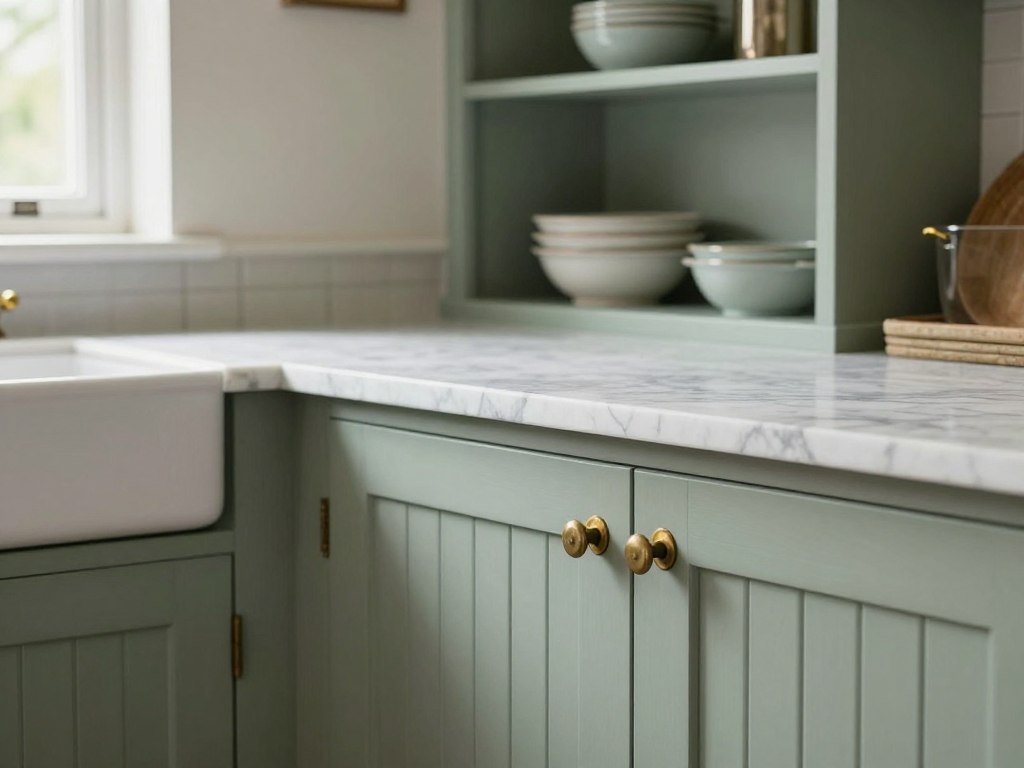
Core Design Elements
Authentic cottage kitchens share several defining features that create their unmistakable character. Understanding these elements helps you make informed choices when planning your space.
Architectural Features
Structural elements provide the foundation for cottage charm and establish the room’s authentic character.
- Exposed ceiling beams in oak or pine
- Plaster walls with subtle texture
- Low ceilings creating intimate scale
- Small paned windows with deep sills
- Stone or brick accent walls
Material Palette
Natural materials age gracefully and develop character that synthetic alternatives cannot replicate.
- Solid wood cabinetry and furniture
- Natural stone countertops and floors
- Ceramic and porcelain fixtures
- Brass and copper hardware
- Linen and cotton textiles
Color Foundations
Cottage color palettes draw inspiration from nature and create calming, cohesive environments.
- Soft whites and warm creams
- Muted greens and gentle blues
- Earth tones and natural browns
- Butter yellows and dusty roses
- Charcoal and slate accents
Functional Layout
Cottage kitchen layouts prioritize efficiency within compact spaces while maintaining warmth.
- Work triangle near windows
- Central table for prep and dining
- Open shelving for display
- Practical storage solutions
- Multi-functional furniture pieces
Traditional Rustic Elements That Create Cottage Character
The soul of a cottage kitchen lives in its rustic details. These elements connect your space to centuries of tradition while providing genuine functionality. Each piece tells a story and contributes to the layered, collected-over-time aesthetic that defines the cottage style.
Exposed Beams and Ceiling Details
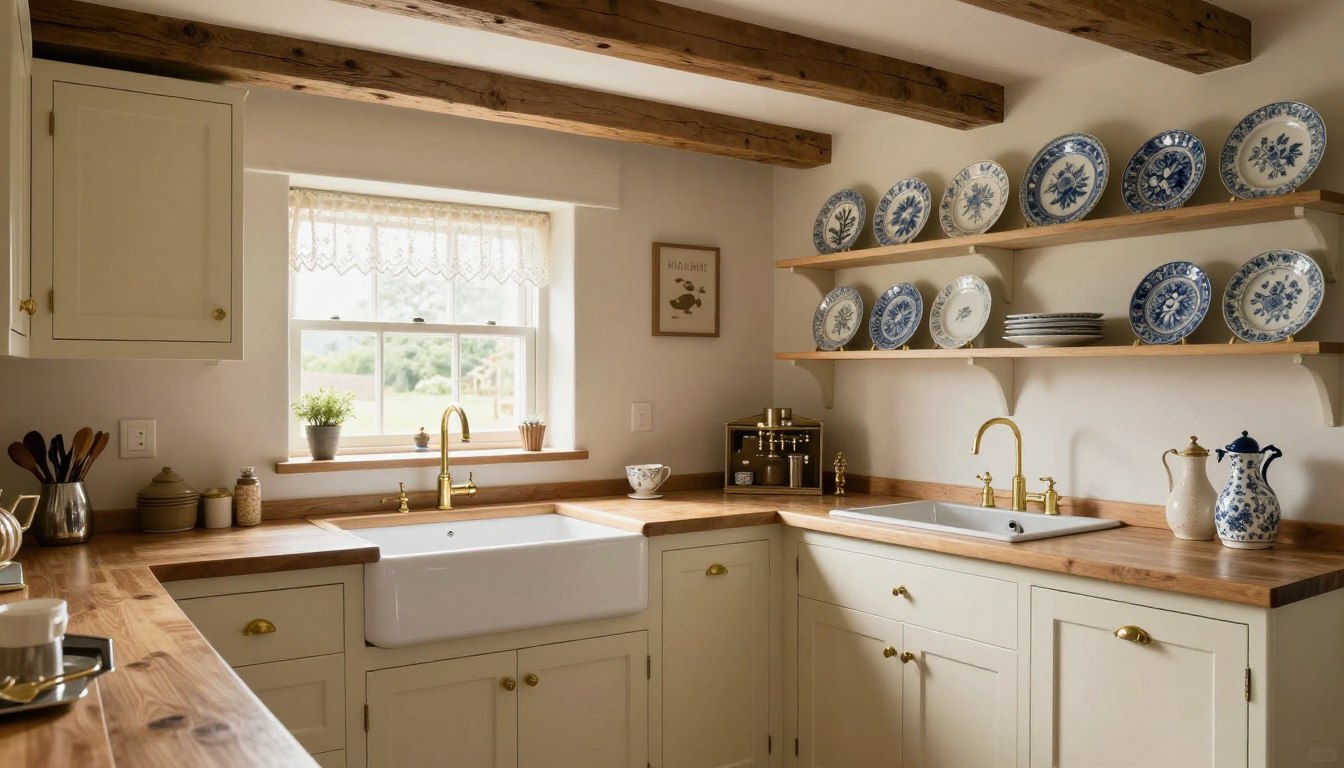
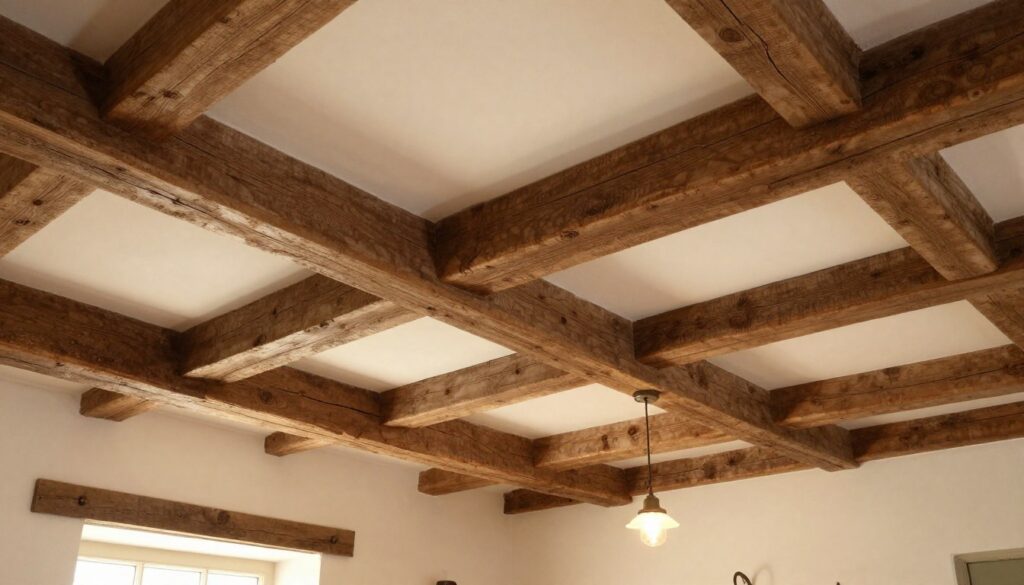
Ceiling beams serve as the crowning glory of cottage kitchens. Original beams showcase natural wood grain, knots, and slight irregularities that machine-cut lumber cannot match. In older homes, these structural elements often bear tool marks from hand-hewn construction, adding historical depth to your space.
If your home lacks original beams, reclaimed wood offers an authentic alternative. Look for pieces salvaged from barns, warehouses, or demolished buildings. The weathered appearance and genuine age rings provide instant character. Installation should embrace imperfections rather than hiding them.
The Farmhouse Sink Legacy
Few fixtures define cottage kitchens more completely than the farmhouse sink. Also called Belfast or butler sinks, these deep basins originated in working kitchens where substantial cleanup happened daily. The apron front extends beyond the cabinet face, reducing back strain during long washing sessions.
Traditional farmhouse sinks came in white fireclay, a ceramic material fired at extremely high temperatures. This process creates a virtually indestructible surface that resists staining, chipping, and thermal shock. Modern versions maintain this durability while offering improved installation options.
Size matters when selecting your sink. Authentic cottage sinks measure thirty to forty inches wide, accommodating large pots and serving platters. The depth typically reaches ten inches, providing ample room for soaking and washing without splashing.
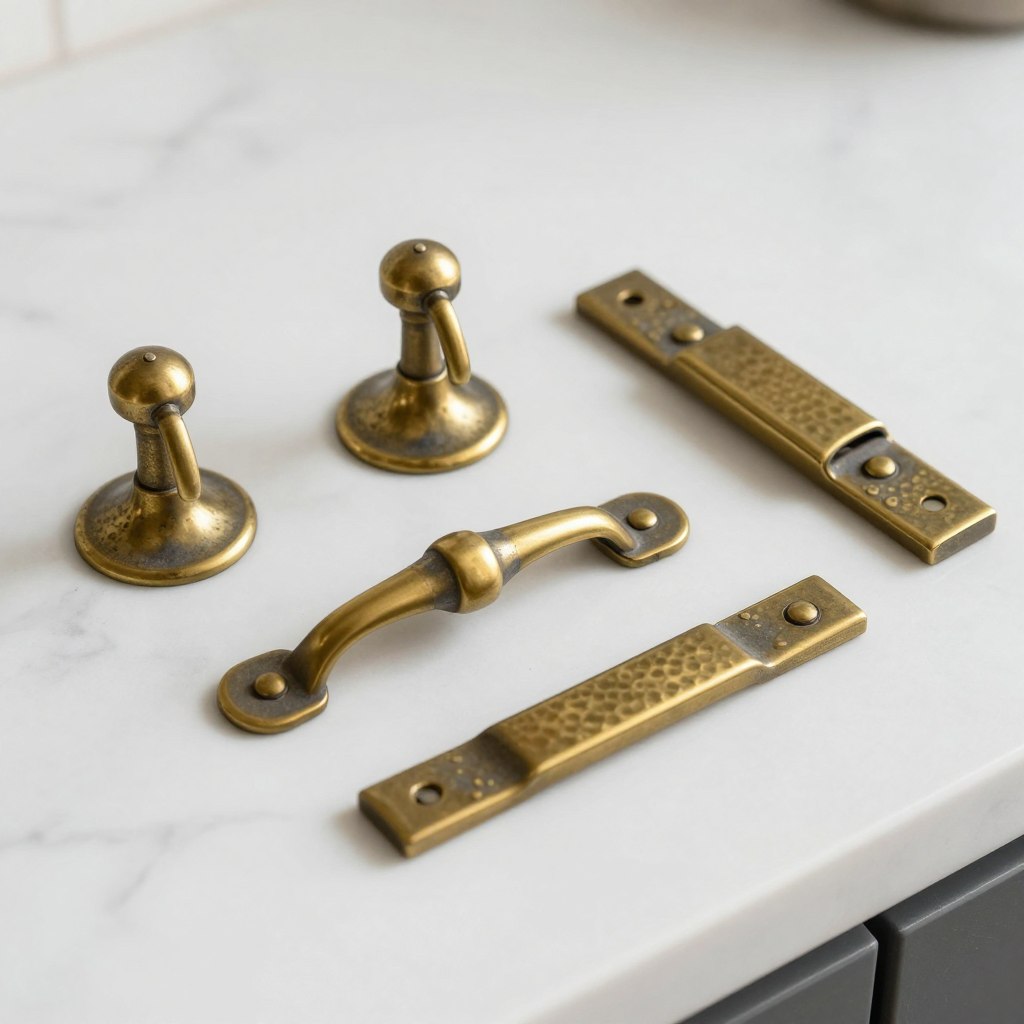
Authentic Cottage Cabinet Hardware Collection
Transform ordinary cabinets into cottage classics with this curated hardware set. Each piece features hand-applied patina finish that captures centuries of English craftsmanship. Solid brass construction ensures durability while cup pulls and bin handles provide period-accurate styling.
- Solid brass with living finish that develops character
- Multiple mounting options for various cabinet styles
- Includes cup pulls, bin handles, and strap hinges
- Handcrafted detailing with subtle texture variations
Natural Wood Throughout
Wood anchors cottage kitchen design in multiple applications. Cabinetry, flooring, furniture, and accessories all benefit from natural timber’s warmth and versatility. The key lies in mixing wood tones and textures rather than matching everything perfectly.
Cabinet wood choices typically include oak, pine, and maple. Oak brings pronounced grain patterns and exceptional durability. Pine offers softer character with more knots and color variation. Maple provides smooth, fine grain ideal for painted finishes. Each species ages differently, developing unique patina over time.
Flooring Materials
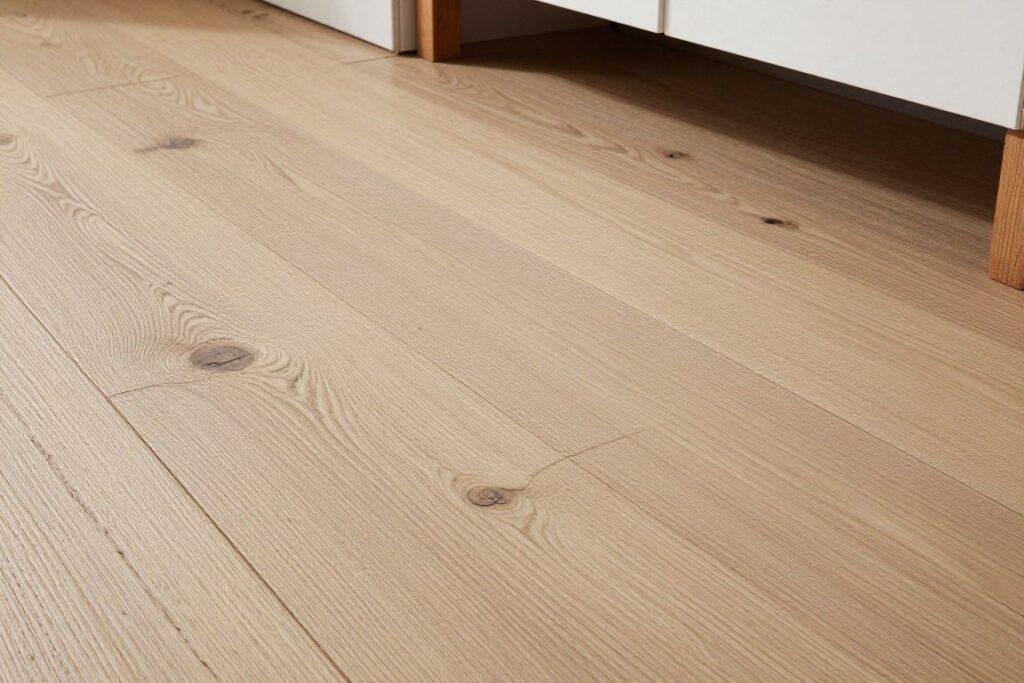
Cottage kitchen floors balance beauty with practicality. Traditional options include wide-plank wood, natural stone, and terracotta tiles. Each material brings distinct advantages to your space.
Wide-plank wood flooring uses boards measuring six to twelve inches across. This proportion reflects historical milling capabilities and creates visual warmth. Choose oak or pine with visible grain and natural knots. Finish with matte or satin polyurethane to avoid modern shine.
Stone floors provide exceptional durability and authentic character. Flagstone, slate, and limestone all appear in traditional cottage kitchens. Irregular shapes and natural color variation add to the rustic appeal. Stone stays cool underfoot, a welcome feature near cooking areas.
Butcher Block Countertops
Butcher block brings warmth and function to cottage kitchen countertops. These work surfaces consist of wood strips laminated together, creating thick, stable platforms perfect for food preparation. The natural material develops a patina that enhances character over years of use.
Maple dominates butcher block construction due to its tight grain and hardness. However, oak, walnut, and cherry also create beautiful counters with distinct appearances. Edge grain construction shows the side of wood planks, while end grain displays growth rings and offers superior knife-friendliness.
Maintenance requires regular oiling to prevent drying and cracking. Food-safe mineral oil or specialized butcher block conditioner keeps wood nourished. Light sanding removes stains and scratches, allowing the surface to regenerate throughout its lifetime.
Cottage Kitchen Color Palettes and Paint Selections
Color creates mood and defines character in cottage kitchens. Traditional palettes draw from nature, featuring soft neutrals accented with gentle pastels. These colors reflect available historical pigments and the desire to maximize natural light in spaces with small windows.
Primary Wall and Cabinet Colors
Soft white serves as the foundation for most cottage kitchens. This shade differs from stark modern white by containing subtle warm undertones. Look for whites with names like linen, ivory, or cottage white. These variations prevent the sterile feeling while maintaining brightness.
Cream colors add richness without heaviness. Traditional cream paint contains yellow or pink undertones that complement warm wood tones. This color works beautifully on cabinets, creating a softer alternative to pure white while maintaining light-reflective qualities.
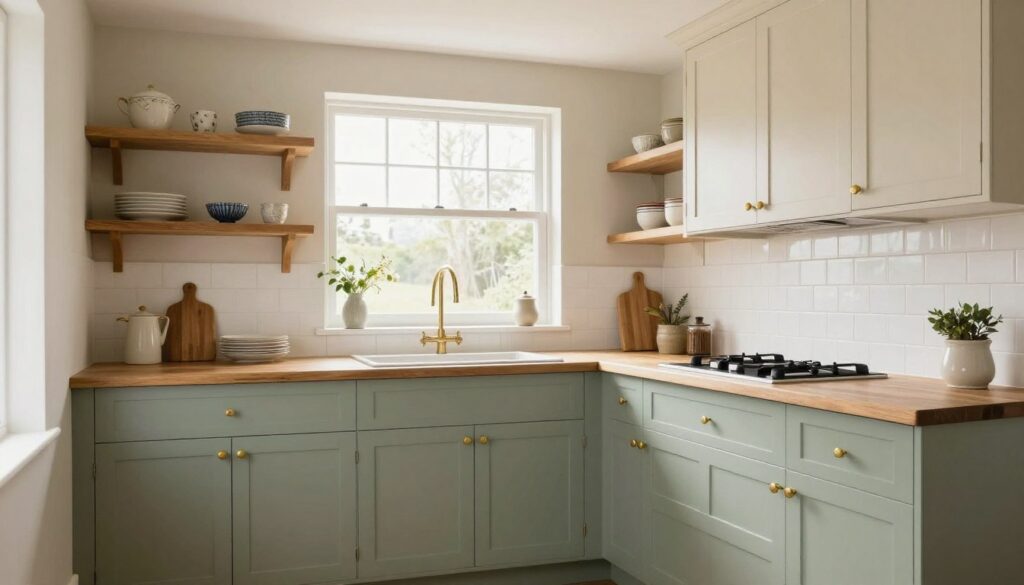
Muted greens ranging from sage to moss bring nature indoors. These colors appeared frequently in historical cottage kitchens, created using earth pigments. Green cabinetry pairs wonderfully with wood countertops and brass hardware. The color recedes visually, making small spaces feel larger.
Accent and Trim Color Choices
Dusty blue creates calm, sophisticated accents. This color appears in vintage china patterns, making it perfect for painted furniture pieces, island cabinets, or wall treatments. Blue works particularly well in kitchens with white or cream as the dominant color.
Warm gray serves as a modern neutral that respects cottage tradition. Unlike cool contemporary grays, cottage-appropriate versions lean toward greige or taupe. This color grounds spaces without introducing harshness, working well for painted wood floors or lower cabinetry.
Recommended Paint Finishes
- Matte for walls and ceilings
- Eggshell for cabinetry interiors
- Satin for cabinet exteriors
- Semi-gloss for trim work
- Chalk paint for furniture pieces
- Limewash for textured walls
Avoid These Color Pitfalls
- High-gloss finishes on cabinetry
- Cool, blue based whites
- Trendy bold accent walls
- Perfectly matched color schemes
- Bright, saturated primary colors
- Stark black trim or details
Color Combination Ideas
- Cream cabinets with sage island
- White walls with blue-gray lowers
- Natural wood with soft white
- Greige base with butter accents
- Stone gray with warm cream
- Soft yellow with charcoal details
Modern Conveniences That Blend Seamlessly
The beauty of contemporary cottage kitchen design lies in hiding modern appliances and conveniences within traditional aesthetics. Today’s homeowners need dishwashers, refrigeration, and efficient cooking equipment. The challenge becomes integrating these elements without disrupting the rustic charm.
Appliance Integration Strategies
Panel-ready appliances accept custom cabinet fronts, disappearing into your cabinetry. Dishwashers, refrigerators, and freezers become invisible when covered with matching door panels. This approach maintains visual consistency while providing full modern functionality.
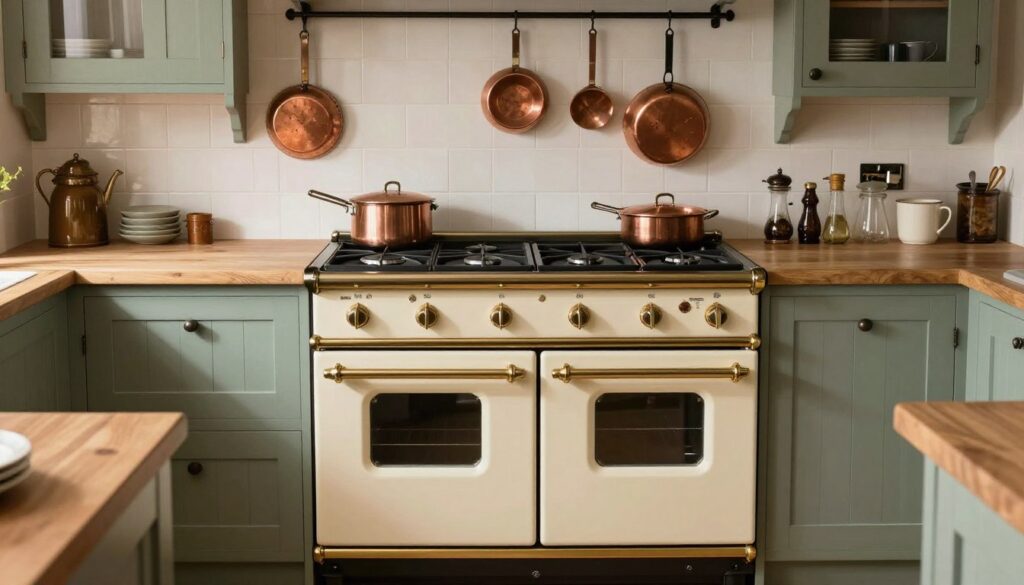
Range cookers bridge old and new beautifully. Companies like AGA and Lacanche produce traditional-style ranges with modern efficiency. These substantial appliances become focal points, offering professional cooking capabilities wrapped in classic design. Colors like cream, navy, and forest green complement cottage palettes perfectly.
Hidden Storage Solutions
Modern storage systems maximize space while maintaining period appearance. Pull out shelving, soft-close hinges, and drawer organizers hide inside traditional-looking cabinets. These features improve function without announcing their presence visually.
Pantry cabinets with modern interiors provide substantial storage behind cottage style doors. Install adjustable shelving, roll out trays, and specialized organizers for maximum efficiency. The exterior maintains beaded board panels or frame-and-panel construction typical of cottage design.
Lighting Technology
LED technology now fits inside vintage style fixtures, providing energy efficiency without sacrificing aesthetic. Pendant lights, wall sconces, and under-cabinet lighting all benefit from modern bulbs that last years while consuming minimal electricity.
Dimmer switches allow lighting adjustment throughout the day. Morning meal preparation needs bright, focused light. Evening dining benefits from softer, warmer illumination. Install dimmers on all light circuits for maximum flexibility and ambiance control.
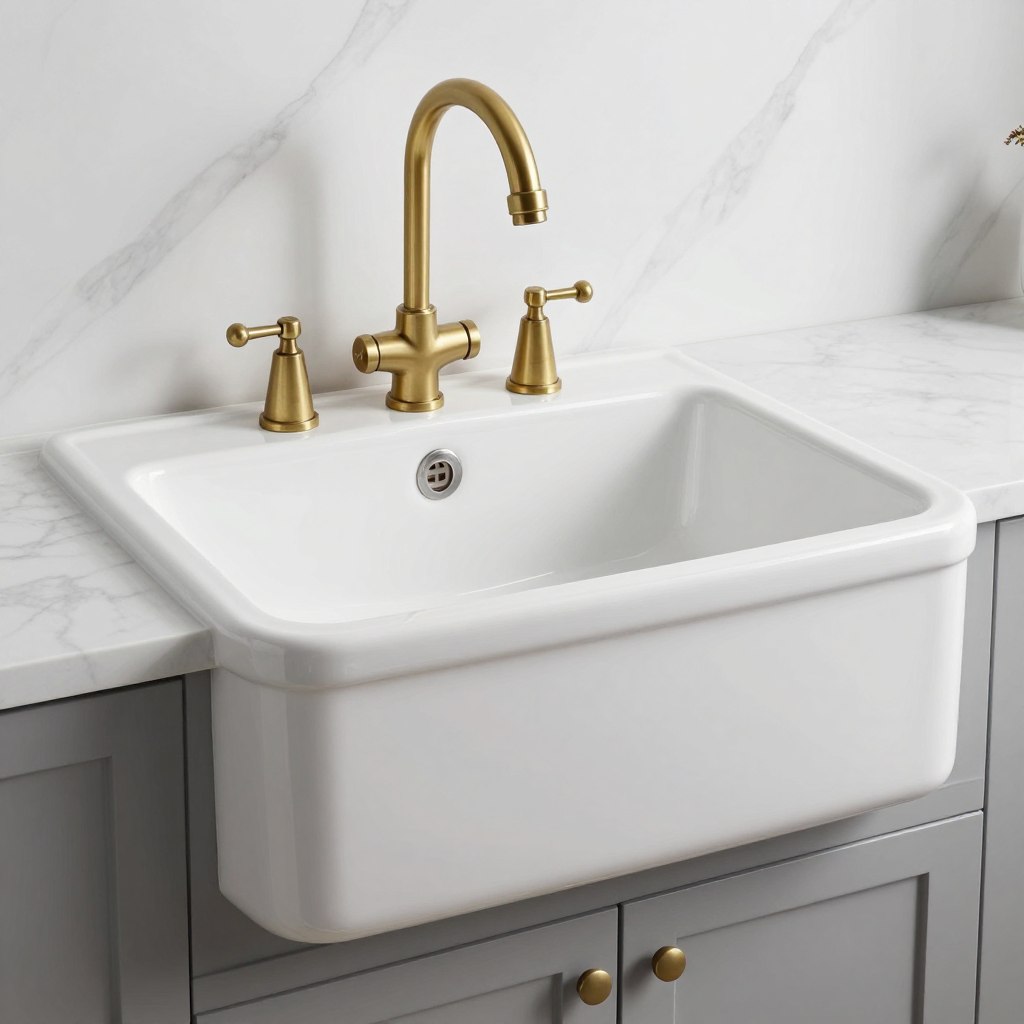
Authentic Fireclay Farmhouse Sink – 33 Inch
Experience the enduring quality of traditional fireclay construction in this generously sized farmhouse sink. Hand-finished with a smooth, non-porous glaze that resists staining and scratching. The ten-inch depth accommodates large cookware while the reversible design offers plain or decorative front options.
- Single basin measures 33 x 18 x 10 inches
- Fireclay construction fired at 1600°F for durability
- Reversible with smooth or fluted apron front
- Includes stainless steel bottom grid protector
Textures and Materials That Add Depth
Layering different textures prevents cottage kitchens from feeling flat or one dimensional. The interplay between smooth and rough, matte and subtle shine, creates visual interest that draws the eye throughout the space. This approach mirrors how these kitchens developed over generations, accumulating pieces with varied surfaces.
Wall Treatments and Backsplashes
Plaster walls provide subtle texture impossible to achieve with modern drywall. Traditional lime plaster creates slight undulations that catch light beautifully. If authentic plaster proves impractical, textured paint techniques or specialized wallcoverings can approximate the effect.
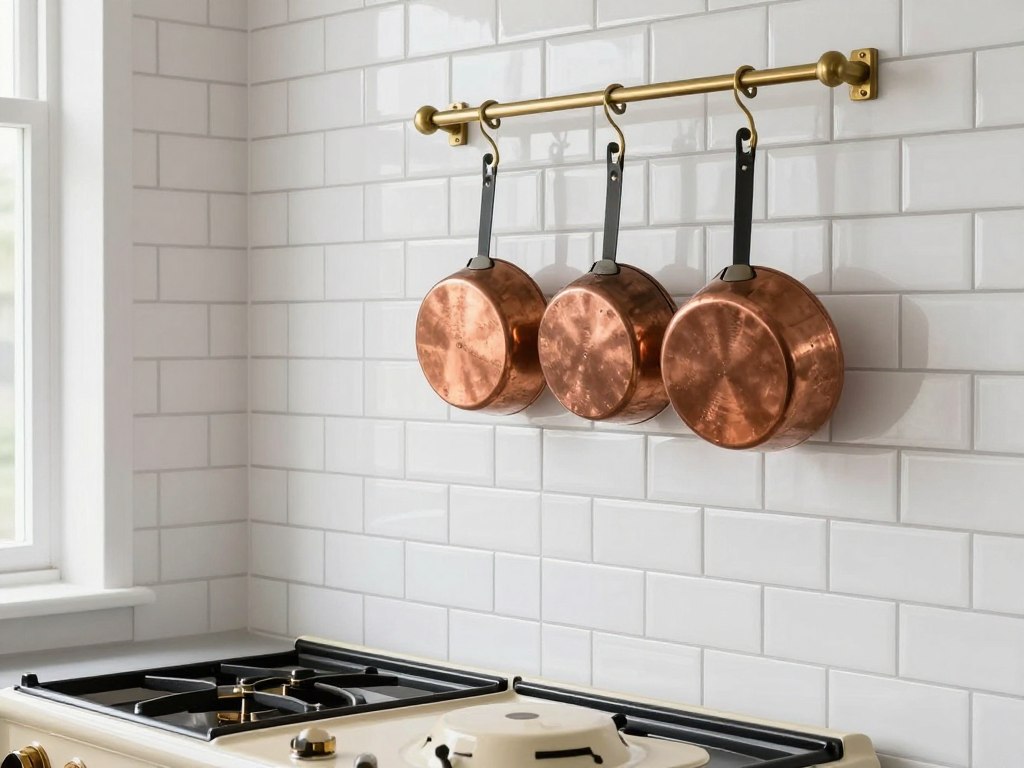
Subway tile backsplashes honor cottage tradition while offering practical protection. White ceramic tiles measuring three by six inches create classic patterns. Install with slightly wider grout lines than contemporary style dictates. This detail references historical installation methods and adds visual weight.
Stone Countertop Alternatives
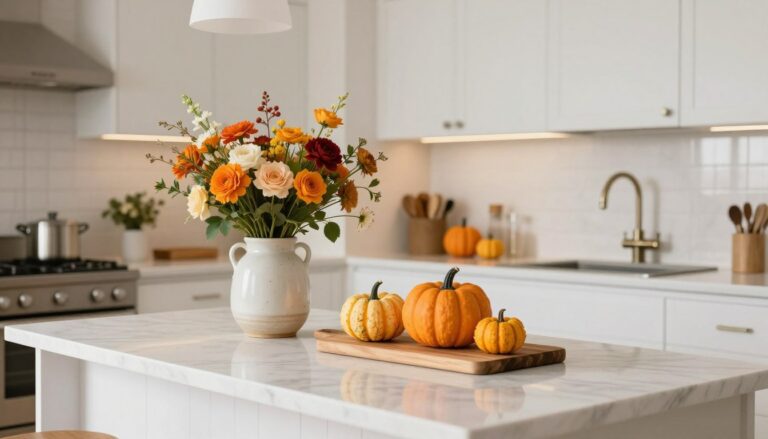
Marble countertops bring luxury and history to cottage kitchens. White marble with gray veining works beautifully near sinks and on islands. Accept that marble develops patina through use. The slight etching from acidic foods and gentle wear patterns add character rather than diminishing beauty.
Soapstone offers a darker alternative with exceptional durability. This natural stone resists heat and staining while developing a rich patina. The surface feels smooth and warm, creating tactile appeal. Soapstone works particularly well as countertops near cooking areas or as farmhouse sink surrounds.
Granite provides durability with natural beauty. Choose varieties with subtle patterns rather than dramatic veining. Colors like Absolute Black, Steel Gray, or Kashmir White complement cottage aesthetics without overwhelming. Honed finishes suit cottage style better than high-gloss polish.
Furniture and Freestanding Pieces
Cottage kitchens traditionally incorporated freestanding furniture rather than built-in cabinetry throughout. This approach evolved from practicality, as pieces moved between homes or adapted to changing needs. Today, mixing furniture elements creates flexibility and authentic character.
The Essential Kitchen Table
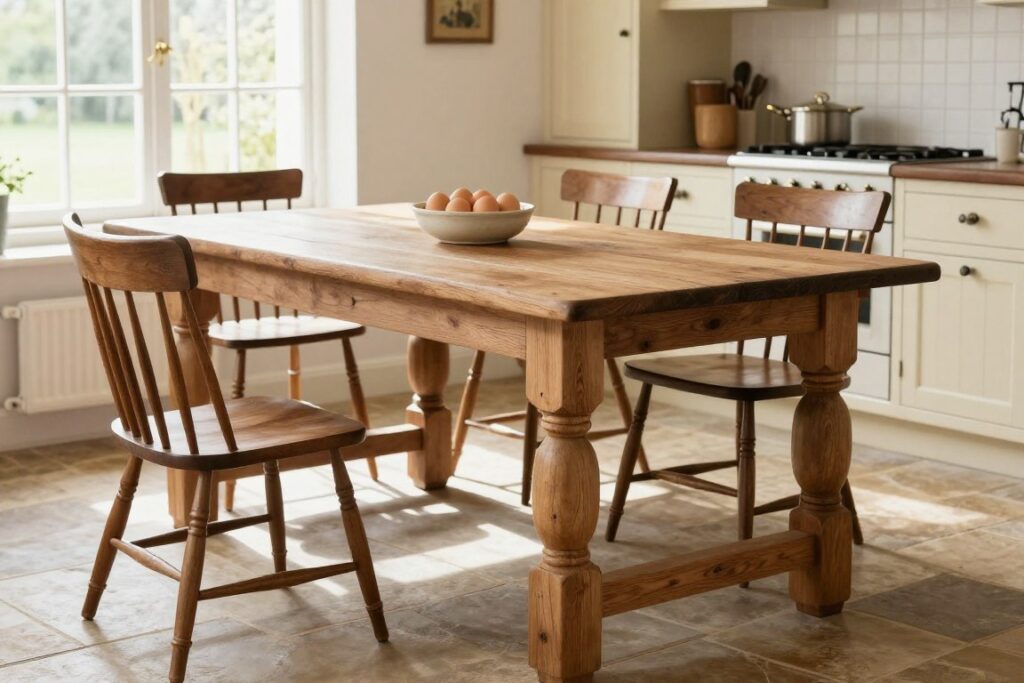
A central table serves multiple functions in cottage kitchens. Food preparation, casual dining, homework sessions, and craft projects all happen at this gathering place. Choose solid wood construction with natural finish or painted base. Pine, oak, and elm all create appropriate cottage tables.
Table size depends on available space and family needs. Smaller kitchens accommodate thirty-six by forty-eight inch tables comfortably. Larger rooms can feature farm tables stretching six to eight feet. Extendable designs offer flexibility for everyday use and special occasions.
Hutches and Dressers
Welsh dressers provide signature cottage storage and display. These tall pieces combine open shelving above with cabinet storage below. The shelves showcase china, pitchers, and decorative pieces while cabinets hide everyday items. Look for examples with plate grooves and cup hooks built into shelving.
Freestanding pantry cabinets supplement built-in storage. Antique or reproduction pieces with multiple drawers and adjustable shelving organize dry goods, linens, and serving pieces. Paint finishes or natural wood both work depending on your overall color scheme.
Island Alternatives
Kitchen islands benefit from furniture-style construction in cottage spaces. Rather than matching perimeter cabinetry exactly, consider repurposed tables, antique work benches, or purpose-built pieces with turned legs and furniture details. These elements reinforce the collected-over-time aesthetic.
Butcher block tops work beautifully on freestanding islands. The warm wood contrasts with painted bases while providing practical work surface. Add storage through drawers, shelves, or baskets tucked underneath. Casters increase flexibility if you occasionally need to rearrange the space.
Lighting Choices for Authentic Ambiance
Lighting transforms cottage kitchens from merely attractive to genuinely inviting. Historical cottage kitchens relied on natural daylight supplemented by candles and oil lamps. Modern lighting should reference these humble origins while providing adequate illumination for contemporary tasks.
Pendant and Hanging Fixtures
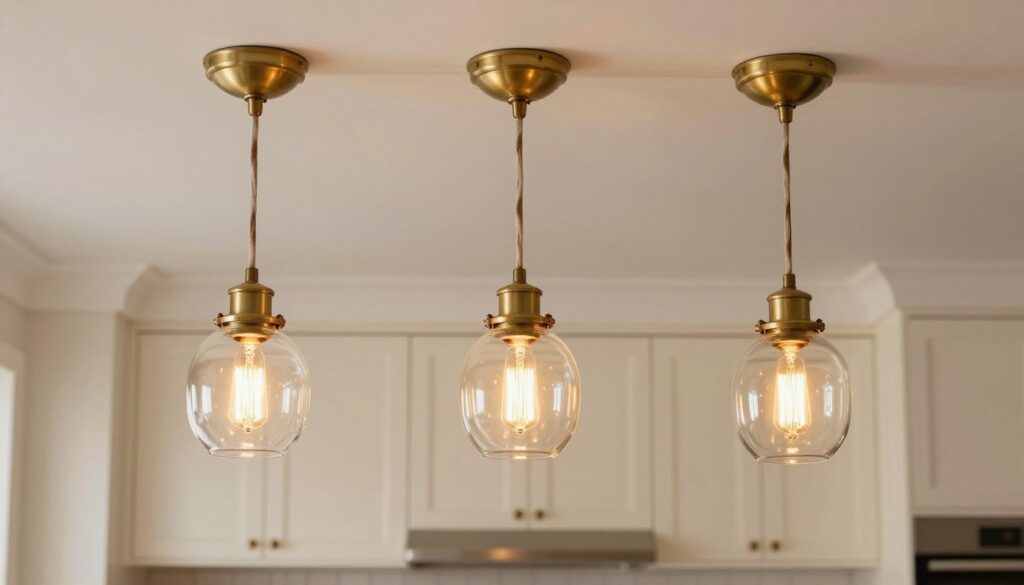
Pendant lights over islands or tables create focal points and task lighting simultaneously. Look for designs referencing vintage utility fixtures, schoolhouse lights, or converted lanterns. Metal finishes in aged brass, oil-rubbed bronze, or matte black suit cottage aesthetics.
Glass shades offer practical advantages and period charm. Clear glass showcases vintage-style Edison bulbs while milk glass diffuses light gently. Consider mixing pendant styles rather than matching exactly. This approach reflects how lighting accumulated over time in traditional homes.
Under Cabinet and Task Lighting
Discreet under-cabinet lighting illuminates counters without visible fixtures. LED strips or puck lights install beneath wall cabinets, providing shadow free task lighting. Choose warm color temperatures around 2700K to match incandescent bulbs rather than cool modern white.
Swing-arm wall sconces near sinks or prep areas combine vintage style with practical function. These adjustable fixtures direct light exactly where needed. Look for designs in brass or bronze with simple, clean lines that complement rather than compete with other details.
Natural Light Maximization
Window treatments should enhance rather than block natural light. Simple cafe curtains covering only the lower half of windows provide privacy while admitting sunshine. Linen, cotton, or lace fabrics in white or cream maintain cottage character.
Avoid heavy draperies that darken spaces. If privacy or light control requires more coverage, install shutters or wooden blinds. These treatments adjust for different times of day while maintaining traditional appearance. Paint shutters in wall color to minimize visual impact.
Open Shelving and Display Storage
Open shelving defines cottage kitchen character by showcasing cherished pieces rather than hiding everything behind doors. This approach creates opportunities for personal expression while keeping frequently used items accessible. The key lies in thoughtful arrangement that balances function and beauty.
Shelf Styling Principles
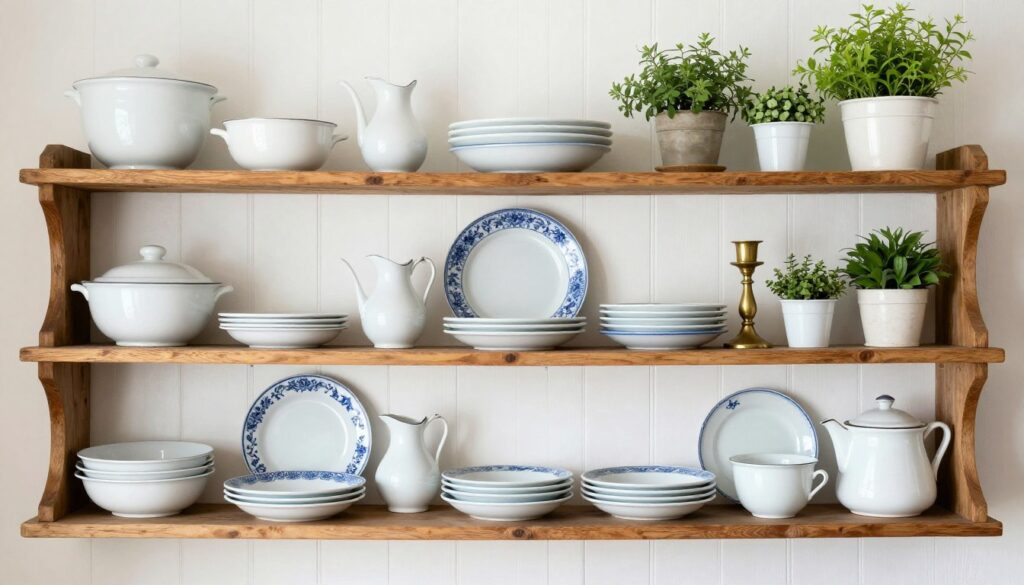
Group items by color, size, or purpose for visual coherence. Stacks of white plates create clean lines and emphasize their simple beauty. Mixing in a few colored pieces prevents monotony without creating chaos. Vintage transferware in blue and white patterns works particularly well.
Vary heights and depths to add dimension. Tall pitchers anchor arrangements while smaller items fill gaps. Lean plates against the wall rather than stacking them flat. This technique displays patterns beautifully and makes individual pieces accessible.
Items Perfect for Display
- White ironstone serving pieces
- Vintage cutting boards and utensils
- Ceramic pitchers and crocks
- Copper cookware and molds
- Woven baskets for storage
- Glass storage jars with contents
- Potted herbs in terra cotta
- Vintage scales and kitchen tools
Practical Considerations
Install shelves within easy reach of primary work zones. Items used daily should sit at eye level or slightly below. Reserve higher shelves for decorative pieces or occasional-use serving platters. Lower shelves accommodate heavier items like mixing bowls and stockpots.
Depth matters for both function and safety. Shelves measuring eight to twelve inches deep accommodate most dishware without items falling forward. Secure brackets firmly to wall studs, especially for shelves bearing significant weight. Thick wood shelving adds visual substance and structural support.
Accept that open shelving requires maintenance. Dust accumulates on displayed items more quickly than in closed cabinets. Plan for occasional reorganization as your collection evolves. This ongoing interaction with your kitchen becomes part of the cottage lifestyle rather than a burden.
Handcrafted Brass Pendant Light Collection
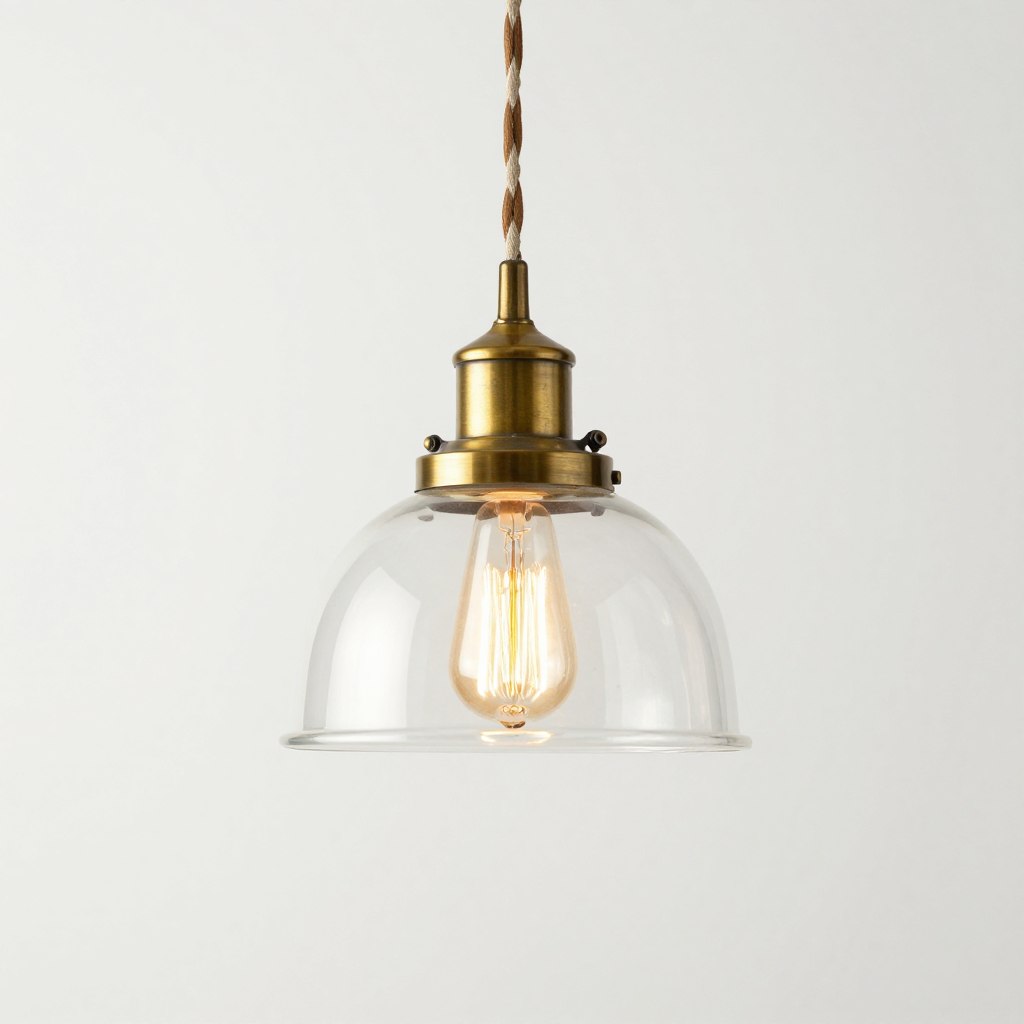
Illuminate your cottage kitchen with authentic pendant fixtures hand finished in aged brass. Each light features solid brass construction with hand-applied patina that deepens over time. Clear seeded glass shades showcase vintage-style LED bulbs while providing generous light distribution. Available in single pendants or coordinated sets.
- Solid brass construction with living finish
- Seeded glass shades with period-accurate detail
- Adjustable height from 12 to 60 inches
- Compatible with LED Edison-style bulbs
Finishing Touches and Decorative Details
The smallest details often make the biggest impact in cottage kitchen design. Hardware, textiles, and decorative accessories provide opportunities to reinforce your aesthetic vision. These elements cost relatively little but contribute substantially to overall character and charm.
Hardware and Fixtures
Cabinet hardware deserves careful consideration. Cup pulls, bin pulls, and knobs in aged brass or bronze reference historical pieces while providing excellent function. Avoid overly ornate designs that compete for attention. Simple, substantial hardware serves cottage kitchens best.
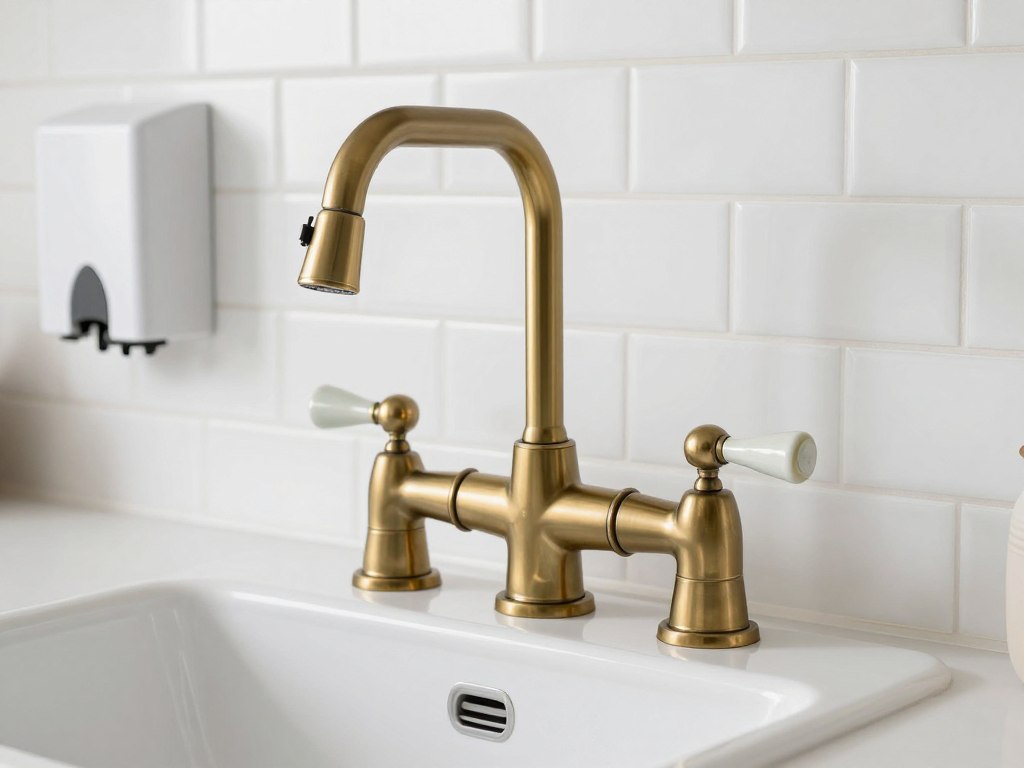
Faucets bridge function and style. Bridge style kitchen faucets with separate hot and cold handles embody cottage charm. Wall-mounted versions create clean countertop lines and reference traditional installations. Choose solid brass construction with ceramic disc valves for durability.
Textile Accents
Natural fiber textiles add softness and color. Linen dish towels in stripes or checks provide both decoration and function. Vintage flour sack towels offer authentic charm if you find them at estate sales or antique shops. Modern reproductions capture the look without fragility.
Table linens deserve attention even in everyday use. A simple runner down the table center protects the surface while adding color. Cloth napkins in coordinating colors elevate daily meals. Choose machine-washable fabrics that age gracefully through regular laundering.
Vintage and Antique Accents
Authentic vintage pieces contribute instant history. Wooden cutting boards, enamelware, vintage scales, and ceramic crocks all work beautifully. Shop antique stores, estate sales, and online marketplaces for pieces that speak to you. Imperfections and wear marks add character rather than diminishing value.
Display collections with intention. Group similar items together for impact. Three to five pieces create visual weight without clutter. Rotate seasonal items to keep displays fresh. Autumn might showcase copper molds while spring features white ironstone filled with flowers.
Practical Implementation Tips for Your Cottage Kitchen
Transforming design inspiration into reality requires planning and practical decision-making. Whether you’re renovating an existing kitchen or building from scratch, certain approaches increase your success and satisfaction with the final result.
Budget Allocation Strategies
Invest in quality for permanent elements. Cabinetry, countertops, flooring, and major appliances should receive priority in your budget. These components form the foundation of your kitchen and prove costly to replace. Mid-range to high-quality selections in these categories provide better long-term value than expensive accessories.
Save on easily changed elements. Paint, hardware, lighting fixtures, and decorative accessories can upgrade later without major renovation. Start with basic versions and improve them as budget allows. This approach also lets your personal style evolve naturally.
High Priority Investments
- Custom or semi custom cabinetry in solid wood
- Quality countertop materials like marble or soapstone
- Authentic farmhouse sink in fireclay
- Professional quality range or cooktop
- Wide plank wood or stone flooring
- Proper ventilation and range hood
Areas to Save Initially
- Cabinet hardware can start basic, upgrade later
- Light fixtures easy to replace as style evolves
- Window treatments simple at first
- Decorative accessories accumulated over time
- Some appliances can be entry level if panelready
- Paint colors easily changed with trends
Phasing Your Project
Complete structural work first. Address any electrical, plumbing, or HVAC updates before cosmetic improvements. Install cabinetry, countertops, and flooring as the foundation. These elements must be in place before smaller details make sense.
Add finishing touches gradually. Hardware, lighting, window treatments, and accessories need not install simultaneously. Living with the space helps you understand what works and what needs adjustment. This organic approach often yields better results than rushing to complete everything at once.
Working with Professionals
Kitchen designers familiar with traditional styles bring valuable expertise. They understand appropriate proportions, authentic details, and how to source period-appropriate materials. Interview several designers and review their portfolios before committing. Look for experience specifically with cottage, country, or traditional kitchen styles.
Skilled craftspeople become essential for custom work. Find carpenters, tile setters, and painters who appreciate quality and take pride in traditional techniques. Rushed work shows in cottage kitchens where subtle details matter tremendously. Build extra time into schedules for proper execution.
Maintaining Your Cottage Kitchen’s Beauty
Natural materials and vintage elements require different care than modern synthetic surfaces. Understanding proper maintenance preserves beauty while allowing materials to develop desirable patina. This ongoing stewardship becomes part of the cottage kitchen experience.
Wood Care and Protection
Butcher block and wood countertops need regular oiling. Apply food safe mineral oil monthly for the first year, then quarterly afterward. This treatment prevents drying, cracking, and staining. Light sanding removes surface marks and refreshes the appearance whenever needed.
Wood floors benefit from gentle cleaning and periodic refinishing. Sweep or vacuum regularly to remove grit that scratches finish. Damp mop with wood specific cleaners rather than soaking. Plan to refinish every seven to ten years depending on traffic and wear patterns.
Natural Stone Maintenance
Marble requires acceptance of its living nature. Seal surfaces annually with penetrating sealer designed for natural stone. Clean spills immediately to prevent etching. Embrace gentle patina development as part of marble’s character rather than fighting against it.
Soapstone becomes richer with mineral oil application. Rub food-safe mineral oil into the surface to darken color and highlight natural veining. Reapply whenever the stone appears dry or lighter in color. Scratches sand out easily with fine-grit sandpaper.
Hardware and Fixture Care
Living finishes on brass and bronze develop patina naturally. Avoid harsh cleaners that strip this desirable aging. Wipe with soft cloth and mild soap when needed. Some prefer to accelerate patina development using specialized aging solutions.
Fireclay sinks withstand aggressive cleaning but rarely need it. The non-porous surface resists staining and bacteria. Simple dish soap and water handle daily cleaning. Occasional baking soda paste removes stubborn marks without scratching the glaze.
Common Mistakes to Avoid
Understanding pitfalls helps you navigate cottage kitchen design more successfully. Many well-intentioned choices undermine authenticity or create maintenance headaches. Learning from common mistakes saves time, money, and disappointment.
- Over coordinating colors and finishes. Cottage kitchens evolved over time with collected pieces rather than perfectly matched suites. Mixing wood tones, paint colors, and metal finishes creates more authentic character than forcing everything to match exactly.
- Choosing trendy over timeless. Resist the temptation to incorporate current design trends that conflict with cottage aesthetics. Shiplap accent walls, industrial pipe shelving, and ultra modern fixtures will date your kitchen quickly. Stick with proven traditional elements.
- Skimping on quality for key elements. Particleboard cabinets, laminate counters, and vinyl floors may cost less initially but lack durability and authentic appearance. These compromises show immediately and disappoint long term. Better to do less with quality than more with inferior materials.
- Ignoring proper proportions. Cottage kitchens feature specific scale relationships. Oversized islands, too tall cabinets, or giant light fixtures disrupt the intimate, human-scale feeling. Study traditional examples to understand appropriate sizing.
- Installing insufficient lighting. Romantic cottage ambiance still requires adequate task lighting for safe food preparation. Under cabinet lights, well placed pendants, and good natural light all contribute to functional beauty rather than decorative darkness.
- Neglecting practical storage needs. Open shelving looks beautiful but cannot accommodate all kitchen necessities. Balance display storage with adequate closed cabinetry for less attractive items. Plan storage during design phase rather than solving problems later.
- Forgetting about ventilation. Proper range hoods become essential in kitchens with substantial cooking. Choose models designed to look appropriate in cottage settings rather than ultra-modern stainless boxes. Adequate CFM ratings prevent grease buildup and odors.
- Using obviously fake materials. Faux wood beams, plastic “stone” veneers, and other imitations fool no one in person. If budget cannot accommodate real materials, choose honest alternatives rather than poor imitations. Painted surfaces often work better than fake finishes.
Adapting Cottage Style for Small Kitchens
Limited square footage need not prevent cottage kitchen charm. Historical cottage kitchens often occupied compact spaces, relying on clever organization and multi-functional elements. Modern small kitchens benefit from the same approaches while incorporating contemporary conveniences.
Space Maximizing Strategies
Light colors expand visual space dramatically. White or cream walls and cabinets reflect light and create airiness. Reserve darker accent colors for small doses rather than large surfaces. This approach maintains cottage character while preventing the room from feeling cramped.
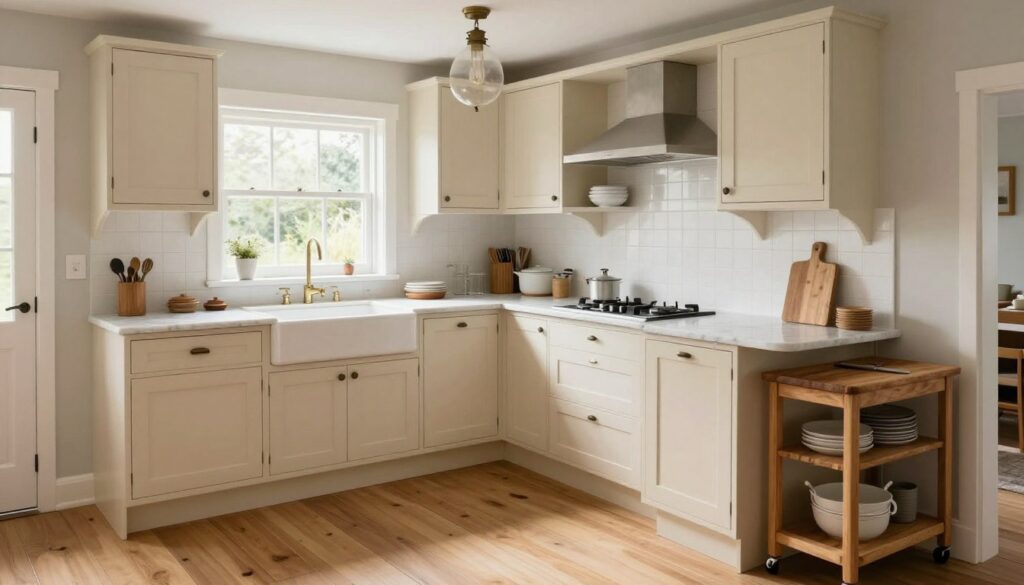
Strategic open shelving replaces some upper cabinets. Removing cabinet doors creates visual openness while maintaining storage capacity. Display your most attractive pieces on open shelves and use remaining closed cabinets for less photogenic necessities.
Furniture Choices for Compact Rooms
Rolling carts substitute for permanent islands in tight spaces. These mobile units provide additional prep surface and storage when needed, then tuck away to open floor space. Choose solid wood construction with butcher block tops for authentic cottage appeal.
Wall-mounted folding tables serve multiple purposes. A hinged table attached to the wall folds down for dining or food prep, then folds up flat when not needed. This centuries-old solution works beautifully in contemporary small kitchens needing flexibility.
Vertical Storage Solutions
Tall, narrow cabinets maximize vertical space without consuming floor area. Pantry units measuring twelve to eighteen inches wide fit between appliances or at room ends. Interior organization with pull-out shelves makes deep storage accessible.
Ceiling-height cabinetry uses otherwise wasted space above standard cabinets. Store occasional-use items like serving platters, seasonal dishware, and specialty appliances in these upper regions. A small step stool kept handy makes access practical.
Regional Variations in English Cottage Style
English cottage kitchens developed differently across regions, influenced by local materials, climate, and cultural traditions. Understanding these variations helps you choose elements that resonate personally while maintaining authentic cottage character.
Coastal Cottage Kitchens
Seaside cottage kitchens incorporate maritime influences and lighter color palettes. Soft blues and aquas reference ocean and sky. White painted beadboard walls protect against moisture while creating bright, airy spaces. Open shelving displays blue and white china alongside beach finds and nautical elements.
Country Farmhouse Versions
Rural cottage kitchens emphasize practical functionality and connection to agriculture. Larger spaces accommodate farm tables and substantial storage for preserving harvests. Earth tones dominate, with warm browns, soft greens, and butter yellows creating cozy environments. Exposed stone walls and terracotta floors reference agricultural buildings.
Village Cottage Adaptations
Town cottage kitchens occupy smaller footprints with refined details. More formal elements like decorative moldings and sophisticated color combinations appear alongside cottage staples. These kitchens balance charm with a slightly elevated aesthetic appropriate to village settings.
Seasonal Decorating and Simple Refreshes
Cottage kitchens welcome seasonal changes that celebrate nature’s cycles. Simple updates keep spaces feeling fresh without requiring major renovation. This approach honors the cottage tradition of living in harmony with the natural world.
Spring and Summer Touches
Fresh flowers and herbs bring life indoors during growing seasons. Simple arrangements in ceramic pitchers or vintage jars add color and fragrance. Potted herbs on windowsills provide both decoration and fresh ingredients for cooking.
Lighter textiles refresh for warmer weather. Replace heavier dish towels with crisp linen versions. Switch to lighter table runners or remove them entirely. These small changes create seasonal variety without expense.
Autumn and Winter Updates
Warmer colors welcome cooler seasons. Copper accents, amber glassware, and rust-colored textiles create cozy autumn ambiance. Natural elements like pine cones, branches, and gourds bring outdoor beauty inside.
Layered textiles add warmth during winter months. Wool or flannel dish towels, quilted table runners, and cushions on dining chairs create inviting comfort. These pieces store easily when seasons change again.
Bringing Your English Cottage Kitchen Vision to Life
Creating an authentic English cottage kitchen requires balancing multiple elements into cohesive harmony. The most successful spaces honor traditional aesthetics while embracing modern conveniences that make daily life easier. This balance defines contemporary cottage style, where vintage charm meets practical function.
Start with foundational decisions about cabinetry, countertops, and flooring. These permanent elements set the stage for everything else. Choose quality materials that age beautifully rather than trendy options that date quickly. Natural wood, stone, and ceramic all develop character through years of use.
Layer in furniture and freestanding pieces that add personality. Tables, islands, hutches, and dressers create the collected over time feeling essential to cottage charm. Mix painted and natural wood finishes. Combine antique finds with new pieces designed in traditional styles.
Complete your vision with thoughtful details. Hardware, lighting, textiles, and accessories provide opportunities for personal expression within cottage parameters. These smaller elements cost less than major components but significantly impact overall character and livability.
Remember that cottage kitchens evolve organically. Few historical examples appeared fully formed. Instead, they grew and changed as families adapted spaces to their needs. Allow your kitchen the same grace to develop gradually. Add pieces when you find them. Change what doesn’t work. This ongoing relationship with your space embodies the cottage spirit more authentically than any single renovation ever could.
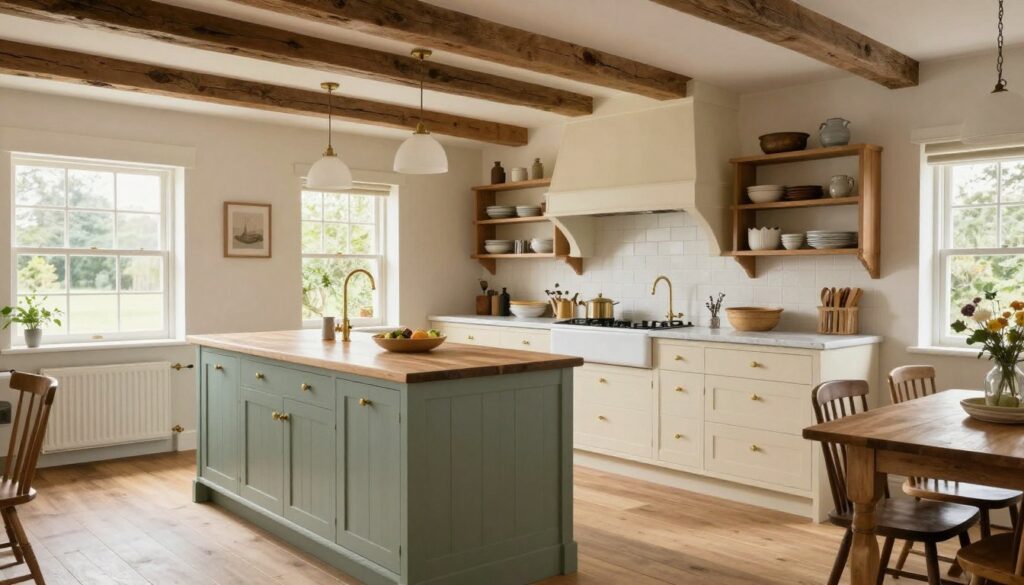
The true measure of success lies not in perfect execution but in creating a space that welcomes family and friends while supporting daily life. English cottage kitchens excel at this fundamental purpose, wrapping practical function in layers of warmth, history, and beauty. Your kitchen should inspire you daily while working hard to support your family’s needs. When design and function unite seamlessly, you’ve achieved the cottage kitchen ideal.