

Most people spend a lot of time choosing their curtains and almost no time thinking about everything else. The rod, the finials, the rings, the tiebacks these are the details that actually determine whether your windows look designed or just dressed.
I’ve been decorating and writing about home interiors for a few years now, and I can tell you the moment I started paying attention to hardware was the moment my rooms started looking noticeably better. Not dramatically different, just… finished. The way a room looks when every detail was considered, not just the big pieces.
These 15 luxury window decor accessories are the ones worth investing in. Some are practical and invisible. Others are pure decoration. All of them make a difference.
What makes a window decor accessory “luxury”?
Luxury in this context isn’t about spending the most money. It’s about materials you can feel and construction that doesn’t fail in six months.
A luxury curtain rod feels solid real metal, smooth finish, no wobble. A luxury finial has weight to it; when you handle it, it’s clearly not hollow plastic. Velvet tiebacks feel like fabric you’d use in a garment, not foam wrapped in polyester. The difference usually comes down to material quality and how much care went into the finishing.
For window accessories specifically, these are the signals worth looking for: solid brass or cast metal hardware (not chrome-plated plastic), real wood for any wooden elements, heavy-gauge metal for rods that’ll hold lined drapes without bowing, and fabric components made from actual velvet, linen, or silk — not synthetic imitations.
The 15 best luxury window decor accessories
1. Decorative curtain rod
The rod is the foundation. Everything else hangs from it, literally.
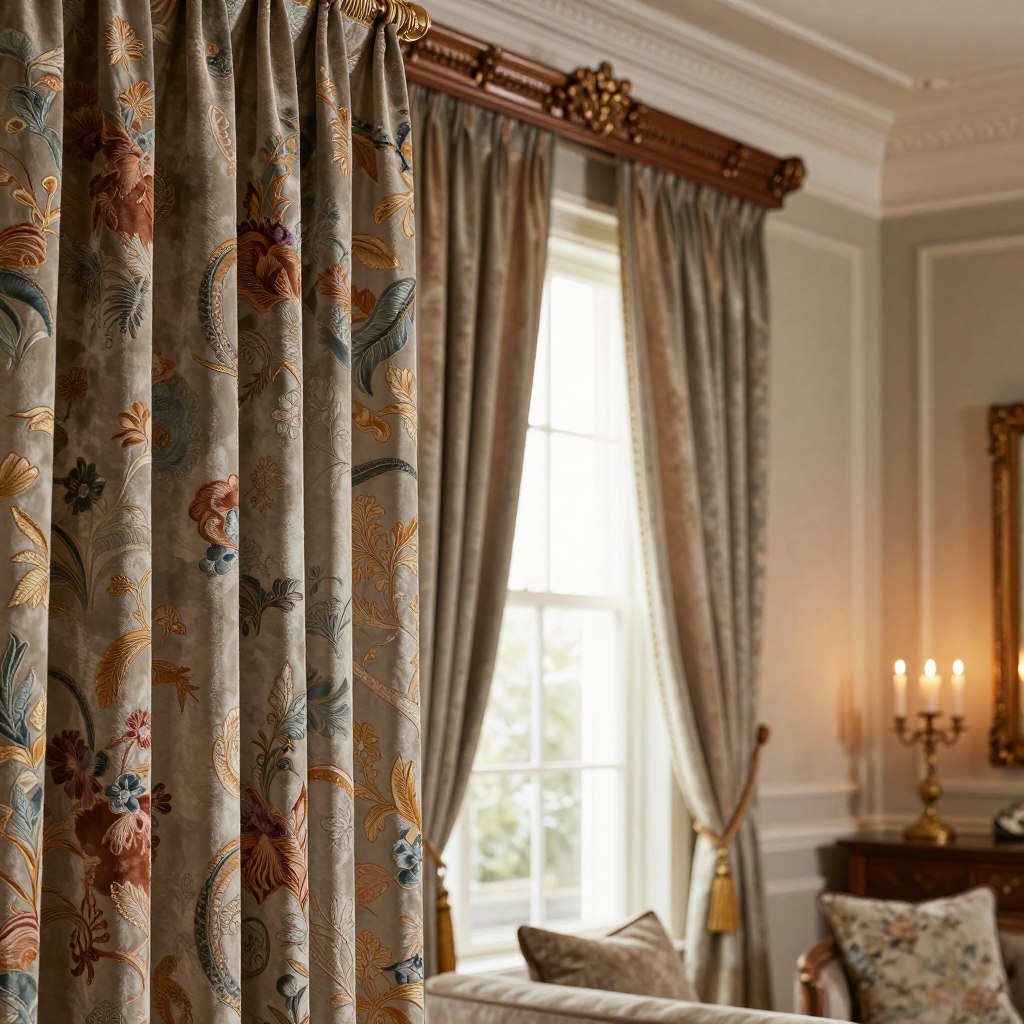
For a luxury setup, you want a rod with real weight to it a solid brass or heavy-gauge metal construction, at least 1 inch in diameter for any curtain heavier than a sheer. The finish matters too. Polished brass, matte black, and brushed nickel are the three finishes that photograph well and age gracefully. Avoid anything with a glossy silver chrome finish; it reads cheap under certain lighting.
What to look for: a rod with a center support bracket included (essential for any window wider than 60 inches), finials that screw on firmly with no wobble, and brackets that have actual depth at least 3-4 inches so your curtains hang in front of the window trim rather than skimming it.


2. Crystal and ornate finials
Finials are the earrings of your window. Most people don’t notice them consciously, but they notice the room feels more put-together.
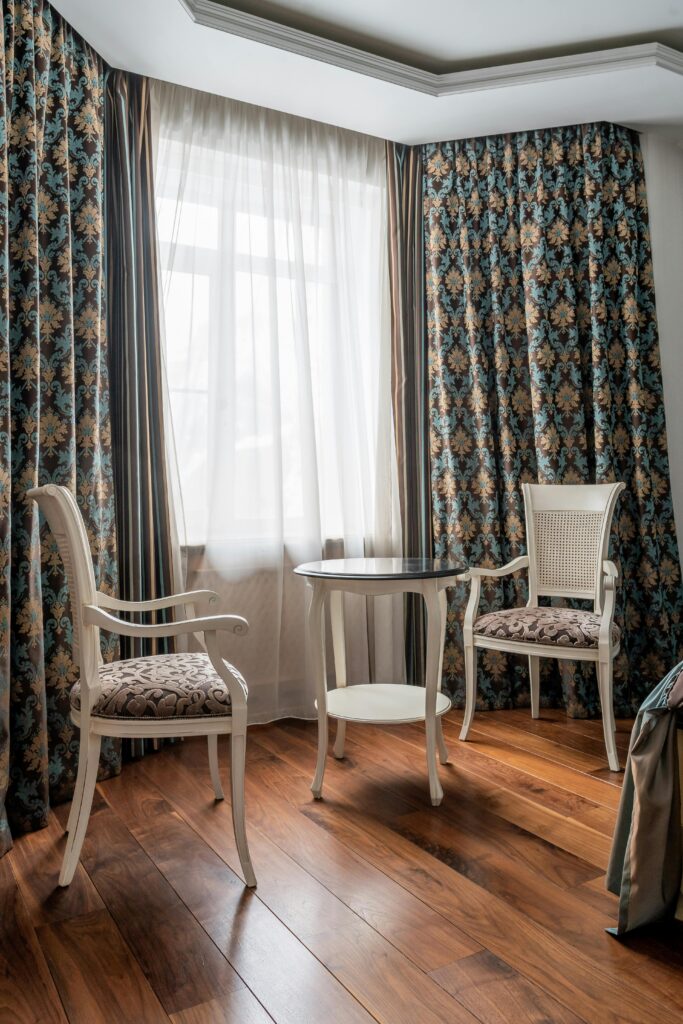
Crystal finials work in almost any room they catch light without competing with anything else in the space. Carved wood finials (acorn, sphere, or botanical shapes) work well in traditional or organic-modern rooms. For minimalist spaces, flat disc or simple sphere finials in matte black or brushed nickel disappear into the wall in a good way.
The practical rule: finials need to match your rod diameter exactly. A 1-inch finial threads onto a 1-inch rod. If you’re replacing the finials on an existing rod, measure the rod end before ordering.
Pair crystal finials with light-colored or sheer curtains. They add glamour without heaviness.


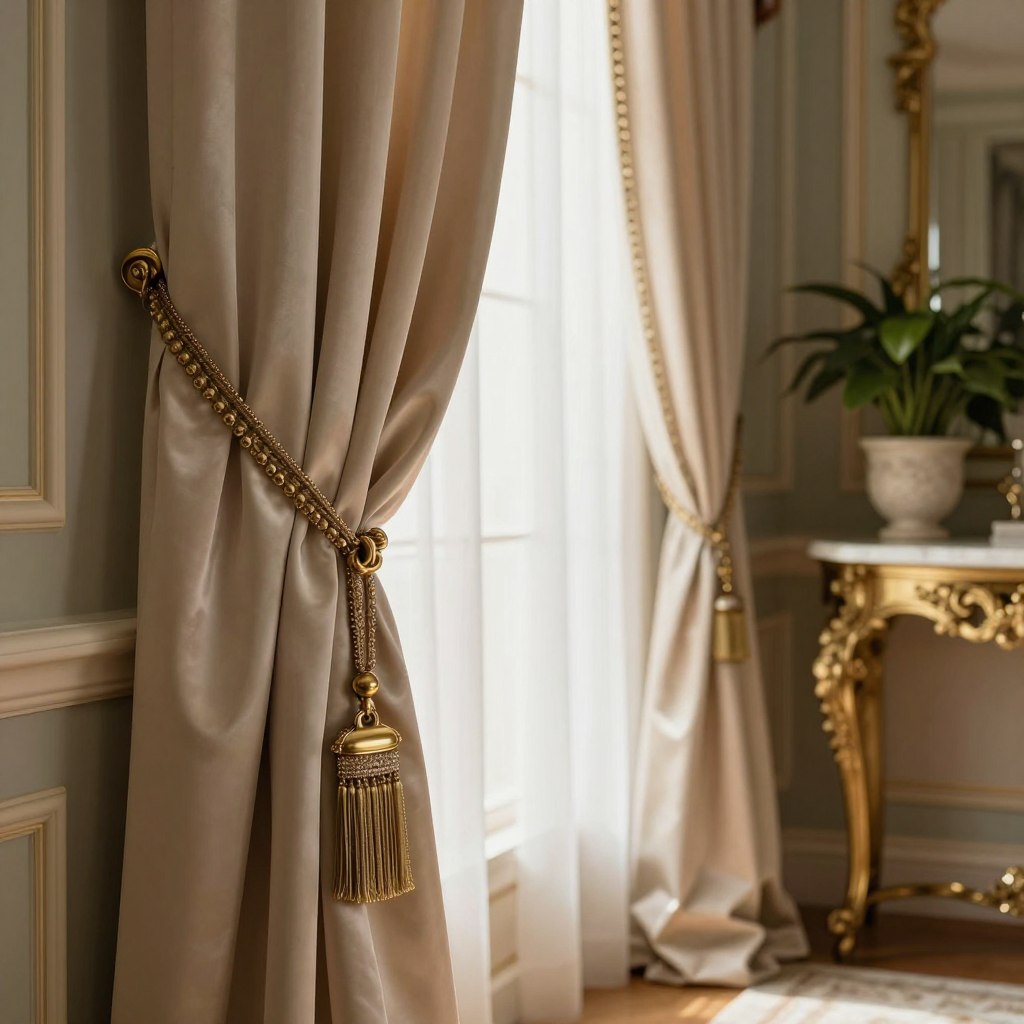
3. Velvet drapery tiebacks
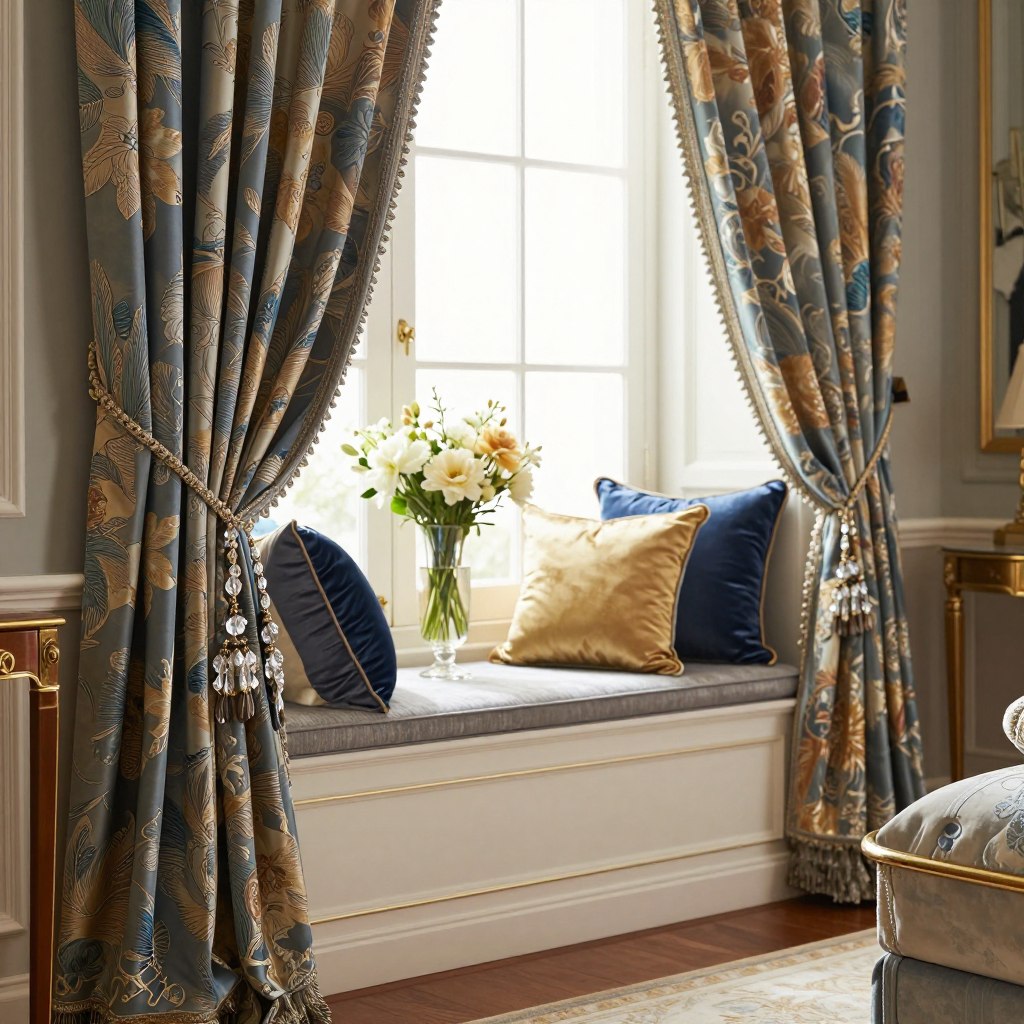
A velvet tieback does something fabric tiebacks can’t it creates a soft gathering point that looks like the curtain was born that way. A thick velvet cord or tassel tieback adds texture and depth against heavier drape fabrics.
These work best with formal setups: floor-length curtains in velvet, heavy linen, or silk. Pull the fabric back about halfway up the curtain length for the classic draped look. Lower than that and the fabric pools; higher and it loses the elegant sweep.

For a living room, I’d pair velvet tiebacks with a tasseled end it’s the kind of detail guests comment on without knowing why the room feels expensive.


4. Brass curtain holdbacks
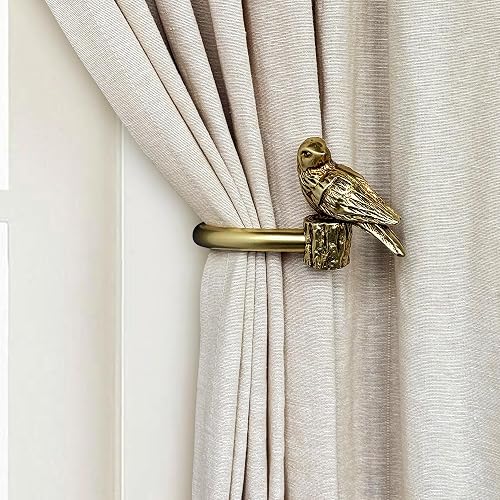
Holdbacks are rigid, wall-mounted hardware that you tuck the curtain behind. They look cleaner than tiebacks because there’s no cord or knot just the curtain sweeping back behind a polished arm.
Polished brass is the classic choice and honestly the right one for most traditional or transitional living rooms. It warms up the wall and plays well with cream, navy, and jewel-toned fabrics. Matte black holdbacks are the modern alternative sharper, more architectural.
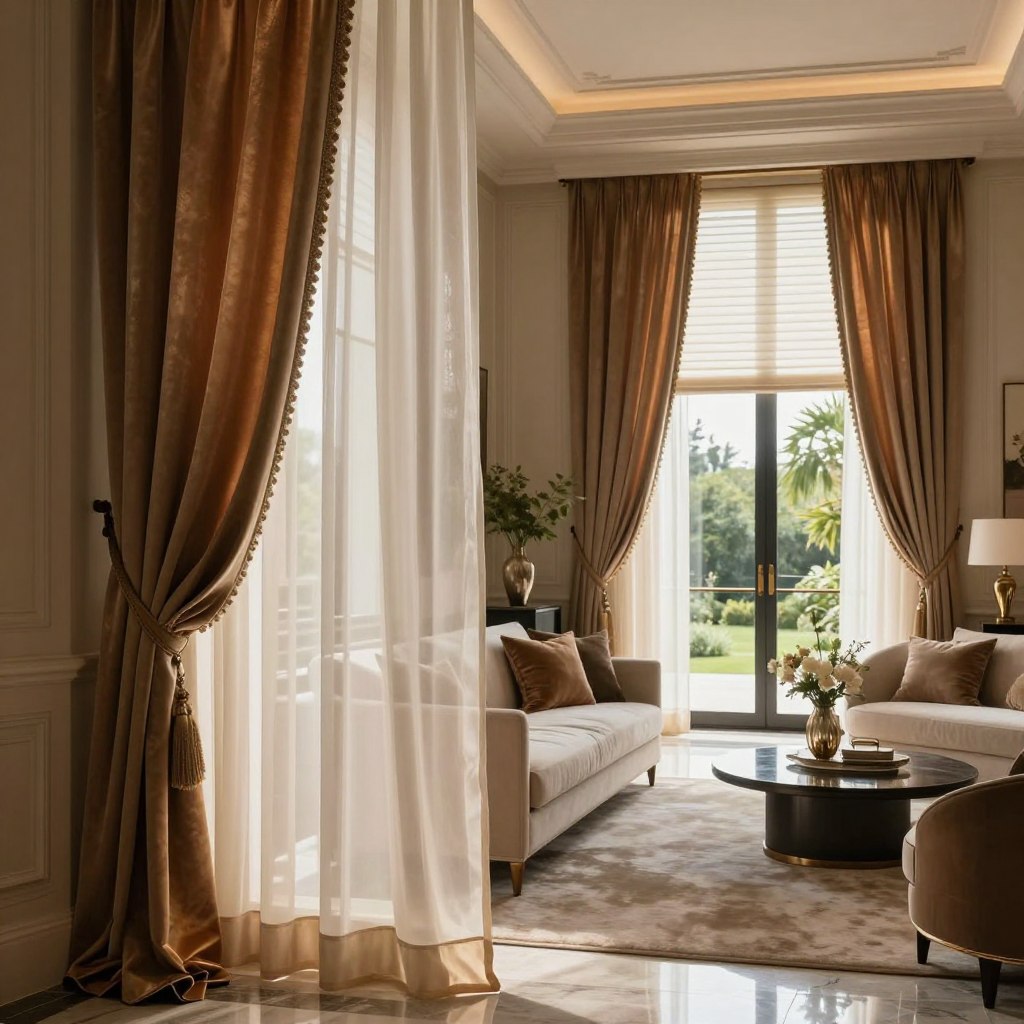
Install them 36 inches from the floor for a balanced look. Too high and the curtain bottom fans out awkwardly; too low and the gathered section feels truncated.
Get two per window. One per side. That sounds obvious but people do make that mistake.


5. Magnetic curtain tiebacks
These are the modern solution when you want the look of a tieback without drilling holes in the wall.

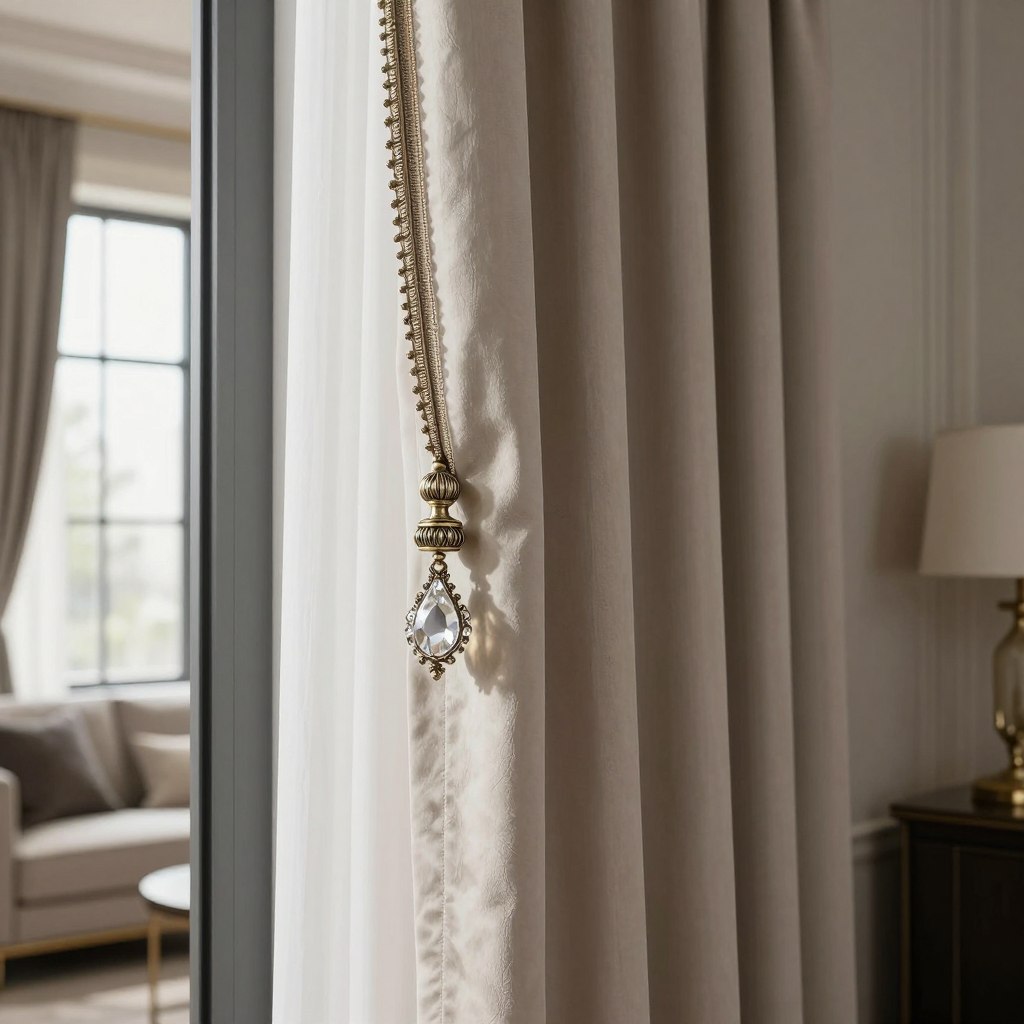
Magnetic tiebacks have two weighted heads connected by a cord or ribbon, with strong magnets that snap together through the curtain fabric. No wall hardware. No commitment. You can reposition them in 30 seconds.
They’re genuinely useful not just a compromise. I use them on rental-friendly setups and anywhere I want flexibility to adjust how the curtain gathers day to day. Crystal or wooden sphere magnetic tiebacks look as good as anything mounted to the wall.
Look for ones with neodymium magnets; the cheap versions use weak magnets that slip open when you brush past them.


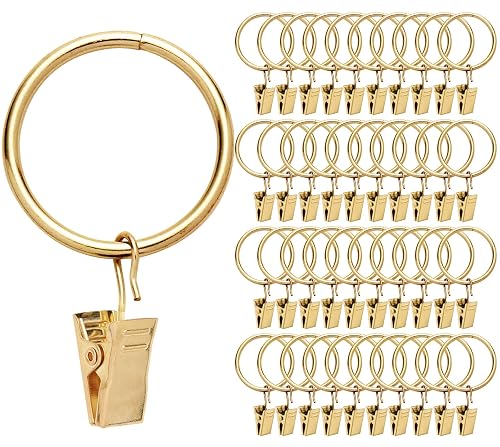
6. Decorative curtain rings and clips
If you’re hanging pinch pleat or flat panel curtains on a standard rod, you need rings. And the rings you choose affect how the whole setup reads from across the room.
Clip rings are the most versatile they work with almost any curtain header and let you adjust the drop easily. The clips shouldn’t pinch the fabric so tightly they mark it, but they need to hold without slipping.
For a luxury look, go with rings that have some visual weight: solid brass, bronze, or matte black rings with a diameter sized to your rod (usually 1.5 inches for a 1-inch rod). Cheap plastic rings with chrome coating look fine in photos and terrible in person.
Match ring finish to rod finish. If you use antique brass rings on a matte black rod, you need a deliberate reason. Otherwise, keep them consistent.


7. Silk curtain panels
This is the fabric that changes everything.
Real silk panels not polyester satin masquerading as silk have an iridescent quality that shifts as the light moves through the day. In the morning you get a soft gold cast. In the evening they go deep and rich. No synthetic fabric does this.
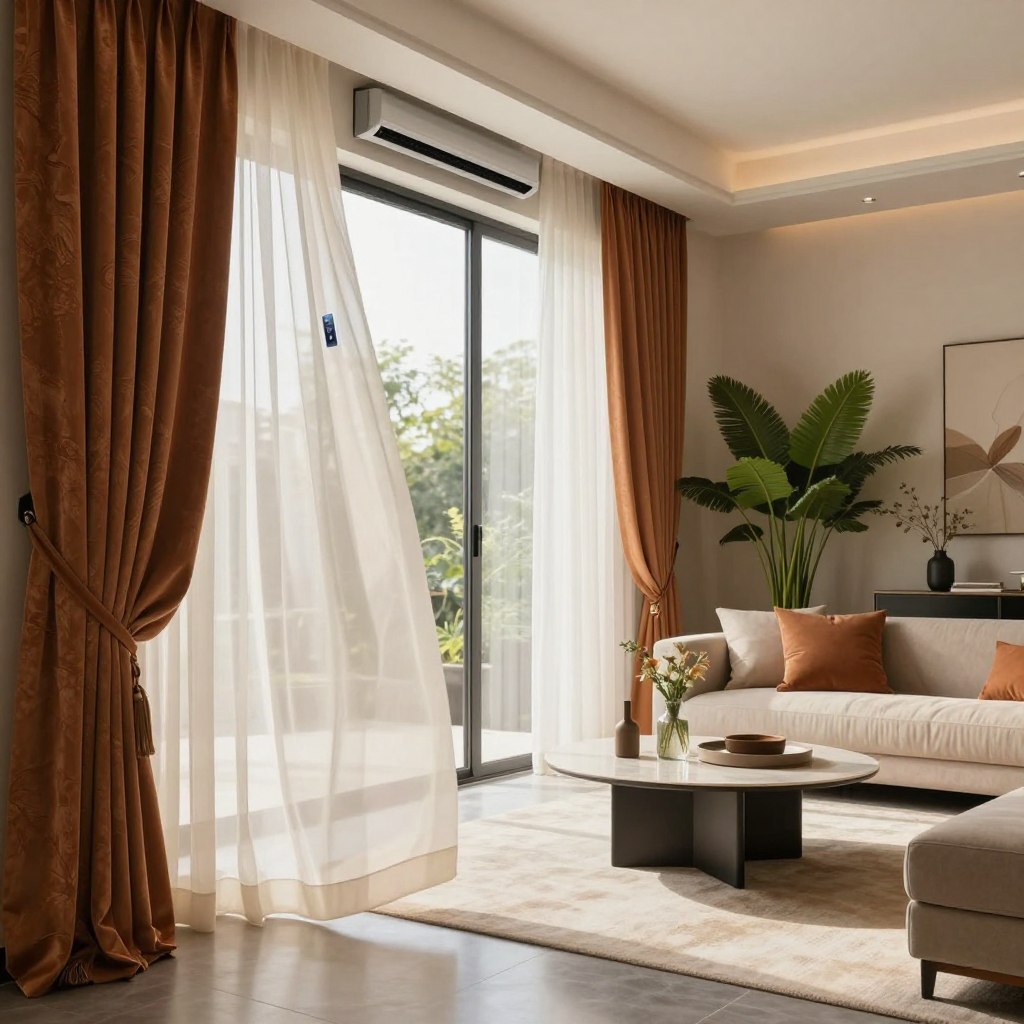
Silk works best in rooms that don’t get intense direct sunlight (UV degrades silk fibers over time). South-facing windows need a UV-protective lining or a separate sheer layer to protect them. In a north or east-facing living room, silk panels are genuinely transformative.
For affiliate links: look for dupioni or faux silk panels that use a high-density weave these hold their structure better than lightweight charmeuse silk and survive regular handling.


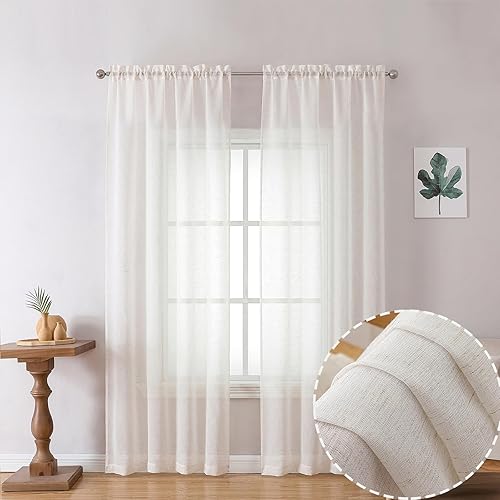
8. Premium linen sheer curtains
Linen sheers are the everyday version of luxury practical, beautiful, and harder to get wrong than silk.
A good linen sheer filters light without blocking it. The texture of the weave creates a diffused, warm glow that makes any room feel more considered. And unlike polyester sheers, linen sheers wrinkle in a way that looks intentional rather than neglected.
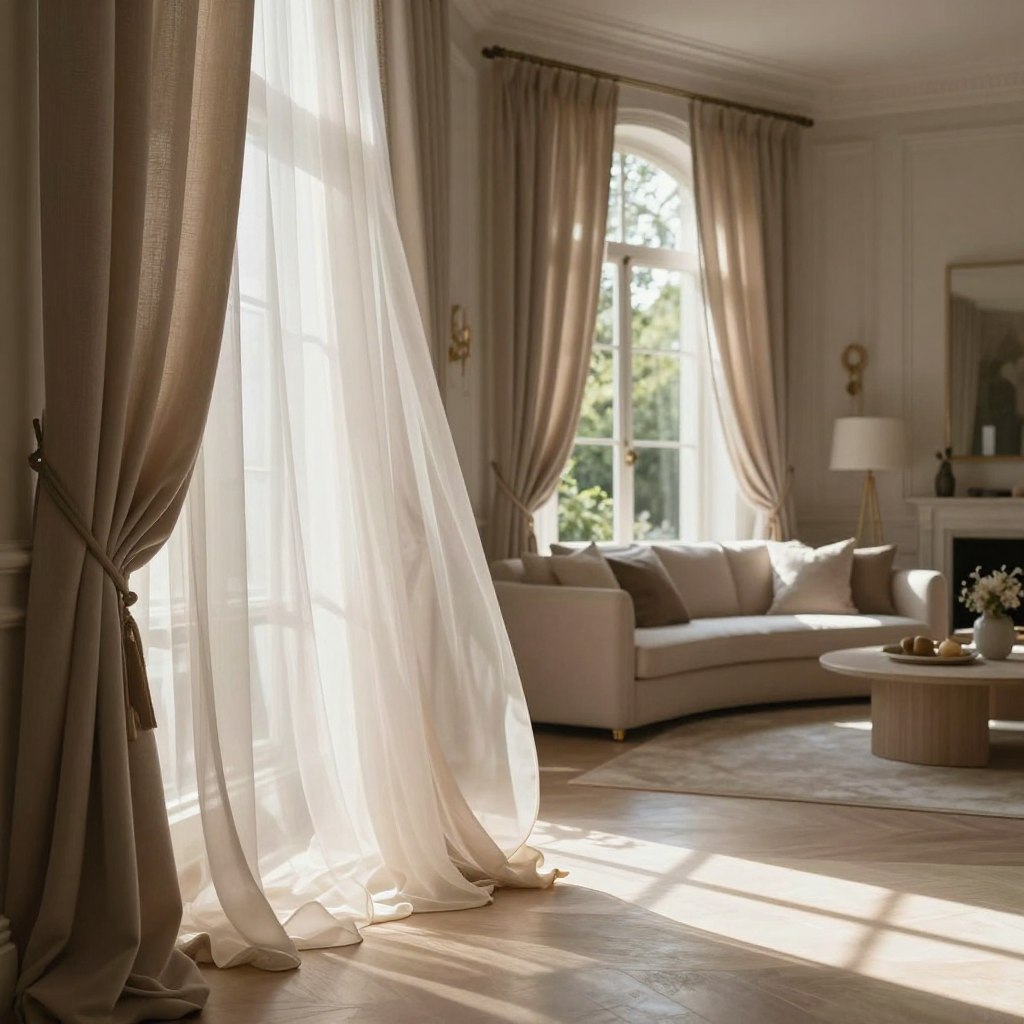
The best versions have a natural slub slight irregularities in the weave and hang with real weight. Lightweight linen sheers billow constantly in HVAC air, which can be beautiful or annoying depending on your tolerance. If you run your AC a lot, get a slightly heavier-weight sheer.
These work well layered under heavier drapes on a double rod. It’s the setup that gives you soft daylight and full privacy depending on what you pull closed.


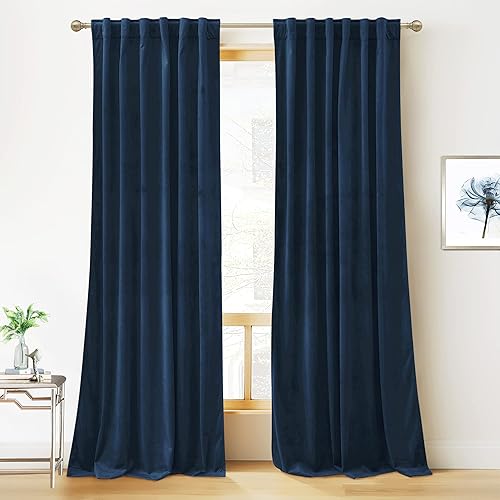
9. Velvet blackout curtains
Velvet blackout curtains aren’t subtle. They’re the ones that make a room feel like a boutique hotel heavy, light-blocking, and rich-looking at any time of day.
The velvet adds thermal insulation as a bonus. In winter, closed velvet curtains noticeably reduce how cold a room feels near the windows. I’ve had guests comment on how warm my living room stays compared to the rest of the apartment; the curtains are doing a lot of that work.
For a living room, deep jewel tones (navy, emerald, burgundy) look the most intentional. For a bedroom, charcoal or ivory velvet tends to photograph better and age more gracefully as design tastes shift.
Look for velvet with a tight pile loose pile velvet crushes easily and shows handling marks. You want a velvet that bounces back.


10. Motorized curtain track system
This is the one accessory that actually changes how you live in a room, not just how it looks.
A motorized curtain track connects to your phone, voice assistant, or a simple remote. You can program it to open with the morning light and close at sunset. When you’re working from home and want to reduce glare without getting up mid-call, one tap handles it.
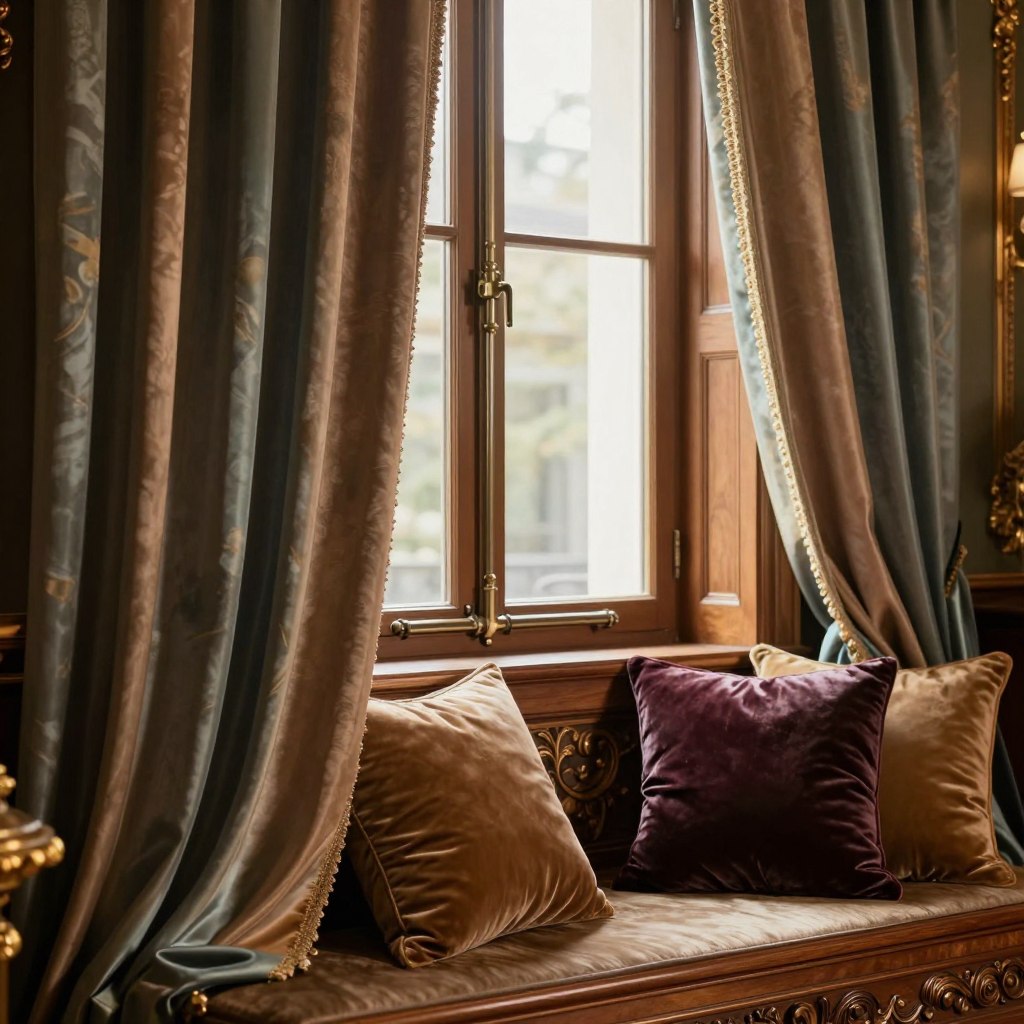
The visual benefit is that motorized tracks are completely hidden behind the curtain header no visible rod, no rings, no hardware at all. The curtain appears to float and glide. For a minimalist room or a large floor to ceiling window, this is the cleanest possible setup.
These are a bigger investment, but they’re also genuinely the most “luxury” item on this list in terms of daily quality of life improvement.
11. Real basswood blinds
Basswood blinds are what wood blinds look like when they’re done right.
The grain on basswood is fine and consistent. When stained, it looks like actual furniture-grade wood rather than the compressed particleboard used in cheaper alternatives. The slats move smoothly, close tightly (important for light control), and don’t warp the way lower-quality wood blinds do over time.
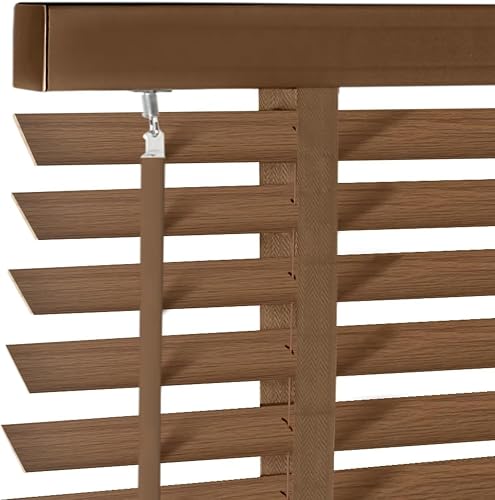


For living rooms with a lot of natural light, basswood blinds work beautifully on their own or as a base layer under fabric curtains. They control light with precision tilt the slats and you can direct the light toward the ceiling for a softer bounce, or angle them down for direct light control without closing the room off completely.
Get custom-sized blinds if you can. Off-the-shelf blinds that are trimmed to fit look noticeably worse than blinds cut to the exact width from the start.
12. Linen Roman shade
Roman shades are the option for people who want clean lines without metal or hard surfaces.
A linen Roman shade folds into stacked horizontal sections when raised and drops flat when lowered. The fold lines are part of the design. A good one has even folds, a consistent hang, and doesn’t develop that irritating side-gap that lets in light around the edges.


Linen is the best fabric for this application. It has enough body to hold the fold structure without stiffening agents. It also diffuses light beautifully softer than a cellular shade, less sheer than a sheer curtain.
For a kitchen, dining room, or study, a Roman shade is often cleaner and more appropriate than floor length curtains. It reads more architectural.
13. Decorative valance or cornice board
Most people skip valances because they think they look dated. They’re not wrong about cheap valances from 2003. But a proper wood cornice board, wrapped in fabric to match your drapes, is an entirely different thing.


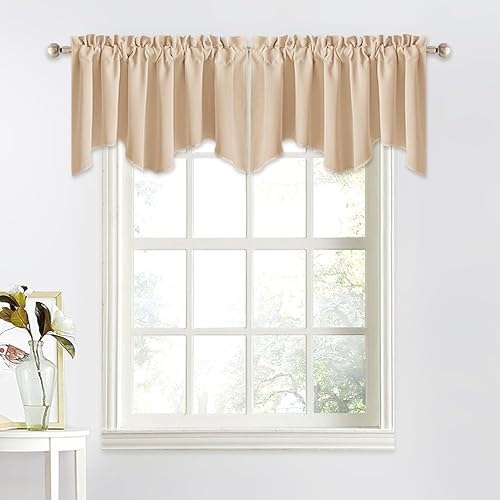
A cornice board hides the rod, brackets, and any hooks or rings completely. The window treatment appears to begin from a clean horizontal line at the top. It makes standard ceiling height windows look taller and more architectural.
For a fabric-covered cornice, choose a solid or subtle pattern the cornice is structural, not the focal point. For a painted wood cornice in a more modern room, a matte white or off-white finish disappears against the wall while still giving that clean, custom-built look.
Pair this with floor-length curtains and holdbacks. That combination cornice at top, full length curtains, elegant holdbacks is what you see in professionally styled rooms.
14. Double curtain rod set
If you take one structural upgrade from this list, make it a double rod.
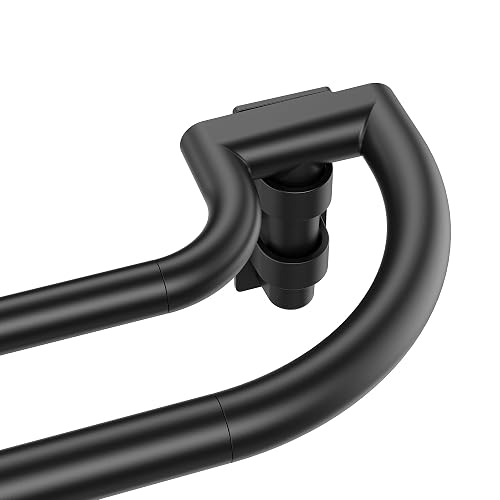


A double curtain rod lets you hang sheer curtains on the inner rod and blackout or heavier panels on the outer rod. During the day, sheers stay closed for privacy and light diffusion. At night, you pull the outer panels closed for complete coverage. You get full versatility out of one window setup.
This is also the look that makes a room feel like a hotel suite. Two layers of fabric one light, one heavy create depth and dimension that a single curtain panel can’t replicate.
What to look for: double rods where both rods are the same diameter (so you can use matching rings on both) and brackets with enough projection from the wall to clear the layered fabric without bunching.
15. Complete curtain hardware kit
If you’re starting from scratch on a window or doing multiple windows at once buying a complete hardware kit saves money and guarantees everything matches.
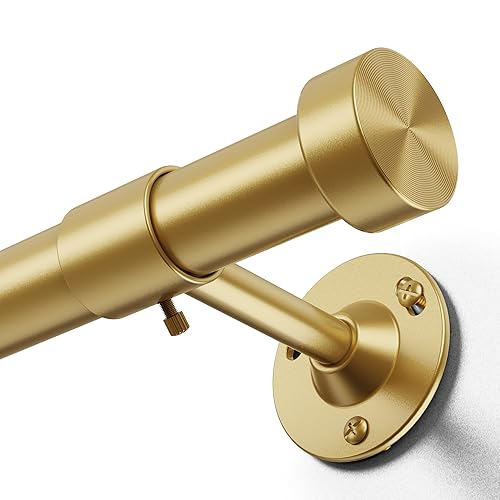


A good kit includes the rod, finials, brackets, center support, and mounting hardware. The advantage over buying separately is that the finish and scale are calibrated to work together. No discovering at installation that your finials are a slightly different brass tone than your brackets.
Look for kits that come with the center support bracket included. A lot of kits skip it. On any window over 60 inches, that bracket is non-negotiable without it, the rod bows under the weight of lined curtains and eventually fails.
How to match window accessories to your interior style
The accessories you choose should feel like they came from the same design vocabulary as the rest of the room. Here’s a quick guide:
Modern and minimalist: matte black or brushed nickel
Clean, industrial hardware. Matte black rods and rings with simple sphere or flat disc finials. Skip the tiebacks entirely a matte black holdback is enough. Pair with linen sheers or floor-length linen panels for texture without fuss.
Traditional and elegant: gold, brass, or crystal
Warm metallics. Polished brass or antique gold rods with crystal or carved finials. Velvet tiebacks with tassel ends. Silk or velvet panels in jewel tones. This combination is the most classically “luxury” it takes more commitment but rewards it.
Warm and organic: wood finials and natural linen
Natural wood rod with carved finials. No metallic hardware at all, or minimal brushed nickel. Linen sheers and Roman shades. Woven holdbacks in jute or leather. This reads earthy-luxe and works well in rooms with a lot of natural wood furniture or stone surfaces.
Whatever your style, the rule is consistency across a room. Use the same finish on all the hardware in a room. Mixing finishes works in editorial photos because stylists know exactly how to balance them. In a normal living room, it just looks mismatched.
What curtain rod is best for heavy curtains?
For heavy velvet or lined drapes, you want a solid metal rod at least 1 inch in diameter with a center support bracket for any span over 60 inches. Traverse rods work well too because the curtain weight is distributed through the track system rather than resting on rings. Avoid lightweight telescoping rods they’ll bow and eventually fail.
What are the best curtain accessories for a living room?
For a living room, the accessories that make the biggest visual difference are: a decorative curtain rod in brass or matte black, crystal or carved finials, and a set of holdbacks or magnetic tiebacks. If you want to add drama, layer sheer panels over blackout curtains on a double rod it’s the single move that makes the most impact.
What are window decor accessories?
Window decor accessories are the hardware and fabric elements that complete a window treatment beyond the basic curtain or blind. This includes curtain rods, finials, rings, tiebacks, holdbacks, valances, and cornice boards. Together they determine how your curtains hang, how they’re gathered, and how the whole setup looks from across the room.
What accessories do you need for curtains?
At minimum, you need a curtain rod, brackets to mount it, and finials for the ends. For a more finished look, add curtain rings or hooks (depending on your header style), plus tiebacks or holdbacks to pull the fabric back during the day. A valance or cornice board at the top hides the rod entirely and makes the setup look custom.