

There’s a corner in almost every living room that holds one lamp and one vase.
It looks finished. It isn’t.
The objects are there. The intention isn’t. Most corners get decorated the way an afterthought gets addressed something placed, something balanced, box ticked. But the corner is visible from almost every seat in the room. It shapes how the space reads before anyone sits down.
These fifteen corner table decor ideas aren’t about adding more. They’re about choosing with more precision and knowing what to actually buy for each setup.
What actually makes a corner table display work
Before getting into specific setups, one question comes up constantly: what do you put on a corner table in the living room?
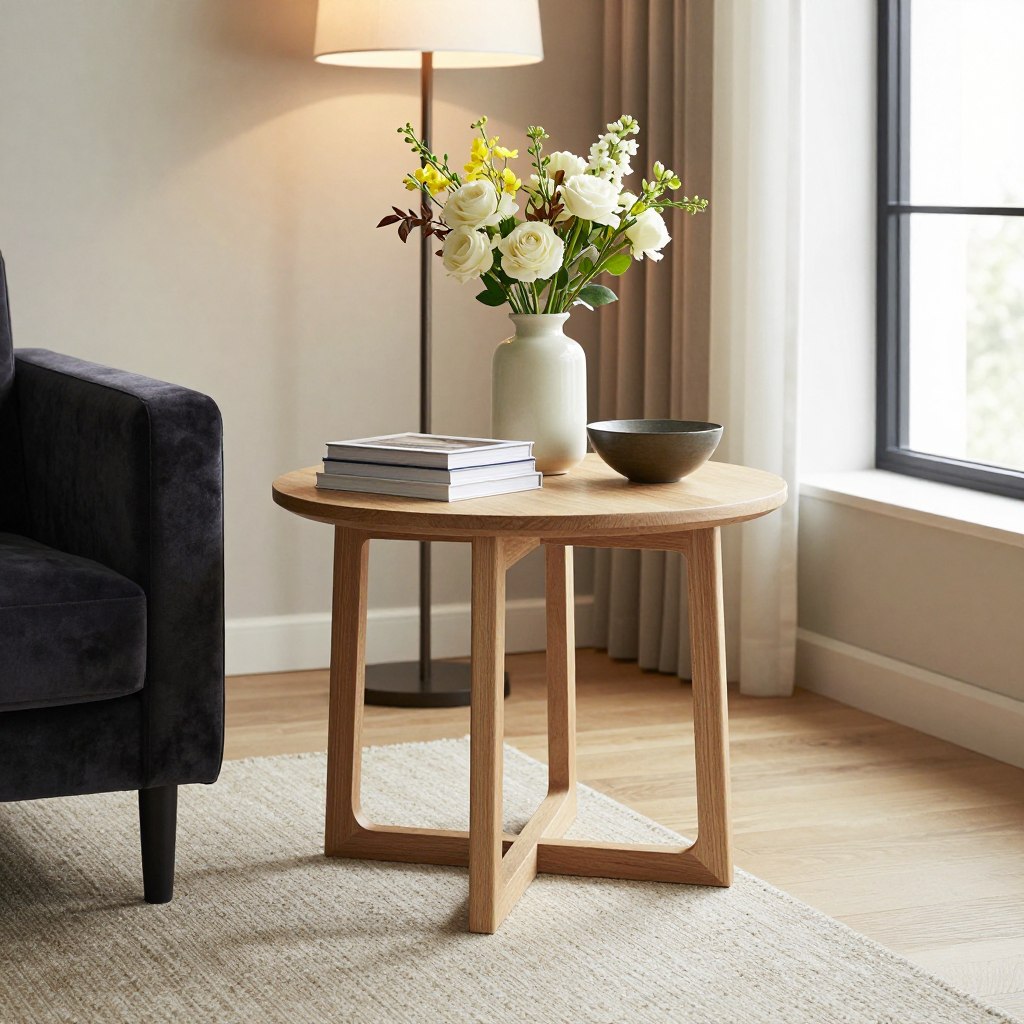
The honest answer is simpler than most styling guides make it. The strongest setups use three heights: one tall element (a lamp or plant), one mid-height object (a ceramic vessel or candle), and one low item (a tray or book). Three heights. One surface. Done. Resist the urge to fill it further everything beyond three elements starts competing for attention rather than earning it.
The height rule: why everything looks flat at one level
When objects on a corner table all sit at the same height, the eye moves along a flat horizon line and stops. There’s nowhere to go. Vary the heights one tall, one medium, one low and suddenly the eye moves through the composition. The corner holds attention rather than deflecting it.
It’s the single most common reason a styled corner looks underwhelming in person. The objects might be beautiful. The arrangement is flat. Three heights fix it faster than any new purchase.
How to match your table to the room’s material story
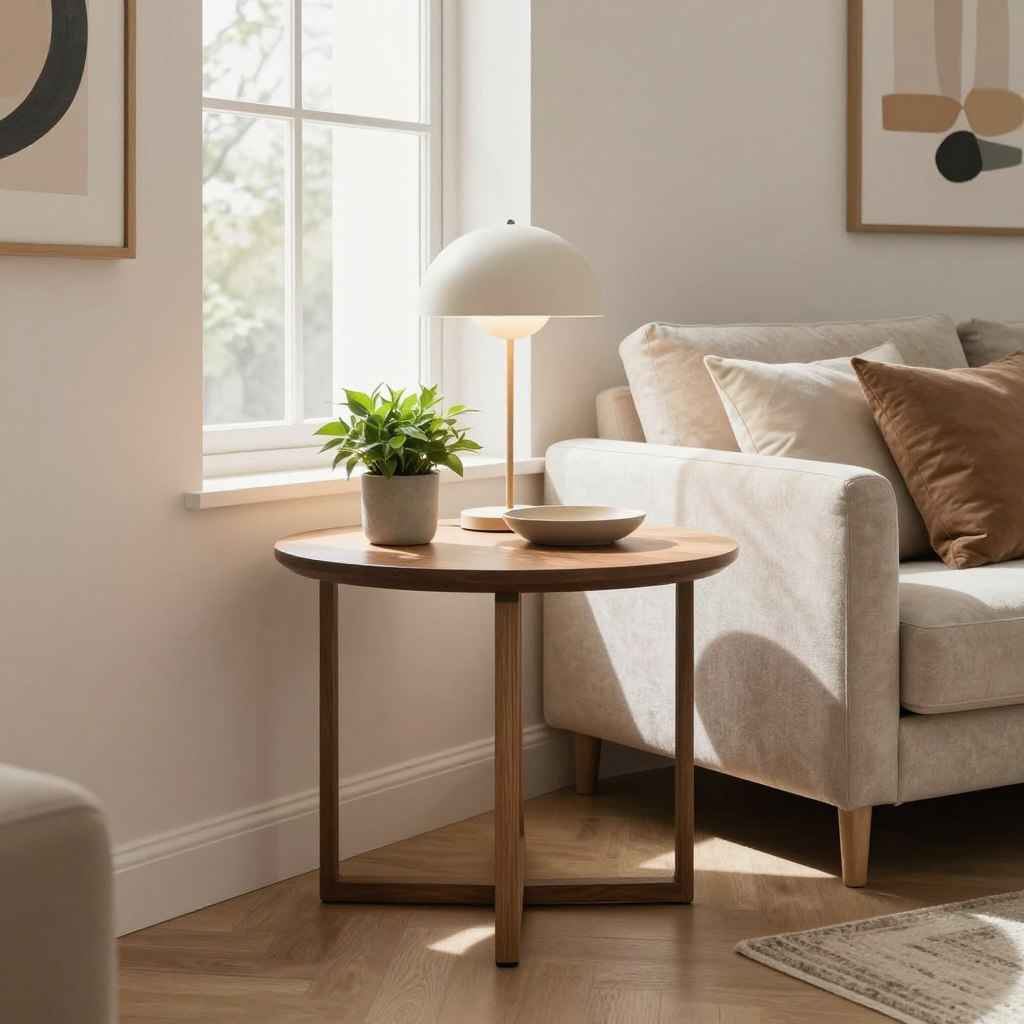
A corner table that technically fits can still visually disappear. The material of the table is a design decision before anything goes on top of it. If the room has warm wood tones and soft linen, a cold glass table interrupts that story. If the room is all pale stone and white plaster, a dark walnut table grounds it.
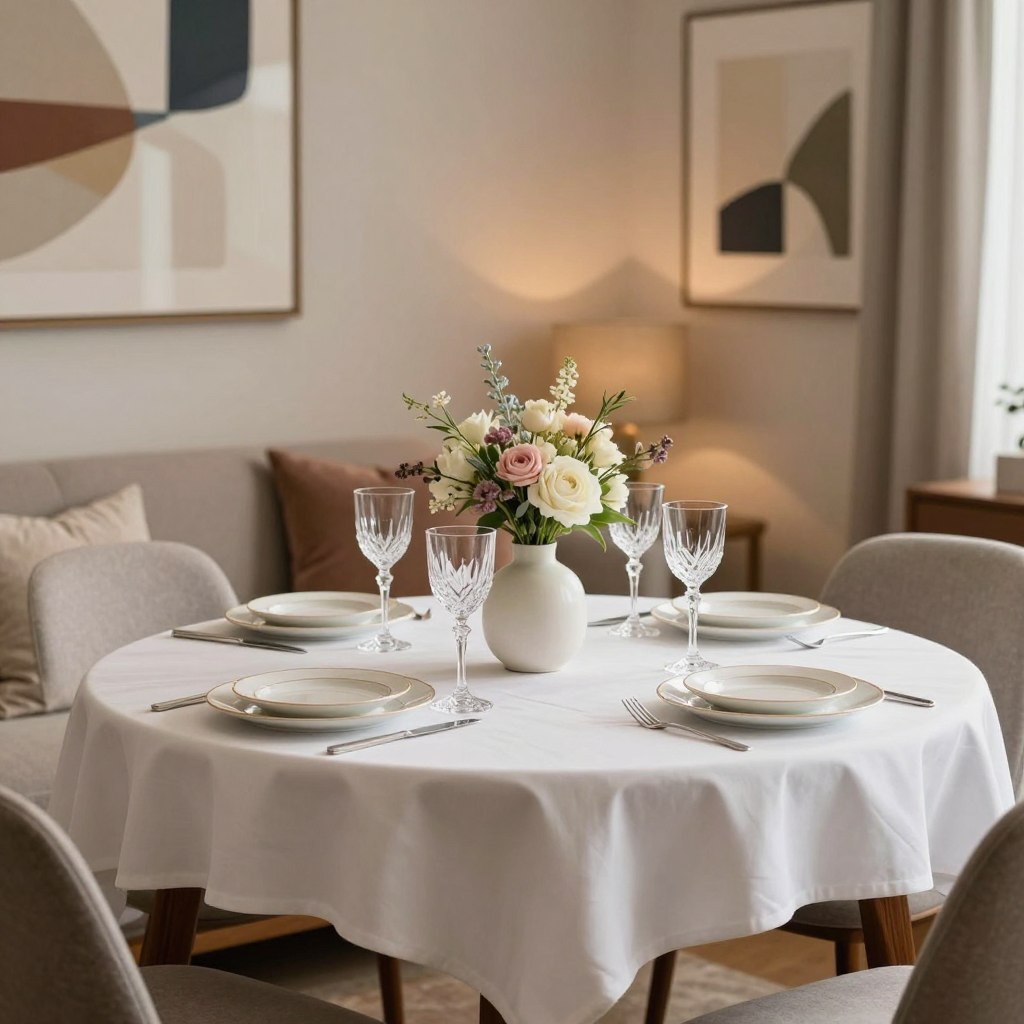
Look at what’s already in the room. Find one material that echoes it. Start there. Everything placed on top of the table is secondary.
15 corner table decoration ideas for the living room
1. One statement plant, one object nothing else
The biophilic corner works when it resists the urge to grow into something more. One plant a trailing pothos, a small fiddle leaf fig, a single stem in a ceramic vessel and one object beside or beneath it. A book. A smooth stone. A small tray.

The restraint is the design. When the surface is quiet, the plant does all the work.
What to buy: A matte ceramic planter in white or terracotta holds almost any plant and reads quiet from across the room. For the object beside it, a small concrete or stone decorative sphere in a neutral tone adds weight without drawing attention away from the plant.
For help choosing the right plant for your light conditions and space, the chic indoor plants guide for apartment living rooms is a good place to start.
2. The layered tray: one surface, three heights
A tray is one of the most underused tools in corner table styling. It creates a frame everything inside the frame belongs to a composition, everything outside it belongs to the room. Within that frame, vary the height: a short candle, a medium vessel, a tall stem or branch.
Three heights, within a contained footprint, read as considered. The tray keeps them together without cluttering the surface.
This is the setup that photographs like a styled shoot and lives like a functional corner. It’s also forgiving you can swap one element seasonally without touching the rest.
What to buy: A round wooden or marble tray in the 10–14 inch range anchors the composition without overtaking the table. Inside it, pair a wax pillar candle with a small ceramic bud vase and a dried botanical element.
3. A single sculptural piece with presence
Some objects work because of what they are, not what surrounds them. A ceramic form with texture. A raw stone piece. A single cast-iron figure. These don’t need context or grouping. They read clearly on their own.
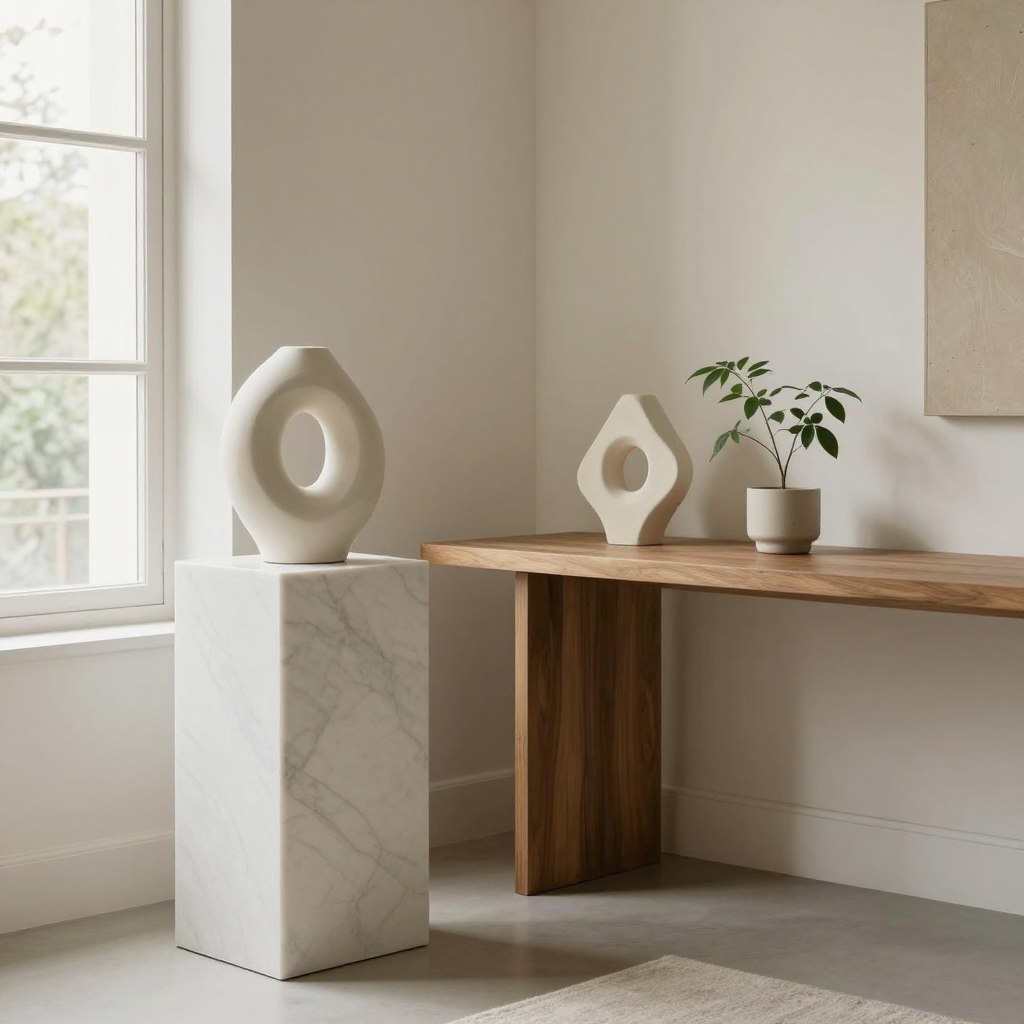
Placed on a corner table with nothing else beside them, they give the corner a sense of intention that a collection of smaller items rarely achieves.
The scale should feel slightly larger than instinct suggests. Objects that hold a corner tend to have presence not size exactly, but weight. A piece that feels almost too bold in your hand will often look right once it’s on the table.
What to buy: Look for abstract ceramic sculpture for home decor in matte finishes gloss reads cheaper in most rooms. Alternatively, a small concrete or stone decorative sphere in a large size anchors the corner with no styling required.
4. Lamp and one low object the two-piece rule
Light is the most underused element in corner styling. A lamp placed in a corner doesn’t just illuminate it defines the quality of the evening in that room. The warmth of the bulb, the opacity of the shade, the height of the base: each shapes how the corner feels after dark.
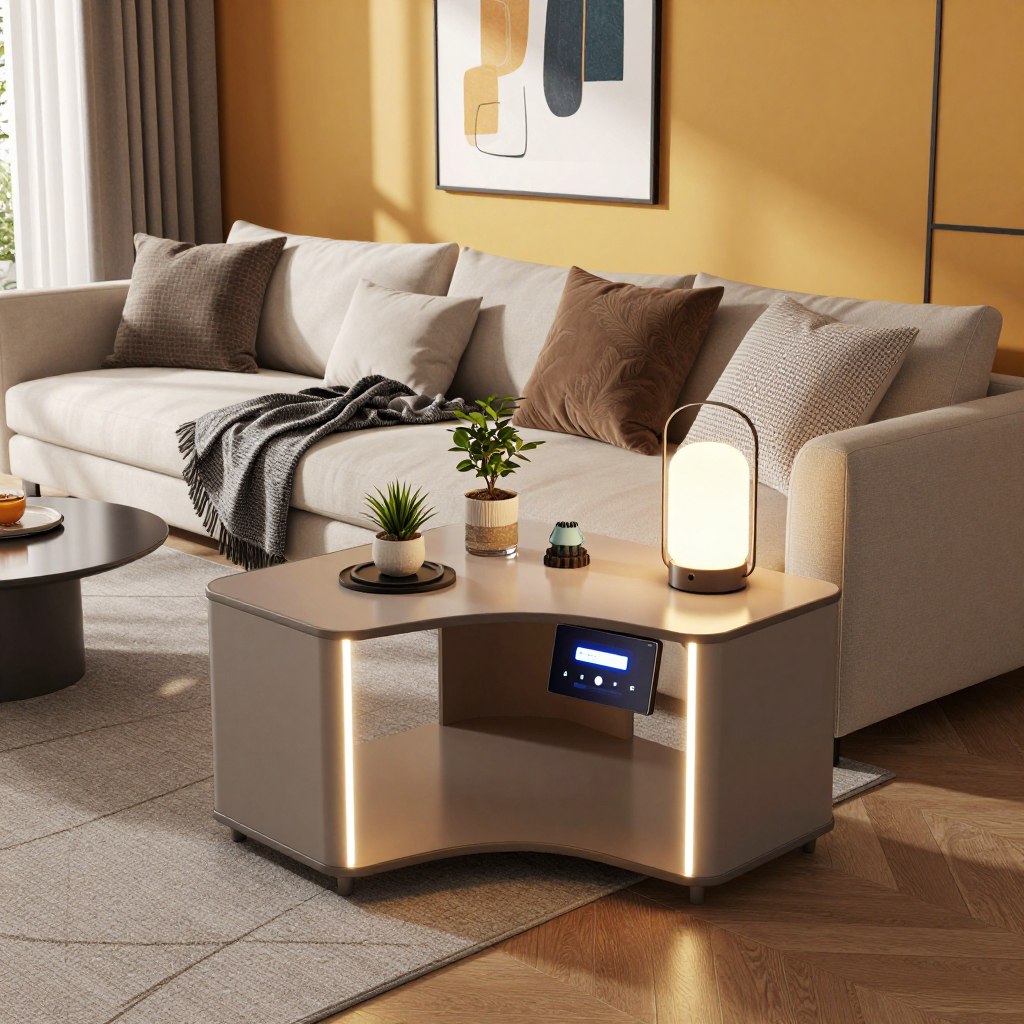
The two-piece rule: lamp plus one object at the base. That’s it. A small ceramic. A stack of two or three books. A candle. The lamp provides the vertical anchor, the low object provides ground-level interest without cluttering the surface.
In a room where chandeliers or ceiling fixtures are already making a statement, the modern crystal chandeliers can anchor the larger space, leaving the corner lamp to do quieter work.
What to buy: A linen or drum shade table lamp with a ceramic or resin base in a neutral finish. Pair with a decorative coffee table book set stacked flat beneath it.
5. Monochromatic texture: same tone, different materials
A single color across multiple surfaces and materials creates more depth than a mix of colors. Try it with warm whites: a linen object, a matte ceramic, a raw paper lampshade, a pale wood surface all the same tone, none the same texture.
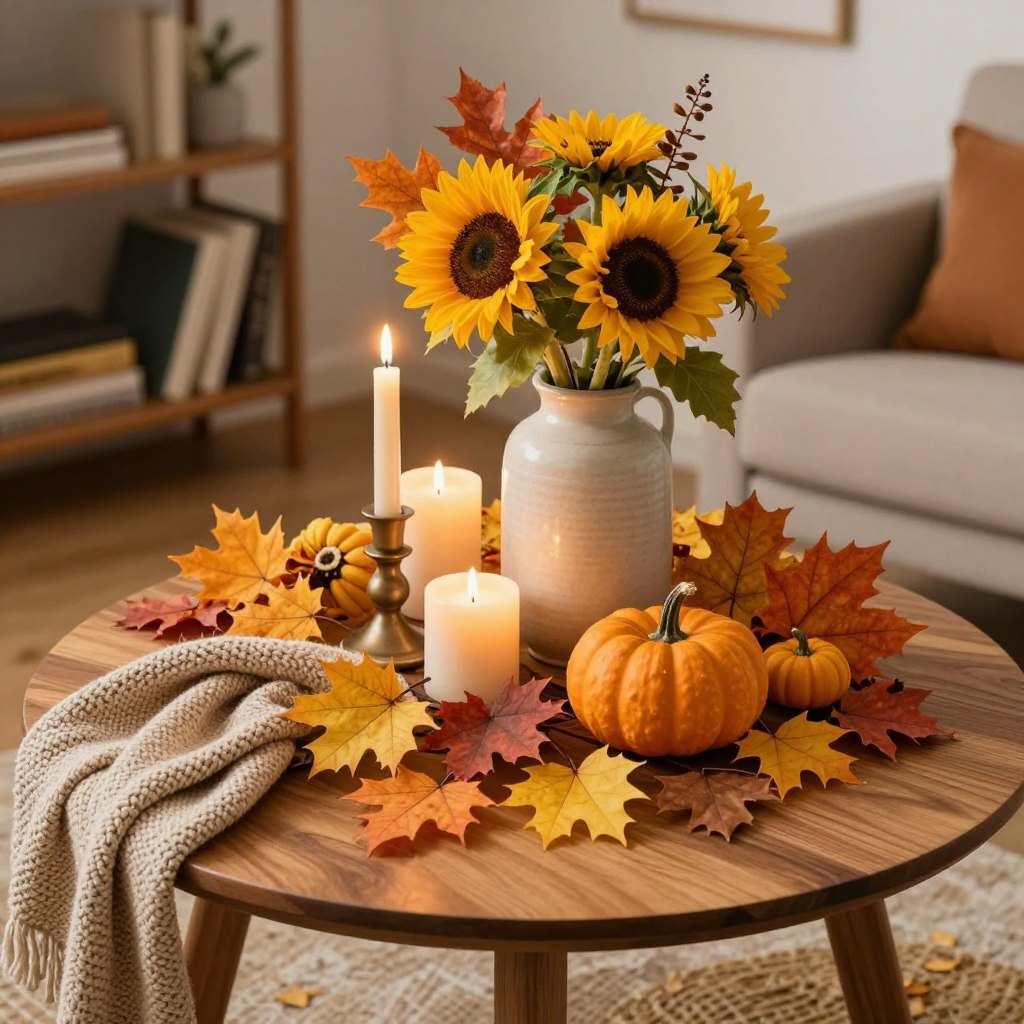
The eye moves across differences in material rather than jumping between colors. The result reads calm from across the room and rewards closer attention.
This is one of the harder setups to pull off quickly because it requires editing rather than shopping. But once it’s there, it stays looking right with almost no maintenance.
What to buy: A woven or rattan decorative object in natural tones alongside a matte white ceramic vase and a small bleached wood object or figurine. The tone should match; the texture is where the interest lives.
6. A framed print leaning against the wall
The gallery corner doesn’t require a gallery wall. One framed print, leaning against the wall behind the table rather than hung. One object in front of it a candle, a small vessel, a folded textile.
The print provides a vertical plane. The object in front provides a horizontal one. Together they create a composition that reads as intention rather than decoration.
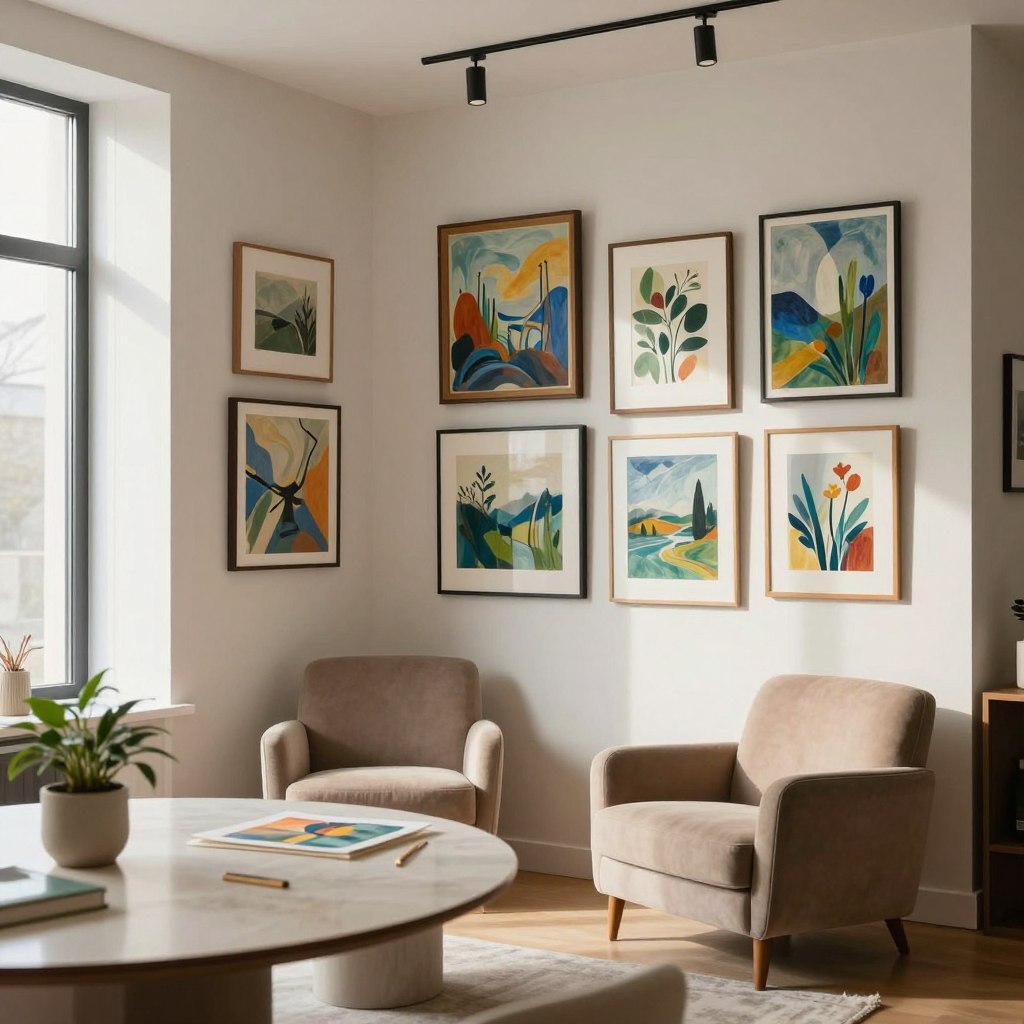
Leaning rather than hanging is a small decision with a big effect. It softens the formality of a hung piece, makes the corner feel more personal, and lets you change it without filling holes in the wall.
What to buy: A thin black or natural wood picture frame in the 8×10 or 11×14 range leans well on most tables. For the object in front, a small ceramic or glass bud vase with a single dried stem works across most room styles.
For more on calibrating scale and spacing with wall art, the modern wall decor ideas guide for 2026 covers what holds a room and what flattens it.
7. The reading nook setup: lamp, clear surface, one object
When a corner table sits beside an armchair, it enters a different category. It’s no longer decorative it’s functional, and it should be styled that way.
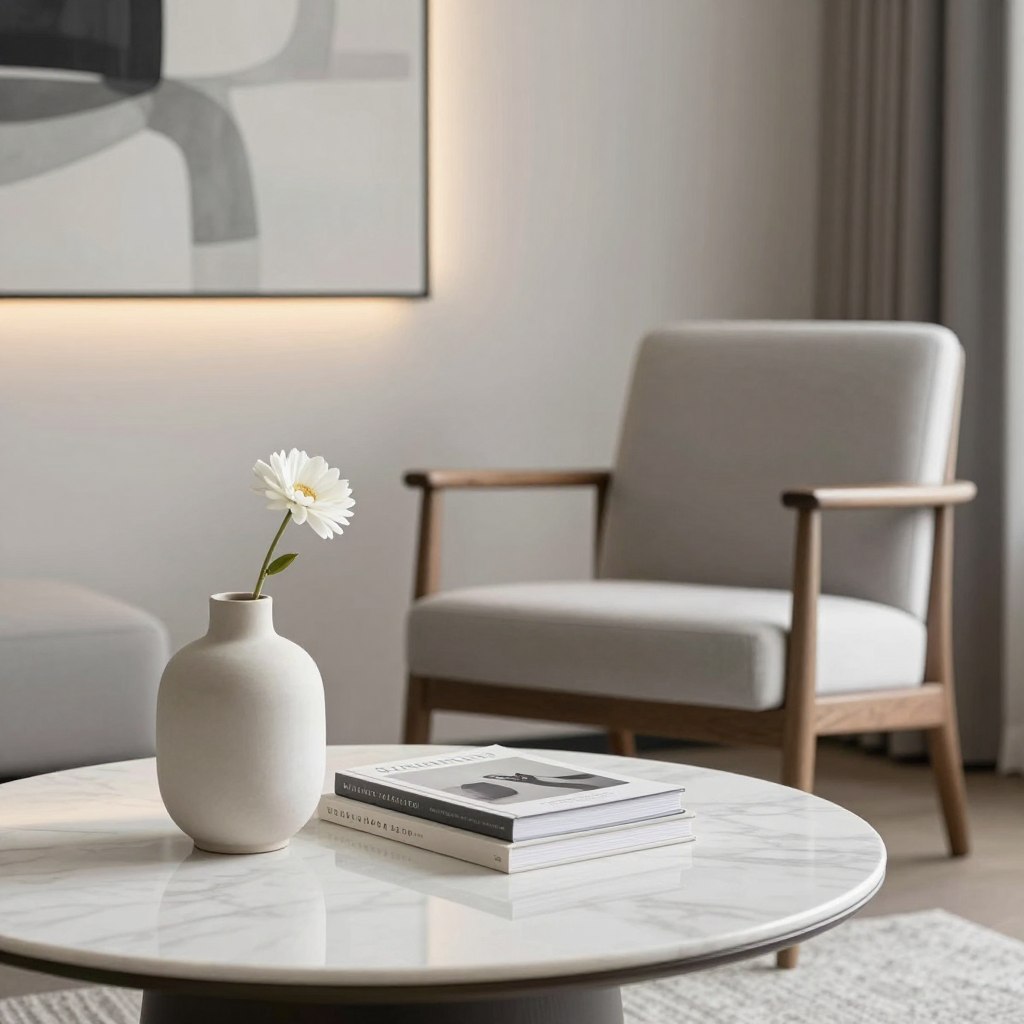
lamp at reading height. One object that can be moved easily (a candle, a small plant, a ceramic). Surface clear enough for a cup, a book, a pair of glasses. The restraint here is practical, not aesthetic. But restraint for practical reasons tends to look more considered than restraint chosen for appearance.
Don’t over-decorate a reading table. That’s the whole note.
What to buy: An adjustable arc floor lamp or a slim table lamp that positions light over the chair rather than just illuminating the table. Beside it, a small potted succulent or air plant that tolerates low light and requires almost no attention.
For rooms where a reading corner is part of a broader layout strategy, the rug selection guide for small living rooms covers anchoring the zone visually without closing it off.
8. Natural materials that anchor: stone, raw wood, ceramic
The most stable corner table arrangements share one quality: they’re grounded by material weight. A stone object at the base of a composition. A raw wooden vessel with visible grain. A ceramic with thickness and texture.
These don’t draw attention. They anchor. The arrangement above them can change; the material beneath stays constant, making the corner feel finished rather than styled. Designers call it “feeling finished” for a reason it usually traces back to one heavy, honest material at the center of a setup..
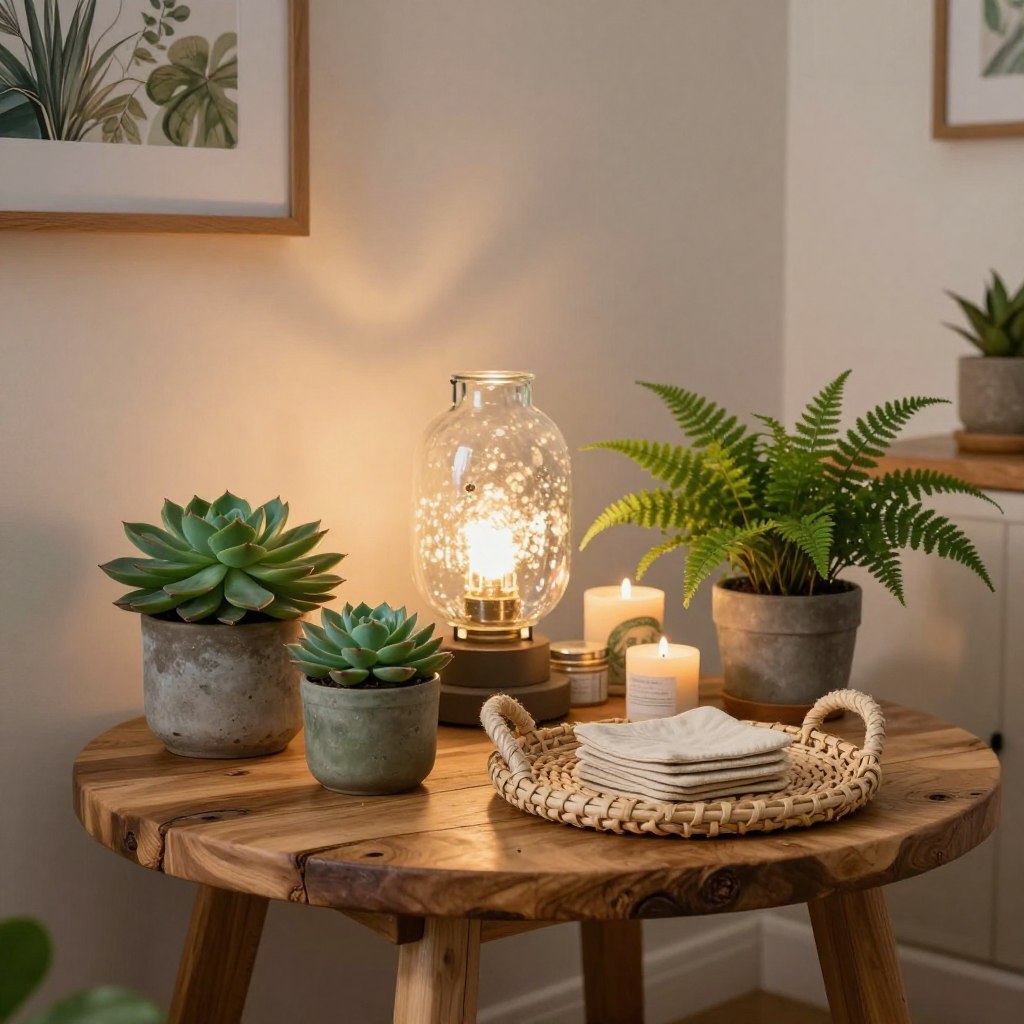
What to buy: A natural stone bookend or decorative object in marble, travertine, or river stone. Pair with a handmade ceramic bowl or vessel the irregularity in handmade pieces reads more natural than factory-perfect finishes.
9. Seasonal rotation: change one element, keep the rest
A corner table that evolves with the seasons doesn’t need a complete overhaul. Keep the table, the lamp, and the primary object constant. Change one element.
In spring, a small vase of cut stems. In autumn, a single dried branch or a darker ceramic. In winter, one candle with a longer burn time and a deeper color. The constancy makes the change legible the room registers the shift without feeling rearranged.
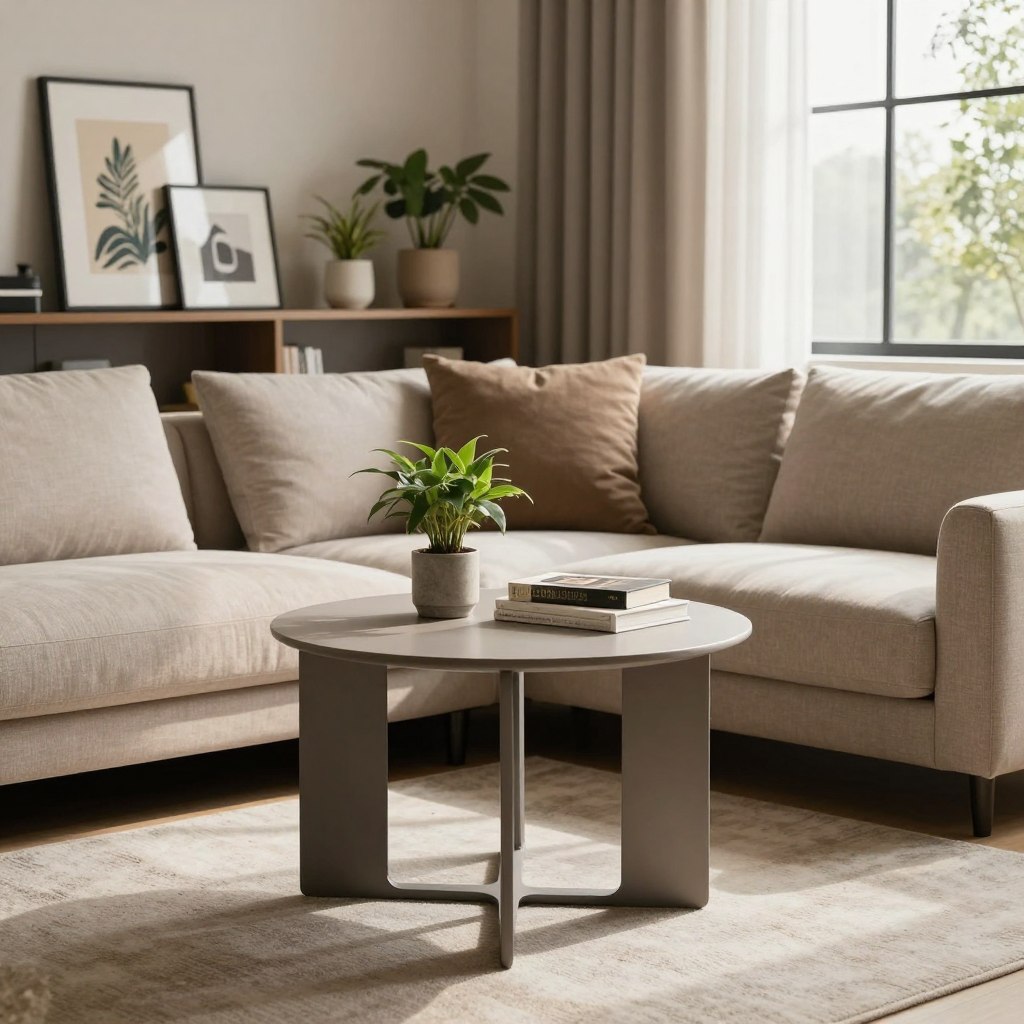
This works because stability and change are both present. The corner feels alive rather than static, without requiring you to rethink the whole setup four times a year.
10. Hidden tech: charging pad, speaker, no visible cords
A corner table that houses technology should hide the evidence. A wireless charging pad flush with the surface. A small Bluetooth speaker in a material that matches the table ceramic, fabric-wrapped, or wood. Cable management built into the table itself, or routed behind the wall.
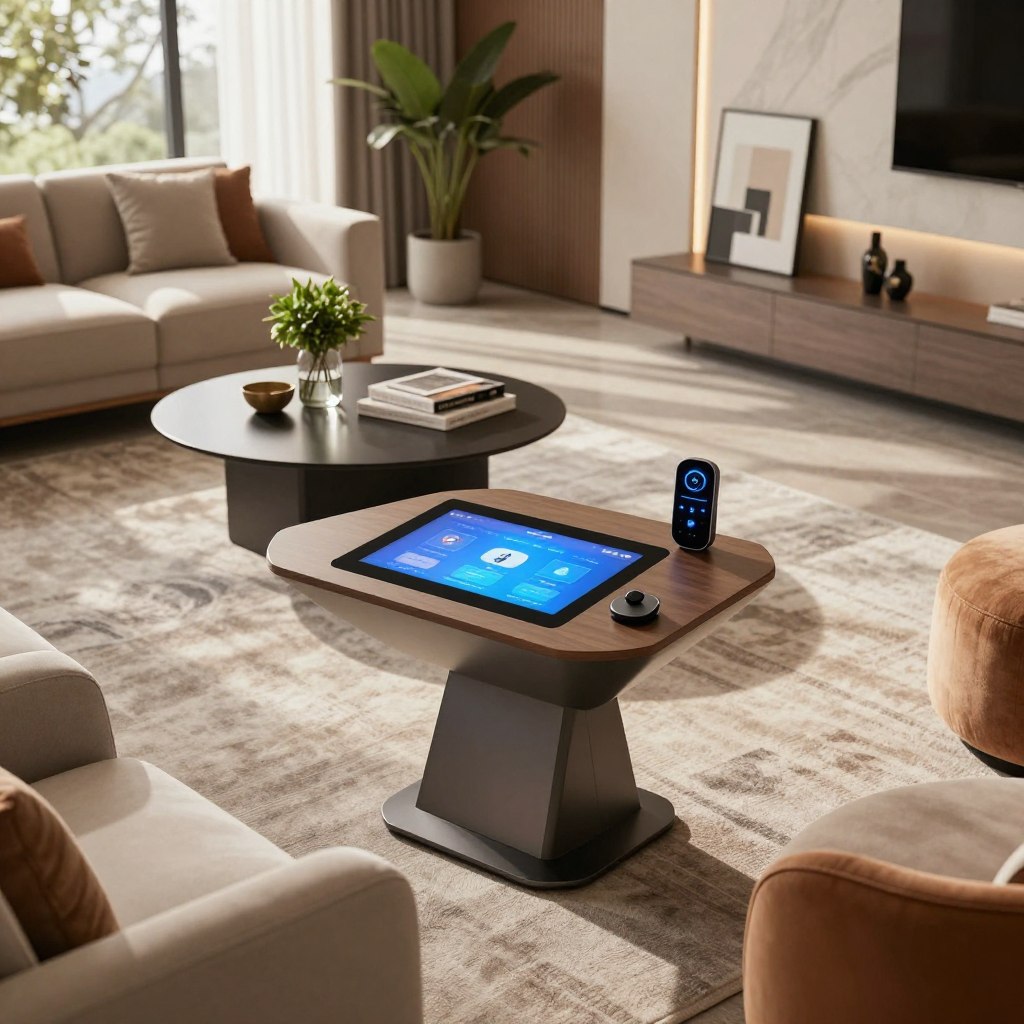
When the technology is invisible, the corner reads as calm. When it isn’t, the corner reads as cluttered regardless of what else is on it.
The test: if you can see a cord, the corner isn’t finished.
11. Three vessels, one color a small vase cluster
Three vessels of different heights, same color family, one section of the table. This is the cluster approach it reads as a deliberate still life rather than random objects sharing a surface.
The key is keeping the tones close. Three vases in white, cream, and pale grey create depth through variation without visual noise. Three vases in white, terracotta, and sage compete with each other instead.
It’s easier than it sounds. Buy one set, vary the shapes and heights, resist the urge to mix colors.
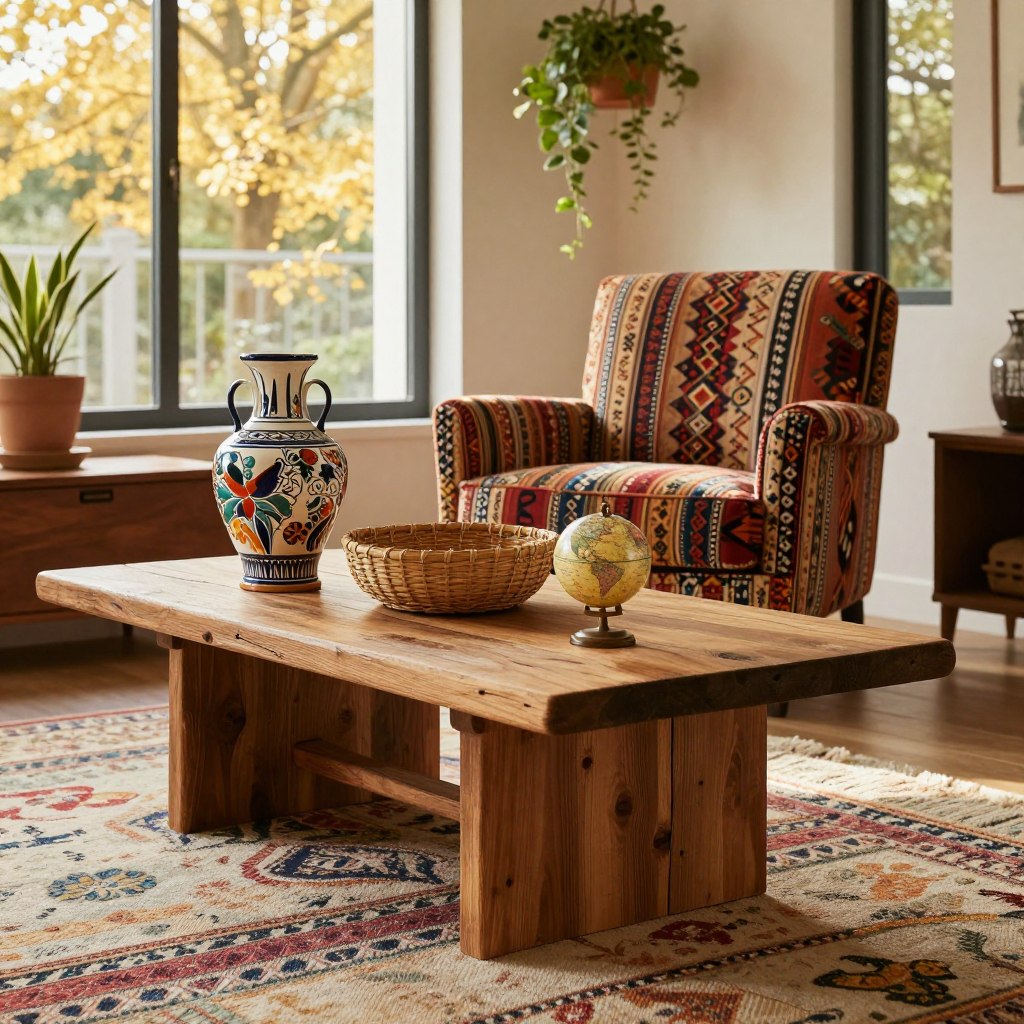
What to buy: A set of three ceramic bud vases in complementary shapes look for a squat wide one, a mid-height cylinder, and a slim tall one. Varying the silhouette while keeping the palette close is what makes the cluster feel composed.
12. A candle tray as the hero of the corner
A large candle tray one wide candle or three pillar candles at different heights on a tray can carry an entire corner table on its own. No plant, no additional objects. Just the tray, the candles, and the surface beneath them.
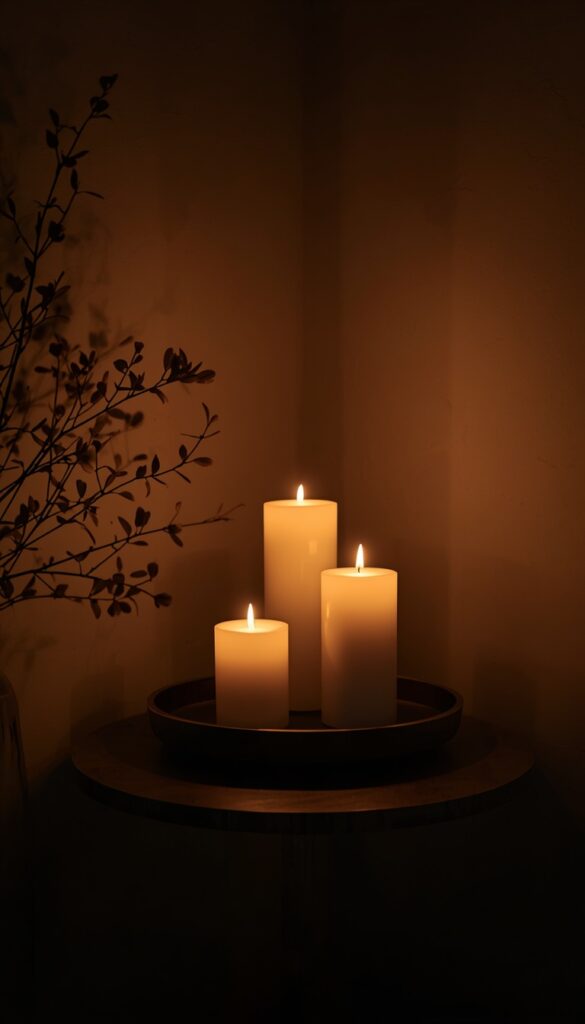
The rule here is the same as the tray setup: vary the heights within the tray. A short pillar, a medium pillar, a tall. Or a single thick church candle that fills the space without needing company.
This works particularly well in darker rooms or in autumn and winter, when the quality of light after dark matters more than what the corner looks like at noon.
What to buy: A wooden or slate candle tray in the 12–16 inch range to anchor the setup. For the candles themselves, unscented pillar candles in cream, ivory, or charcoal photograph well and don’t compete with other scents in the room.
13. An architectural object that needs no plant or book
Some corners don’t need to be softened. An object with a strong geometric form a sculptural vase with interesting proportions, a tall faceted ceramic, a single piece of driftwood can carry the corner on its own.
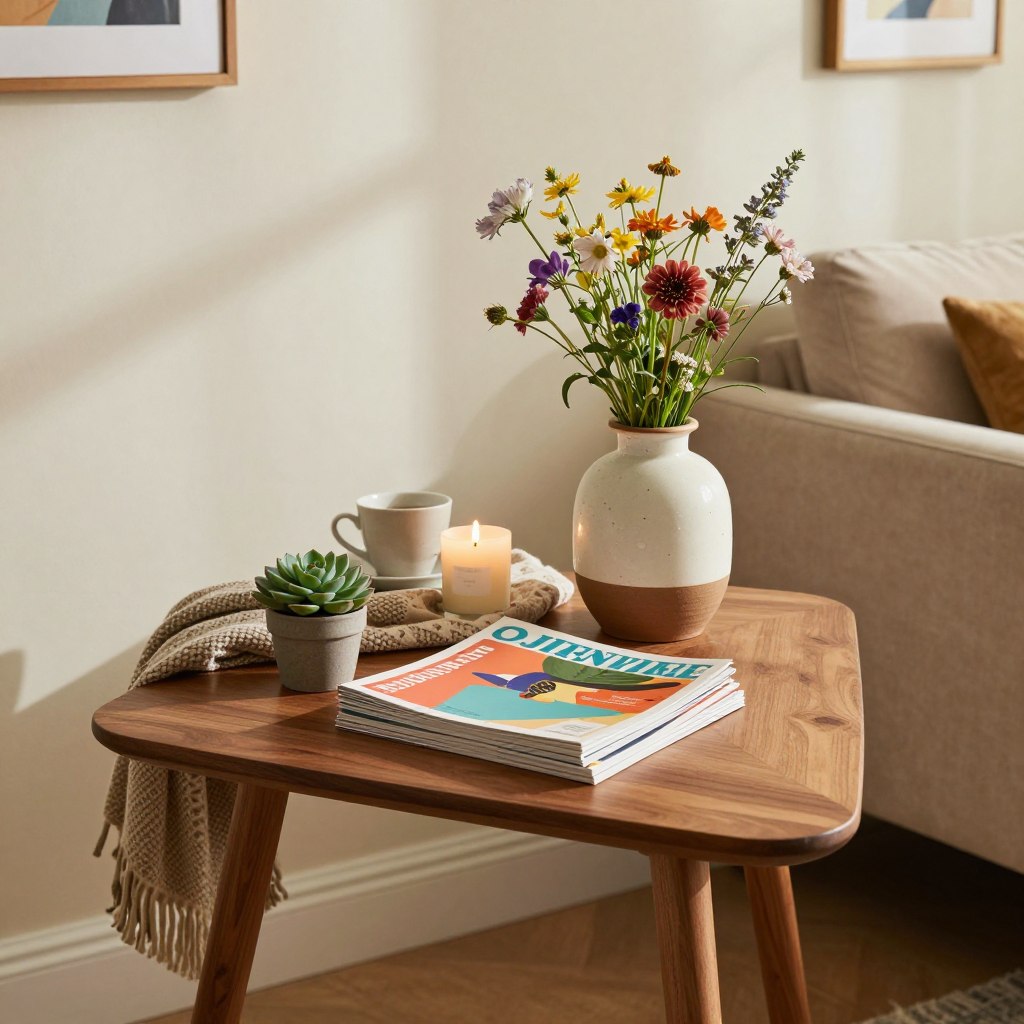
These are for rooms that already have warmth (soft rugs, linen upholstery, warm wood tones). The corner can afford to be a little harder and cleaner because the room around it supplies the warmth. Going architectural in an already-stark room tips into cold.
What to buy: A geometric or faceted ceramic vase in a matte finish, 12–18 inches tall. Or a natural driftwood decorative piece for rooms that lean organic and textural.
14. The blanket basket: functional and deliberately styled
A corner table doesn’t have to hold objects above its surface. A table beside a sofa or armchair can become a soft storage point a woven basket beneath or beside it holding extra throws, with one considered object on top.
The basket does something most styled corners don’t: it makes the corner feel useful. And objects that serve a purpose tend to look more at home than objects placed purely for effect.
What to buy: A woven seagrass or cotton rope basket with handles in the 14–18 inch diameter range — large enough to hold two or three folded throws without overflowing. On top of the table, a small ceramic candle holder or plant keeps the surface from looking forgotten.
15. The one-object minimalist corner when less is the point
Sometimes the right corner table decor idea is one object. Not “one object and a tray” or “one object and some books.” One object.
A large sculptural vase. A thick ceramic form. A single tall plant in a considered planter. The table, and the one thing that deserves to be on it.
This works in rooms where the rest of the space is doing a lot — busy textiles, a large sectional, multiple light sources. The corner becomes the room’s pause. One object, full stop.
What to buy: This is the setup where quality matters most, because the single object carries everything. A statement ceramic vessel in the 12–20 inch height range look for interesting texture or form rather than color. Or a large succulent in a concrete planter for rooms that want life without complexity.
Choosing the right corner table for the space
The table itself matters before any styling decision. An undersize table for the corner it’s in will always look uncertain, regardless of what’s on it.
Round vs. square: which shape works where
Round tables work in tighter corners and beside upholstered seating the lack of sharp edges makes them feel friendlier in close proximity to a sofa or armchair. Square and rectangular tables read more architectural, better suited to rooms with clear geometric lines and harder surfaces.
If the corner sits between two pieces of upholstered furniture, round. If it anchors one side of a clean-lined sectional or sits against a panelled wall, square or rectangular.
Table height and your sofa armrest
Most people buy corner tables that are too short. The surface should align with or sit just below the armrest of the nearest seating typically 22 to 28 inches from the floor. Below that, anything on the table reads as floor-level. Above it, the table blocks the sightline from the sofa.
Measure before you buy. The difference between a table that works and one that looks wrong is often two or three inches.
The moment to stop adding things
Every corner table has a version where it works and a version where it’s one object too many.
The way to find the right version: remove one thing. If the corner looks better, it had one thing too many. If it looks incomplete, put it back. Most people can feel when a surface is overloaded trusting that instinct rather than overriding it with the urge to fill is the whole skill.
A corner that does one thing well is more memorable than a corner that does six things adequately. Choose the one thing. Let the corner be that.
What do you put on a corner table in the living room?
The strongest corner table setups use three heights: one tall element (a lamp or plant), one mid-height object (a ceramic vessel or candle), and one low item (a tray or book). Keep the surface restrained three elements maximum. Everything beyond that starts to compete.
How tall should a lamp be on a corner table?
A corner table lamp should have its shade bottom sit at roughly eye level when seated typically 58 to 64 inches total height from the floor, including the table. If the table is 24 inches tall, look for a lamp base around 28 to 32 inches, giving a combined height of 52 to 56 inches.”
How do you decorate a small corner table?
For a small corner table, the one-object rule works best. Pick one statement piece a plant in a good planter, a single sculptural ceramic, or a lamp with a strong base and leave the rest of the surface clear. A small table with one intentional object reads better than the same table crowded with three.”
What looks good in a living room corner with no table?
Without a table, a corner works best with a tall floor lamp, a large plant in a statement planter, a decorative ladder, or a combination of floor lamp and plant at different heights. The key is vertical reach a corner without a table needs at least one element that gets toward 60 inches or above, otherwise the space reads as empty rather than minimal.”
Simplyjang participates in the Amazon Associates program. Some links in this article may earn a small commission if you make a purchase, at no additional cost to you. Products are selected based on relevance to the ideas described.