
I’m excited to share the world of indoor-outdoor kitchen design with you. It turns your home into one big living area. Here, cooking and entertaining blend smoothly from inside to outside.
Indoor-outdoor living is a hit with those who love to entertain and enjoy the outdoors. It extends your kitchen outdoors, making hosting easier and more fun for all.
So, why do people love indoor-outdoor kitchen design? It’s all about mixing function with lifestyle. You get the cozy feel of indoors with the fresh air of outdoors. It fits many budgets and home styles, making it accessible to many.
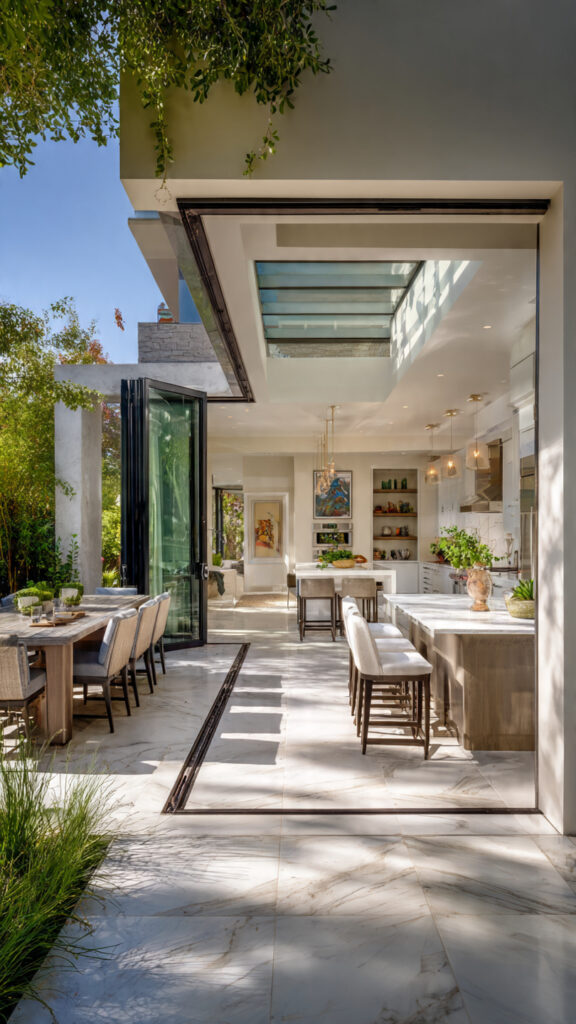
In this guide, I’ll cover all the bases. We’ll talk about planning, choosing materials, and adding transition elements. You’ll learn about flooring, colors, weatherproofing, and lighting.
My aim is to show you that indoor-outdoor living is not just possible. It’s a great way to make your home more enjoyable every day.
Why Indoor-Outdoor Kitchen Design Is Transforming Modern Homes
In recent years, how Americans use their homes has changed a lot. People now want kitchens that flow easily from inside to outside. This change is one of the most exciting trends in kitchen design today.
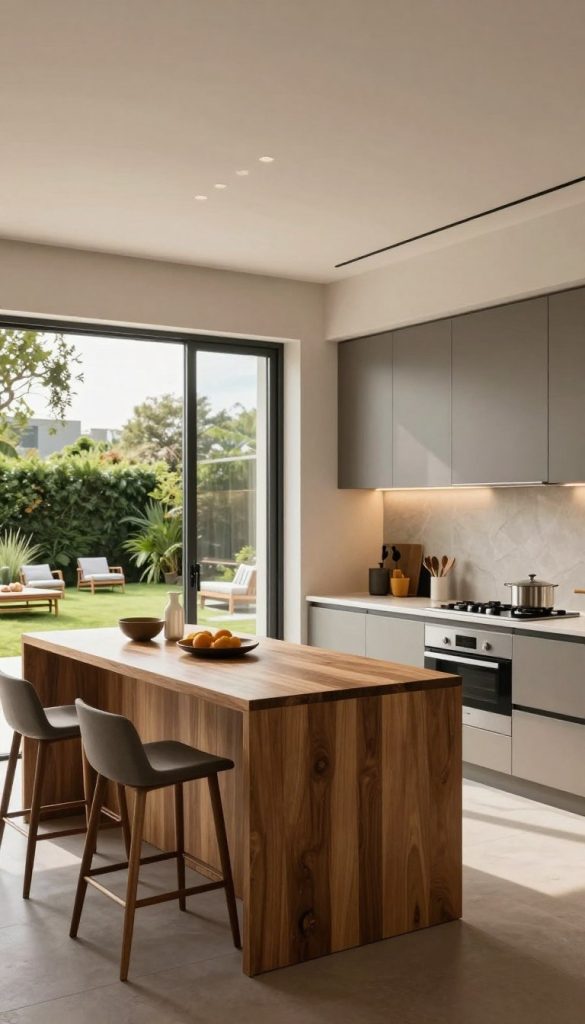
There’s a big reason for this shift. Homeowners find that combining indoor and outdoor kitchens makes their living space bigger. Imagine having dinner parties where guests move easily between inside and outside. This makes family time and entertaining more enjoyable.
Modern kitchen design has made this possible. Now, we have bigger glass doors, retractable walls, and weather resistant materials. These features help create spaces that feel connected, not separate. When you look at current trends, you’ll see that the lines between inside and outside are blurred. Materials, colors, and lighting all work together to enhance both areas.
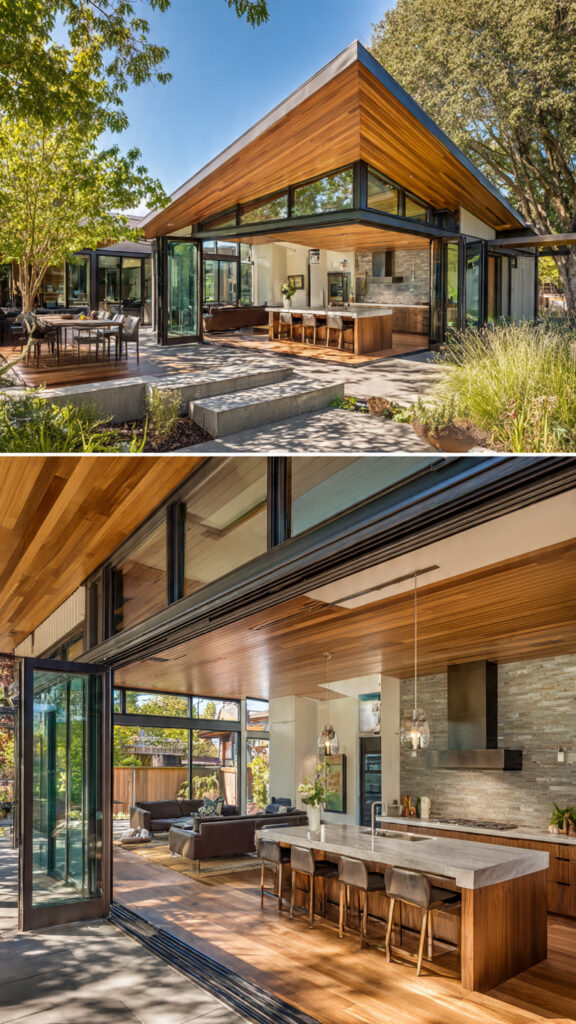
This design not only improves lifestyle but also adds value to homes. Properties with great indoor outdoor kitchen spaces sell for more. Buyers love the extra space for entertaining and the better quality of life. To learn more about implementing these ideas, check out the top kitchen trends for 2026. This design shift is more than a trend. It shows how Americans want to live now and in the future.
Planning Your Space: Essential Considerations Before You Start
Before starting your indoor-outdoor kitchen, take a good look at what you have. Walk around your home and see how people move. Notice the traffic patterns in your kitchen and living areas.
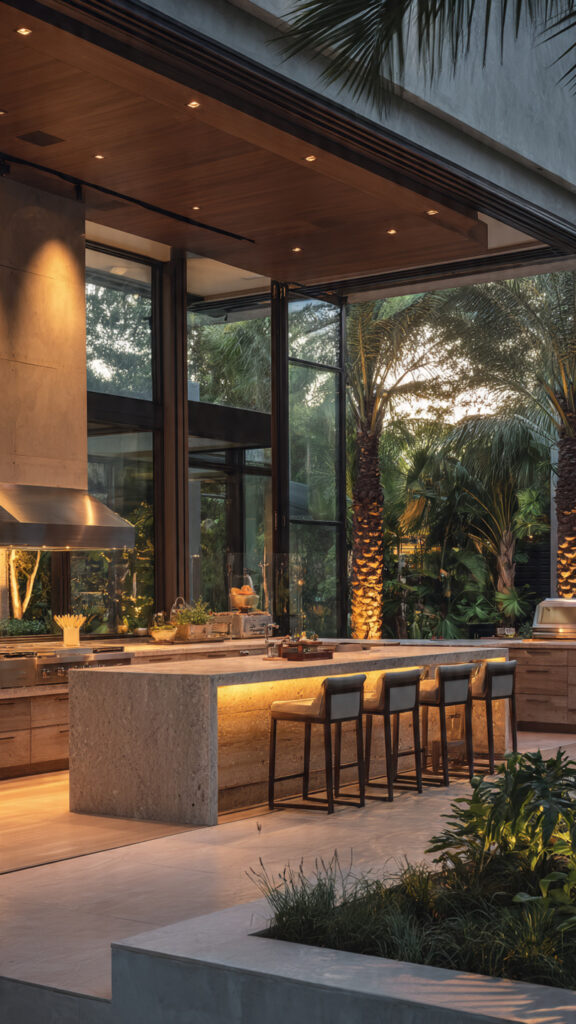
Think about where your family likes to gather. How do they use different rooms during the day? This helps you create a flow that feels right for your lifestyle.
Next, imagine what you want your outdoor space to be like. Do you want to host dinner parties under the stars? Or will it be for quick coffee or weekend cookouts? Your answers will guide every decision.
Consider if you need the same appliances inside and out. Or if some functions can move between spaces. The goal is to match your design to your real life habits, not ideal ones.
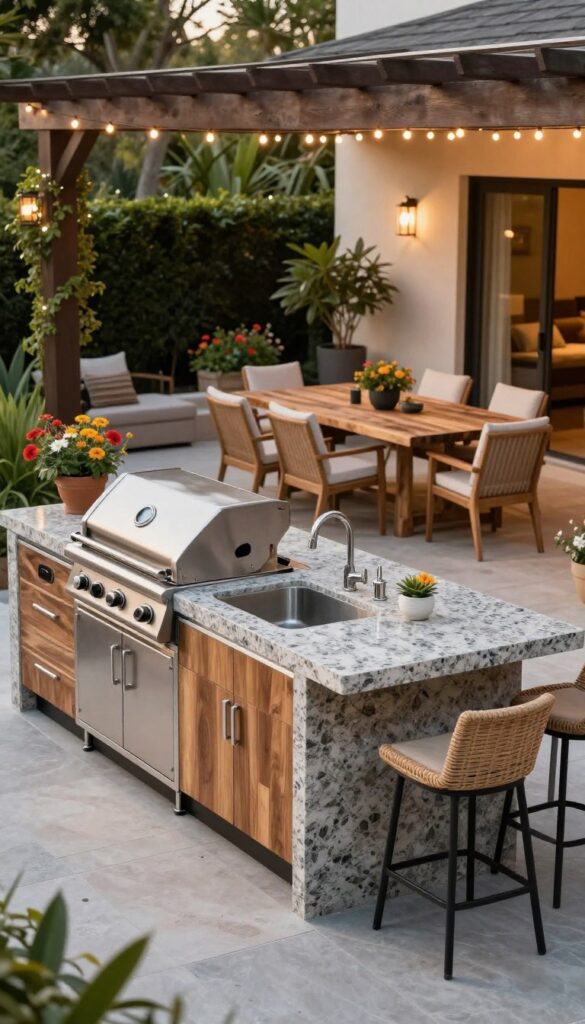
Climate and weather are key. If it rains a lot, you’ll need different solutions than someone in a dry area. Check local zoning and permits early. Many places have rules on where and how you can build your outdoor kitchen.
Utility connections are crucial. Plan where water, gas, and electricity will reach your kitchen. These details affect layout and cost. Think about how your indoor and outdoor spaces will look together.
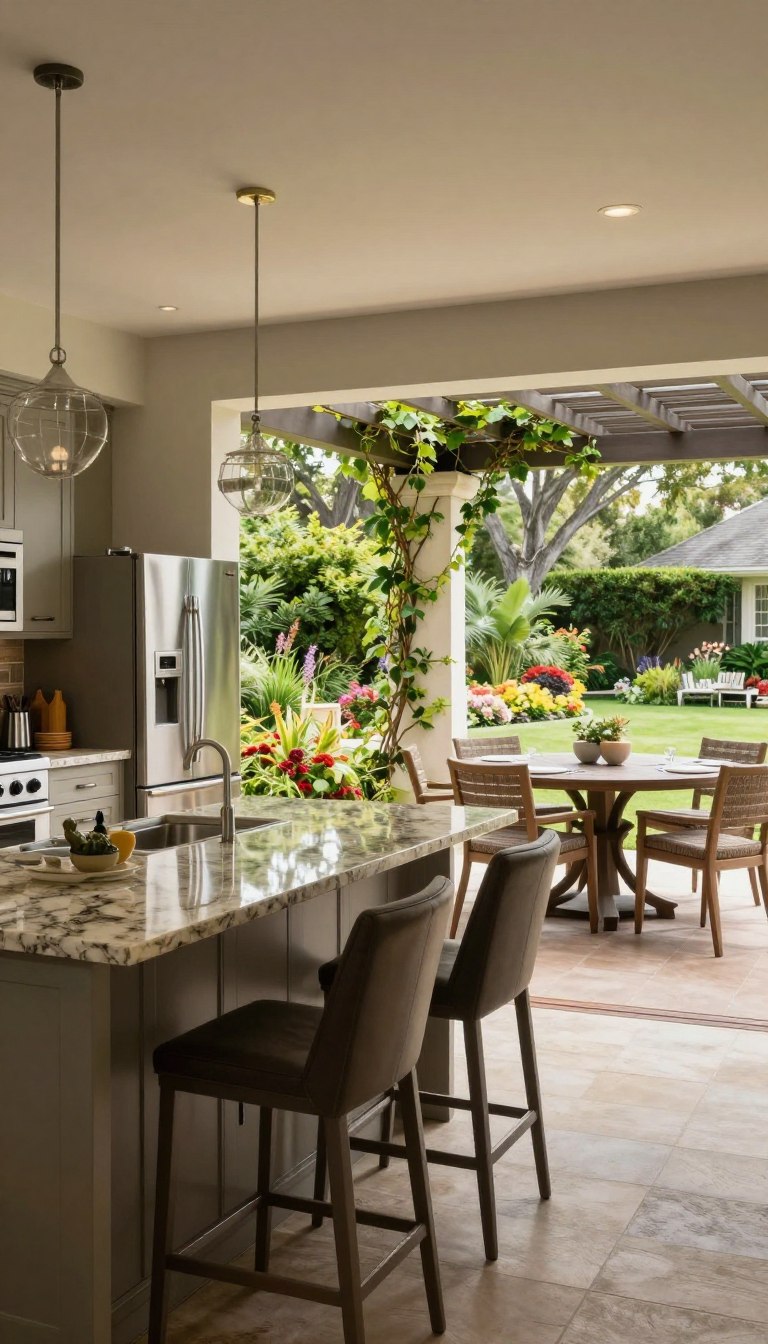
Positioning is important. The island acts as a hub that connects cooking to living. Make sure your spaces look connected through glass doors and windows.
Choosing the Right Flooring to Connect Your Spaces
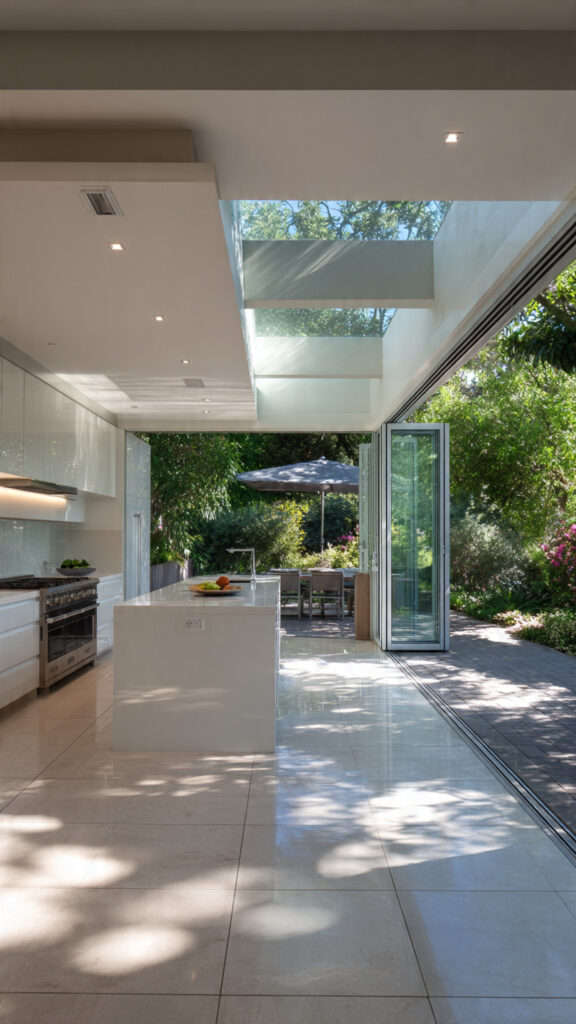
Flooring is key in making your indoor outdoor kitchen look like one space. The right floor material can tie your open concept kitchen together. When indoor and outdoor floors match, your eyes move smoothly from one area to the next.
Large-format porcelain tile is great for both inside and outside. It comes in many finishes and colors, looking like natural stone or wood. Engineered hardwood adds warmth indoors and can match outdoor materials. For those on a budget, luxury vinyl plank is water-resistant and durable, yet affordable.
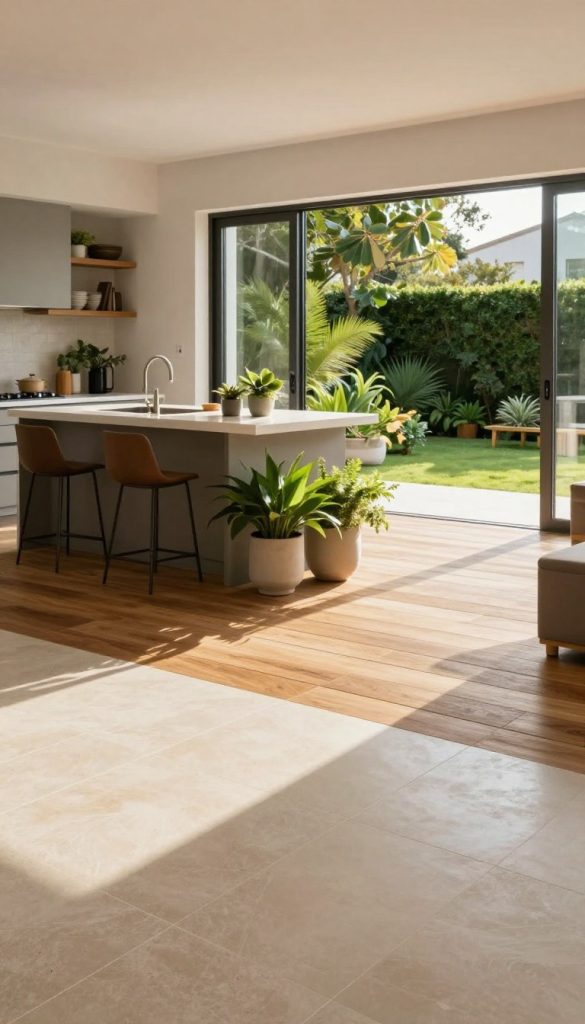
Choosing the right colors and textures is as important as the material. Use the same tones indoors and outdoors to keep the look flowing. When you look at open kitchen renovation ideas, you’ll see how matching floors create a seamless look.
Don’t forget about practical needs. Outdoor areas need slip-resistant floors to prevent slips when wet. Make sure threshold heights are low to avoid tripping. Also, ensure proper grading and waterproofing to prevent water damage. Talk to your installer about transition strips that are safe and work with your materials.
These flooring choices are the base of a successful indoor-outdoor kitchen design.
Creating Visual Continuity with Materials and Color Schemes
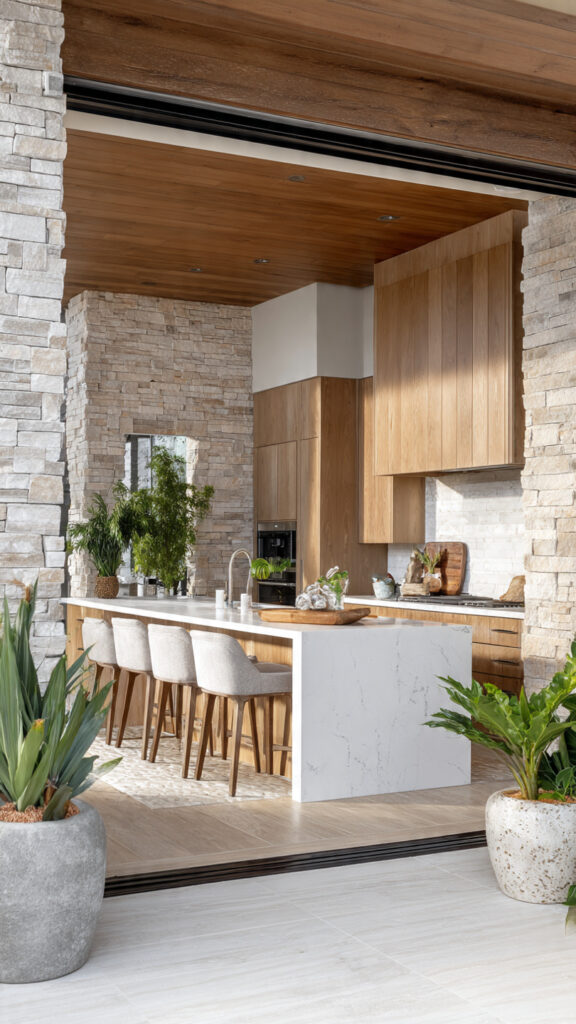
When designing a modern kitchen, I aim for a seamless transition from indoors to outdoors. I choose materials and colors that complement each other in both spaces. It’s not about matching everything exactly it’s about creating a harmonious relationship.
I select cabinetry materials that can handle outdoor conditions while maintaining a cohesive look. Stainless steel cabinets are a great choice as they resist rust and weathering. Marine grade polymer and treated wood options allow me to match indoor aesthetics while withstanding the elements. In luxury kitchen designs, I opt for finishes that exude sophistication and durability.
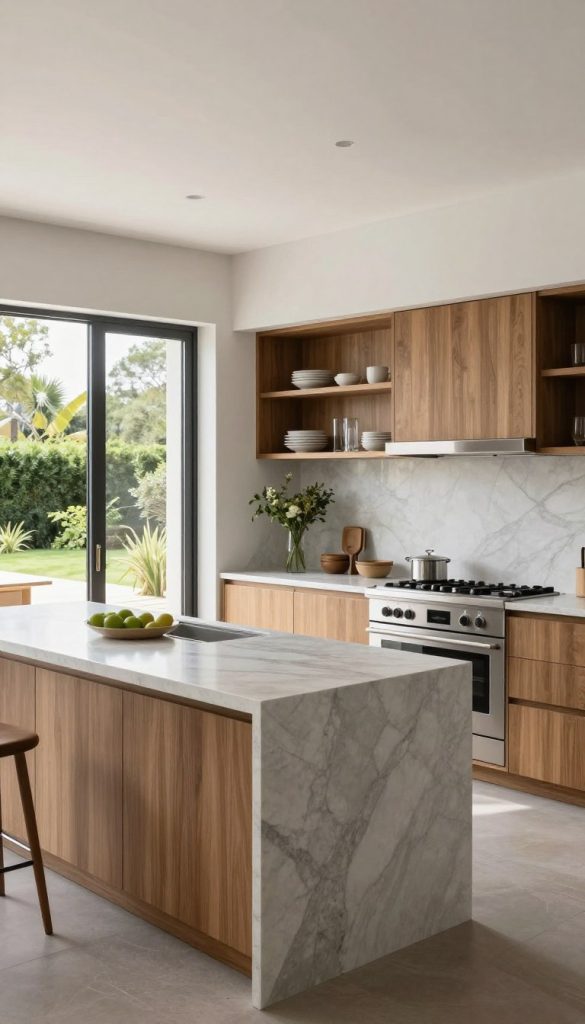
Color schemes are also crucial. I might use the same palette in both spaces or create a complementary scheme for the outdoors. Granite and quartzite countertops bring elegance to any kitchen. Concrete adds a modern touch if that’s what I envision.
Hardware finishes, lighting fixtures, and decorative elements should match between spaces. I incorporate natural materials like stone and wood to beautifully connect indoor and outdoor areas. In kitchens without windows or in tight spaces, I use strategies from kitchen designs without windows to enhance visual flow. Reflective surfaces and layered lighting work well in both areas.
Plants add warmth and connection to both spaces. I use the same wood tones or stone finishes across the transition zone. This creates a visual rhythm without needing everything to be identical.
Installing Transition Elements That Blur the Boundaries
To create a smooth indoor outdoor flow, planning is key. The right door and window systems are crucial. Options like folding glass walls and sliding pocket doors can blend into your walls.
These choices allow you to open your kitchen fully when it’s nice outside. They also keep your kitchen functional when the weather isn’t great.
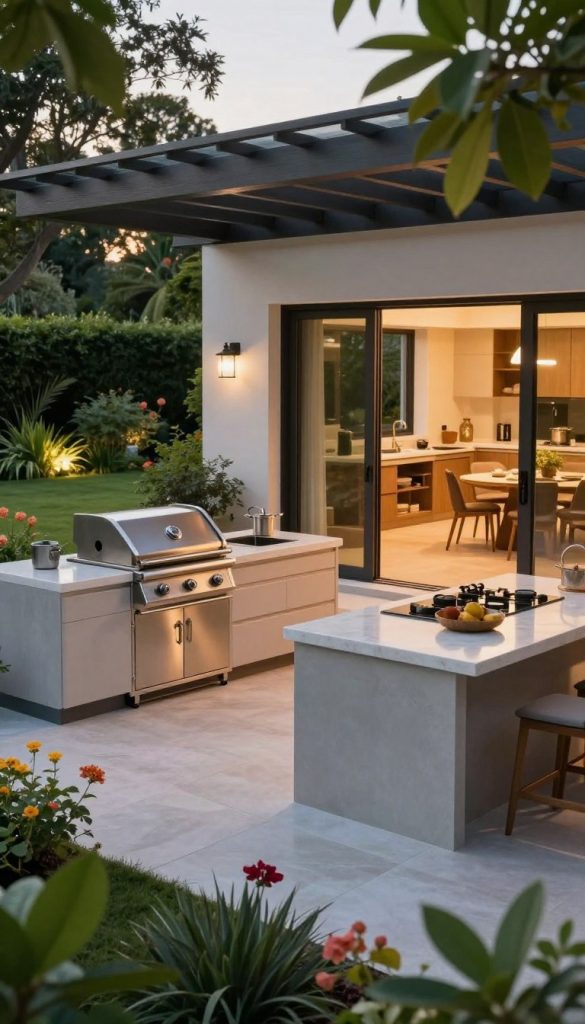
Creating a “middle space” between indoors and outdoors is also smart. Covered patios, loggias, and pergolas act as buffer zones. They extend your kitchen’s area.
Architectural features like extended rooflines and awnings offer shelter. They keep your space open and airy. This way, you can enjoy outdoor kitchen ideas without being too exposed to the weather.
Pass-through windows and serving hatches are practical too. They let you interact and serve food even with doors closed. Extending your kitchen island from inside to outside creates a continuous countertop.
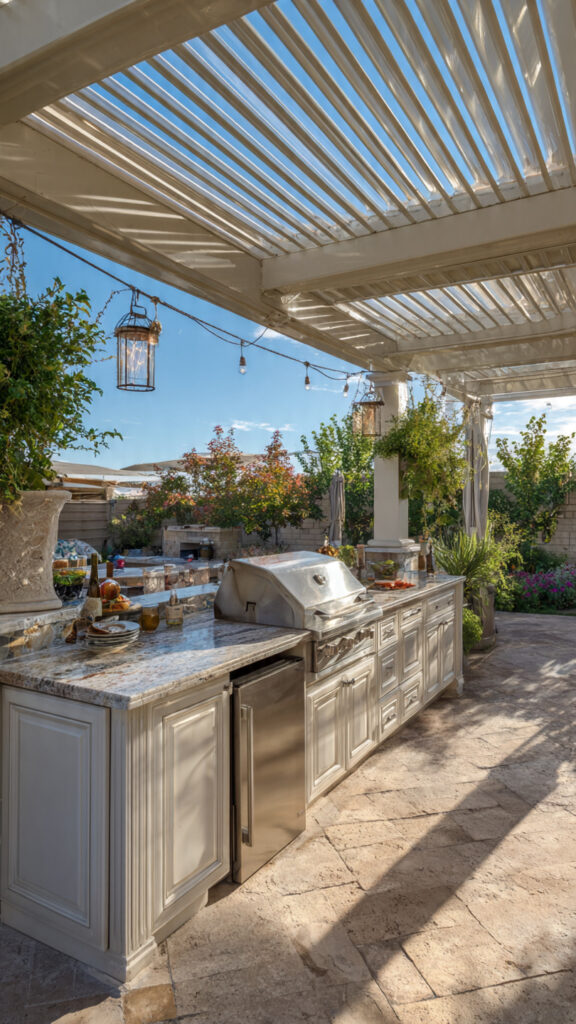
Matching backsplashes on both sides of the wall add to the visual unity. For climate control, consider screen systems and strategic opening placement. When designing long narrow kitchens with indoor-outdoor flow, balance openness with temperature management.
Mobile islands and fold down work surfaces help keep pathways open. They also increase your prep areas during parties.
Weatherproofing Your Outdoor Kitchen Without Sacrificing Style
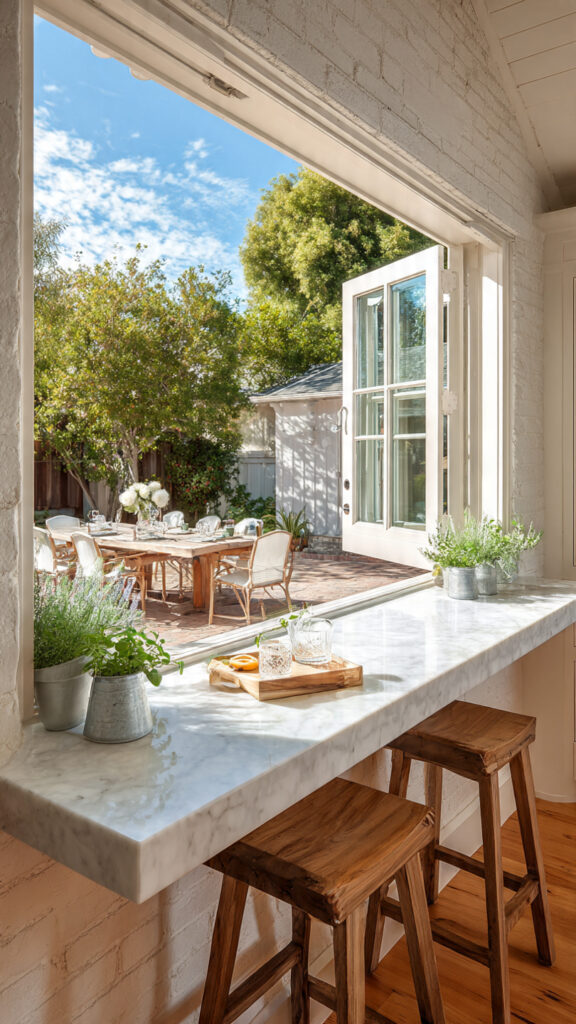
Protecting your outdoor kitchen from the weather can seem tough. But, today’s weatherproofing solutions keep your space safe and stylish. You don’t have to hide your design with ugly covers.
When picking appliances, choose outdoor-rated ones from brands like Weber and Lynx. These grills and fridges can handle rain, sun, and temperature changes. Indoor appliances won’t last long outside.
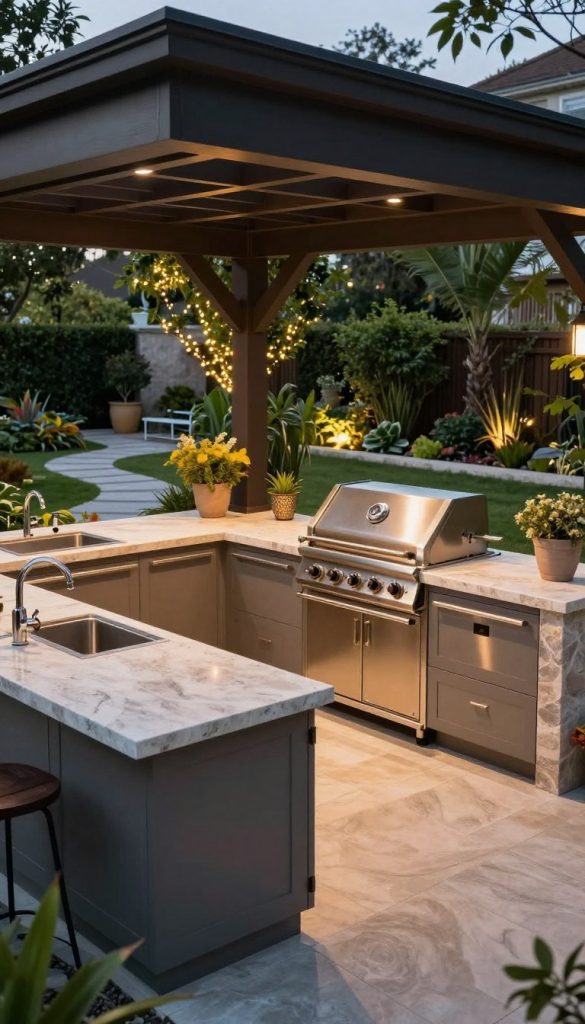
Adding protective structures makes your outdoor space great all year. Adjustable pergolas, retractable awnings, and pavilions block up to 90% of UV rays. They keep your equipment and guests safe from the sun.
Electrical safety is key in outdoor kitchens. Use GFCI outlets and hire pros for wiring. Seal countertops yearly and clean furniture often. Move delicate items inside when it’s bad weather. Use infrared patio heaters to stay warm in cooler months. Learn more about stylish rooftop terrace ideas for inspiration. Regular maintenance keeps your space looking good and protects your investment.
Lighting Design Strategies for Day to Night Functionality
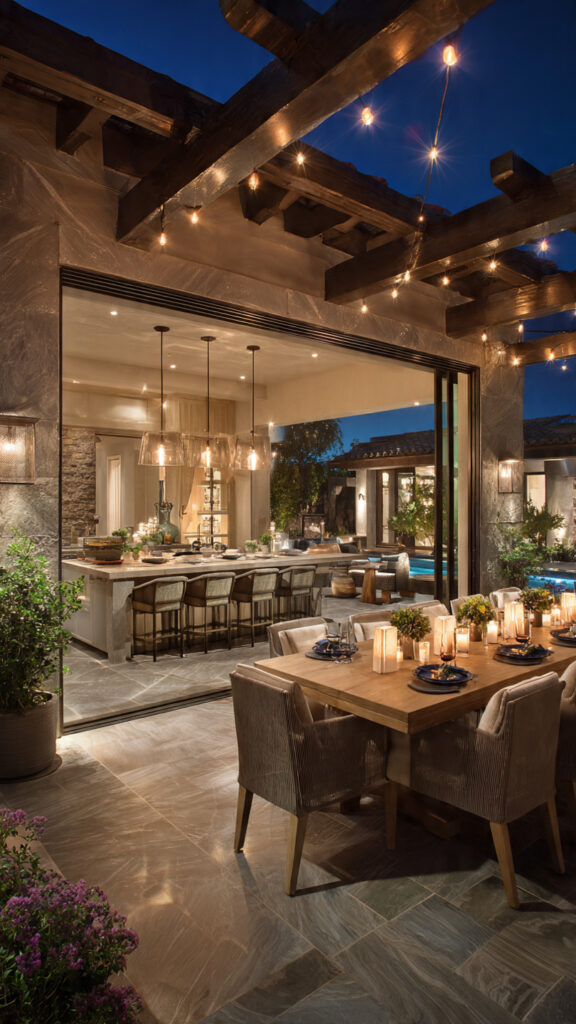
Good lighting design is key for indoor and outdoor kitchen spaces. Smart lighting is a big trend now. Your kitchen should be perfect for morning coffee or evening gatherings.
Layering your lighting is crucial. You need task lighting for cooking, ambient lighting for brightness, and accent lighting for style.
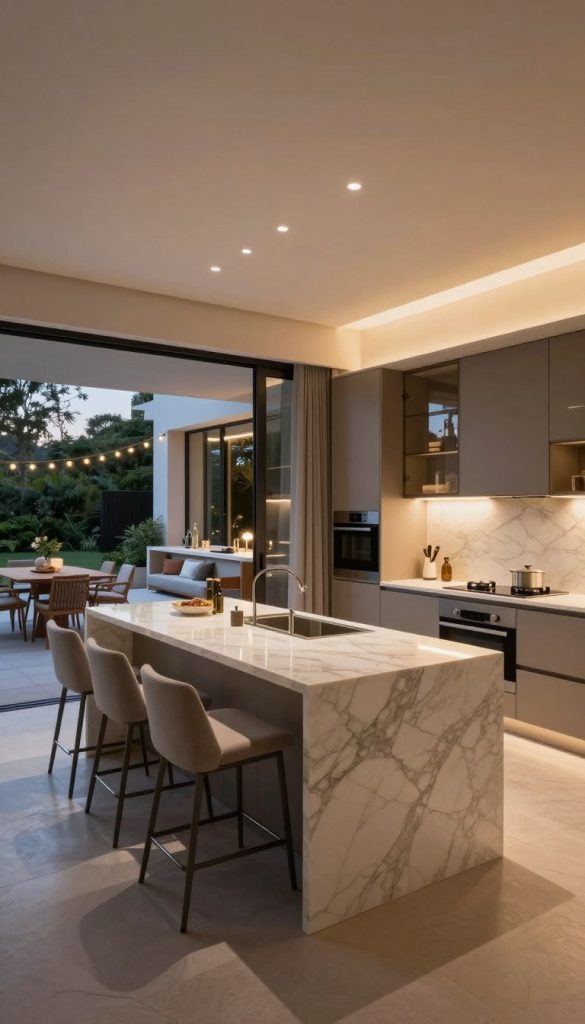
When designing luxury kitchens, I aim for a unified look. Use recessed ceiling lights, pendant fixtures, and under-cabinet LEDs that match your style. Choose outdoor rated versions to keep the look consistent.
A multi-layer lighting approach with warm colors and dimmable options keeps spaces bright at night.
Smart lighting systems are a game changer. They let you control both indoor and outdoor spaces from one app. LED technology saves energy and offers color flexibility. Weatherproof switches and proper placement prevent glare.
Don’t forget decorative touches for warmth. String lights, lanterns, and fireplaces extend your kitchen’s use into the night. Matching fixture styles and lighting tones creates a seamless experience.
Conclusion
Creating an indoor-outdoor kitchen design is about making a space that fits your life. You’ve learned how to plan, choose materials, and link indoor and outdoor areas. These steps will shape your home use for years.
Start with a solid plan before you begin. Think about what you need in your kitchen. Do you want to cook outside? Do you need protection from rain? Should your floors match inside and out?
These choices guide your whole project. If you’re making big changes, talk to a pro. They can help avoid costly mistakes.
Remember, your kitchen design doesn’t have to be expensive. Small changes can make a big difference. Try fresh paint, new lighting, or flooring upgrades. Brands like Trex and Weathertech offer affordable options.
Your design should reflect you, not a showroom. This investment adds value to your home. You’ll have better parties and enjoy more time outside.
Your daily life will improve with easy indoor-outdoor movement. I encourage you to start planning today. Gather your ideas and begin building your dream kitchen. You have everything you need to create something beautiful and functional.