
Updated May 2026 · This post contains affiliate links. We earn a small commission on Amazon purchases at no extra cost to you..
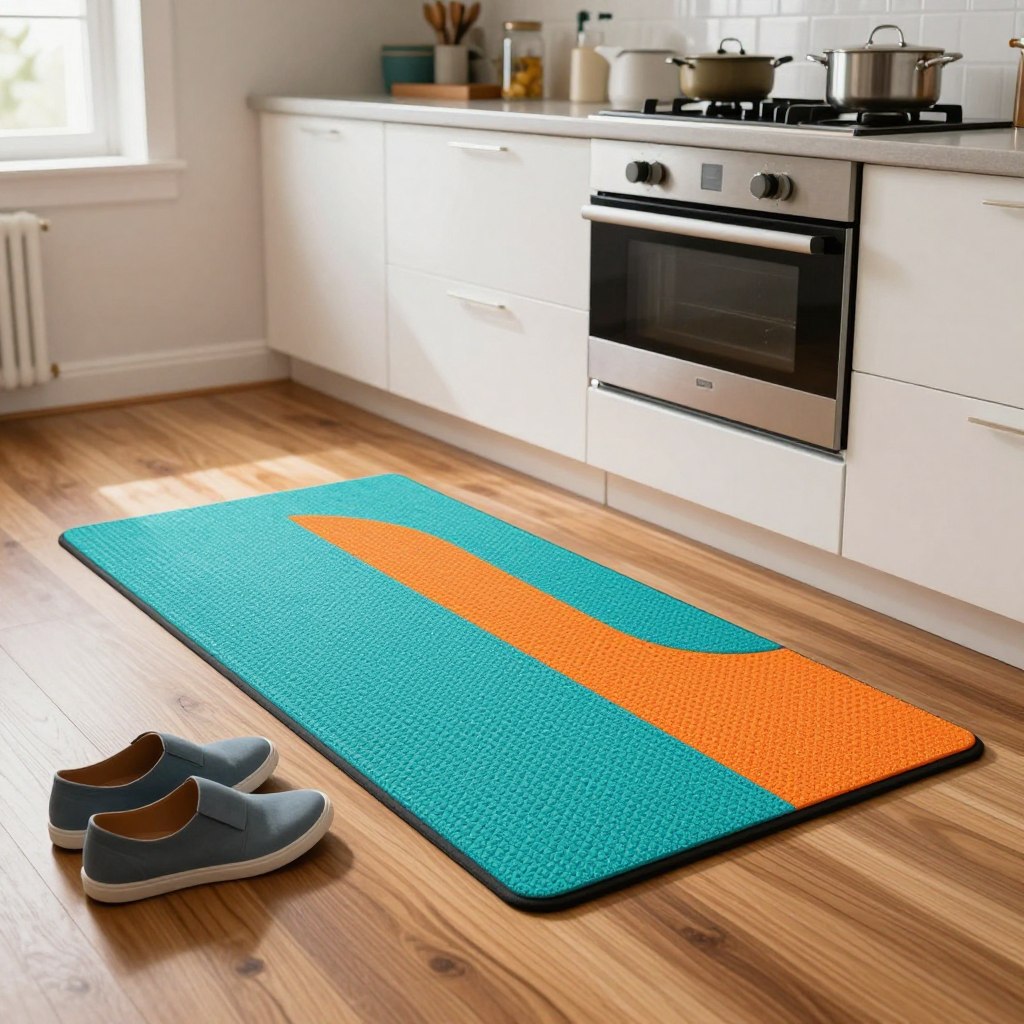
If you spend any real time cooking, you know what your feet feel like after 45 minutes on hard tile. That low dull ache in your heels. The tension creeping up through your calves. A good anti-fatigue kitchen mat solves this and the best ones are well under $50 on Amazon.
The good news: the best anti-fatigue kitchen mat for most home cooks is available for well under $50 on Amazon. You don’t need to spend $120 to get real relief. This guide covers the 6 best options we’ve found, what each one is actually good for, where it falls short, and which one fits your kitchen.
What is the best anti-fatigue kitchen mat? For most people, the ComfiLife Anti-Fatigue Floor Mat. It’s 3/4 inch thick, holds its shape over time, and the non-slip backing doesn’t budge on tile or hardwood. But read on depending on your kitchen and how you cook, one of the other five picks might be the better call.
Quick Picks: Best Anti-Fatigue Kitchen Mats 2026
| Mat | Best For | Thickness | Price |
|---|---|---|---|
| KitchenClouds ComfiLife | Best Overall | 0.75 in | Under $50 |
| KMAT 2-Piece Set | Best Budget | 0.6 in | Under $30 |
| Gorilla Grip Mat | Most Durable | 0.5–0.75 in | Under $50 |
| House of Mattitude | Best for Style | 0.75 in | Under $50 |
| ComfiLife Floor Mat | Best Cushioning | 0.75 in | Under $50 |
| KANGAROO Mat | Best Texture | 0.7 in | Under $50 |
Why anti-fatigue kitchen mats are worth it (and when they’re not)
How anti-fatigue mats reduce standing fatigue
Standing on a hard floor forces the muscles in your feet and legs into static tension. They’re not moving, just bracing. That’s actually more exhausting than walking, because walking keeps blood circulating standing still doesn’t.
Anti-fatigue mats work by introducing slight instability. The foam surface is soft enough that your foot muscles make small, constant micro-adjustments to stay balanced. Those tiny movements keep circulation going and reduce the sustained load on your joints. It’s subtle. But after a few days of cooking with one, stepping back onto bare tile feels noticeably worse.
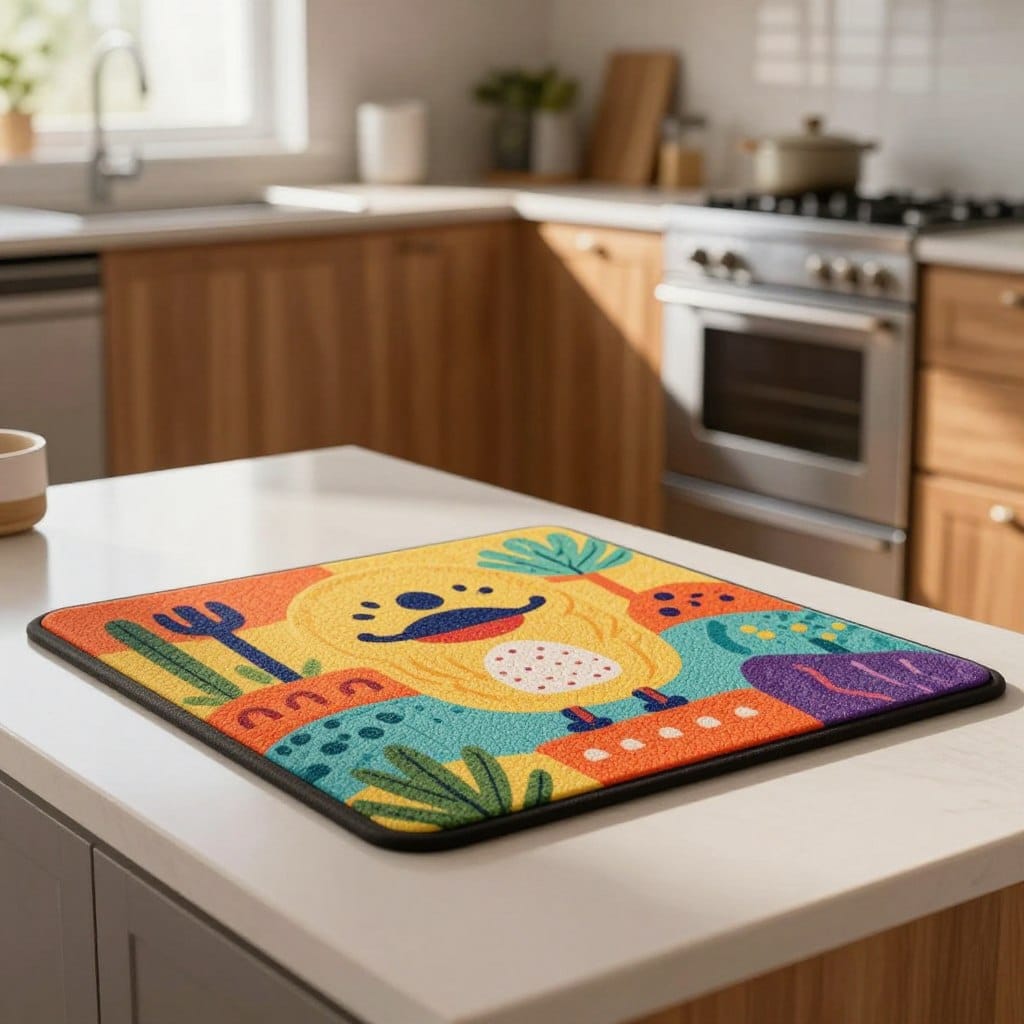
That said, they’re not magic. If you have a serious foot or back condition, a kitchen mat alone won’t fix it. And if you’re only in the kitchen for 10 minutes at a time, you probably won’t notice a difference either way. The benefit is real and worth having but calibrate expectations accordingly.
What $50 can actually get you (vs $100+)
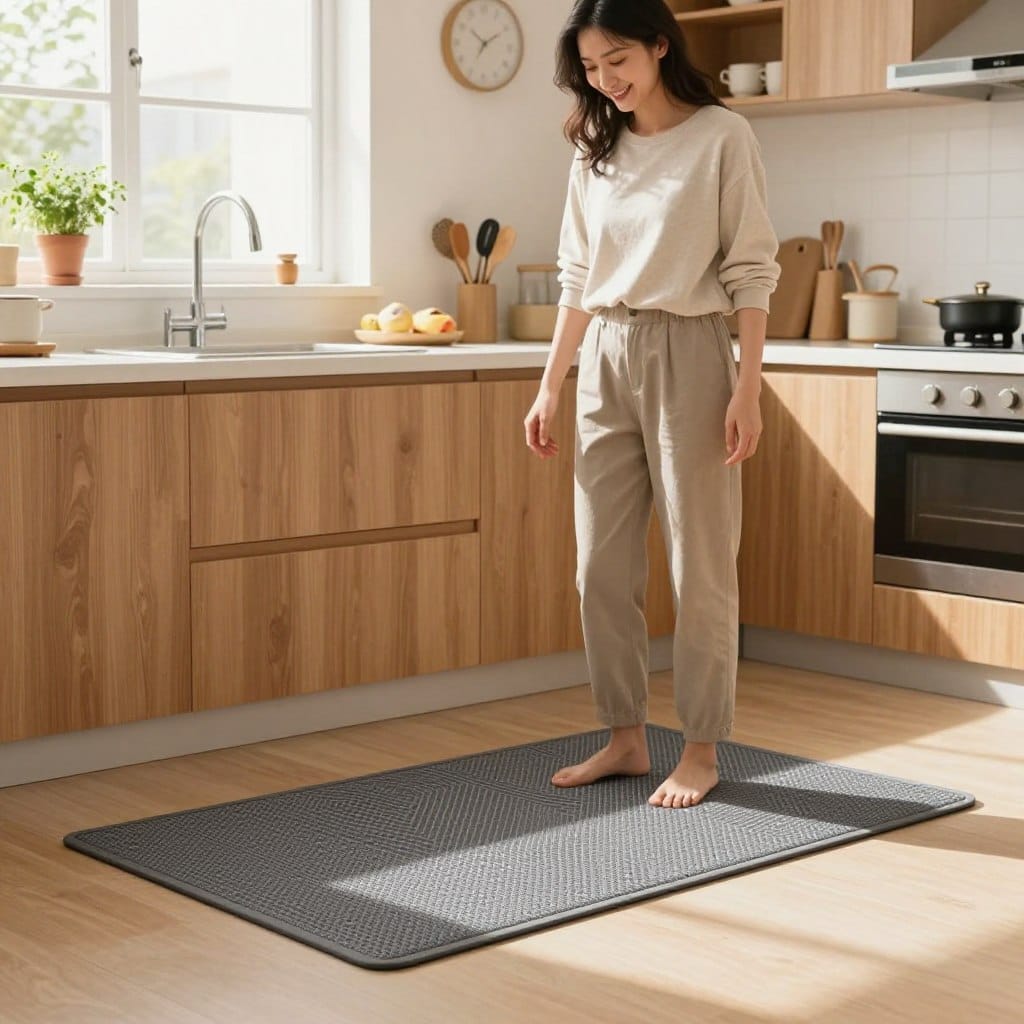
Quite a lot, honestly.
The difference between a $40 mat and a $120 mat is mostly material grade and warranty. In the $40 range you get 3/4-inch foam that genuinely works, a decent non-slip bottom, and a mat that will last 2 to 3 years with normal use. The $120 range (GelPro, Topo) gives you better foam density, more complex ergonomic profiles, and sometimes a longer warranty
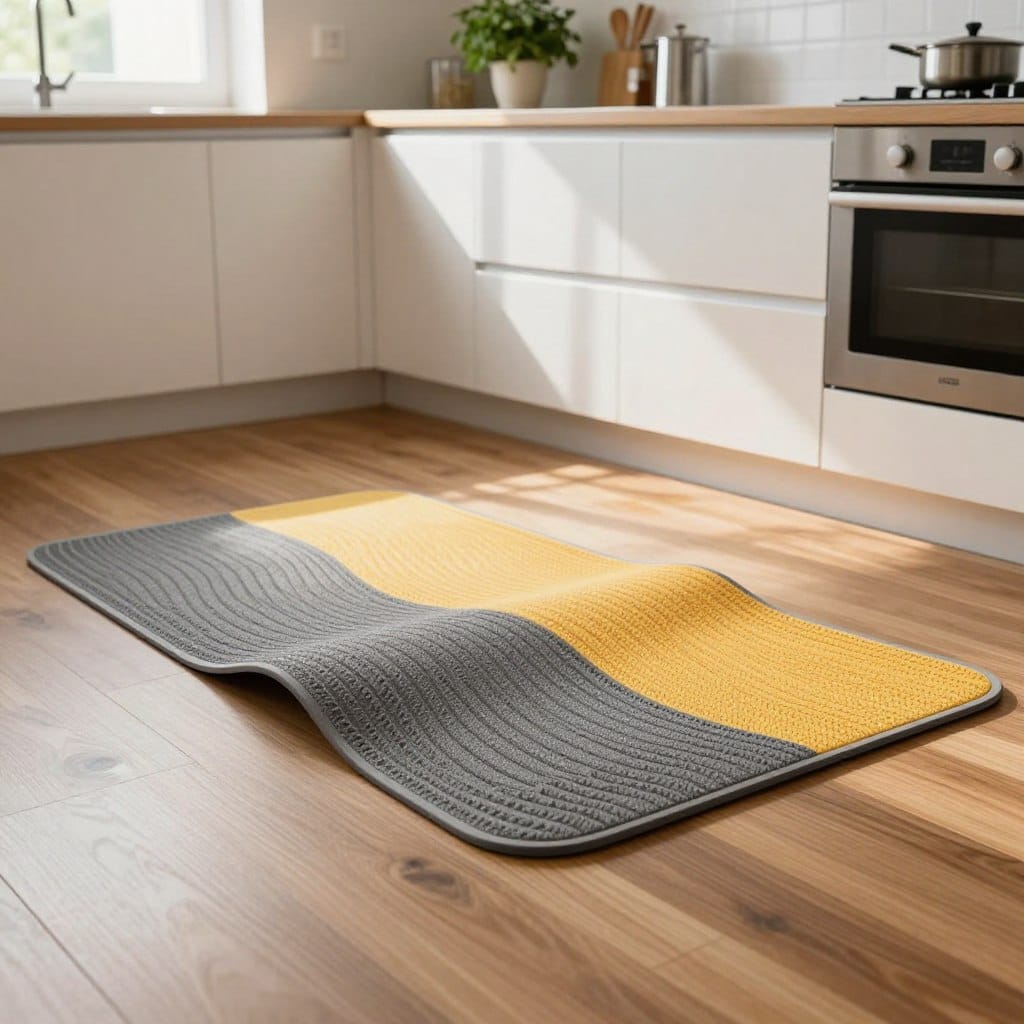
For a home kitchen, the $40 range is enough. The scenarios where premium mats justify their cost are all-day standing desk setups and professional kitchens where someone is on their feet for 8-hour shifts. If that’s you, spend more. If you cook dinner and bake on weekends, it isn’t necessary.
The 6 best anti-fatigue kitchen mats on Amazon under $50
1. ComfiLife Anti-Fatigue Floor Mat — best for most kitchens
Price: ~$30–40 | Thickness: 3/4 inch | Sizes: 18″×30″, 20″×36″, 20″×39″
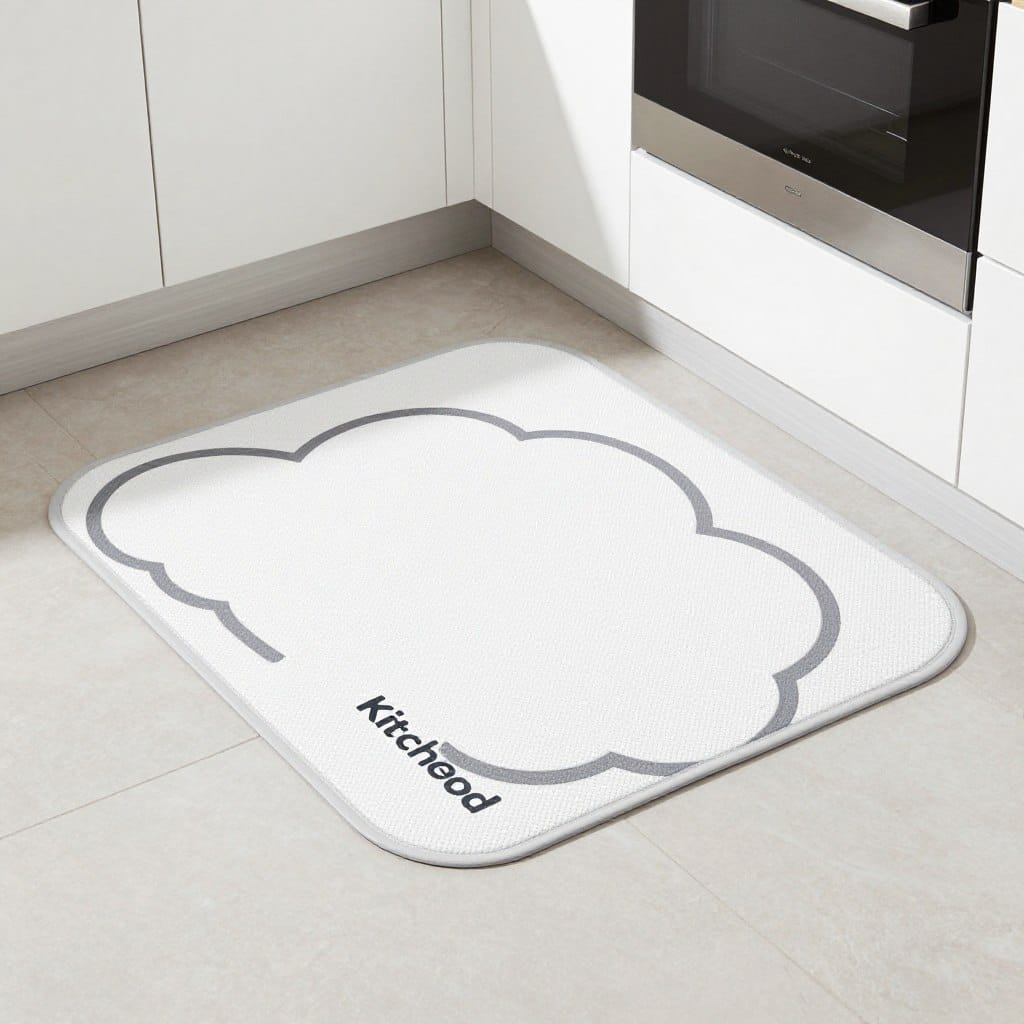
This is the one I’d recommend to most people without knowing anything else about their kitchen. The 3/4-inch PVC foam is firm enough that you don’t feel wobbly standing on it, and cushioned enough to make a real difference after 30 minutes. Beveled edges on all four sides mean you’re not catching your toes on the rim as you move around the kitchen.
The non-slip rubber bottom stays put on both tile and hardwood. It doesn’t curl at the edges after a few weeks the way cheaper mats tend to. Spills wipe off the surface easily without soaking in.
The honest downside: color options are limited. Mostly black, with a few neutrals. If you want something that matches a styled kitchen interior, look at the KitchenClouds below. But if you want the most reliable, no-fuss mat under $50, this is it.
Best for: Anyone who wants a dependable mat that works without thinking about it. Good on tile and hardwood floors.
2. FEATOL Anti-Fatigue Mat — best for long standing sessions
Price: ~$35–45 | Thickness: 1 inch | Sizes: 20″×32″, 20″×39″, 20″×60″
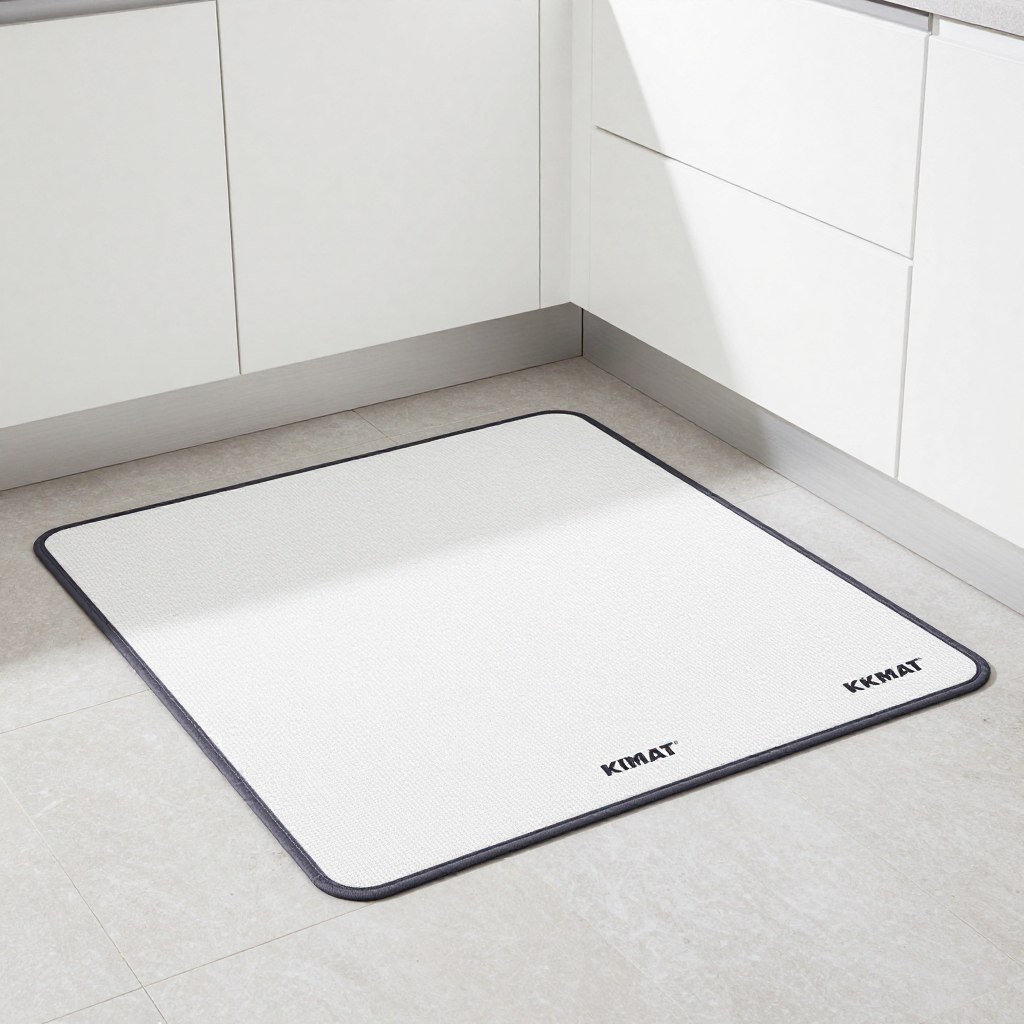
If you make three-hour Sunday roasts, or spend long stretches baking from scratch, the extra thickness here is worth the few extra dollars. The FEATOL is 1 inch thick noticeably more cushion than the 3/4-inch standard, especially if you’ve been on your feet for a while.
The polyurethane foam core holds its shape well. It doesn’t bottom out after a few months, which is the failure mode of cheap thick mats that feel great in the store and are useless within a year. The textured surface makes it easier to clean and gives your feet something to grip.
It’s slightly spongier than the ComfiLife, which some people love and others find a bit unstable feeling. If you’re not sure which you prefer, go with 3/4 inch first it’s more universally comfortable. But if you already know you want maximum cushion underfoot, this is the pick.
Best for: Long cooking sessions. Anyone who already owns a 3/4-inch mat and wants more support.
3. KitchenClouds Kitchen Mat — best budget pick under $20
Price: ~$15–18 | Thickness: ~1/2 inch | Sizes: 18″×30″, 18″×47″
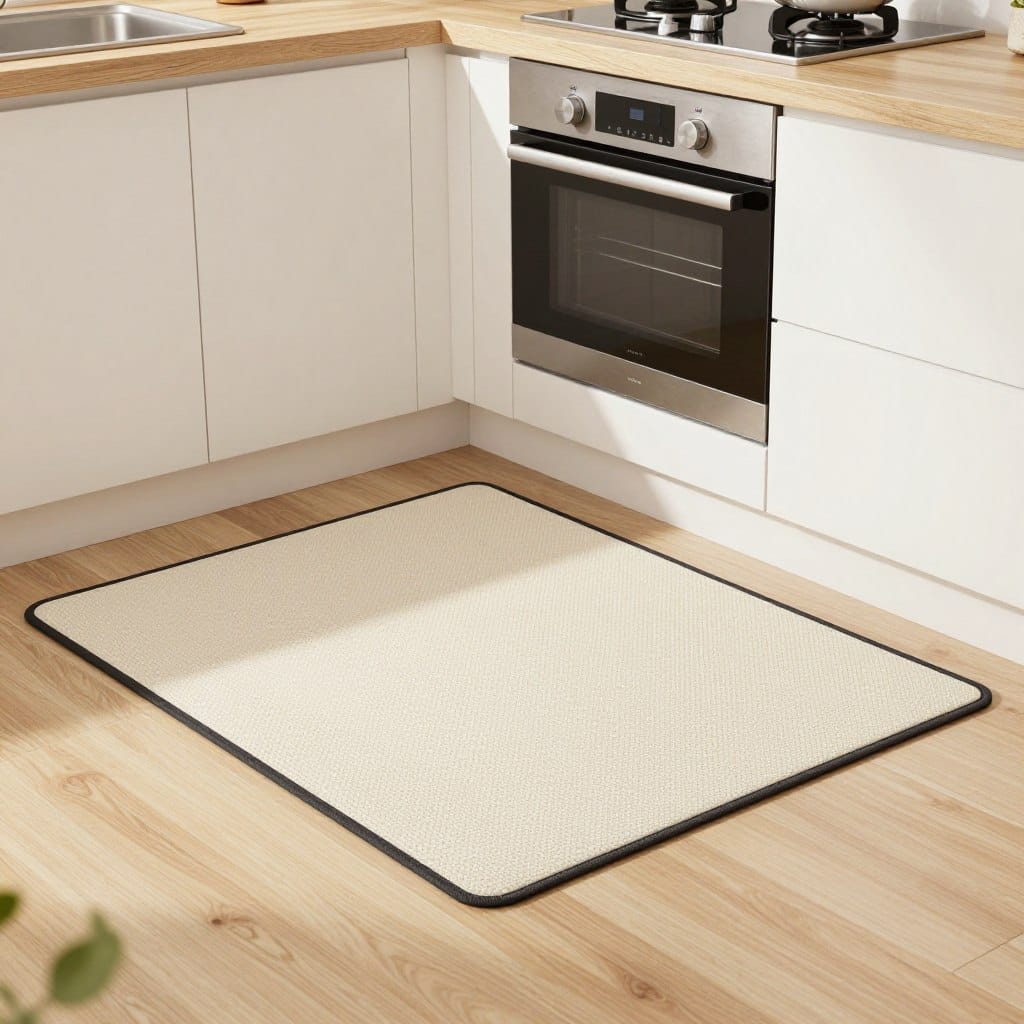
The KitchenClouds is the Amazon bestseller in this category. At $15 to $18, it outperforms what you’d expect at the price point. The memory foam surface is genuinely soft, and it comes in around 40 color and pattern options more variety than any other mat on this list by a wide margin.
The tradeoff is thickness and longevity. At roughly 1/2 inch, you get real cushion but less than the 3/4-inch options above. The foam will start showing compression wear after 12 to 18 months of daily use faster than the pricier picks. But at $15, replacing it every year still costs less than one $60 mat, so the math works out if you’re budget-conscious.
The color selection is its real selling point. If you have a kitchen with specific colors or want something that looks intentional rather than functional, KitchenClouds has more variety than anything else at this price.
4. KMAT Kitchen Mat 2-Piece Set — best set for sink and stove coverage
Price: ~$25–35 for the set | Thickness: ~3/4 inch | Includes: 17.3″×28″ + 17.3″×47″
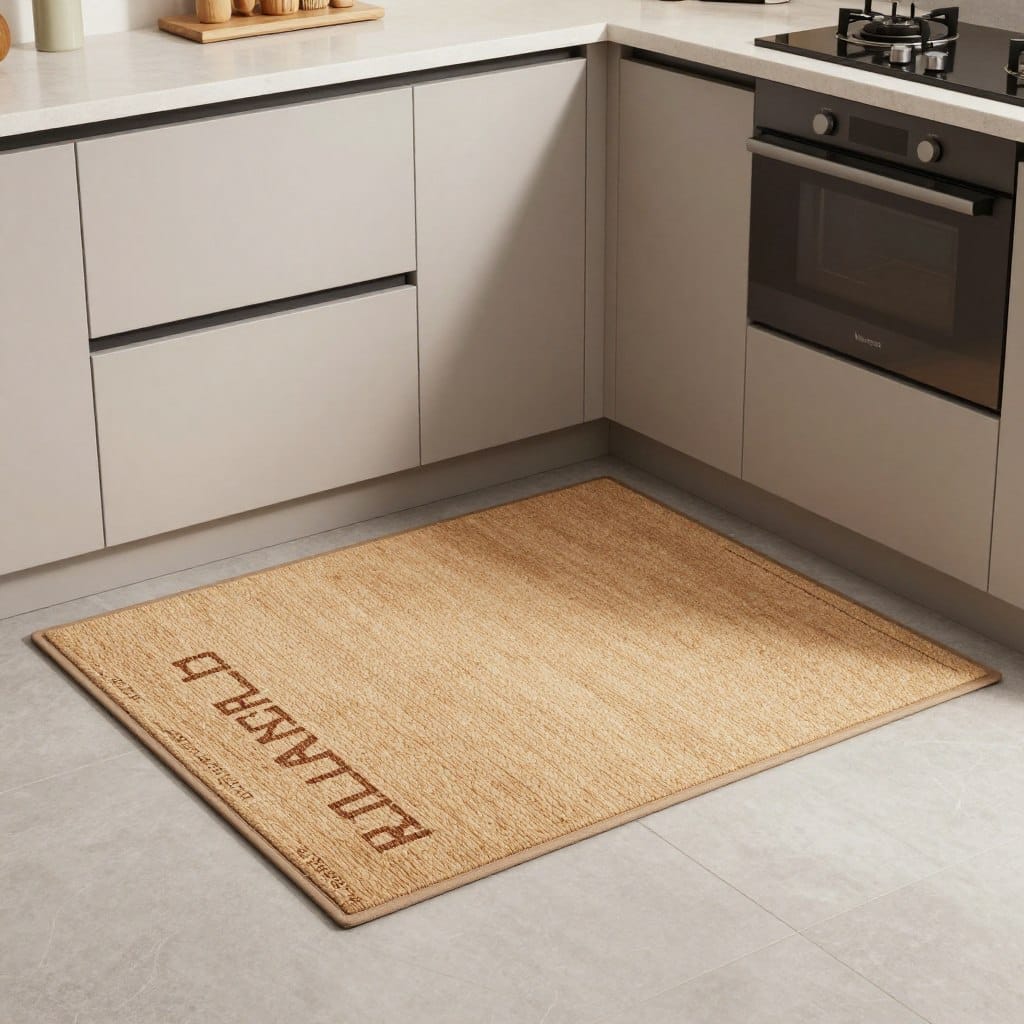
Most kitchens have two main standing spots: in front of the sink and in front of the stove. The KMAT 2-piece set covers both in one order — a smaller mat for the sink and a longer one for the stove or prep counter.
The foam is cushioned anti-fatigue construction, similar in feel to the ComfiLife but slightly softer. The matching set looks intentional in a way that two mismatched mats don’t. The non-slip backing holds on both tile and hardwood.
One thing to check before buying: the smaller mat in the set is 17.3 inches wide, which is a bit narrow if your sink area is wide or you have a double basin. Measure first. But for a standard single-sink kitchen, the sizing is fine.
Best for: Covering both the sink and stove without two separate orders. Good value if you need to outfit the whole kitchen at once.
5. Gorilla Grip Premium Anti-Fatigue Mat — best low-profile option
Price: ~$22–32 | Thickness: ~5/8 inch | Sizes: 18″×30″, 20″×36″
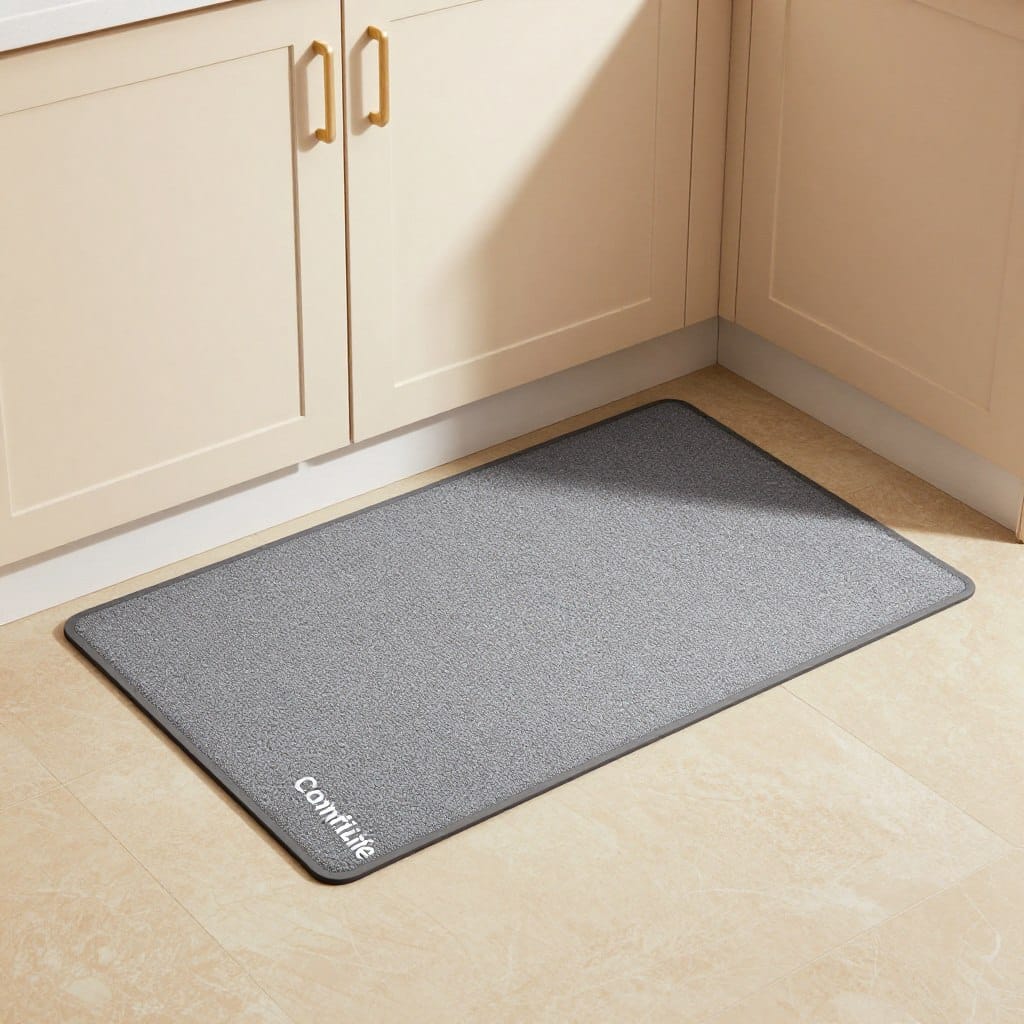
The Gorilla Grip’s standout feature is the bottom. It uses a deep suction-cup grip pattern that holds to smooth floors better than most other mats particularly useful on polished hardwood or high-gloss tile where other mats tend to wander.
The profile is slightly lower than the 3/4-inch standard. That makes it a better fit for kitchens where thick mats create clearance problems with cabinet toe kicks. If a thicker mat would create a gap issue when opening your lower cabinet doors, this solves that.
Cushion is good but not exceptional compared to the ComfiLife or FEATOL. This pick is more about grip and fit than maximum foot comfort. If your main problem is a mat that slides around or won’t lie flat, the Gorilla Grip handles that better than anything else on this list.
Best for: Polished hardwood and glossy tile. Kitchens with low cabinet clearance. Anyone whose current mat won’t stay put.
6. Sky Solutions Anti-Fatigue Mat (extra long) — best for galley kitchens
Price: ~$35–45 | Thickness: 3/4 inch | Size: 20″×72″
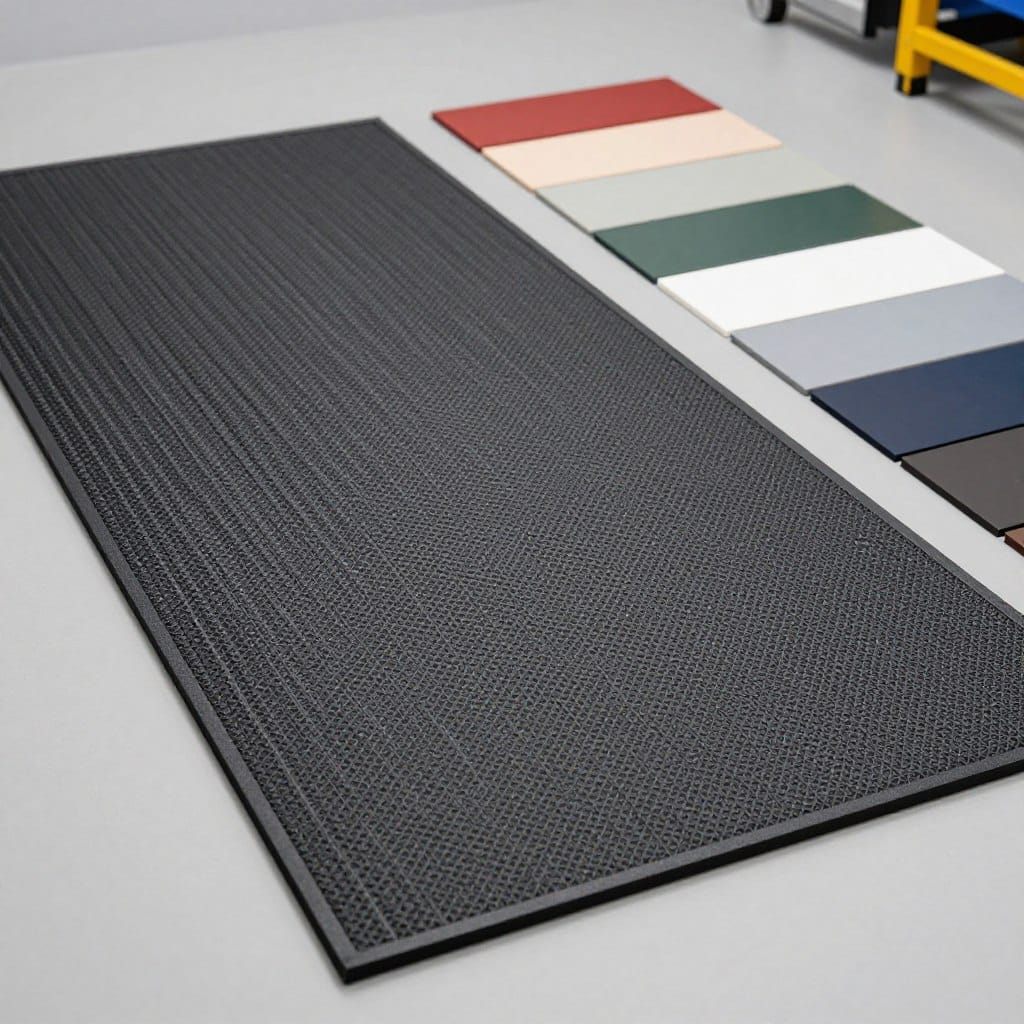
A standard 18″×30″ mat doesn’t work in a galley kitchen. You need coverage along the full run of counter, not just one spot. The Sky Solutions extra-long mat comes in a 20″×72″ size and is purpose-built for narrow kitchens where you move along a single stretch of counter from one end to the other.
The foam is solid 3/4-inch anti-fatigue construction. At 6 feet long, it covers the most common galley layout sink at one end, stove at the other without needing two separate mats with a gap between them. The surface is smooth and easy to clean.
It’s also useful for large island setups if you want unbroken coverage along one full side. Two separate mats can’t match it for flow, and the single-piece look is cleaner.
Best for: Galley kitchens, long counter runs, large kitchen islands.
How to choose the right anti-fatigue kitchen mat
Thickness: what does 3/4 inch vs 1 inch actually mean?
For most home cooks, 3/4 inch is the sweet spot. It provides enough cushion to reduce foot and leg fatigue without being so thick that it creates a tripping hazard or causes clearance issues under cabinet doors. If you stand for more than two hours at a stretch long baking sessions, holiday cooking go up to 1 inch. Mats under 1/2 inch don’t provide meaningful anti-fatigue support; they’re essentially decorative rugs that feel a little softer underfoot.
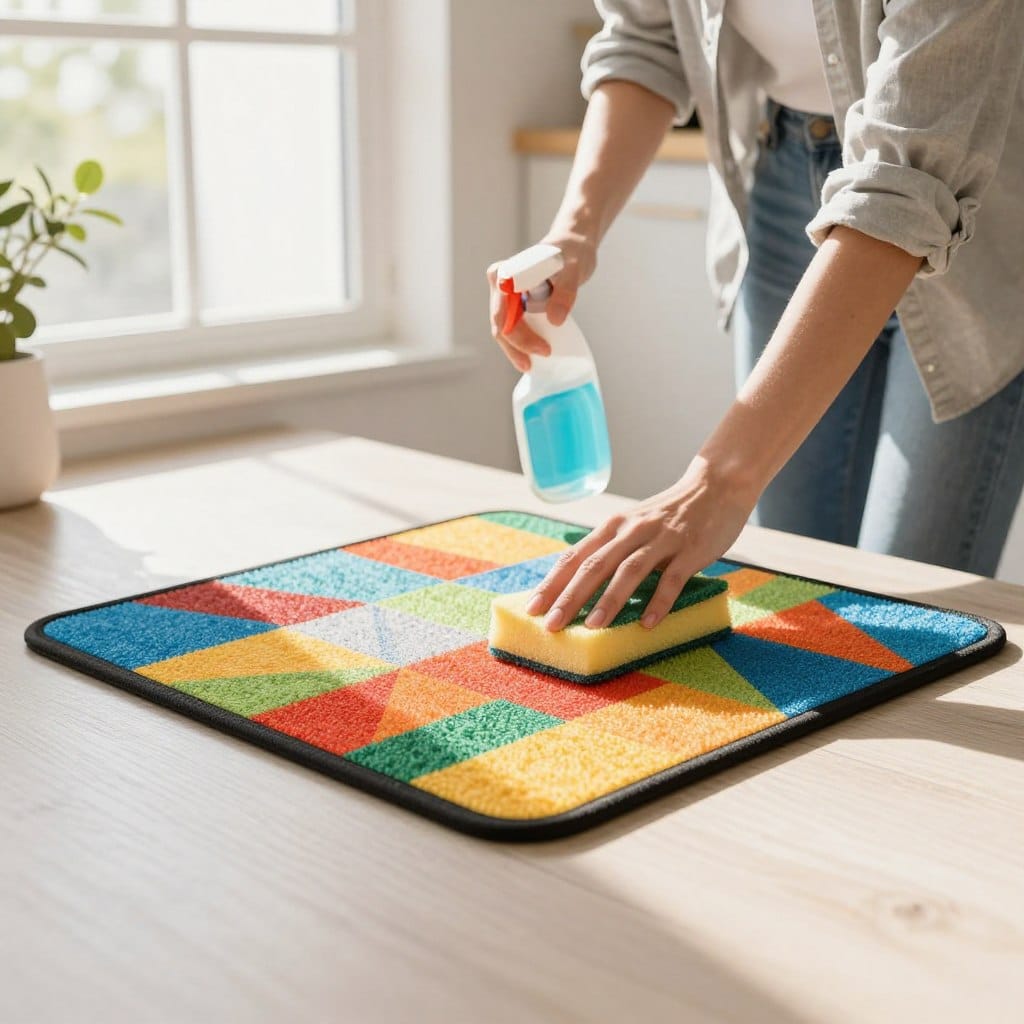
A quick test to check if any mat is still doing its job: press your thumb firmly into the surface. If it springs back within 2 to 3 seconds, the foam is healthy. If it stays compressed, the cushioning is gone and it’s time to replace it, regardless of how the mat looks from above..
Material: memory foam vs PVC vs rubber
There are three things going on material-wise in a kitchen mat, and they each serve a different function.
The top surface affects how the mat feels underfoot and how easy it is to clean. Memory foam is softer and molds slightly to your foot it feels good but compresses faster over time. PVC foam is firmer and more durable. In a kitchen where you’re standing and shifting weight constantly (rather than standing in one place), PVC tends to hold up better long term.
The core foam is where the actual anti-fatigue work happens. Polyurethane foam at the right density provides the cushion and recovers its shape after each use. Low-density foam from cheap mats flattens out within months.
The backing prevents slipping. Rubber backing and suction-cup patterns are significantly more effective than a plain foam bottom, especially on hardwood. If your current mat slides around, the backing is almost always the reason.
Size and placement: where to put kitchen mats (and how many)
Two spots in most kitchens benefit most from a mat: in front of the sink and in front of the stove. Those are the places you stand longest without moving.
An 18″×30″ mat fits most single positions. For a wide prep area or large kitchen island, step up to 20″×36″ or consider a 2-piece set. For a galley kitchen, go straight to a runner-length option.
One thing a lot of people miss: the mat should be wide enough that your whole foot lands on it when you’re standing naturally at the counter. A mat that’s too narrow forces you to angle your stance to get your heels on it, which defeats the purpose. If you’re not sure, measure the distance from your counter base to where you naturally stand your mat should cover that depth comfortably.
FAQ: anti-fatigue kitchen mats
How thick should a kitchen mat be?
For most kitchens, 3/4 inch is the right choice. It gives enough cushion to reduce foot and leg fatigue without creating a tripping hazard or clearance issues with cabinet doors. If you stand for more than two hours at a stretch, a 1-inch mat is worth the extra money. Mats under 1/2 inch don’t provide meaningful anti-fatigue support they’re essentially decorative rugs with a little extra softness underfoot.
Are anti-fatigue kitchen mats worth it?
Yes, for most home cooks. Standing on hard tile or hardwood for 30 minutes puts real pressure on your feet, knees, and lower back. A good anti-fatigue mat redistributes that pressure by encouraging small muscle movements that keep blood circulating. The effect is noticeable from the first day. If you cook regularly and your kitchen floor is hard, it’s worth it.
How long do anti-fatigue kitchen mats last?
A decent anti-fatigue kitchen mat lasts 2 to 5 years with normal use. The main sign it’s worn out is when it stops bouncing back after you press on it that dead, compressed feel means the cushioning is gone. Cheap mats under $15 tend to flatten in under a year. The picks in this guide should all last at least 2 to 3 years with regular use.
What is the best material for a kitchen mat?
For anti-fatigue cushioning, PVC foam or memory foam are the two most common materials. PVC foam is firmer and more durable good for high-traffic spots. Memory foam feels softer underfoot but can compress faster over time. For the bottom layer, rubber or suction-grip backing is more effective than plain foam at keeping the mat in place, especially on hardwood and polished tile.
How do you clean a kitchen mat?
Most anti-fatigue kitchen mats are not machine washable. For daily spills, wipe down with a damp cloth and mild soap. For a deeper clean, rinse with a hose or in a bathtub and let it air dry flat. Don’t fold it while wet and don’t put it in the dryer heat breaks down the foam. Check the label before using harsh cleaners, as some foam cores will degrade with strong chemicals.