
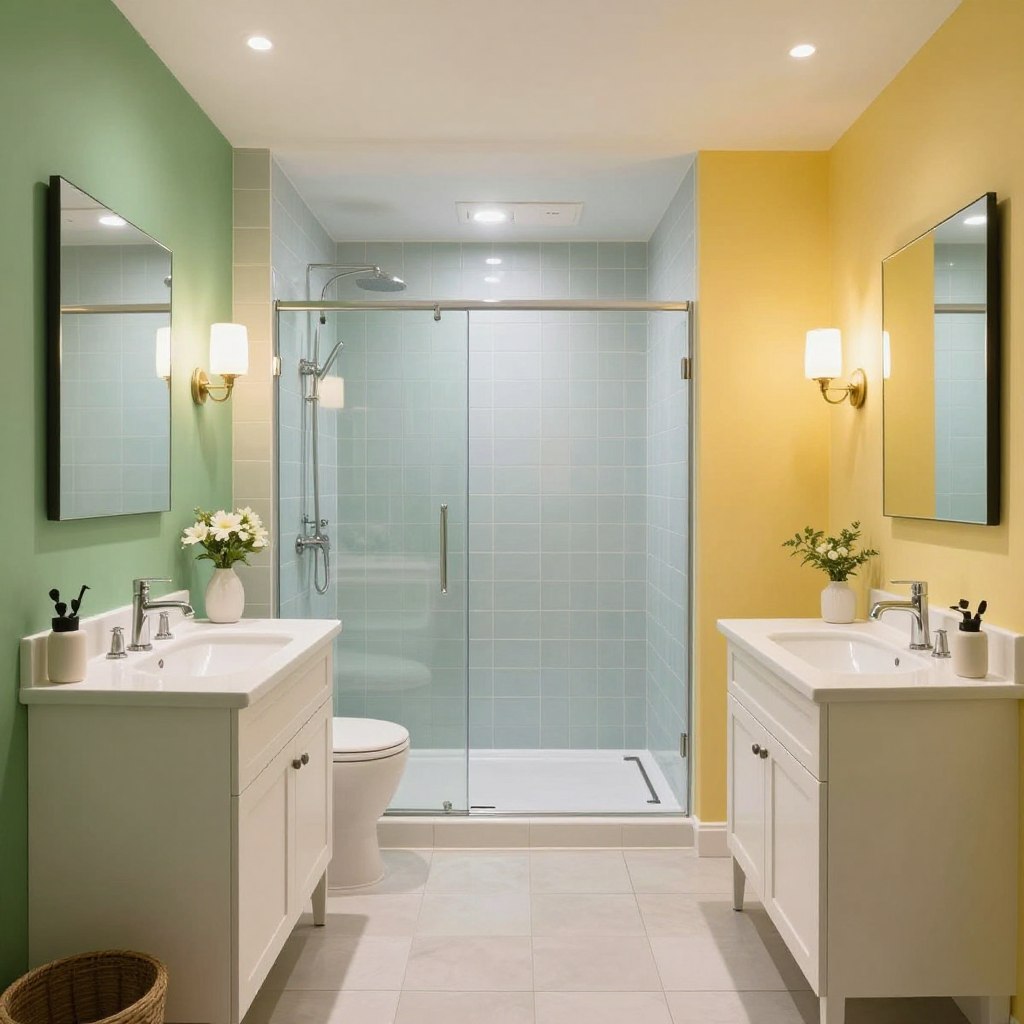
Does your tiny bathroom feel like a cramped closet? If you see only limitations, you’re not alone. I’ve helped many homeowners turn their small bathrooms into cozy retreats.
Your compact bathroom is full of potential. The right small bathroom paint colors and layout ideas can make it feel spacious and inviting.
I’ve guided many through this transformation. By the end of this guide, you’ll see your small bathroom as a canvas. You’ll learn how the right paint color and layout can make it feel bigger and more functional. Let’s make your small bathroom amazing together.
Why Your Small Bathroom is a Design Opportunity
For years, I thought my tiny, windowless bathroom was a design dead end. But a client’s small powder room showed me the opposite. It was cramped, dark, and lacked character.
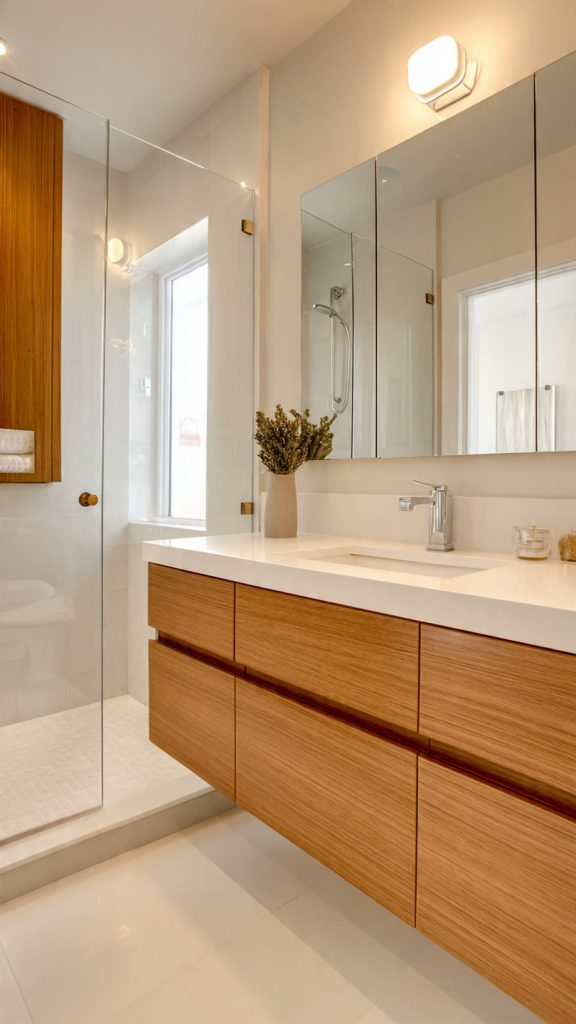
We saw a chance to make a bold statement. We picked a single, dramatic tile for the whole space and a sleek, wall hung vanity. The result was stunning, like an art installation. This taught me that a small bathroom is a creative opportunity, not a challenge.
Why is a small bathroom a great design chance? First, it lets you make a big design statement without spending a lot. You can use expensive tiles or marble because you only need a little.
This is your chance to splurge on materials that are too pricey for bigger spaces. Imagine a wall of stunning zellige tile or a marble vanity top. In a bigger room, this would be too expensive.
Second, a small bathroom lets you create a deep, jewel-box effect. Every choice, from paint to faucet, works together for a strong look. There’s no room for waste, so every decision counts.
This isn’t just about looks; it’s smart design. By focusing on a small area, you can afford quality fixtures and smart storage. For more small bathroom design ideas, there are ways to make every inch count. Remember, small spaces can spark your most creative small bathroom design ideas.
The Power of Paint and Layout: Small Bathroom Paint Colors and Layout Ideas
Before picking a paint chip for your small bathroom, learn about Light Reflectance Value, or LRV. LRV is like a report card for paint colors, showing how much light they reflect. A black surface absorbs all light, while white reflects the most.
In small bathrooms, LRV is crucial. The higher a paint’s LRV, the more light it reflects. This isn’t just about brightness; it’s about making a room feel larger. A high LRV paint makes walls seem to disappear and ceilings feel higher.

For a small bathroom, choose paint with an LRV of 70 or higher. Look for pure whites and light pastels. The color is less important than the LRV. A soft gray with an LRV of 85 will make your bathroom feel more open than a dark color, even if you love the dark hue.
This focus on LRV doesn’t mean you’re limited to boring colors. It’s your guide to choosing colors that work. Understanding LRV helps you pick colors that make your bathroom feel serene and spacious. This is key for many popular small bathroom designs.
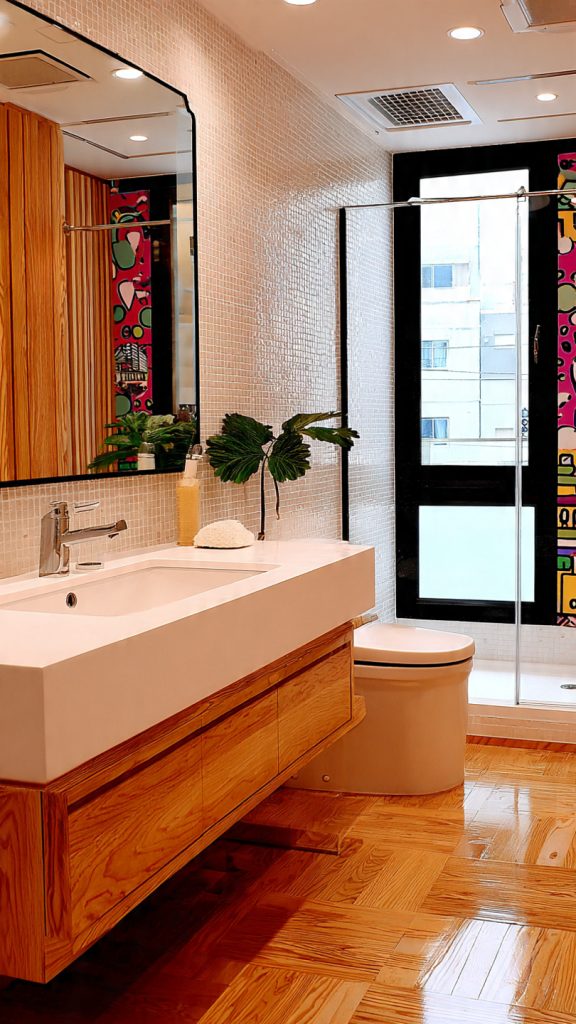
Color Strategy 1: The Light & Airy Neutrals
When a bathroom feels cramped, we often choose pure white. But the secret to making it feel bigger is not just white. It’s about picking the right neutral tones that reflect light and feel light.
This is the key to successful best small bathroom paint colors. A palette that feels expansive, not empty. Light, airy neutrals are the ultimate optical illusion, pushing walls back and making the ceiling feel higher.
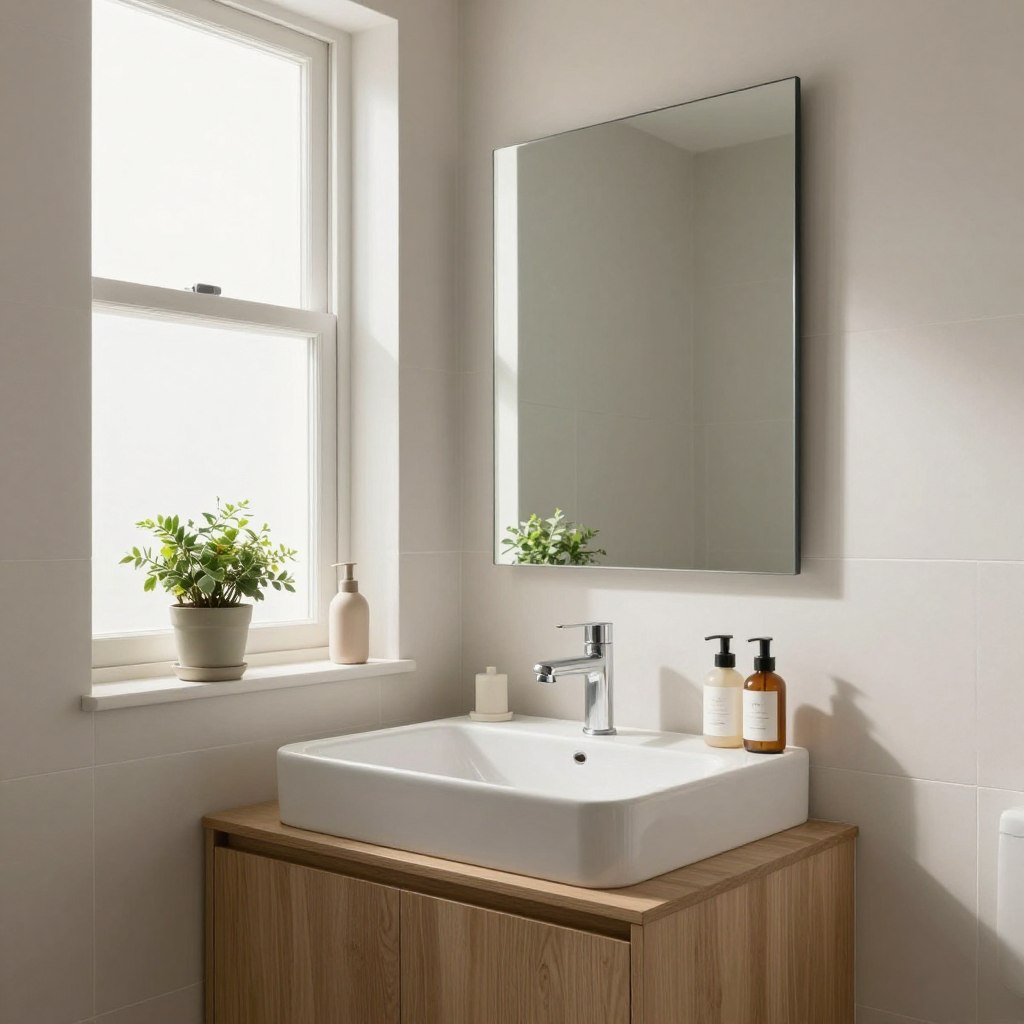
Not all neutrals are created equal. For a small bathroom, you want shades with the perfect undertone to combat shadows and make the most of natural or artificial light. My go to recommendations are warm, complex neutrals that don’t feel cold or sterile.
The finish is just as crucial as the color. Always, use a satin or eggshell finish for walls. The slight sheen is more durable and easier to clean than flat/matte, and it will reflect light beautifully without the glare of a semi gloss.
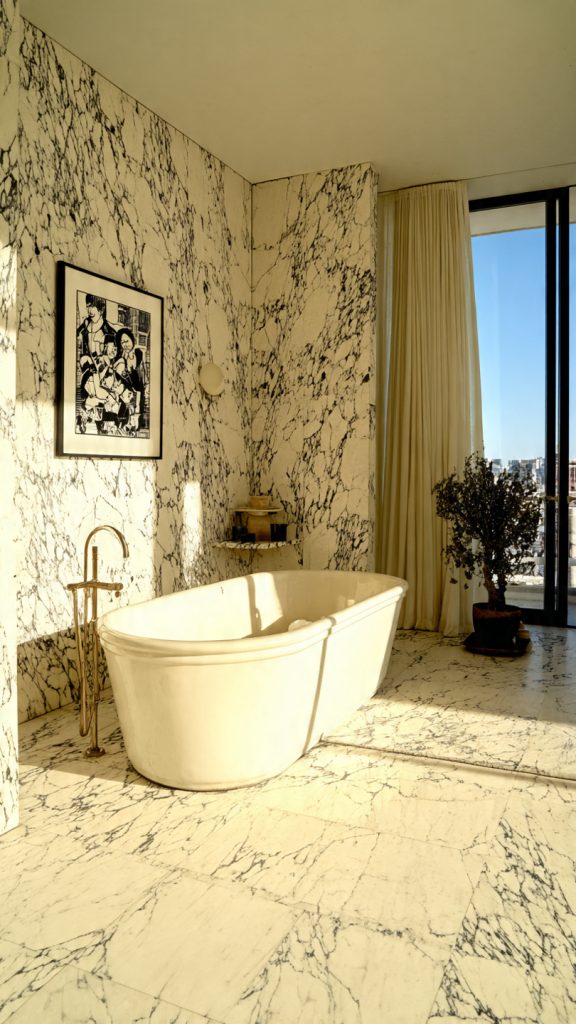
Choosing the right neutral is only half the battle. To maximize the feeling of space, your color strategy must work in concert with your layout. This is where the genius of the floating vanity comes in.
For more stunning small bathroom color ideas that can transform a compact space, exploring a range of hues can provide the perfect accent to your neutral base.
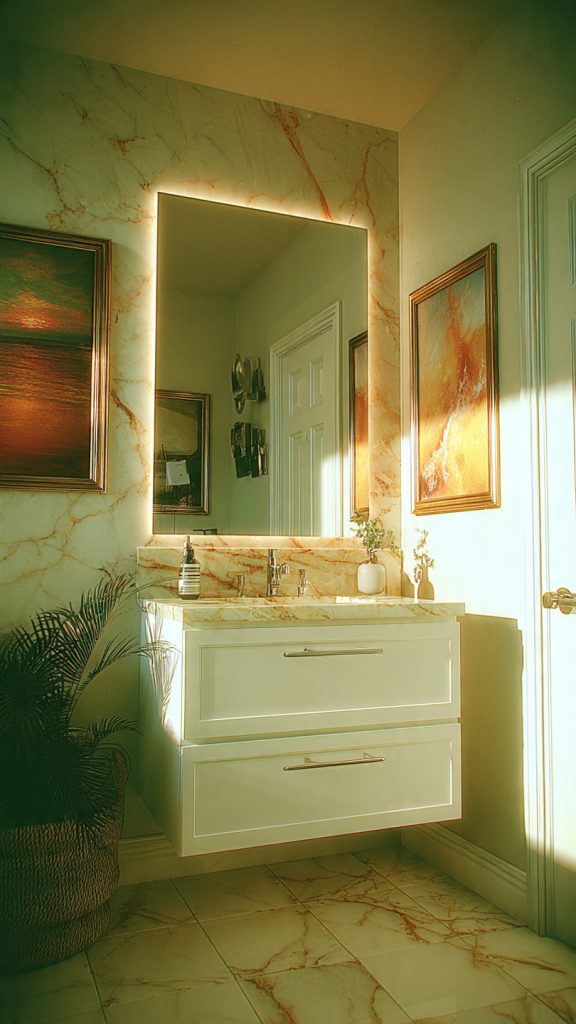
Pairing your light, neutral walls with a floating vanity is more than a design trend it’s a spatial strategy. It clears the floor, tricks the eye into seeing more square footage, and makes cleaning a breeze. When your best small bathroom paint colors are paired with this smart layout choice, you don’t just get a new color on the walls; you get a completely new sense of space.
Color Strategy 2: Serene Blues for a Spa Like Feel
Blue can turn a small bathroom into a spa. It’s calming and clean, making it great for small spaces. Blues make rooms feel bigger and more open.
Not all blues are the same. The range of blues is vast for small bathroom paint colors. A light sky blue can make a room seem taller and more open.
For a cozy feel, try a deep navy or peacock blue on one wall. The right blue depends on your room’s light. Cool light works well with icy blues, while warm light suits warmer blues.
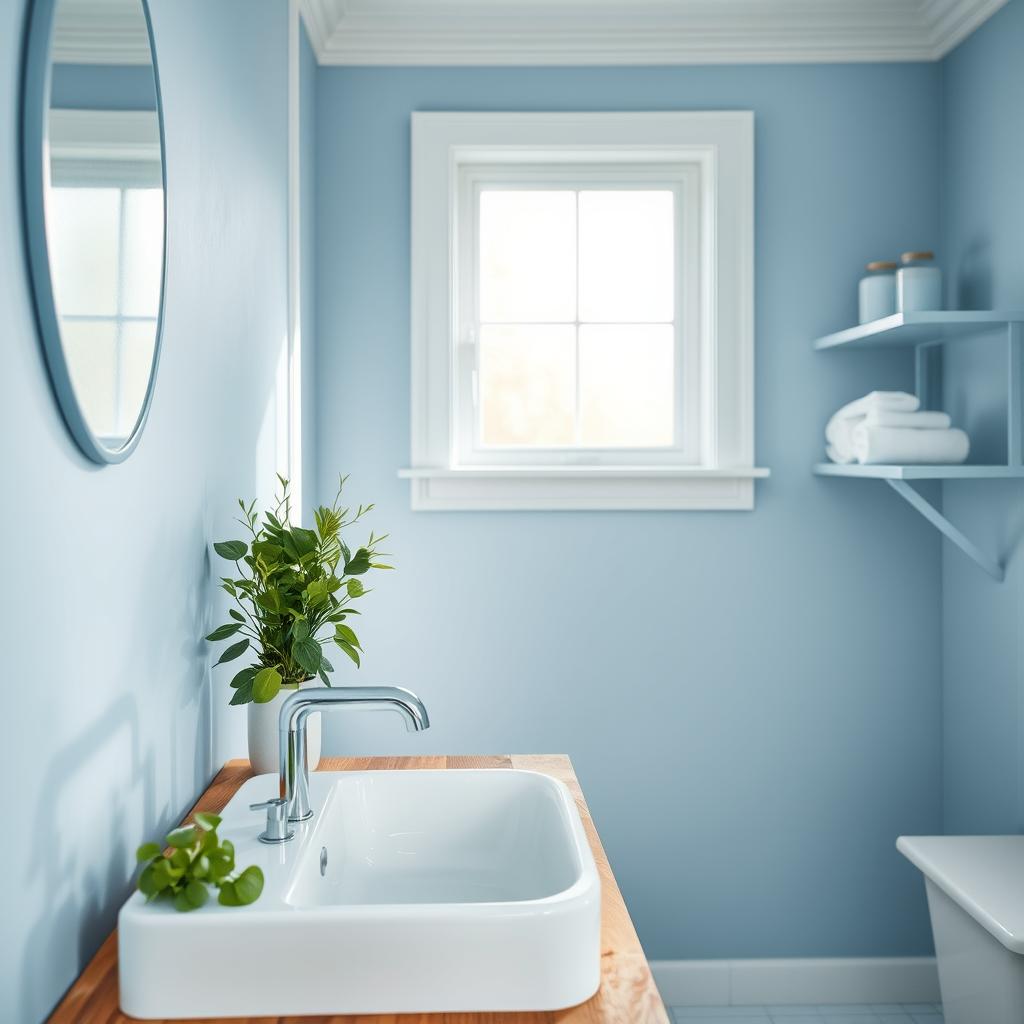
Choosing the right paint is just the start. Your bathroom’s layout must match your small bathroom paint colors. A frameless glass shower enclosure is perfect here.
Unlike curtains or solid walls, glass lets your eye move freely. This makes your bathroom seem bigger. A serene blue and clear glass create a spa like feel.
Using clear surfaces to open up a space works beyond bathrooms. For more ideas, check out these small bedroom decorating ideas to make the most of your space.
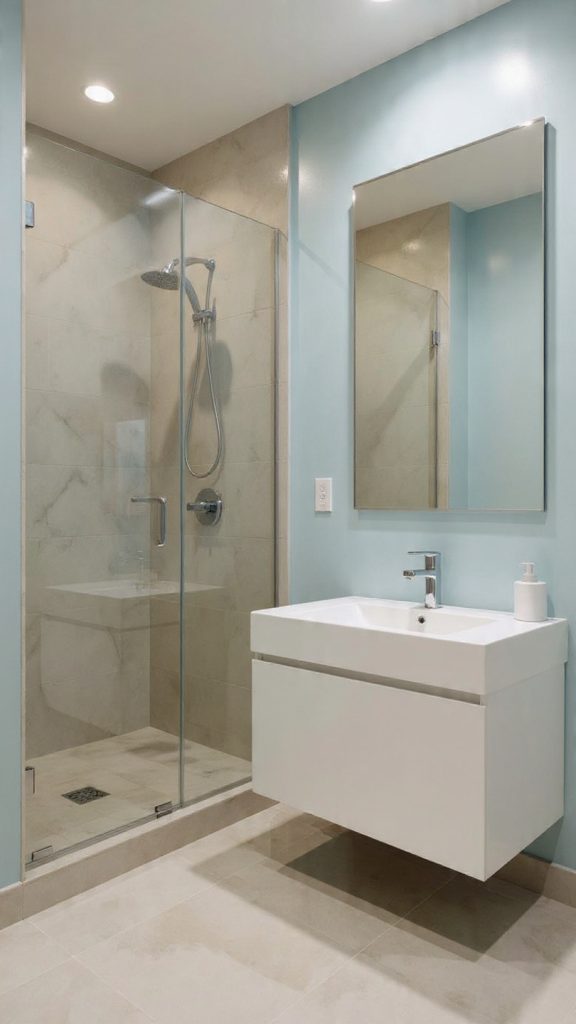
The aim is to make your bathroom feel open and cohesive. A pale blue, glass shower, and light fixtures will turn your bathroom into a sanctuary.
Color Strategy 3: Earthy, Grounding Greens
Explore beyond serene blues and light neutrals to earthy greens. These colors turn your small bathroom into a calm, natural haven. They connect us to nature, making small spaces feel like personal retreats. This is key for small bathroom color schemes, offering a rich, organic choice.
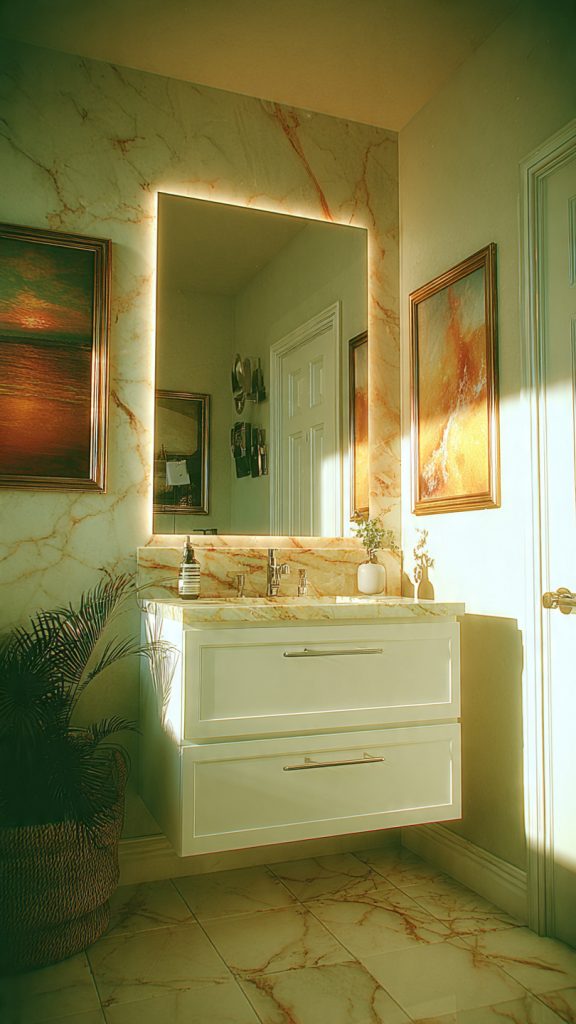
Pairing Greens with Natural Materials
Soft sage, muted eucalyptus, and deep olive are great for small bathroom color schemes. The magic happens when you mix these with natural materials. Think of a sage green wall with a teak mirror or a seagrass basket vanity.
These small bathroom color schemes shine with rattan, stone, or natural wood. This mix adds texture and sophistication, making the space feel soothing.

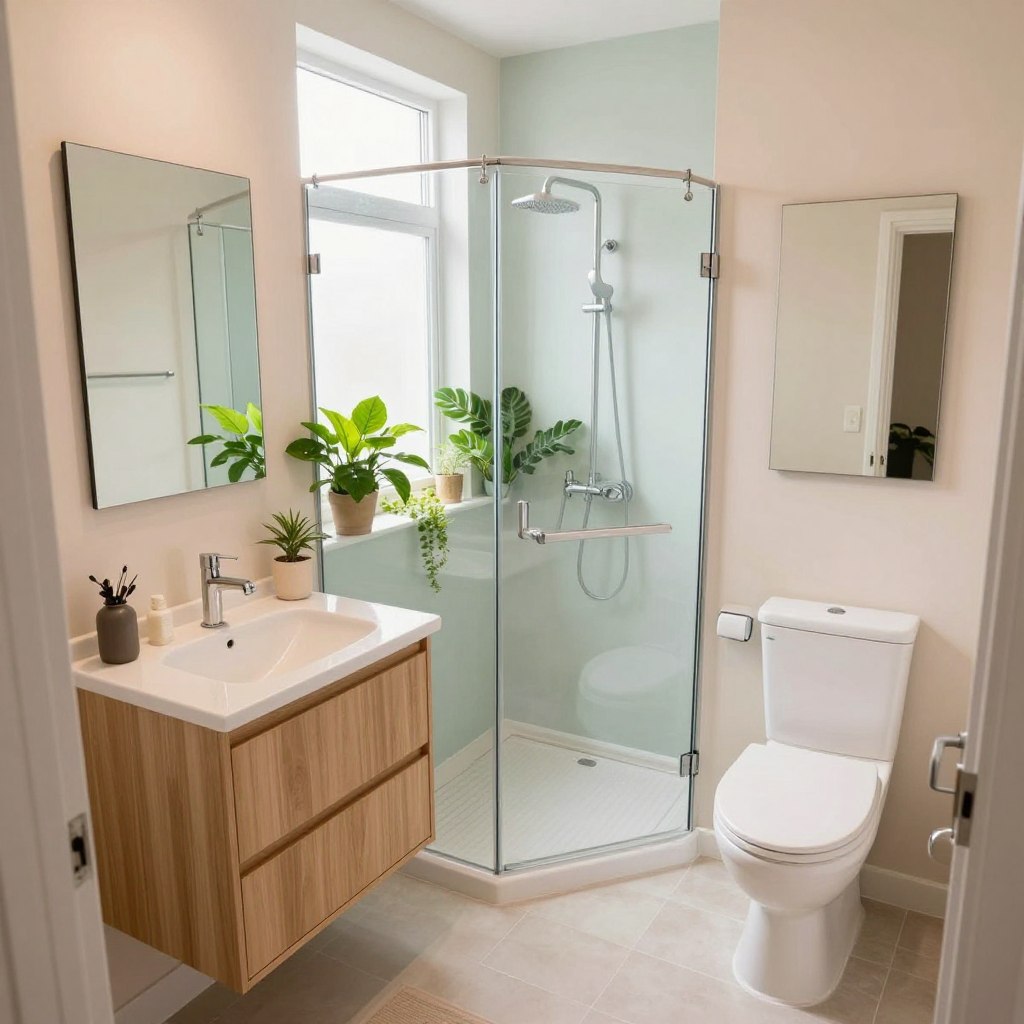
To truly embrace this small bathroom color scheme, add color vertically. Use living walls, vertical gardens, or hanging planters. This trick makes the space feel taller and more open.
It’s a beautiful blend of wall greens and living plants. This brings the outside in, making the space feel expansive. Learn more about creating an open, airy feel in any room.
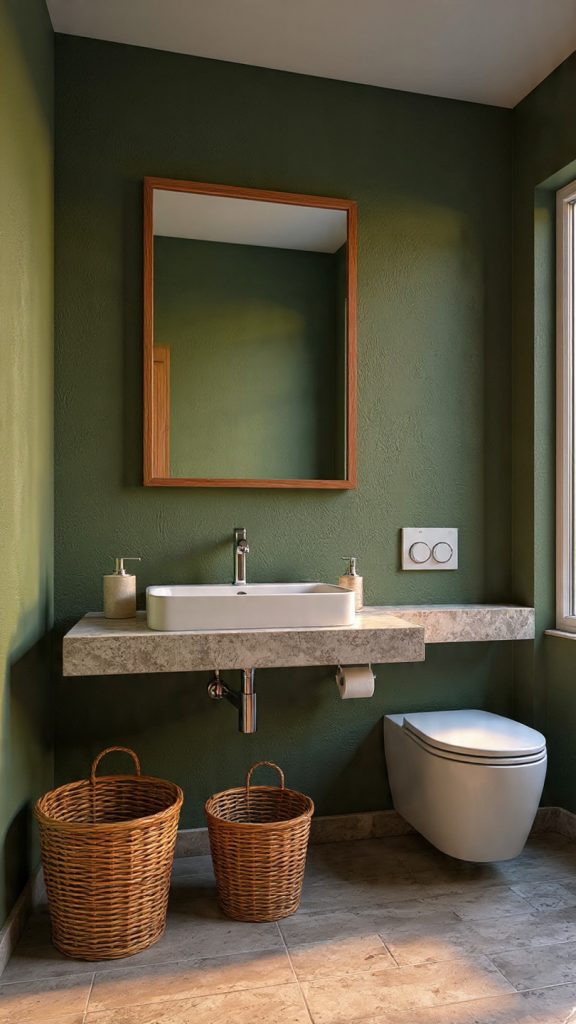
By choosing earthy greens and natural materials, your small bathroom becomes a peaceful retreat. It’s a small bathroom color scheme that looks and feels great, turning a functional space into a personal sanctuary.
Color Strategy 4: Warm Grays and Greige
Warm grays and greige are perfect for small bathroom color schemes. They bring a calm, neutral look. This makes small bathrooms feel bigger and more grounded.

To find the right greige, compare it with your tile, countertop, and flooring in different lights. The best greige will make walls seem farther away.
Warm grays, leaning towards beige or taupe, are easy to pair with most bathroom finishes. Pick a greige that matches your floor tile or vanity’s dominant tone. This creates a unified look that makes the space seem larger.
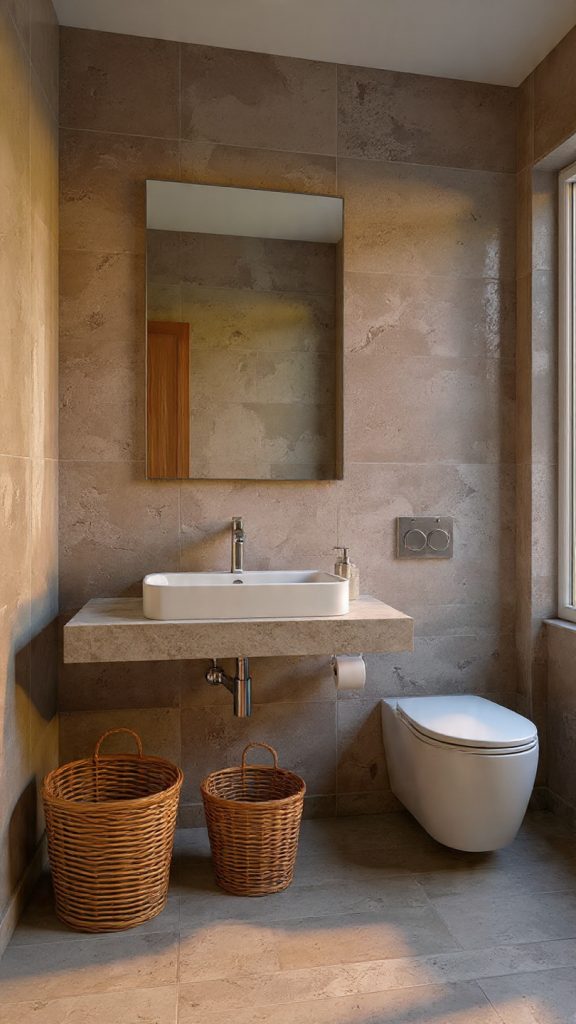
For more ideas on using color to make a small space feel bigger, check out our guide to subtle colors that expand a small living room.
Color Strategy 5: The Bold Statement (Done Right)
Think a small bathroom means you can’t be bold with color? Think again. A small bathroom is perfect for a bold color choice. It’s a small space where you can take a risk without big commitment.
The secret to a bold statement is strategic application. It’s about creating a look that feels intentional, not an afterthought.
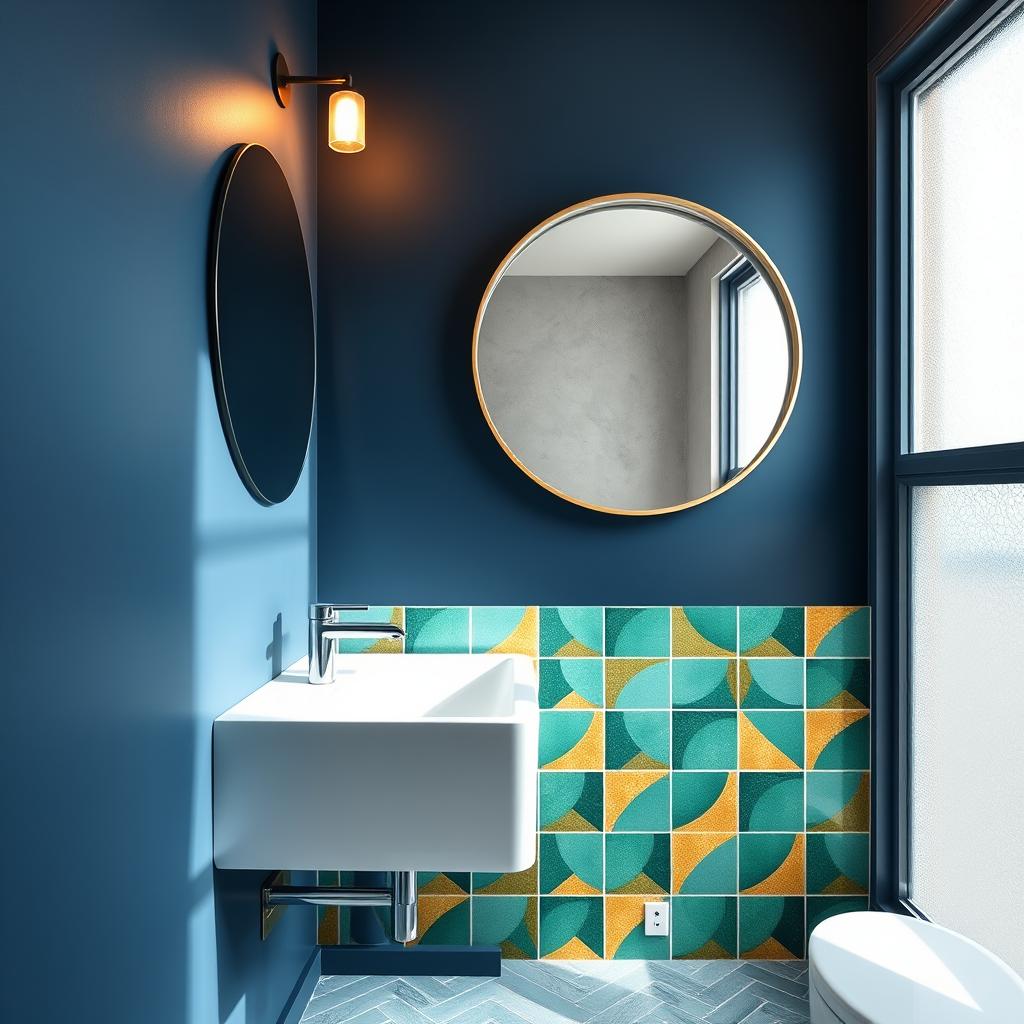
An accent wall is your best friend for bold color. It adds drama without feeling overwhelming. In a small bathroom, the best accent wall is often behind the vanity or toilet.
Imagine a deep navy or rich terracotta on one wall. This frames the room’s key features and draws the eye. It’s a high impact, low commitment way to test a bold best small bathroom paint color.
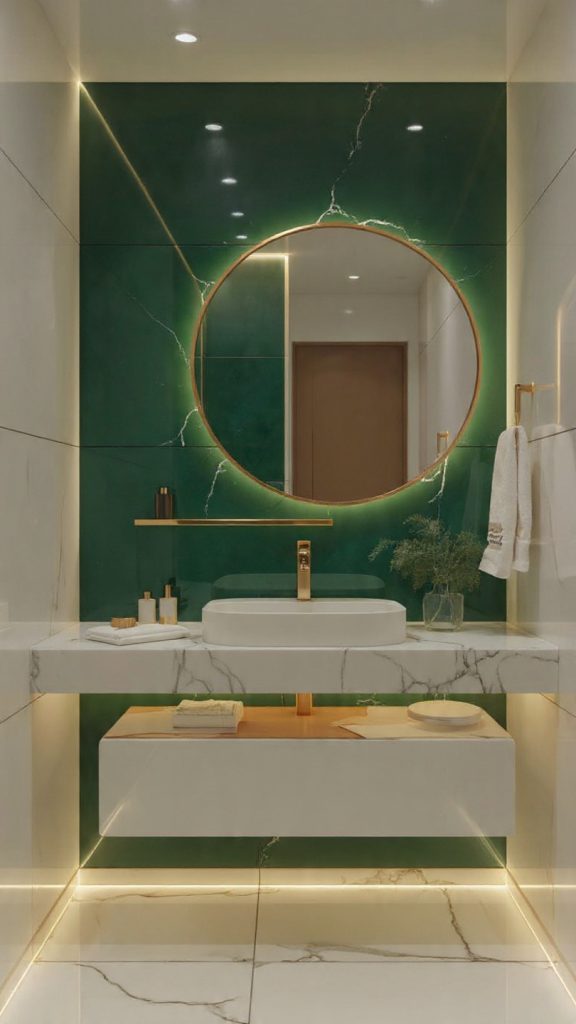
Layout Synergy: Statement Tile
Make your bold color choice shine with statement tile. You don’t need to tile the whole room. Focus on a single, powerful feature.
Try a bold, patterned cement tile in the shower niche, or a stunning backsplash above a floating vanity. Let the tile and your bold paint color have a conversation. For example, a deep emerald green accent wall can be complemented by a mosaic tile in the shower niche.
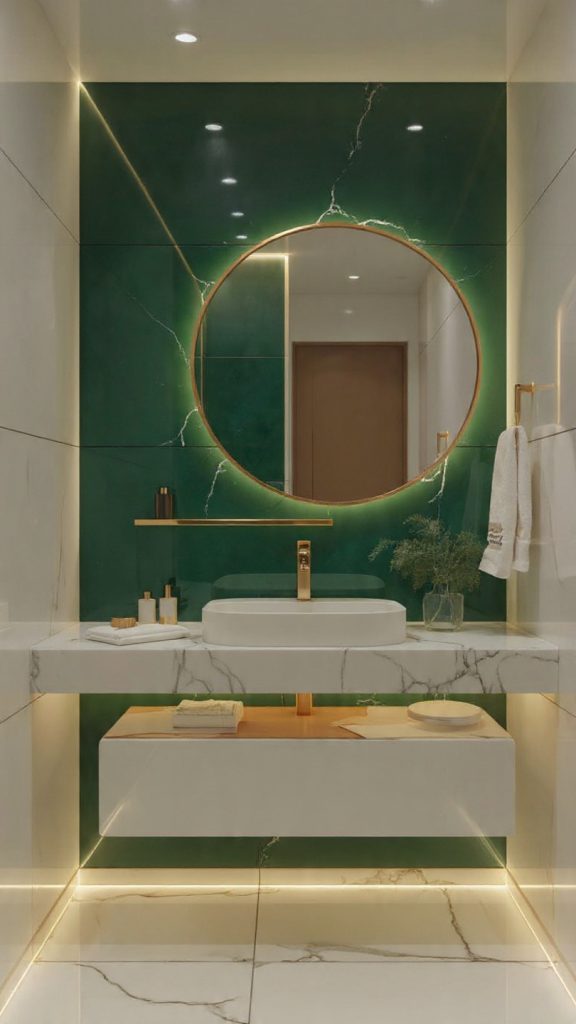
Don’t be afraid to mix finishes and sheens. A matte or eggshell paint on the wall paired with glossy or textured tile creates a dynamic look. This contrast adds depth and makes a small space feel thoughtfully designed, not just decorated. This synergy between a bold paint choice and a strategic tile application is what transforms a simple bathroom into a personal sanctuary. It proves that the best small bathroom paint colors are often the ones you feel most connected to, applied with confidence and a clear strategy.
Color Strategy 6: Soft, Reflective Pastels
Pastels are no longer just baby pink or mint green. Today, they’re sophisticated and muted. These soft colors add a touch of color without making a small space feel cramped. They’re a top trend for modern small bathrooms, making them look bigger and brighter.
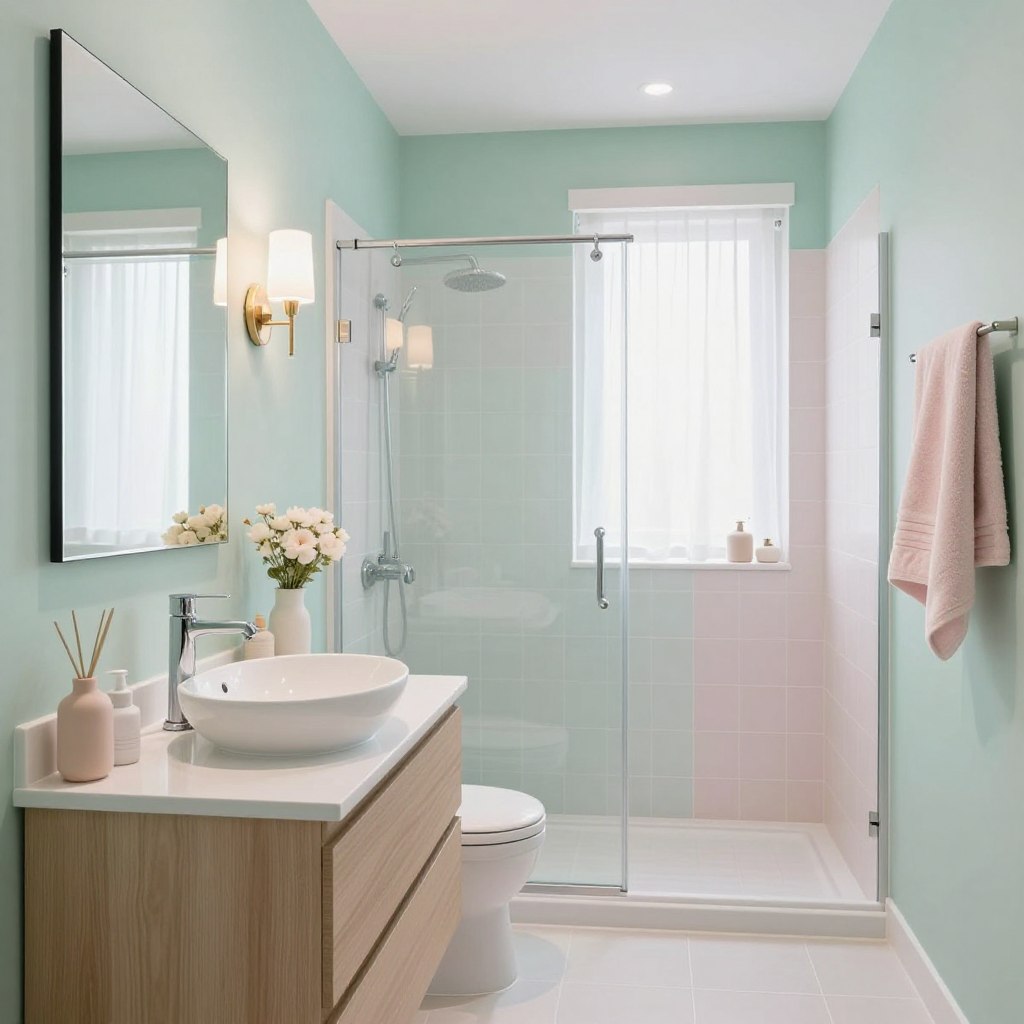
Small bathrooms often get less natural light. To fix this, choose pastels with a high Light Reflectance Value (LRV). Paint with an LRV of 70 or higher will reflect light well. A pale lavender or a soft pink with a matte finish can make a room feel bright, not dark.
Layout Synergy: Glossy Finishes
Glossy finishes make pastel colors pop. A glossy cabinet in a soft sage or a glossy blue backsplash will bounce light around. This creates depth and makes the space feel larger.
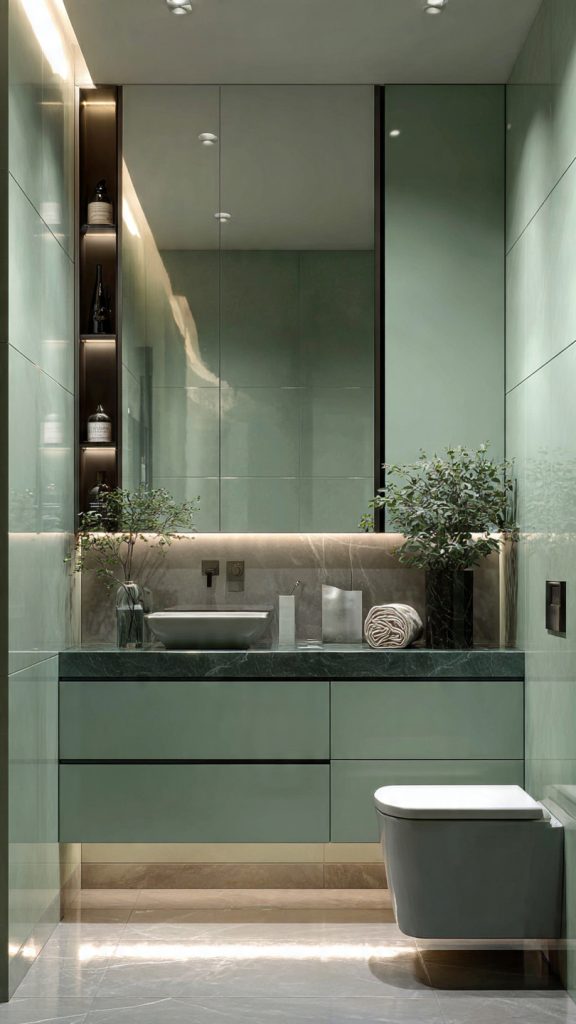
Think about a lacquered vanity in a pastel color or glossy penny-round tiles. This mix of color and finish is key in modern bathroom trends. It turns a design risk into a bright, airy space.
Using soft pastels creates a light and airy feel. It’s a modern take on color that’s fresh and open. The result is a calm and surprisingly spacious bathroom.
Color Strategy 7: The Timelessness of a True White
True white is a timeless choice for bathrooms. It reflects light, making spaces feel larger. It also serves as a neutral backdrop for any small bathroom design.
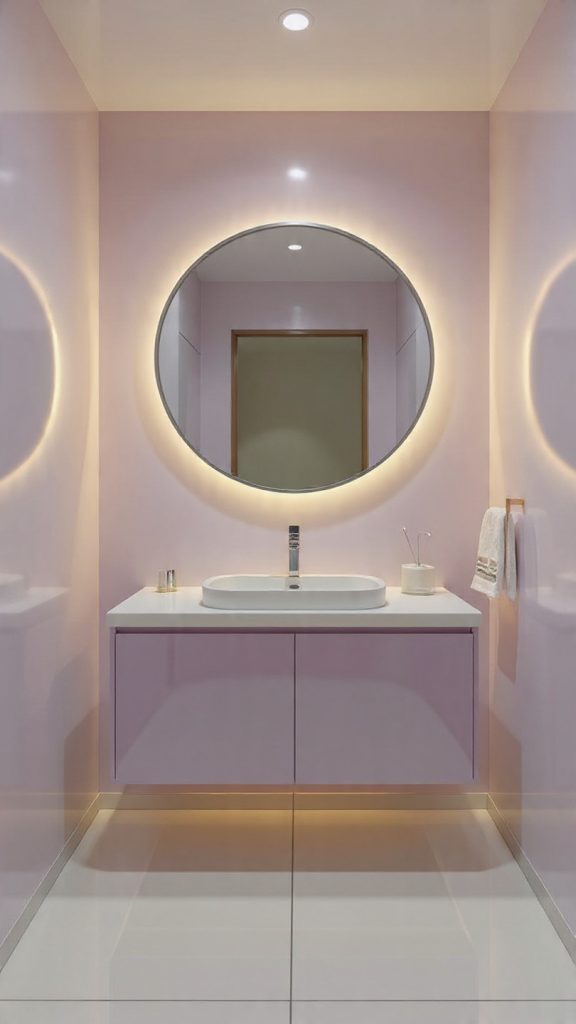
Choosing the right shade of white is crucial. Cool whites with blue undertones are great for bright rooms. Warm whites with yellow undertones are cozier, perfect for dimmer spaces.
Avoiding the “Sterile” Look
Using all white can make a room feel cold. The trick is to add texture and material contrast. This makes the space feel more dimensional.
Introduce natural textures like woven baskets and wooden stools. Add warmth with wood-toned accessories. Even a bathroom rug with texture can make a big difference.
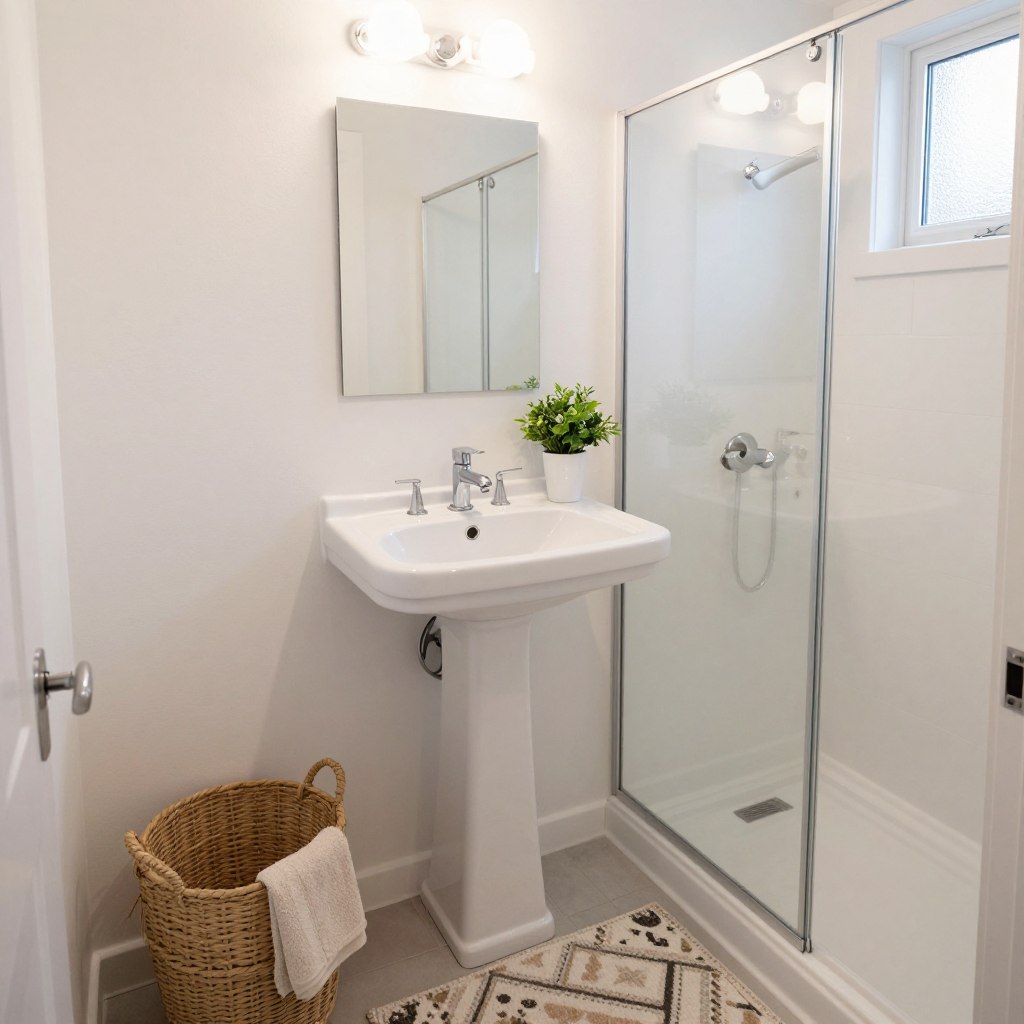
White pairs well with smart small bathroom designs. One effective trick is the “vanity wall.”
Paint the wall behind your vanity white. This makes the area feel clean and focused. It frames the space, making it feel larger and more intentional.
True white is a versatile choice. It makes small bathrooms feel larger and reflects light well. It also lets other design elements stand out.
Color Strategy 8: The Monochromatic Scheme
Blue is great for a monochromatic scheme, with shades from navy to sky blue. Start with navy or slate blue walls for a deep feel. Then, use a vanity in a lighter or darker blue shade. Finish with pale blue grey tiles.
Play with texture to add depth. Use matte walls, glossy vanity, and honed stone surfaces. This creates a spa-like atmosphere that’s both cohesive and calming.
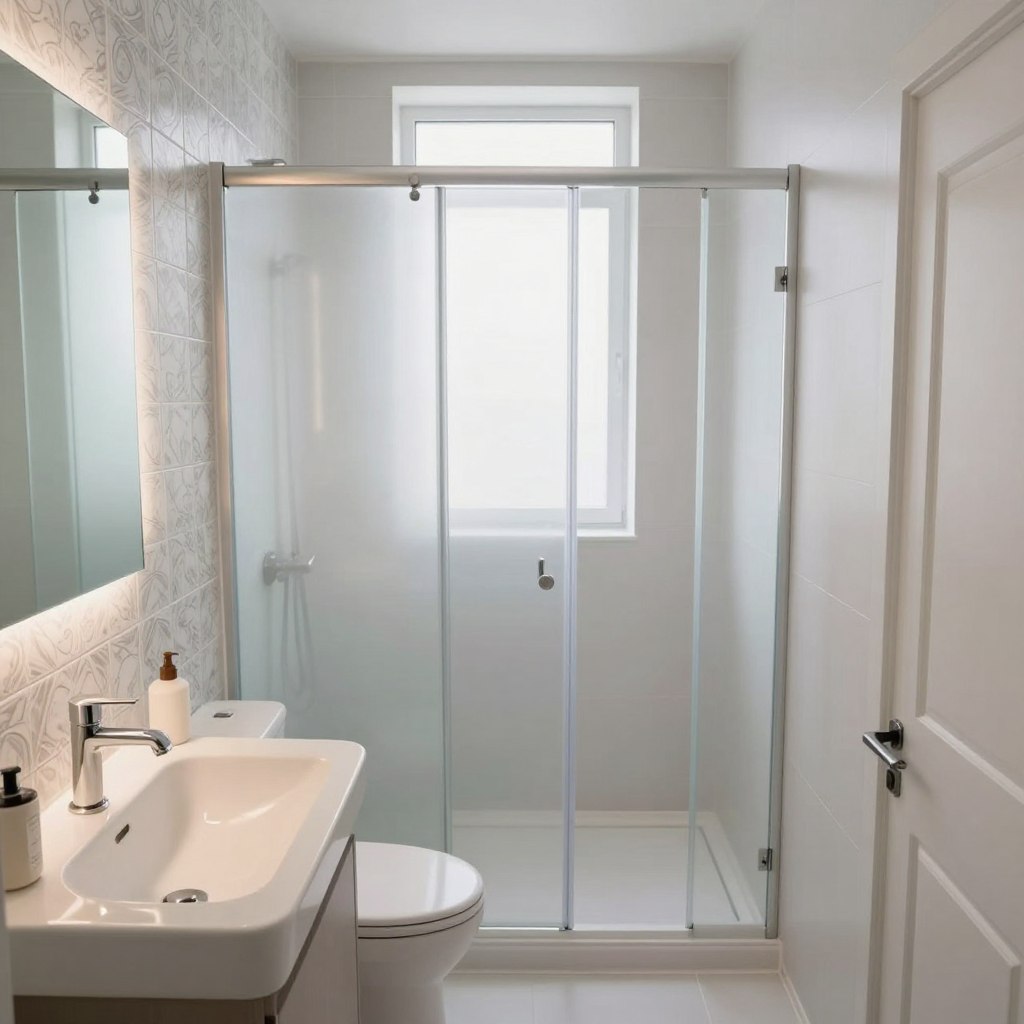
This method is a great example of creative small bathroom layouts focusing on simplicity. The room looks larger and more designed because of the smooth transitions.
Layout Synergy: Streamlined Built Ins
The magic of monochromatic schemes comes from smart layouts. Choose custom, floor to ceiling built in cabinetry or recessed shelving. Paint them the same color as the walls to make them blend in.
This approach solves storage without losing the minimalist look. Built ins provide storage without taking up visual space. They make the space sleek, seamless, and functional.
By using a single color and built ins, your bathroom will feel bigger, more organized, and peaceful.
Layout Idea 1: The Floating Vanity & The Illusion of Space
Creating the illusion of space in a small bathroom starts with a key element: the floating vanity. It’s more than just a place to store things. It’s a smart choice that makes your floor plan look bigger.
Mounting the vanity on the wall lets you see more of the floor. This makes the room feel larger and more open. The floating design gets rid of the block that traditional vanities cause. That’s why it’s so effective in small bathrooms.
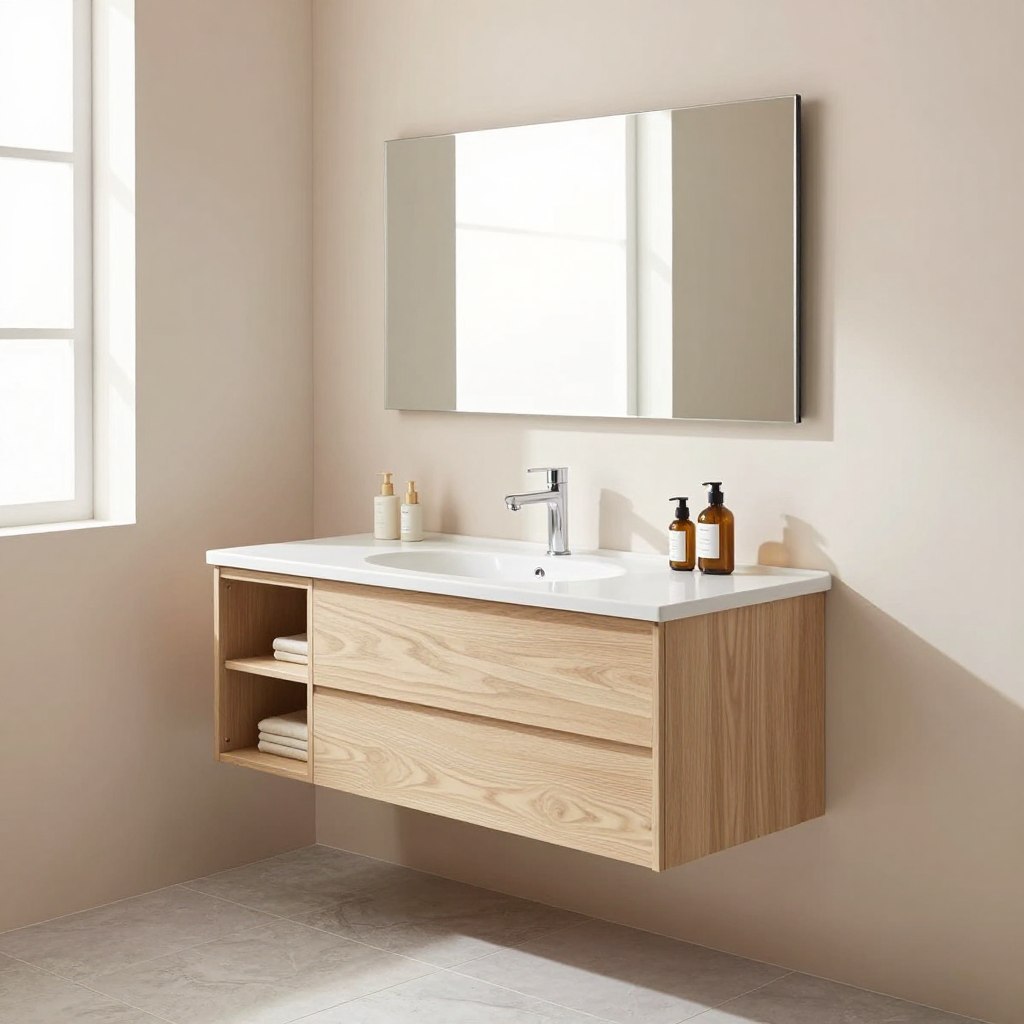
The magic of a floating vanity lies in its ability to make the floor appear larger. It’s mounted on the wall, so the floor looks like it goes on forever. This is a big deal in small spaces where every inch matters.
When picking a vanity, think about its depth. A shallow vanity is best. A deep cabinet can make a small space feel even smaller. Look for something shallower, as wall-mounted vanities don’t need as much support.
You can choose between two mounting styles. A true wall mounted vanity looks like it’s floating because it’s fixed to the wall with hidden brackets. A pedestal vanity sits on the floor but looks like it’s floating. The wall mounted option is better for making your space feel bigger.
To make your bathroom feel airy, choose a vanity that looks light. Open shelving, a cantilevered design, or legs can help. Light colors and materials also make your space feel less heavy.
In the end, the best small bathroom layout options focus on making your space feel bigger. A floating vanity is a great example of a design that works well. It makes your bathroom feel larger and more open.
Layout Idea 2: The Glass Enclosure
Removing barriers can make a small bathroom feel bigger. A glass enclosure does just that. It turns a cramped bathroom into a more open space.
The beauty of a glass enclosure is its ability to let your eye move freely. Unlike solid walls or curtains, clear glass connects the bathroom visually. This makes the room feel larger and more connected.
Frameless vs Semi Frameless
Choosing a glass enclosure means picking between two stylish options. Frameless glass enclosures are modern and high end. They use thick glass with little hardware for a sleek look. They cost more but make a small bathroom look like a spa.
Semi frameless enclosures are a more affordable choice. They have minimal metal framing for support. This option offers a clean look without the high price of frameless systems.

Consider the alternative: a shower curtain or solid wall. They make a small bathroom feel even smaller. A glass panel, on the other hand, keeps the area open while defining the wet zone.
Choosing a glass enclosure means choosing openness. It removes clutter and solid barriers. This choice prioritizes light, flow, and openness, making it a top choice for small bathrooms.
Layout Idea 3: Vertical Storage & Smart Shelving
When you have little floor space, the best option is to use your walls. In a small bathroom makeover, walls are your best friend. They help make your bathroom feel bigger and more open. This way, you can store lots without taking up too much space.
Choose tall, narrow storage. A tall cabinet or a slender freestanding unit can hold a lot. Even a ladder shelf in a corner can store towels and decorations without taking up much space. This makes your bathroom look taller and more open.
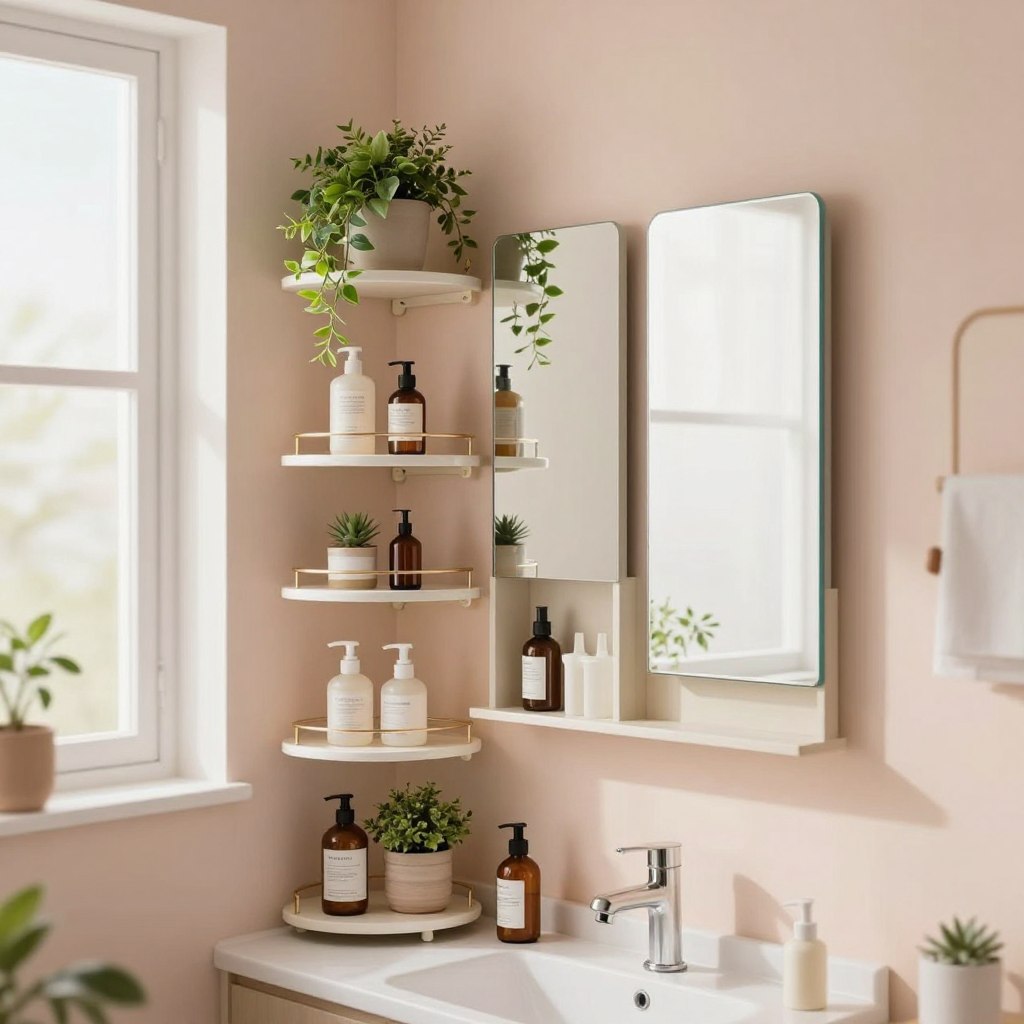
Floating shelves are great for small bathroom makeovers. They can be placed above the toilet or beside the mirror. This keeps things within reach without taking up too much space. It makes your bathroom feel bigger and easier to clean.
Built in Niche Shelving
Built-in niche shelving is both functional and stylish. Instead of a big soap dish or corner caddy, a built in niche is better. It’s carved into the wall of your shower or tub, holding your toiletries neatly. It’s a smart way to store things without cluttering the floor.
This kind of storage is key for small bathroom makeover ideas. It gets rid of the need for big storage units that make a room feel small. By using your walls and vertical space, you make your bathroom feel more organized and spacious.
Layout Idea 4: The “Wet Room” Layout
Turn your small bathroom into a spa with a modern wet room layout. This design removes the tub and shower walls, making the space feel bigger. It’s a top choice for those wanting a modern, open look.
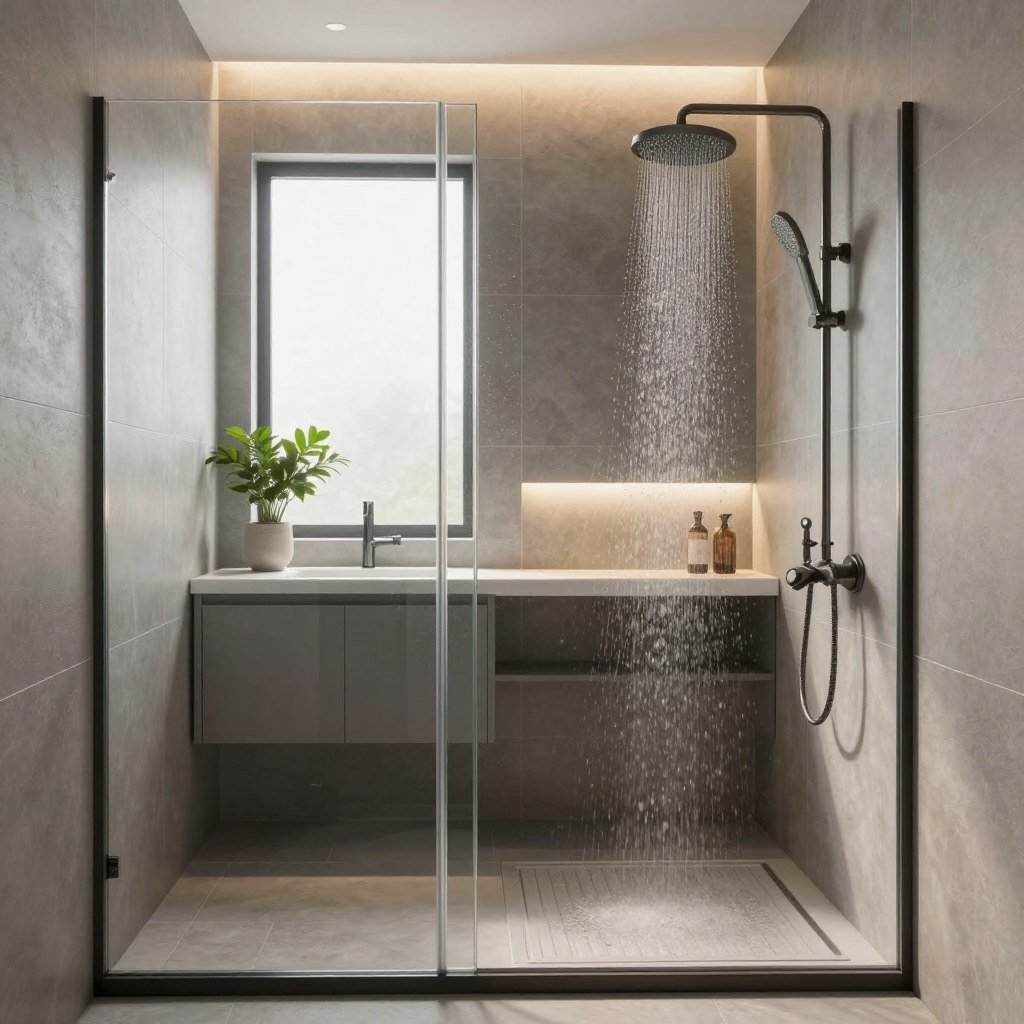
A wet room has a single floor with a drain and a glass panel for a clean look. It gets rid of shower curtains and bulky bases. This makes your small bathroom look big and airy.
Key Considerations
Creating a wet room needs careful planning. First, you must have professional waterproofing. This is not a DIY job. A pro must install a waterproof system to avoid water damage.
Radiant floor heating makes the floor warm and inviting. Choose a tile that’s textured and slip-resistant. You don’t want to slip in your spa like bathroom.
The wet room offers a luxurious, open feel. But it’s a big decision. It costs more and is more complex than a regular remodel. Yet, it turns your bathroom into a personal spa. It changes how you use space.
Layout Idea 5: The Linear Run (for Long, Narrow Bathrooms)
Don’t see a long, narrow bathroom as a tunnel. Instead, turn it into a design asset with the linear run. This layout is a smart choice for small, galley style bathrooms. It makes the most of the space, creating a streamlined and functional design.
Place your key fixtures like vanity, toilet, and shower or tub in a row along the longest wall. Start with the vanity, then the toilet, and end with the shower or tub. This order keeps plumbing neat and saves money.
Traffic Flow and Clearance
In a narrow bathroom, keeping paths clear is key. You need at least 21 to 24 inches of space in front of each fixture and the door. This ensures the space feels open and easy to use.
When planning your layout, remember to keep paths clear. This makes the bathroom feel more spacious and less cluttered. It’s like creating a clear lane for movement.
Now, here’s a design trick that makes this layout special. Add a large mirror or a full mirrored wall at the end of the linear run. This trick makes the space feel longer. Your long, narrow bathroom now looks like a spacious design statement.
This layout is more than just fitting everything in. It’s about creating order and flow in a small space. By aligning fixtures and considering movement, you make a small bathroom feel intentional and spacious.
Embrace the linear run. It’s a great example of creative small bathroom layouts that use the space well. Even the most challenging spaces can become serene and functional retreats.
Lighting and Fixtures: The Finishing Magic
You’ve picked your colors and set up your layout. Now, it’s time for the final touch: lighting and reflective surfaces. This is when a small bathroom makeover really shines. The right lighting and mirrors make your space feel open and polished.
Forget the harsh overhead light. A layered lighting scheme is key. Start with a central fixture for overall light. Then, add task lighting with wall sconces or vertical light strips on either side of your mirror. They give a flattering light without harsh shadows.
Add a small, decorative fixture for personality. A beautiful pendant or chandelier can be a focal point. Choose warm white (2700K-3000K) bulbs for a cozy, spa-like feel. They are more flattering and relaxing than cool-toned light.
Mirrors as Space Multipliers
A mirror is not just for reflection; it’s a space multiplier. A large, frameless mirror is a classic for a reason. It reflects light and the room, making walls seem to recede.
For a space-saving small bathroom makeover idea, try a medicine cabinet with a mirrored front. It offers storage, hides clutter, and mirrors the room. Place it opposite a light source, like a window, to bounce more light around. This trick can make your bathroom feel larger and brighter.
Conclusion: Your Blueprint for a Bigger Feel
Your small bathroom’s potential isn’t just about size. It’s about using color and space smartly. The right paint colors and layout can change how your room feels. It’s not about having more space; it’s about designing with purpose.
Light, reflective paint colors like soft neutrals or serene blues can make walls look bigger. Combine these with smart layouts, like a floating vanity or a glass shower. This opens up the floor and lets light in. Vertical storage and clever layouts, like a wet room, can make every inch count.
The best small bathroom paint colors and layouts work together. A light, airy color scheme makes a room feel open. A clever layout ensures every element has its place. Brands like Sherwin-Williams and Benjamin Moore offer colors to make spaces feel larger.
Start with just one change. Choose one color strategy or one new layout idea. See how it changes your small bathroom. Your bathroom is ready to feel bigger, brighter, and perfectly yours.