
Have you ever walked into your long, narrow living room and felt frustrated? You’re not alone. I’ve been there, staring at that space, wondering how to make it cozy and functional.
It’s a common problem. You try to fit furniture and your life into a space that seems to fight you. It feels like a puzzle where the pieces won’t fit. I’ve tried pushing furniture against the walls, but it only makes the middle cramped and cluttered.
But here’s the good news: a long, challenging space isn’t a dead end. It’s a chance to get creative. Forget the frustration. I’ve found the solutions through trial and error. This guide has the 7 smart layout rules that changed my space.
We’ll move past the frustration. I’ll show you how to use the room’s shape to your advantage. You’ll learn to define zones, choose the right furniture, and create a flow. Your long, narrow living room will feel intentional, stylish, and like a place you want to be.
Introduction: The Long and Short of It: Embracing Your Narrow Space
Does your living room feel like a bowling alley? You’re not alone. That sofa against the wall, the coffee table blocking the way, and feeling like you’re decorating a hallway are common issues. But, this cramped feeling is actually a great chance to get creative.
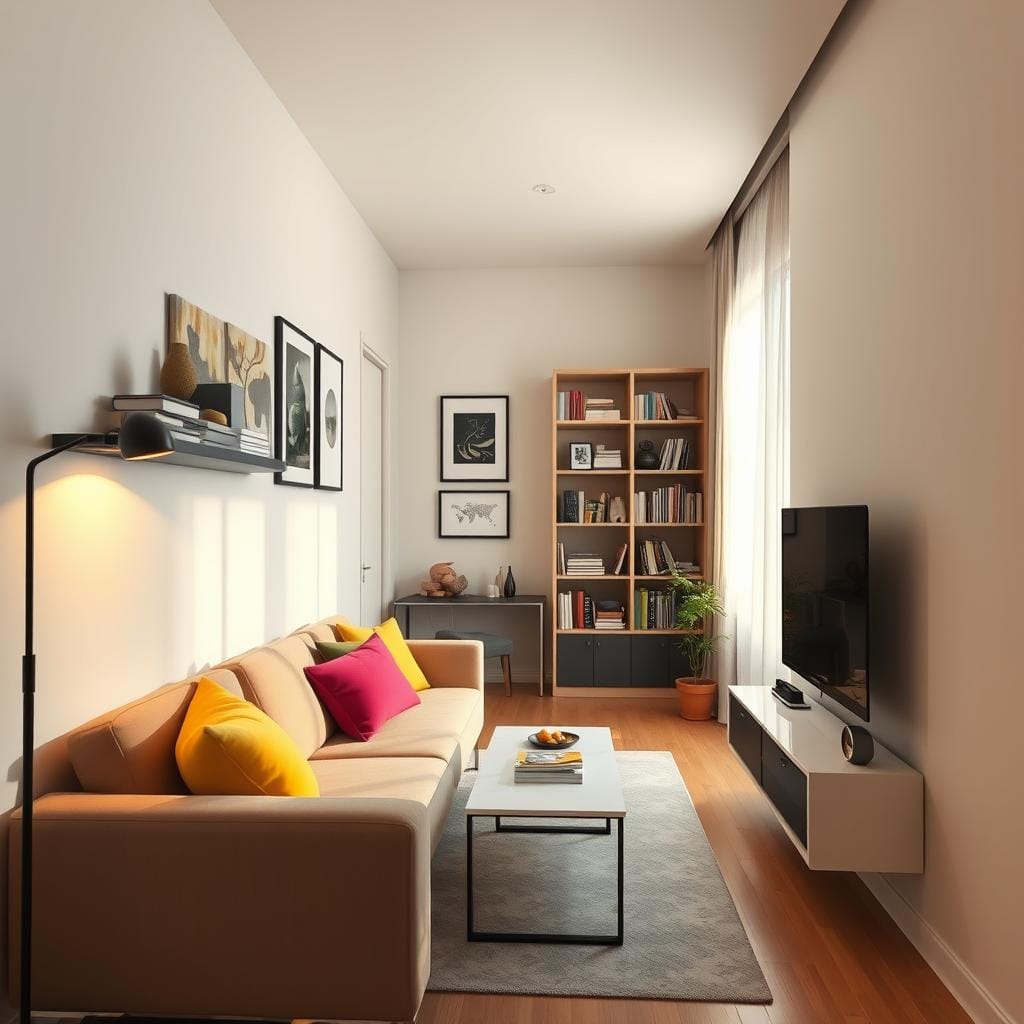
Don’t see your narrow room as a problem. View it as a chance to be creative. That long, narrow shape is perfect for small space decorating ideas that make your room feel bigger and cozier. Instead of fighting the room’s shape, we can use it to create a stylish and functional space.
This isn’t about hiding the room’s shape. It’s about celebrating and enhancing it. We aim to turn that “bowling alley” into a cozy, intentional space. Smart design choices can make this challenge your home’s most charming feature.
The key is a set of principles, not just random small space decorating ideas. I’ve narrowed it down to seven rules for your narrow living room. We’ll focus on making the room work better, not just look bigger. We’ll discuss breaking the space into zones, using rugs and furniture, and choosing pieces that fit the room’s shape.
Let’s change how we see your narrow living room. It’s not a problem—it’s an opportunity. It’s a chance to create a space that’s uniquely yours. The next seven rules will help you love your floor plan, not fight it.
Why a Narrow Living Room Presents a Unique Challenge
Living in a long, narrow room can be tough. It feels cramped or like a maze no matter how you set up the furniture. This isn’t just about decorating; it’s a design puzzle with its own rules.
The challenge isn’t just about space. It’s about finding a balance between a clear path and cozy seating areas. This balance is hard to achieve in a narrow room.
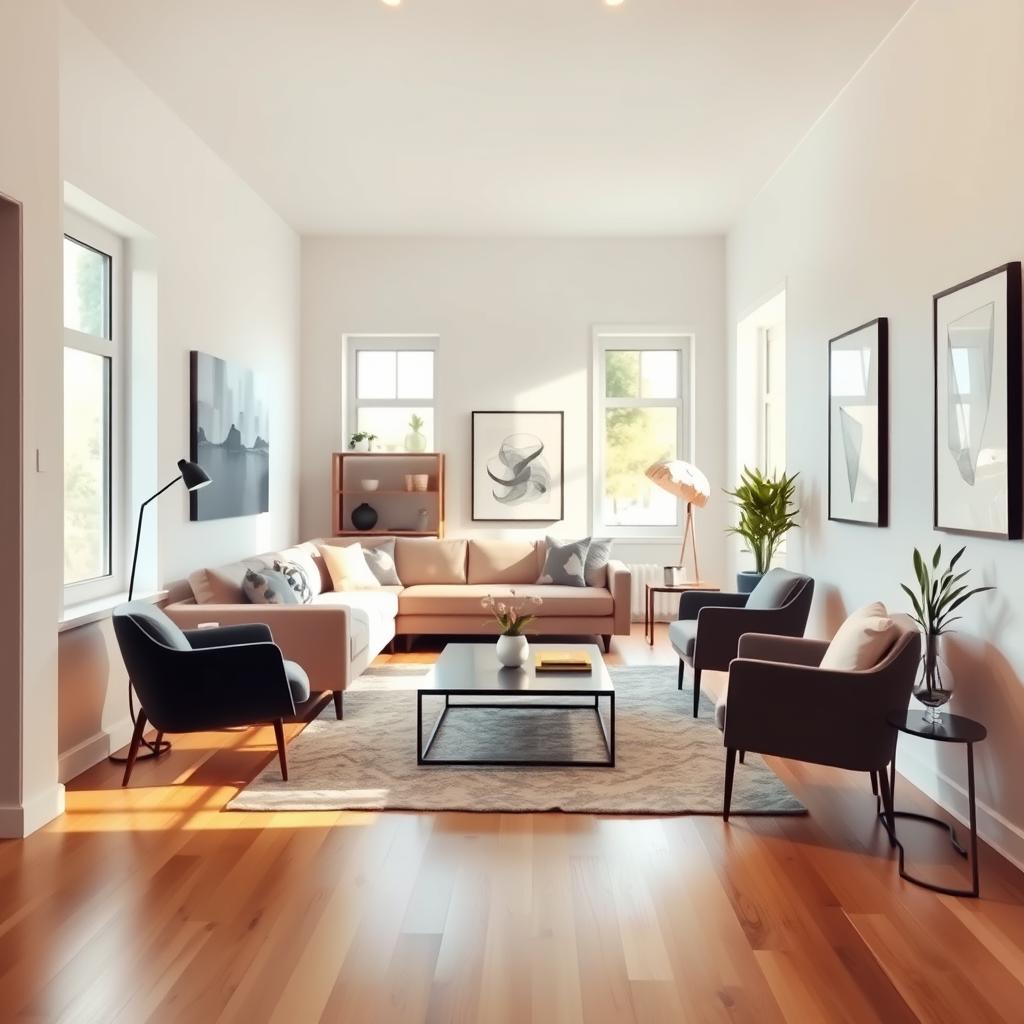
The bowling alley effect is at the heart of the problem. Walking into a long room feels like entering a tunnel. It’s like a bowling alley to many. You’re faced with a choice: a clear path or cozy seating.
Pushing furniture against walls is a common mistake. It makes the room feel even narrower. This creates a useless middle area that feels like a hallway.
Arranging furniture in a narrow space is a puzzle. A sofa can block the path, making it hard to move. It’s not just about where to put the sofa; it’s about making the room functional.
This challenge is more than furniture. It’s about how space feels. A bad layout makes a room feel cramped, not because it’s small, but because of its shape. The bowling alley effect affects how we move and live in the room.
But there’s a solution. By understanding the challenges of a narrow room layout, we can find smart ways to arrange it. This will transform your space.
Narrow Living Room Decor: The 7 Rules for a Smart Layout
When it comes to narrow living room decor, following the right layout rules can make all the difference in transforming your space.
You’ve faced the challenge of your long, narrow living room. You’ve noticed the “bowling alley” feeling. Now, let’s find a solution. Forget the cramped and awkward feeling. Transforming your space is about strategy, not magic.
Think of these as your design playbook. They create a powerful approach. Your space will feel wider, more balanced, and inviting.
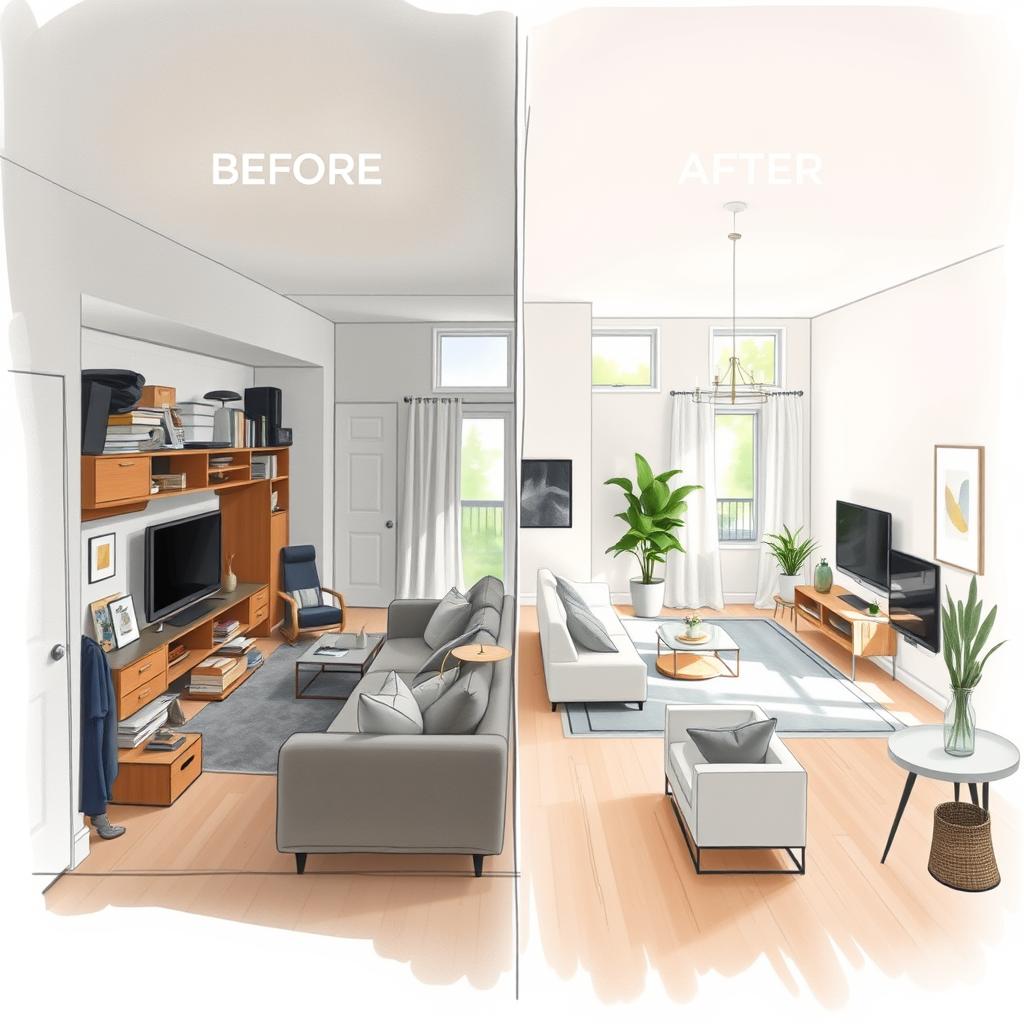
Here are your seven-point playbook for conquering a narrow space. We’ll explore each one to help your home.
Your 7 Point Playbook for a Narrow Living Room
This isn’t just one trick. It’s a coordinated strategy. Each rule supports the others, creating good design.
Rule 1: Ditch the Bowling Alley
Stop lining furniture against walls. This mistake makes the room feel like a hallway. We’ll show you how to create cozy zones instead.
Rule 2: Float Your Furniture
Don’t push furniture against walls. Pulling it away makes the room feel wider and more intimate.
Rule 3: Use Rugs to Widen the View
A rug can stretch your room visually. The right size and placement can make the room feel wider.
Rule 4: Choose Slim & Tall Furniture
Furniture with legs and open space underneath adds airiness. Think sofas with visible legs and tall, slender bookcases.
Rule 5: Manipulate Light and Color
This is your visual magic trick. We’ll explore how to use paint, light, and reflection to widen your room.
Rule 6: The Two Thirds Layout Principle
This rule of thumb changes your room’s balance and flow. It ensures your room is balanced, not blocked.
Rule 7: Layer Your Lighting
A single overhead light makes a room feel like a tunnel. We’ll show you how to layer lighting to widen and warm your space.
Think of these rules as tools in your design toolkit. You don’t need to use every single one perfectly. By understanding and combining them, you can redefine your narrow living room. You’re not just decorating; you’re solving a spatial puzzle. Let’s start with the most important shift in mindset: ditching the bowling alley.
Rule 1: Ditch the Bowling Alley: Create “Zones of Use”
The biggest mistake in a long, narrow living room is treating it like a bowling lane. You might push all your furniture against the long walls, making it feel like a long, uninviting corridor. The best furniture arrangement in narrow spaces is to forget the single, long room concept. Instead, break the room into distinct “zones of use.”
This turns your narrow space into a multi functional, inviting area. It makes the room feel wider by creating multiple focal points. It tricks the eye into seeing distinct, functional areas instead of one long, skinny room.
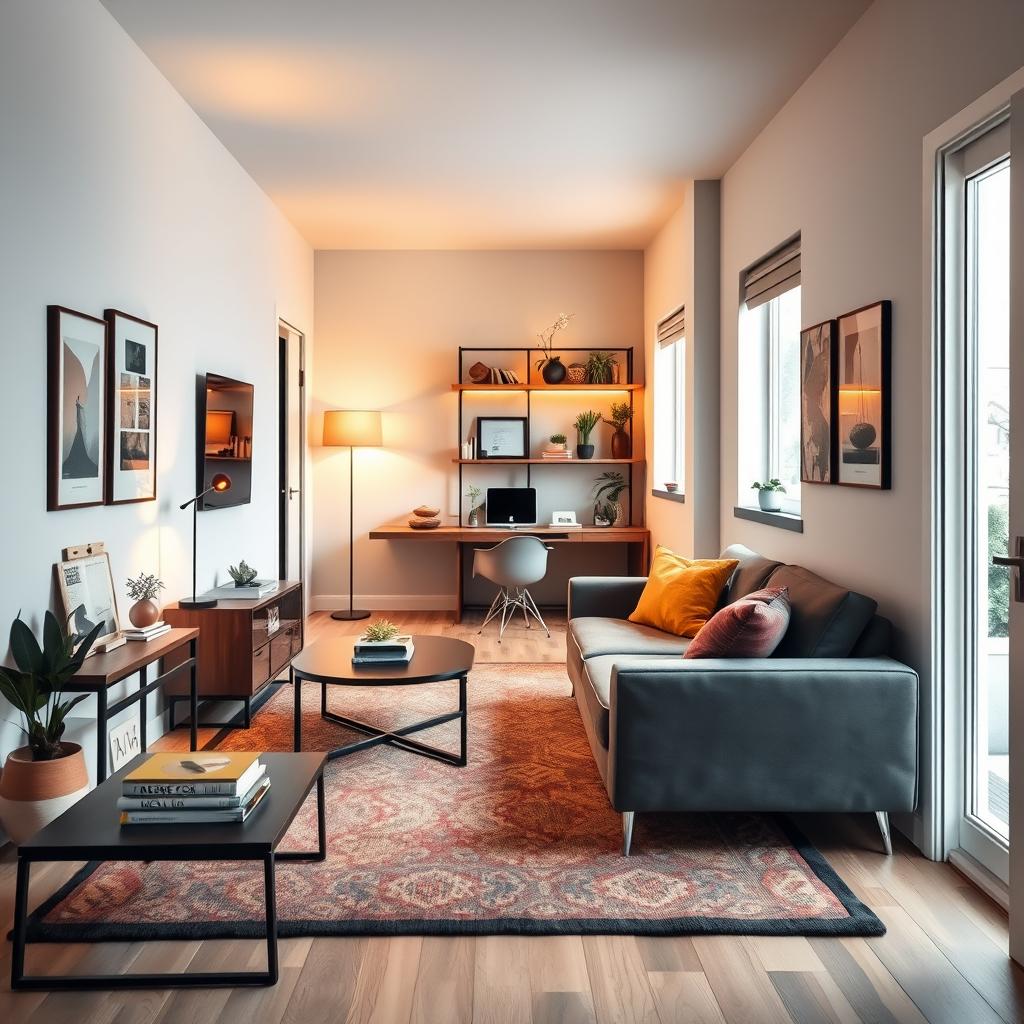
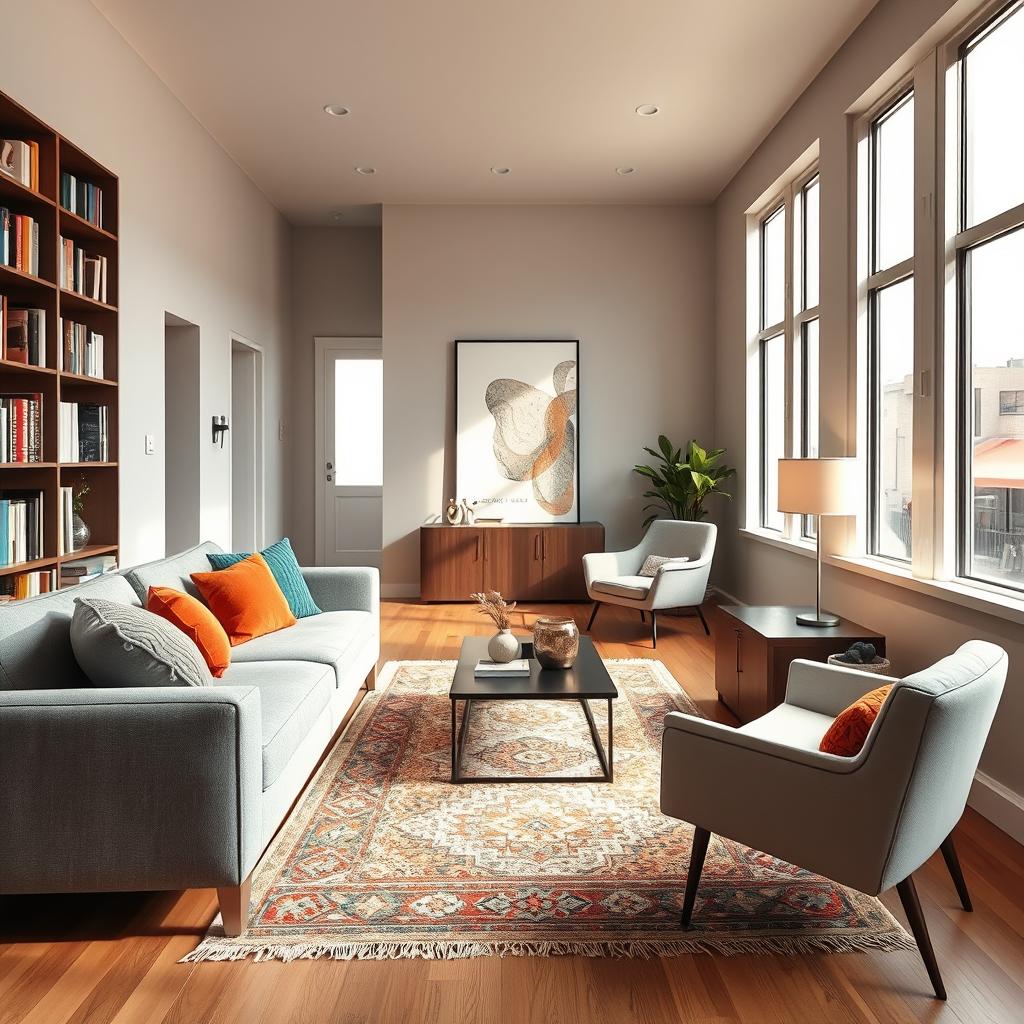
This is your primary seating area. The key is to float your furniture. Instead of pushing a sofa against the long wall, pull it into the room to face a pair of chairs. This creates an intimate, multi-directional seating area that naturally blocks the long “bowling lane” sightline.
Arrange your sofa and chairs to face each other, not the TV. This encourages conversation and forces a natural flow of traffic around the perimeter, not through your living area.
Use a rug to anchor this zone. A large area rug that fits under all the front legs of your furniture will visually define the conversation area. This is a crucial step in smart furniture arrangement in narrow spaces.
Media Zone: Smart Tech Placement
Your TV and media console shouldn’t dictate the entire room’s layout. For the media zone, think vertical and minimal. Mount your TV on the wall or on a slim console. The goal is to avoid a cluttered look that eats into your floor space.
Hide cables and components in a console with doors or a media cabinet. This zone should feel integrated, not dominant.
If your main seating is perpendicular to the TV, place the console on the shortest wall. This arrangement stops the room from feeling like a tunnel and makes the TV a part of the living space, not the sole focal point.
Work or Reading Nook: Claiming a Quiet Corner
Every narrow room has an awkward corner or a sliver of unused space. That’s your opportunity. Claim a quiet corner for a reading nook or a compact workspace. A small, comfortable chair, a floor lamp, and a tiny side table are all you need.
This clever furniture arrangement in narrow spaces utilizes what was once dead space. It adds function and makes the room feel considered and complete, proving that smart design works in every nook.
By dividing your room into these purposeful zones, you shatter the bowling alley effect. You’re not just arranging furniture; you’re designing an experience. Each zone serves a purpose, making your narrow living room feel wider, smarter, and infinitely more livable.
Rule 2: Float Your Furniture to Free the Walls
My top tip to avoid the bowling alley effect is to stop hugging the walls. Putting all furniture against the wall makes a room feel smaller, not bigger. It turns your room into a long, empty space.
To fix this, float your furniture. Move your key pieces, like a sofa or chairs, away from the walls. This simple change can totally change your room’s feel.
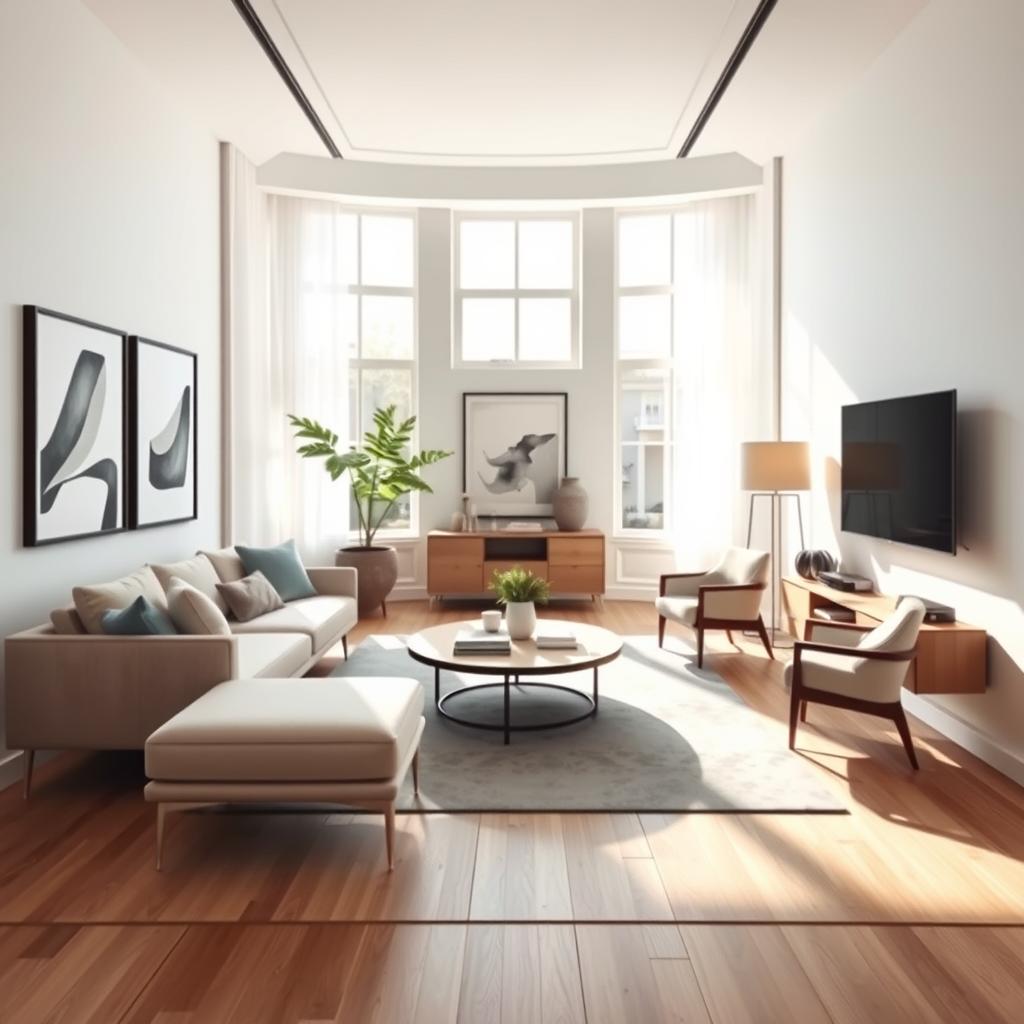
When you put a sofa in the room’s center, it makes the space more lively. It breaks the “tunnel” feeling by creating different areas. This makes your room feel like a collection of special spots, not just a long path.
Traffic Flow: The 36 Inch Rule
When you move furniture, remember the 36-inch rule for traffic flow. You need at least 36 inches of space for a main walkway. This lets people move easily around and behind furniture.
When you move your sofa, check the space behind it. If it’s 36 inches or more, you’ve made a useful walkway. This makes your room feel more open and planned, not just cluttered.
Using a Sofa Table for Function and Flow
What about the space behind your sofa? A sofa table is a great choice here. A narrow console or sofa table behind your sofa changes everything.
It gives your sofa a “back” and defines the living area. It also provides a spot for a lamp, books, or decor. Its slim design keeps the walkway open. It’s the perfect answer to the “what to do with this space?” question.
Remember, a great narrow living room has clear, useful zones. By floating your furniture, you control the room’s flow and function.
Rule 3: Use Rugs to Visually Widen the Space
I think the area rug is the most powerful tool for a long, narrow living room. Don’t use a small rug in the middle. It makes the room feel longer and narrower.
The right rug is the base of your layout. It’s the key to making a narrow room feel wider.
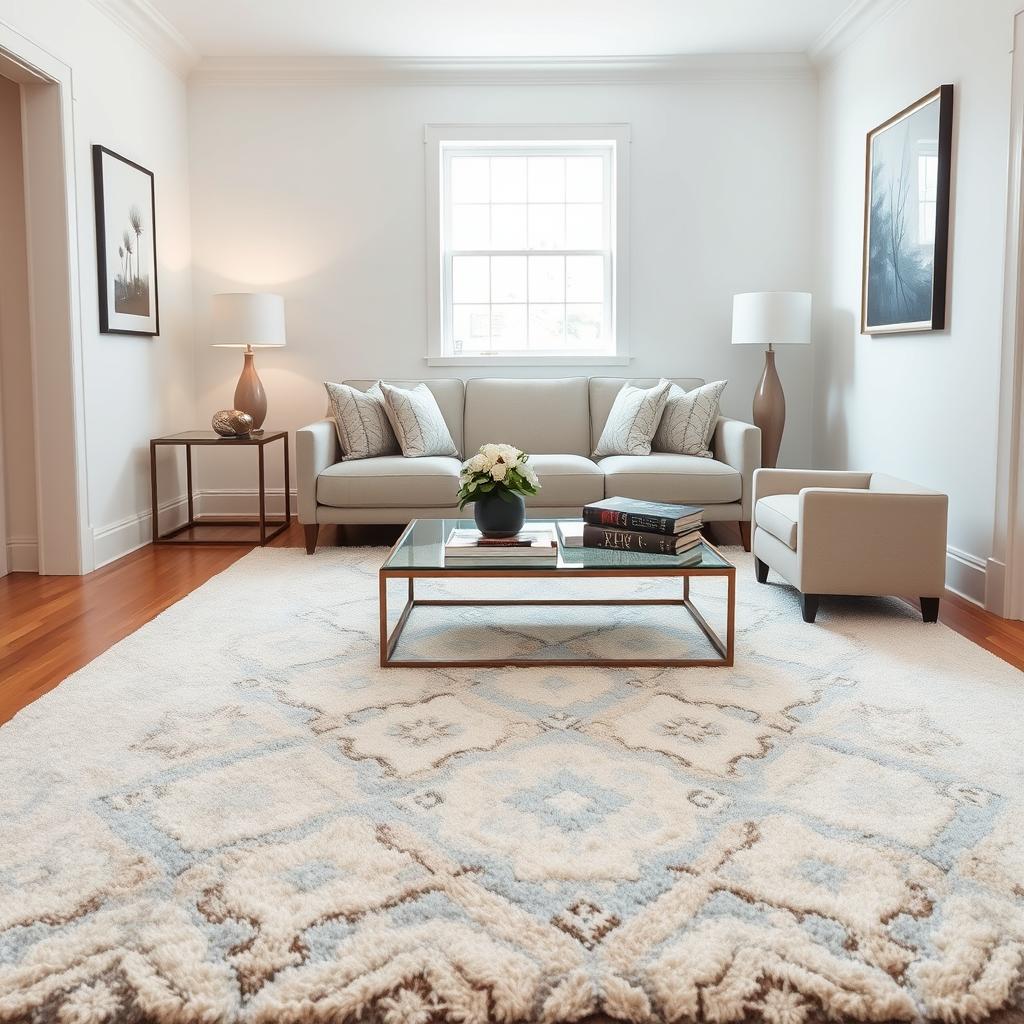
The golden rule is go big or go home. A small rug can make the room seem smaller. Your rug should be as wide as your main seating area.
For the best effect, lay the rug perpendicular to the room’s length. This creates a visual line that makes the room feel wider. It stops the room from feeling like a bowling alley.
Choosing the Right Rug Size and Pattern
First, decide on the rug’s size. The front legs of your main furniture should be on the rug. This anchors everything and creates a unified area.
A small rug makes furniture look like it’s floating. It breaks the room into pieces. The rug should tie your seating area together.
For the pattern and color, pick a rug with a horizontal pattern. Stripes or a geometric pattern work well. A light-colored rug with a subtle pattern can also make the room feel brighter.
Stay away from small, busy patterns. They can make the room feel cramped. Instead, choose rugs that guide your eye across the room.
One big rug, placed right, can change your room’s look dramatically. It makes the walls seem farther apart. This transforms your narrow living room.
Rule 4: Choose “Slim & Tall” Furniture
To avoid the bowling alley look, pick furniture that’s slim, tall, and light. In a narrow room, every piece must be useful. Big, stuffed sofas and deep sectionals take up too much space and block the view.
Instead, use furniture that goes up, not out. This makes your room feel bigger and more open.
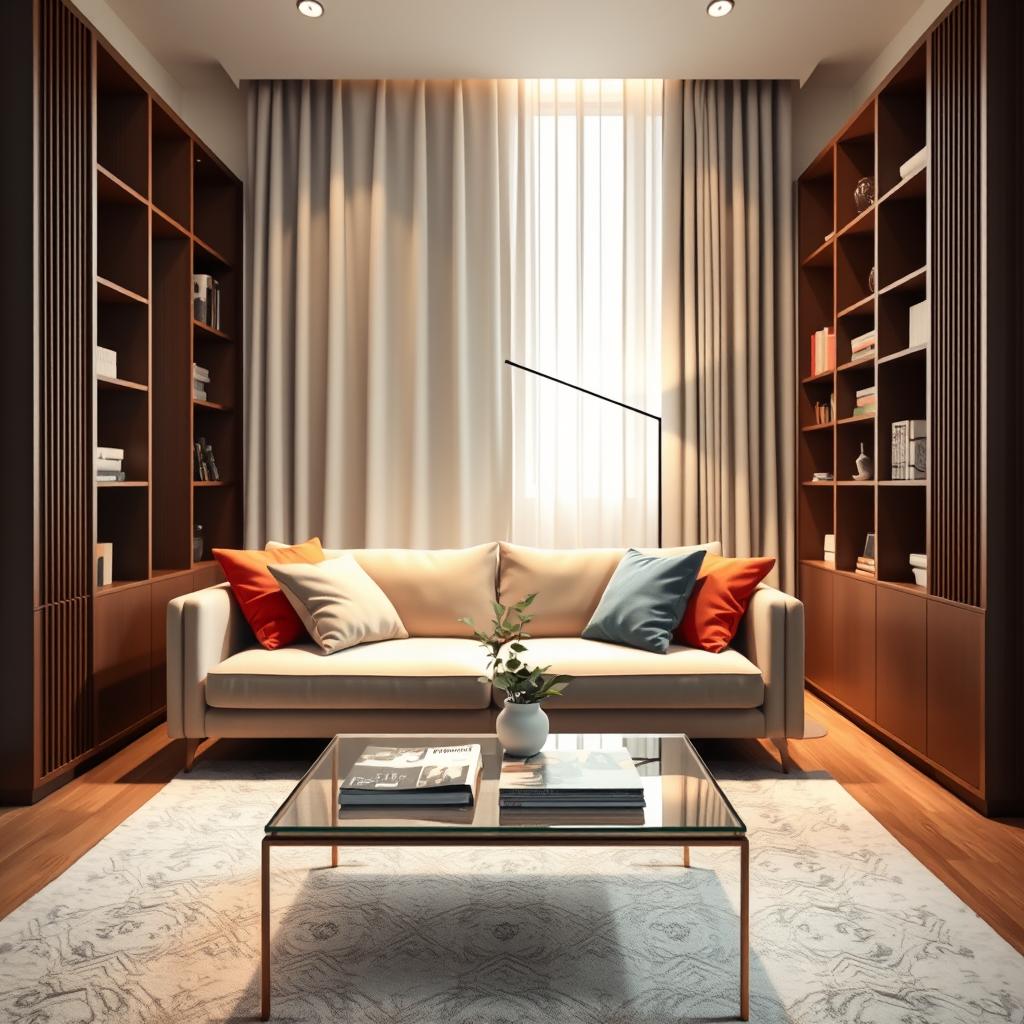
Your sofa is the biggest piece, so its size matters a lot. I tell clients to find sofas and loveseats that are shallow. A sofa shouldn’t be more than 36 inches deep.
This keeps it from taking up too much room. A high back and slim arms make the room feel taller. A loveseat or a small three-seater is better than a big sectional.
For a small area, follow the optimal design for small spaces. It works well with slim, vertical furniture.
Furniture on Legs: Let Light and Sightlines Flow
Choosing furniture on legs makes a room feel airy. A sofa, armchair, or console table with thin legs changes everything. It lets light flow under the furniture and across the floor.
This makes the room feel bigger. The space under furniture on legs seems like part of the room, not a block.
This trick isn’t just about looks. It’s about how our brains see space. When we can see the floor from one end to the other, the room feels larger. So, switch to a sofa or chair with tall, slender legs and watch your room open up.
Rule 5: Manipulate Light and Color
Forget about knocking down walls. The most powerful tool for transforming a long, narrow room isn’t a sledgehammer it’s the clever manipulation of light and color. This is where you stop fighting the room’s shape and start working with the principles of perception to make it feel wider, brighter, and perfectly proportioned. Think of paint and light as your magic wands.
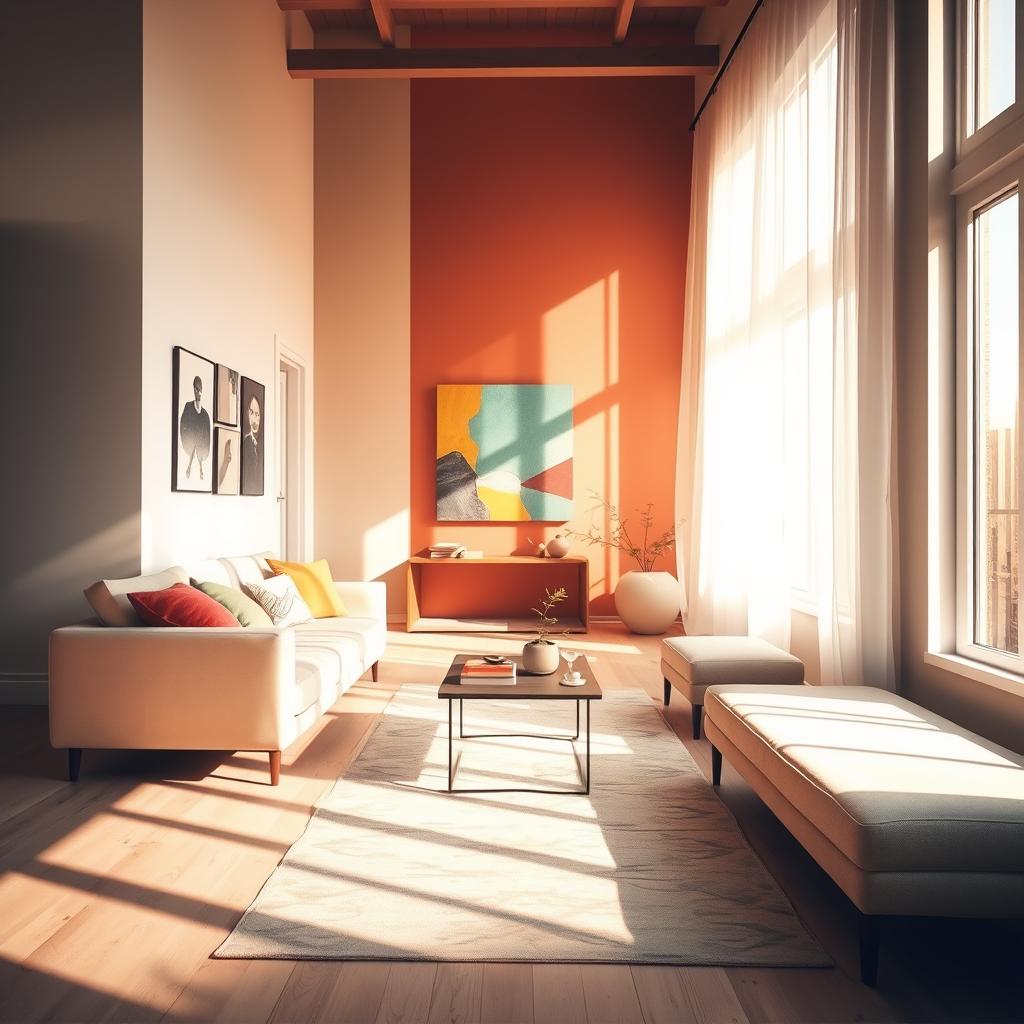
Your color palette is your most powerful tool. The golden rule for a narrow room is to use light, airy, and cool colors. These hues recede, making walls seem farther apart. Think soft whites, pale grays, and airy pastels.
For the long walls, stick to these light, reflective colors to push the walls apart visually. The finish matters, too. A low-sheen or matte finish is best. It’s more forgiving on imperfect walls and absorbs light softly, reducing harsh shadows that can make a space feel tight.
Now, for the short end walls, you can use a slightly darker, more saturated tone. This clever trick makes the far wall feel like it’s “coming forward,” which visually squares off the room and shortens the tunnel effect. This contrast is one of the most effective lighting ideas for a narrow living room because it plays with depth perception.
The Accent Wall: When It Works and When It Doesn’t
An accent wall can be a bold statement, but in a narrow room, the rules are strict. Never put a bold, dark, or busy accent color on one of the long walls. This will only make the room feel like a narrow, colored tunnel.
However, there is one powerful exception: the short wall at the end of the room. Painting or papering the far, short wall in a rich, deep, or dramatic color or pattern will visually bring that wall forward, making the room feel more square and balanced. It acts as a visual stop, a destination, rather than a continuation of a long, boring wall.
Strategic Mirror Placement to Double the Space
This is the ultimate high impact, low-cost trick. A strategically placed mirror doesn’t just reflect light; it doubles the sense of space. The key is placement. Hang a large mirror on a long wall to reflect the view from a window or a beautiful piece of art opposite it.
This creates the illusion of another window or an extension of the room. Avoid placing mirrors on opposite walls, as this can create an infinite, funhouse effect. Instead, angle a large, leaner mirror to reflect a specific, pleasant view, effectively creating a new “window” and pushing the perceived boundaries of the room. This is a cornerstone of smart lighting ideas for a narrow living room, as it amplifies both natural and artificial light.
Light and color are your magic wands. By painting with light and choosing hues strategically, you can make your narrow living room feel more open, airy, and balanced than you ever thought possible.
Rule 6: The “Two Thirds” Layout Principle
Working with a long, narrow living room? The “Two-Thirds” layout principle is a game changer. Instead of filling the room with furniture, focus on two thirds of it. This trick brings balance and purpose to an awkward space.
It creates a cozy, defined area. This leaves room for movement and flow.
Creating a “Floating” Conversation Area
This principle focuses on a “floating” conversation area. Group your main seating sofa, armchairs, and coffee table in one zone. This zone should feel like a self contained, intimate space in the larger room.
Position your sofa and chairs to face each other across a coffee table. Use a large area rug to anchor the arrangement.
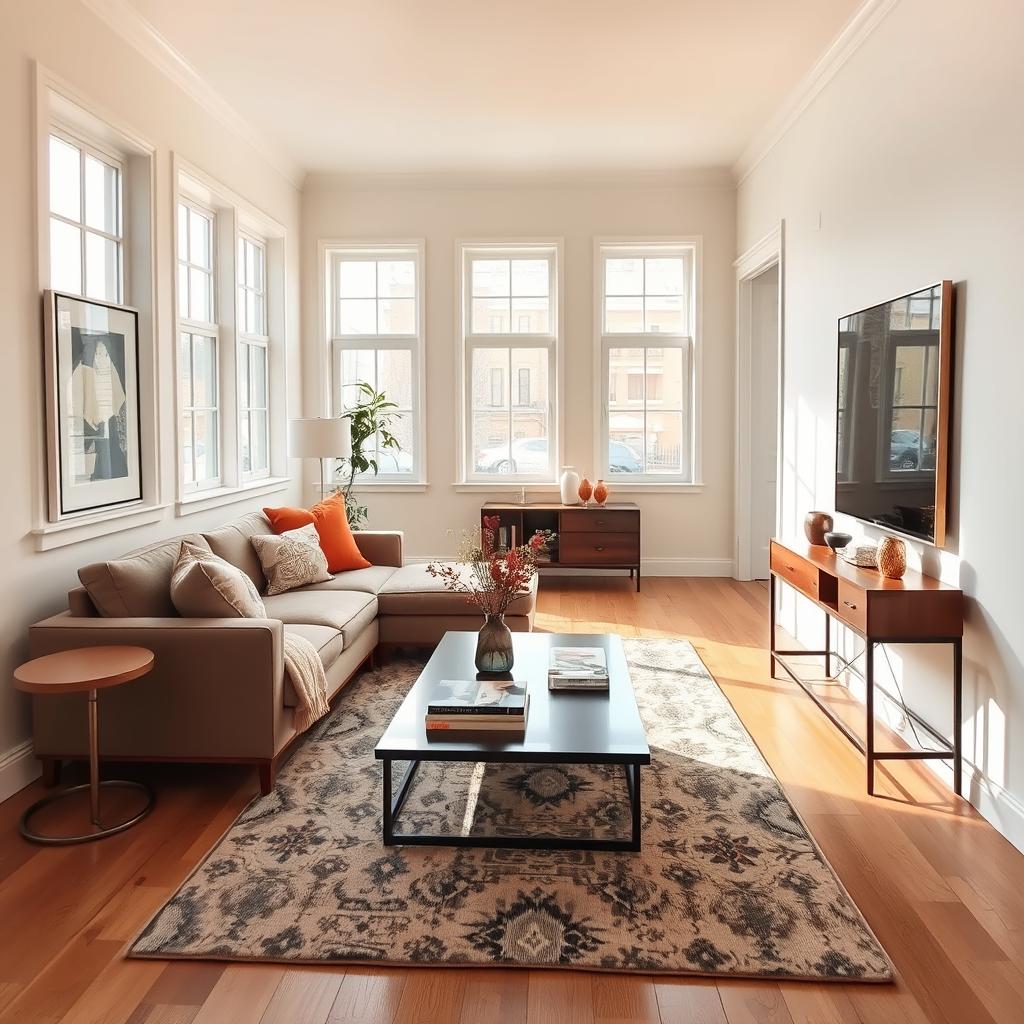
The right area rug is key for defining this zone. Choose a rug big enough for the front legs of all your main seating. This visual boundary is crucial.
It physically and visually carves out your primary living area. The rug acts as a border, telling the eye where the primary social space begins and ends.
By using a large area rug, you create a distinct and inviting conversation area. It feels intentional and grounded.
The beauty of this rule is what you do with the remaining third of the room. This space is not wasted! It becomes a generous walkway or a perfect spot for a slim console table, a tall, slender bookcase, or a floor plant.
This clear separation makes the room feel more open and less like a bowling alley.
Rule 7: Layer Light to Widen and Lift
To make your long, narrow room feel bigger and more welcoming, you need to change how you light it. Move away from the single overhead light that makes the room feel tight. Instead, use layered lighting to add depth and make the room feel wider and taller.
Think of lighting like a painter uses colors. You need three layers: ambient, task, and accent. This layered lighting is key to making your narrow room feel more open.
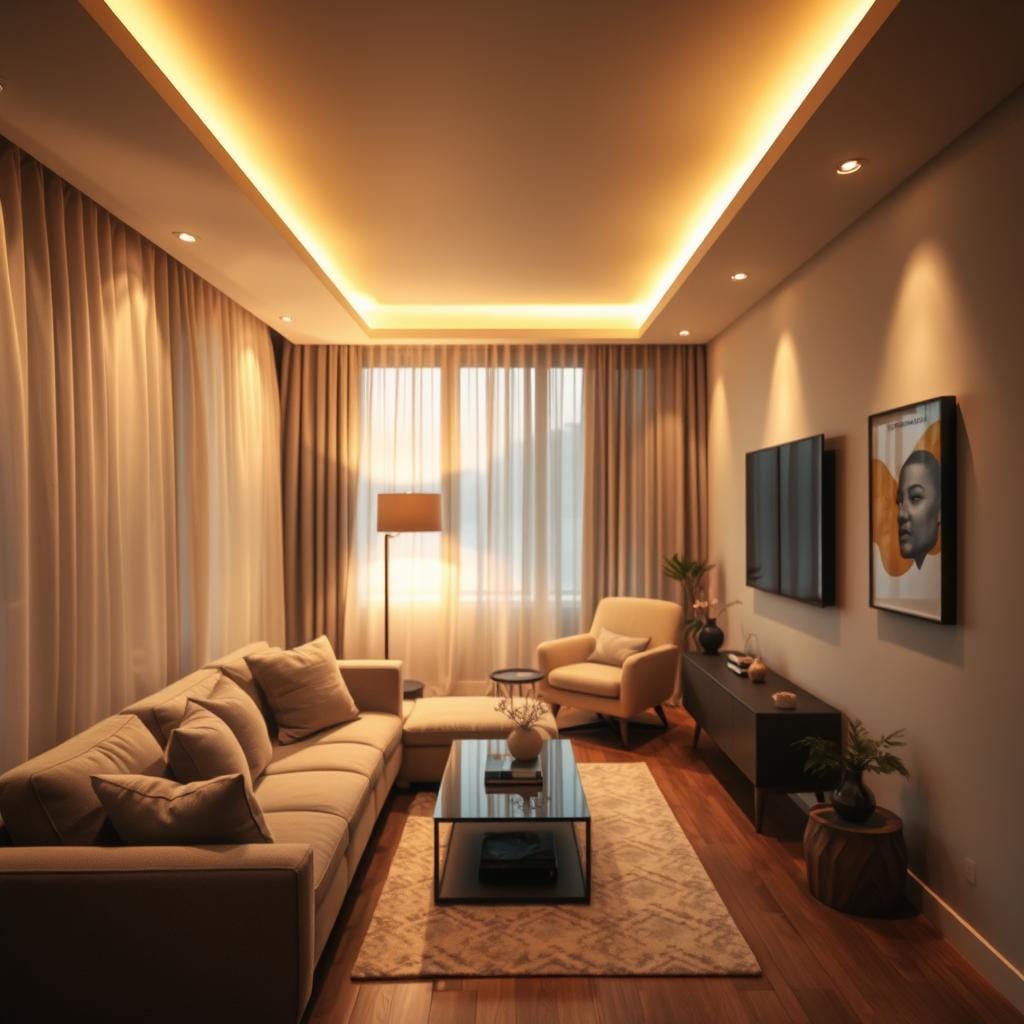
Start with ambient light. Don’t use a single light in the center. This creates harsh shadows and makes the room feel smaller. Use recessed or track lighting to spread light evenly. Place them to graze the long walls and make them seem farther away.
This trick makes the room look wider by visually pushing the walls apart.
Task Lighting for Specific Zones
Task lighting is about making your room functional. A floor lamp by a chair makes a cozy reading spot. A table lamp on a console table creates a place for conversation. This targeted lighting breaks up the room into different areas, making it feel wider.
For even better space use, look into multi-functional furniture with built-in lighting. It serves two purposes at once.
Accent Lighting to Guide the Eye
Accent lighting is the last, magical touch. It guides your eye through the room. A picture light on a big art piece, a small lamp on a console table at the room’s end, or a slim floor lamp in a corner all draw your gaze. They make the room feel longer and wider.
By mixing ambient, task, and accent lighting, you create a soft, even light. This eliminates harsh shadows and dark spots. It’s how you turn a narrow room into a bright, spacious space.
Common Mistakes That Make a Narrow Room Feel Cramped
Many homeowners push all furniture against the walls in a long, narrow living room. They think this makes the space feel larger. But, this is actually the biggest mistake that makes a room feel cramped.
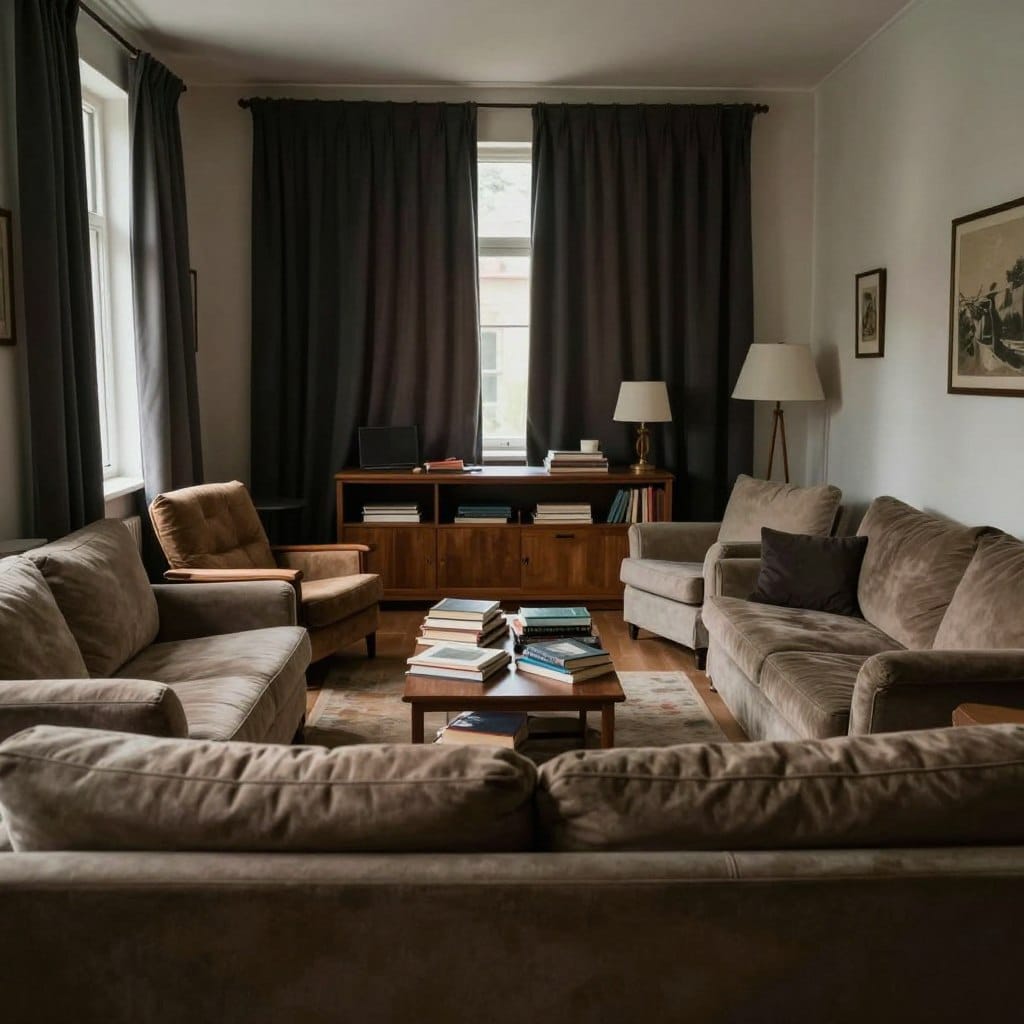
People often line their sofas, bookshelves, and media units along the long walls. They hope to open up the center. But, this creates a “bowling alley” effect, making the room’s length more noticeable and leaving a big, unused space in the middle.
Pushing all furniture against the walls is a common but wrong solution. It turns the room into a long, narrow hallway. Furniture that floats in the space makes the room feel more alive and open for conversation.
Using a rug that is too small is another mistake. A small rug in a long room makes the floor feel broken and the room smaller. A big enough rug can help make a cozy area and make the floor seem wider.
Choosing an oversized, deep sofa is a common error. A big, deep sectional can take over a narrow room. Choosing a smaller sofa or chairs helps the room flow better.
Relying on a single, central overhead light is a big problem. A single light in the middle of a long room creates shadows and makes the walls seem closer. It makes the room feel flat and narrow.
Lining the long walls with bulky bookcases or media units is a costly mistake. It makes the room feel like a tunnel. A big unit on one wall makes the room feel narrower and more cramped.
These mistakes are not design failures, but easy fixes. Knowing them is the first step to making a room feel open, balanced, and welcoming.
Narrow Living Room Layout Examples
Changing a long, narrow space can be tough. Let’s look at some layout examples. Seeing “before and after” scenarios helps us understand how to use the seven layout rules. We’ll explore a few common scenarios to show you how to apply these principles.
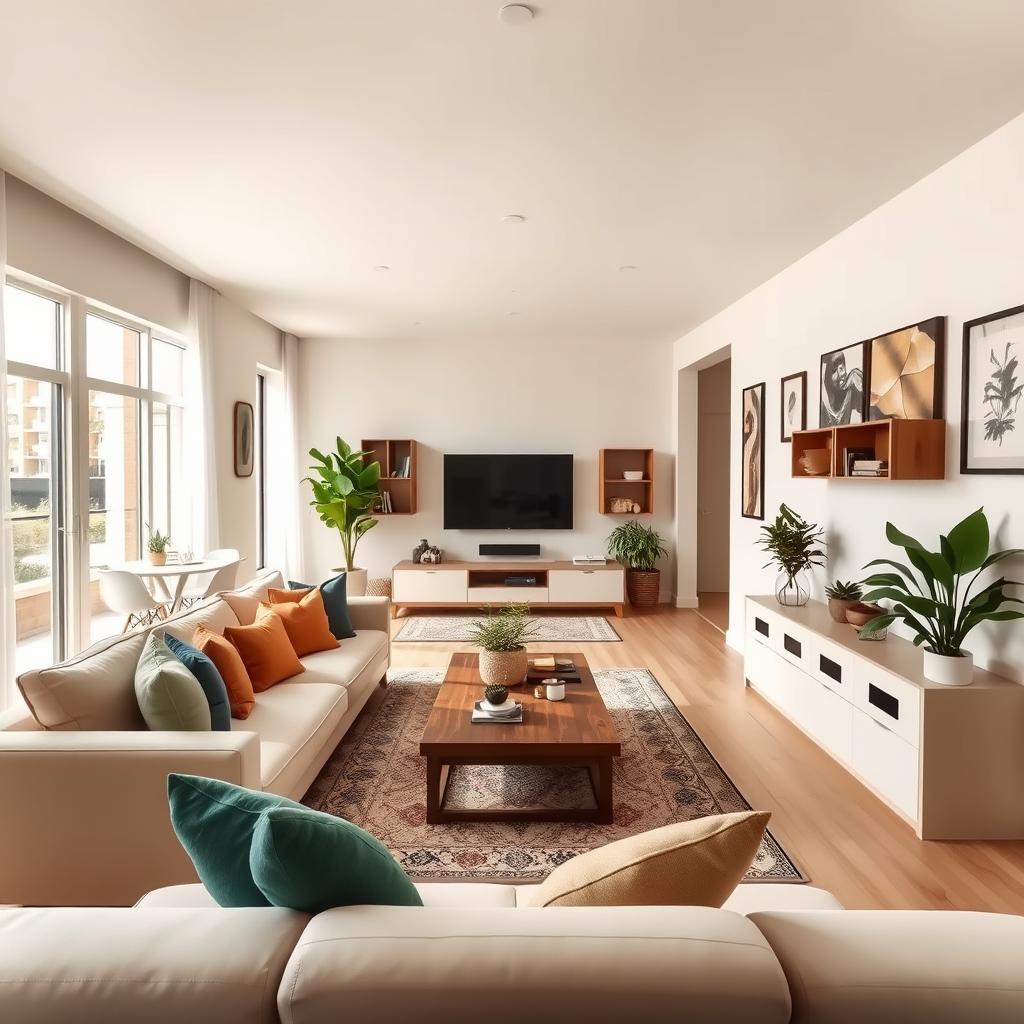
First, let’s tackle The 12×24 Foot Bowling Alley. The “before” scene is common: a sofa and TV against the walls, making the room feel like a hallway. The “after” scene uses several rules. We float the furniture to create a cozy area in the first two-thirds of the room.
A console table behind the sofa acts as a divider. A long, low runner rug helps with traffic flow, making the room feel like a proper space.
Next, we have The Pass Through Galley. The “before” scene has a long sofa against one wall, with the other wall being a busy path. The “after” scene uses the “two thirds” principle well. A large area rug and a sofa are placed perpendicular to the wall, taking up two thirds of the room’s width.
A pair of chairs face the sofa, creating a cozy area. The remaining third is a dedicated walkway. A tall, slim bookcase at the end provides storage and anchors the room.
Lastly, let’s look at The Multi Function Zone. The before scene is cluttered, trying to be a living room, home office, and play space. The after scene uses rugs and lighting to create zones. A reading nook, a media/TV zone, and a small desk for the office are defined.
Slim, tall furniture is key here. This approach uses every rule we’ve discussed: zoning, floating furniture, and strategic lighting. It turns a long living room layout into a space that feels intentional.
Each example shows that working with the room’s dimensions is key. By creating zones, freeing furniture, and controlling movement, you can make a narrow living room layout beautiful and functional.
Smart Storage for a Narrow Space
Clutter is the enemy of a narrow living room. The right storage solutions can be your ally. A room looks wider when clutter is gone. Smart storage isn’t just about hiding things; it’s about calm and space.
Start by looking up. Your walls are valuable. Floor to ceiling, shallow depth bookcases on short walls make ceilings feel higher. They save floor space and are a game changer for storage solutions for a narrow living room.
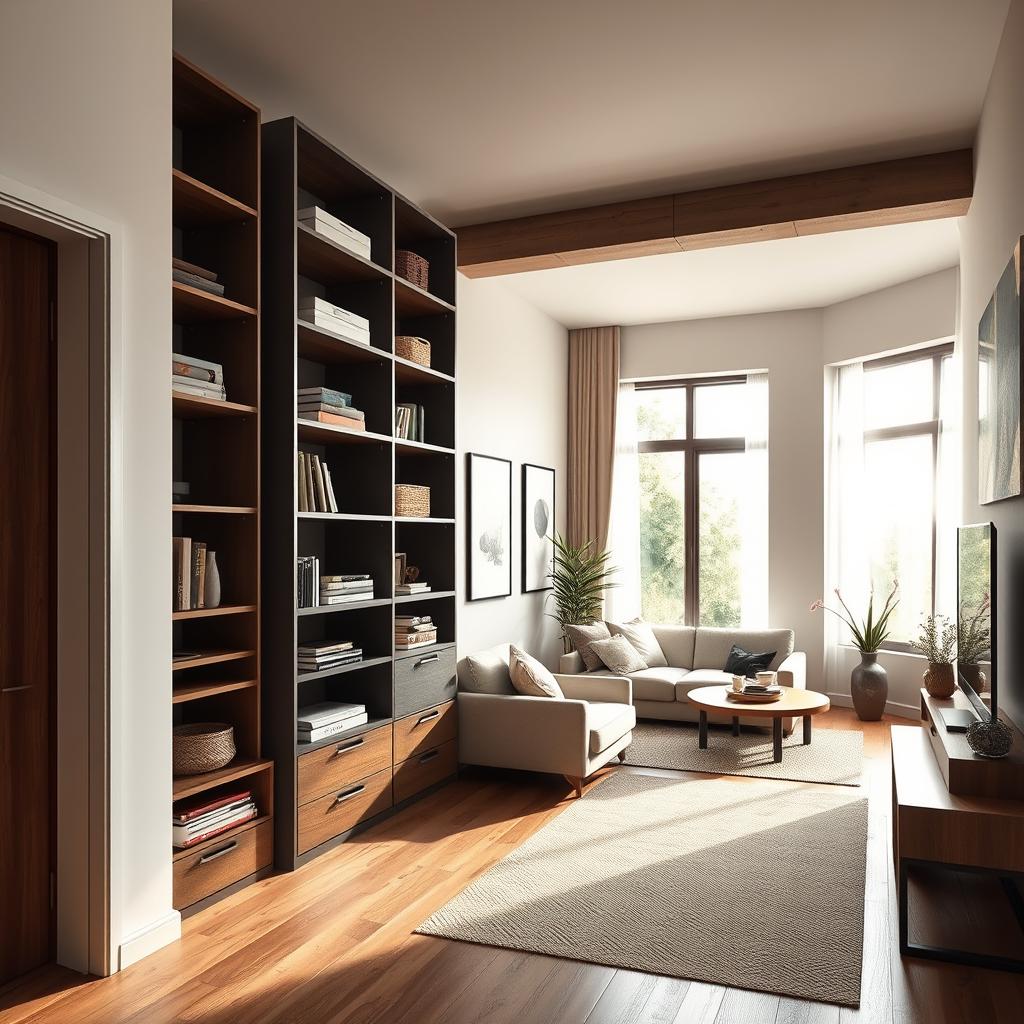
Think vertical next. Use floating shelves instead of bulky bookcases. They hold items without taking up much space. A wall mounted console or media unit keeps the floor open and items hidden.
Hidden gems are key. Multifunctional furniture is a must. An entryway console with drawers or an ottoman with a lift up lid is great. A storage bench or coffee table with hidden spots can hold throws, games, or board games.
Implementing these storage solutions for a narrow living room makes a big difference. The room looks tidier and feels wider. You get to enjoy the space you reclaim.
The goal is to create a system, not just hide things. A narrow room feels wider when it’s uncluttered. This is the power of smart storage solutions for a narrow living room. It turns a room from a passageway to a sanctuary.
Budget Friendly Updates for a Quick Refresh
You don’t need a big overhaul or a huge budget to refresh your narrow living room. Small, smart changes can make it look wider, brighter, and more welcoming. These budget friendly updates are all about making a big impact with little cost.
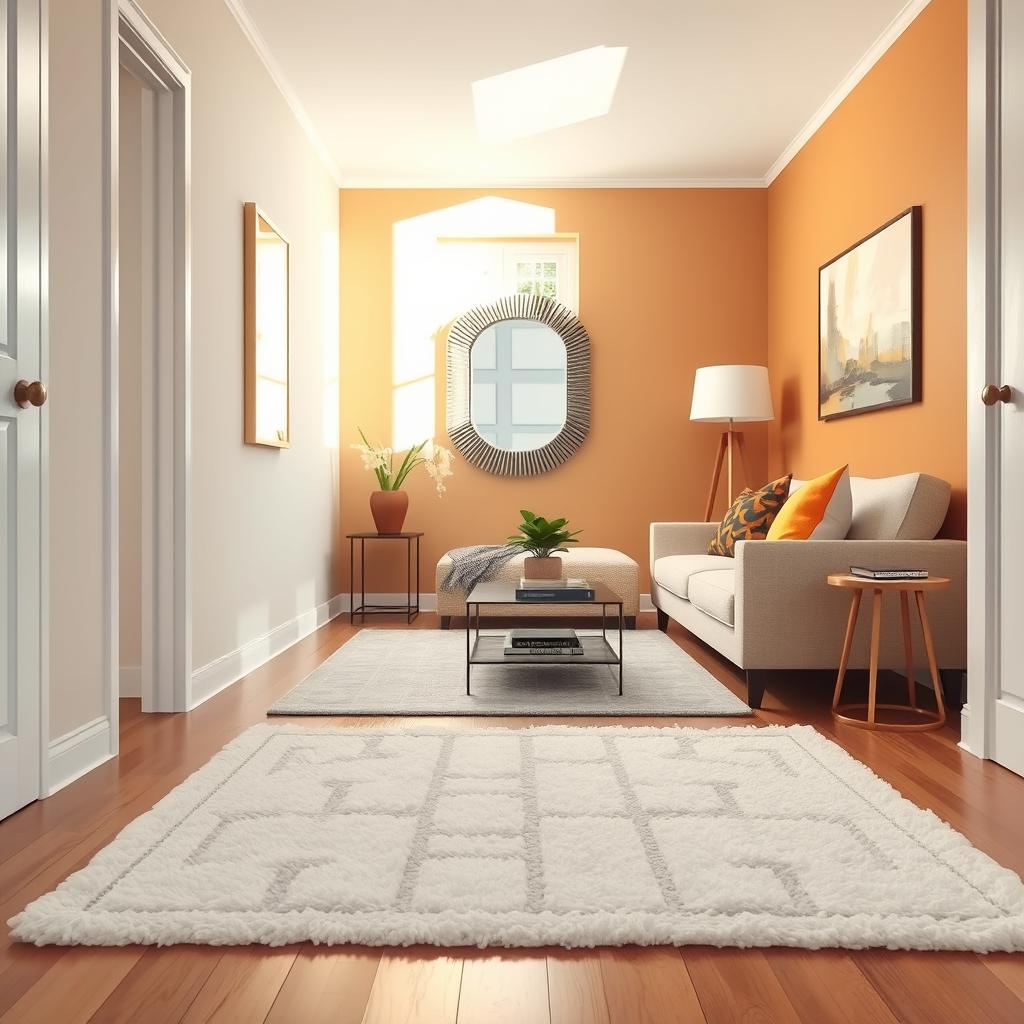
Start with the floor. A large, light colored rug can make the room look bigger. Pick a rug that’s light and has a low pile to make it feel airy.
Then, check your windows. Simple, floor to ceiling panels in light fabrics can make the ceiling seem higher. This trick makes the room feel taller.
Painting the far wall a darker or more saturated color can add depth. It draws the eye to the room’s end, making it seem longer. This bold move has a big impact.
A large, horizontal mirror is a great budget friendly update for narrow rooms. On the longest wall, it reflects light and views, making the room seem wider.
Lastly, think about your furniture. Leggy, open side tables can replace a bulky coffee table. This clears clutter and makes the room feel more open.
Each of these updates is easy on the wallet and can be done in a weekend. The goal is to change how space and light are perceived, not just the furniture.
Conclusion: Your Inviting, Inviting, and Efficient Space
Your narrow living room is not a problem to fix. It’s a chance to add your personal touch. The seven smart layout rules you’ve learned are more than a checklist. They change how you see things.
Changing from a long, awkward space to a cozy one is all about mindset. It’s about seeing your room as a blank canvas for smart design.
You now have the rules. Rule one teaches you to make different zones for different activities. You’ve learned to place furniture in a way that opens up the room. A simple area rug can make your floor look wider.
You’ve also learned to pick slim, tall furniture and use color and light to make the room feel bigger.
You’re no longer seeing a problem. You’re seeing the potential. You have the rules to fix that long, awkward space.
Now is the time to start. Look at your room with new eyes. See the different zones and imagine furniture that flows well. Think about how light and color can make your space feel bigger. Your inviting, efficient, and beautiful living room is waiting for you to bring it to life.