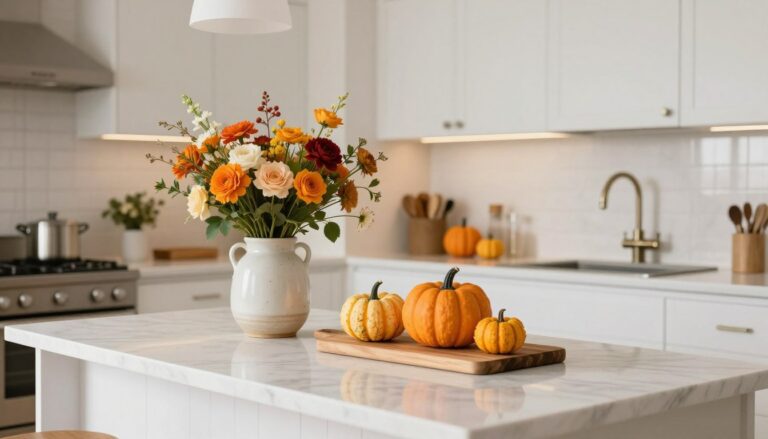

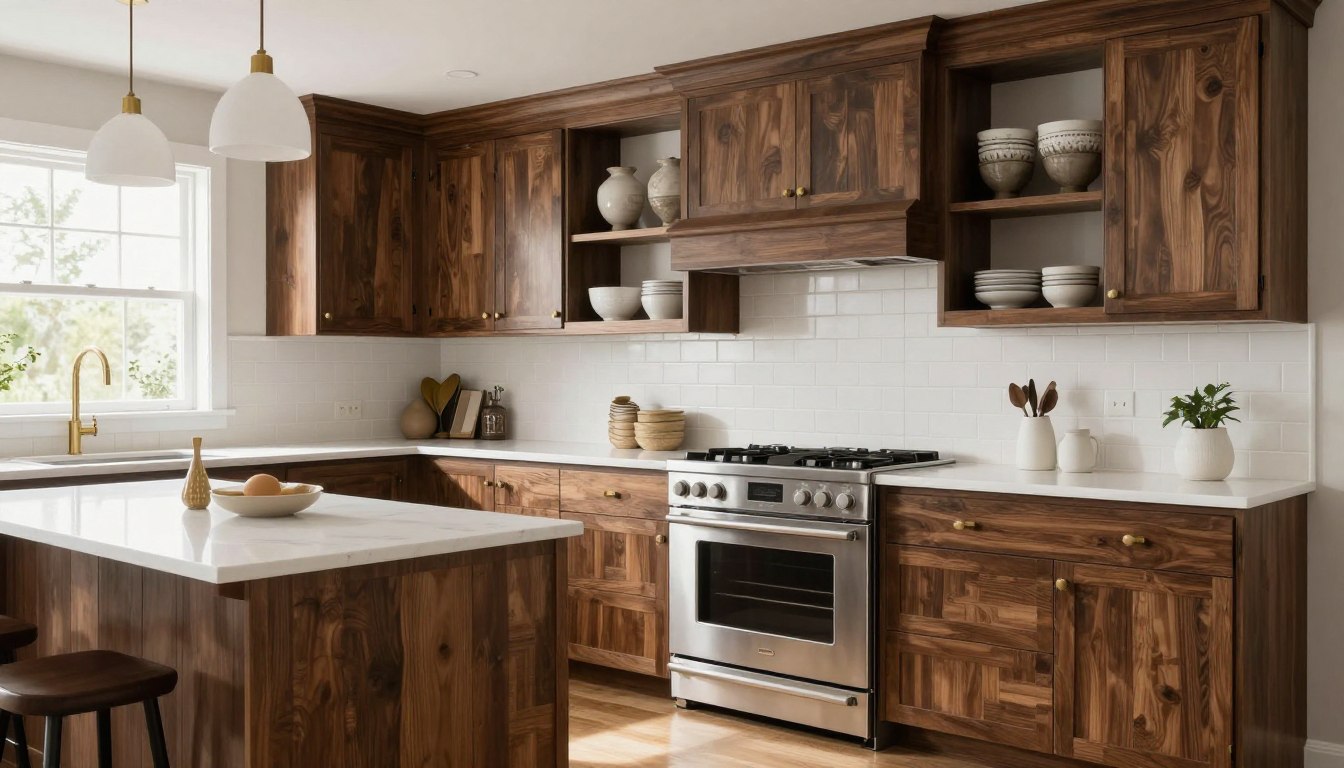
Think beyond basic white. Warm creams, soft grays, and gentle beiges complement walnut kitchen cabinets while maintaining the rustic feel.
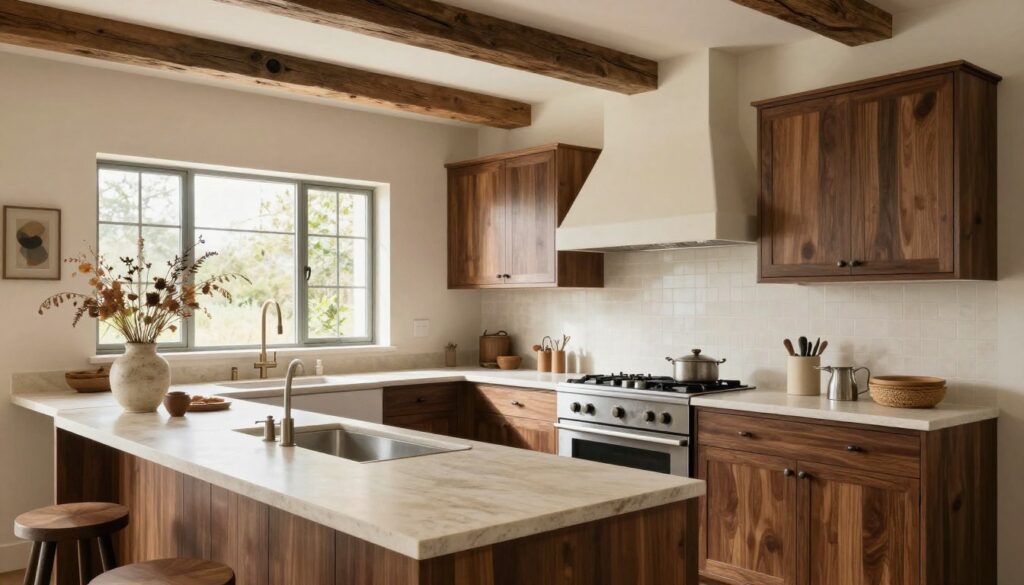
Wall Colors That Complement Walnut Cabinets
Benjamin Moore’s Swiss Coffee offers warmth without competing with wood tones. Sherwin Williams’ Accessible Beige brings subtle warmth to the space.
Greige tones bridge gray and beige perfectly. These colors support the modern rustic aesthetic while keeping walnut cabinets as the star.
Avoid cool grays with blue undertones. They clash with walnut’s warm character and create visual discord in your kitchen.
Countertop Materials and Colors
White countertops create stunning contrast against dark walnut. White quartz countertops offer durability with maintenance-free beauty.
Marble brings luxury and natural variation. The veining patterns add movement that complements wood grain.
Light granite provides texture and depth. Creamy whites with subtle speckling balance the cabinet darkness while adding visual interest.
Light Countertop Options
- White quartz with minimal veining
- Carrara marble for classic elegance
- Light gray granite with warm undertones
- Quartzite in cream or ivory shades
Warm Neutral Alternatives
- Beige granite with gold flecking
- Cream marble with caramel veins
- Tan quartz composite materials
- Sandstone-look engineered surfaces
Backsplash Selections for Visual Balance
Your backsplash bridges cabinets and countertops. The right choice unifies the entire kitchen design.
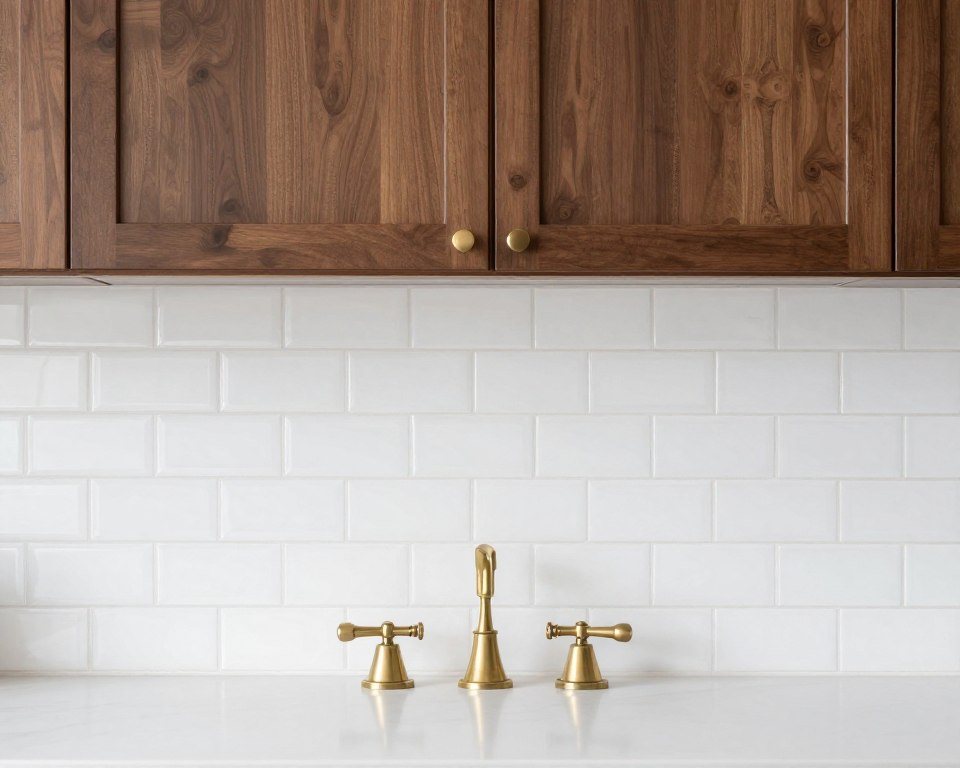
White subway tiles remain a timeless solution. Their clean lines support modern sensibilities while their simplicity honors rustic roots.
Natural stone tiles add texture and organic beauty. Stacked stone creates dimension that enhances the modern rustic vibe.
Hardware Choices for Walnut Cabinets
Cabinet hardware serves as jewelry for your kitchen. These small details make significant design impact.
The finish you select either complements or contrasts with dark walnut. Both approaches work when executed thoughtfully.
Modern rustic design favors authentic materials. Metal finishes should feel genuine rather than overly polished or trendy.
Metal Finishes That Enhance Dark Wood
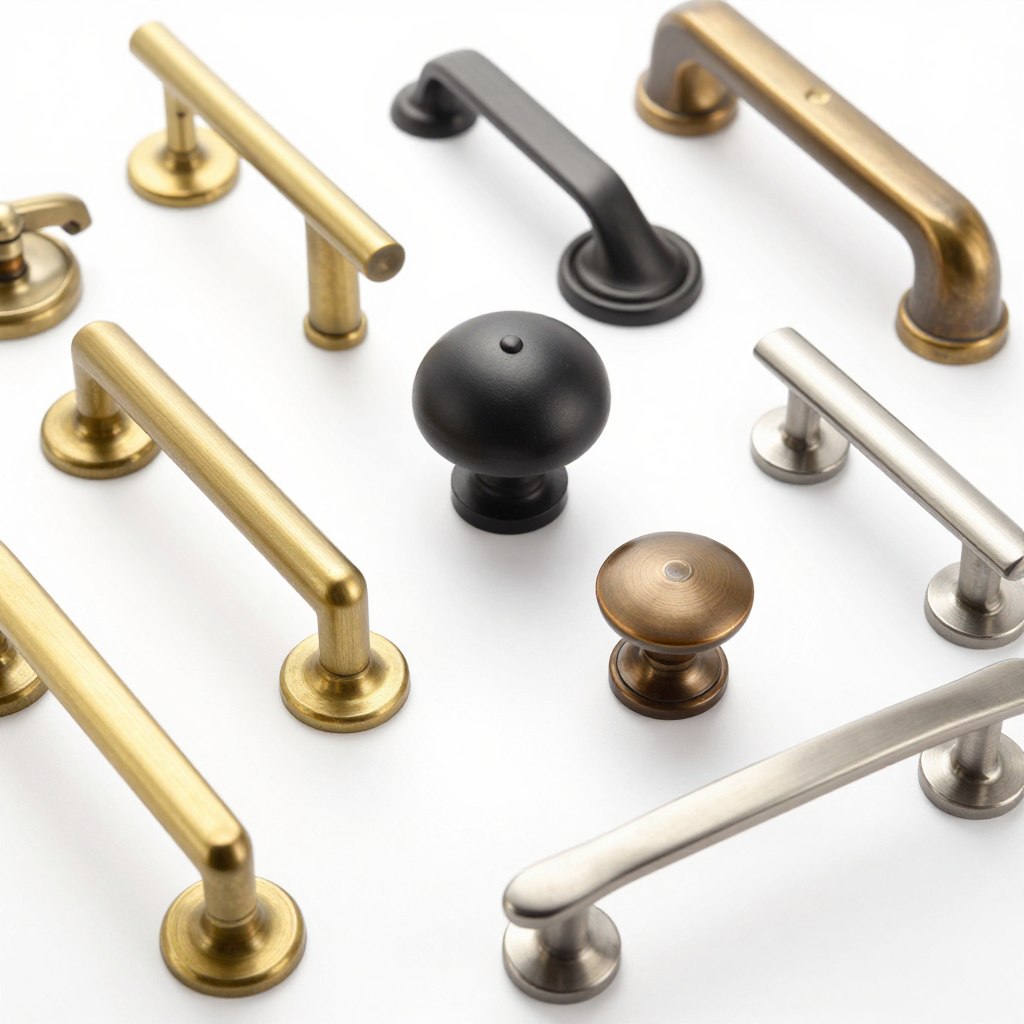
Brass hardware brings warmth that harmonizes with walnut cabinets. The golden tones create cohesive flow throughout the kitchen.
Brushed nickel offers subtle contrast. Its cool gray tone provides visual relief without harsh competition.
Oil-rubbed bronze adds rustic character. The dark finish with copper highlights creates depth against the walnut cabinet faces.
Warm Metal Options
- Unlacquered brass develops natural patina
- Antique brass pre-aged for character
- Champagne bronze subtle warmth
- Copper accents rustic authenticity
Cool Metal Choices
- Brushed nickel contemporary clean
- Satin chrome modern minimalism
- Pewter aged character
- Stainless steel professional look
Dark Metal Finishes
- Oil-rubbed bronze traditional depth
- Matte black bold contrast
- Aged iron industrial edge
- Blackened steel artisan quality
Knobs vs. Pulls: Style Considerations
Knobs work beautifully on cabinet doors. Their compact size suits traditional and transitional designs.
Pulls provide easier grip for drawers. Bar pulls in particular suit modern rustic kitchens with clean lines.
Mixing knobs and pulls creates visual interest. Use knobs on doors and pulls on drawers for functional style.
Sizing and Placement Guidelines
Hardware scale matters significantly. Oversized pulls overwhelm small cabinet doors while tiny knobs disappear on large surfaces.
Standard drawer pulls range from four to six inches. Cabinet knobs typically measure one to two inches in diameter.
Placement affects both function and appearance. Center knobs on cabinet door stiles for symmetry. Position drawer pulls horizontally for comfortable grip.
Lighting Design for Walnut Kitchens
Light dramatically affects how walnut appears in your kitchen. Proper illumination showcases the wood’s natural beauty while providing task functionality.
Walnut cabinets absorb light rather than reflecting it. This characteristic demands thoughtful lighting strategy to prevent dark, cave like spaces.
Layered lighting creates depth and dimension. Combine ambient, task, and accent light sources for optimal effect.
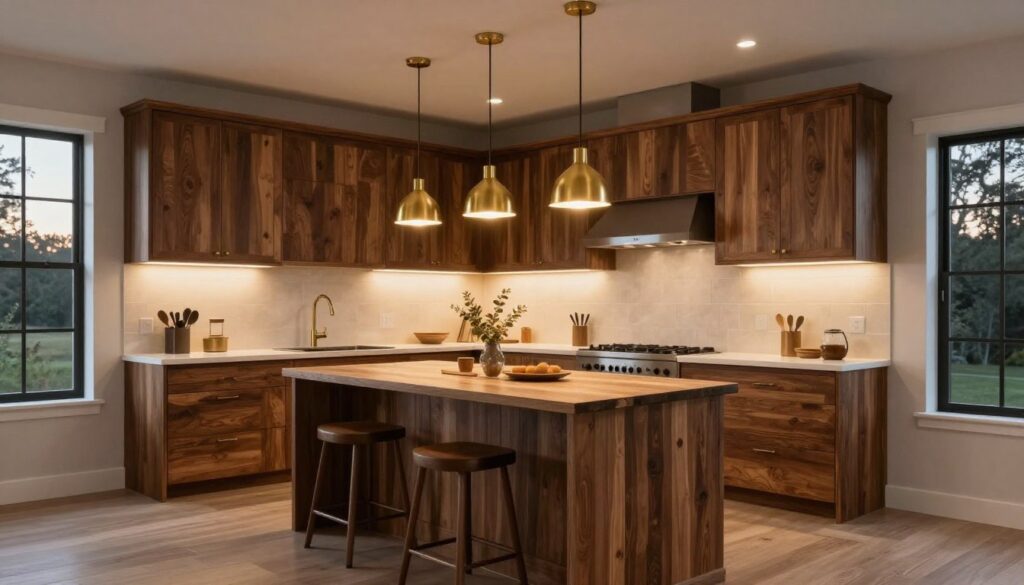
Pendant Lighting Over Islands and Tables
Pendant lights serve as functional art in walnut kitchen spaces. They draw the eye upward while providing essential task lighting.
Glass pendants with brass fixtures complement the wood’s warmth. Exposed bulb designs support the rustic aesthetic.
Hang pendants thirty to thirty-six inches above counters. This height provides adequate light coverage without blocking sightlines.
Under Cabinet Task Lighting
Under cabinet lighting transforms dark countertops into functional workspaces. LED strips offer energy efficiency and longevity.
Warm white light temperatures suit walnut kitchens best. Aim for 2700K to 3000K for inviting ambiance.
Install lights toward the cabinet front edge. This placement minimizes shadows and maximizes work surface illumination.
Natural Light Optimization
Windows become crucial in walnut kitchen design. Natural light prevents the space from feeling heavy or dark.
Keep window treatments minimal or absent. Sheer curtains filter light while maintaining brightness levels.
Position reflective surfaces strategically. Mirrors, glass cabinet doors, and polished metal catch and bounce natural light throughout the room.
Need Help Selecting the Perfect Lighting?
Lighting design requires expertise to achieve the right balance. Our team provides comprehensive lighting plans specifically designed for dark walnut cabinets.
Flooring Options for Cohesive Design
Floor selection anchors your entire kitchen design. The right flooring choice supports walnut cabinets without competing for attention.
Wood floors create warmth but require careful color coordination. Too much wood can overwhelm the space.
Alternative materials offer contrast and durability. Consider how your floor choice affects the overall color balance.
Wood Flooring Considerations
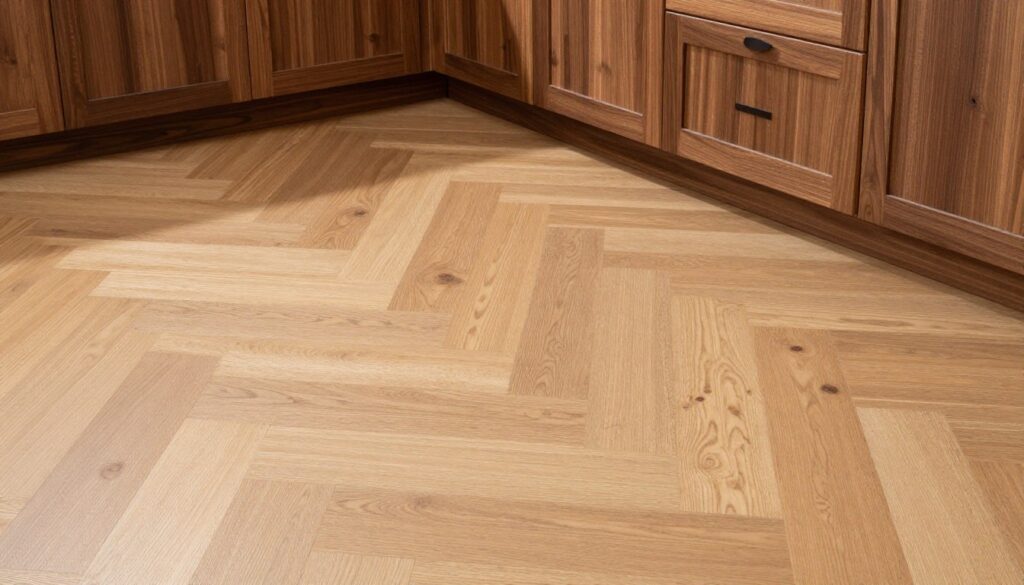
Light walnut floors provide subtle continuity. The wood connection creates flow while the lighter tone prevents darkness.
White oak flooring offers contrast with similar texture. Its pale gray-brown tones complement walnut cabinet richness.
Avoid matching floor and cabinet woods exactly. Slight variation in tone or species creates more sophisticated design.
Tile and Stone Alternatives
Large format tiles create clean modern lines. Light gray or beige porcelain provides neutral foundation.
Natural stone brings organic texture. Limestone or travertine tiles support the rustic element beautifully.
Patterned cement tiles add personality. Use them in limited areas to avoid overwhelming the walnut cabinets.
Practical Durability Factors
Kitchen floors endure significant wear. Durability matters as much as aesthetics in material selection.
Engineered hardwood resists moisture better than solid wood. This solution offers wood beauty with improved stability.
Luxury vinyl planks mimic wood convincingly. They provide water resistance and easy care at lower cost than natural hardwood.
Accessories and Decor Elements
Thoughtful accessories complete the modern rustic kitchen story. These finishing touches personalize the space while supporting your design vision.
Less often means more in accessorizing. Curate carefully rather than cluttering surfaces around your beautiful walnut cabinets.
Natural materials reinforce the rustic theme. Wood, stone, metal, and natural fiber accessories feel authentic and intentional.
Bar Stools and Seating Selection
Bar stools bring function and style to kitchen islands. Their design significantly impacts the overall aesthetic.
Wood and metal combinations suit modern rustic spaces. Look for stools with natural wood seats and black metal frames.
Leather upholstery adds warmth and sophistication. Cognac or caramel tones complement walnut cabinet coloring.
Modern Style Elements
- Clean lined metal frames
- Minimal ornamentation
- Neutral upholstery fabrics
- Geometric shapes and angles
- Low profile backs
Rustic Design Features
- Reclaimed wood seats
- Distressed metal finishes
- Natural leather upholstery
- X-back or ladder-back styles
- Weathered wood tones
Open Shelving and Display Items
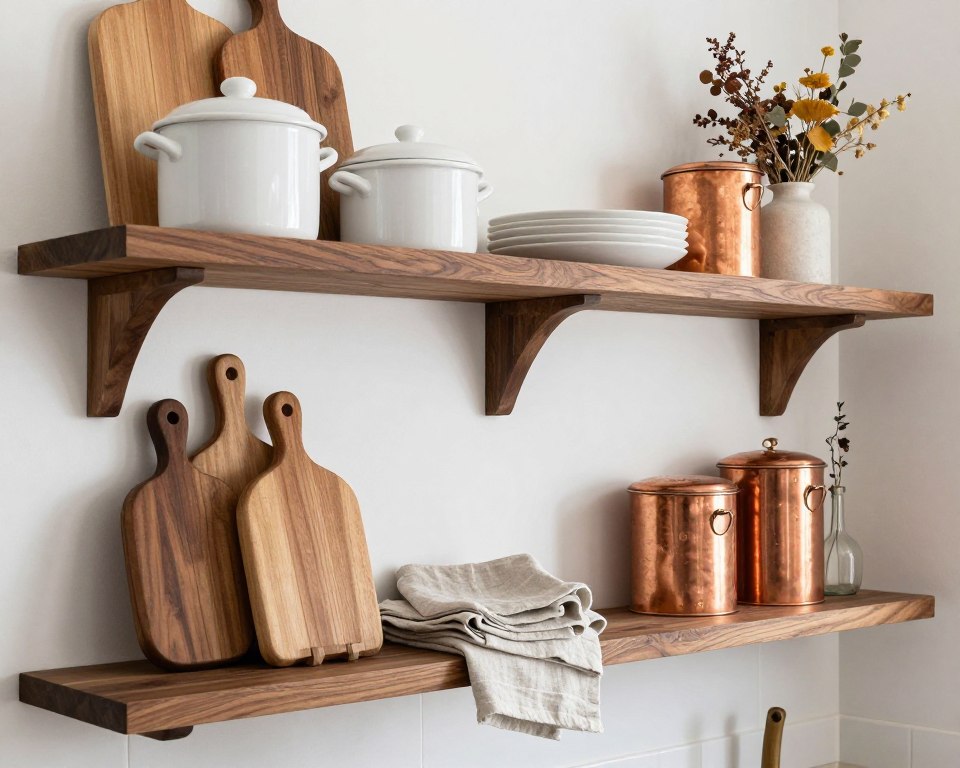
Open shelving creates breathing room in walnut-heavy kitchens. The visual break prevents the space from feeling too dark.
Display white dishware for contrast. Ceramic plates and bowls pop against dark wood backgrounds.
Mix functional and decorative items. Everyday glasses beside a vintage cutting board tells a lived-in story.
Textiles and Soft Goods
Kitchen textiles soften hard surfaces. They introduce color, pattern, and texture to balance wood and stone.
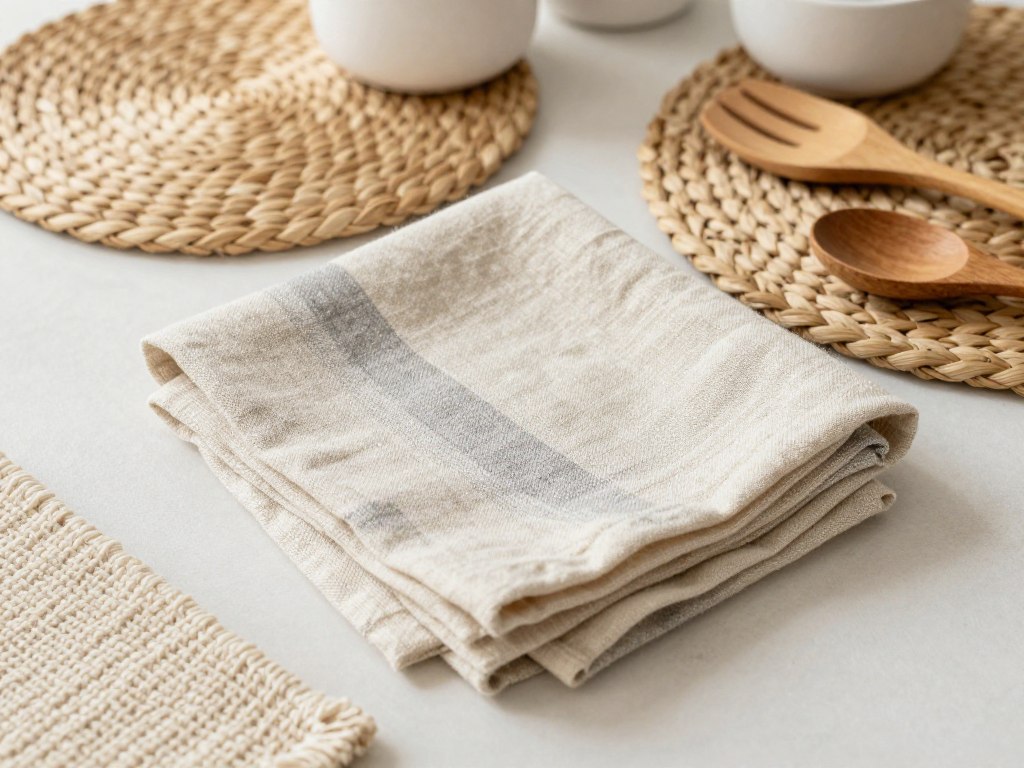
Natural linen dish towels suit the rustic aesthetic. Choose cream, gray, or muted earth tones.
Window treatments should feel light and airy. Avoid heavy fabrics that compete with substantial walnut cabinetry.
Mixing Cabinet Finishes and Materials
Two-tone cabinetry creates visual interest in modern kitchens. This approach works especially well with rich dark walnut.
The contrast prevents monotony while maintaining cohesion. Strategic placement of each finish defines zones within the kitchen.
Balance remains critical when mixing materials. One finish should dominate while the other provides accent.
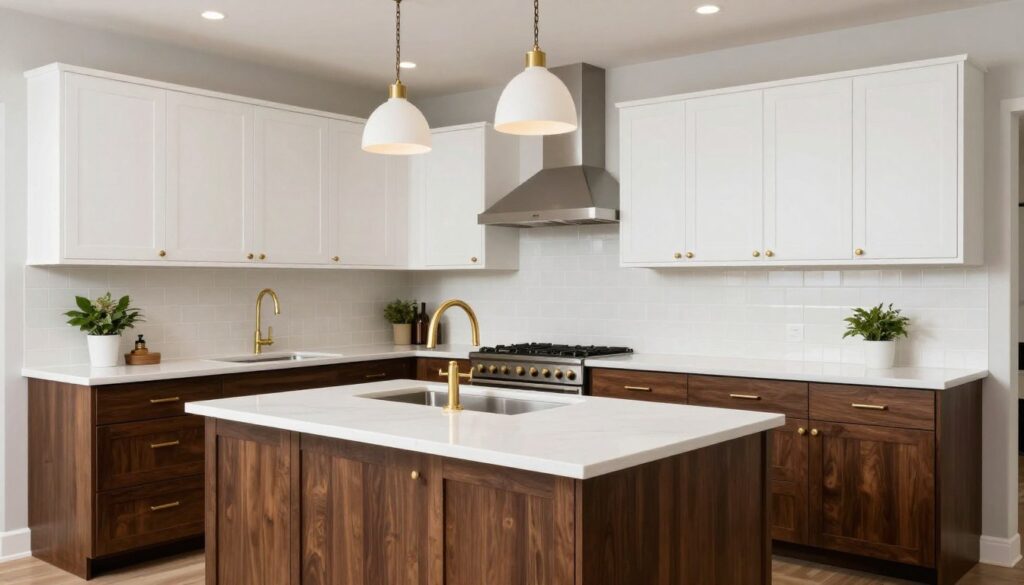
Walnut Cabinets with White Upper Cabinets
White upper cabinets lighten the overall look dramatically. This classic combination prevents walnut from overwhelming smaller kitchens.
Cabinets white countertops create a bright horizon line. The visual lift makes ceilings appear higher and spaces more open.
Use dark walnut on lower cabinets for grounding. White cabinets above maintain airiness while showcasing the beautiful wood below.
Incorporating Glass Cabinet Doors
Glass-front cabinets break up solid wood expanses. They create display opportunities while adding visual lightness.
Frame glass doors with dark walnut for striking contrast. The wood frames the view inside like artwork.
Limit glass cabinets to select upper locations. Too many glass doors sacrifice storage and create maintenance burden.
Island as Accent Piece
A contrasting island becomes the kitchen focal point. This strategy works when perimeter cabinets showcase walnut beauty.
Paint the island in complementary colors. Sage green, navy blue, or charcoal gray create striking contrast against walnut walls.
Alternatively, make the island the walnut showcase. Surround it with lighter painted cabinetry for dramatic effect.
Maintenance and Care Tips
Proper care extends the life and beauty of walnut kitchen cabinets. These hardwood surfaces require regular attention but reward you with lasting elegance.
Prevention beats cure in cabinet maintenance. Simple daily habits prevent most common problems.
Understanding wood characteristics helps you care appropriately. Walnut responds to environmental conditions and benefits from consistent treatment.
Daily and Weekly Cleaning Routines
Wipe cabinets daily with soft microfiber cloth. Remove cooking grease and food splatters before they set.
Use mild soap and water for weekly cleaning. Avoid harsh chemicals that strip protective finishes from the wood.
Dry surfaces immediately after cleaning. Standing moisture damages wood and dulls the finish over time.
Essential Cleaning Supplies
- Microfiber cleaning cloths (lint-free)
- Mild dish soap diluted in warm water
- Wood-safe polish or conditioner
- Soft-bristle brush for detailed areas
- Clean, dry towels for immediate drying
Protecting the Wood Finish
Apply wood conditioner quarterly. This care solution nourishes the wood and maintains the protective finish.
Avoid excessive moisture near walnut cabinets. Install proper ventilation to manage steam from cooking and dishwashing.
Address spills immediately. Acidic substances like lemon juice or vinegar can damage the finish if left standing.
Long-Term Durability Considerations
Walnut cabinets darken naturally with age. This patina development adds character rather than indicating damage.
Monitor cabinet door alignment annually. Wood expands and contracts with humidity changes requiring occasional adjustment.
Refinishing extends cabinet life significantly. Professional refinishing every ten to fifteen years maintains like-new appearance.
Protect Your Investment
Expert installation and finishing ensure your walnut cabinets perform beautifully for decades. Our team provides complete cabinetry services from design through installation and maintenance guidance.
Budget Planning Considerations
Walnut cabinetry represents a significant investment. Understanding cost factors helps you plan effectively and make informed decisions.
Multiple variables affect final pricing. Cabinet construction, finish quality, and installation complexity all impact total project cost.
Smart budgeting allows for quality where it matters most. Prioritize spending on elements that provide lasting value.
Cost Factors for Walnut Kitchen Cabinets
Wood grade affects pricing substantially. Premium select-grade walnut costs more than rustic grades with natural character marks.
Cabinet construction method matters significantly. Custom cabinets command premium prices compared to semi-custom or stock options.
Finish complexity influences costs. Hand-rubbed finishes and multiple stain layers increase labor time and material expense.
| Cabinet Type | Cost Range per Linear Foot | Typical Features | Best For |
| Stock Walnut Cabinets | $200 – $350 | Standard sizes, limited styles, factory finish | Budget-conscious projects, simple layouts |
| Semi-Custom Walnut | $350 – $650 | Modified sizing, multiple finish options, some customization | Most residential kitchens, moderate budgets |
| Custom Walnut Cabinetry | $650 – $1,200+ | Fully custom dimensions, premium construction, hand-finished | Luxury kitchens, unique layouts, highest quality |
Where to Invest vs. Where to Save
Invest in cabinet boxes and drawer construction. Quality joinery and materials ensure decades of reliable performance.
Splurge on visible walnut cabinet fronts. The door and drawer faces create the aesthetic impact worth the premium.
Consider alternatives for hidden areas. Use less expensive materials for interior cabinet boxes that nobody sees.
DIY vs. Professional Installation
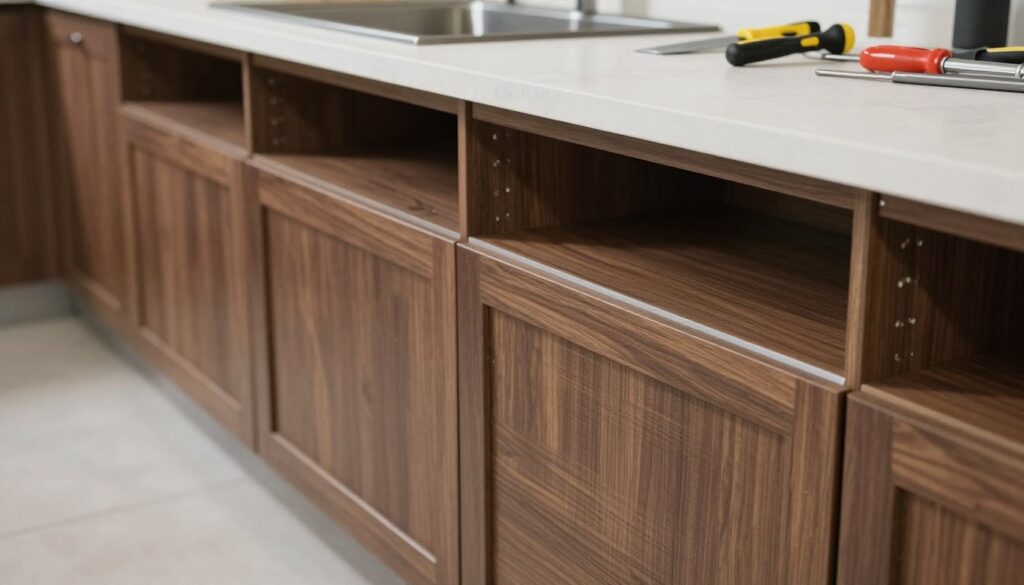
Professional installation ensures proper alignment and function. Cabinet installation requires precision that affects long-term satisfaction.
DIY installation saves labor costs significantly. However, mistakes with expensive walnut cabinets prove costly to correct.
Hybrid approaches offer middle ground. Homeowners might handle demolition and preparation while hiring professionals for cabinet installation.
Design Mistakes to Avoid
Even beautiful walnut cabinets can disappoint when surrounded by poor design choices. Learning common pitfalls helps you avoid costly mistakes.
Design errors often stem from ignoring balance principles. Too much darkness, insufficient light, or poor color choices undermine walnut’s natural beauty.
Thoughtful planning prevents problems. Consider the entire kitchen as a system rather than isolated elements.
Common Pitfalls with Dark Cabinetry
All-dark kitchens feel cave-like and oppressive. Balance walnut cabinet darkness with light countertops, walls, and ceilings.
Insufficient lighting creates dungeon atmosphere. Dark wood absorbs light requiring more fixtures than lighter kitchens need.
Matching too many wood tones creates monotony. Vary wood species, stains, and finishes for visual interest.
Top Design Errors to Avoid
- Using dark countertops with dark walnut cabinets
- Installing walnut cabinets in poorly lit kitchens without adding light sources
- Choosing warm wood floors that match cabinet tones exactly
- Overloading the space with too much wood texture
- Selecting hardware that disappears against dark wood
- Ignoring the need for visual breathing room
Balancing Modern and Rustic Elements
Too much rustic creates dated country kitchen appearance. Modern rustic requires restraint with distressed finishes and farmhouse accessories.
Excessive modern elements feel cold and sterile. The rustic component provides warmth that makes kitchens feel welcoming.
Find the sweet spot between clean lines and organic texture. Let walnut cabinets anchor the design while other elements play supporting roles.
Scale and Proportion Issues
Oversized islands overwhelm small kitchens. Scale furniture and fixtures appropriately to room dimensions.
Tiny hardware disappears on large cabinet doors. Select knobs and pulls proportional to door and drawer sizes.
Ceiling height affects cabinet choices. Standard height cabinets create awkward gaps in tall-ceiling kitchens requiring custom solutions.
Real World Inspiration and Examples
Successful walnut kitchens demonstrate design principles in action. Studying real installations provides valuable ideas for your project.
Different approaches suit various home styles. Modern walnut kitchen designs differ significantly from traditional interpretations.
Regional variations reflect local preferences and architectural contexts. Your location influences which styles feel most appropriate.
Modern Minimalist Approach
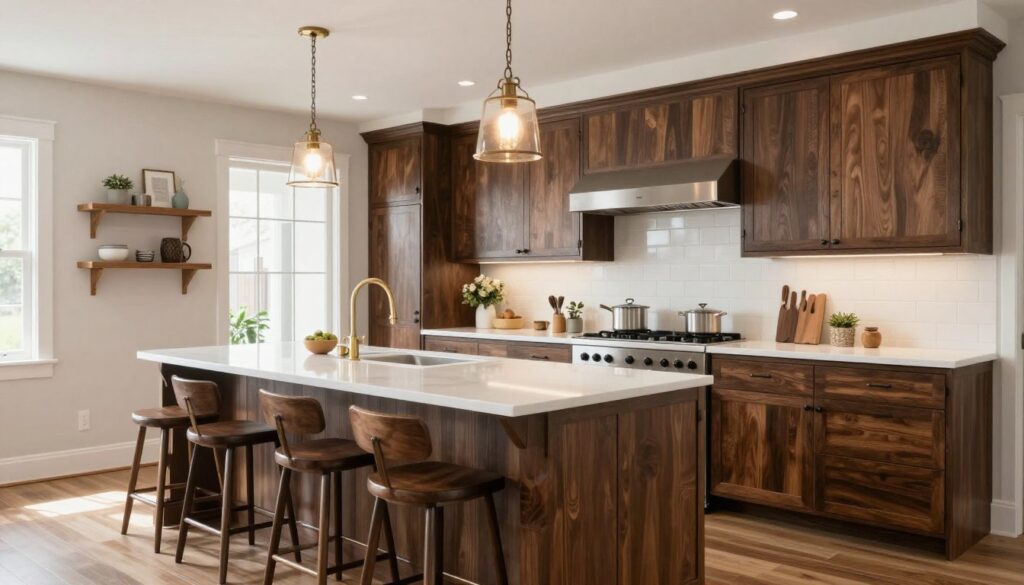
Clean-lined walnut cabinets without visible hardware create sleek appearance. Push-to-open mechanisms maintain smooth facades.
Integrated appliances disappear behind walnut cabinet panels. This approach emphasizes wood beauty over appliance presence.
Minimal accessories keep surfaces clear. The natural walnut cabinet grain provides sufficient visual interest without added decoration.
Warm Traditional Style
Raised panel walnut cabinet doors add traditional detail. Combined with modern elements, they create transitional appeal.
Classic brass hardware enhances traditional character. Bin pulls and cup handles reference historical kitchen design.
Crown molding and decorative trim complete the look. These details add sophistication without overwhelming the space.
Industrial Rustic Fusion
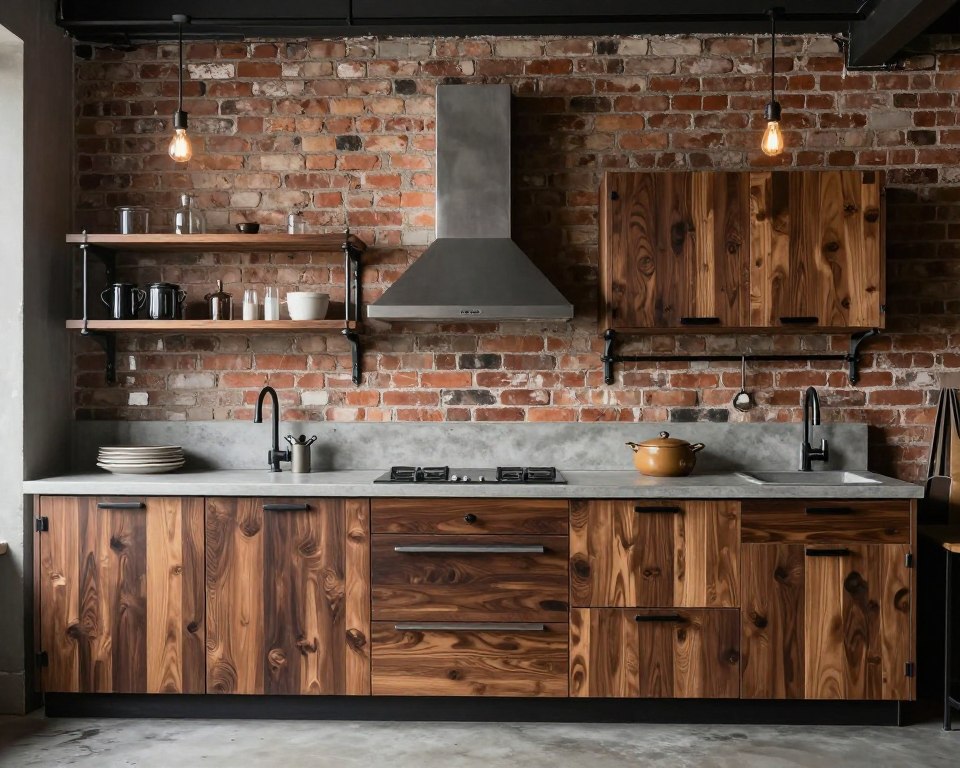
Exposed shelving with metal brackets complements walnut cabinets. The industrial edge balances warm wood tones.
Concrete countertops provide textural contrast. Their cool gray color and smooth finish offset walnut’s organic warmth.
Edison bulb lighting and metal accents complete the aesthetic. This solution works particularly well in urban loft spaces.
Sustainable and Eco-Friendly Options
Environmentally conscious homeowners increasingly prioritize sustainable materials. Walnut cabinets can align with green building principles when sourced responsibly.
Natural walnut represents a renewable resource. Trees mature and become available for harvest while new growth replaces them.
Certification programs verify sustainable forestry practices. These programs ensure your cabinet wood comes from responsibly managed forests.
FSC Certified Walnut Sources
Forest Stewardship Council certification guarantees responsible harvesting. FSC certified walnut comes from forests managed for long-term health.
Ask cabinet manufacturers about wood sources. Reputable companies provide documentation of sustainable practices.
Domestic walnut reduces transportation impacts. North American walnut requires less shipping than imported alternatives.
Low-VOC Finishes and Stains
Traditional cabinet finishes release volatile organic compounds. These chemicals affect indoor air quality and environmental health.
Water-based finishes minimize VOC emissions. They provide durable protection with reduced environmental impact.
Natural oil finishes offer eco-friendly alternatives. Products like linseed or tung oil protect wood while maintaining non-toxic profiles.
Reclaimed and Salvaged Walnut
Reclaimed walnut provides character and sustainability. Wood salvaged from old buildings carries history while reducing new tree harvest.
Expect higher costs for reclaimed materials. Processing old wood requires additional labor and specialized equipment.
Each reclaimed piece tells a unique story. The aged patina and weathered character enhance rustic design aesthetics.
Bringing Your Vision to Life
Dark walnut kitchen cabinets create stunning foundations for modern rustic design. Their rich color and natural grain provide timeless beauty that improves with age.
Success requires balancing multiple design elements. Color, light, hardware, and accessories must work together harmoniously.
Your kitchen reflects personal style and daily living patterns. Take time to plan thoughtfully and invest in quality materials that serve you well for decades.
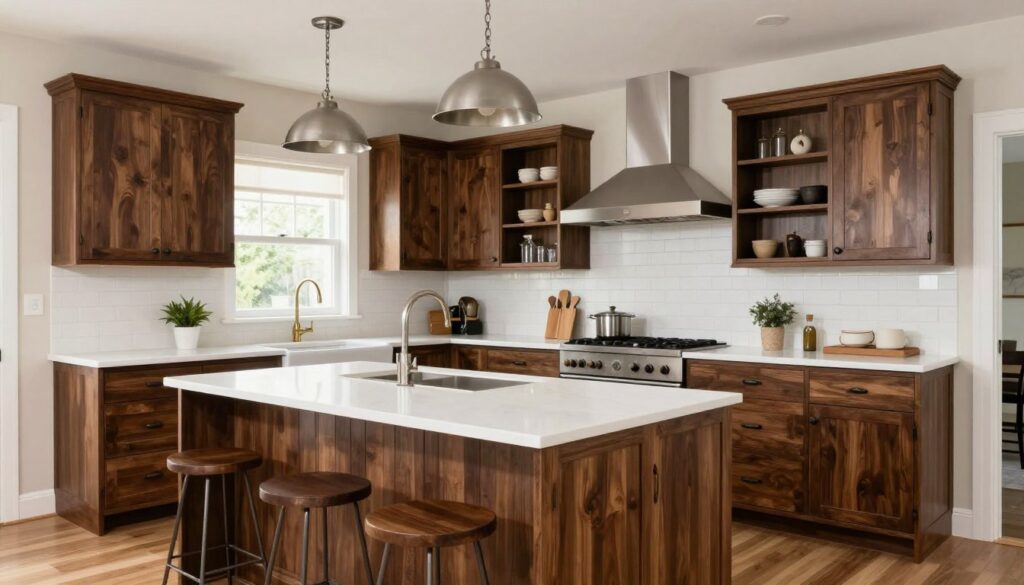
Start with the fundamentals covered in this guide. Choose complementary colors, appropriate lighting, and quality hardware that enhances your walnut cabinets.
Remember that great design evolves over time. Begin with the permanent elements like cabinetry and countertops, then refine accessories and decor as you live in the space.
Ready to Create Your Dream Kitchen?
Transform your space with expert guidance tailored to your unique style and needs. Our team specializes in modern rustic kitchens featuring beautiful walnut cabinetry. We handle everything from initial design through final installation.
Or fill out our quick form to schedule your free in-home consultation:
The investment in quality walnut cabinets pays dividends in daily enjoyment and home value. Choose wisely, maintain properly, and your modern rustic kitchen will delight for generations.