
There’s a version of the kitchen island that holds a fruit bowl, a stack of mail, and a paper towel roll.
It’s functional. It isn’t considered.
The island is the first surface people see when they enter a kitchen. It sits at the room’s center, visible from every angle. And yet most centerpieces placed on it are chosen the way a placeholder gets chosen something set down and never revisited.
These 12 kitchen island centerpiece ideas start from a different place. Not what fills the space. What the space actually needs.
What a Centerpiece Actually Does for a Kitchen Island
It Anchors the Room’s Eye Line Not Just the Surface
The island doesn’t just hold things. It holds the room’s attention.
When the centerpiece is considered, the eye settles. The kitchen reads as finished not because every detail is perfect, but because the center has weight. When the centerpiece is absent or accidental, the eye keeps moving, searching for something to land on.
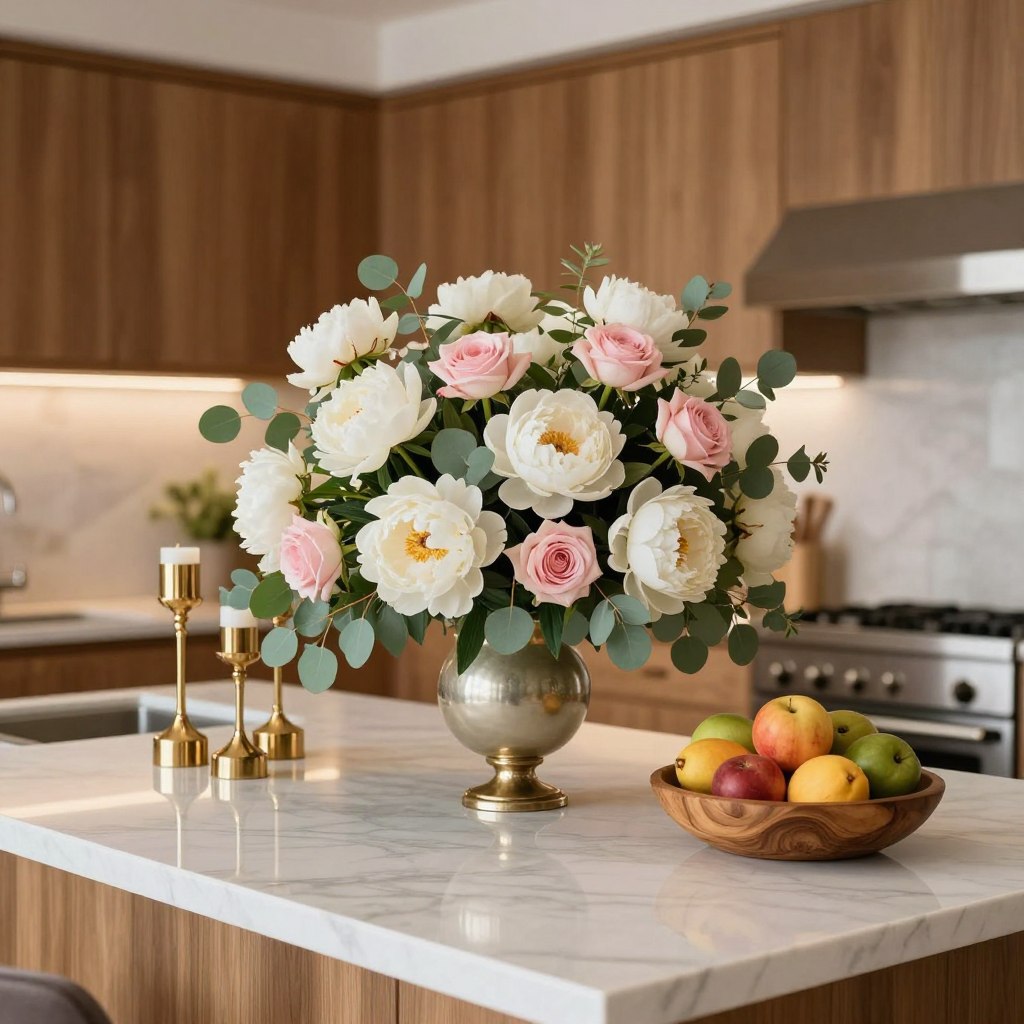
One good object does more than five average ones. That’s not a style preference. It’s how the eye works.
The Difference Between a Display and a Decision
A display is reactive. You put things on the island because the surface is there.
A decision is intentional. You choose one thing a vessel, a plant, a board and let it carry the surface. The difference in the room is immediate. One approach reads as styled. The other reads as inhabited.
The best kitchen island centerpiece ideas don’t look like decoration. They look like they’ve always been there.
Before You Style What the Island Needs First
Scale and the Clearance Rule Most People Ignore
A centerpiece that’s too small disappears. A centerpiece that’s too large competes with the work surface.
The clearance rule is simple: leave at least 12 inches of uninterrupted counter on either side of the centerpiece. Within the remaining space, choose one object scaled to fill it with presence not packed into it.
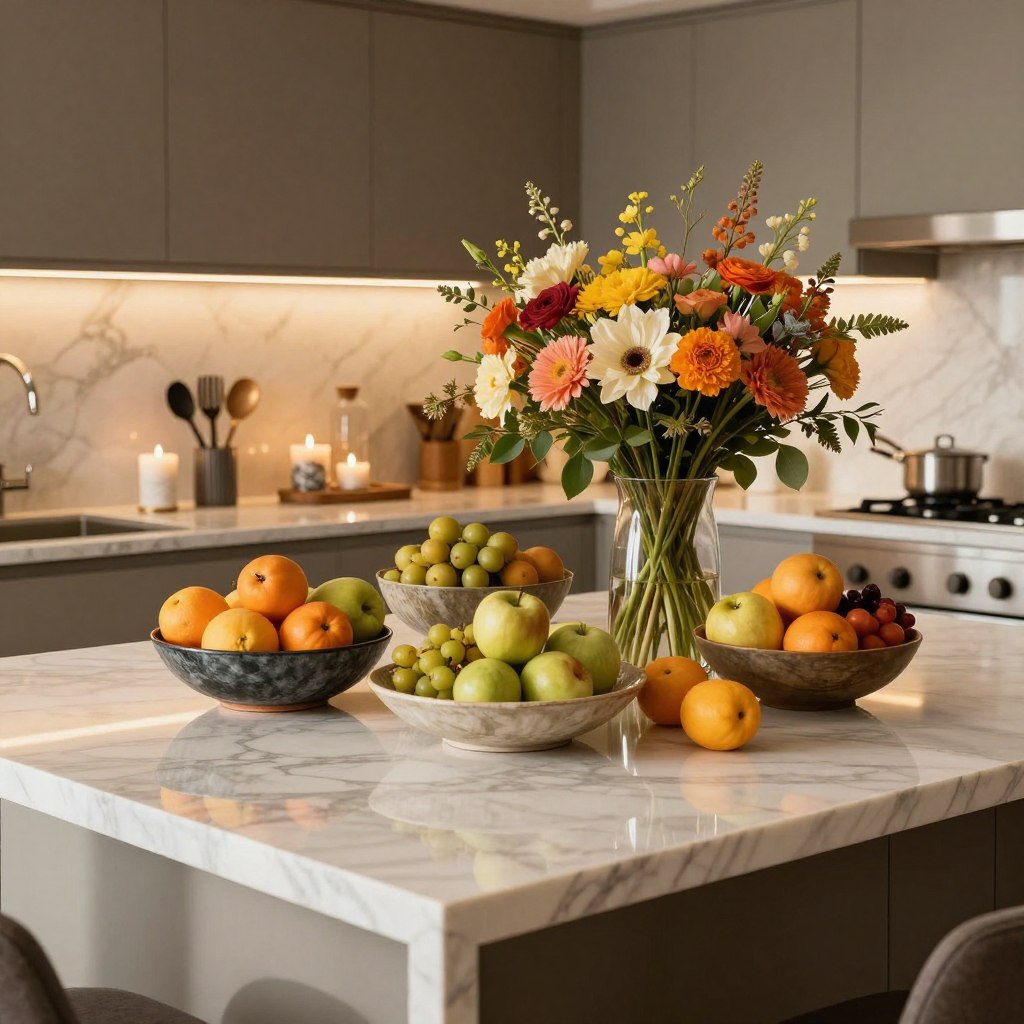
Tall and narrow reads lighter than wide and low on most islands. Keep that in mind before choosing a vessel or planter.
Reading the Room’s Material Story Before Adding to It
The island already has a material stone, wood, concrete, laminate. The centerpiece should speak to what’s already there.

If the countertop has warm grain and visible texture, a cold glass object interrupts the story. If the surface is pale and smooth, a raw ceramic or dark wood piece grounds it.
Look at the kitchen countertop designs and cabinet finishes already in the room. Find one material in the centerpiece that echoes them. That’s the starting point not the catalog page.
For a broader view of how to keep kitchen surfaces calm and purposeful, minimalist kitchen decor is worth reading before you begin.
12 Kitchen Island Centerpiece Ideas Worth Keeping.
1. The Floral Anchor One Vessel, One Stem Variety, Nothing Else
A single stem variety in one considered vessel does what a mixed arrangement rarely achieves: clarity.
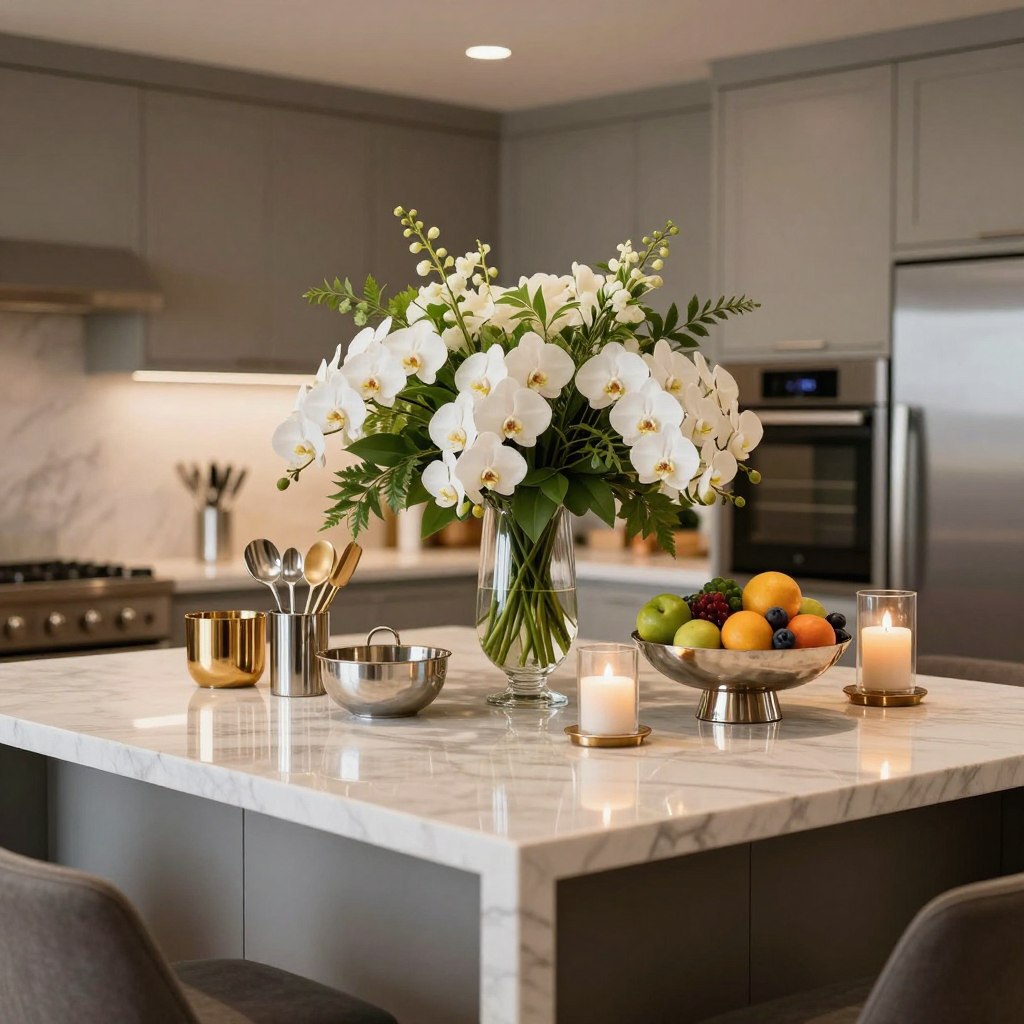
Choose orchids, alliums, or dried pampas something with architectural form. Place it in a vessel that matches the island’s surface material. A stone countertop pairs with matte ceramic. A wood island pairs with raw-glazed pottery.
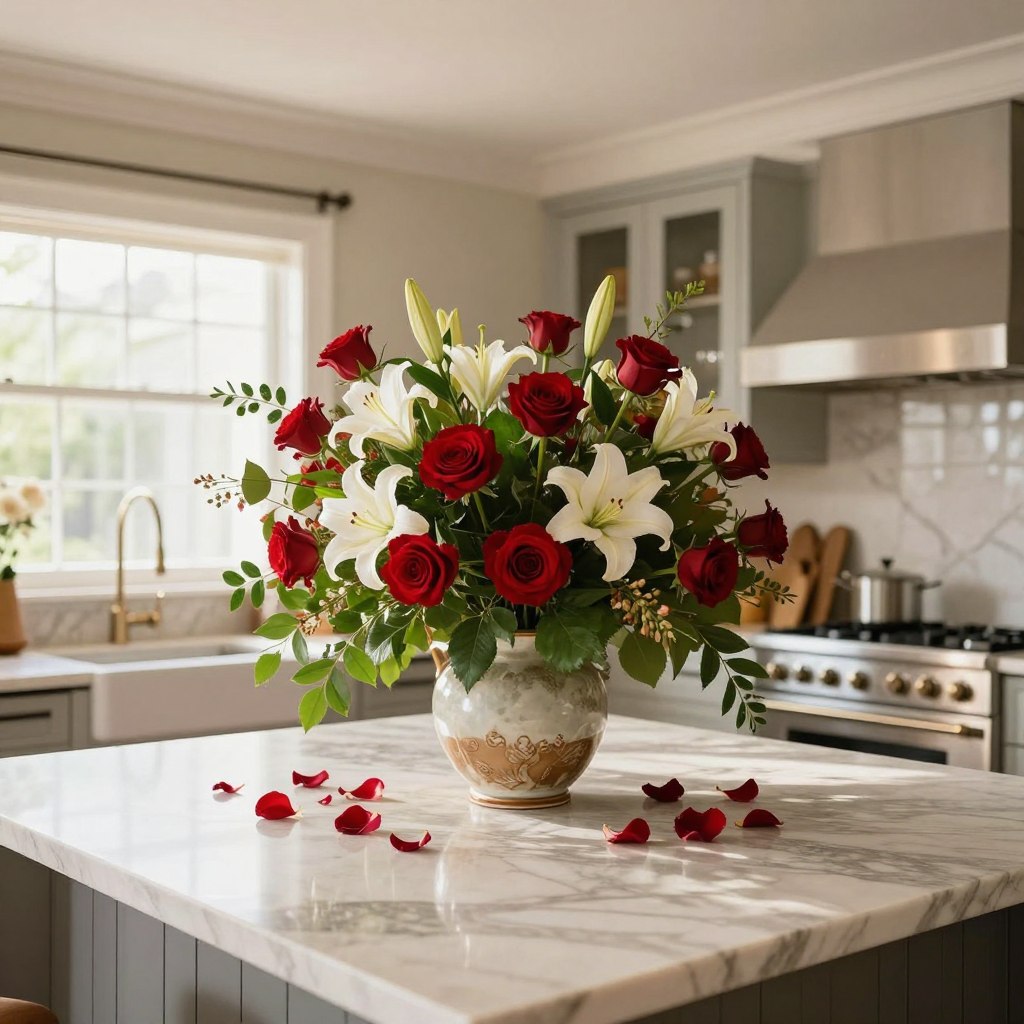
Let the color of the stems inform the palette not the other way around. This is also where your kitchen backsplash becomes a design asset: stems that echo or contrast the tile create a layered, considered look without adding anything more.
2. 2. The Artisanal Board Functional Sculpture, Not a Cheese Board
A single walnut or olive wood board, placed with intention, reads as art.
The grain does the work. You don’t need to style around it. Lean a knife nearby. Set a small ceramic bowl at the edge. Let the rest of the island breathe.
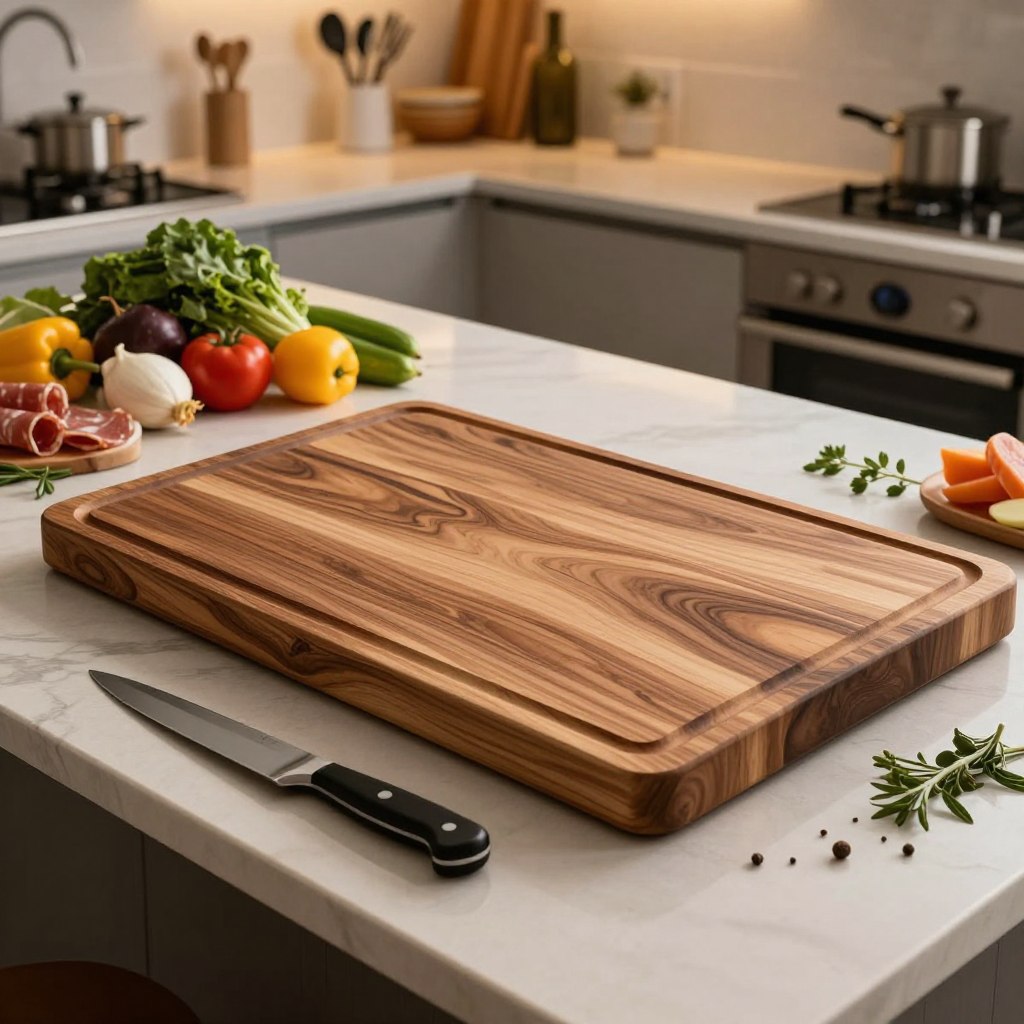
This isn’t a charcuterie setup. It’s a surface that suggests readiness good cooking, done quietly. Functional objects become the most honest centerpieces when they’re chosen for their material, not their purpose.
3. 3. The Sculptural Object One Piece That Doesn’t Need Context
Some objects need nothing beside them. A smooth stone orb. A ceramic form with visible handwork. A single piece of raw mineral.
Place it alone. Give it room. Let it hold the surface on its own.
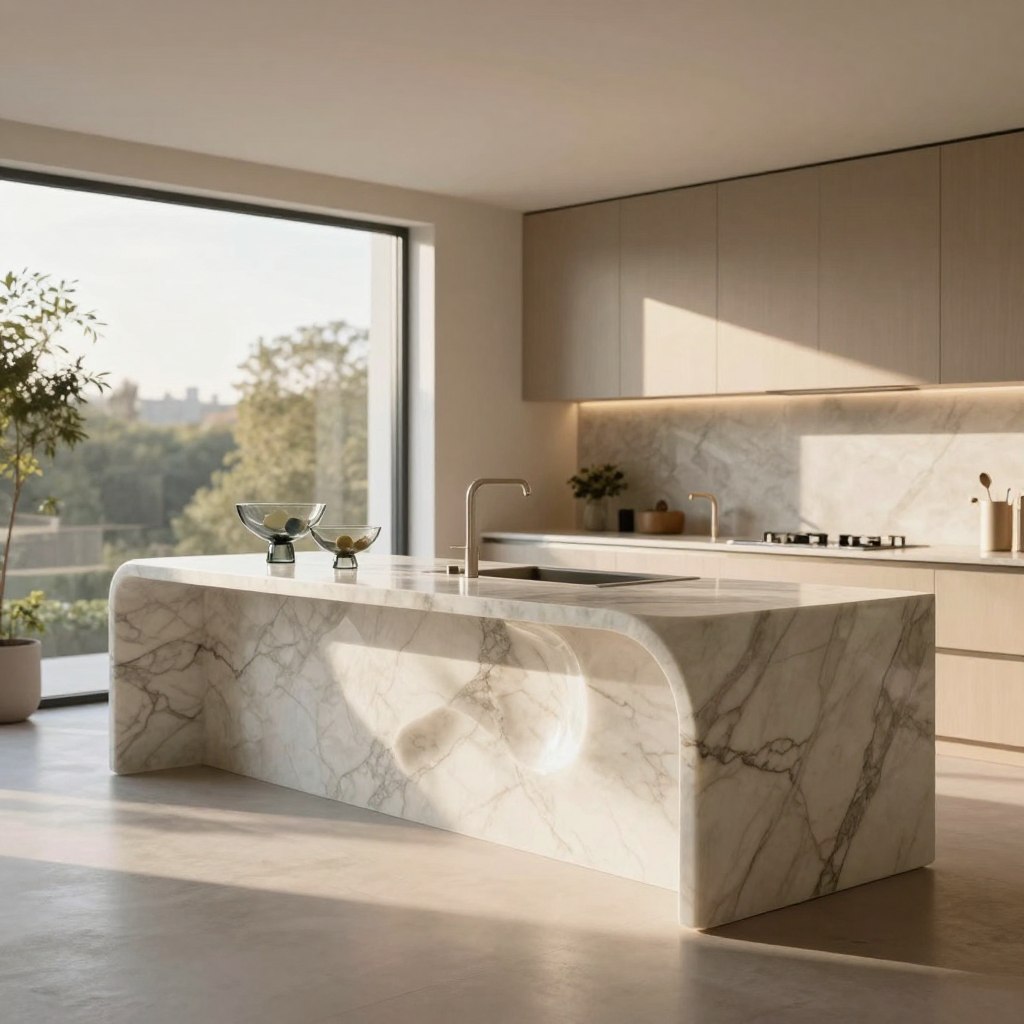
This is the approach that works best on islands with strong countertop movement veined stone, bold grai where adding more creates visual noise. One quiet sculptural piece absorbs the room’s energy instead of competing with it.
For surfaces like luxury granite countertops with bold pattern and depth, this is often the only centerpiece that works.
4. The Seasonal Edit Change One Thing, Not Everything
The island that looks considered in every season isn’t restyles seasonally. It’s edited.
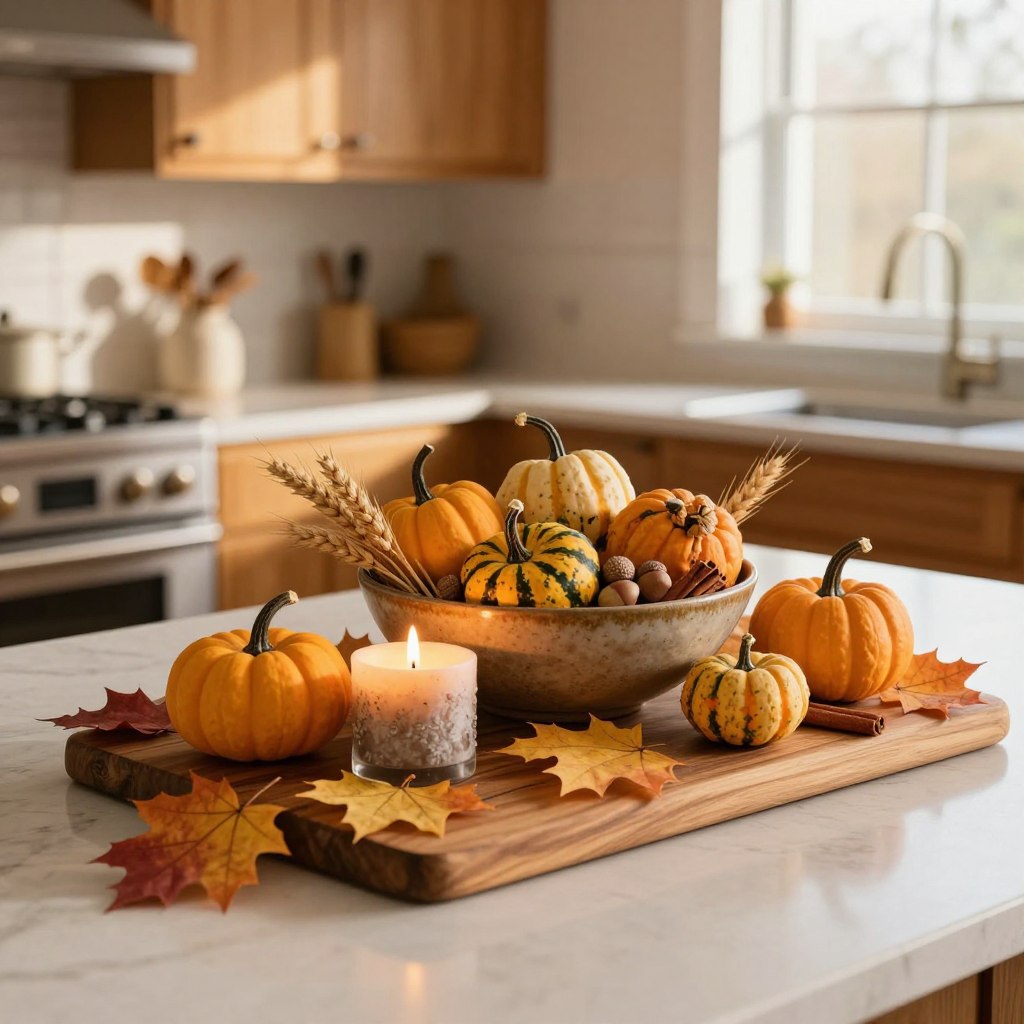
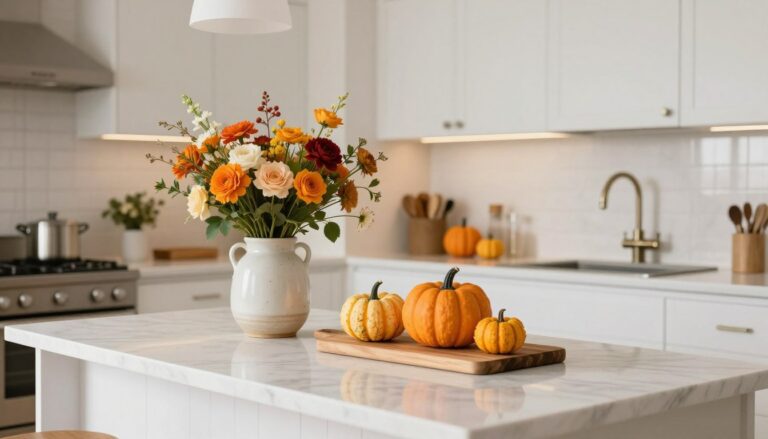
Keep the vessel, the tray, or the board constant. Change one element: a dried branch in winter, pale tulips in spring, a cluster of dark figs in autumn. The constancy makes the change legible. The room registers the shift without feeling rearranged.
This approach takes less time than a full swap and creates more coherence over the year.
5. The Living Plant Scale, Container, Light Conditions
A plant on a kitchen island works when three conditions are met: the scale is right, the container is considered, and the light is sufficient.
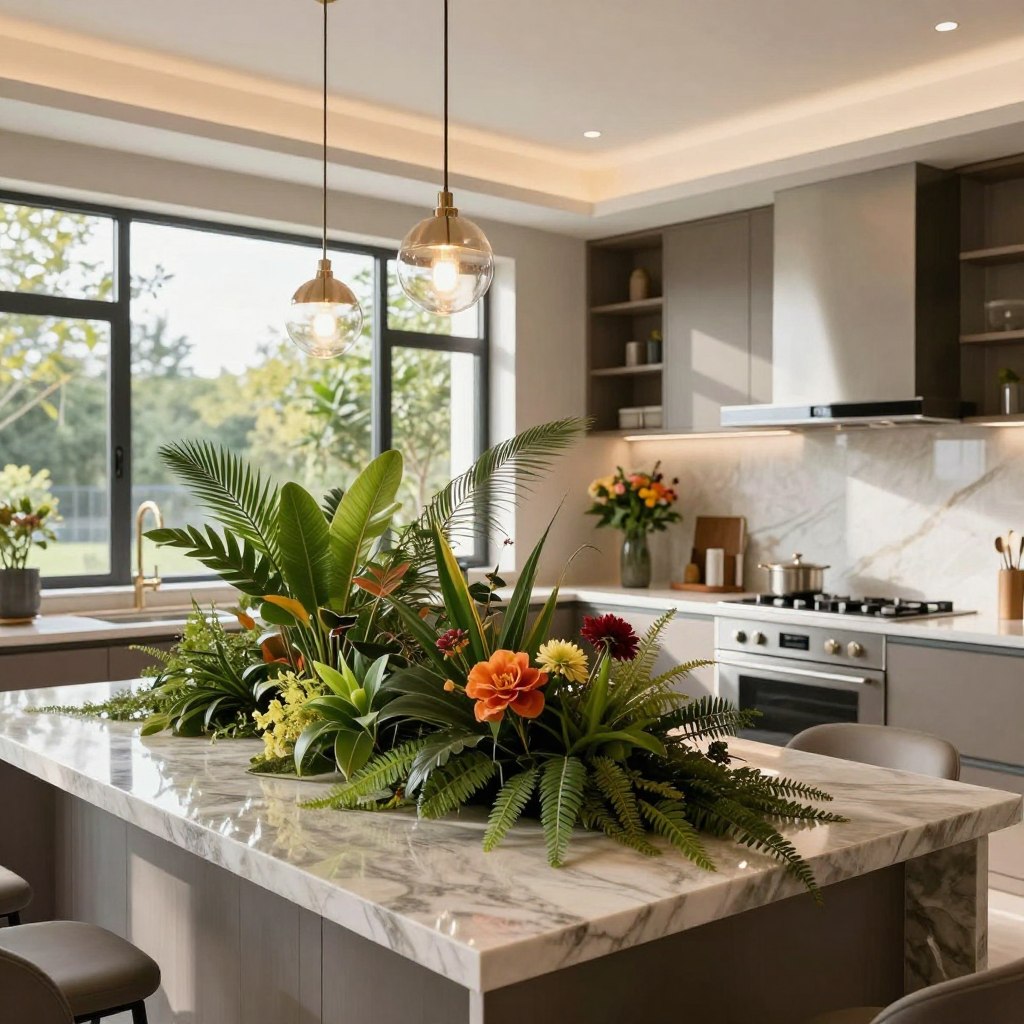
A Fiddle Leaf Fig too large for the island overwhelms it. A small succulent too slight for the surface disappears. The plant should occupy roughly one-third of the available centerpiece zone tall enough to create vertical presence, contained enough to leave clear counter space on both sides.
Choose a planter in a neutral material that matches the island matte concrete, unglazed ceramic, weathered stone. The planter is not decorative. It’s structural.
6. The Candle Arrangement Height Variation, Unscented, Material Matched
Candles on a kitchen island work when they’re treated as light objects, not fragrance.

Keep them unscented. The kitchen already holds its own aromas food, coffee, herbs. A competing fragrance creates sensory noise. Choose pillar candles in varying heights grouped on a stone or metal tray. The tray contains them. The variation in height gives the arrangement movement.
In the evening, this centerpiece changes the quality of the kitchen entirely. The surface stops being a workspace. It becomes the room’s warmest point.
7. The Tray Composition Frame, Three Heights, Contained Footprint
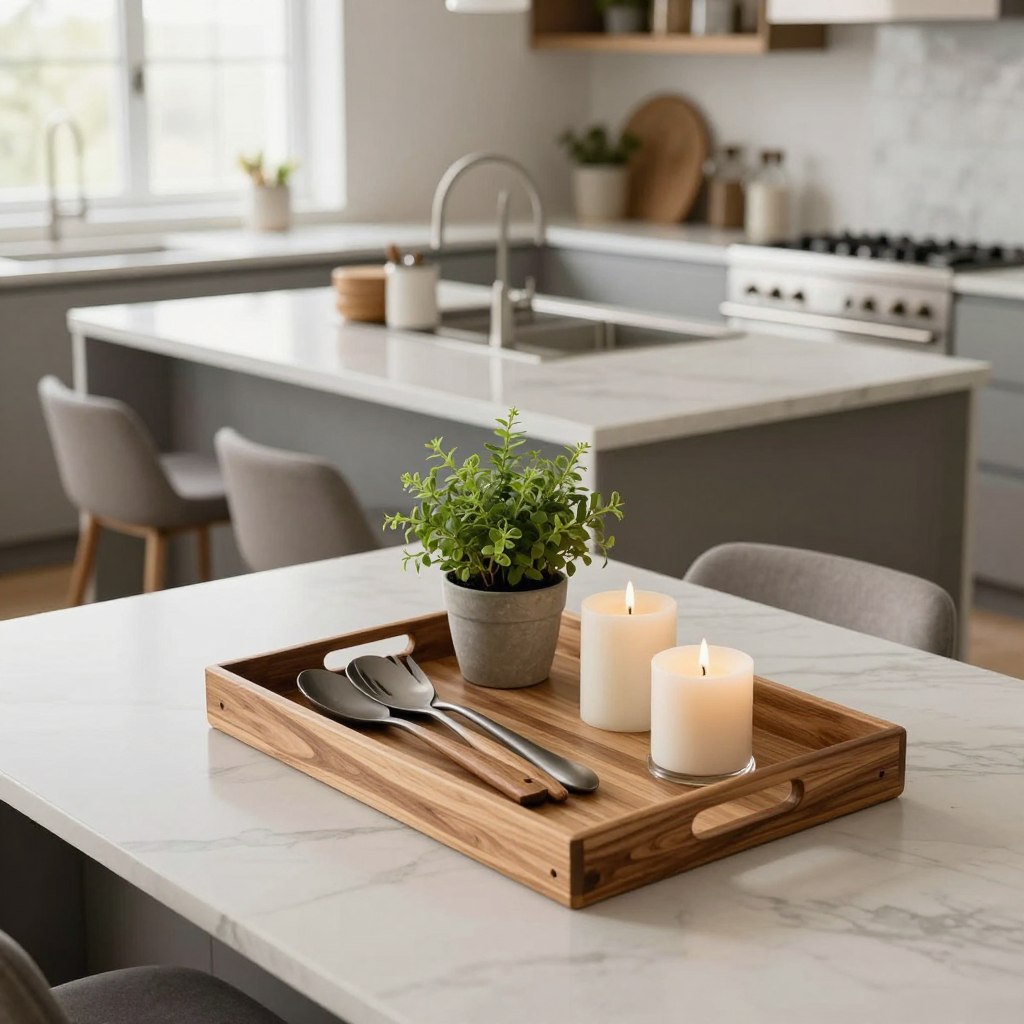
A tray gives the island’s centerpiece zone a boundary.
Everything inside the tray belongs to a composition. Everything outside belongs to the kitchen. Within that boundary: one tall element, one mid-height piece, one low or flat object. Three planes on one surface. The eye moves through them instead of resting on a single flat horizon.
Use a tray in a material that grounds the composition lacquered wood, honed marble, aged brass. The tray is doing as much design work as anything placed inside it.
8. The Ceramic Collection Two or Three Pieces, Tonal Not Matching
A collection of artisanal ceramics reads as personal when the pieces are tonal, not matched.
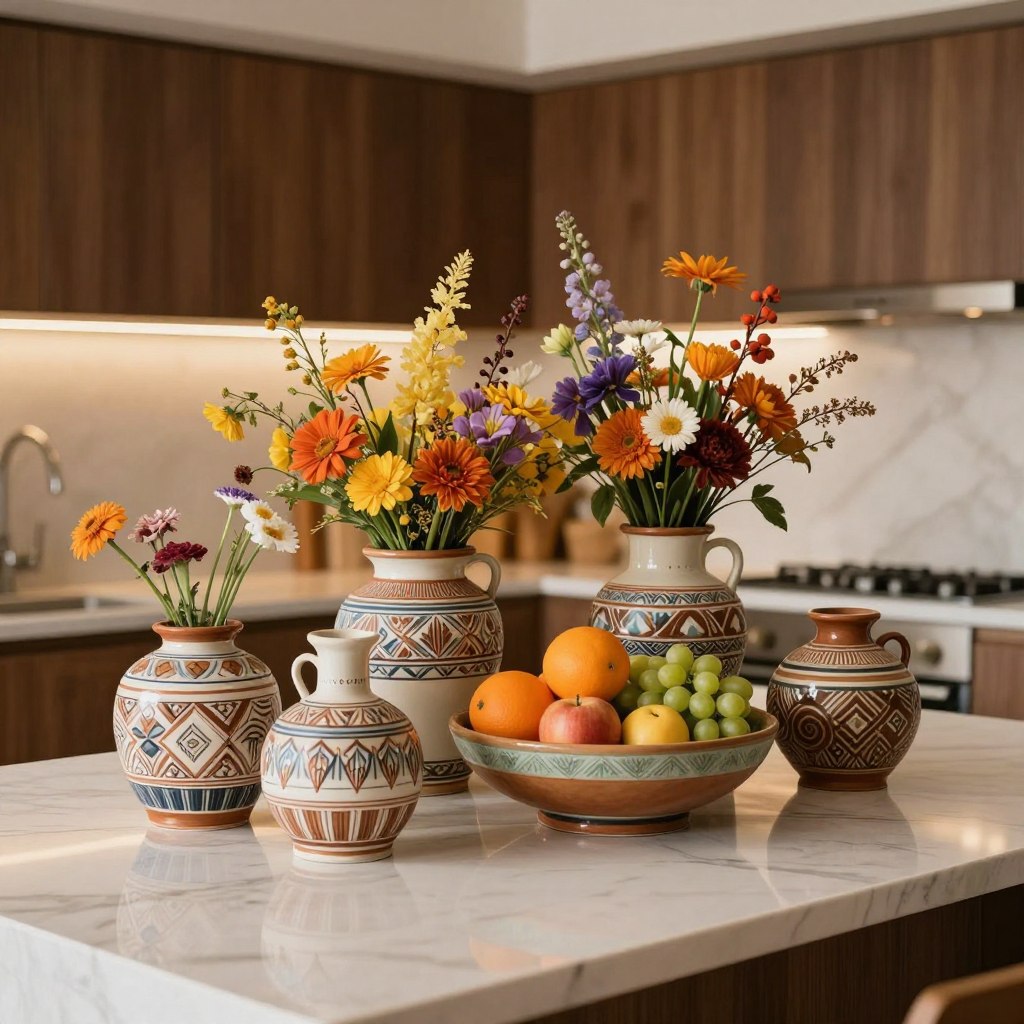
Two or three pieces a lidded vessel, a low bowl, a narrow vase in the same tonal family but different forms and finishes. A matte white beside a crackle glazed off white beside a raw grey. The relationship is color. The interest is in the differences.
This is the centerpiece that rewards looking at closely. From across the kitchen, it reads calm. Up close, it holds texture and detail.
9. The Produce Display One Category, One Vessel, Edible Art
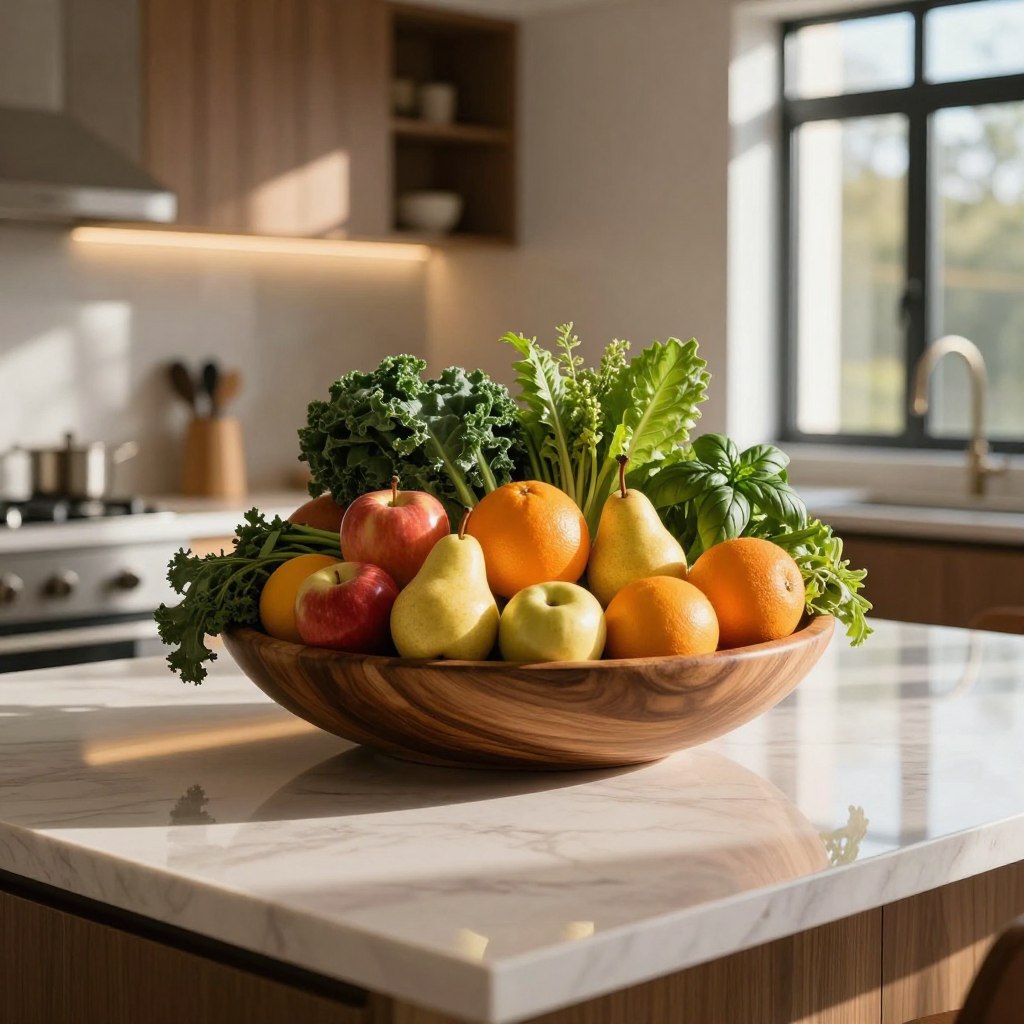
A produce display works when it’s edited to one category.
All lemons. All green apples. All artichokes. Not a mix a selection. Choose a vessel with depth and material presence: a wooden dough bowl, a wide ceramic, a rattan tray with a dark linen liner. The repetition of form and color within the bowl creates visual coherence.
This centerpiece is also the most honest. It changes as things are used and replaced. It’s alive in a way that no decorative object can be.
10. The Cookbook Corner Adjacent to Use, Not Just for Show
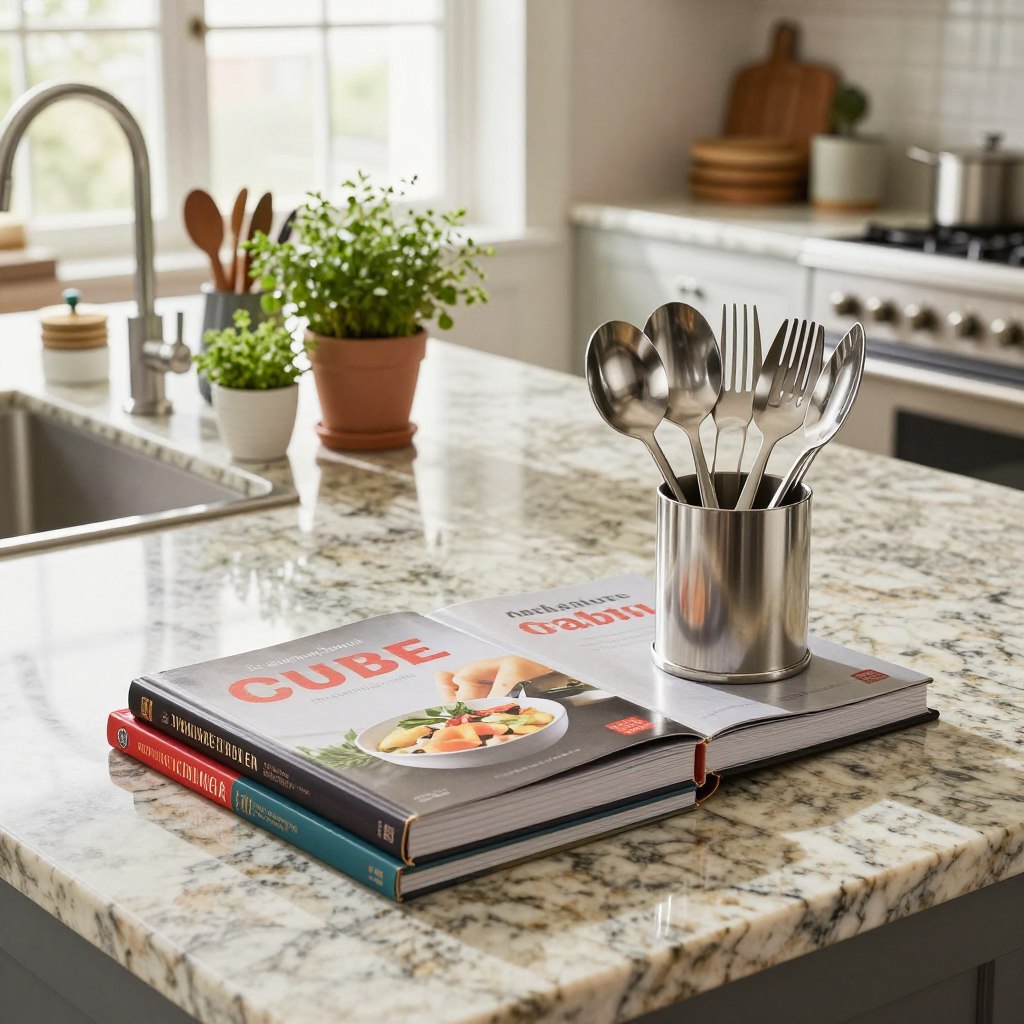
Two or three cookbooks stacked with a single utensil or small object alongside creates a corner that reads as lived in.
Choose books with considered covers neutral spines, typographic detail, cloth binding. Stack them by height. Lean a beautiful rolling pin or a single ceramic spoon rest against them. Don’t over style. The look should suggest that someone cooks here not that someone arranged for a shoot.
This pairs naturally with the island’s working end. For more on how to create shelf moments that feel collected rather than decorated, the styling kitchen shelves guide covers the principles.
11. The Herb Planter Long, Narrow, Light Aware
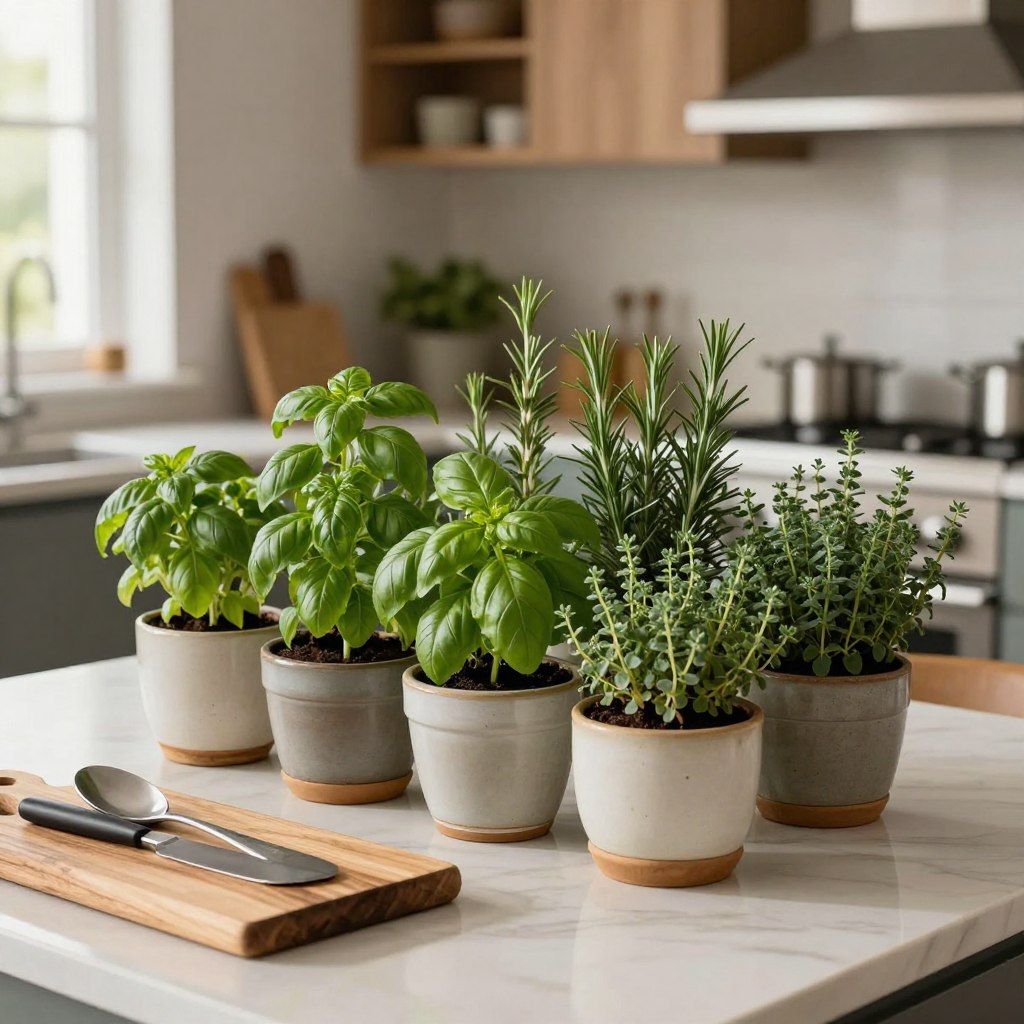
A long, narrow planter with three or four herbs running the length of it creates a centerpiece that changes daily.
Rosemary, thyme, basil, mint. Each with its own texture. The planter should sit in the island’s most light-adjacent position closest to the window or skylight, not centered for symmetry.
Choose a planter with clean lines in concrete, ceramic, or dark stained wood. Low profile. Let the height of the herbs create the vertical interest. This is function and presence in one object.
12. The Sculptural Bowl The Bowl as Object, the Fruit as Secondary
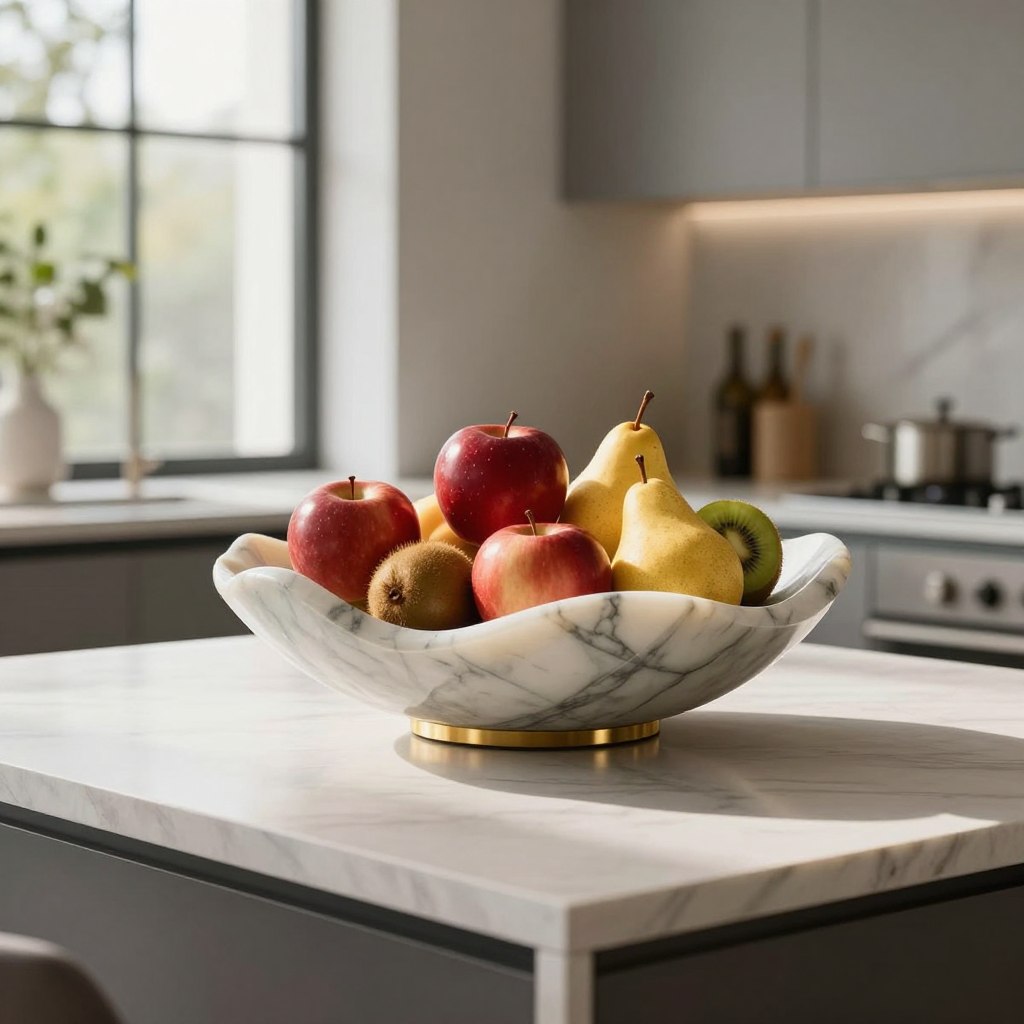
The bowl matters more than what’s inside it.
Choose a vessel with genuine material character: a hand-carved wooden bowl with visible grain, a stone bowl with weight, a wide ceramic with raw edges. Fill it with one type of fruit pears, lemons, quinces in a single color family.
The bowl reads as sculpture when empty. With fruit, it becomes a centerpiece. The distinction is important: an ordinary bowl disappears behind its contents. A considered bowl holds the surface on its own terms.
The Island Is a Choice
Not every surface needs to perform.
The kitchen island does the most work of any surface in the room. Meals are prepared on it. People lean against it. Things get set down and left there without thinking. A centerpiece that holds all of that and still reads as considered is not about decoration.
It’s about decision.
Choose one thing. Give it room. Let the island do the rest.