

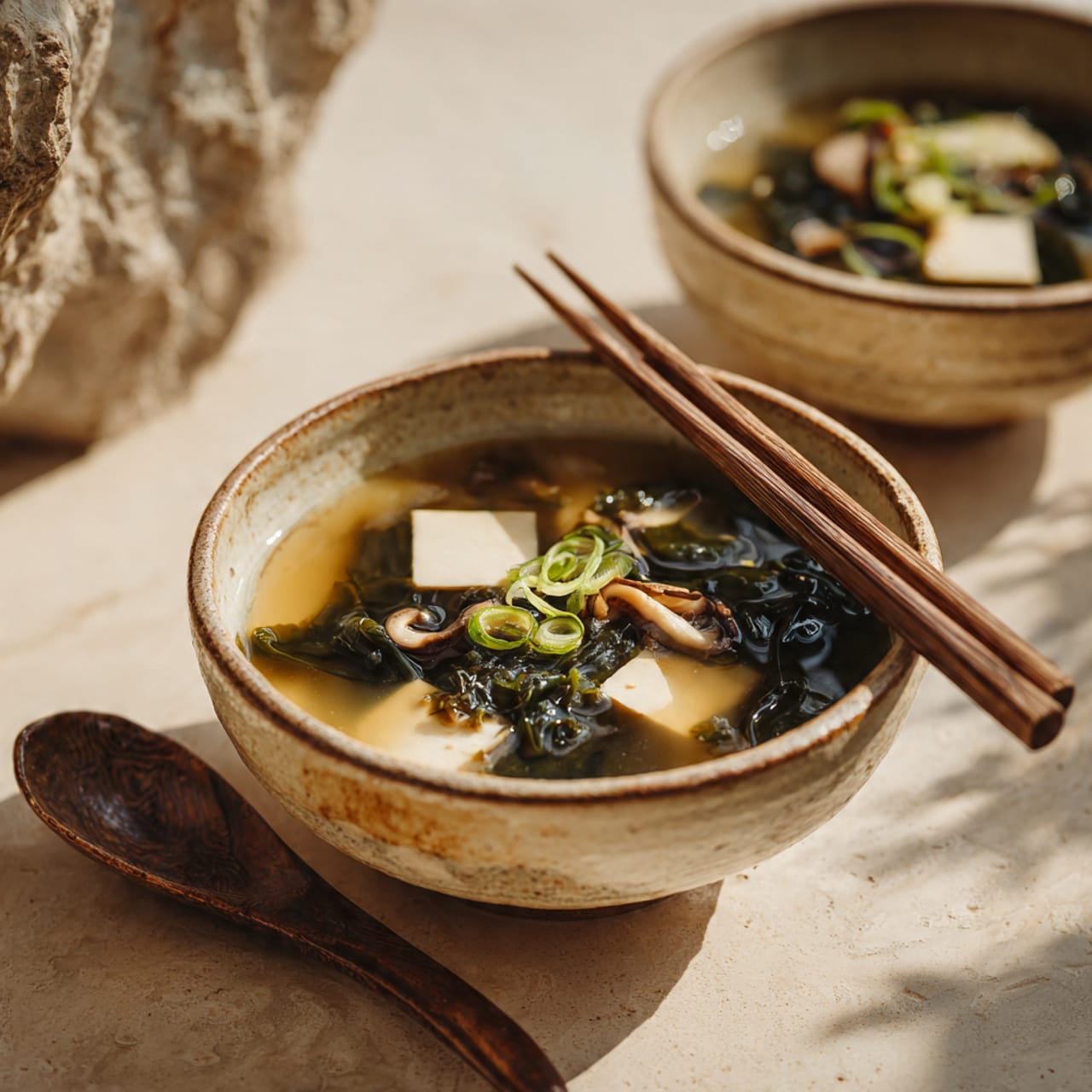
Have you ever woken up feeling like your body’s battery is running on empty? Or perhaps, after a series of festive parties, you find yourself craving something that can “reboot” your digestive system?
In the world of healing cuisine that I have always pursued, there is a symbol of longevity and serenity from Japan: Miso Soup. But today, I want to bring you a version that is more special, more refined, and designed for everyone even those with the most sensitive digestive systems: Vegan Miso Soup (Gluten Free).
This isn’t just a bowl of soup; it is a therapy for balancing the Mind, Body, and Spirit that I want to share with you.
1. Miso “Liquid Gold” for Your Gut Microbiome
If you’ve followed me long enough, you know how “obsessed” I am with gut health. The Japanese have a saying: “Miso is a doctor to every home.” Why?
Miso is the product of fermenting soybeans (or other grains) with koji mold. It contains billions of probiotics that help your digestive system run like a well oiled machine. However, a common hurdle in the wellness community is Gluten. Many traditional misos are fermented with barley (Mugi Miso) or wheat, which can cause inflammation or bloating for those with gluten sensitivities.
That’s why the version I’m sharing today uses White Miso (Shiro Miso) or Red Miso (Aka Miso) made entirely from soybeans and rice, certified Gluten-Free. This small switch brings absolute peace of mind to your tummy.
2. The Art of Ingredients: Excellence in Simplicity
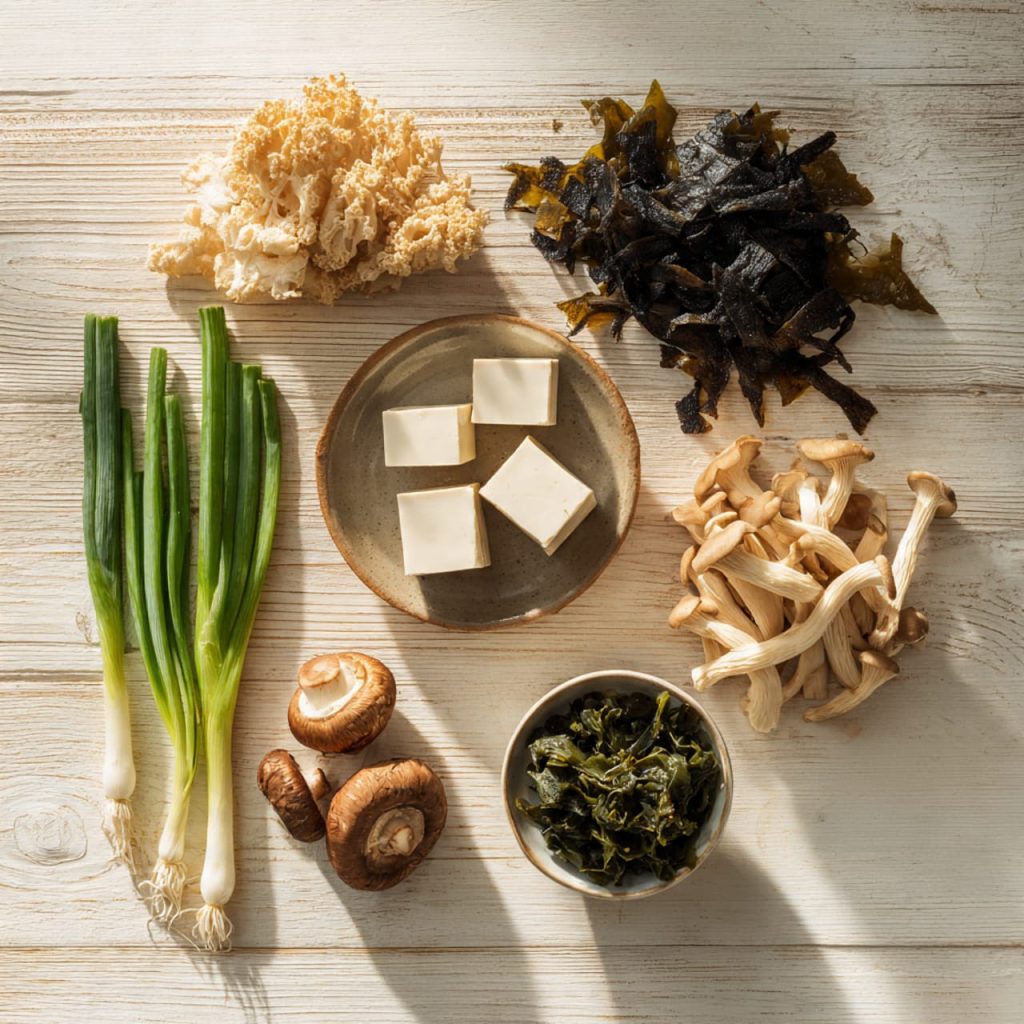
The power of this dish lies in its purity. Don’t try to overcomplicate it. Let each ingredient speak for its own value.
The Soul of the Dish:
-
Gluten Free Miso (2-3 tablespoons): Choose organic, Non GMO options. White miso offers a mild sweetness, while red miso is deeper and more robust.
-
Dried Mushrooms & Kelp (Kombu): To create a vegan Dashi broth. This is the secret to “Umami” that natural savory sweetness without the need for chemicals.
The Nourishing Elements:
-
Silken Tofu: Soft as jelly, providing a clean source of plant protein.
-
Wakame Seaweed: A treasure trove of minerals and iodine from the ocean.
-
Fresh Mushrooms (Enoki, Shiitake): To add texture and earthy flavors.
-
Green Onions & Fresh Ginger: To activate blood circulation and warm the body.
3. “Crafting” the Dashi The Heart of Miso Soup
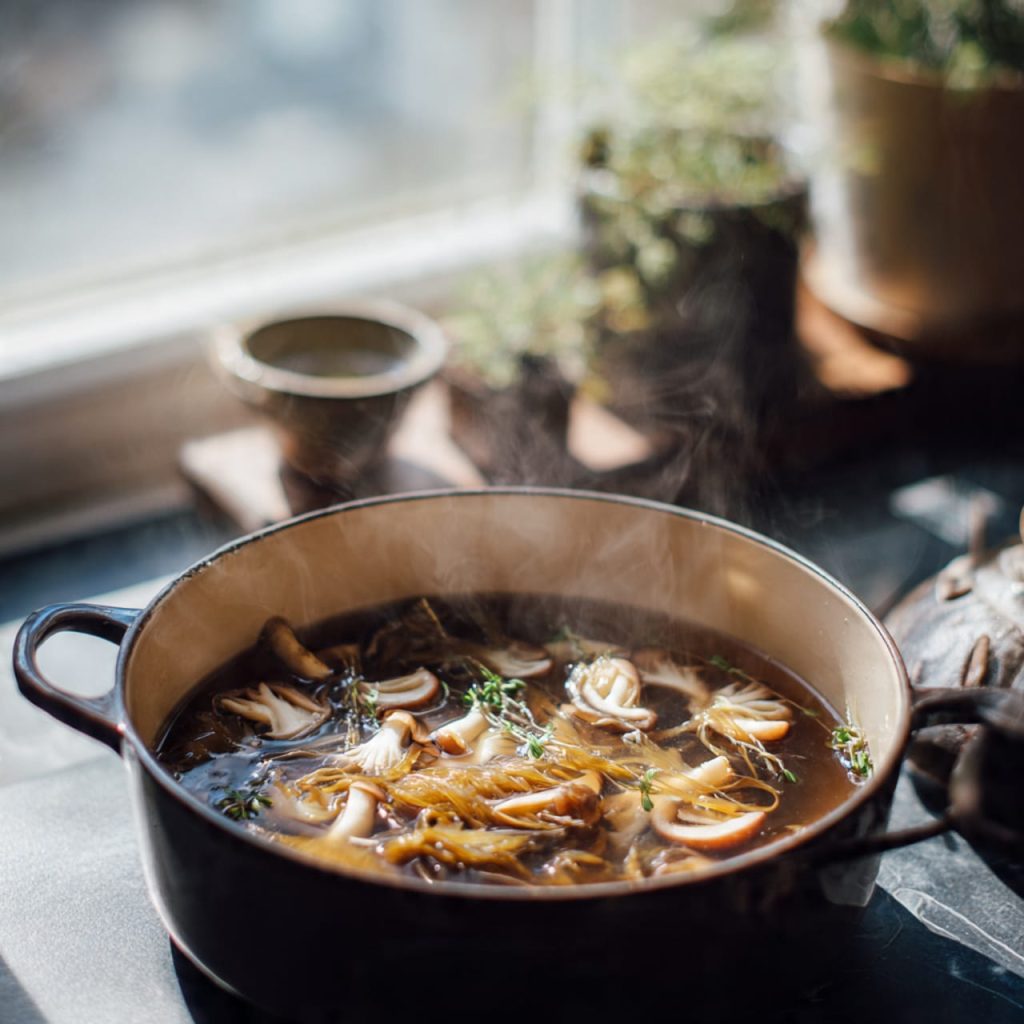
Many people make the mistake of cooking miso soup with plain water. To reach the level of a true connoisseur, you must start with Dashi.
-
Soak the Kombu: Soak a piece of Kombu kelp in water for about 30 minutes before cooking. The kelp will release natural glutamic acid.
-
Gentle Simmer: Heat the soaking water on the stove. Just as it begins to simmer, remove the Kombu immediately. If boiled too long, the broth becomes bitter and slimy.
-
Mushroom Essence: Add dried shiitake mushrooms to this broth and simmer for another 10 minutes. You will now have a pale gold liquid, smelling intensely of the sea and the forest. That is the “soul” of your soup.
4. The Golden Rule: Never Boil Miso!
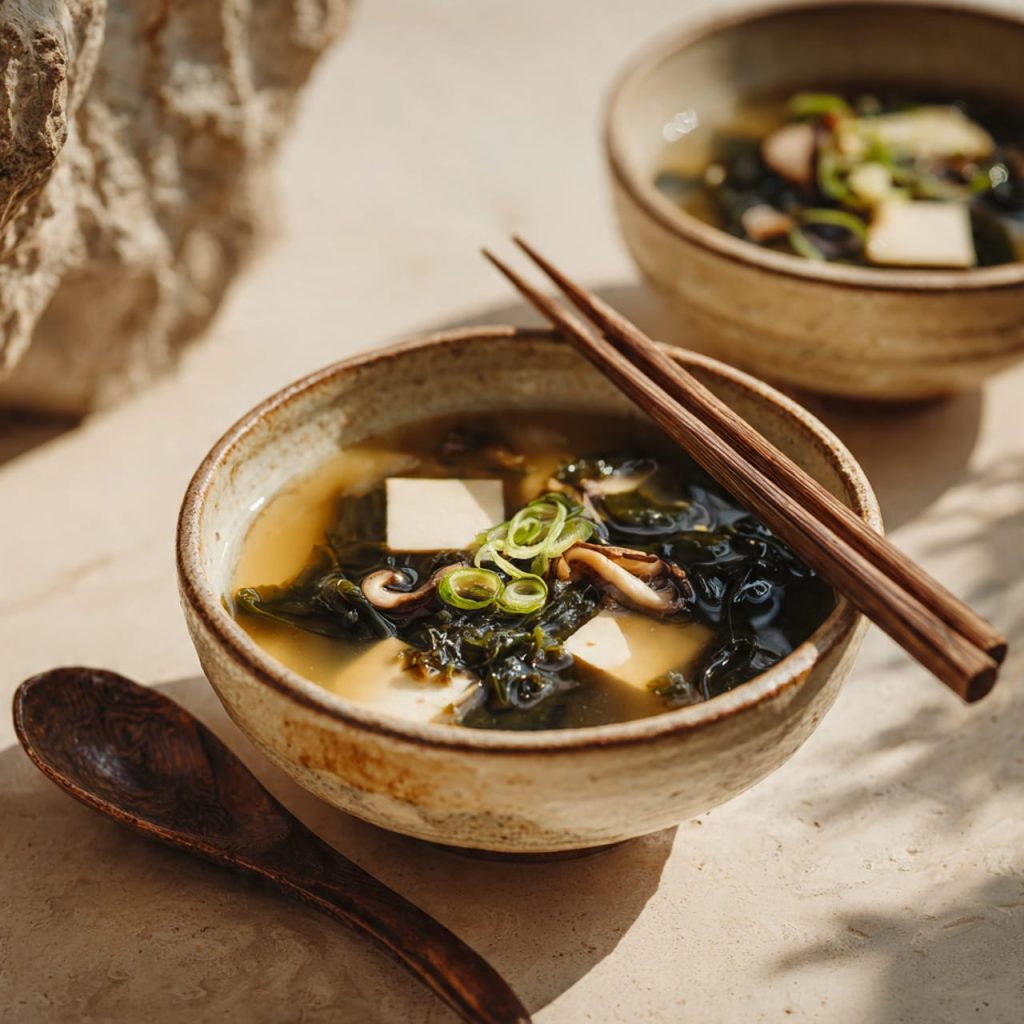
This is a point I always emphasize to students in my cooking classes. Miso is a living food. If you drop miso into rolling, boiling water, you kill all those precious probiotics and ruin its delicate flavor profile.
The Right Way:
-
Turn off the heat after the vegetables and tofu are cooked.
-
Ladle a small amount of broth into a small bowl, add the miso, and whisk until smooth.
-
Pour the dissolved miso mixture back into the pot. Now, your bowl of soup is not just delicious; it’s a “symphony” of beneficial microbes ready to take care of your body.
5. Why This Dish Will Change Your Lifestyle
When you choose to cook a bowl of gluten-free vegan Miso soup in the morning or evening, you are performing an act of Self love.
In our modern lifestyle, we consume far too many processed foods, excess salt, and saturated fats. Miso soup acts like a filter, helping to alkalize the body, support liver detoxification, and soothe the nervous system. After drinking it, you’ll feel a gentle surge of energy no carb heavy drowsiness, no caffeine jitters.
It teaches us about gratitude. Gratitude for the soybean that spent months fermenting in silence to become a premium seasoning. Gratitude for the sea that gifted us the vibrant green seaweed.
6. Elevating Food into Art
To make your bowl look like it belongs in a fine-dining restaurant in Kyoto, pay attention to the presentation:
-
Colors: A few carrot slices cut into flower shapes, a bit of vibrant green bok choy.
-
Flavor Profile: A single drop of toasted sesame oil drizzled on top just before serving.
-
Mindset: Use a rustic wooden or ceramic bowl. Hold the bowl with both hands, feeling the warmth through your palms before taking that first sip.
7. A Message from Me to You
My dear friends, happiness is not found in luxury. It is found in our ability to care for ourselves in the smallest ways. Gluten free vegan Miso soup is proof that food can be medicine, art, and comfort all at once.
Try spending 15 minutes tonight to cook this soup. Listen to your body as it whispers “thank you” after every warm spoonful.
Nutritional Value Summary:
-
Low Calorie: Perfect for staying fit.
-
Rich in Probiotics: Great for digestion and immunity.
-
Gluten Free: Safe for everyone.
-
Plant Based: Protecting the environment and animals.
Conclusion: A Journey of Awareness
In the end, this Vegan Miso Soup is more than just a recipe; it’s a reminder to slow down. In every ferment of the miso, there is patience. In the clear dashi broth, there is purity.
I hope this soup becomes a staple in your family’s “happiness menu.” Cook it with your whole heart, and you will find its flavor is entirely different.
Don’t forget to share your peaceful moment with this Miso soup by tagging me! I’m always here to help you spread the values of green and healthy living.
Wishing you a day full of peace and healing energy!