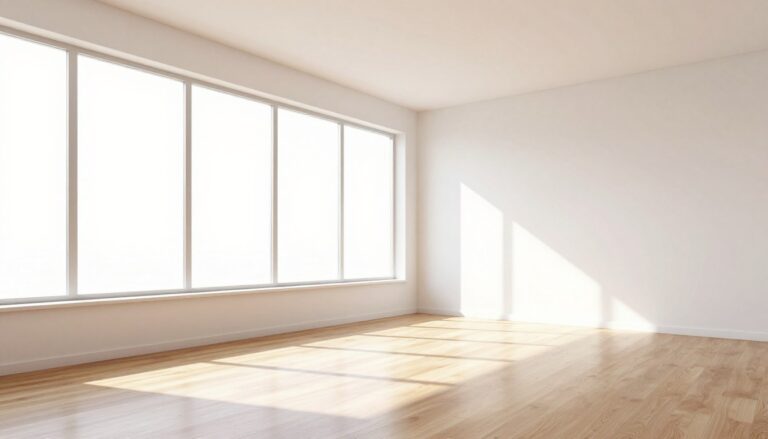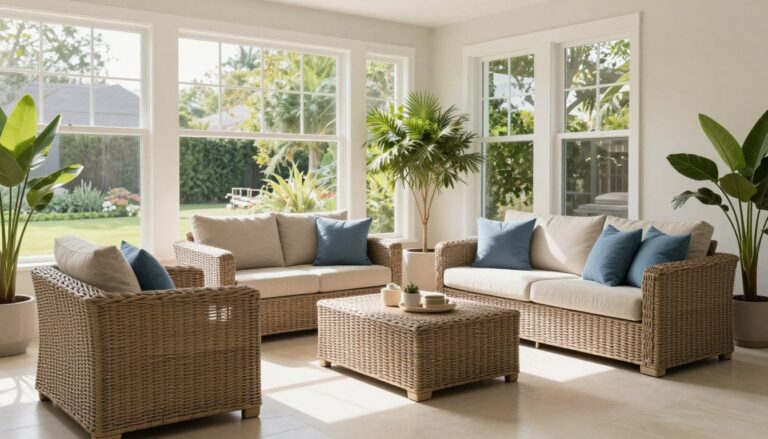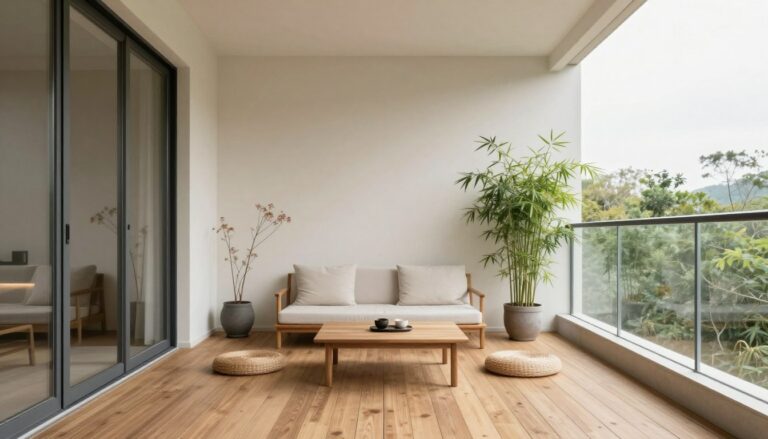

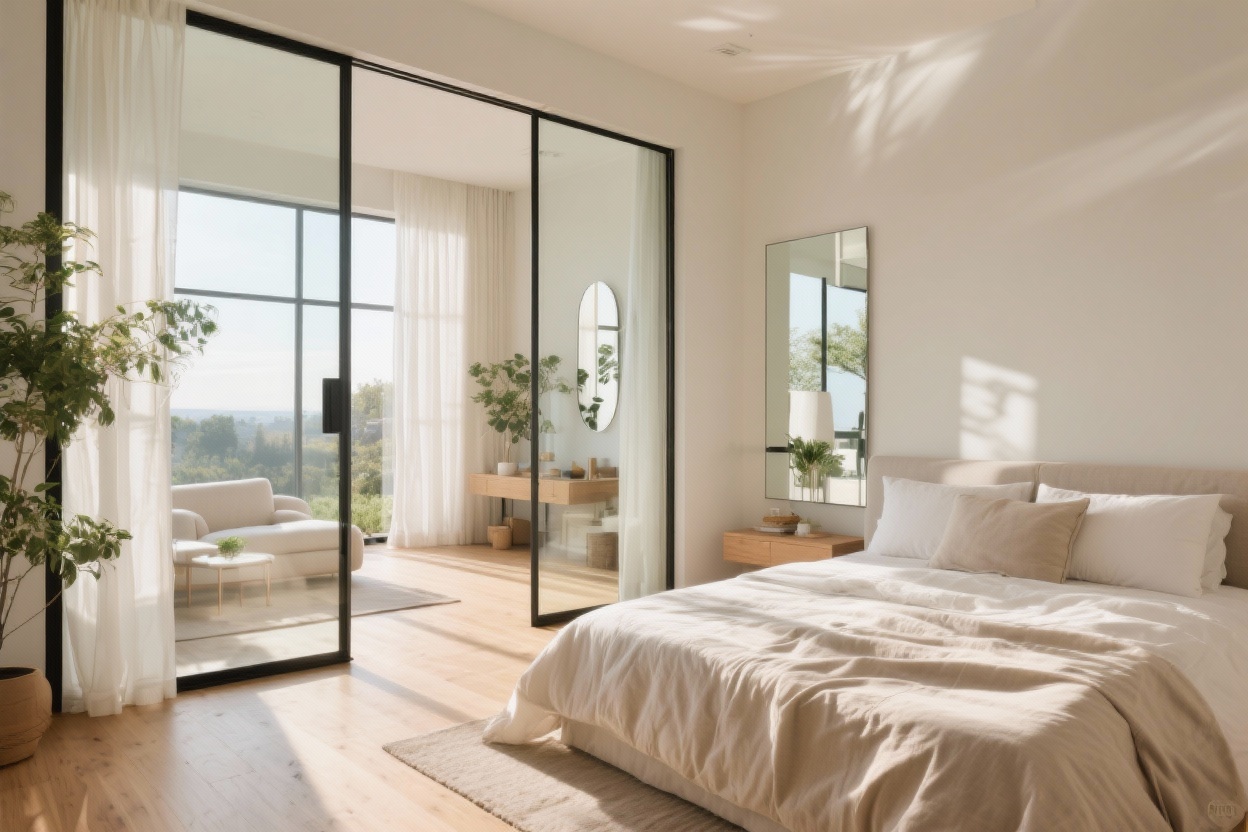
Morning enters through glass differently.
It doesn’t announce itself. It spreads across the floor, along the wall, into corners the room didn’t seem to have before.
That’s what glass does to a bedroom. Not decoration. Not drama. Just light, given somewhere to move.
Most bedrooms feel smaller than they are not because of size, but because of density. Solid walls stop light. Fixed structures close space in. Glass interrupts that pattern quietly. A partition here. A sliding door there. A panel behind the bed that changes everything subtly.
These glass bedroom ideas aren’t ambitious renovation projects. Most of them are decisions about material choosing something that holds space open rather than filling it. Each one works differently. Some invite light from outside. Some borrow it from an adjacent room. Some simply make the room feel less finished, and therefore more alive.
What they share is restraint. In a bedroom, restraint is always the right starting point.
Glass Partition Bedroom Designs
A partition doesn’t divide a room. It edits it.
Done well, a glass partition creates two experiences within one space without reducing either. The sleeping area stays defined. The surrounding room stays visible. Light passes through both.
Steel Framed Floor to Ceiling Partitions
Black steel frames and clear glass panels are the most architectural version of this idea.
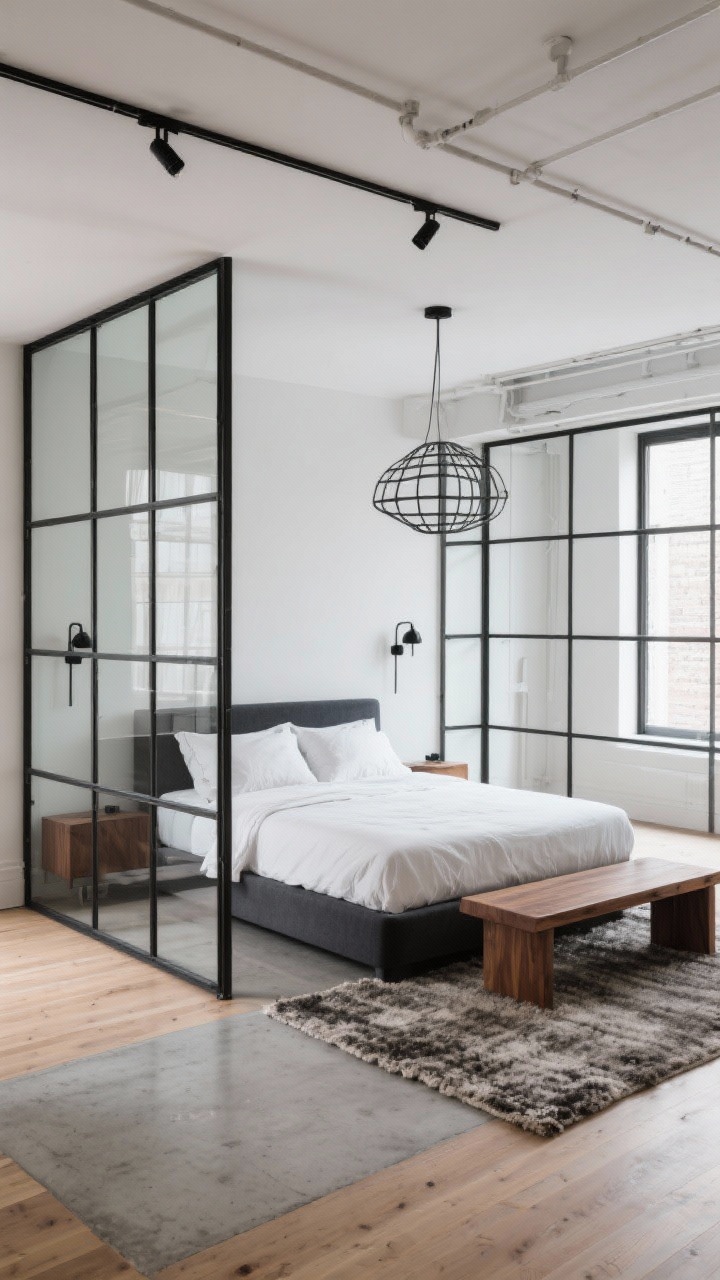
The frame does something the glass alone cannot: it draws a line. Clean, deliberate, structural. The sleeping area sits inside it like a room within a room present but contained. This works particularly well in open-plan apartments where the bedroom has no natural boundary of its own.
Keep the interior simple. A low platform bed in pale oak. White bedding with no excess. The structure carries the visual weight the furnishings don’t need to compete.
Shoji Style Slim Wood Panels
The Japandi approach to glass partitions uses less glass and more frame.
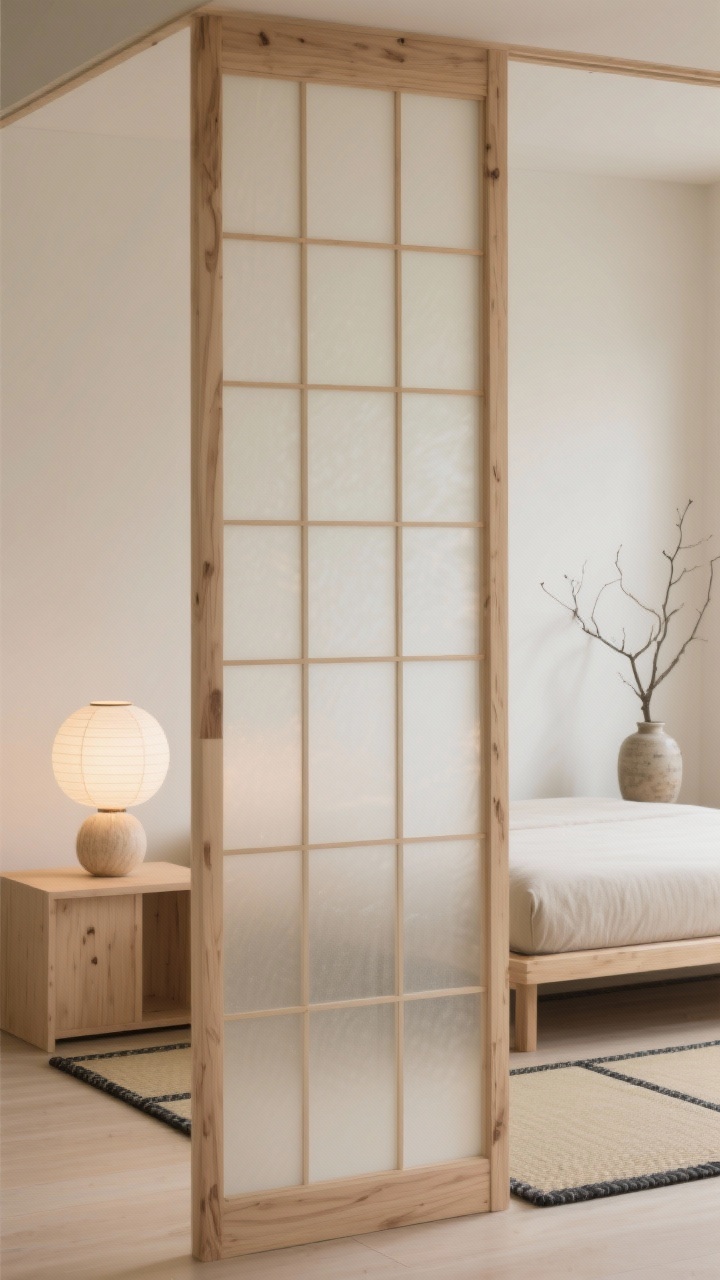
Thin wooden grids in ash, oak, or bamboo divide the panels into small geometric sections. The glass behind them becomes secondary. Light diffuses through the grid evenly no glare, no hard shadow lines. It’s one of the quieter glass bedroom ideas on this list, and often the most enduring.
Pair this partition with a floor-level bed, a single ceramic lamp, and surfaces that stay empty. The restraint of the partition sets the tone for everything inside it.
Ribbed and Fluted Glass for Ensuite Separation
Ribbed glass is the right choice when the bedroom connects to a bathroom.
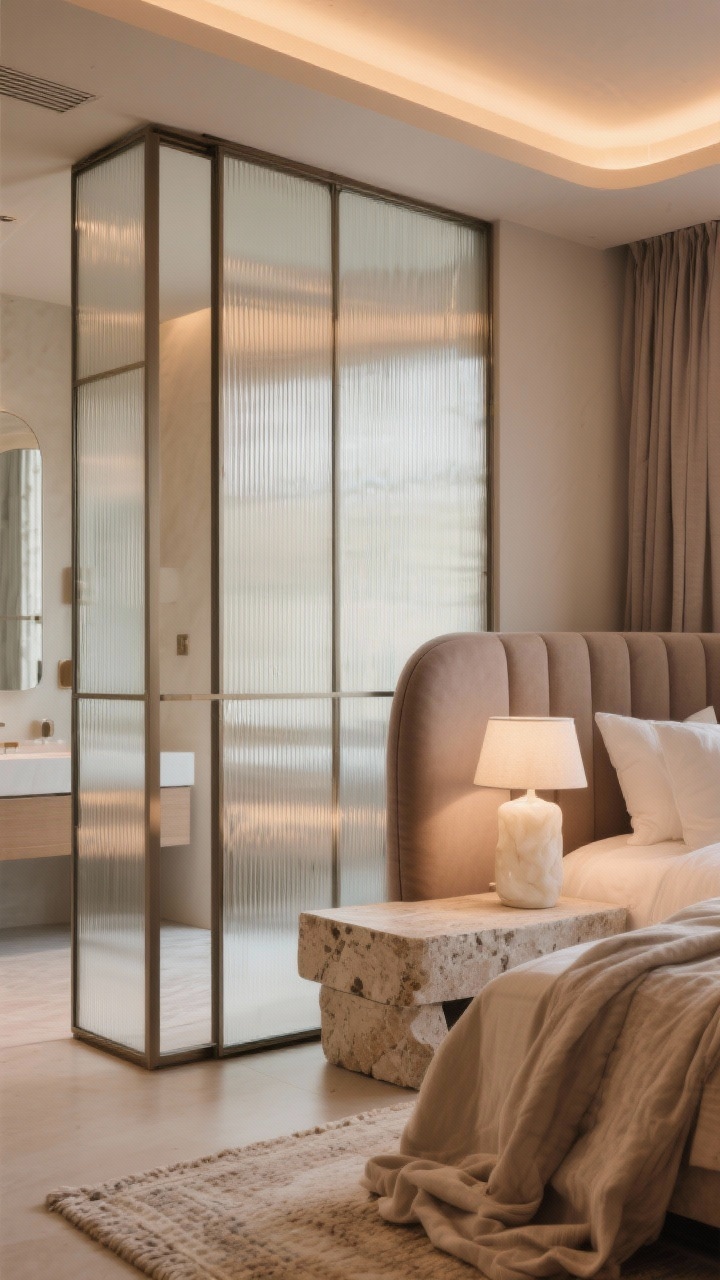
The vertical texture catches light without transmitting a clear image. You see warmth and movement through it — a lamp switched on, a shadow crossing — but not detail. Privacy holds. Light travels. The wall between two rooms becomes a material feature in its own right.
Pair it with stone surfaces, organic linen, and warm-toned lighting. The result feels like a continuous, considered space rather than two separate rooms joined awkwardly.
Glass Wall Bedroom Design
A glass wall changes the relationship between inside and outside.
It doesn’t just let in light. It dissolves the edge of the room the point where interior ends and exterior begins. Done with restraint, this is one of the most spatially transformative glass bedroom design ideas you can act on.
Frosted Sliding Glass Doors for Soft Privacy
When privacy matters, frosted glass offers a quieter solution than curtains or blinds.
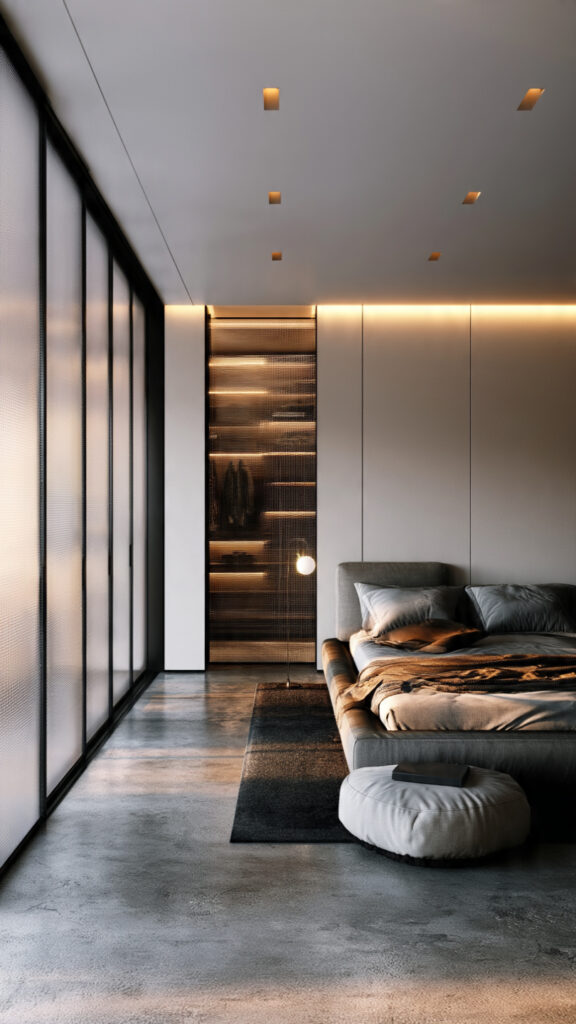
Sliding doors in frosted glass replace a solid wall with something that moves and breathes. Closed, they hold the room soft daylight comes through without detail. Open, they remove the boundary entirely, connecting the bedroom to a balcony or adjacent space.
The sliding mechanism is part of the design. Track hardware in matte black or brushed brass adds a considered detail at ceiling height visible, but quiet.
Glass Corner Walls and Garden-Facing Rooms
Two adjacent glass walls in a corner redefine what a bedroom can feel like.
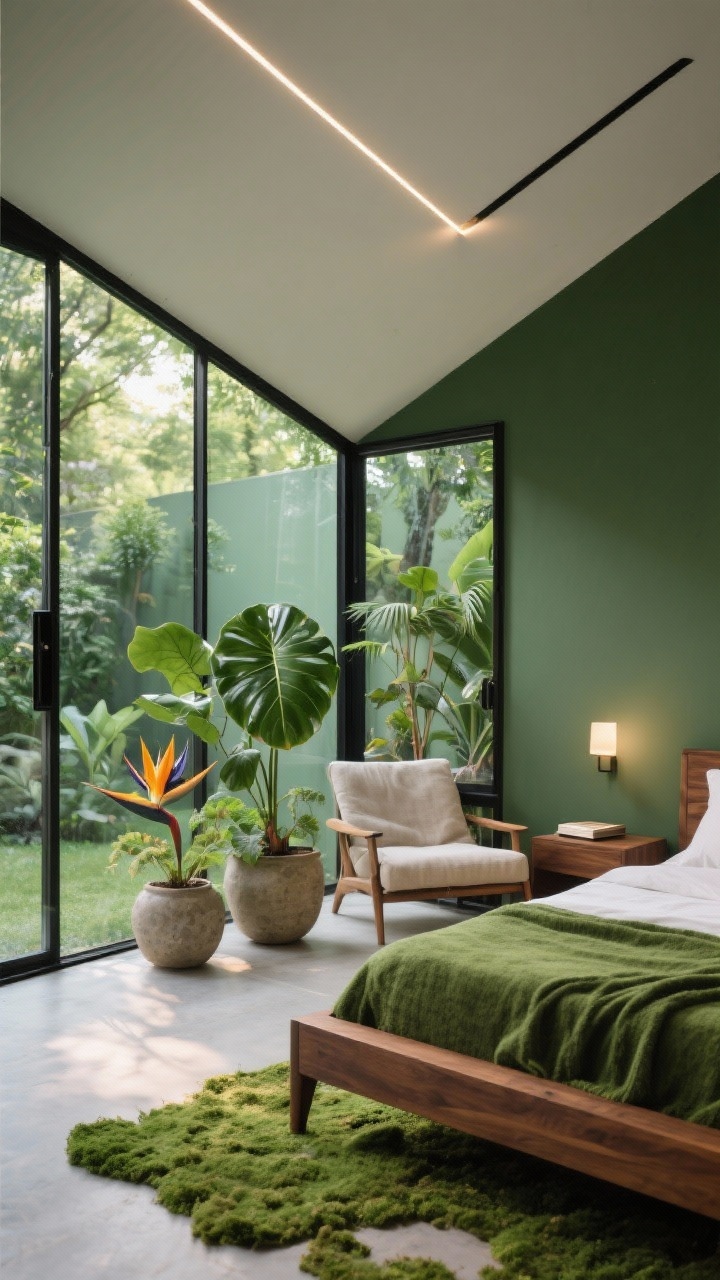
Light enters from two directions at once. Shadows shift through the day. The room feels less like an interior space and more like a pavilion enclosed enough to sleep, open enough to feel the outdoors without stepping into it.
Keep the rest of the room deliberately still. A walnut bed frame. Moss-toned linen. One or two plants in matte ceramic. Let the corner do the work.
French Glass Doors Opening to a Reading Nook
French doors in a bedroom aren’t about grandeur. They’re about threshold.
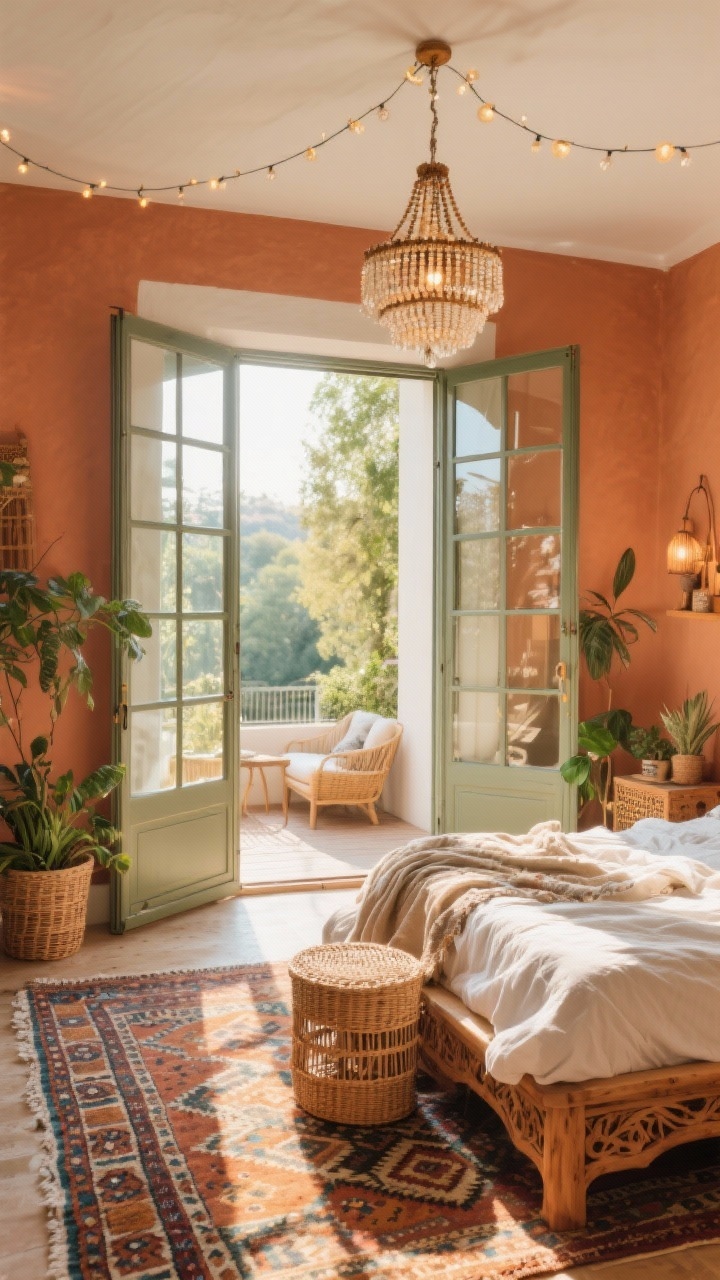
Multi-pane glass doors in white timber or thin steel create a soft, domestic version of the glass wall. They frame a view without dominating it. Opened onto a small balcony or internal reading nook, they allow light to travel freely while giving the bedroom a quiet sense of porousness.
Style the adjacent nook simply. A linen chair. A low side table. A single lamp with a warm bulb. The connection between spaces needs very little to feel complete.
If the reading nook opens to a balcony instead of an interior space, the same principle applies keep it spare. Our guide to minimalist balcony ideas covers how to style a small outdoor area so it earns the glass door you’ve just put in front of it.
Smart Glass and Technology Driven Privacy
This is the newest category in glass bedroom design and the most practical for anyone nervous about the privacy question.
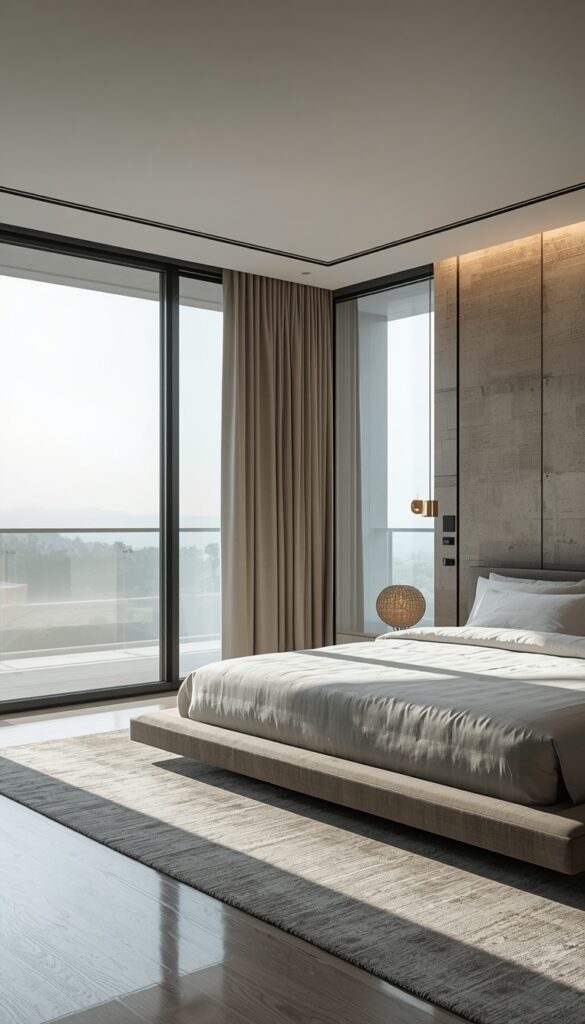
Electrochromic Smart Glass
Smart glass switches between transparent and opaque at the touch of a button, a voice command, or a timer. In clear mode it’s a standard glass wall. Opaque mode looks like frosted glass. No curtains, no blinds, no hardware on the wall.
The cost is significant typically $50–$150 per square foot installed, compared to $10–$30 for standard frosted glass. But for a bedroom that needs full transparency in daylight and full privacy at night, it eliminates the compromise entirely.
If the price isn’t right yet, smart glass film applied to existing panels costs a fraction of that and achieves a similar effect. The switchable opacity isn’t quite as complete, but it works — and you can apply it without replacing any glass.
This is still a niche addition. Most glass bedroom ideas don’t need it. But if privacy has been the reason you’ve held back from a glass wall, smart glass is the answer that doesn’t require you to choose between light and comfort.
Glass Features That Reshape the Ceiling and Storage
Not all glass needs to be vertical.
Some of the most considered glass bedroom design ideas involve the ceiling, the wardrobe, or the structural elements most people don’t think to change.
Glass Ceiling Panels and Skylights
Light from above has no equivalent.
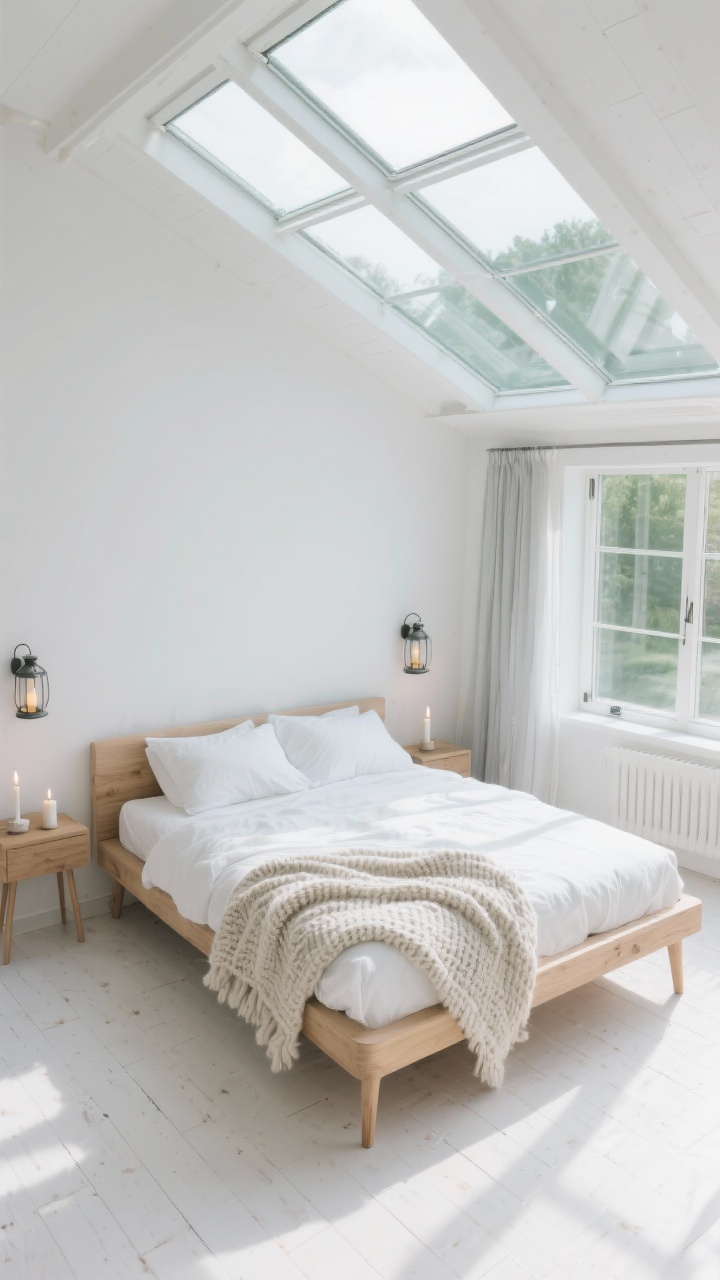
A skylight or tempered glass ceiling panel introduces daylight at an angle no window can replicate. It moves with the sun slow arcs across the floor and walls throughout the day. In a room with pale oak flooring and white walls, this quality of light makes the space feel perpetually morning.
If structural skylights aren’t possible, a roof lantern over a flat extension achieves a similar effect with more visual warmth. And if you’ve gone far enough with glass that the ceiling is largely glazed, you’re essentially building a sunroom which brings its own set of design considerations worth reading before you commit. See our guide to sun rooms in houses for the full picture.
Glass Enclosed Wardrobes as Design Features
A wardrobe behind clear glass panels is not transparency for its own sake.
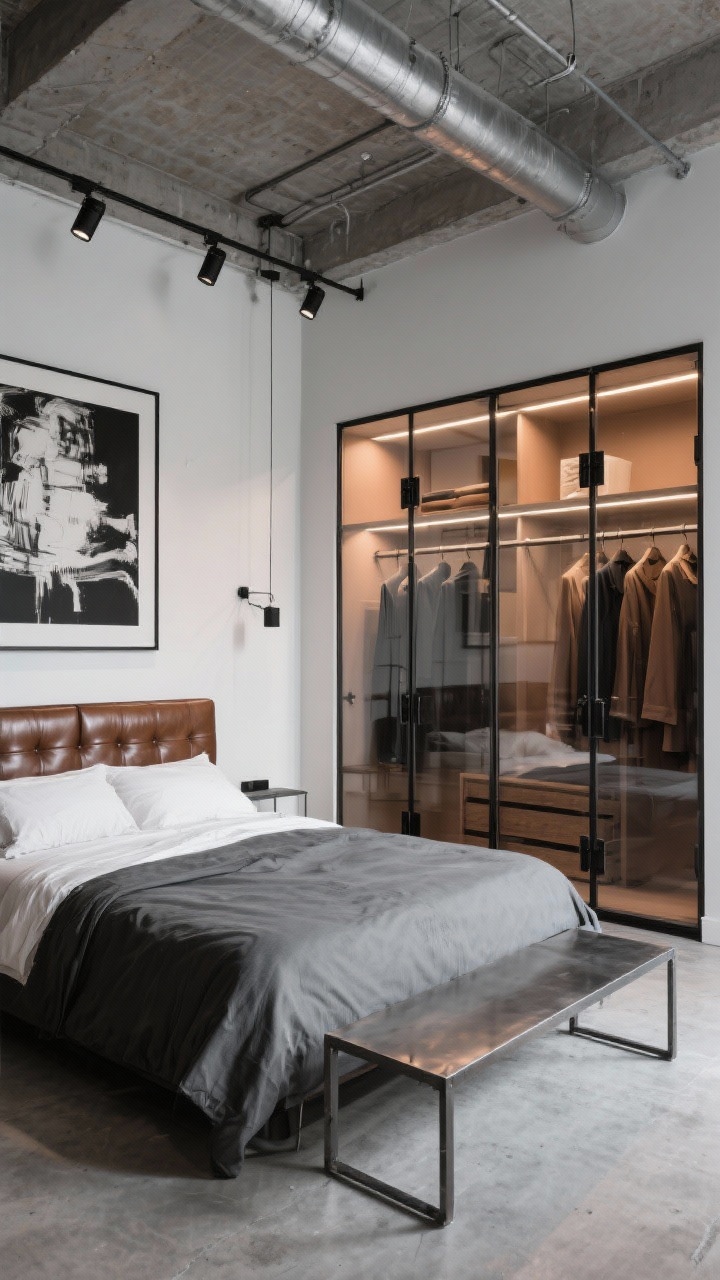
It’s a discipline. Clothing arranged by color and weight becomes a considered backdrop the kind of visual order that makes the rest of the room feel calm by comparison. The glass keeps the wardrobe present without making it heavy. Storage becomes part of the composition rather than something to close off and ignore.
Pair this with a leather-upholstered headboard, monochrome artwork, and a steel bench at the foot of the bed. The palette should stay controlled. The wardrobe carries enough visual information on its own.
Glass-Backed Architectural Niches
A glass-backed niche beside or behind the bed adds depth without dimension.

The niche appears to extend further back than it does. Objects placed inside it a small sculpture, a ceramic, a single book sit in front of their own reflection. The effect is architectural rather than decorative, adding geometry to a wall that would otherwise be flat.
Keep the niche narrow and tall. One accent, lit from below. Nothing more.
Glass Railings in Loft Bedrooms
If your bedroom is in a loft or raised mezzanine, glass railings are an easy decision.
Solid railings eat the view. Glass ones don’t. You get the safety barrier you need without losing the open, airy quality that makes a loft bedroom worth having in the first place. Frameless glass panels are the cleaner option — steel-framed versions add an industrial edge that works well with exposed joinery and concrete floors.
Installation runs roughly $150–$400 per linear foot, depending on the frame type and glass thickness. Less than a full glass wall, and the visual payoff is immediate.
Choosing the Right Glass for Your Bedroom
What Is the Difference Between Clear, Frosted, and Ribbed Glass?
Clear glass transmits light and image without alteration. It’s the most open and the least private.
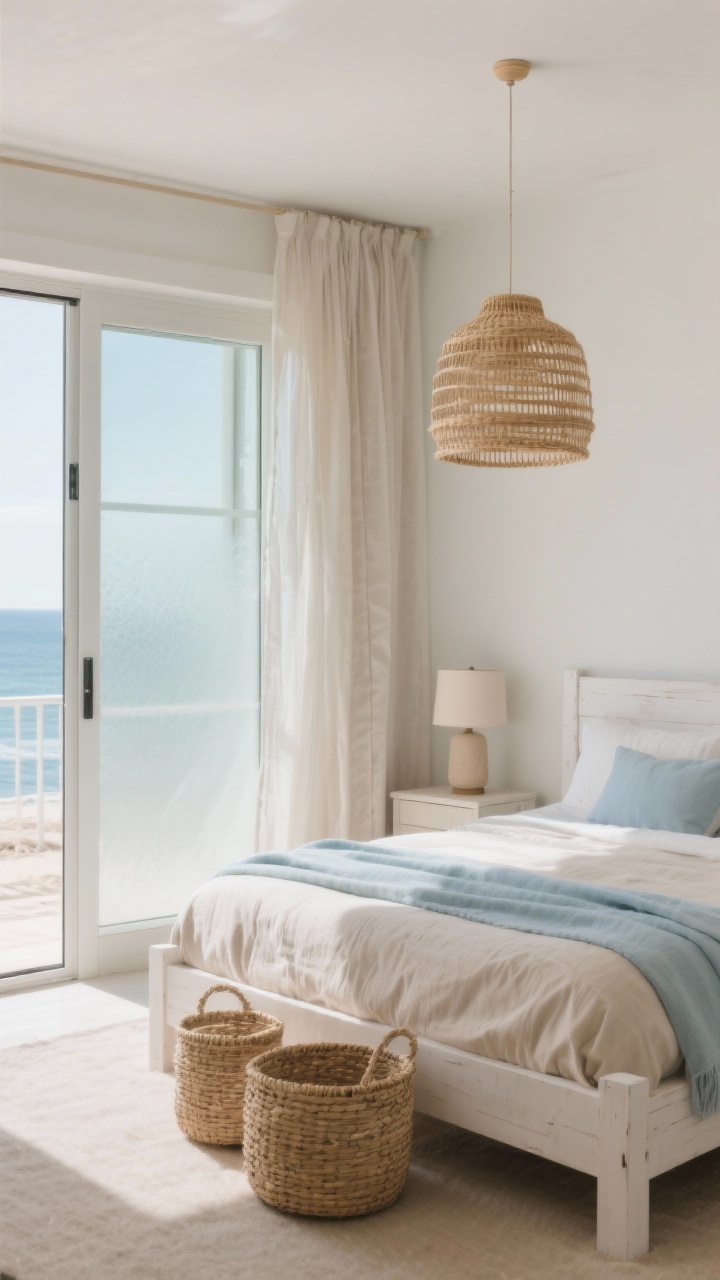
Frosted glass is sandblasted or acid-etched to diffuse light. It allows light through while obscuring detail useful for ensuite walls, sliding doors, or windows facing neighbouring buildings.
Ribbed or fluted glass has a textured surface that scatters light laterally. It offers partial privacy and creates a distinctive visual effect. Light becomes movement rather than illumination.
Smart (electrochromic) glass switches between clear and opaque on command. Expensive, but it solves the privacy versus-light trade off completely.
Is a Glass Bedroom Wall Private Enough?
It depends on placement and glass type.
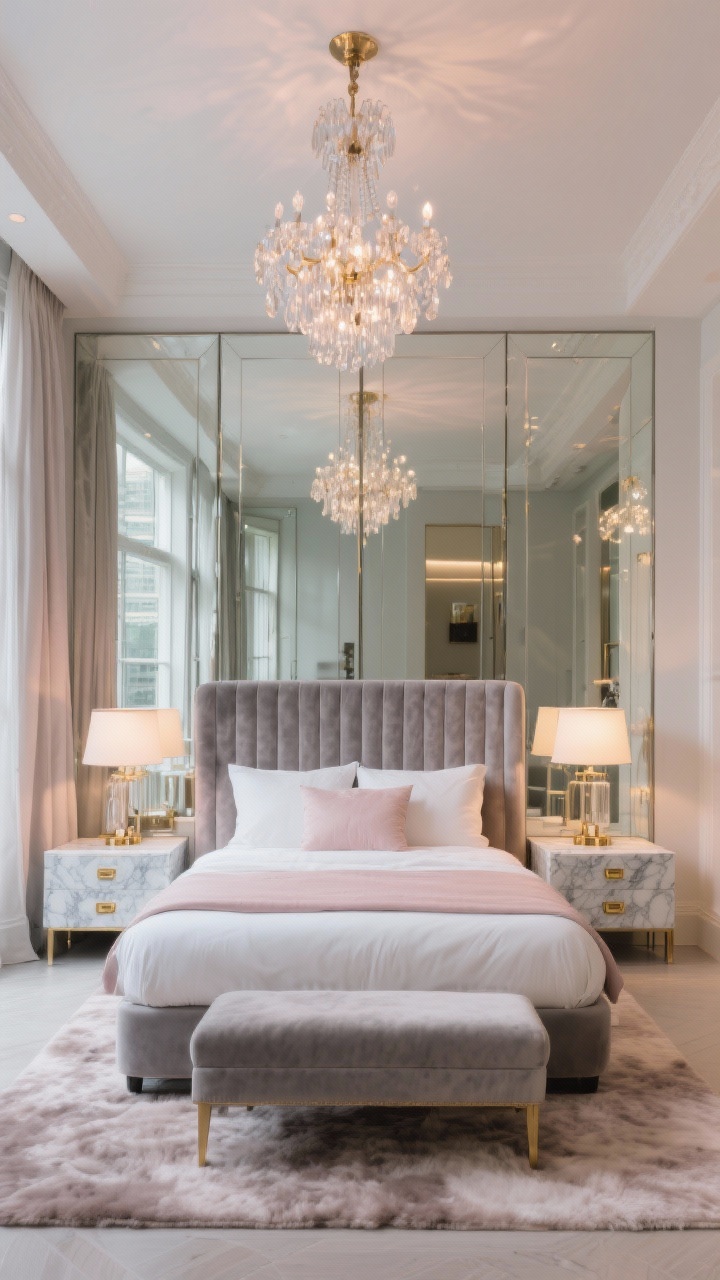
A clear glass partition within an apartment works well when the view is inward to an open-plan living space you control. A glass wall facing a public exterior needs frosted, tinted, or smart glass to maintain comfort.
The question isn’t whether glass is private enough. It’s whether the specific glass type and placement serve both the light and the life happening inside the room.
How Much Natural Light Do You Actually Need?
The ideal isn’t a greenhouse. It’s a room where light shifts through the day, where you notice shadow as much as brightness, where morning feels different from afternoon.
One glass wall or partition, positioned toward a light source, is usually enough. Beyond that, control matters more than quantity curtains, sheers, or adjustable blinds that let you modulate what you’ve opened up.
Cost and What to Know Before You Buy
Standard tempered glass for a partition or sliding door runs roughly $200–$600 per panel installed, depending on size and frame type. Ribbed and frosted options typically cost 10–20% more than clear.
Structural changes removing a wall to install a glass wall, cutting into a ceiling for a skylight need planning permission in some areas and always need a structural engineer’s sign-off. Glass interior partitions that sit within an existing room are usually straightforward; no permits, no engineers, just installation.
If you’re renting, freestanding frameless glass room dividers start at around $400 and require no installation at all. Not permanent, but they do the job.
One Material. Many Rooms.
Glass doesn’t commit to a single aesthetic.
It works in the paired-back restraint of a Japandi interior. It holds its own in an industrial apartment with steel and poured concrete. It softens a coastal bedroom without competing with what’s outside.
What connects all these glass bedroom ideas isn’t style. It’s intention.
You choose glass because you want the room to feel open rather than enclosed. Because you want light to do something beyond illuminate. Because you’re willing to let the material itself carry part of the design and trust that restraint, applied consistently, produces something that lasts.
The rooms that feel right years after they’re finished tend to share this quality. They didn’t try to say everything at once.
They left space for light to speak.