
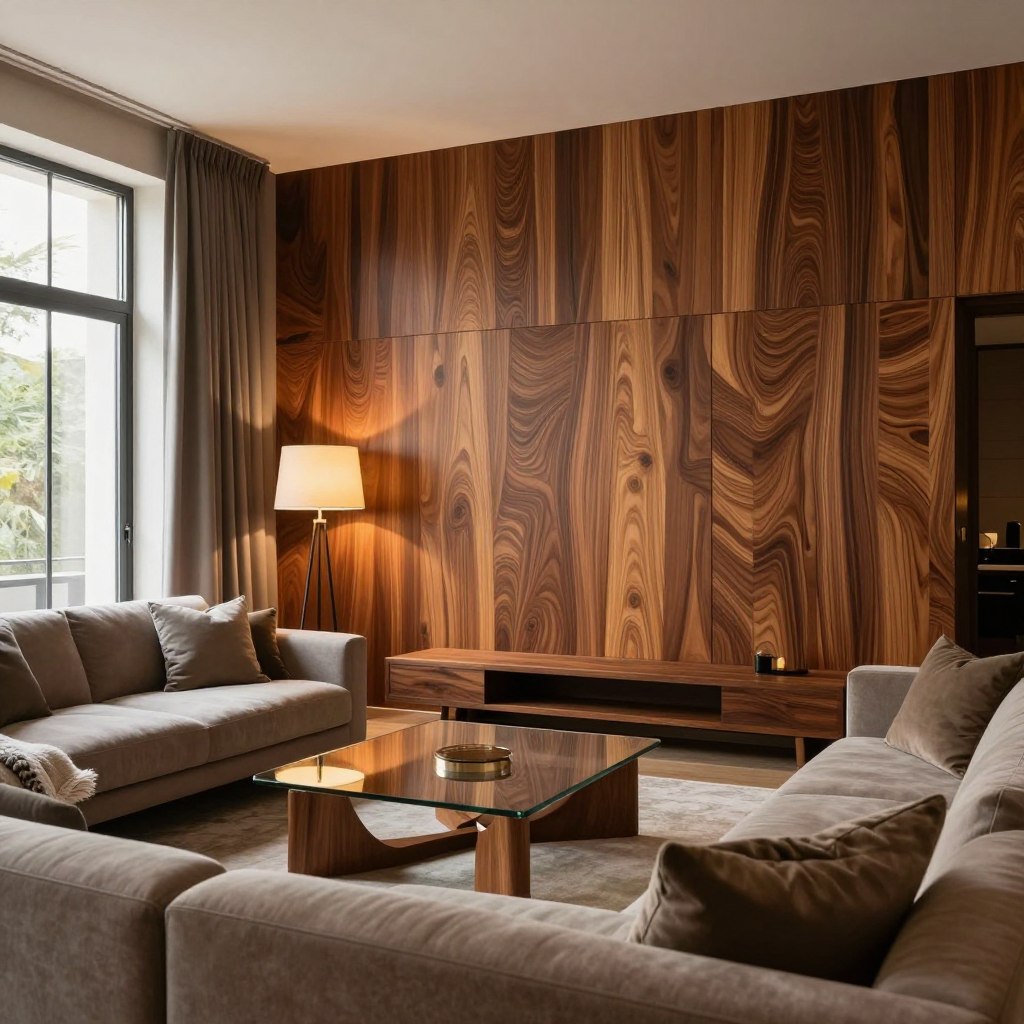

Want to make your living room warm and stylish? This guide shows seven wood wall paneling ideas. They can make your room stand out without a big remodel.
We’ll talk about wood paneling for different budgets and needs. You’ll learn about materials like solid wood and MDF. Plus, we’ll cover simple finishes like stain and paint.
Discover styles like shiplap and vertical tongue and groove. We’ll also explore geometric and textured panels. You’ll find tips on DIY projects and when to call a pro.
Why Choose Wood Wall Paneling for Statement Living Rooms
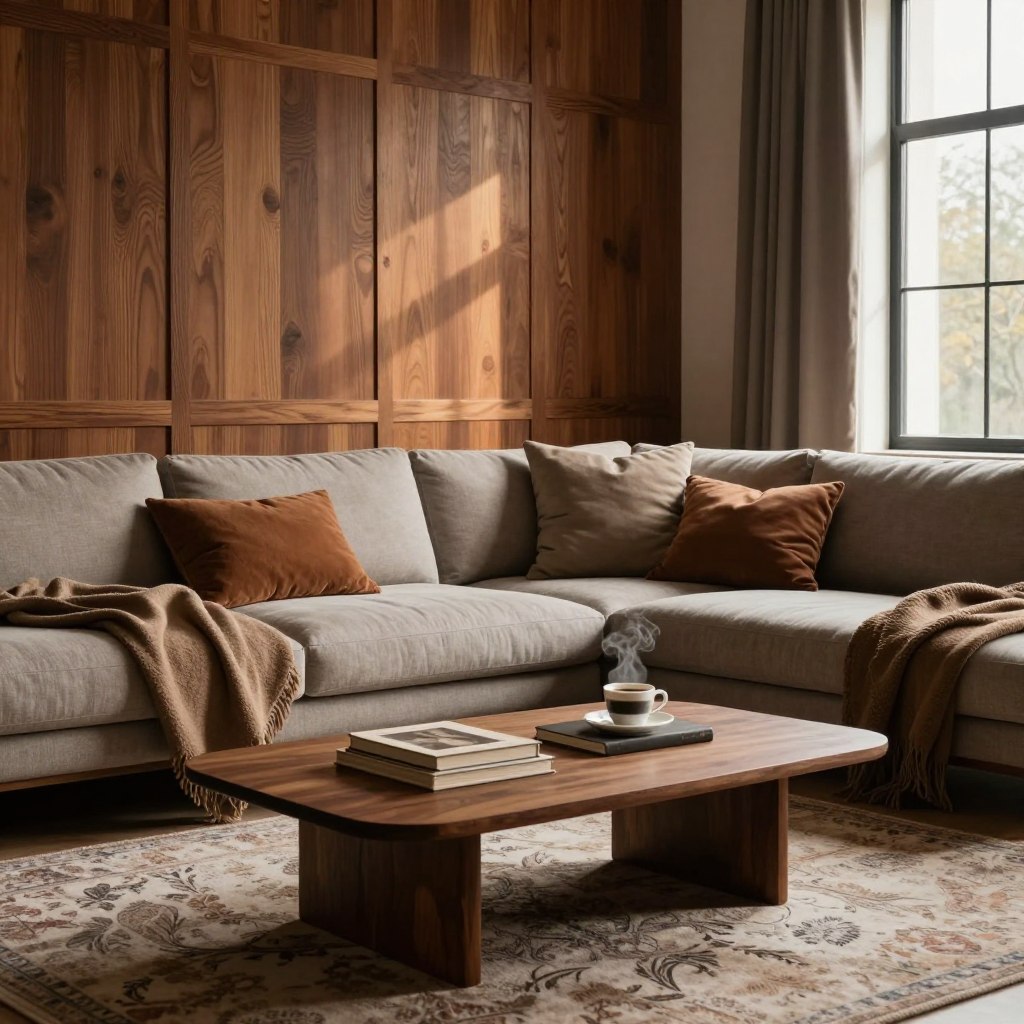
Wood wall paneling adds warmth and texture that paint can’t match. The grain and natural tones make a wall stand out. They turn a simple wall into a key feature that frames seating or a fireplace.
Many wonder why choose wood paneling over paint, which is cheaper. Wood’s appeal lies in its versatility. You can pick from oak, walnut, pine, or maple. Then, choose finishes and patterns to fit any style, from modern to farmhouse.
For inspiration, check out modern accent wall ideas. They show how paneling can change a living room without overwhelming it. See examples at modern living room accent wall ideas.
Stunning Wood Wall Paneling: Signature Styles to Consider
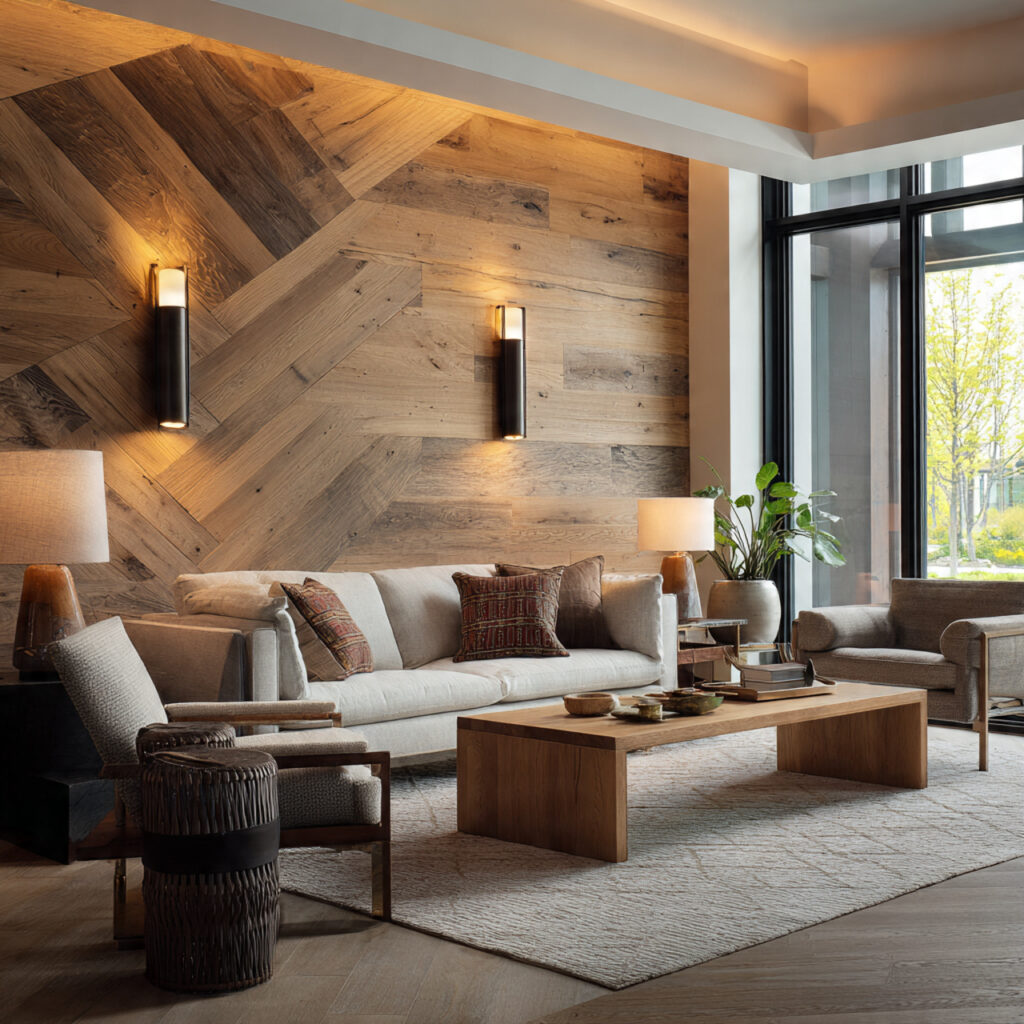
Start by choosing wood paneling styles for your living room. Shiplap and horizontal planks give a casual, coastal vibe. They make rooms feel wider and are great behind sofas or media consoles.
Vertical tongue and groove adds height and elegance. It’s perfect for transitional and classic modern rooms. Place it on a fireplace wall or entry for a focal point.
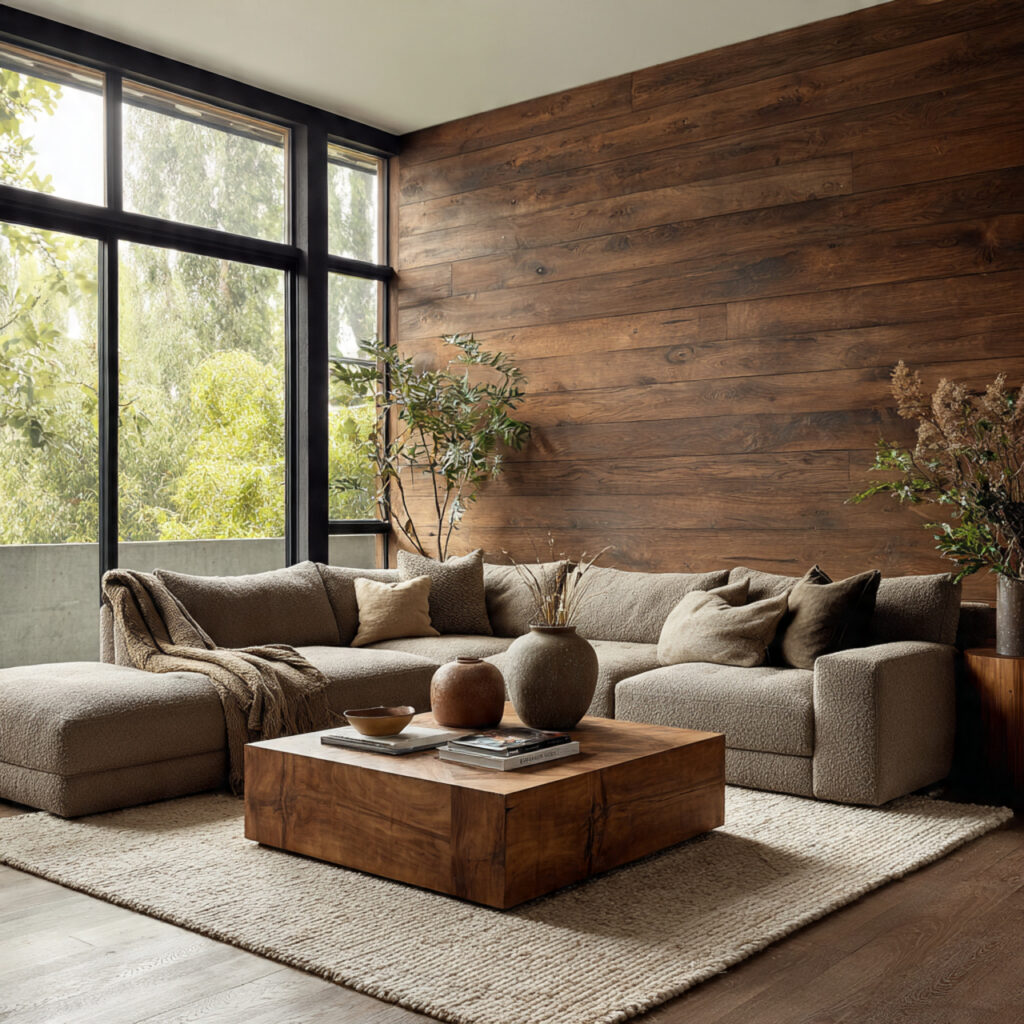
Reclaimed wood accent walls add warmth and history. They’re ideal for cozy, industrial, or historic looks. They bring authenticity and texture to your space.
Geometric and chevron patterns make bold statements. Use them for a contemporary look. Choose subtle tones for a calm paneling or contrasting stains for a bold accent wall.
Textured and 3D panels add depth without clutter. They’re best in minimalist rooms. Here, light and shadow play across the surfaces.
Materials and finishes are key. Solid wood, engineered planks, and plywood respond differently to stains and finishes. Choose durable finishes for busy living areas.
Shiplap and Horizontal Planks for Modern Farmhouse Vibes
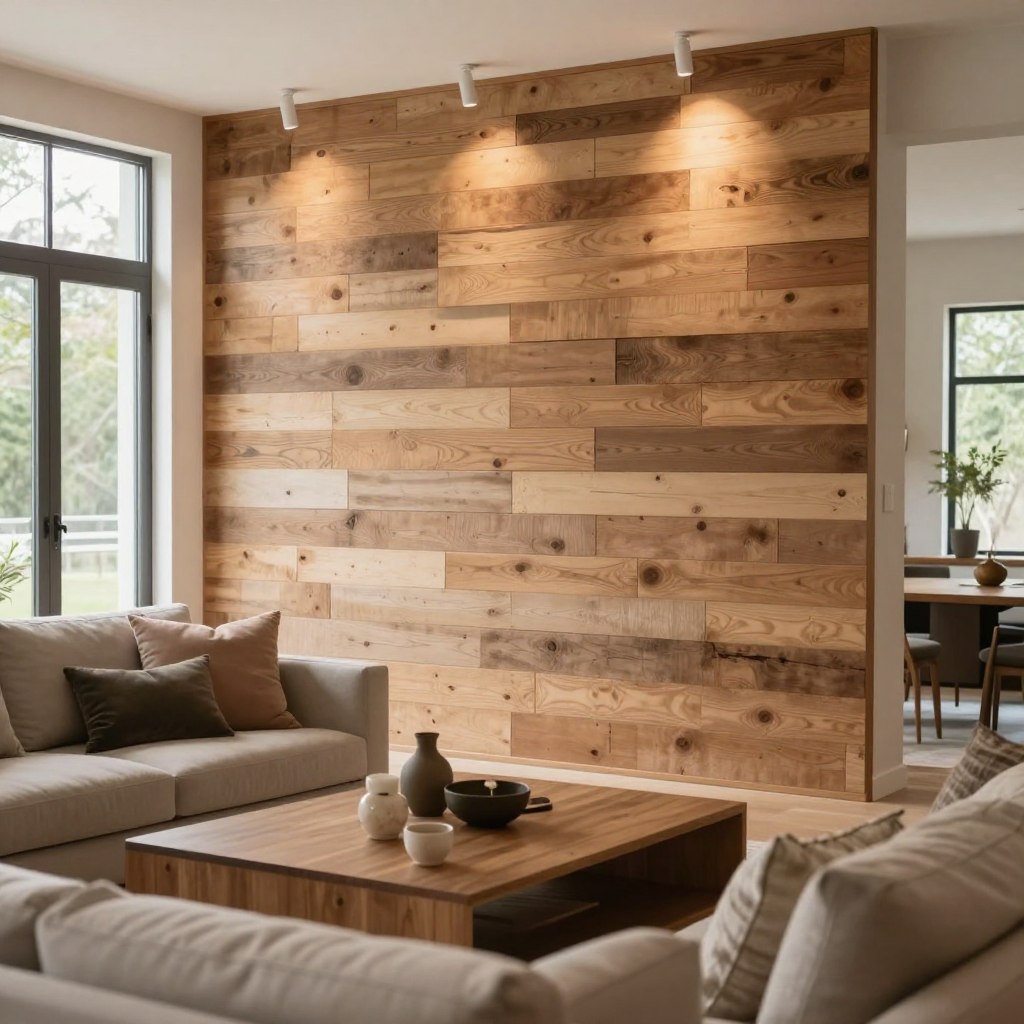
Shiplap’s clean lines make a modern farmhouse wall feel relaxed. It comes from coastal and rural homes, adding warmth without clutter. You can use narrow boards for a sleek look or wider planks with gaps for a rustic feel.
Traditional choices include pine and cedar. But finger jointed pine, engineered wood, MDF shiplap, and PVC are good for damp areas. Boards are usually 4–8 inches wide, with a small reveal. Install them over studs or drywall with furring strips for a level surface.
For a strong hold, use construction adhesive with finish nails. Semi gloss paints are practical for busy living rooms because they resist scuffs. White or off-white finishes brighten a space, while whitewash and natural stains soften it.
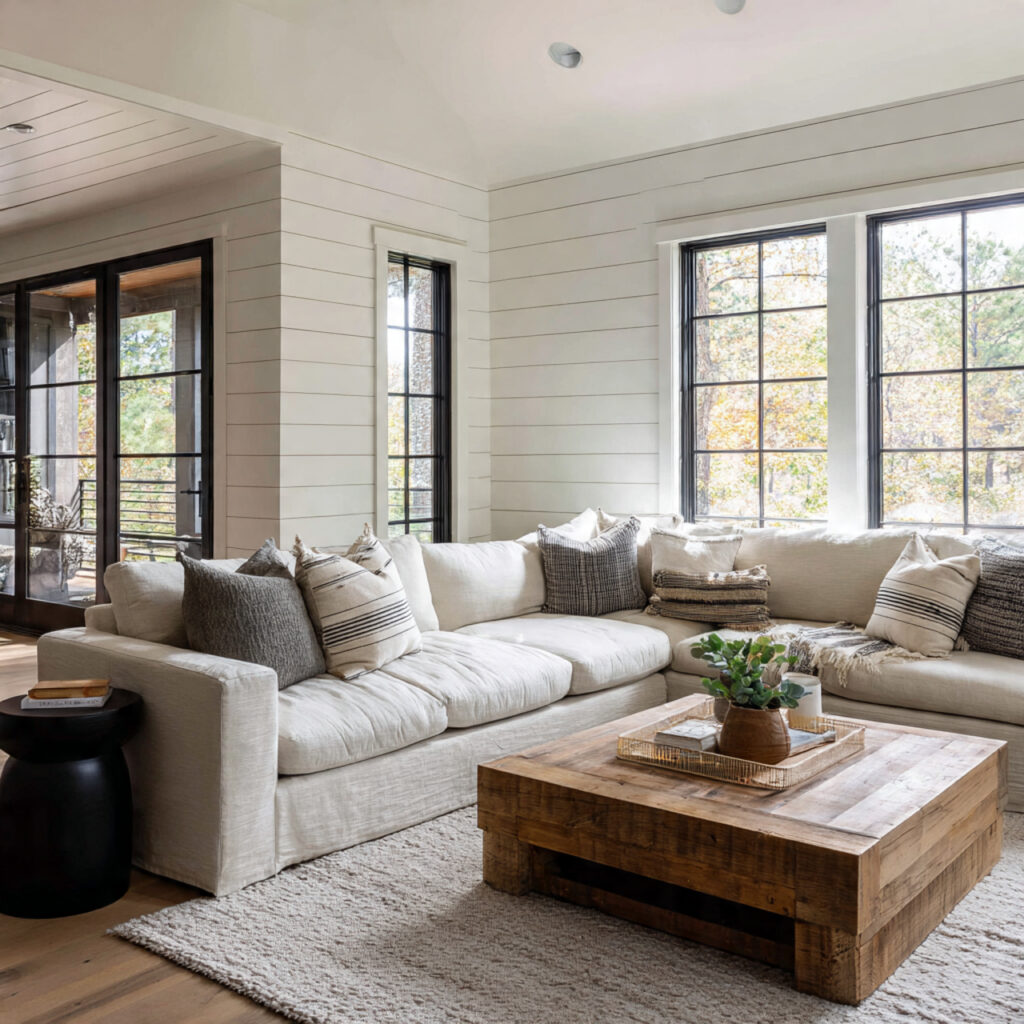
Design variations keep shiplap fresh. Tight seams look modern, alternating widths add rhythm, and bold colors give a contemporary twist. These ideas work well with many layouts and furnishings without overwhelming the room.
Budgets vary by material. MDF and engineered planks are affordable, while real wood costs more per linear foot. Many DIY their installation when walls are plumb and they have basic tools. For complex cuts or uneven surfaces, hire a contractor.
Pair shiplap with neutral textiles, rattan or leather seating, and black metal accents for balance. Add crown molding or a painted ceiling to make a white shiplap living room look intentional and polished.
Vertical Tongue and Groove for Height and Elegance
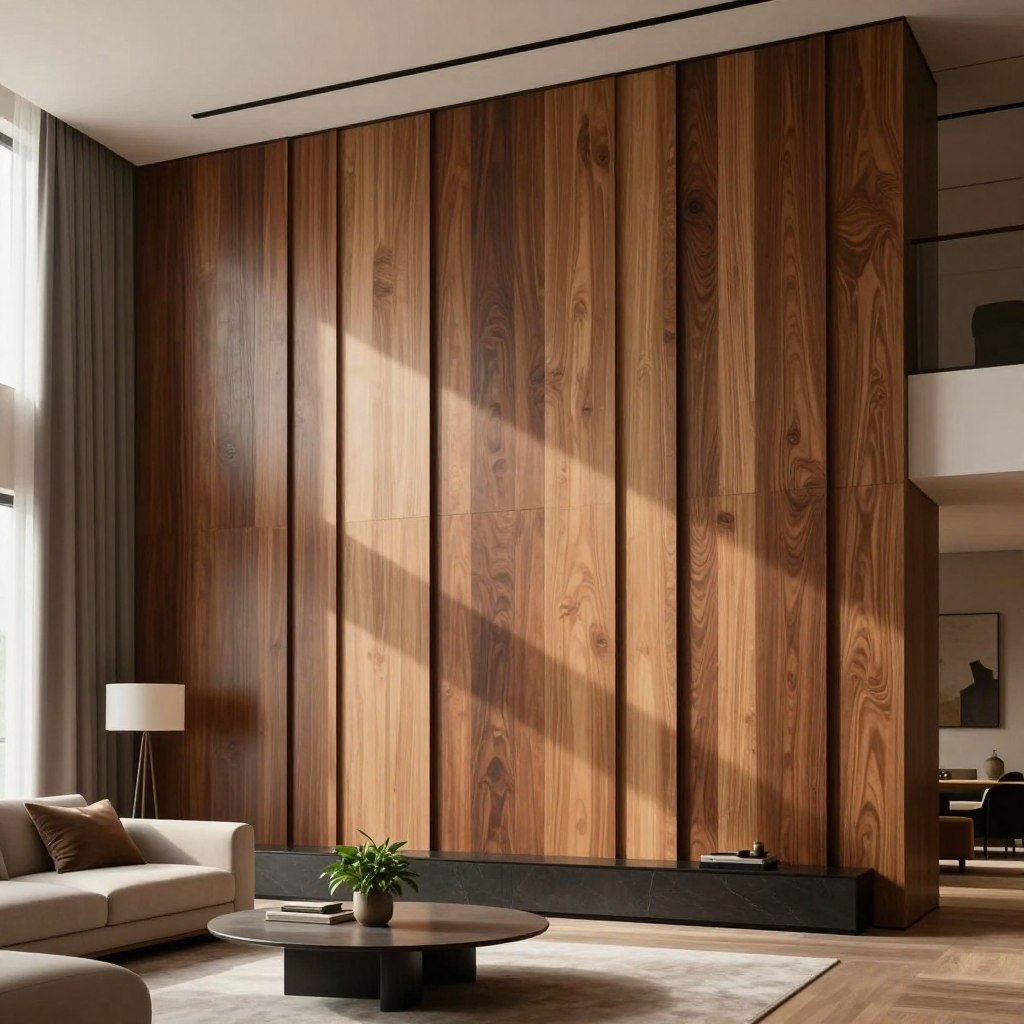
Vertical wood paneling makes a room feel taller. The long lines of tongue and groove walls pull the eye up. This is especially true around tall windows or in rooms with low ceilings.
Install the boards from floor to ceiling. Use a base shoe or quarter round at the floor and a top rail or crown molding at the top. Make sure the wood is acclimated before fitting to avoid warping and keep gaps tight.
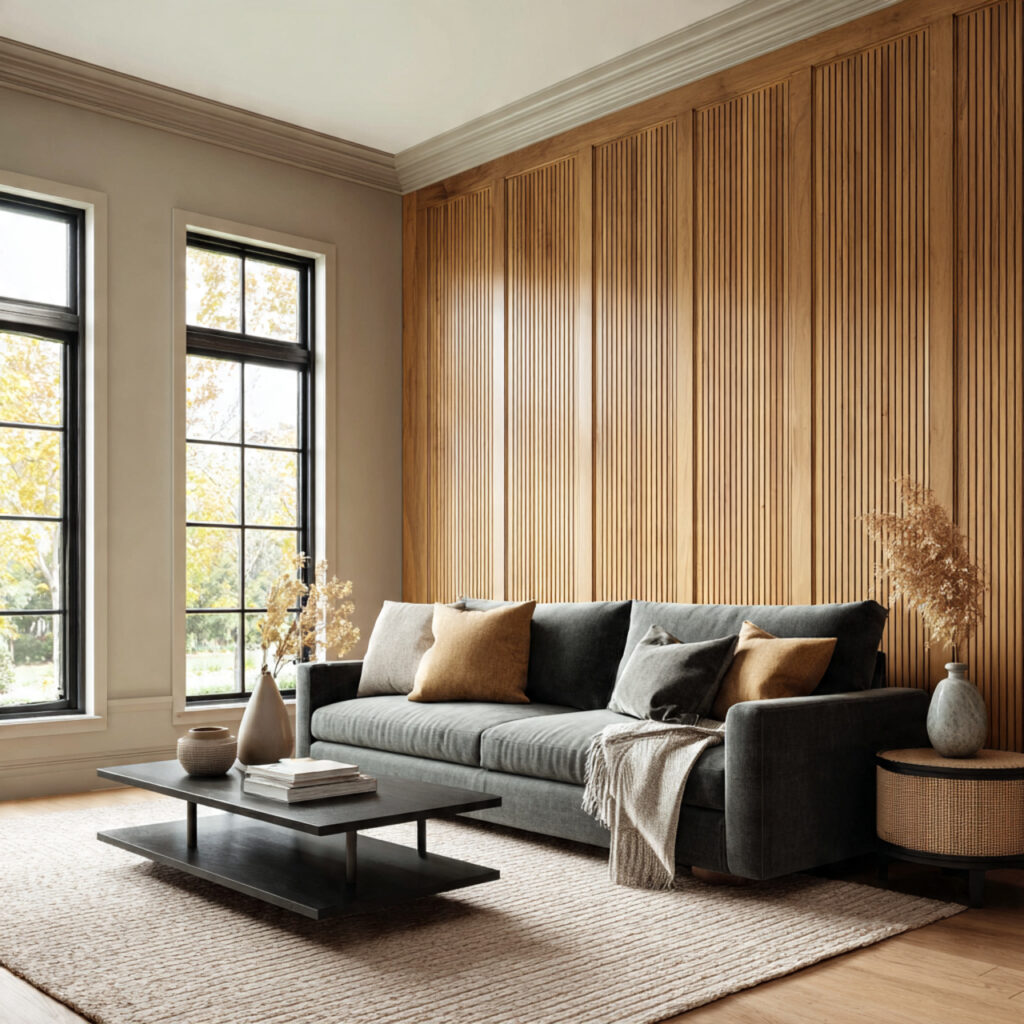
The finish you choose sets the mood. A clear finish shows off the grain, stains add warmth, and solid paint gives a clean look. Lighter tones work well on lower ceilings, while darker hues suit rooms with tall paneling.
Building tongue and groove walls requires precise fitting, which can be more labor-intensive than shiplap. Costs are similar to other materials. Many choose professional installation for seamless results.
Style the wall with tall, slim furniture to match the vertical lines. Use vertical paneling behind a bookshelf or media console. This creates elegant wood walls that look built in and intentional.
Reclaimed Wood Accent Walls for Rustic Character
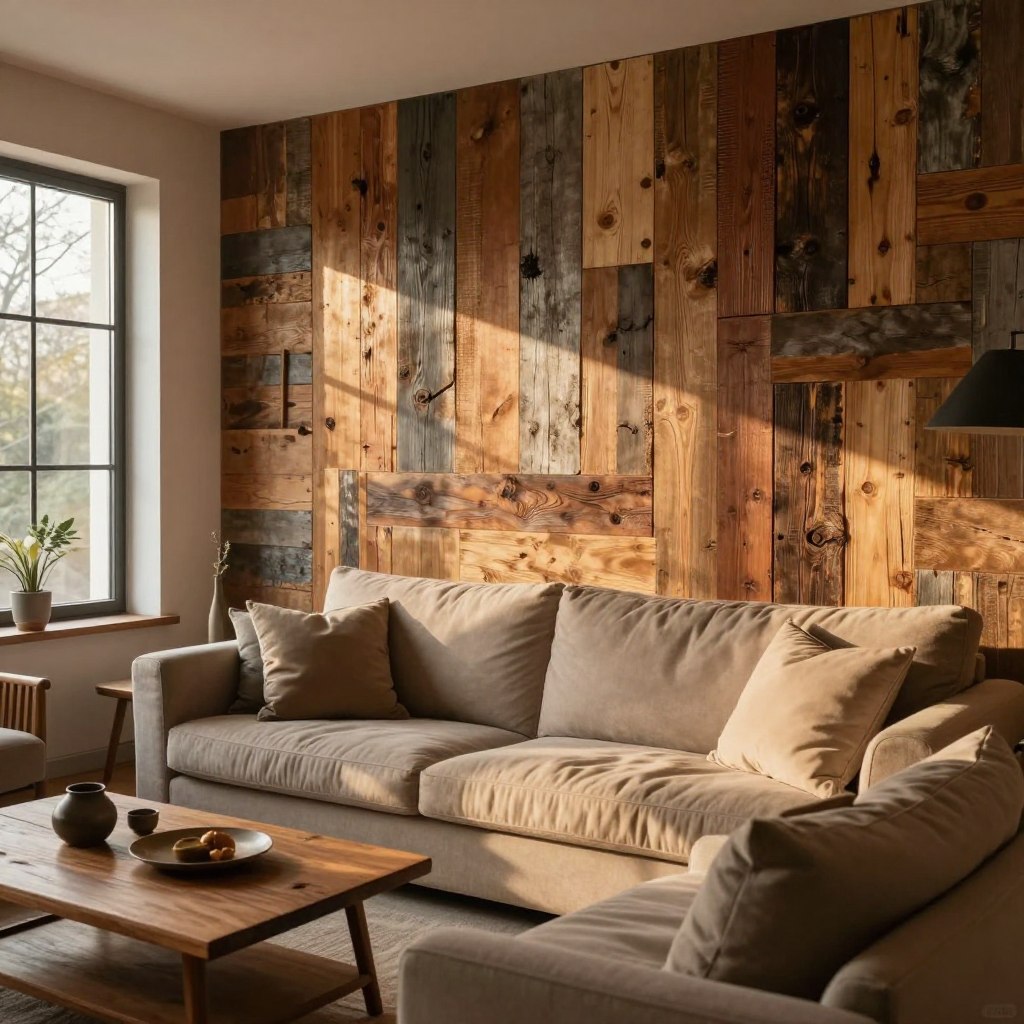
A reclaimed wood accent wall adds a unique story to your living room. It has nail holes, weathered grain, and varied tones. This gives it a genuine, lived-in look that new lumber can’t match.
Common sources include barn board, salvaged flooring, and deconstructed barns. Buying from reputable salvage yards or suppliers ensures the material is safe for indoor use. Choosing reclaimed pieces also supports sustainable wood paneling by reducing demand for new timber.
Finish options let you control the final mood. Clear sealers preserve patina, oil finishes deepen color, and light sanding with a tint softens the look. Avoid heavy sanding to keep the authentic surface marks.
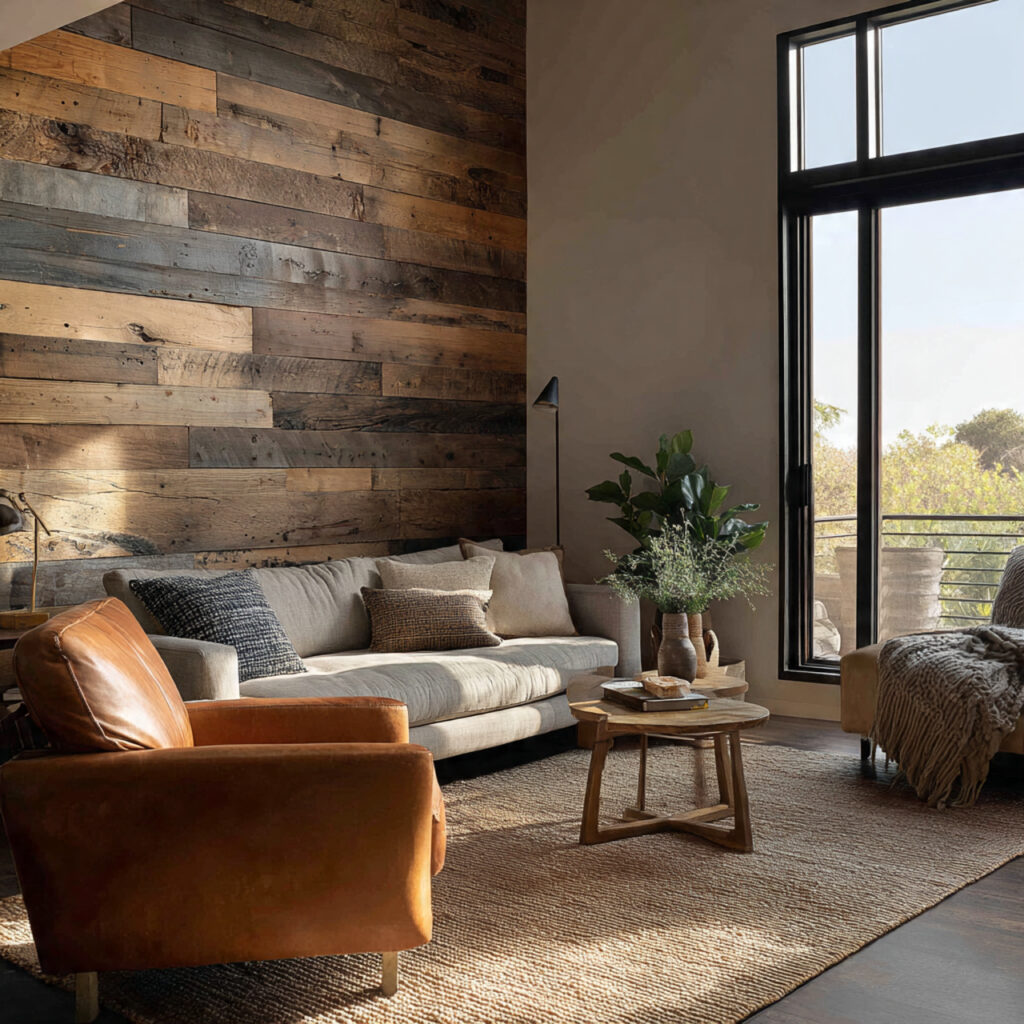
For a natural result, mix board widths and tones and stagger seams. Use a plywood backer for irregular pieces and consider acoustic insulation behind the wall for better sound control. These installation tips help rustic wood walls stay beautiful and stable.
Costs vary by species, rarity, and prep work. Reclaimed materials can be pricier than new lumber because of sourcing and milling. Plan for lead time when hunting for unique barnwood wall ideas or specific tones.
Design pairings are straightforward. Combine reclaimed wood paneling with leather seating, industrial metal fixtures, neutral textiles, and Edison style lighting. A reclaimed wood accent wall works well as a fireplace surround, media wall, or feature behind a sofa.
Geometric and Chevron Paneling for Bold Statement Walls
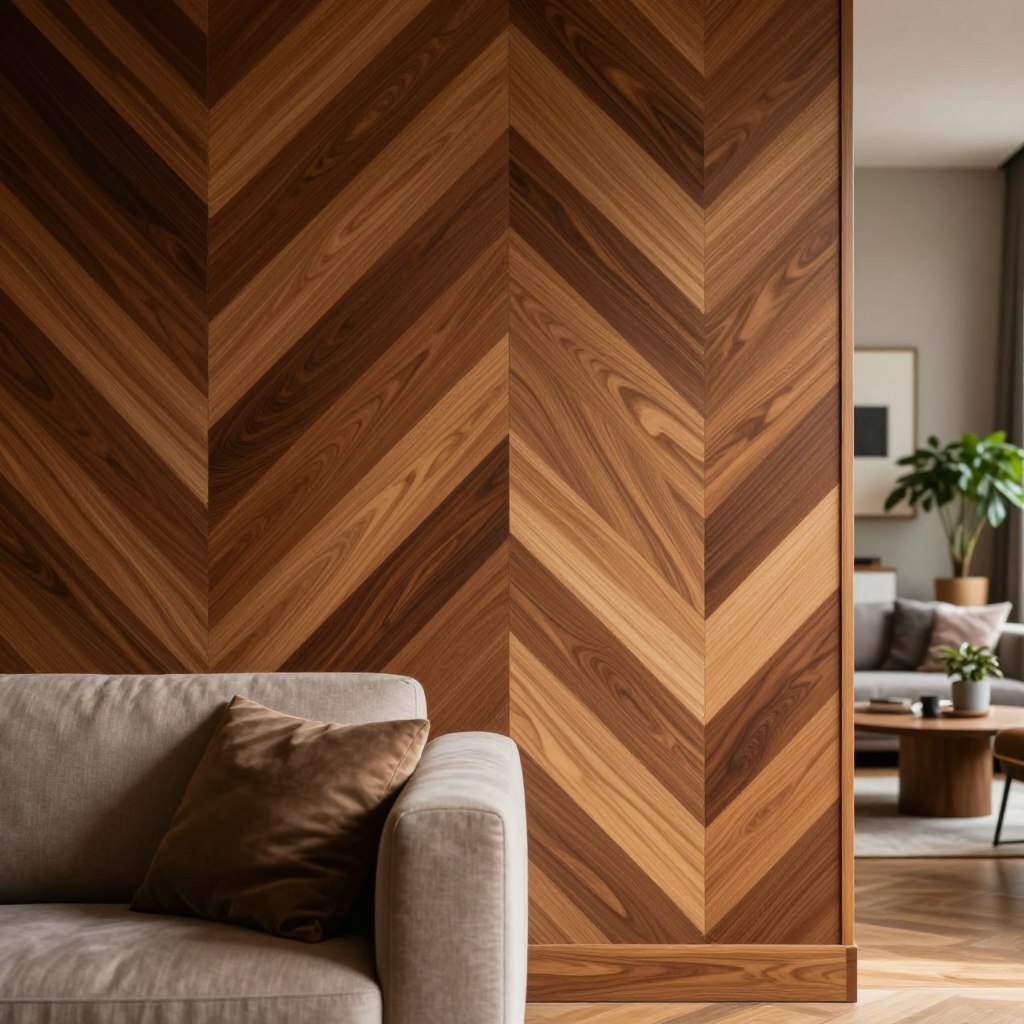
Geometric wood paneling looks like art and architecture. A chevron wood wall or herringbone field adds a modern touch to a living room. It keeps the room warm and textured.
Using high-contrast stains or alternating oak and walnut makes each pattern facet stand out. Tone on tone finishes offer a softer look. This works well with simple furniture and clean lines.
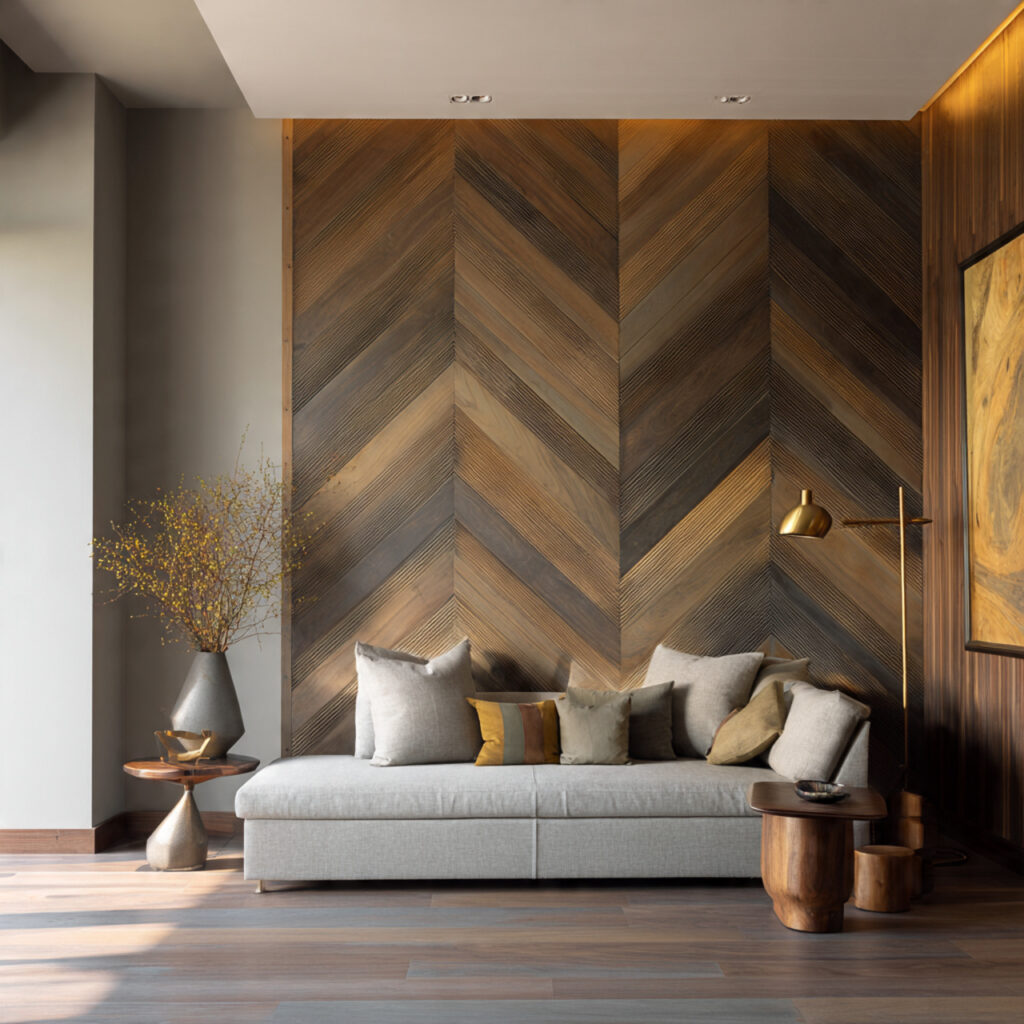
Getting the layout and precision right is key. For a chevron wood wall, you need tight cuts and accurate lines. Many experts suggest using plywood templates for consistent cuts.
Expect more waste and cost when cutting angled pieces. Prefabricated panels save time and often lower costs for a custom look.
Highlighting geometric wood paneling with recessed LED strips or spotlights adds texture and depth. Keep the decor simple to let the wood wall be the main focus.
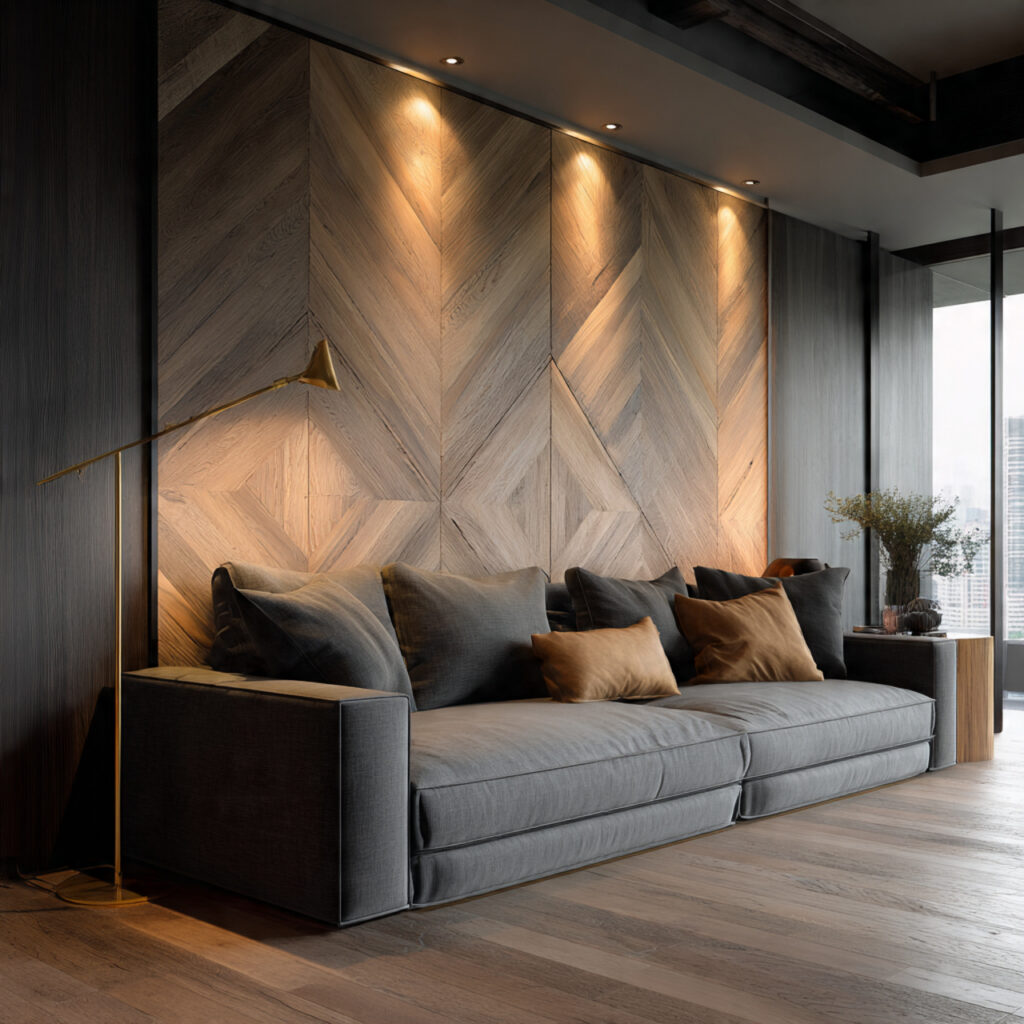
When deciding between DIY and pro installation, consider the timeline and finish. Custom geometric work creates a unique statement wall. Prefab panels offer similar impact but with quicker delivery.
Textured and 3D Wood Panels for Contemporary Flair
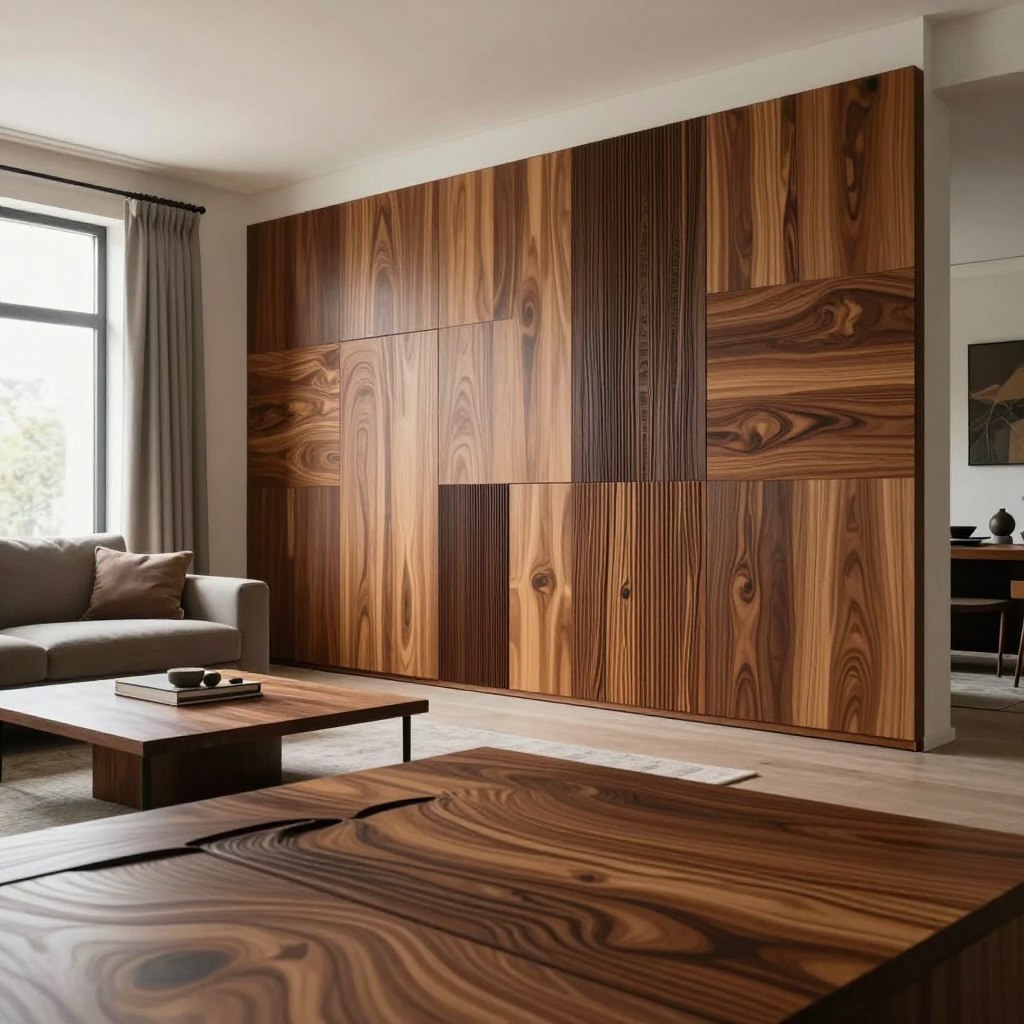
Prefabricated 3D wood panels add relief patterns like waves and cubes to living rooms. These textured panels create dramatic shadow play and invite touch. They turn a flat surface into sculptural wood walls that catch the eye.
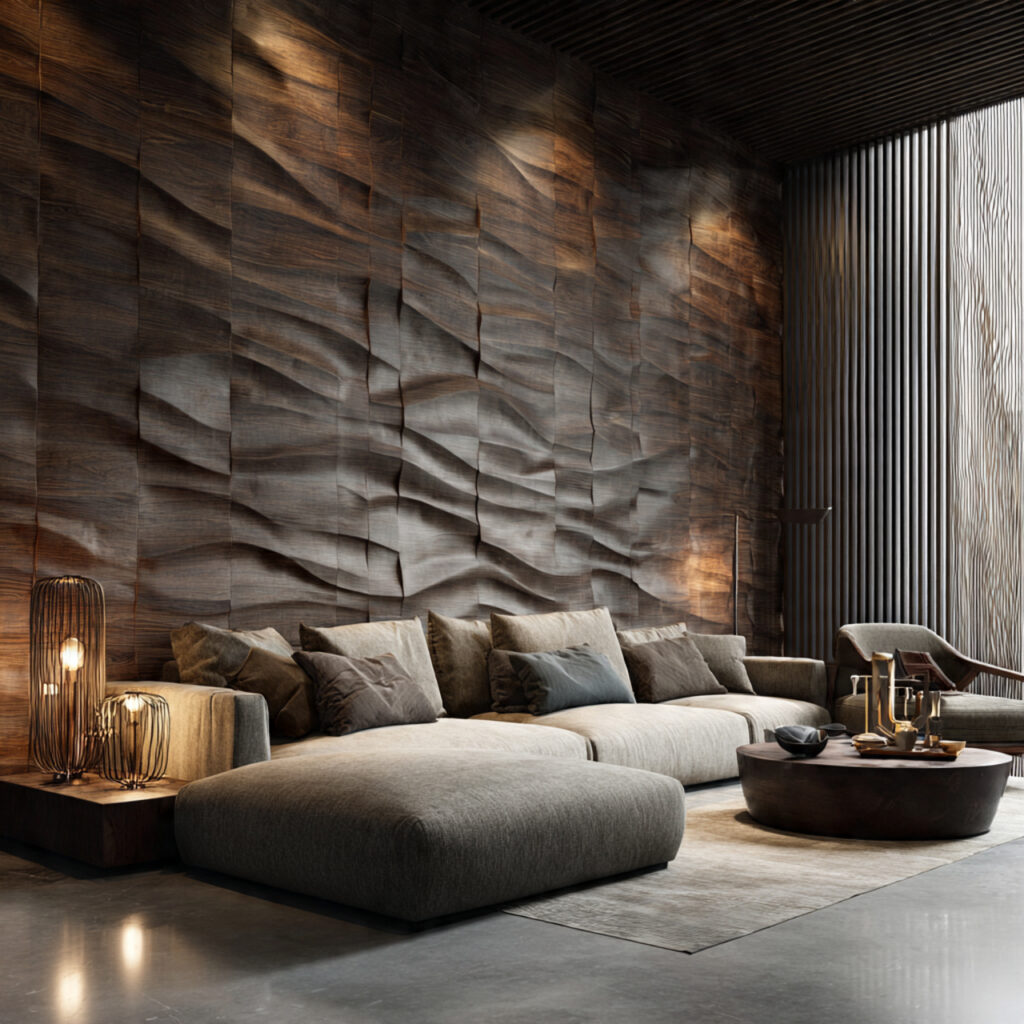
Lighting enhances these surfaces. Side grazing recessed lights or adjustable track fixtures highlight contours and deepen texture. North facing rooms benefit from warmer textures, while south facing rooms can handle deeper relief without losing detail.
Some textured wood wall panels help diffuse sound. Adding acoustic backing behind panels can smooth echoes in open plan spaces and improve room comfort.
Start with one accent area to test scale and lighting before committing to an entire room. Use minimalist furnishings to let sculptural wood walls stand out as modern accent walls without visual overload.
For design ideas and placement tips, explore a practical gallery of finishes and layouts at modern wall decor ideas. Contemporary wood paneling can serve as a calm backdrop or a bold focal point depending on texture, color, and installation choices.
Practical Considerations: Installation, Costs, and Maintenance
First, plan your wood paneling installation with a clear budget. The cost varies: MDF and engineered wood are $1–$5 per foot. Solid hardwoods and reclaimed wood can cost $3–$15+ per foot. Remember to add extra for material waste, trim, and backer plywood for uneven walls.
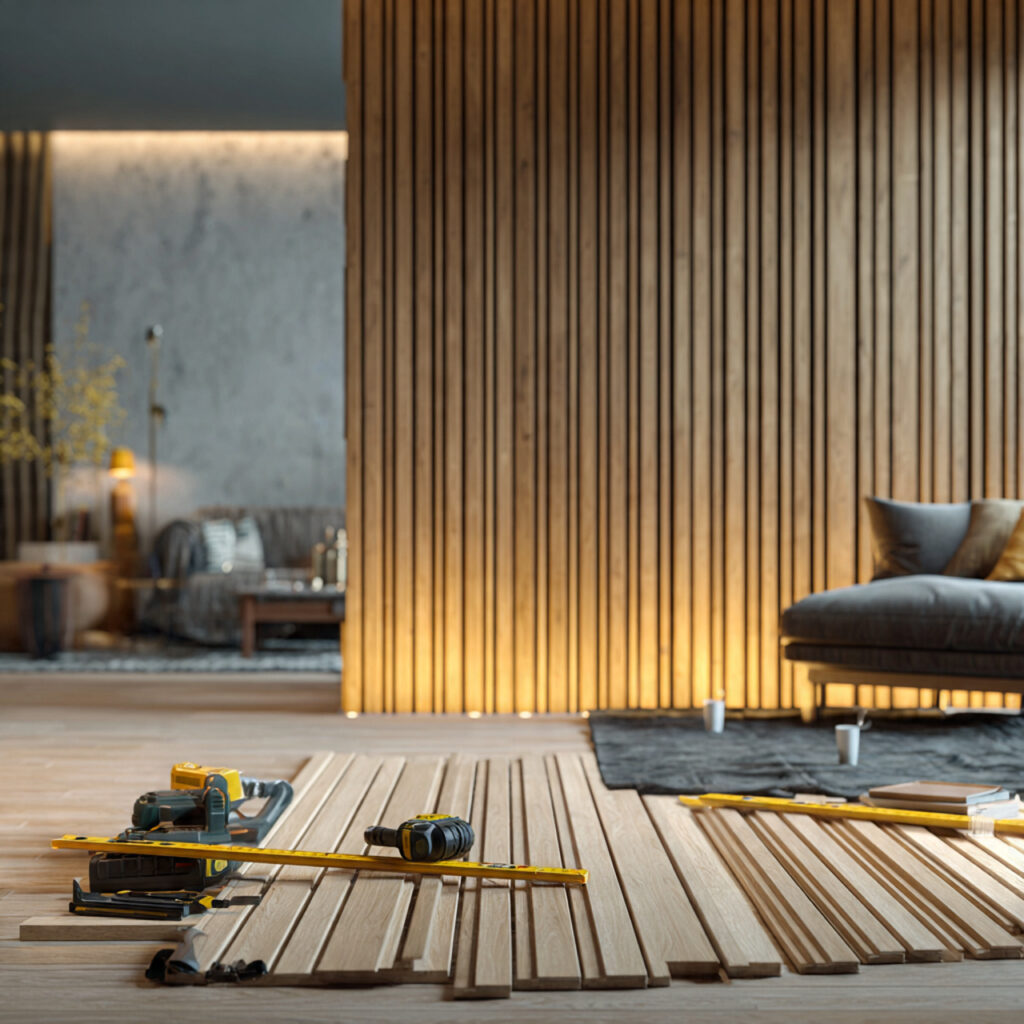
Choose between DIY and professional installation. Simple designs are DIY-friendly if your walls are straight. But, complex designs need a pro. A contractor may cost more upfront but ensures quality and speed.
Before starting, prepare your tools and the wall. You’ll need a miter saw, level, tape measure, and a nail gun. Also, a moisture meter and construction adhesive are key. Make sure the wood acclimates to the room’s conditions.
Check local codes if you plan to make electrical changes. Most panel installs don’t need permits, but some changes might. Always check with building officials to avoid costly mistakes.
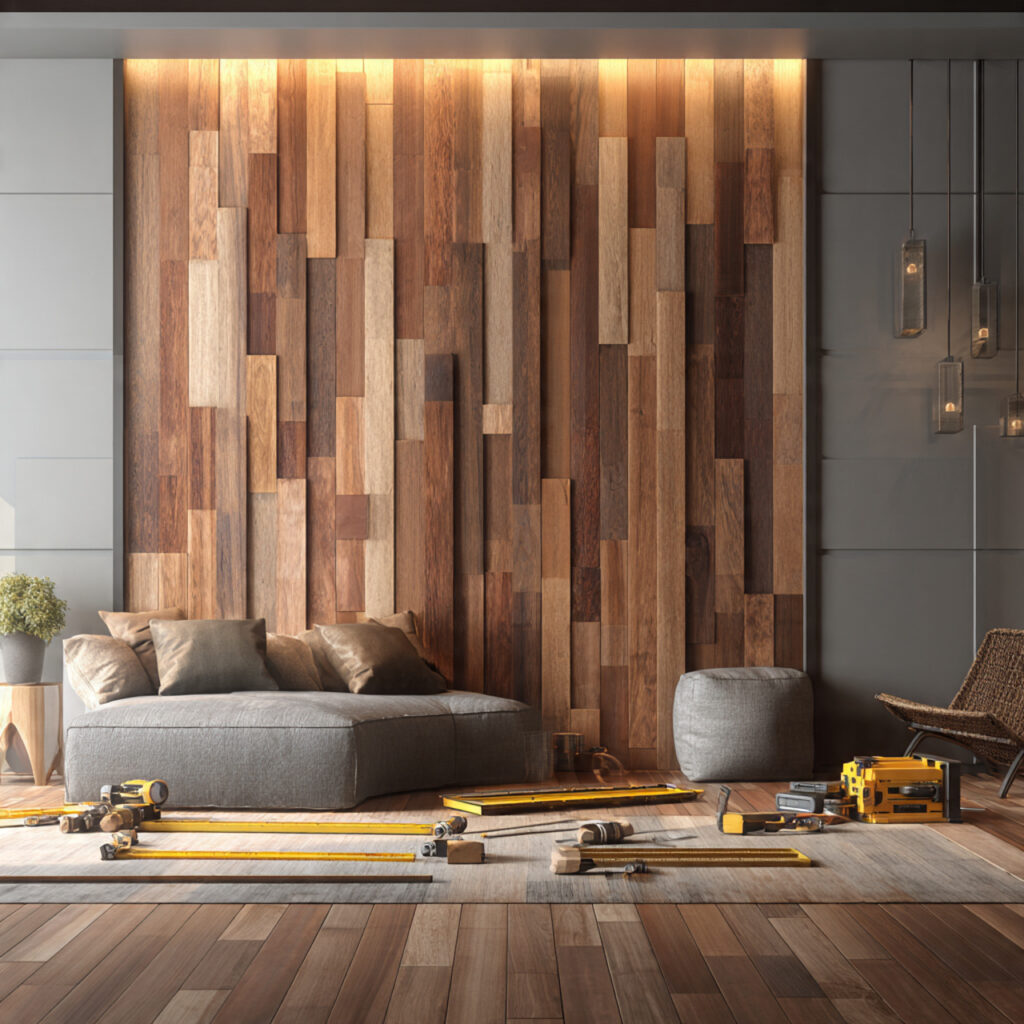
Quality and taste affect longevity and resale value. Neutral panels can last decades and appeal to buyers. Eco-friendly options like FSC-certified lumber or reclaimed wood are also good choices.
For budget tips and material guidance, see a guide on granite backsplash planning and costs here. It can help with finish choices, sealing, and coordinating materials in a remodel.
Conclusion
Wood wall paneling comes in many styles, like shiplap and vertical tongue and groove. Each style adds warmth and texture. It also improves sound quality and looks great.
Think about the finish and pattern with your room’s lighting and furniture. This will help you pick the best wood paneling.
Consider the room’s size, light, and your budget when choosing. Renters can try removable systems or peel and stick veneer. These options let you test styles without damage.
For lasting results, choose FSC certified lumber or reclaimed wood. Also, pick finishes with low VOCs for health.
Start by measuring your wall and gathering samples. Test stains in small areas and get quotes from contractors. Save this article for more design tips.
Check out local suppliers like Lumber Liquidators or Home Depot for materials. For smart furniture ideas, see multi-functional furniture for small living rooms.
Wood paneling can be subtle or bold. Play with samples until you find the perfect fit. Then, enjoy a room that’s warm, quiet, and uniquely yours.