
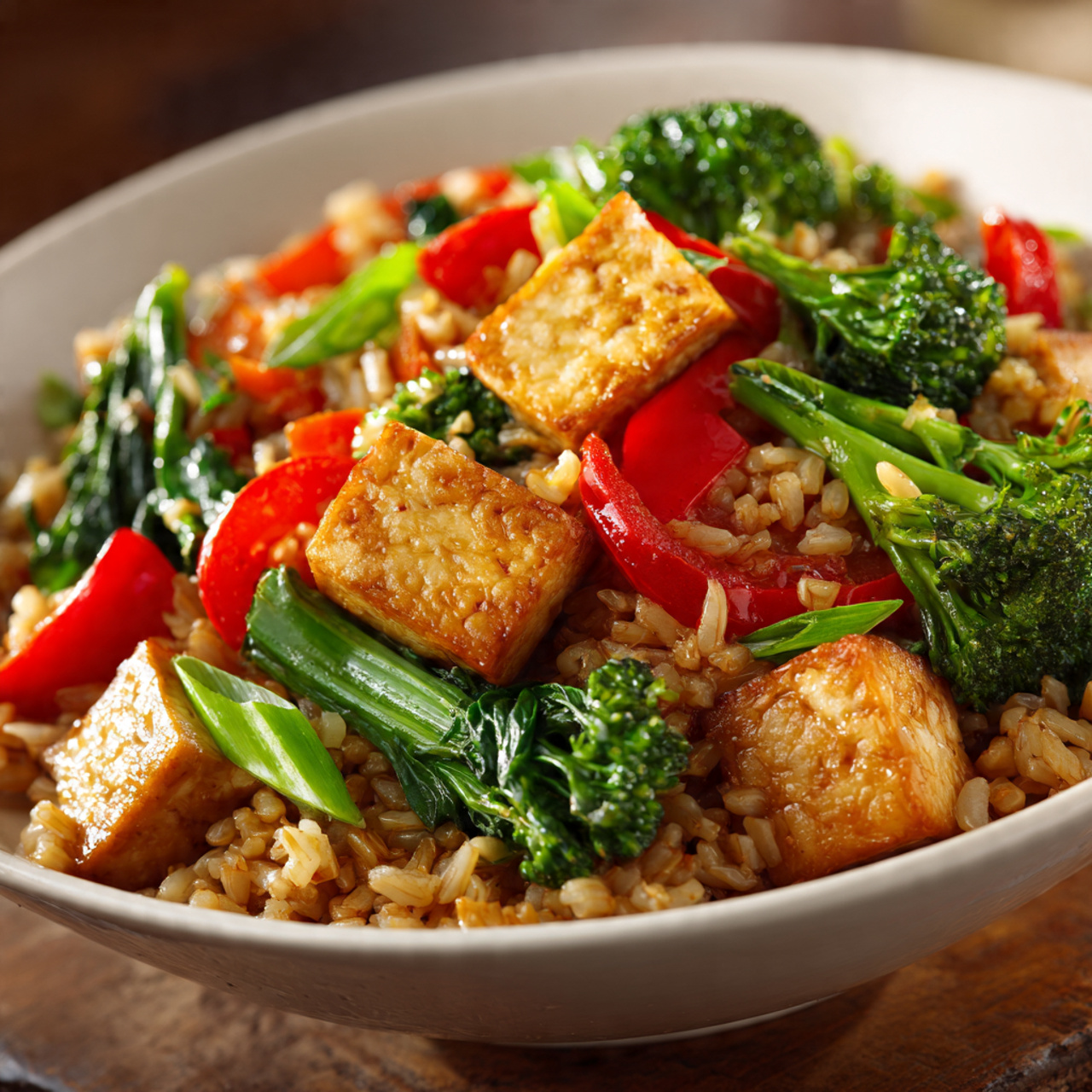

In the world of fried dishes, Brown Rice Stir Fry stands in a league of its own. It lacks the heavy, greasy, and often bloating nature of traditional white rice fried in excessive oil. Instead, it is a celebration of structure: the satisfying crunch of the grain’s outer shell, the nutty softness of the whole-grain starch core, and the succulent freshness of vibrant vegetables.
The ultimate challenge of this dish is ensuring the brown rice isn’t disjointed or dry like “chewing pebbles.” It must be flavorful, individual grains should be distinct (not clumping), and it should possess an appetizing gloss. Let’s embark on this detailed roadmap to mastering this nutritious masterpiece.
1. Ingredient Philosophy: The Bedrock of Perfection
1.1. Choosing the Grain Authenticity Over Polish
There are three common types of brown rice, each with its own personality:
-
Red Brown Rice: Rich in iron and antioxidants, this has the highest “crunch” factor. It is the premier choice for frying.
-
Black Rice (Forbidden Rice): Offers a deep nutty aroma and creates a visually stunning, luxurious dark hue when fried.
-
Standard Brown Rice: The most accessible and softer option, ideal for those new to whole grains.
-
The Golden Rule: Always use chilled, leftover rice. The grains need time to lose moisture, which firms up their structure and allows them to absorb seasonings without becoming a sticky mess.
1.2. Vegetables The Multi dimensional Palette
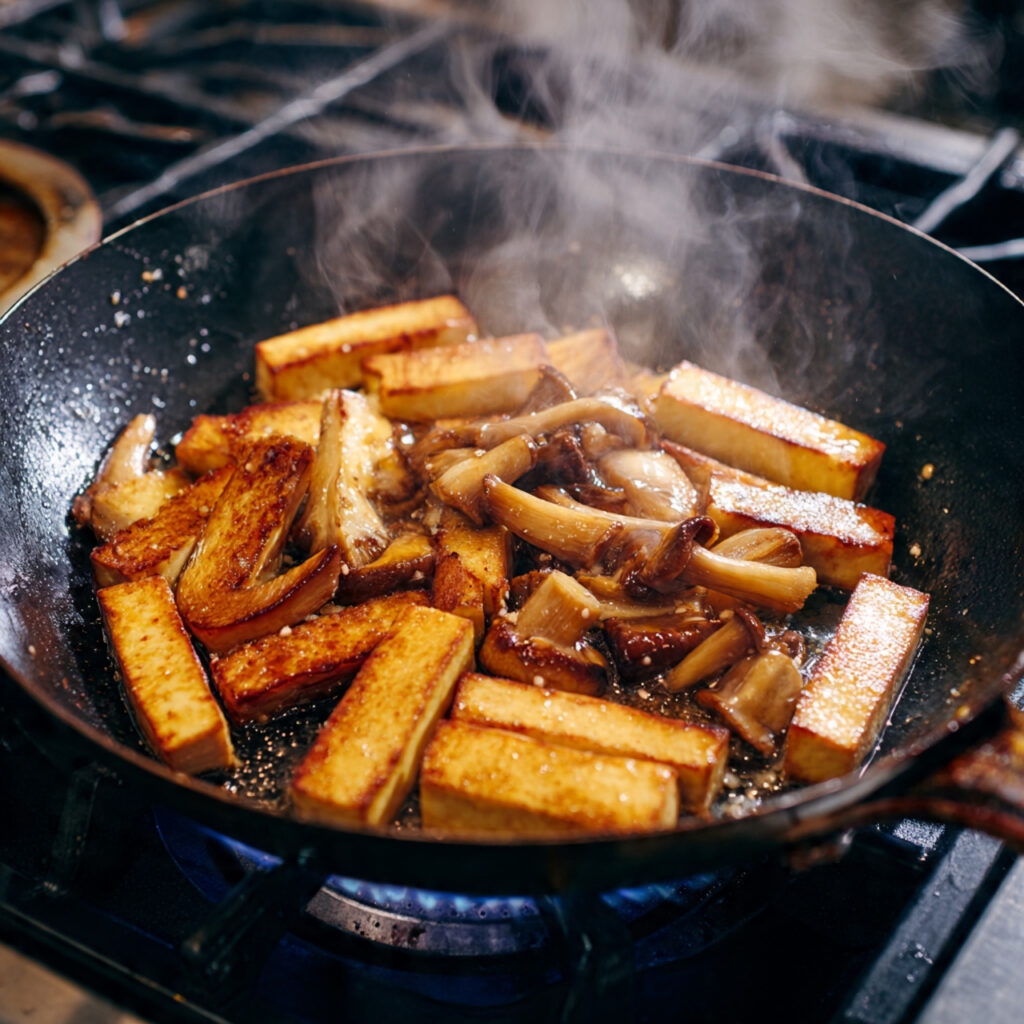
Don’t just use whatever is in the fridge. Select based on texture:
-
The Crunch Group: Carrots, sweet corn, and green peas.
-
The Creamy/Meaty Group: Diced firm tofu or finely chopped King Oyster mushrooms.
-
The Aromatics: Leeks (Baro onion), fresh ginger, and a handful of roasted cashews for a rich, buttery finish.
2. Nutritional Analysis: Why is this a “Superfood”?
Brown rice stir-fry is the perfect alternative for those who want delicious food without the weight-gain worry:
-
Low Glycemic Index (GI): Unlike white rice, brown rice retains its bran layer, allowing energy to be released slowly. This keeps you full longer and stabilizes blood sugar levels.
-
Vitamin B Complex: Vital for metabolism and soothing the nervous system.
-
Insoluble Fiber: Acts as a “natural broom” for the digestive tract, aiding in toxin elimination.
-
Anthocyanin Complexes: (Found in red and black rice) protect the body against free radical damage.
3. The Execution: The Art of Heat Coordination
Step 1: The “Silk-Separation” Technique
If your cold rice is clumped together, do not try to mash it with a spatula in the pan.
-
The Method: Place the cold rice in a large bowl. Wearing a glove, add 1 teaspoon of annatto oil (for a beautiful golden orange glow) or sesame oil, and a pinch of vegan seasoning. Gently massage the rice to separate the grains, ensuring each one is coated in a thin film of oil. This is the secret to making the rice “dance” in the wok rather than sticking to the bottom.
Step 2: Prepping Mushrooms & Tofu The “Umami Soul”
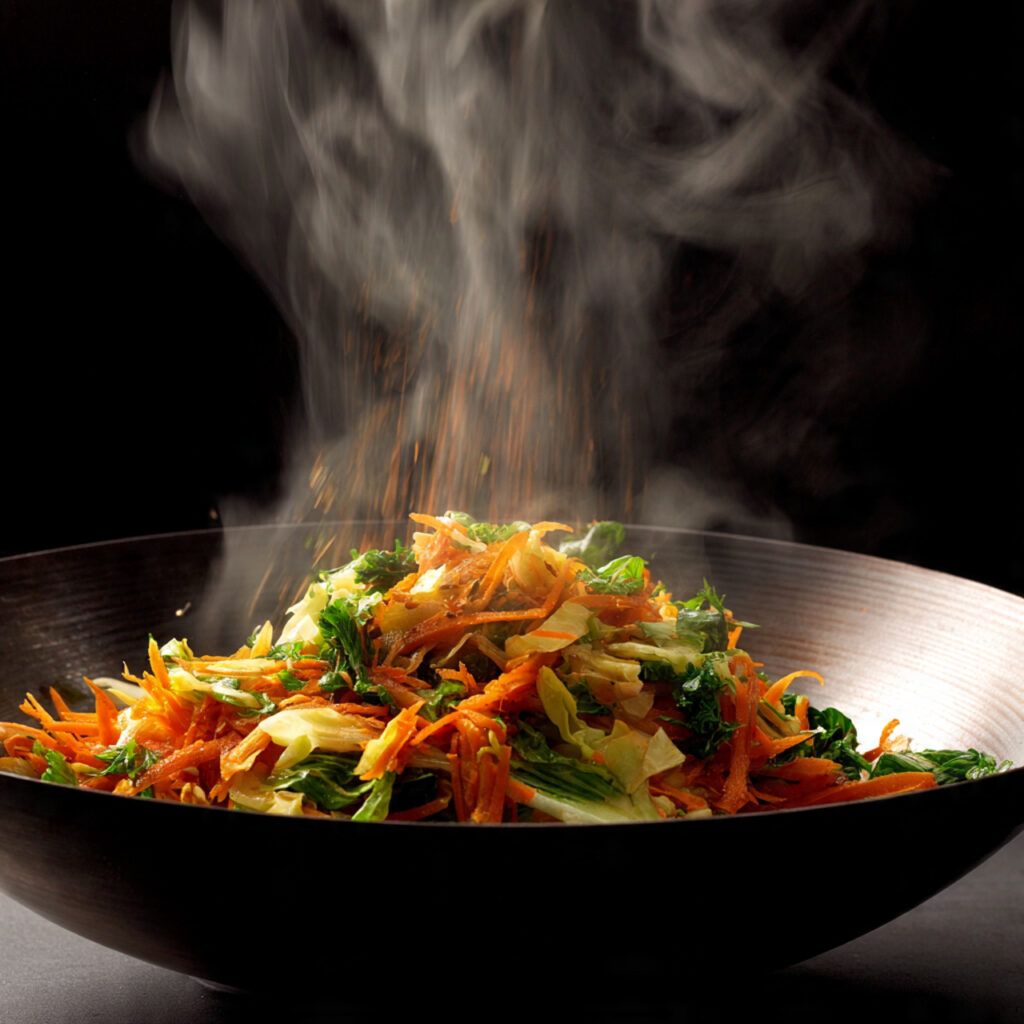
Dice King Oyster mushrooms and firm tofu into small cubes (roughly the size of a corn kernel).
-
The Searing Technique: Sauté the mushrooms and tofu over high heat in a dry pan until they are golden-brown and the moisture has evaporated. This removes the “raw” mushroom scent and creates a chewy, meat-like texture.
Step 3: Awakening Mediterranean Aromas in an Asian Wok
Heat a cast-iron skillet or steel wok until a light wisp of smoke appears. Add olive oil, followed by minced leeks and ginger.
-
Vegetable Sequencing: Add carrots first, then corn and peas. Perform a High heat stir fry for exactly 2 minutes. The vegetables should be just tender crisp, maintaining their vivid colors. Remove the vegetables and set them aside.
Step 4: The “Wok Hei” Sear
This is the most critical step. Add a touch more oil to the wok, wait until it is smoking hot, then add the brown rice.
-
The Action: Spread the rice evenly across the surface of the wok. Let it sit undisturbed for about 30 seconds until the grains are piping hot and you hear a distinct “crackle.” Only then begin to toss vigorously.
-
Seasoning: Drizzle soy sauce around the edges of the wok rather than directly onto the rice. The intense heat of the metal will vaporize the soy sauce, creating the Maillard reaction that infuses every grain with a smoky, caramelized aroma.
Step 5: The Grand Finale
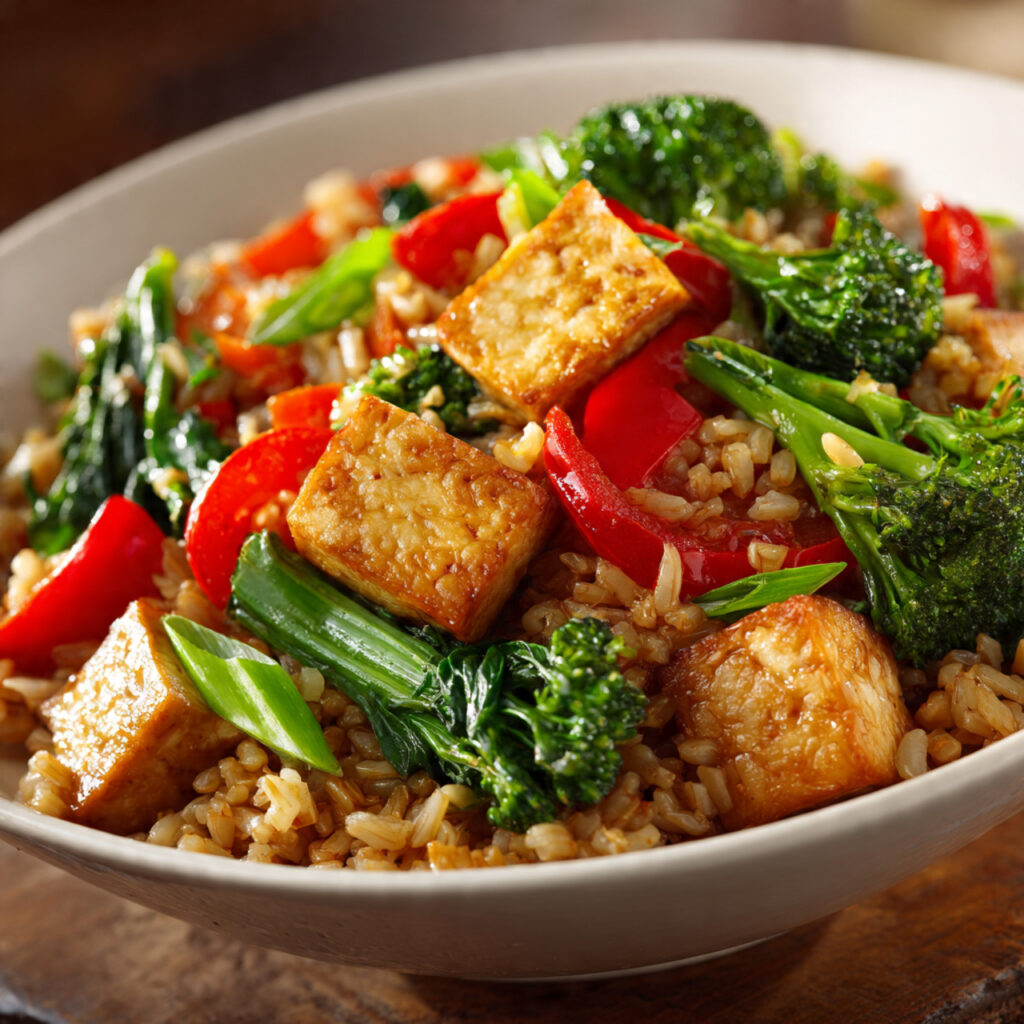
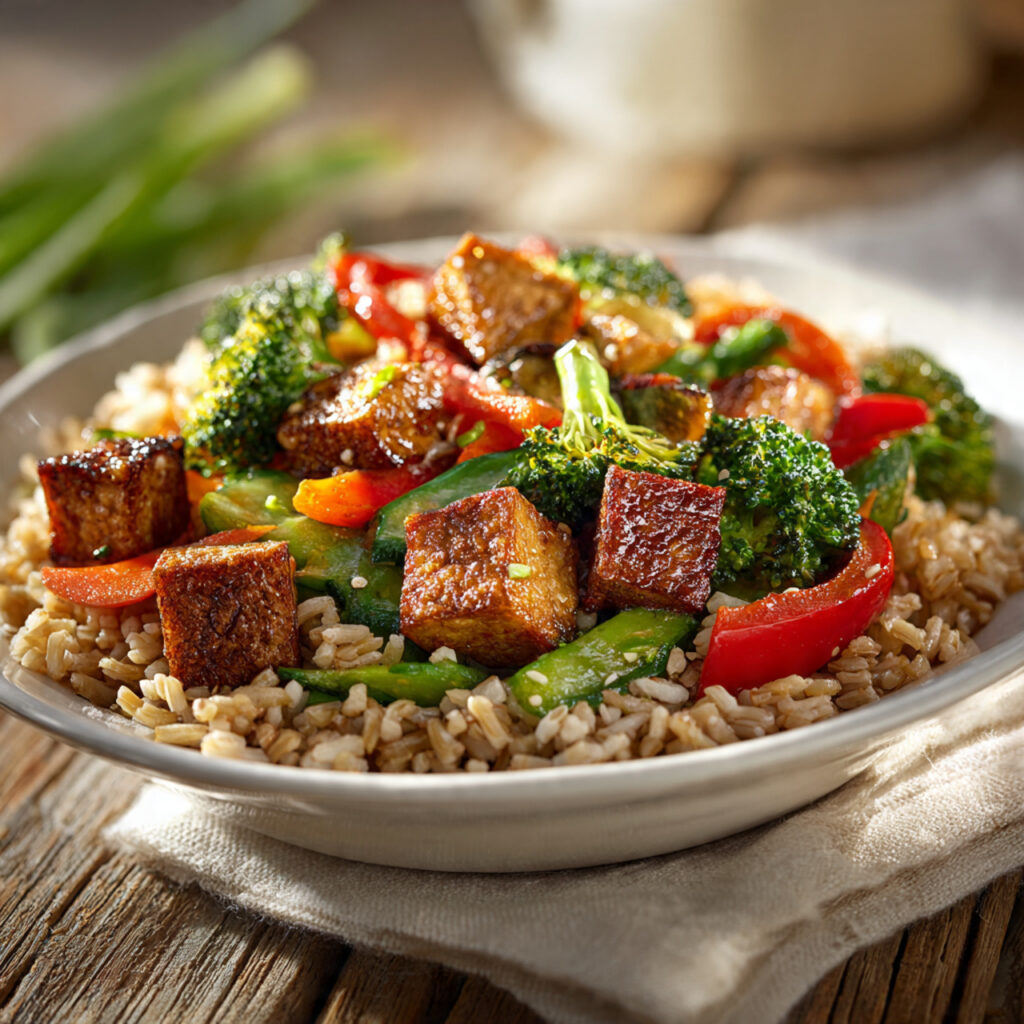
Add the sautéed vegetables, mushrooms, and tofu back into the rice. Toss well to combine. Season with cracked black pepper and finely chopped scallions. Turn off the heat and fold in the crushed roasted cashews.
4. Troubleshooting: Common Pitfalls and Rescues
-
Rice is too dry and hard: This happens if the rice was cooked with too little water initially or has been in the fridge for too many days. The Rescue: Add 2 tablespoons of vegetable broth into the center of the wok and cover with a lid for 1 minute. The steam will soften the grains from the inside without making the surface soggy.
-
The dish tastes bland: Brown rice is nutty but difficult to permeate with flavor. The Solution: Season the rice before frying (as mentioned in Step 1) to ensure the saltiness reaches the core of the grain.
-
Vegetables are mushy or discolored: This occurs from cooking them too long with the rice. The Solution: Always stir fry vegetables separately and only combine them in the final 2 minutes.
5. Presentation and Enjoyment
Brown rice stir fry should be served in white porcelain bowls to highlight the deep earthy tones of the rice and the vibrant colors of the vegetables.
-
Sides: A cooling bowl of seaweed soup or fresh cucumber slices will balance the richness.
-
The Final Touch: A sprinkle of mushroom floss on top adds a layer of sophisticated texture.
Final Thoughts
Cooking brown rice stir fry is not just about filling your stomach; it is a practice in patience. From waiting for the rice to chill to timing the heat so each grain achieves the perfect crunch. When you eat this dish, you are consuming the essence of the earth the most authentic “jewels” of the harvest, still wearing their nutritional coats.
I hope this detailed guide empowers you to create a healthy culinary masterpiece in your own kitchen. May your meals be revitalizing and peaceful!