
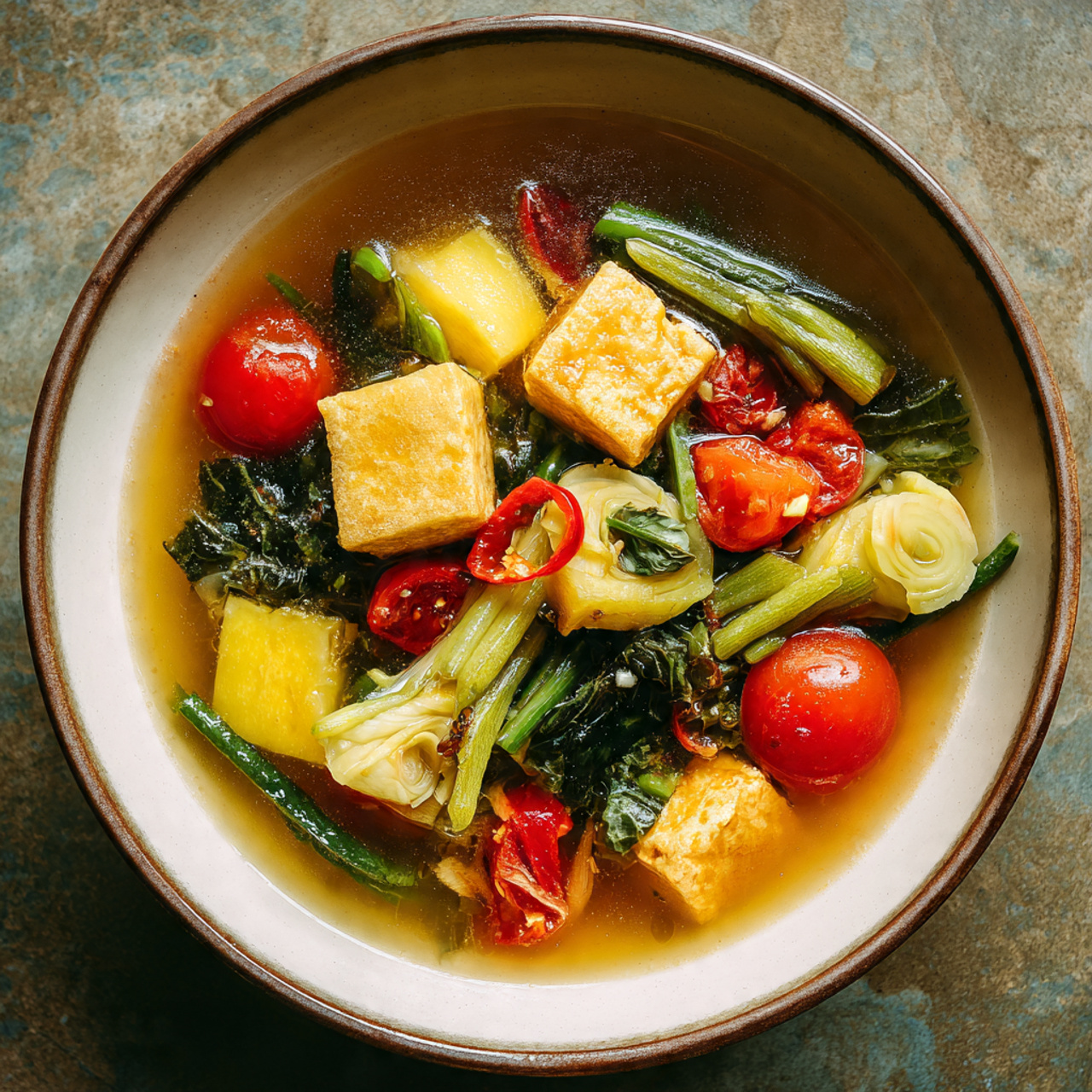

If mushroom soup is a silent meditation, then Vegan Vietnamese Sour Soup (Canh Chua Chay) is a vibrant festival for the palate. It is a calculated explosion where the tartness of tamarind, the succulent sweetness of pineapple, the creeping heat of chili, and the distinct aromatics of sawtooth herb and Thai basil intertwine. They embrace silken tofu and crisp vegetables in a broth that is as complex as it is refreshing.
Cooking a vegan sour soup is not difficult, but achieving the perfect “identity” for each flavor where they are distinct yet harmonized, bold yet not harsh, and clear yet deeply flavorful is a sophisticated art of ingredient coordination.
1. The Philosophy of the Five Elements in Ingredients
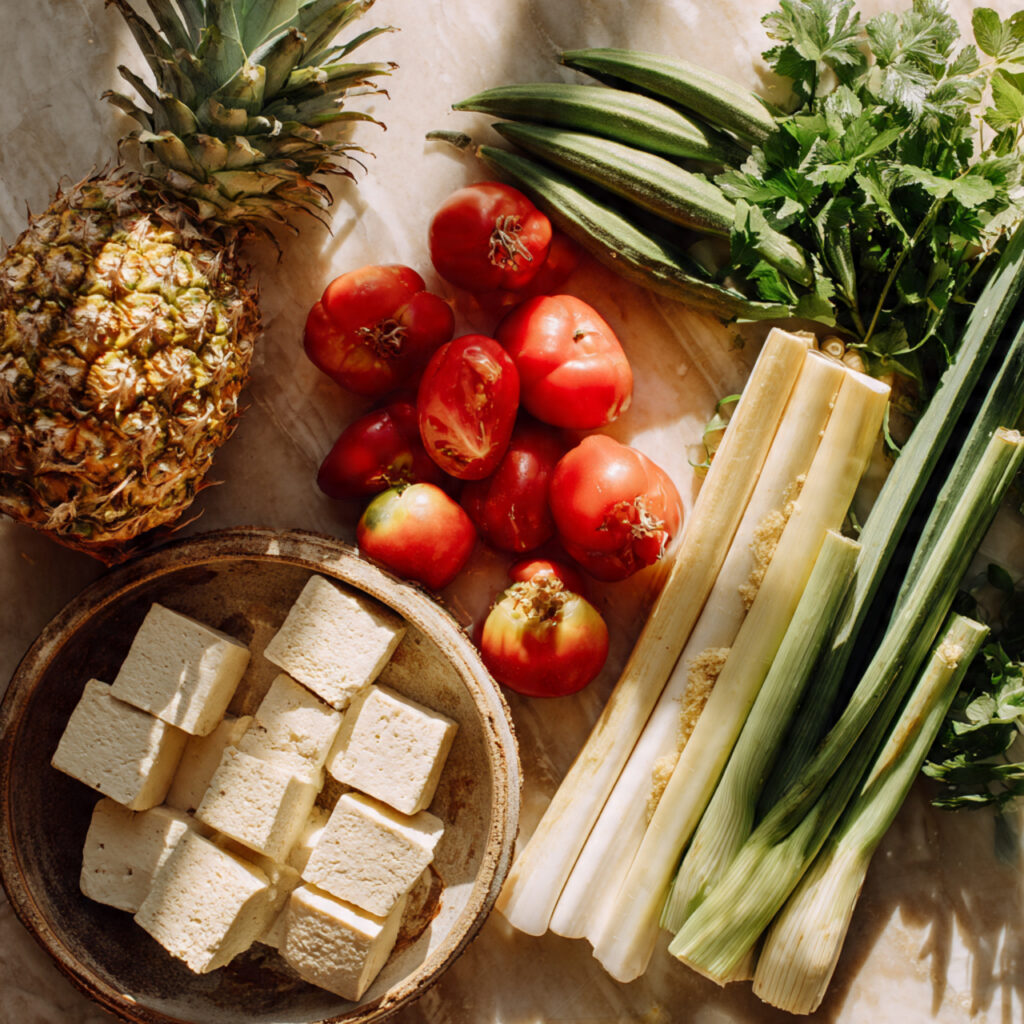
The Vietnamese sour soup is the clearest embodiment of the Yin Yang and Five Elements theory in Southeast Asian cuisine. Every ingredient you select holds a “station” in the flavor compass:
1.1. The “Fire” Element (Heat & Red Hue)
-
Chili and Tomatoes: The crimson hue of the tomatoes provides more than visual appeal; it offers a gentle acidity. Meanwhile, the bird’s eye chili provides a pungent “kick” to stimulate the taste buds and warm the body from within.
1.2. The “Earth” Element (Sweetness & Golden Hue)
-
Pineapple: This is the most critical component for adding “thickness” to the flavor. The natural sugars and subtle tartness of pineapple, when cooked, release enzymes that provide profound depth to the broth.
-
Bean Sprouts and Tofu: Soft white tofu represents purity and gentleness, acting as a sponge that absorbs the essence of the soup.
1.3. The “Wood” Element (Greenery & Texture)
-
Elephant Ear Stalks (Bac Ha) and Okra: These provide the dish’s signature architecture. The stalks act like tiny sponges, soaking up the broth, while the okra provides a light, natural silkiness.
-
Fresh Herbs (Sawtooth Herb, Thai Basil, Rice Paddy Herb): These are the “soul” of the soup. Without them, the dish is merely sour vegetable water.
1.4. The “Water” Element (Acidity & Cooling)
-
Tamarind: We use tamarind pulp to achieve a pure, primal tartness that is fundamentally different from the sharp acidity of vinegar or lime.
2. Nutritional Analysis: Cooling and Recovery
This vegan sour soup is an exceptional cooling remedy:
-
Digestive Support: Natural acids from tamarind and pineapple stimulate gastric juices, helping the body process plant-based proteins from tofu with ease.
-
Rich in Vitamin C and Antioxidants: Tomatoes and fresh herbs provide a massive dose of Vitamin C, bolstering the immune system.
-
Mineral & Hydration Replenishment: It is the ultimate electrolyte-restoring meal after a long day of work or during sweltering weather.
3. The Professional Execution: Layering the Senses
To execute this dish, imagine you are assembling a precision machine where the order of parts determines the smoothness of the operation.
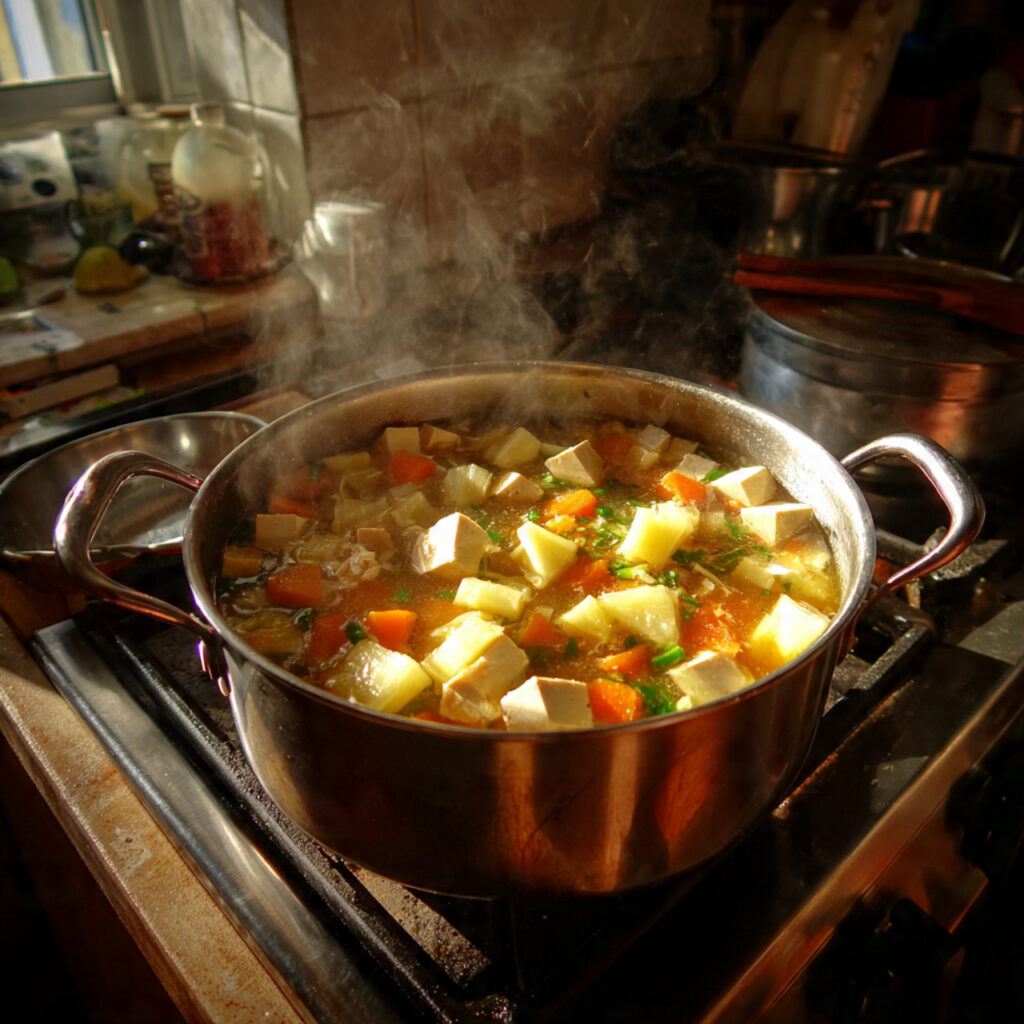
Step 1: Pre treatment Texture Engineering
-
Elephant Ear Stalks: Peel the outer skin and slice diagonally. Pro Tip: Massage the stalks with a pinch of salt and rinse thoroughly. This eliminates any potential itchiness and ensures they remain crunchier in the hot broth.
-
Okra: Slice diagonally. Caution: Do not overcook okra, as it will release excessive mucilage, making the broth cloudy.
-
Tofu: Cut into small cubes. You may lightly sear them beforehand if you prefer a resilient, chewy outer layer.
Step 2: Activating the Pineapple and Tomato Base
This step creates the foundation for the stock.
-
Heat a small amount of oil in a pot and sauté minced leeks (Baro onion). Add the tomatoes and pineapple with a pinch of salt and palm sugar.
-
The Reason: Sautéing first allows the lycopene in tomatoes to dissolve in the oil, creating a shimmering golden-orange broth without artificial coloring. The pineapple’s flavors also intensify when exposed to direct heat.
Step 3: Extracting the Tamarind Essence
-
Dissolve tamarind pulp in warm water and strain out the seeds. Pour the tamarind juice into the sautéed vegetable base.
-
Add filtered water or the vegetable stock prepared from previous lessons. Bring to a rolling boil.
Step 4: The Order of “Integration”
Once the broth is boiling, introduce the ingredients according to the rule: Longest cooking items first.
-
Tofu goes in first to absorb the flavors.
-
Okra follows.
-
Elephant Ear Stalks and Bean Sprouts go in last. As soon as you add these, wait for the broth to return to a boil and turn off the heat immediately to preserve their signature snap.
Step 5: The Magic of Herbs and Fried Aromatics
The dish is only truly finished after the heat is turned off.
-
Add the chopped sawtooth herb, Thai basil, and rice paddy herb.
-
The Chef’s Secret: Top with a table spoon of golden fried leek oil. This fragrant oil “locks in” the herbal aromas and gives the surface of the soup a professional, appetizing gloss.
4. Troubleshooting: Common Pitfalls
-
Cloudy Broth: Caused by overcooking the bean sprouts and okra or using heat that is too high after adding the delicate greens. The Fix: Always turn off the heat the moment the last greens hit the pot.
-
Harsh Acidity: Caused by using too much tamarind without enough palm sugar for balance. The Fix: Follow the rule “Sourness leads, sweetness follows.” A pinch of sea salt will help round out both the sweet and sour notes.
-
Loss of Herbal Fragrance: Caused by adding herbs while the soup is still vigorously boiling. The Fix: Only add aromatics once the pot is removed from the heat to prevent the essential oils from evaporating.
5. The Tasting: A Tropical Symphony
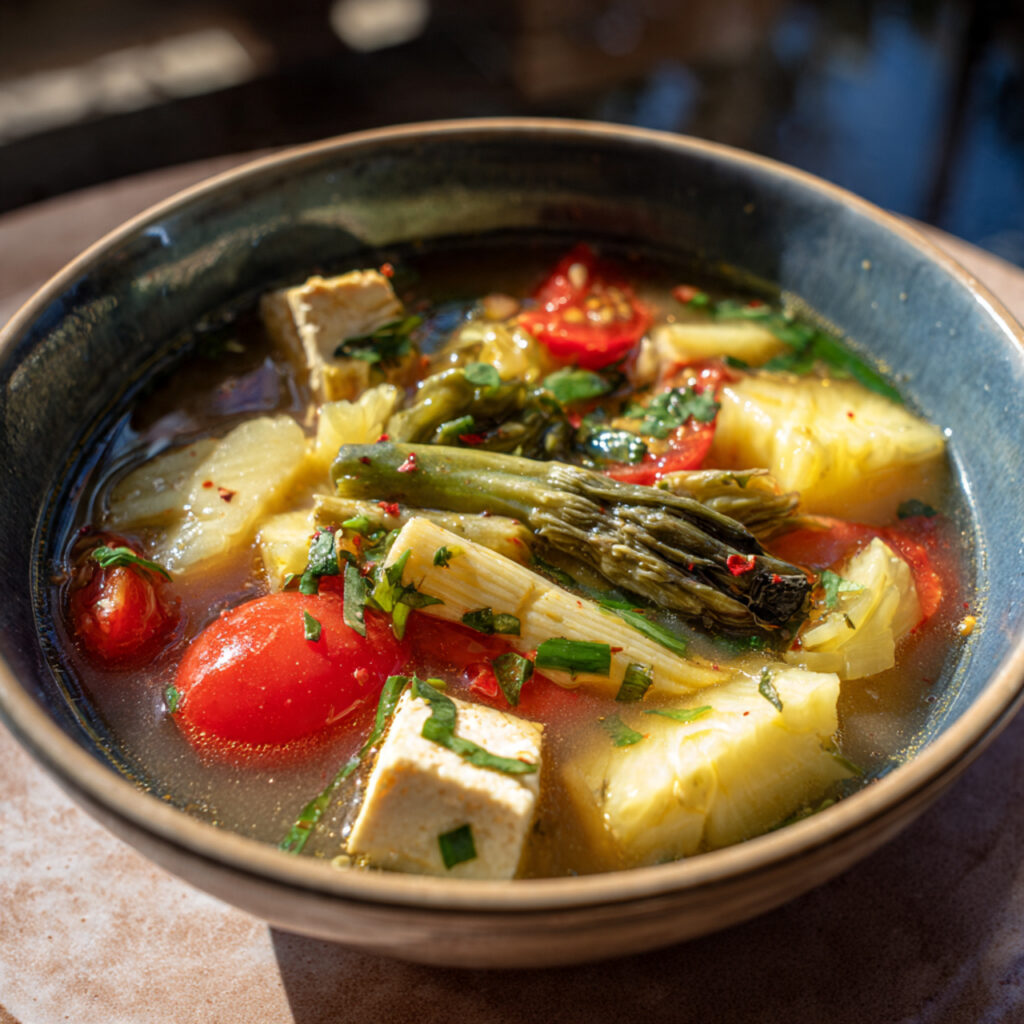
A perfect bowl of Vegan Sour Soup must be a mosaic of colors: the red of tomatoes, the green of okra, the white of tofu, and the yellow of pineapple.
-
On the Palate: You will feel a refined tartness dancing on the tip of the tongue, followed by the lingering sweetness of the vegetables, and finally a gentle glow from the chili.
-
Texture: The juicy elephant ear stalks explode in the mouth, harmonizing with the silky tenderness of the tofu.
-
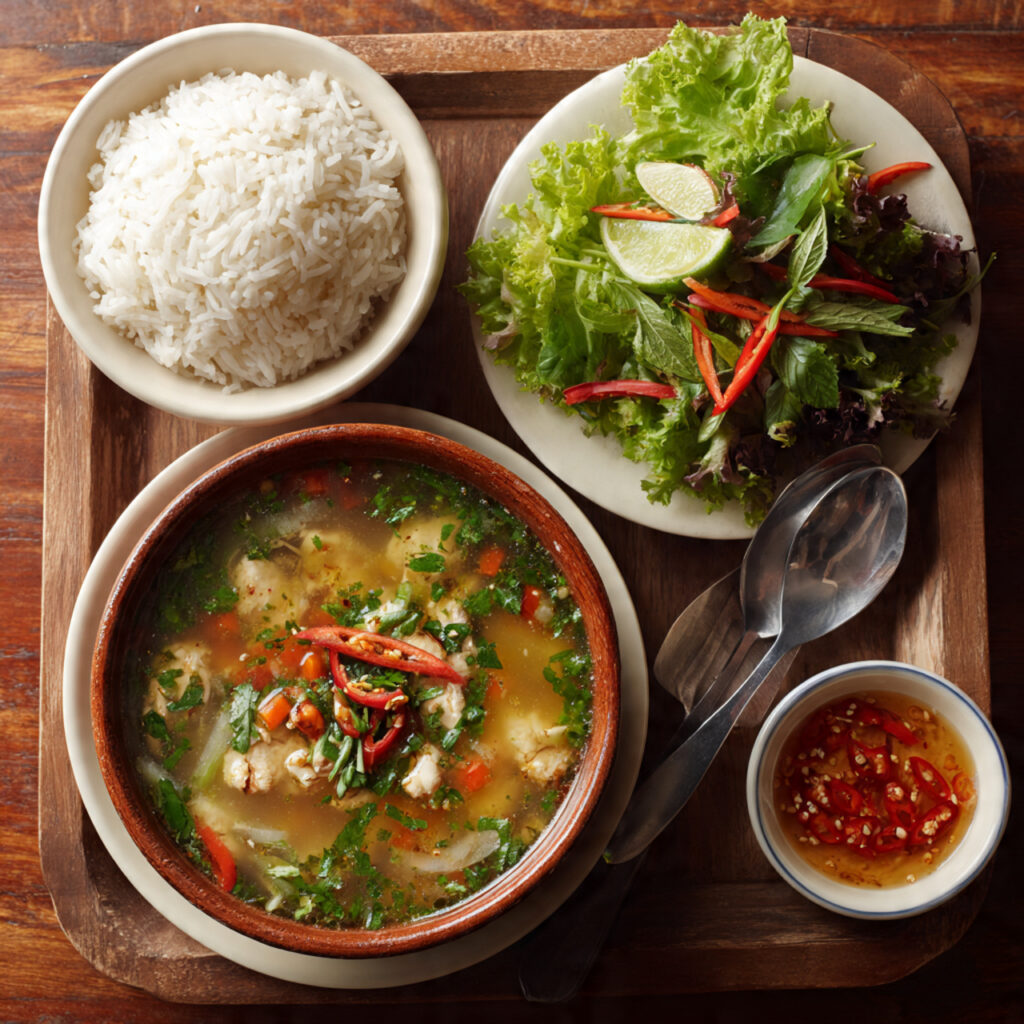
Pairing: This soup is best served with steaming white rice and a side of soy sauce with plenty of sliced chilies. For a variation, it is also wonderful when served over fresh rice vermicelli
Final Thoughts: The Harmony of Five Elements
Cooking Vegan Sour Soup is not merely combining vegetables; it is a quest for balance within opposition. Sour and Sweet, Spicy and Refreshing, Soft and Crunchy. When you master these elements, the bowl is no longer just food it is an inspiring artistic experience.
I hope this guide helps you bring the vibrant spirit of Southern Vietnam into your kitchen.