

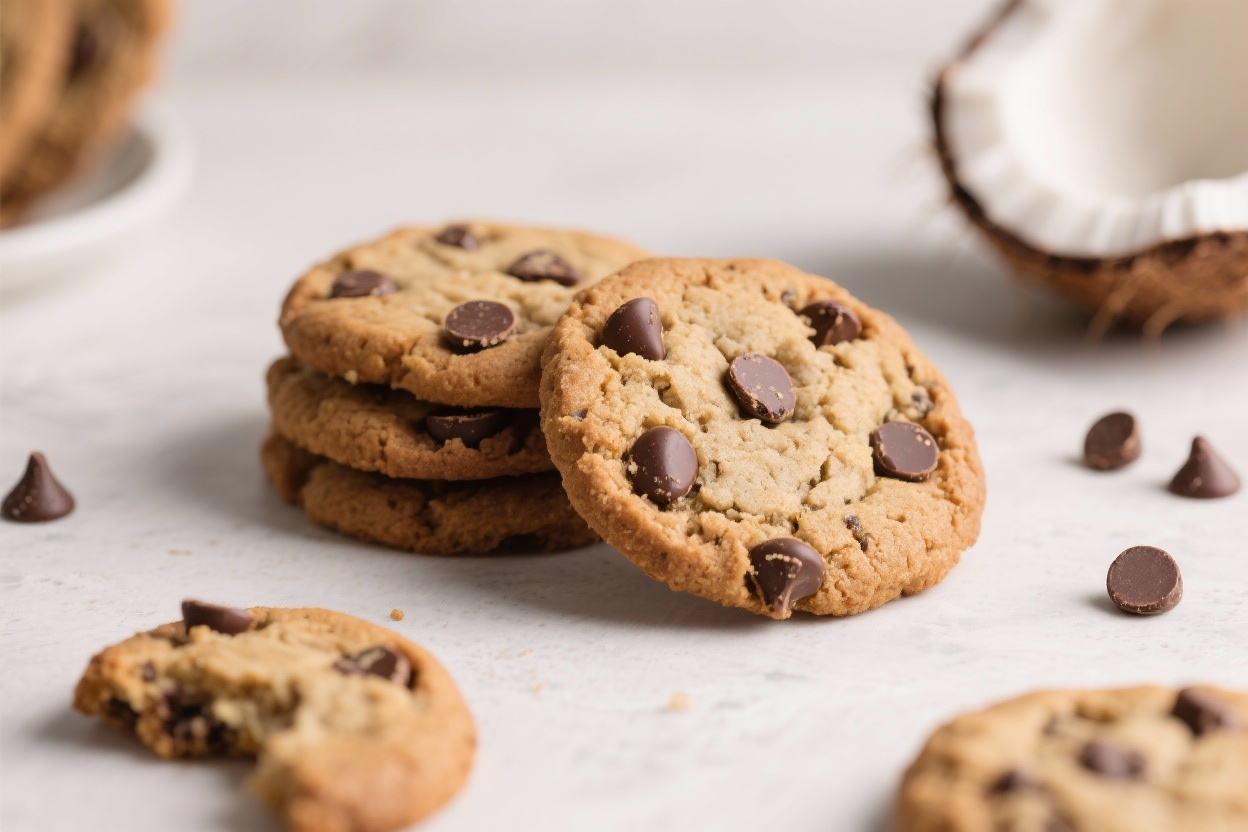

These cookies are the kind you want to bake on a cozy afternoon and snack on straight from the tray. They’re soft in the middle, lightly crisp on the edges, and loaded with melty chocolate chips. Coconut oil steps in for butter, giving a subtle warmth and a cookie that holds its shape without being dry.
No special equipment, and no complicated ingredients. Just classic chocolate chip cookie comfort, made vegan and simple.
What Makes This Special
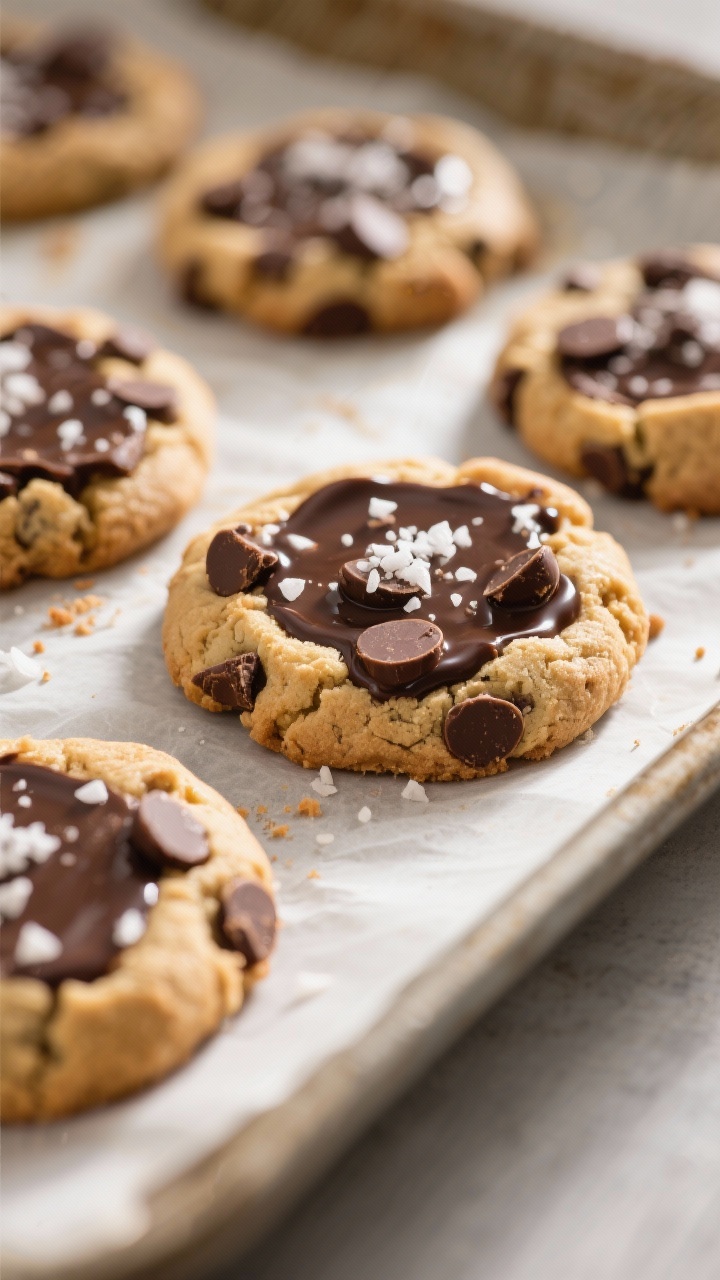
These vegan chocolate chip cookies use coconut oil instead of butter, which makes the dough easy to mix and the cookies tender. A little cornstarch helps keep them soft, while brown sugar adds caramel notes and chew.
You’ll get a great texture without chilling for hours though a short chill does help if you want a thicker cookie. They’re dairy free, egg free, and loved by non vegans too.
Ingredients
- 1/2 cup (120 ml) refined coconut oil, melted and cooled slightly (use refined for a neutral flavor)
- 3/4 cup (150 g) packed light brown sugar
- 1/4 cup (50 g) granulated sugar
- 1/4 cup (60 ml) unsweetened plant milk (almond, oat, or soy)
- 2 teaspoons vanilla extract
- 1 3/4 cups (220 g) all purpose flour
- 2 teaspoons cornstarch (or arrowroot)
- 1/2 teaspoon baking soda
- 1/2 teaspoon baking powder
- 1/2 teaspoon fine sea salt
- 1 cup (170 g) dairy free chocolate chips or chunks
- Optional: flaky sea salt for topping
Instructions
- Preheat the oven. Heat your oven to 350°F (175°C). Line two baking sheets with parchment paper.
- Mix the wet ingredients. In a large bowl, whisk melted coconut oil with brown sugar and granulated sugar until glossy.Add plant milk and vanilla, and whisk again until smooth.
- Combine the dry ingredients. In a separate bowl, whisk flour, cornstarch, baking soda, baking powder, and salt.
- Bring the dough together. Add the dry mixture to the wet mixture. Stir with a spatula until just combined. Fold in the chocolate chips.
- Chill briefly (optional but helpful). Chill the dough for 20–30 minutes if you prefer thicker cookies.If you’re in a rush, you can bake right away.
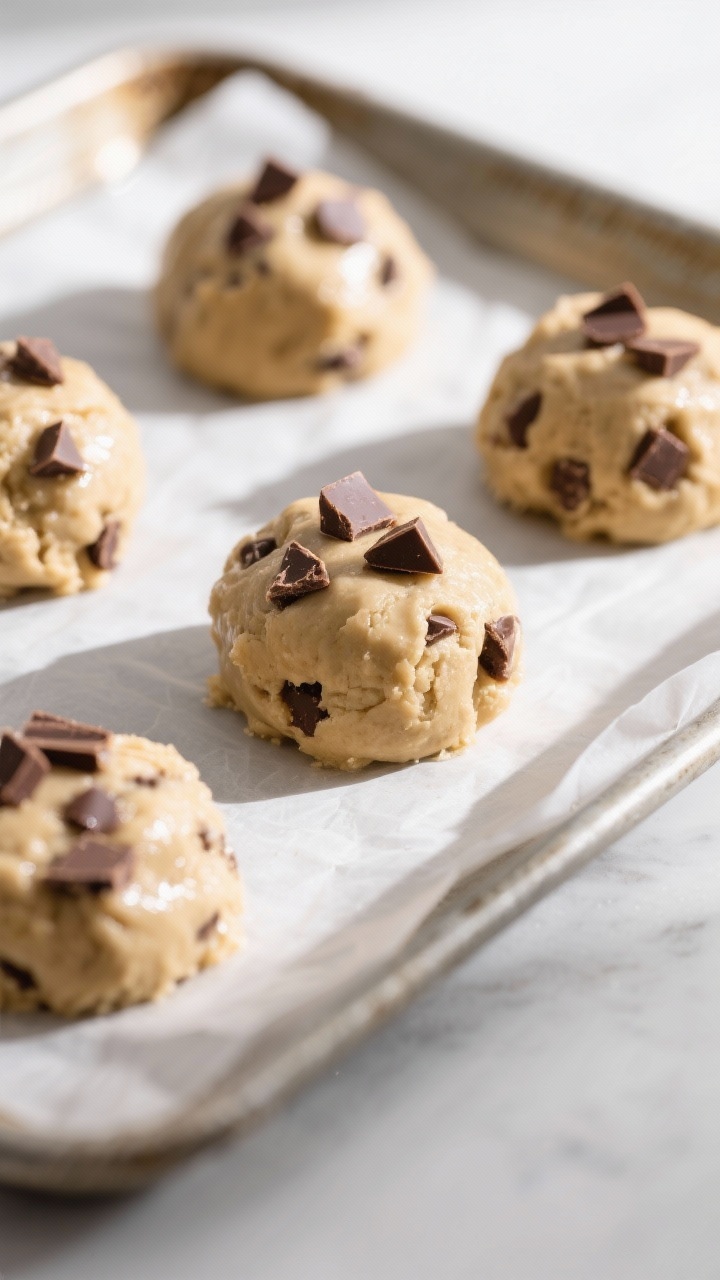
- Portion the dough. Scoop 1 1/2 tablespoons per cookie (about a medium cookie scoop) onto the prepared sheets, leaving space between each.
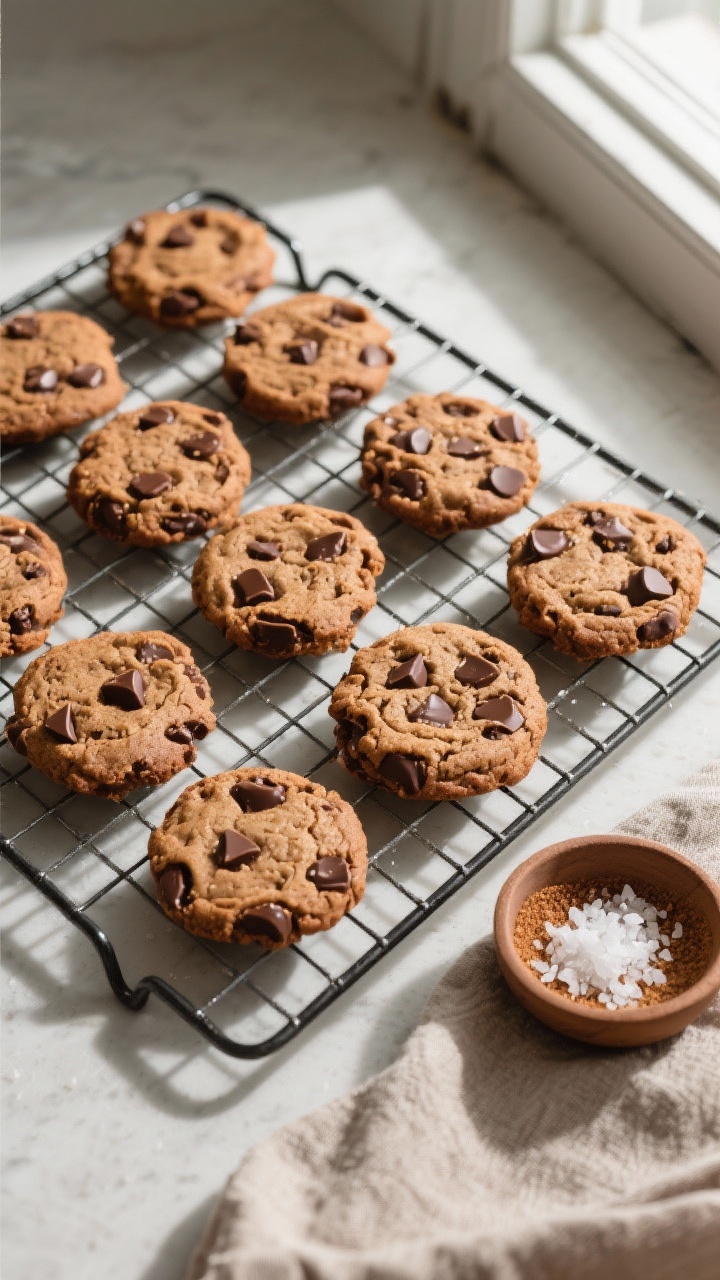
- Bake. Bake for 9–12 minutes, until the edges are set and lightly golden but the centers still look soft.
- Finish and cool. Sprinkle with flaky sea salt if you like. Let cookies cool on the sheet for 5 minutes, then transfer to a rack to finish cooling.
How to Store
- Room temperature: Store in an airtight container for 3–4 days. Slip in a slice of sandwich bread to keep them soft.
- Refrigerator: Keeps for up to a week.Let cookies sit at room temp for 10 minutes before eating.
- Freezer (baked): Freeze in a zip-top bag for up to 2 months. Rewarm in a 300°F (150°C) oven for 5–7 minutes.
- Freezer (dough): Scoop dough balls onto a tray, freeze until firm, then bag. Bake from frozen at 350°F (175°C) for 11–13 minutes.
Health Benefits
While these are still cookies, they come with a few thoughtful choices.
Using coconut oil instead of butter makes them dairy free and suitable for many people with lactose intolerance. Coconut oil provides saturated fats that are naturally plant based, and refined coconut oil keeps the flavor neutral.
Choosing dark dairy free chocolate can add antioxidants and reduce sugar compared to milk chocolate. The recipe also uses plant milk, which can contribute calcium or protein depending on the brand.
If you want to nudge the nutrition further, swap part of the flour for whole wheat pastry flour and reduce the sugar slightly; the texture will still be soft with just a touch more heartiness.
Common Mistakes to Avoid
- Using unrefined coconut oil when you don’t want coconut flavor. Unrefined oil has a stronger coconut taste. If you prefer classic chocolate chip flavor, stick with refined.
- Overbaking. Vegan cookies can go from perfect to dry fast. Pull them when the edges are set and the centers still look a little soft.
- Skipping the salt. Salt balances the sweetness and makes the chocolate pop.Don’t leave it out.
- Measuring flour incorrectly. Spoon and level your flour. Too much flour makes thick, cakey cookies that don’t spread.
- Mixing too much after adding flour. Overmixing develops gluten and toughens the cookies. Stir just until everything comes together.
- Using cold plant milk with warm oil. It can cause the oil to seize.Make sure your plant milk is room temperature, or let the oil cool slightly.
Variations You Can Try
- Browned coconut oil: Gently cook coconut oil on the stove until it turns golden and nutty, then cool. It adds a toasty depth similar to browned butter.
- Chunky chocolate and nuts: Use chopped dark chocolate and add 1/2 cup toasted walnuts or pecans for crunch.
- Oat flour twist: Replace 1/2 cup of all-purpose flour with oat flour for a cozier texture and subtle oat flavor.
- Spiced version: Add 1/2 teaspoon cinnamon and a pinch of cardamom for warmth that pairs well with coconut oil.
- Gluten-free: Use a 1:1 gluten-free all-purpose flour blend and add an extra teaspoon of plant milk if the dough seems dry.
- Espresso boost: Stir in 1–2 teaspoons instant espresso powder. It deepens the chocolate without tasting like coffee.
FAQ
Can I reduce the sugar?
Yes, you can reduce the total sugar by 2–3 tablespoons without major texture changes.
Keep in mind that sugar affects spread and softness, so larger reductions may make the cookies more cakey and less chewy.
What if I only have unrefined coconut oil?
It will work fine, but expect a gentle coconut flavor. Many people enjoy it with chocolate. If you’re unsure, add a pinch more salt and a touch of cinnamon to balance the sweetness.
Do I need to chill the dough?
No, but a quick 20–30 minute chill helps prevent excessive spread and gives a thicker, chewier cookie.
If you skip chilling, leave a little more space between scoops.
Which plant milk is best?
Oat milk and soy milk give the best body and browning. Almond milk works well too. Avoid flavored or sweetened milks unless you want a sweeter cookie.
Can I make these oil-free?
For this style of cookie, oil creates the classic texture.
You can experiment with 1/2 cup creamy almond butter or tahini in place of the oil, but the cookies will be denser and less crisp around the edges.
Why did my cookies spread too much?
Your coconut oil may have been too warm, or the dough was under-measured on flour. Chill the dough briefly, and be sure to spoon and level the flour. Lining the tray with parchment (not a greased pan) also helps.
How do I get those pretty chocolate puddles?
Use chopped chocolate instead of chips, and press a few extra pieces onto the tops of the dough balls before baking.
Tap the baking sheet on the counter right after baking to encourage pooling.
In Conclusion
Vegan Chocolate Chip Cookies with Coconut Oil offer everything you’d expect from a classic cookie soft centers, crisp edges, and plenty of chocolate without dairy or eggs. The ingredients are simple, the method is straightforward, and the results are reliably good. Keep a batch of dough in the freezer for cookie emergencies, and customize the add ins to make them yours.
Once you bake these, you may not miss butter at all.
Printable Recipe Card
Want just the essential recipe details without scrolling through the article? Get our printable recipe card with just the ingredients and instructions.