

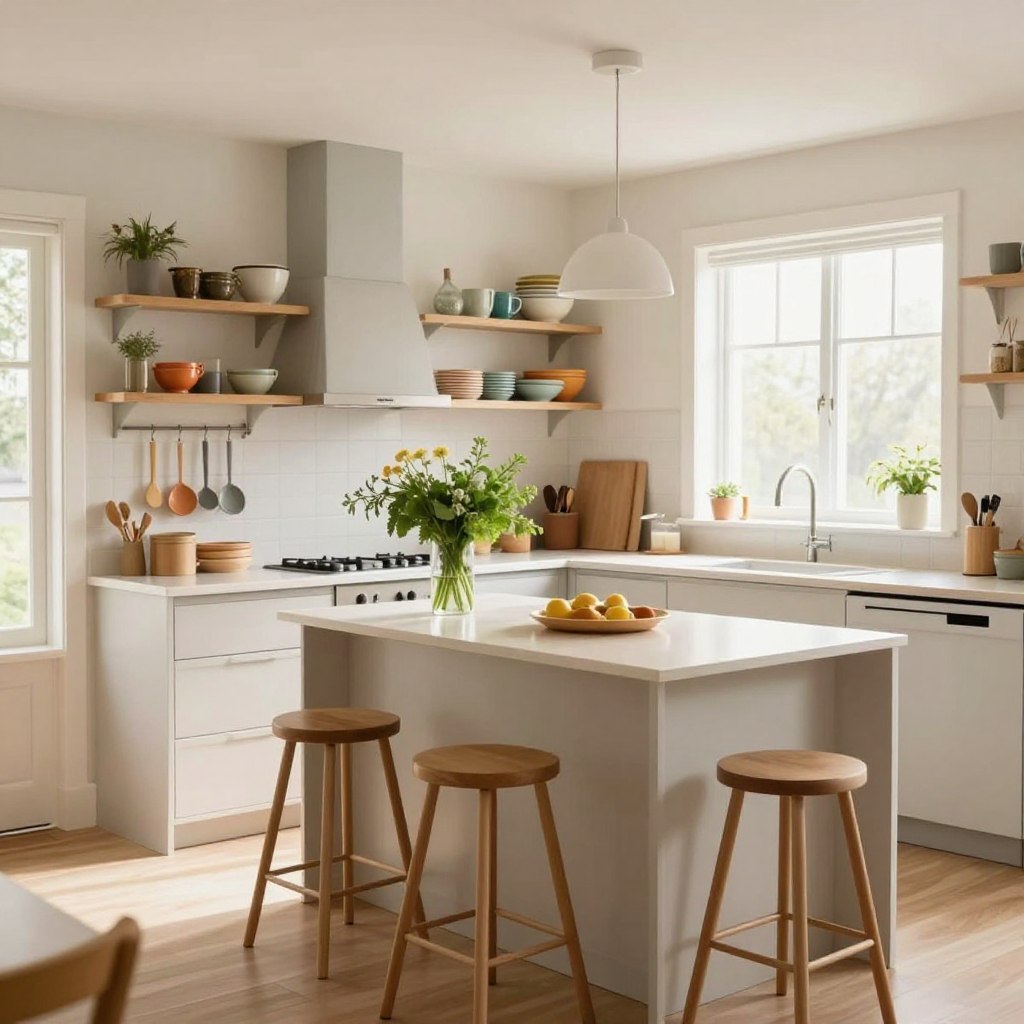

Does your kitchen feel cramped, like a closet? You’re not alone. Many people face tight, inefficient spaces that make cooking hard.
But there’s a solution. With the right plan, you can change that small room. This guide will help you make your kitchen both stunning and useful.
We’ve got 10 practical, genius ideas for you. They focus on smart storage, clever layouts, and design tricks. These tips will help you use every inch wisely.
We’ll cover everything from planning to budgeting and choosing materials. We’ll also show you how to avoid common mistakes. Get ready to fall in love with your kitchen again as we help you truly expand your space.
Key Takeaways
- A well planned remodel can transform even the tiniest kitchen into a highly functional space.
- Smart storage solutions are essential for maximizing every available inch.
- Clever layout changes can dramatically improve workflow and make the room feel larger.
- Visual design tricks, like light colors and reflective surfaces, create an illusion of more space.
- Practical planning and budgeting are crucial first steps before starting any project.
- This guide provides a complete roadmap from initial ideas to final implementation.
- The right approach can make your kitchen both beautiful and incredibly efficient for daily use.
Why Your Small Kitchen Deserves a Big Transformation
Changing a small kitchen is more than adding storage. It’s about making the space better for daily use. The frustration of a small kitchen can ruin your day. A good small kitchen remodel fixes these problems.
Think about your morning. You’re making coffee, lunches, and maybe eggs in a small space. With everything in its place, mornings become calm and efficient. It’s not just about being convenient; it’s about starting the day right.
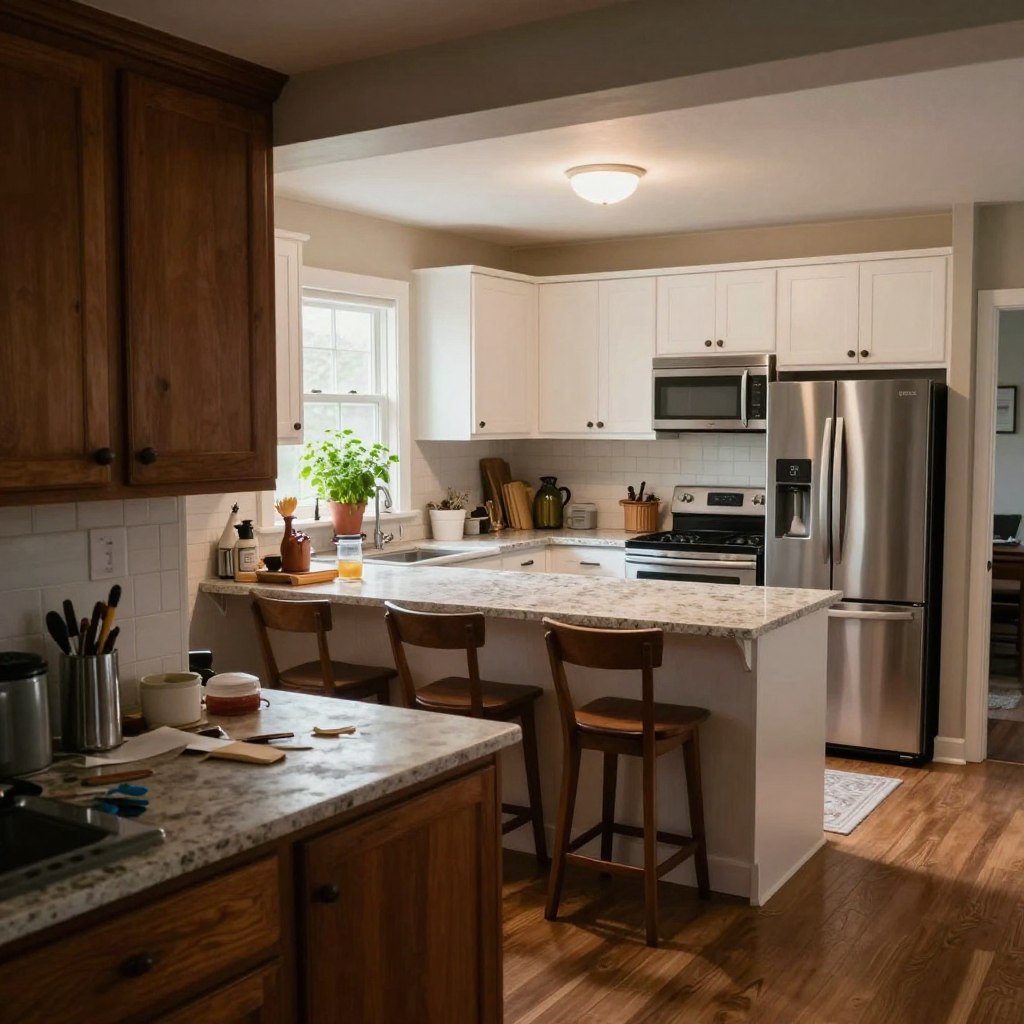
Being organized saves time. No more searching through cluttered cabinets. A new kitchen puts your tools where you need them. This saves minutes every day, giving you time for fun or relaxation.
A great transformation makes your kitchen the heart of your home. It becomes a place to gather, not just pass through. The right design makes it welcoming, perfect for family time or hosting friends.
Here are common problems and how a remodel solves them:
| Kitchen Challenge | Remodel Solution | Daily Life Benefit |
|---|---|---|
| Countertop clutter from appliances | Built in appliance garages and custom nooks | Clean, spacious workspace for actual cooking |
| Inefficient cabinet storage | Pull out shelves, lazy Susans, and drawer organizers | Everything visible and accessible in seconds |
| Poor workflow between sink, stove, and fridge | Strategic layout optimization | Effortless movement while preparing meals |
| Lack of personality in a utilitarian space | Intentional design with lighting, materials, and color | A space that reflects your style and lifts your mood |
Investing in your kitchen improves your life. You use it every day. A well designed kitchen supports your lifestyle, not hinders it. The joy and pride you feel in your home is priceless.
Your small kitchen is a chance for smart design. It’s not a limitation. It’s a way to make every inch count. Seeing your kitchen as an opportunity is the first step to a better space.
Small Kitchen Remodel Planning: The Essential First Steps
Before you start painting or picking out cabinets, there’s important groundwork to do. This work helps make sure your kitchen remodel solves problems, not creates new ones. It’s like drawing a blueprint for your project.
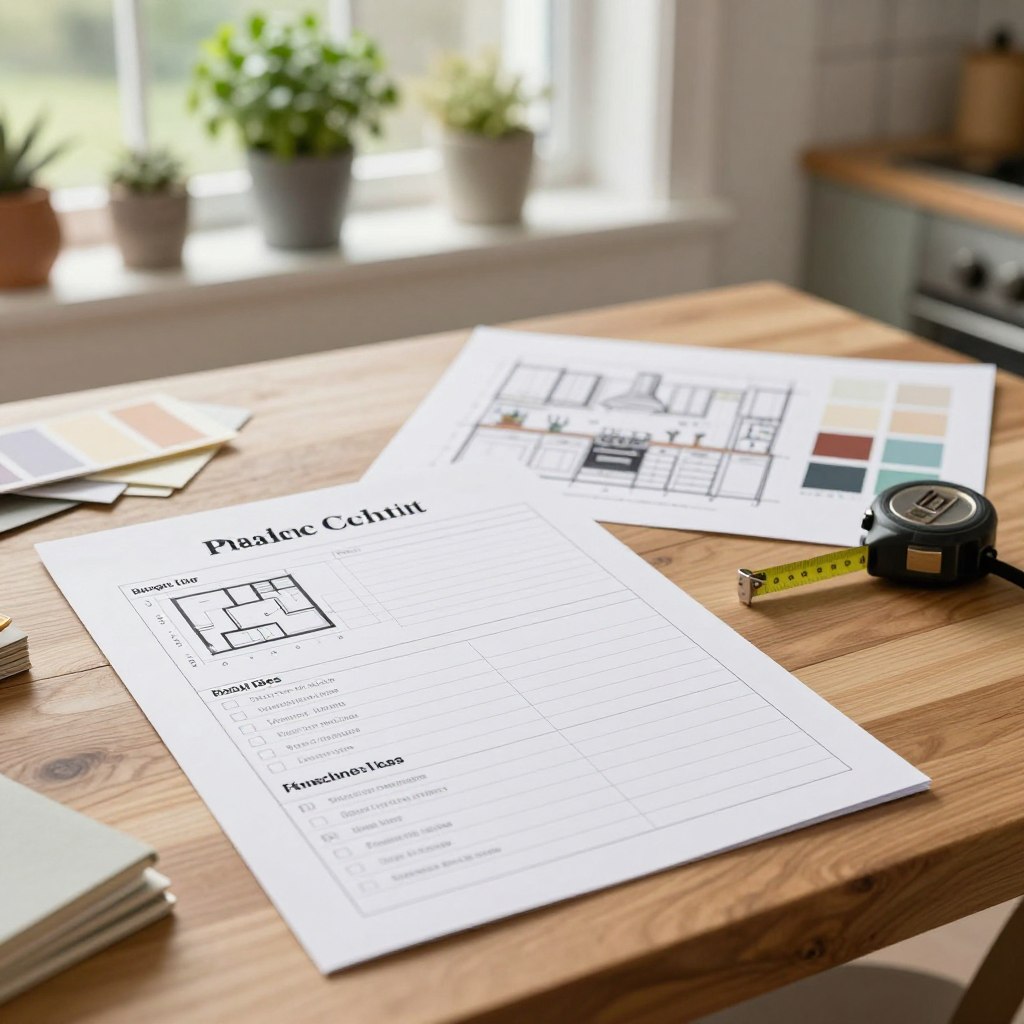
Good planning can turn a cramped, cluttered kitchen into a space that works for you. Let’s look at the three key steps for a successful remodel.
Assessing Your Current Kitchen Layout and Pain Points
Begin by looking at what’s not working in your kitchen. Carry a notebook for a week to see your daily routine. Note where you get frustrated during meal prep.
Common issues in small kitchens include not enough counter space near appliances. You might have hard-to-reach cabinets or disorganized drawers. Cooking with others can feel like navigating an obstacle course.
Focus on the kitchen work triangle the path between sink, stove, and fridge. In small kitchens, this triangle should be compact but not too tight. Measure the distances between these points. Ideal spacing is between 4 and 9 feet.
Make a list of what you own versus what you use. Many small kitchens store items not used in years. This helps reveal your true storage needs.
Setting Realistic Goals and Budget Parameters
Your pain point assessment leads to setting goals. Instead of “more storage,” aim for “dedicated pot lid organization” or “pull out shelves in lower cabinets.”
Goals should have a clear priority system. Separate your needs from your wants. Needs fix daily life problems. Wants add beauty or convenience.
Budgeting needs realism and research. First, figure out your total budget. Then, look up costs for your needs list. Always save 10-20% for unexpected costs.
This table shows typical budget allocations for a small kitchen renovation:
| Category | Percentage of Budget | Key Considerations |
|---|---|---|
| Cabinets & Storage | 25-35% | Most impactful for small spaces; consider refacing vs. replacing |
| Countertops | 10-15% | Durability and maintenance matter more than size |
| Appliances | 15-20% | Standard sizes keep costs down; measure carefully |
| Flooring | 5-10% | Continuous flooring visually expands space |
| Lighting & Electrical | 5-10% | Layered lighting is crucial in small kitchens |
| Labor & Installation | 15-25% | Get multiple quotes; verify licenses and insurance |
A clear budget prevents mid-project changes that can ruin your remodel. It also helps you talk clearly with contractors and designers.
Creating a Timeline That Works for Your Lifestyle
Every remodel needs a realistic schedule. Small kitchens usually take 4-8 weeks. The timeline should include ordering materials, contractor availability, and your living arrangements.
Consider a phased approach if you’re doing some work yourself. You might paint and install open shelving one weekend, then have professionals install cabinets the next. This way, you minimize disruption.
Be honest about how much kitchen downtime your household can handle. If you have young children or often entertain, you might need a temporary kitchen. Some families use a microwave, coffee maker, and mini-fridge in another room.
Always add buffer time between phases. Materials can arrive late, or inspections might get rescheduled. A flexible but structured timeline keeps stress low during the remodel.
Finally, share your timeline with everyone involved family, contractors, and suppliers. Shared understanding prevents frustration and ensures a smooth remodel from start to finish.
Idea 1: Embrace Vertical Storage Solutions
For a budget friendly kitchen remodel, use the space above your counters and appliances. Your walls and ceiling have a lot of potential for storage. This way, you can increase your storage without taking up more floor space.
Installing Floor to Ceiling Cabinets
Standard cabinets often leave a gap between their top and the ceiling. Adding custom or extended cabinetry fills this gap. It makes your kitchen look seamless and taller, and it gets rid of a dusty shelf.
Choosing the Right Cabinet Style for Vertical Storage
The style of your tall cabinets is key. Choose light-colored cabinets with simple doors for a clean look. Cabinets with glass fronts for the top keep the space open. This choice is smart for a budget friendly remodel because it makes the most of your cabinet investment.
Maximizing Accessibility with Pull Down Shelves
High cabinets can be hard to reach. Pull down shelf systems solve this problem. They let you pull down the shelf to counter level, perfect for dishes, pantry items, or small appliances.
Adding these units in upper cabinets means no space is wasted. It’s a big win for accessibility.
Creating a Functional Pot Rack System
Pots, pans, and lids take up a lot of space. A pot rack system frees up cabinet space and keeps your cookware handy. It turns necessary items into a decorative display.
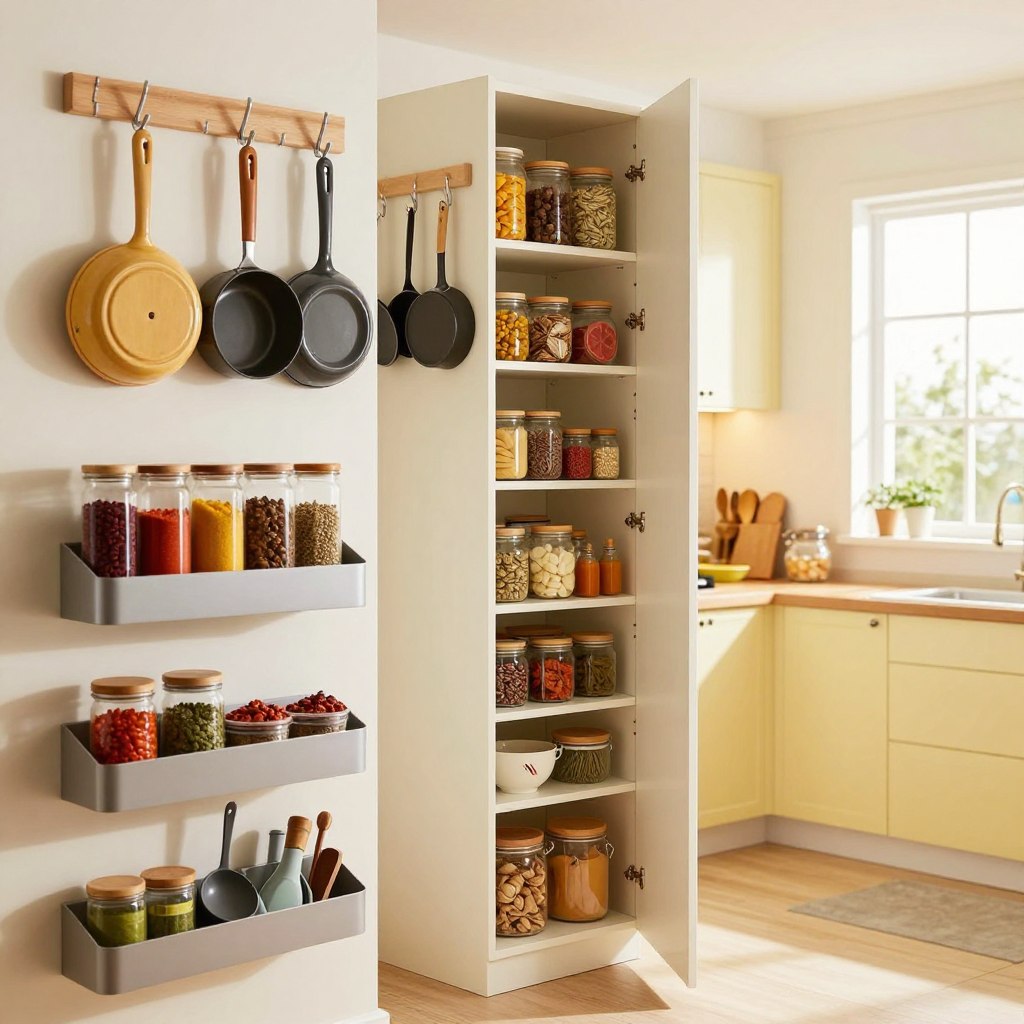
Deciding where to mount the rack is your main choice. Each spot has its own benefits based on your kitchen’s layout and ceiling height.
Ceiling mounted racks are great for adding a focal point and using dead space, especially over an island. Wall mounted racks save your ceiling and are good for areas next to the stove.
| Feature | Ceiling-Mounted Pot Rack | Wall-Mounted Pot Rack |
|---|---|---|
| Installation | Requires secure anchoring into ceiling joists; may need professional help. | Easier to install directly into wall studs; often a DIY project. |
| Best For | Kitchens with high ceilings (9+ ft); spaces with an island. | Kitchens with standard or low ceilings; maximizing wall space next to the range. |
| Space Impact | Defines a zone below it; can feel imposing if too low. | Keeps the ceiling clear; feels more integrated with the wall. |
| Weight Capacity | Generally higher, capable of holding many heavy pots. | High capacity, but limited to the strength of the wall mount. |
| Aesthetic | Makes a bold, traditional statement; acts as kitchen art. | Offers a cleaner, more modern look; functions like extended shelving. |
By using vertical solutions like smart cabinets and pot racks, you can control your kitchen’s clutter. You create a place for everything, making your kitchen more spacious and enjoyable.
Idea 2: Implement Smart Cabinet Organizers
Creating a spacious kitchen isn’t just about adding space. It’s about using every inch of what you already have. Smart organizers are key in small kitchen design ideas. They turn messy, hard to reach spots into efficient storage areas.
Revolutionizing Corner Cabinets with Lazy Susans
Corner cabinets can be a big problem in small kitchens. They’re hard to reach and make you crawl inside to find things. A lazy Susan can change this.
Lazy Susans make it easy to see and access everything. You can choose from different types, like tiered or diagonal, to fit your cabinet perfectly.
| Lazy Susan Type | Best For | Key Advantage | Consideration |
|---|---|---|---|
| Full Circle Rotating Tray | Standard base corner cabinets | Provides complete access to all items with a simple spin. | Requires a clear, unobstructed corner space for full rotation. |
| Tiered or Carousel Style | Tall corner cabinets or pantries | Creates multiple levels of storage, perfect for spices, cans, or jars. | Ensure total cabinet height can accommodate the tiered unit. |
| Diagonal Pull Out System | Deep corner cabinets with limited side clearance | Combines the pull out function with angled shelves for corner optimization. | Installation can be more complex than a simple rotating tray. |
Installing Pull Out Shelves and Drawers
Ever had to crawl to find something in a deep cabinet? Standard shelves waste space. Pull out shelves and drawers solve this problem.
These systems make everything easy to reach. They’re great for lower cabinets and upper cabinets for spices and oils.
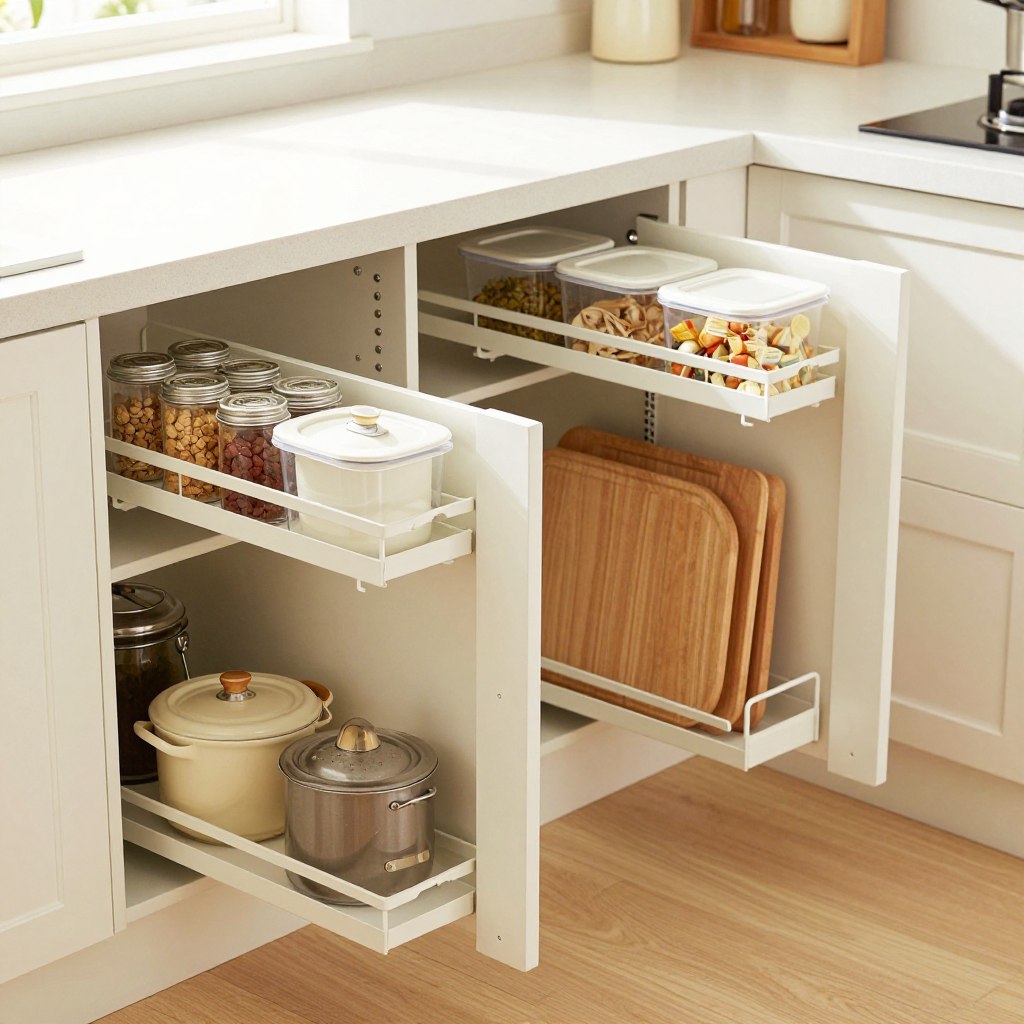
The visual difference is immediate. A messy cabinet becomes organized. You can do it yourself or hire a pro.
Measuring for Perfect Pull-Out Shelf Installation
Getting the measurements right is crucial for pull out organizers. A wrong measurement can cause problems. Here’s how to measure correctly.
- Measure Cabinet Interior Width: Measure the distance between the inner walls. Take measurements at top, middle, and bottom. Use the smallest number.
- Measure Cabinet Interior Height: Find the clear height inside the cabinet. Decide how many pull outs you want and divide the height.
- Measure Cabinet Depth: Measure from the back wall to the front edge. Remember to account for the slide mechanism’s length.
- Account for Hardware: Subtract 1 to 1.5 inches from your width measurement. Check the slide hardware’s specifications.
Smart organizers make your kitchen work better for you. They’re key in small kitchen design ideas that focus on smart storage.
Idea 3: Opt for Multi Functional Furniture Pieces
The secret to a compact kitchen is choosing pieces that do more than one thing. In a space saving kitchen remodel, every item must serve multiple functions. This makes the most of small spaces without feeling cluttered.
Multi-functional furniture is all about doing two things at once. Instead of separate items for dining, prep, and storage, you find clever solutions that do it all. This is especially helpful in small apartments, condos, and older homes where space is limited.
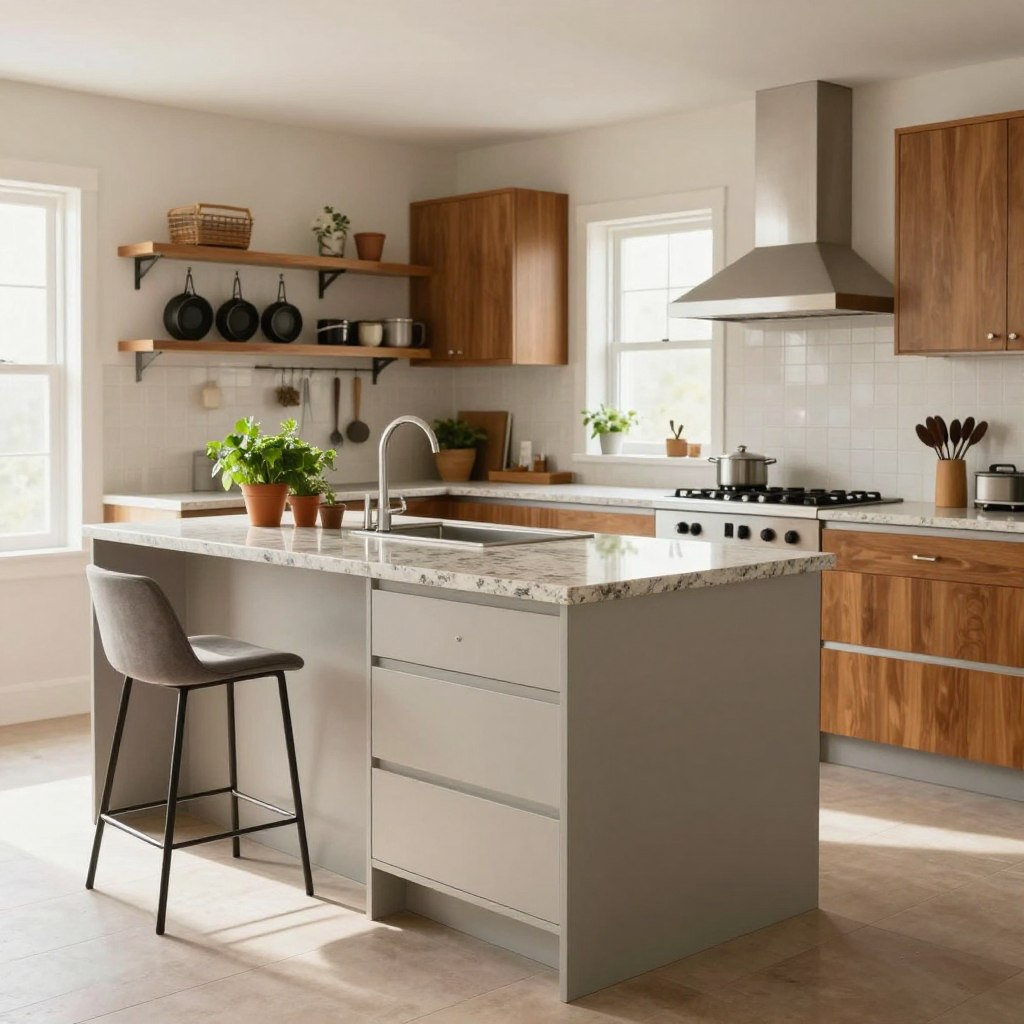
Don’t just think of tables and chairs. Modern designs offer options that fold, slide, or change to fit your needs. The right pieces can make a small kitchen feel organized, spacious, and very functional.
Choosing Kitchen Islands with Built In Storage
Kitchen islands are no longer just for food prep. Today, they are storage powerhouses that can change your cooking area. The right island gives you prep space, seating, and hidden storage all in one.
Look for islands with these features:
- Deep drawers for pots, pans, and baking sheets
- Pull-out trash and recycling bins to keep waste hidden
- Spice rack integrations on the sides or within easy reach
- Wine racks or stemware holders for entertainment essentials
- Electrical outlets built into the surface for small appliances
Mobile islands are very flexible. They can be moved where you need them during meal prep, then tucked away when not in use. Some even have drop leaf extensions for extra counter space when guests come over.
When choosing an island, make sure there’s at least 36 inches of clearance on all sides. This keeps the kitchen work triangle intact while adding functionality. The island should enhance your workflow, not hinder it.
Incorporating Fold Down Tables and Countertops
For very tight spaces, fold down solutions are a game-changer. They provide surface area when needed and disappear when not. They’re great for creating dining spots or extra prep zones without taking up permanent space.
Fold down tables mount securely to walls and can hold a lot of weight with the right hardware. Modern designs ensure smooth operation and secure locking. Consider these options:
- Wall mounted drop leaf tables that fold flat against the wall
- Countertop extensions that hinge from existing cabinets
- Pull out cutting boards that slide from beneath countertops
- Over the sink boards that create instant workspace above the sink basin
Installation needs wall studs or the right anchors for solid mounting. The height should match your counters (usually 36 inches) for a seamless look. Choose materials that fit your kitchen’s style warm butcher block or sleek laminate.
These foldable elements add flexibility to your space saving kitchen remodel. You get a full sized table for family dinners that disappears to open up space. Or you add crucial inches of prep area that vanish when cleanup starts. This makes small kitchens feel spacious and versatile.
Remember, dual purpose furniture is a smart investment in your home’s functionality. Each piece you add reduces clutter and boosts efficiency. This approach turns small spaces into opportunities for creative, intelligent design that enhances your daily life.
Idea 4: Utilize the Space Above Cabinets Creatively
Looking up is a smart move in a small kitchen makeover. The space above your cabinets is often unused. Turning it into storage and decor adds value without taking up floor space. It’s a great DIY project.
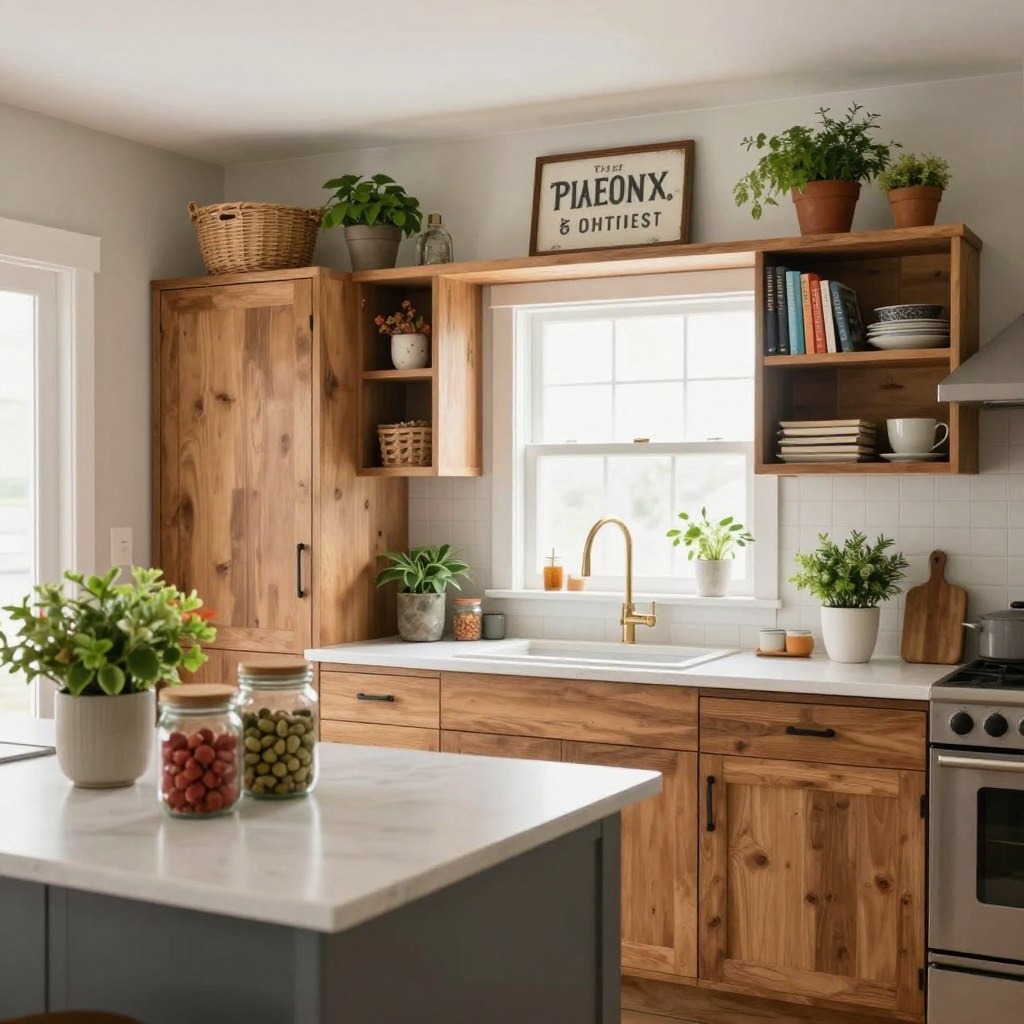
You can choose between open display shelves or a closed storage box. It depends on whether you want to show off your style or keep things hidden.
Building Decorative yet Functional Display Shelves
Open shelves above cabinets make your kitchen feel taller. They’re perfect for items you use sometimes or want to show off.
First, measure the space. Use strong brackets and solid wood for a sturdy shelf. Sand and finish the wood to match your kitchen.
So, what to put on these shelves? Here are some ideas:
- Collections of colorful ceramic bowls or vintage pitchers
- A row of your favorite cookbooks or decorative canisters
- Potted herbs that thrive in indirect sunlight
- Artful baskets for holding napkins or linens
This DIY project adds personality and uses every inch. The shelves become a highlight, not just forgotten space.
Creating Hidden Storage Above Cabinets
If you like a clean look, build a hidden storage box. It blends with your cabinets up to the ceiling.
Make a simple plywood box that fits the gap. Attach it to the cabinets and ceiling. Finish the front with doors that match your cabinets.
This hidden spot is great for items you don’t use every day. Think seasonal appliances, extra serving platters, or baking pans. It keeps your counters and main cabinets tidy.
This hidden storage is a key part of a complete DIY kitchen makeover. You get lots of storage without losing the modern, clean look of your kitchen.
Idea 5: Install Open Shelving for Visual Expansion
Open shelving can make your small kitchen look bigger and more interesting. It removes barriers, making walls seem farther apart. This gives your kitchen a light, open feel that closed cabinets can’t match.
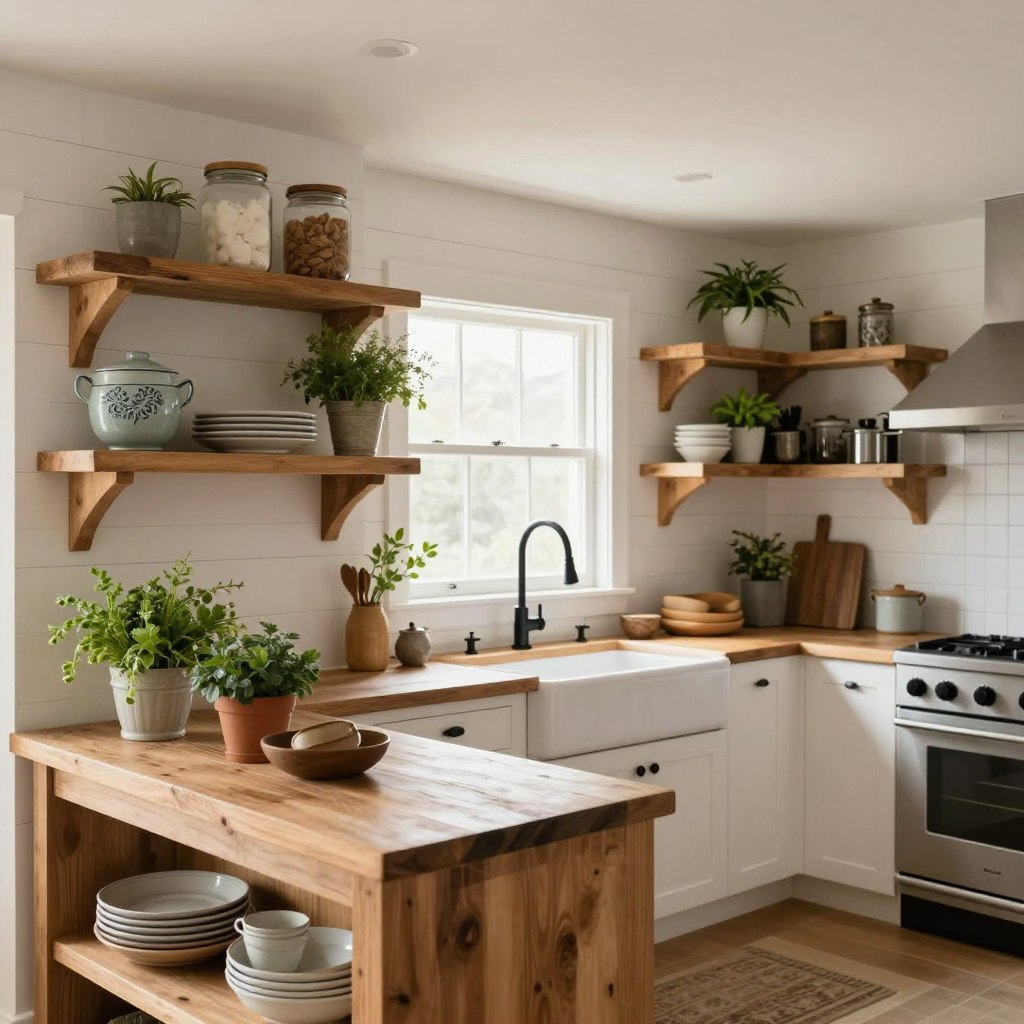
In a farmhouse kitchen remodel, open shelves are perfect. They let you show off your dishes, cookbooks, and decorations. This turns everyday items into part of your kitchen’s look.
Selecting the Right Wall for Open Shelving
Where you put your open shelves is key. The wrong spot can make your kitchen feel cramped. Here’s how to pick the best place.
Start with the wall above your countertop. This spot is great for items you use a lot. Open shelves keep them handy while you cook.
Also, think about empty space between cabinets or appliances. A narrow shelf can use up wasted area. This adds storage without taking up floor space.
Don’t put shelves on walls with lots of windows, doors, or big appliances. You want them to be the main focus. Aim for balanced interest, not too much clutter.
Choosing Materials That Complement Your Style
The material of your shelves sets the kitchen’s mood. The right choice boosts both looks and function. Here are some popular picks for different styles.
Reclaimed wood adds warmth and history. It’s a top choice for a farmhouse kitchen remodel. Each plank has its own story, thanks to its unique features.
Stained wood offers a consistent look with natural texture. You can match it to your cabinets or contrast it. Dark stains add elegance, while light stains keep things bright.
Metal shelves bring an industrial or modern vibe. Black iron is rugged, while brushed nickel or chrome is sleek.
Glass shelves make your kitchen feel more open. They’re great for small kitchens where every bit of space counts.
| Material Type | Best For Style | Key Advantages | Considerations |
|---|---|---|---|
| Reclaimed Wood | Farmhouse, Rustic, Cottage | Unique character, eco friendly, warm aesthetic | May require sealing, weight capacity varies |
| Stained Solid Wood | Traditional, Transitional, Craftsman | Durable, customizable color, strong support | Can darken over time, regular maintenance needed |
| Metal (Iron/Steel) | Industrial, Modern, Urban | Very sturdy, easy to clean, contemporary look | Can show fingerprints, may feel cold |
| Tempered Glass | Modern, Minimalist, Contemporary | Maximizes light, creates floating illusion, sleek | Shows dust easily, requires careful cleaning |
| Laminated Composite | Mid-Century, Scandinavian, Budget-Friendly | Lightweight, moisture-resistant, many color options | Less natural feel, may chip at edges |
Don’t forget about your shelving brackets. Ornate metal brackets go well with wooden shelves in a farmhouse kitchen remodel. Simple, hidden brackets work best for a modern look.
Mixing materials can add interest to your kitchen. Try wood shelves with metal brackets or glass shelves with wooden supports. This adds depth and personality to your small kitchen.
Choose shelves that can hold your items safely. Make sure they’re installed correctly. Beautiful shelves should be both safe and useful every day.
Idea 6: Maximize Drawer Efficiency with Custom Inserts
In any modern small kitchen makeover, making drawers organized is key. The mess of utensils, cutlery, and gadgets wastes space and time. Custom drawer inserts solve this problem, giving each item its own spot.
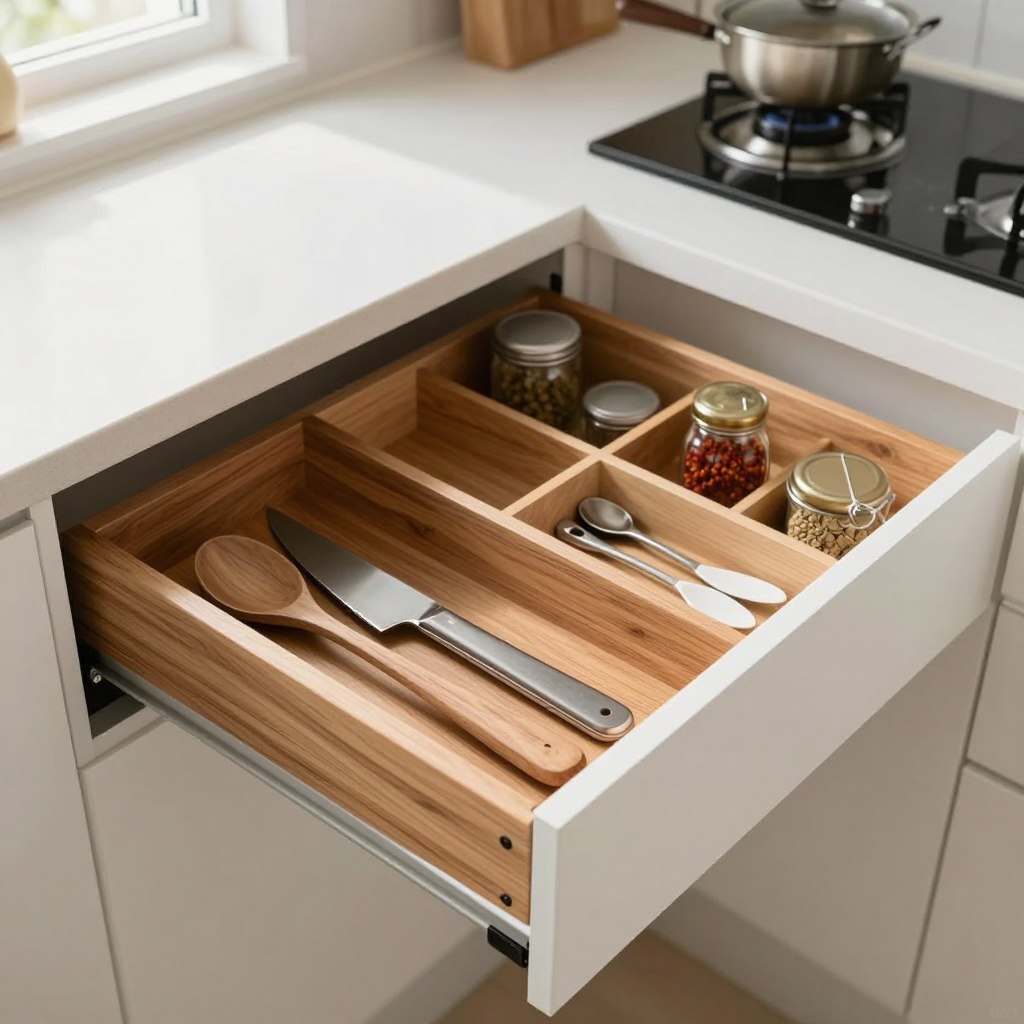
Well organized drawers are smart kitchen design. They make cooking and cleaning easier. The right system turns messy drawers into efficient ones.
Measuring Drawers for Perfect Insert Fit
Getting the measurements right is crucial. A perfect fit keeps inserts in place and uses every inch. Start with a good tape measure and follow these steps.
First, measure the drawer’s width, depth, and height. Take measurements at the front, middle, and back. Since drawers can be uneven, use the smallest measurement for a snug fit.
Remember to check for drawer glides or hardware that might stick out. Also, measure the space below the drawer’s top if you’re using a tray. A few minutes of measuring now saves a lot of hassle later.
DIY vs Pre Made Drawer Organizer Systems
You have two main choices: make your own or buy a pre made system. Each option has its own benefits based on your budget, skills, and what you want.
DIY drawer organizers let you customize and often save money. You can use adjustable wooden dividers or foam board. For a more advanced project, you can make wooden trays from plywood or hardwood.
DIY is great for unique items like baking tools or specialty utensils. You get to choose the materials and design.
Pre made systems from brands like Rev A Shelf, IKEA, or The Container Store offer quick solutions. These kits have modular parts that fit together easily. They work for standard drawer sizes and common needs.
Premium systems have fancy features like soft-close mechanisms and nice finishes. They’re easy to install without tools. This is best for those who want a stylish look without effort.
Here’s a quick comparison to help you decide:
| Factor | DIY Organizers | Pre Made Systems |
|---|---|---|
| Cost | Generally lower | Higher, especially for premium brands |
| Customization | Complete control over layout | Limited to modular options |
| Time & Skill | Requires more time and basic skills | Quick installation, minimal skills needed |
| Aesthetic Finish | Depends on your craftsmanship | Consistent, factory finished look |
Choosing either way, organized drawers make your kitchen better. This smart change is key to a successful modern small kitchen makeover.
Idea 7: Create a Pot Lid Storage Solution
This smart way to store lids is a great example of small kitchen layout optimization. Pot lids can be messy and hard to find. They never stack right and always seem to disappear.
A special storage system can change everything. It saves space in your cabinets. It stops lids from clattering. And it makes finding what you need easy.
We’ll look at two great ways to keep lids in order. One is easy to set up. The other is for those who love to organize.
Installing Lid Organizers on Cabinet Doors
The inside of cabinet doors is often wasted space. Adding a simple rack here can make a big difference. These organizers have slots or bars for lids to fit into.
Lids fit neatly and stay upright. You can see all your lids at once. This system matches lids with their pots below.
Setting it up is easy. Most racks use adhesive or a few screws. Look for one with adjustable dividers. This way, it fits different lid sizes.
This method is a great example of using space wisely. It makes your cabinet tidy and functional.
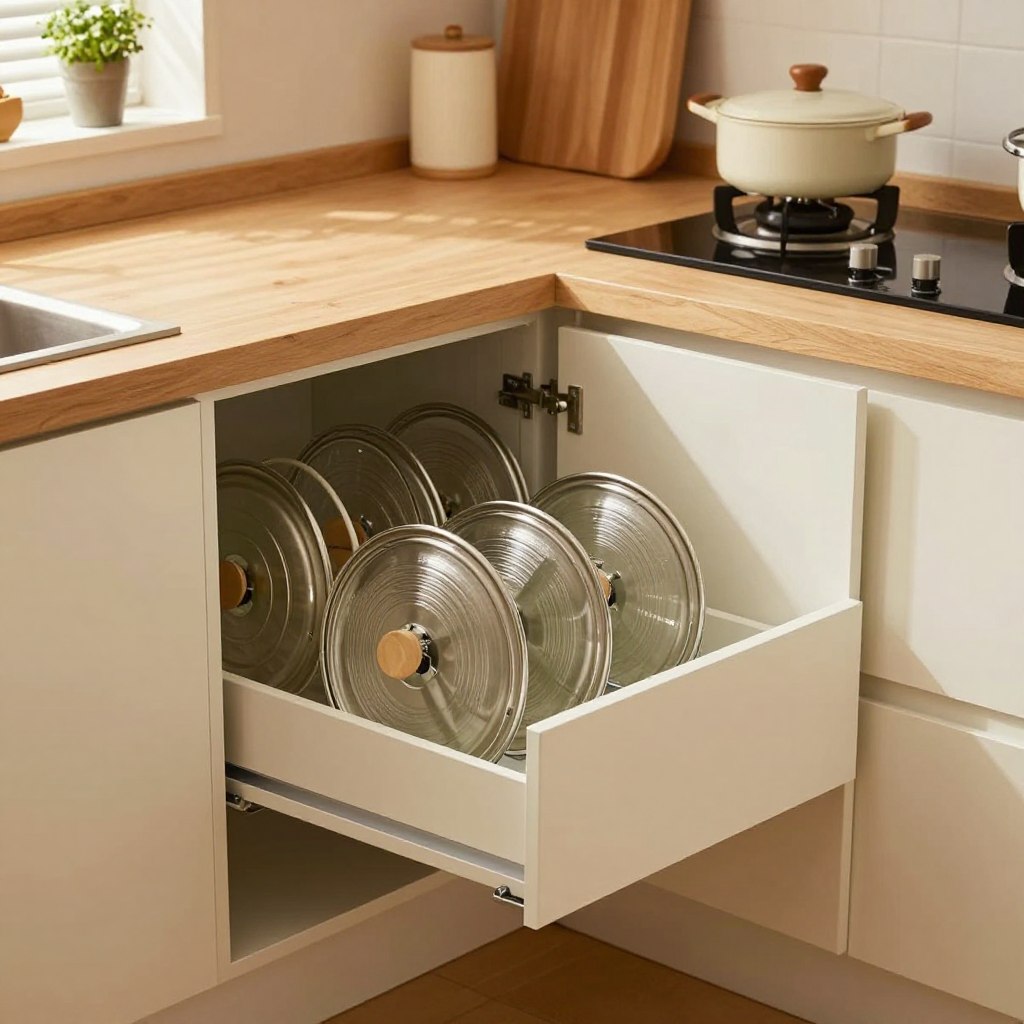
Building a Custom Lid Rack System
Building a custom rack is a more integrated solution. It gives lids their own special place. You can make it a pull out tray, slide in rack, or freestanding divider.
A pull out system is very efficient. Make a simple wooden frame for a deep drawer or base cabinet. Add dividers 1-2 inches apart.
When you open the drawer, all your lids are right there. No more digging or lids falling over. You can design it to fit your exact needs.
Another option is a slide in rack for a narrow cabinet or fridge side. It uses little space but keeps lids organized. Use strong materials like plywood or acrylic.
Custom building lets you use every inch. It turns awkward spaces into organized zones. This takes your small kitchen layout optimization to a pro level.
| Storage Method | Best For | Skill Level Required | Estimated Cost | Space Efficiency |
|---|---|---|---|---|
| Door Mounted Rack | Quick solutions, renters, basic lid collections | Beginner (DIY) | $15 – $40 | Uses unused door space |
| Custom Pull-Out Tray | Large lid collections, deep cabinets, serious cooks | Intermediate (woodworking) | $30 – $80 (materials) | Maximizes deep cabinet space |
| Slide In Side Rack | Narrow gaps, side of appliance spaces | Intermediate | $25 – $60 (materials) | Utilizes otherwise wasted areas |
| Freestanding Divider | Deep drawers, adjustable needs | Beginner to Intermediate | $20 – $50 | Organizes existing drawer space |
Both methods make your kitchen more organized. This means you can cook more easily and enjoy it more. You’ll spend less time searching and more time making great food.
The best kitchen organization system is one you use every day. A good lid storage solution is a daily winner.
Idea 8: Implement Under Sink Organization Systems
In a small kitchen remodel, every inch matters. The space under your sink is often wasted. Turn it into a tidy storage area for a better kitchen.
Maximizing the Often Wasted Under Sink Area
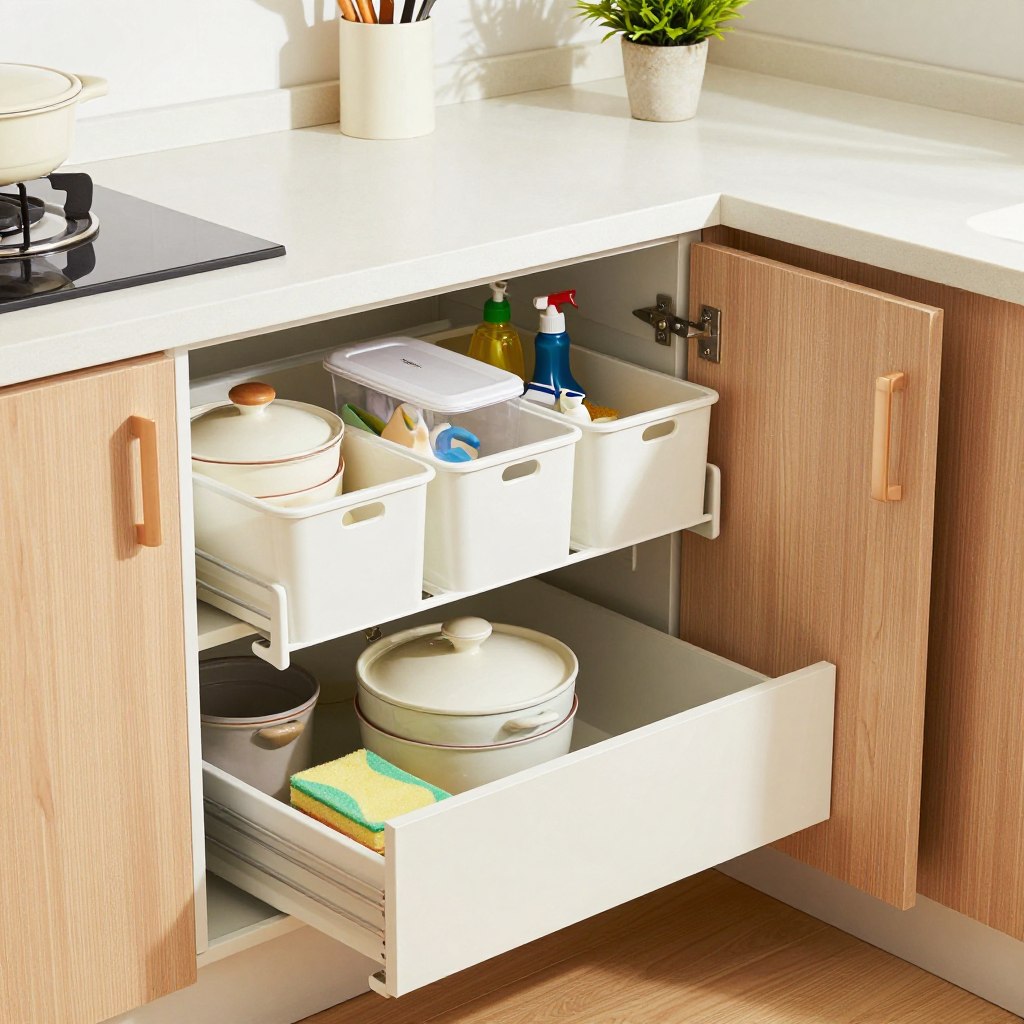
To make the most of this space, work around the pipes. Start by clearing everything out. Then, plan to use the full height and depth for storage.
Here are some smart ways to use every inch:
- Tiered Shelving Units: These shelves help you see and reach items easily. They’re great for cleaning supplies.
- Roll Out Bins or Trays: A slide out tray or bins on rails make a dark space into a pull out pantry. It’s perfect for sponges and trash bags.
- Door Mounted Racks: Use the inside of the cabinet door for racks or caddies. They’re ideal for items like dishwasher pods and small towels.
- Adjustable Tension Rods: A horizontal rod can hold spray bottles upright. This prevents leaks.
Choosing Water Resistant Storage Solutions
This area is prone to drips and leaks. Your storage system must be tough and clever. Choose materials that won’t warp, rust, or mildew.
Look for these moisture resistant options:
- Coated Wire Shelving: Epoxy or plastic coating on wire racks prevents rust. The open design also helps air circulate, reducing moisture.
- Plastic Bins and Drawers: Durable, waterproof plastic is affordable and versatile. Choose clear bins for easy identification.
- Stainless Steel Organizers: Stainless steel is a premium choice for its durability against corrosion and water damage.
- Marine Grade Plywood: This plywood is treated to resist water better than regular wood. It’s great for custom pull outs.
Always use a removable, washable liner on the cabinet floor for extra protection. A well planned under-sink system adds storage and order to your small kitchen remodel. No more searching for dish soap in the dark!
Idea 9: Use the Backsplash for Additional Storage
Your kitchen backsplash can do more than just look good. It’s a great spot for smart storage. By making it a storage area, you keep things handy and your counters clear.
Installing Magnetic Knife Strips and Spice Racks
Magnetic knife strips are a big help for safety and saving space. They keep sharp knives off the counter and look cool. Pick a strip that fits your kitchen’s style.
For spices, use narrow racks that stick to the wall. They make your favorite flavors easy to find. No more digging through a crowded cabinet! Try tiered designs or magnetic tins for a simple storage solution.
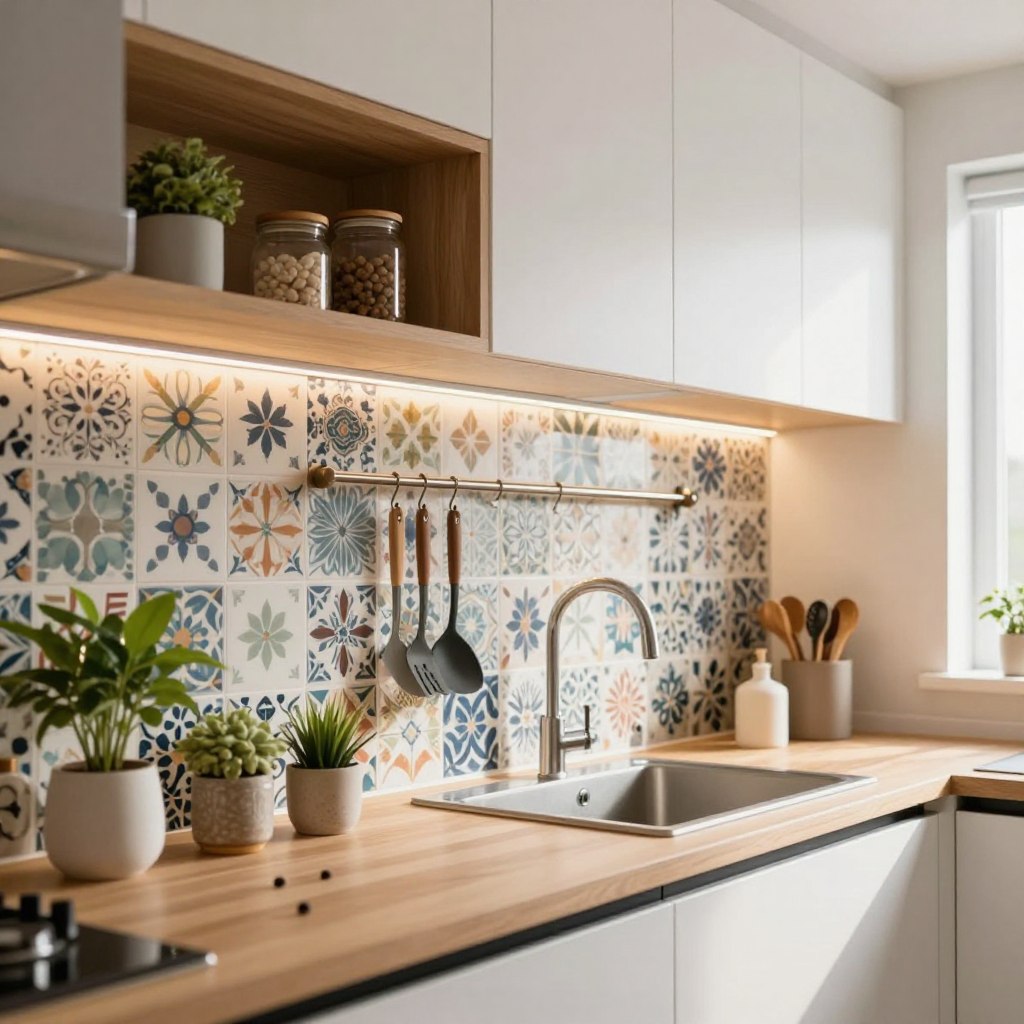
Creating a Functional Backsplash with Hooks and Rails
Modular rail systems are super flexible. A single rail on your backsplash can hold many things. Hang measuring cups, ladles, mugs, and small pans.
This setup is easy to change as your needs do. You can add or move items around. Here are some great things to put on a rail:
- S-hooks for hanging tools
- Small wire baskets for fruits or kitchen towels
- Magnetic bars for metal utensils
- Mini shelves for oil bottles or salt cellars
This makes a spot for your daily items. Your drawers and counters will thank you. Your backsplash becomes your kitchen’s best helper.
Idea 10: Optimize Appliance Placement and Storage
Toasters, blenders, and coffee makers are must-haves in the kitchen. They can make a small space look messy and cramped. A smart way to solve this is to give these big items their own spot.
By organizing your appliances, you clear your counter and make your kitchen look bigger. This makes your kitchen feel more peaceful and open.
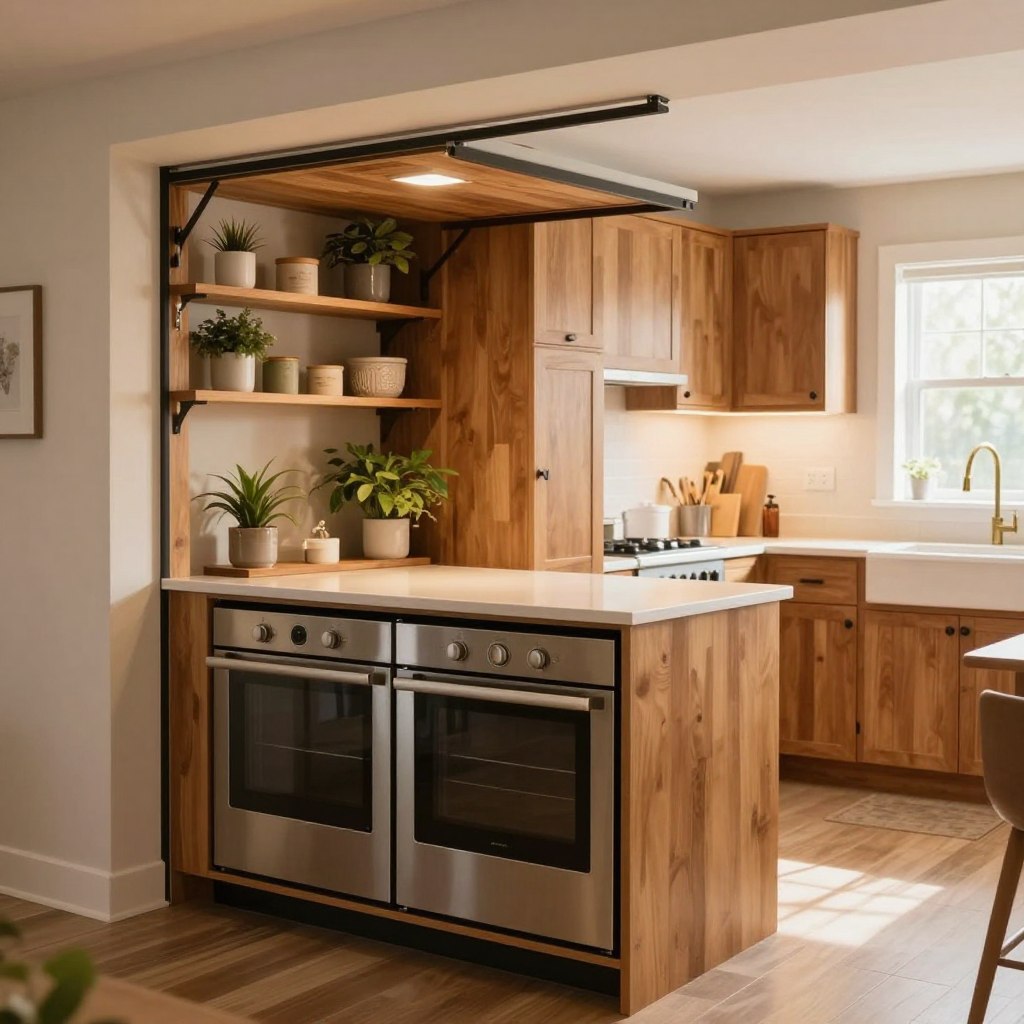
Creating Appliance Garages for Countertop Clutter
An appliance garage is a special cabinet for your countertop gadgets. It has a roll up door or a flip up panel. This is great for items you use often, like a stand mixer or food processor.
You can put an appliance garage at the end of a cabinet or in a corner. It often has an outlet inside. This keeps cords tidy and your appliance ready to go. Making or updating a cabinet into an appliance garage is a smart choice for a budget friendly kitchen remodel.
Building Custom Nooks for Frequently Used Appliances
For your daily favorites, like the coffee maker or toaster oven, a custom nook is perfect. Instead of hiding them, you build them in. This means designing a shallow recess or shelf in your cabinets or between studs.
The appliance fits right into the nook, not taking up extra space. This makes your most used items easy to reach while saving space. It turns an appliance into a built in feature. Designing these nooks adds personalized storage without needing a whole new cabinet.
Choosing between an appliance garage and a custom nook depends on how often you use the item. The table below helps you decide which solution fits your needs and budget best.
| Storage Solution | Best For | Key Advantages | Potential Drawbacks | Cost Level |
|---|---|---|---|---|
| Appliance Garage | Bulky, occasional use appliances (mixer, blender, processor) | Completely hides clutter; contains cords; keeps dust off appliances | Requires more cabinet depth; door mechanism can add cost | Medium (DIY retrofit) to High (custom build) |
| Custom Countertop Nook | Daily-use appliances (coffee maker, toaster, kettle) | Integrates appliance seamlessly; maximizes convenience; saves counter space | Appliance remains visible; requires precise measurement for fit | Low (simple shelf) to Medium (built-in recess) |
| Pull-Out Shelf Cabinet | Mid-frequency appliances (air fryer, slow cooker) | Easy access without lifting; conceals when not in use; versatile | Needs tall cabinet space; shelf must support weight | Medium |
Both strategies are key to a functional, budget friendly kitchen remodel. They tackle the biggest source of clutter. By planning spots for your appliances, you protect your counter space. Your kitchen will look bigger and work better.
Choosing Materials for Your Small Kitchen Remodel
The materials you pick for your small kitchen remodel do more than look good. They help make your kitchen feel bigger and more functional. Choosing the right materials means your kitchen will look great and work well for years to come.
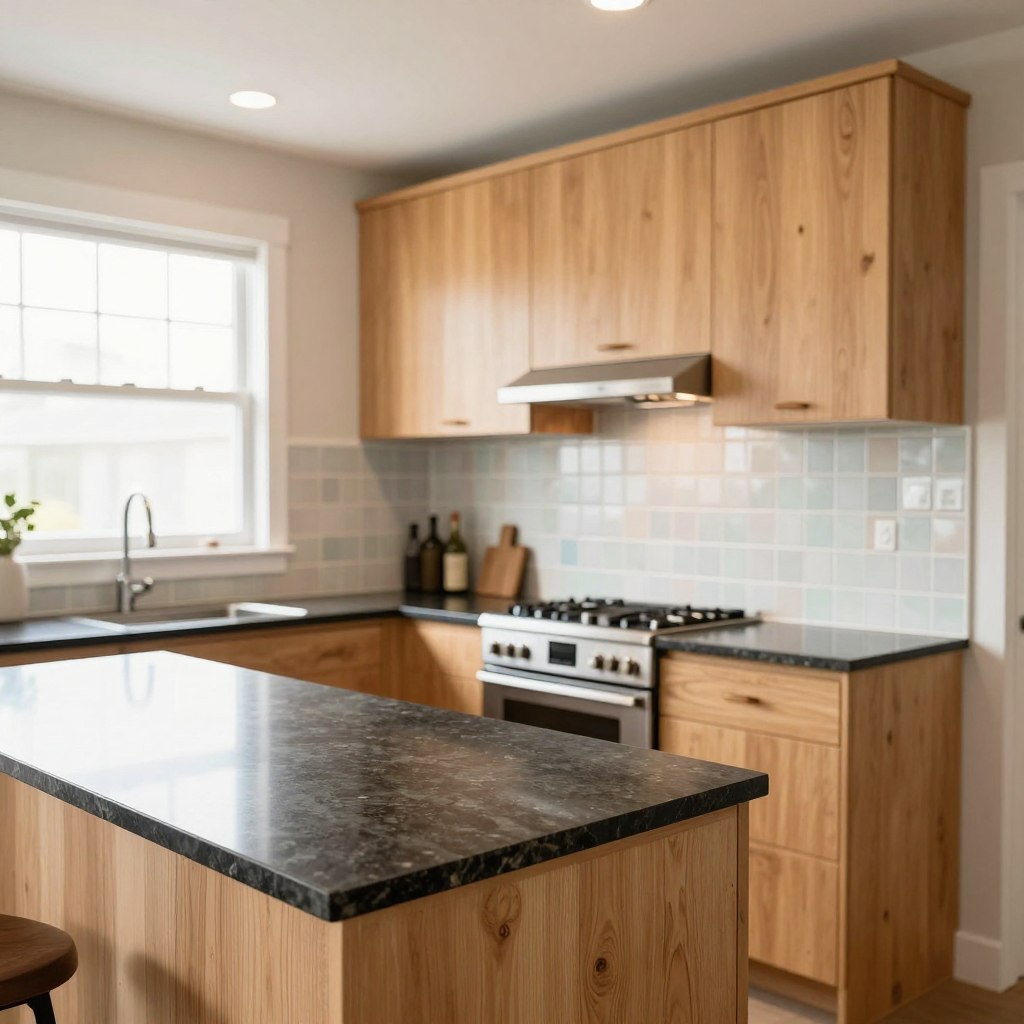
Durable and Space Enhancing Countertop Options
Your countertop is the heart of your kitchen. For small kitchens, choose light colors and simple patterns to make it feel bigger. Quartz is a top pick because it’s durable, easy to clean, and comes in light colors.
Laminate is a budget-friendly option that’s both durable and stylish. It looks like natural stone but is easier on your wallet. Solid surface materials like Corian are seamless, making your kitchen feel more open.
Here are some popular countertop choices:
- Quartz: Durable, low maintenance, and consistent coloring
- Laminate: Affordable, easy to clean, and many designs
- Butcher Block: Adds warmth and character without feeling heavy
- Solid Surface: Easy to repair and install
Choose a countertop that reflects light to make your kitchen brighter. Light colors hide fingerprints well, perfect for busy kitchens.
Flooring Choices That Make Small Kitchens Feel Larger
Flooring sets the tone for your kitchen’s look. Big tiles with less grout make your kitchen feel bigger. Porcelain tiles over 12×24 inches work well, especially in a straight pattern.
Continuous plank flooring, like hardwood or laminate, makes your kitchen look longer. Planks running parallel to the longest wall make narrow kitchens seem wider. Light colors or neutral tones help your kitchen feel more open.
Here’s how to choose the right flooring for your small kitchen design ideas:
| Flooring Type | Best For Small Kitchens | Visual Effect |
|---|---|---|
| Large-Format Tile | Less grout, easy to clean | Seamless, expansive look |
| Continuous Plank | Directional installation | Extends the space visually |
| Light-Colored Vinyl | Budget-friendly, waterproof | Reflects light, opens up the room |
Avoid dark colors or busy patterns. They can make your kitchen feel smaller. Choose materials that create a calm, unified look for your kitchen.
Cabinet Materials That Maximize Storage and Style
Cabinets are key in your kitchen, affecting both storage and style. Sleek doors without patterns create a clean look. Reflective surfaces like glossy lacquer or glass cabinets add brightness.
For cabinet boxes, plywood is better than particleboard for stability. This ensures drawers work smoothly for years. Your cabinet material should support smart organizers to maximize space.
Finish choices greatly impact your kitchen’s look:
- Light colors: White, cream, or light gray cabinets make walls seem farther apart
- Two-tone schemes: Light uppers with darker lowers balance the space
- Glass inserts: Transparent or frosted glass adds depth and display
- Matte finishes: Hide fingerprints better than glossy surfaces in busy kitchens
When planning your small kitchen design ideas, remember cabinets should support your storage solutions. Quality hinges, soft close mechanisms, and sturdy drawer slides depend on strong cabinet construction.
Your material choices are crucial for your kitchen’s look and function. By picking materials that enhance durability and space, you create a kitchen that feels larger than it is, while lasting through daily use.
Lighting Solutions to Enhance Your Small Kitchen Space
Lighting is key to a successful small kitchen remodel. It does more than help you see it changes how you feel. Bright, well planned lighting makes small spaces look bigger and more welcoming.
When planning your kitchen lighting, think about layers. Just like you layer flavors in cooking, you layer light sources in design. This approach gives you control over mood and function. You can have bright light for chopping vegetables and softer light for enjoying dinner.
Layered Lighting for Function and Ambiance
Layered lighting combines three types: ambient, task, and accent. Each layer serves a different purpose. Together they create a balanced, flexible lighting scheme perfect for small kitchens.
Ambient lighting provides general illumination. Think of it as your kitchen’s main light source. Recessed ceiling lights, flush mounts, or track lighting work well here. This layer should offer even, shadow-free light throughout the room.
Task lighting focuses on specific work areas. You need bright, direct light where you prepare food, cook, and clean. Under-cabinet lights, pendant lights over islands, and directional spotlights are excellent task lighting options.
Accent lighting adds drama and highlights design features. Use it to showcase open shelving, artwork, or architectural details. LED strip lights inside glass cabinets or small spotlights above displays create beautiful accents.
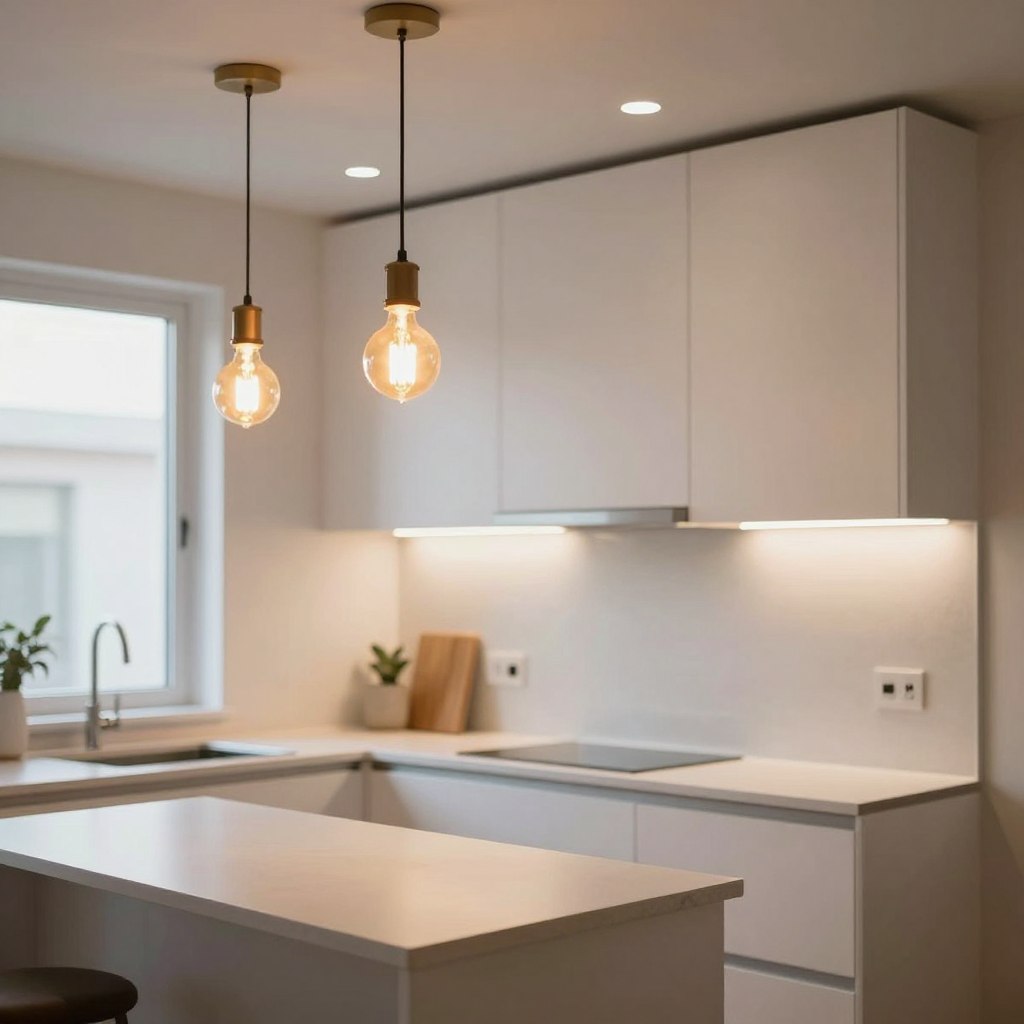
The table below shows how each lighting layer contributes to your kitchen’s functionality and style:
| Lighting Type | Primary Purpose | Best Locations | Recommended Fixtures | Brightness Level |
|---|---|---|---|---|
| Ambient | General room illumination | Ceiling center, multiple ceiling points | Recessed lights, flush mounts, track lighting | Medium (300-400 lumens per fixture) |
| Task | Work area visibility | Countertops, sink, stove, island | Under cabinet lights, pendants, directional spots | High (400-800 lumens per fixture) |
| Accent | Highlight design features | Open shelves, glass cabinets, artwork | LED strips, small spotlights, rope lights | Low to Medium (200-300 lumens) |
Balance these three layers for the best results. Start with ambient lighting as your foundation. Add task lighting where you work most. Finish with accent lighting to personalize your space. Dimmer switches give you control over all layers, letting you adjust lighting for different times and activities.
Under Cabinet Lighting to Illuminate Workspaces
Under cabinet lighting is crucial in any kitchen. It banishes shadows from your countertops, making food preparation safer and easier. This lighting layer turns dark areas into bright, usable workspace.
You have several options for under cabinet lighting. LED strip lights offer continuous, even illumination along your entire counter. They’re energy-efficient and produce little heat. LED puck lights provide focused spots of light, perfect for highlighting specific areas. LED light bars give a balanced glow and are easy to install.
Consider these factors when choosing undercabinet lighting:
- Color temperature: Choose 3000K-4000K (warm white to neutral white) for kitchen tasks
- Brightness: Aim for 400-600 lumens per linear foot of counter space
- Installation: Hardwired systems look cleaner but plug-in options offer flexibility
- Controls: Look for dimmable options with separate switches or remote controls
Proper placement matters most. Install lights at the front edge of cabinets, not pushed all the way back. This position minimizes shadows cast by your body while working. Ensure lights illuminate the entire counter depth, especially near the backsplash where you need clear visibility.
Under cabinet lighting transforms how you use your kitchen. It makes every inch of counter space functional. This simple addition has huge impact in a space saving kitchen remodel. You’ll wonder how you ever cooked without it.
Remember to coordinate your under cabinet lighting with other task lights. Pendant lights over islands should complement under cabinet fixtures in style and brightness. Consistent color temperature throughout your kitchen creates a cohesive, professional look.
Good lighting planning elevates your entire kitchen experience. It makes small spaces feel generous and every task feel easier. As you plan your space saving kitchen remodel, give lighting the attention it deserves. The right illumination will make your new kitchen both beautiful and brilliantly functional.
Budget Friendly Small Kitchen Remodel Strategies
You can make your kitchen look amazing without spending a lot. Focus on the most important parts and try DIY projects. A smart remodel changes your kitchen in big ways without costing too much.
This method is not about cutting corners. It’s about making strategic choices to get the most from your money. Whether it’s updating cabinets, changing surfaces, or organizing better, the right plan makes a big difference. Let’s see how to make the most of your budget for a great kitchen makeover.
Prioritizing Remodel Elements for Maximum Impact
Begin by picking the changes that will make the biggest difference. Not all updates are the same in terms of cost and impact.
Start with the big changes that affect how your kitchen feels. A fresh coat of paint on walls and cabinets is a big visual change. A new backsplash can change the look of your kitchen without a full renovation.
Next, think about changes that make your kitchen better for daily use. New drawer organizers or pull-out shelves make a big difference right away. Better lighting, especially under cabinets, makes your kitchen safer and nicer to use.
Save the cosmetic changes for later if you’re on a tight budget. Fancy hardware, light fixtures, and finishes can wait. Remember, invest in what you touch and use every day first.
DIY Projects That Save Significant Money
Doing the work yourself can save a lot of money. Many tasks are easy with basic tools and online guides.
Painting is a cheap way to update your kitchen. A fresh coat of paint can make cabinets look new. Make sure to clean, sand, and prime well for a lasting finish. Painting walls is also a simple project with quick results.
Installing a peel and stick backsplash is another smart choice. It looks professional but is easy to do and mess-free. These modern materials come in many styles and are great for beginners.
Other DIY projects worth trying include:
- Installing new cabinet hardware (knobs and pulls)
- Adding open shelving using basic brackets and boards
- Applying decorative molding to plain cabinets for custom detail
- Organizing drawers with custom-cut inserts or affordable systems
Before starting, think about your skills and time. Some tasks, like electrical or plumbing, might be better left to a pro for safety and code compliance.
When to Splurge vs. When to Save
Knowing when to spend and when to save is key to a budget-friendly remodel. This balance ensures quality where it matters most without unnecessary expense.
Splurge on these key items:
- Quality faucet: You use it a lot. A good, reliable faucet will last for years.
- Durable countertop edges: If you’re replacing counters, spend on durable edges where they meet. This area gets a lot of wear.
- Comfortable flooring: You stand on kitchen floors a lot. Investing in durable, cushioned flooring is worth it.
- Good cabinet boxes: Even if you paint them, solid cabinet construction is important for longevity.
Confidently save on these elements:
- Decorative lighting: Stylish pendant lights don’t have to be expensive to look great.
- Cabinet hardware: Beautiful knobs and pulls are available at all price points.
- Window treatments: Simple shades or blinds work well in kitchen spaces.
- Small appliances: Look for sales or consider refurbished models for items like microwaves.
The best diy kitchen renovation mixes smart savings with careful spending. By focusing on high-use items and doing DIY projects, you can create a beautiful, functional kitchen that fits your budget and vision.
Common Mistakes to Avoid in Your Small Kitchen Remodel
Planning a small kitchen remodel is exciting. It’s easy to get swept up in beautiful finishes and the latest designs. However, the most stunning kitchen can become a daily frustration if fundamental mistakes are made.
Learning from common pitfalls can save you time, money, and regret. Let’s explore two critical areas where homeowners often stumble. A little foresight here will keep your project on track for both beauty and blissful functionality.
Overlooking Workflow and Kitchen Triangle Principles
In a small kitchen, every inch matters for movement. The classic kitchen work triangle connects your sink, stove, and refrigerator. This isn’t an old fashioned rule. It’s a proven guide for efficient cooking.
Ignoring this flow for the sake of a specific layout or aesthetic can create a bottleneck. You might end up with too much distance between key areas. Or, you could place them in a line that forces you to crisscross the kitchen constantly.
A beautiful kitchen that’s frustrating to cook in is a design failure. Always map your major appliance placement with your daily routine in mind.
Think about how you actually move during meal prep. Do you grab veggies from the fridge, rinse them at the sink, and then chop on a nearby counter? Your remodel should create a smooth, logical path for these actions. Clustering your prep zone near the sink and stove is often more valuable than gaining a few extra cabinets in an awkward spot.
Choosing Trends Over Functionality
It’s tempting to design your kitchen straight from a magazine or social media feed. A popular trend, like the cozy farmhouse kitchen remodel, looks incredible. But will it work for your real life?
Trends often prioritize a specific look. This can lead to choices that aren’t practical for a busy household. For example, an all-white farmhouse kitchen remodel might require constant cleaning if you have young kids or love to cook messy meals.
Instead of blindly following a style, adapt its elements to suit your needs. You can love the farmhouse vibe but choose durable, stain-resistant quartz countertops over porous marble. You can install a classic apron sink but pair it with easy-to-clean cabinetry in a forgiving finish.
| Design Element | Trendy Choice (Potential Pitfall) | Functional Alternative |
|---|---|---|
| Countertops | Delicate marble or concrete (stains easily, high maintenance) | Quartz or solid surface (durable, stain-resistant, low maintenance) |
| Backsplash | Intricate, textured tile with lots of grout lines (difficult to clean) | Large format tile or glass panels with minimal grout (wipes clean easily) |
| Cabinet Hardware | Ornate knobs with sharp edges or delicate finishes (catches on clothing, chips) | Simple, rounded pulls in a brushed or matte finish (durable and user-friendly) |
| Lighting | Purely decorative pendant lights with low output (poor task lighting) | Stylish pendants with adequate wattage/Lumens, combined with under-cabinet LEDs |
The goal is to create a kitchen you love to look at and love to use. Make material and layout decisions based on your family’s habits, not just a photograph. Your future self will thank you for prioritizing smart, livable design over a passing fad.
Putting It All Together: Your Small Kitchen Remodel Action Plan
Now that you’ve gathered all the clever storage and design solutions, it’s time to make a step-by-step plan. This plan will help your remodel go smoothly, whether you’re doing a full modern small kitchen makeover or making changes little by little. A good plan keeps stress low, your budget in check, and gives you the kitchen you’ve always wanted.
Creating a Phase by Phase Implementation Strategy
Breaking your remodel into phases makes it easier to manage. This way, you can still use your kitchen while it’s being updated. It also helps with budgeting, as you can spread out the costs over time.
Most remodels start with demolition and structural work. Then comes electrical and plumbing updates. Next, install cabinets, countertops, and flooring. Finally, add the finishing touches like backsplashes and lighting.
Here’s a typical phase sequence for your modern small kitchen makeover:
| Phase Name | Key Tasks | Estimated Duration | Tips for Success |
|---|---|---|---|
| Preparation & Demolition | Remove old cabinets, appliances, flooring; update electrical/plumbing rough ins | 3-7 days | Protect adjacent rooms with plastic sheeting; have dumpster delivered beforehand |
| Structural & Surface Work | Install drywall, painting, ceiling work, flooring underlayment | 5-10 days | Complete all painting before cabinet installation to avoid drips on new surfaces |
| Cabinet & Countertop Installation | Install cabinets, countertops, sink, faucet | 4-8 days | Verify cabinet measurements twice before ordering; schedule countertop templating after cabinets are installed |
| Appliance & Fixture Installation | Install appliances, lighting fixtures, backsplash, hardware | 3-6 days | Coordinate appliance delivery with installation date; test all appliances immediately |
| Final Touches & Organization | Install drawer organizers, shelving systems, decorative elements | 2-4 days | This is your chance to implement all the smart storage solutions you’ve planned |
Your timeline will vary based on the project’s size and your contractor’s schedule. Always add extra days for any unexpected delays. Sometimes, materials arrive late, or you might find hidden issues that need fixing.
If you’re doing some of the work yourself, be honest about your abilities and time. Some tasks, like electrical or plumbing, need professionals. But painting, demolition, and some installations are good DIY projects that can save money.
Managing the Remodel Process with Minimal Disruption
Living through a kitchen remodel can be tough, even for the most organized families. With careful planning, you can stay sane and keep your daily routine going. The key is to set up systems before the chaos starts.
Set up a temporary kitchen in another room. Use a microwave, electric kettle, slow cooker, and mini-fridge for basic meals. Use plastic bins to organize utensils, plates, and non perishable foods. If your sink will be out for a while, have a place for washing dishes.
Good communication with your contractor is crucial. Have daily meetings to check on progress and talk about any issues. Make sure all agreements are in writing, especially any changes that affect the timeline or budget. A good contractor will appreciate your organization and clear expectations.
Keep your home clean from construction dust and debris. Use plastic sheeting to seal off areas and floor protection in busy spots. If anyone in your household has allergies or breathing problems, consider an air scrubber.
Be flexible with your meal plans. Enjoy simple meals, takeout, and dinner invitations from friends. Remember, the temporary hassle is worth the beautiful, functional kitchen you’ll have soon.
Your modern small kitchen makeover is an investment in your home and daily life. With this plan, you’ll confidently navigate the remodel. Each phase brings you closer to the kitchen you’ve dreamed of.
Conclusion
Your journey to a better kitchen is over. You now know how to make your small space work for you. Every idea helps you use what you already have.
Starting a small kitchen remodel with smart planning is key. The ten genius ideas guide you. By focusing on layout, you make every choice count.
Space can feel bigger with smart design, not just more square feet. Your remodel can make your kitchen feel open and organized. This is the joy of it all.
The path to your dream kitchen is now open. By setting a clear budget and timeline, you’ve turned a vision into a tangible plan and with every choice you make, you’re reclaiming the heart of your home. Remember, a successful remodel isn’t just about changing a layout; it’s about creating a space that sparks joy every single day.
To ensure your new kitchen is as smart as it is beautiful, dive into these specialized guides to perfect your design:
Affordable Luxury: Master the art of the ‘high end look’ on a budget with 5 Tips for Choosing Premium Granite Backsplashes Without Breaking the Bank.
The Modern Naturalist: Explore the ultimate trend in 10 Stunning White Oak and Black Kitchen Ideas for a Modern, Natural Look.
The Finishing Touches: Elevate your aesthetic with 7 Expert Tips for Selecting Hardware and Lighting for White Oak and Black Kitchens.
Your dream sanctuary is just a few decisions away. Start planning today, and watch how a well-crafted kitchen transforms your entire home!