
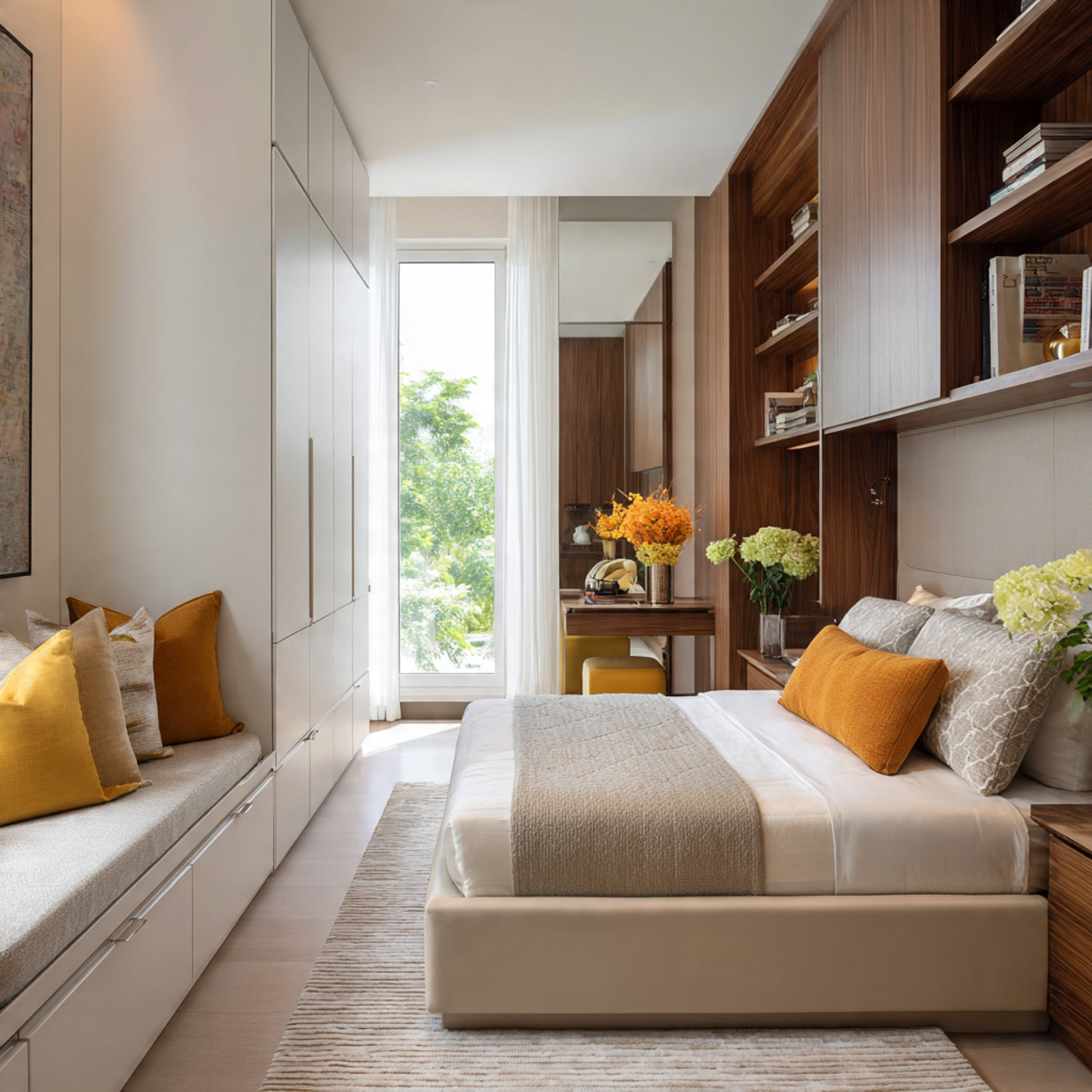

Optimizing space in a small bedroom can be tough. I’ve been there and know how key it is to arrange furniture well. This makes your room both comfy and useful.
Getting your furniture arrangement right is key to using space wisely. It helps turn your room into a peaceful spot that seems bigger than it is.

In this article, I’ll share useful tips for making your bedroom space better. We’ll talk about picking the right furniture and arranging it smartly. By the end, you’ll know how to turn your bedroom into a cozy spot.
Key Takeaways
- Understand the importance of measuring your bedroom space accurately.
- Learn how to choose the right furniture for your small bedroom.
- Discover effective furniture arrangement strategies.
- Explore tips on creating the illusion of more space.
- Find out how to maintain a clutter free and organized bedroom.
The Challenges of Maximizing Space in a Small Bedroom
Creating a functional small bedroom needs careful planning. With limited space, it’s easy to feel overwhelmed. There are many challenges to overcome when optimizing the space.
Common Space Limitations You’ll Face
Small bedrooms often have awkward layouts and little floor space. This makes arranging furniture a big challenge. You might face issues like:
- Narrow pathways
- Limited storage options
- Awkwardly placed doors or windows
Why Strategic Furniture Arrangement Matters
Strategic furniture arrangement is key to maximizing space. It affects both the room’s functionality and visual perception.
Impact on Functionality
A good furniture plan keeps the room functional. It ensures there’s enough room to move around easily.
Effect on Visual Perception
The way you arrange furniture can make the room seem bigger. For example, using multi functional furniture can open up the space.
By tackling these challenges and using smart furniture arrangements, you can make your small bedroom feel bigger and more comfortable.
How to Properly Assess Your Small Bedroom
Knowing your small bedroom’s size and layout is key for good space planning. First, take precise measurements. Then, map out the room’s layout.
Taking Accurate Measurements
Begin by measuring the room’s length, width, and any obstacles like heating vents or outlets. Use a tape measure to get these dimensions. Don’t forget to measure doors and windows.
Mapping Architectural Features
Look at the architectural features that affect furniture placement. This includes:
Windows and Natural Light Sources
Notice the size and position of windows and other natural light sources. This helps you place furniture to get the most light.
Doors and Their Swing Paths
Think about the door swing paths and how they influence room flow. Measure the door’s width and the space needed for it to open fully.
| Feature | Measurement | Consideration |
|---|---|---|
| Room Length | 12 feet | Available space for furniture |
| Window Width | 4 feet | Placement of furniture to maximize natural light |
| Door Swing Path | 3 feet | Traffic flow and furniture placement |
Creating a Functional Floor Plan
With your measurements and architectural notes, make a basic floor plan. This lets you see the space and decide where to put furniture. Use graph paper or a digital tool for a scale drawing.

Selecting the Right Furniture for a Small Bedroom
Creating a small bedroom design that works starts with picking furniture that does more than one thing. I’ll show you how to choose the best furniture to make the most of your small bedroom’s space.
Determining Your Essential Pieces
The first step is to figure out what furniture you really need. Start with the basics: a bed, a dresser, and a nightstand. Think about how each piece helps the room flow well.
Choosing the Optimal Bed Size
Finding the right bed size is key in a small bedroom. I suggest picking a bed that fits well without taking up too much room. Think about a wall mounted bed or one with storage to save floor space.

Space-Efficient Storage Furniture
Storage furniture is a must in small bedrooms. Look for pieces that are both useful and don’t take up too much space.
Nightstands That Save Space
For nightstands, go for wall-mounted or floating designs to save floor space. These not only offer storage but also make the room feel more open.
Streamlined Dresser Options
When picking dressers, look for slim, tall ones that use vertical space well. A dresser with a mirror attached can also make the room seem bigger.
By carefully picking the right furniture and thinking about its function, you can make your small bedroom feel bigger and more harmonious.
Strategic Bed Placement Techniques
In small bedrooms, where space is limited, placing your bed wisely is key. It affects both the room’s look and its use. The right spot for your bed can make a big difference.
Wall Placement vs. Center Positioning
Choosing between wall placement and center positioning is a big decision. Wall placement opens up the room and frees up space for other items. Yet, centering the bed can make the room feel balanced and add a focal point.

Corner Arrangements for Awkward Layouts
For rooms with odd shapes, a corner bed can be a smart choice. It uses unused space and can make the room seem larger. But, make sure the bed doesn’t dominate the corner or make the room feel tight.
Creating a Focal Point Without Overwhelming the Space
It’s important to have a focal point in your bedroom. But, it should not take over the room. Balance your bed with other items, like art or a standout piece of furniture, to catch the eye without cluttering.
Maximizing Vertical Space in Your Small Bedroom
Maximizing vertical space in your small bedroom is a game-changer. It makes your room feel more organized and airy. When floor space is limited, looking upwards is a great strategy.
Wall Mounted Storage Solutions
One effective way to maximize vertical space is by installing wall-mounted storage solutions. These can include floating shelves, wall-mounted cabinets, and hanging organizers. By keeping items off the floor, you create a sense of openness and make the room feel larger. As “The key to a clutter-free small bedroom lies in its vertical dimension.”
Utilizing Space Above Furniture
Another strategy is to utilize the space above your furniture. For instance, you can place storage units or decorative items above your bed or dresser. This not only adds storage but also draws the eye upward, creating a sense of height. As an expert suggests,
“Using the space above furniture is a clever way to add storage without encroaching on floor space.”
Floor to Ceiling Organization Systems
Floor to ceiling organization systems are also highly effective. These can range from tall wardrobes to custom-built shelving units that stretch from the floor to the ceiling. Such systems provide ample storage while maintaining a streamlined appearance, making your bedroom look more spacious. I recommend considering these systems for a clutter free environment.
By implementing these strategies, you can significantly enhance your small bedroom’s functionality and aesthetic appeal. Remember, the key is to keep the floor clear and make the most of your room’s vertical dimension.
Multi-Functional Furniture That Saves Space
In small bedrooms, multi functional furniture is a big help. It saves space and makes the room more useful. With furniture that does more than one thing, you can keep your space tidy and meet all your needs.
Storage Beds and Platform Options
Storage beds are great for saving space. They have drawers or compartments under the mattress for clothes, bedding, and more. Storage beds help get rid of the need for extra storage units.

Convertible Desks and Work Areas
Convertible desks are perfect for small bedrooms. They can fold up or change into other items like a dressing table or nightstand. This makes keeping your workspace tidy and useful easy.
Foldable and Expandable Furniture Choices
Furniture like Murphy beds and nesting tables also save space. Murphy beds fold against the wall, freeing up floor space. Nesting tables expand when needed and then fold up again.
Murphy Beds and Wall Beds
Murphy beds are a classic choice for saving space. They fold up against the wall, letting you use the room for other things.
Nesting Tables and Expandable Surfaces
Nesting tables are great for working or dining. They can grow to fit more people and then fold up to save space.
Using these multi functional pieces, you can make your small bedroom feel bigger, more organized, and more functional.
How to Create Efficient Traffic Flow
Creating efficient traffic flow in a small bedroom is key for a comfy and useful space. When I arrange my furniture, I make sure there’s a clear path through the room.
Establishing Clear Pathways Around Furniture
To start, I assess the room’s layout and find the main paths. It’s important to have enough space between furniture for easy movement. A good rule is to keep at least 30 inches of space between beds, dressers, and other big items.

Door and Closet Clearance Requirements
Another important thing is making sure doors and closets have enough room. I ensure doors can open fully without blocking the path or hitting other furniture. For closets, I think about the door type and its swing to use the space well.
Preventing Overcrowded Arrangements
To avoid overcrowding, I pick multi functional furniture and limit the number of items in the room. The saying “less is more” is true here. By choosing furniture that does more than one thing, I keep the space tidy and ensure smooth movement.
By using these strategies, I can make my small bedroom feel bigger and more comfortable, meeting all my needs.
Innovative Storage Solutions for Small Bedrooms
In small bedrooms, it’s key to have good storage. This helps keep the space tidy and comfy. The right storage can really help avoid clutter.
Maximizing Under Bed Space
The space under the bed is often wasted. Using drawers and containers for this area can be a game-changer. It keeps things like out-of-season clothes and linens hidden away.
Drawers and Containers
There are many sizes of under-bed storage drawers and containers. They fit easily under the bed, saving floor space. Fabric containers with strong bottoms are both useful and stylish.
Vacuum Bags for Seasonal Items
Vacuum bags are great for storing items you don’t use often. They can be compressed to save space. Store them under the bed or in closets.
Closet Organization Systems
A tidy closet is vital for a clean bedroom. Closet systems with shelves, drawers, and rods help use space well. Double hanging rods can double your hanging space.
Hidden Storage Opportunities
There are many hidden spots for storage in a bedroom. For example, a storage ottoman or a bed frame with built-in storage can be very useful. They’re perfect for storing blankets, pillows, or clothes you don’t use often.
| Storage Solution | Description | Benefits |
|---|---|---|
| Under bed Drawers | Slide-under drawers for storing clothes and linens | Space-saving, easy access |
| Vacuum Bags | Compressed bags for storing seasonal items | Reduces storage space, protects items |
| Closet Organization Systems | Shelves, drawers, and hanging rods for closet organization | Maximizes closet space, improves accessibility |

By using these smart storage ideas, you can make even the smallest bedroom feel bigger and more organized. It’s all about making the most of every inch.
Lighting Strategies to Enhance Spatial Perception
Lighting is key to making small bedrooms feel bigger. The right lighting tricks can make your room seem larger.
Optimizing Natural Light Sources
Using natural light is a top way to enlarge a small bedroom. Make sure your windows are clear of curtains or furniture. Sheer curtains can let in light while keeping the room bright.
Strategic Artificial Lighting Placement
Artificial light is a good backup when natural light is scarce. Layered lighting adds depth to small spaces. It includes ambient, task, and accent lights.

Space-Saving Fixture Options
Choosing the right lights can also make a room feel bigger. Look for space-saving options like wall sconces and pendant lights.
Wall Sconces and Clip Lights
Wall sconces save space on floors and tables. Clip lights can be fixed to headboards or furniture, offering focused light without extra space.
Pendant Lights vs. Floor Lamps
Pendant lights are stylish and save floor space. Floor lamps are good for low ceilings. Pick what fits your room’s layout and style.
| Lighting Type | Benefits | Best Use |
|---|---|---|
| Wall Sconces | Saves space, provides focused light | Bedside or hallway |
| Pendant Lights | Stylish, maintains floor space | Above bed or in corners |
| Clip Lights | Flexible, doesn’t occupy space | Attached to headboard or furniture |
Color and Decor Tricks for Visual Spaciousness
Using color and decor wisely can make a small bedroom feel bigger. By choosing carefully, you can make any room look more spacious.
Space Enhancing Color Schemes
Choosing the right colors is key to making a room look bigger. Light colors on walls and ceilings help a lot. Soft whites, creams, and pale grays are great for this.
Here’s a simple comparison of color schemes and their effects:
| Color Scheme | Effect on Space Perception |
|---|---|
| Light and Neutral | Makes the room feel larger and more airy |
| Dark and Bold | Can make the room feel cozier but smaller |
Strategic Mirror Placement
Mirrors are great for making a room look bigger. A large mirror opposite a window reflects light. This makes the room brighter and more spacious.

Minimalist Styling Approaches
Going for a minimalist approach helps too. Don’t fill the room with too much stuff. Choose a few items that are useful and keep things simple.
With these color and decor tips, your small bedroom can feel bigger and more relaxing. It will be a more comfortable space.
Common Mistakes to Avoid When Arranging a Small Bedroom
Understanding the pitfalls of small bedroom arrangement is crucial for a functional space. It’s easy to make mistakes that can make the room feel cramped or uncomfortable.

Choosing Oversized Furniture
One of the most common mistakes is picking furniture that’s too big for the room. Oversized furniture can overwhelm the space, making it hard to move around. To avoid this, measure your room carefully and choose furniture that fits the space’s scale.
Allowing Clutter to Accumulate
Clutter can make a small bedroom feel even smaller. It’s important to keep the room tidy and organized. Use storage solutions like under bed drawers or closet organizers to keep things out of sight.
Poor Lighting Decisions
Lighting decisions can greatly impact a small bedroom’s feel. The right lighting can make the room feel larger and more welcoming. Use different light sources, like overhead lighting and table lamps, to create a cozy atmosphere.
Ignoring Vertical Space Potential
Many people overlook the potential of vertical space in a small bedroom. Using wall mounted shelves, storage units, or floor to ceiling curtains can help draw the eye upward. This makes the room feel more spacious.
By avoiding these common mistakes, you can create a small bedroom that feels comfortable, functional, and relaxing. Remember, the key is to be mindful of the space and make intentional decisions about furniture, clutter, lighting, and vertical space.
See more bedroom design insights:
-
10 Romantic Bedroom Decor Ideas to Create a Warm & Intimate Space
-
7 Essential Modern Bedroom Furniture Design Elements for 2026
Conclusion
Optimizing space in small bedrooms is all about smart furniture arrangement. This makes your room both comfortable and useful. By following our tips, you can turn your small bedroom into a peaceful haven.
Take a fresh look at your bedroom’s layout. Use these strategies to make your space feel bigger. With a bit of imagination and planning, your small bedroom can become a cozy, spacious retreat.
FAQ
What are the most common challenges when maximizing space in a small bedroom?
Common challenges include limited floor space and awkward layouts. Insufficient storage also makes the room feel cramped.
How do I assess my small bedroom to optimize its space?
Start by taking accurate measurements. Map out architectural features like windows and doors. Then, create a functional floor plan to find ways to optimize the space.
What type of furniture is best suited for a small bedroom?
Choose furniture that serves multiple purposes. Look for storage beds, compact nightstands, and streamlined dressers. These pieces help save space while being functional.
How can I maximize vertical space in my small bedroom?
Use wall mounted storage solutions to make the most of vertical space. Consider installing floor to ceiling organization systems. This keeps the floor clear and makes the room feel more open.
What are some innovative storage solutions for small bedrooms?
Use under bed space with drawers and containers. Vacuum bags are great for seasonal items. Closet organization systems also help keep clutter away.
How can lighting strategies enhance the spatial perception of a small bedroom?
Optimize natural light and use strategic artificial lighting. Choose space-saving fixtures like wall sconces and pendant lights. This makes the room feel larger.
What color and decor tricks can make a small bedroom feel larger?
Use colors that make the room feel larger. Place mirrors to create the illusion of more space. Minimalist styling also helps make the room feel more spacious.
What are some common mistakes to avoid when arranging a small bedroom?
Avoid oversized furniture and clutter. Poor lighting choices and ignoring vertical space are also mistakes. These can make the room feel cramped and less functional.