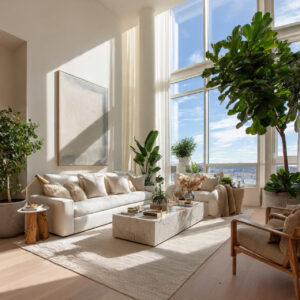

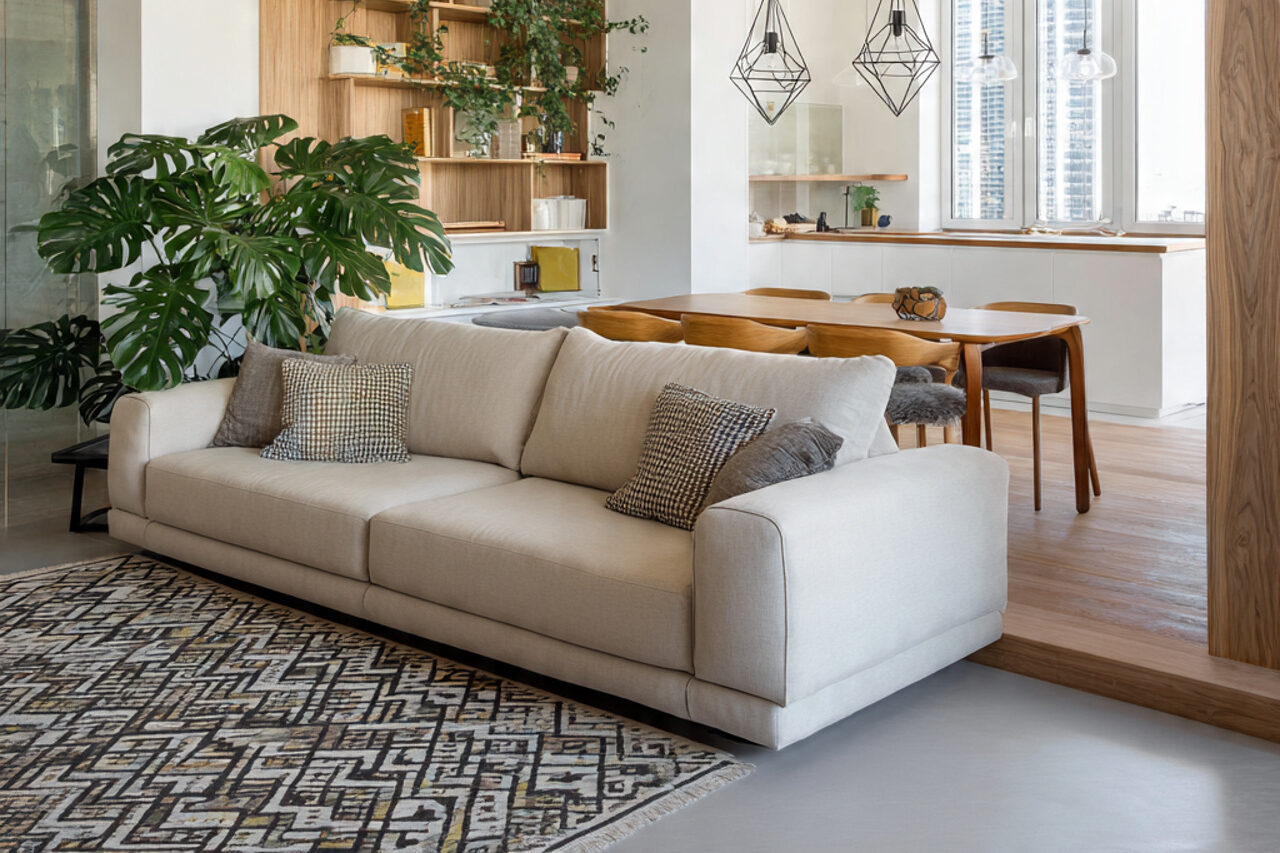

Living in an open plan apartment can feel exciting at first modern, airy, and full of freedom.
But after a while, that “no walls” layout often turns into a problem. The dining table blends into the sofa, the work desk faces the TV, and suddenly everything feels messy and unorganized.
The good news? You don’t need walls or major renovations to fix it. If your living room is part of an open concept layout especially when combined with the kitchen these ideas will help you understand how zoning works beautifully without walls.
Based on my own experience living in a small apartment, I’m sharing 6 super effective secrets to separate your living room helping you create clear, functional zones while keeping that open, modern look you love.
Let’s get started.
1. The Power of Nature: The Mobile Green “Wall”
Have you ever walked into a space and immediately felt more comfortable and relaxed? I bet there were plenty of plants there. And guess what? Plants are not just amazing decor; they are also incredibly subtle space zoning warriors.
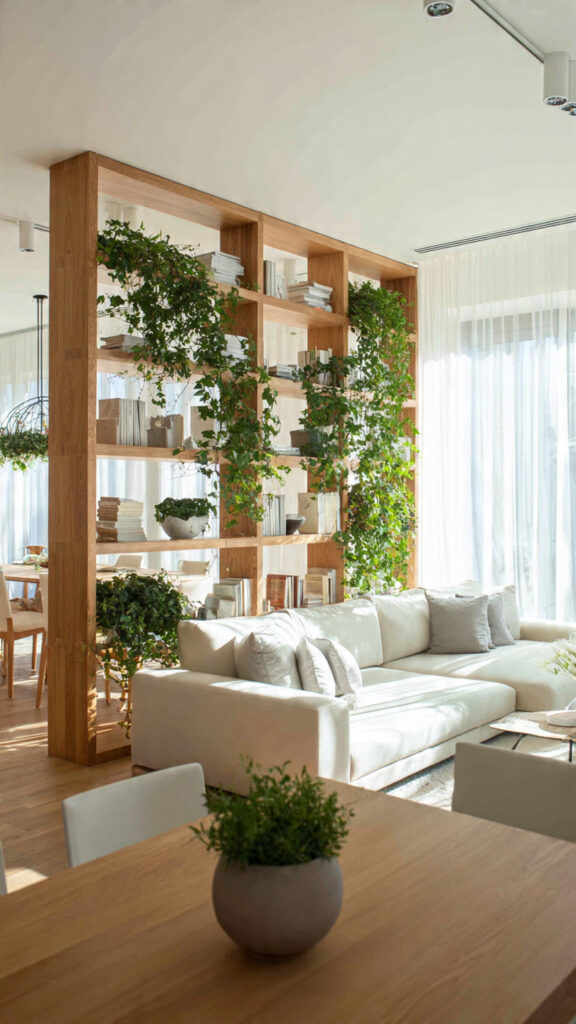
My secret tip: Instead of using a rigid screen, use open shelves (like a backless bookcase) and fill them with plants of different sizes. Or, even simpler, you just need a row of tall, large plants, placed close together, such as the Swiss Cheese Plant (Monstera) or Snake Plant (Sansevieria) in elegant planters.
Why does this work so well?
- Creates a soft separation: You can still see through the gaps between the leaves, keeping the room airy and allowing light to flow. This is completely different from erecting a concrete wall.
- Adds texture and color: The green hue brings a lively, fresh feel, creating an organic, beautiful “wall.”
- Cleans the air (Well, that’s just a bonus): Who doesn’t love cleaner air in their house?
I once placed a shoulder high Monstera in the corner transitioning between the sofa area and the reading nook. Even though it was just a plant, it immediately announced: “Hey, you’re transitioning into a different zone now!” This psychological effect is incredibly powerful, trust me!
2. The Light Trick: “Drawing” Zones with Lamps
This is one of my favorite secrets because it’s so aesthetic and effective while taking up the least amount of floor space. Light is not just for illumination; it is a powerful space design tool.
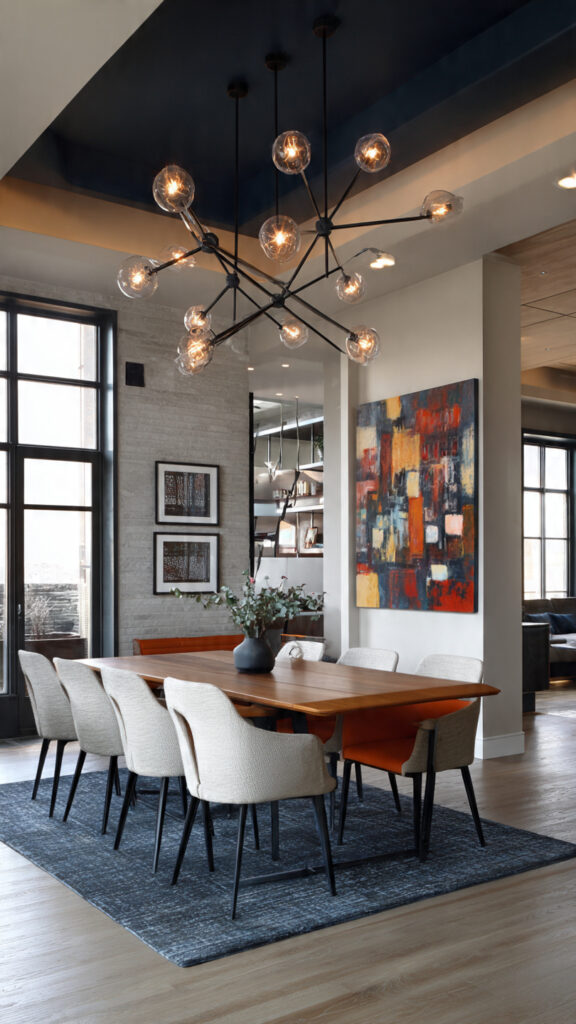
How to do it: Instead of relying only on general ceiling lighting, use light to “fence off” specific areas.
- Main Living Area (Sofa): Use a modern, tall, and curved floor lamp (like an Arch Lamp) placed next to the sofa. This lamp immediately defines the boundaries of the seating area and creates a cozy, focused atmosphere.
- Dining Area: Hang a cluster of distinctive pendant lights (e.g., geometric, minimalist metal) right above the dining table. The focused light shining down on the table will clearly separate this area. Statement lighting pieces like modern crystal chandeliers can instantly elevate the living room zone.
Have you ever noticed that the softer lighting in the sofa area make you feel instantly like relaxing, while the focused light on the dining table encourages interaction? That is the magic of lighting!
A small note: Make sure the color temperature (Kelvin) of the light is appropriate. Warm light (2700K – 3000K) is generally used for relaxation areas (living/bedroom), while whiter light (4000K) can be used for working/dining areas. When you use different types of light, your areas will feel different, even without walls.
3. Separating with Versatile and Back to Back Furniture
The basic principles of zoning an open space is: Don’t push everything against the walls!
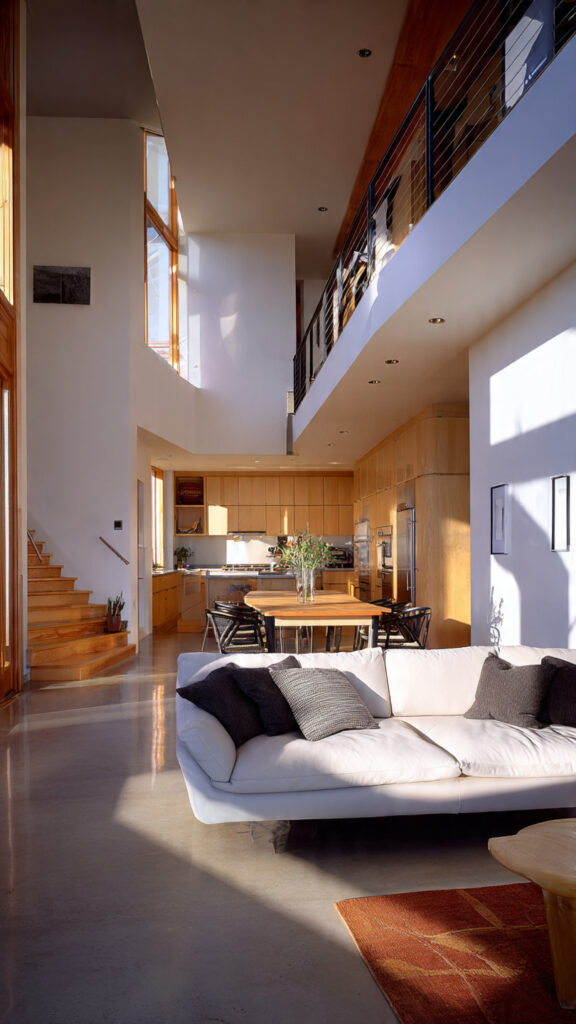
The biggest tip: Let your large pieces of furniture turn their backs on each other.
- Sofa: Place the back of the sofa facing outwards, towards the dining area or kitchen. The back of the sofa acts as a perfect “half wall,” clearly shaping the living area without feeling heavy.
- Low Bookshelves/Storage Cabinets: A low credenza or bookshelf (under $1.2$ meters) placed behind the sofa is an extremely clever solution. It not only provides extra storage space but also creates a distinct plane of separation. Because it’s low, your sightline remains unobstructed, maintaining that airy feel. (Who doesn’t need more places to hide clutter? I bet you’re hiding a mountain of charging cables and remotes somewhere!). Multi functional furniture can act as both storage and invisible space dividers especially in small apartments.
- Console Table: Place a slender console table right behind the sofa. You can decorate it with lamps, books, and a few ornaments, making it visually appealing and an effective visual barrier.
I always advise you to rotate your sofa to the middle of the room, instead of pushing it against the wall. This simple action transforms the sofa from a decorative item into a powerful space dividing tool.
4. Color and Material Strategy: Subtle Differences
This is where we play with the reader’s sight. You don’t need to repaint the whole house. Just a few strategic changes in color and material.
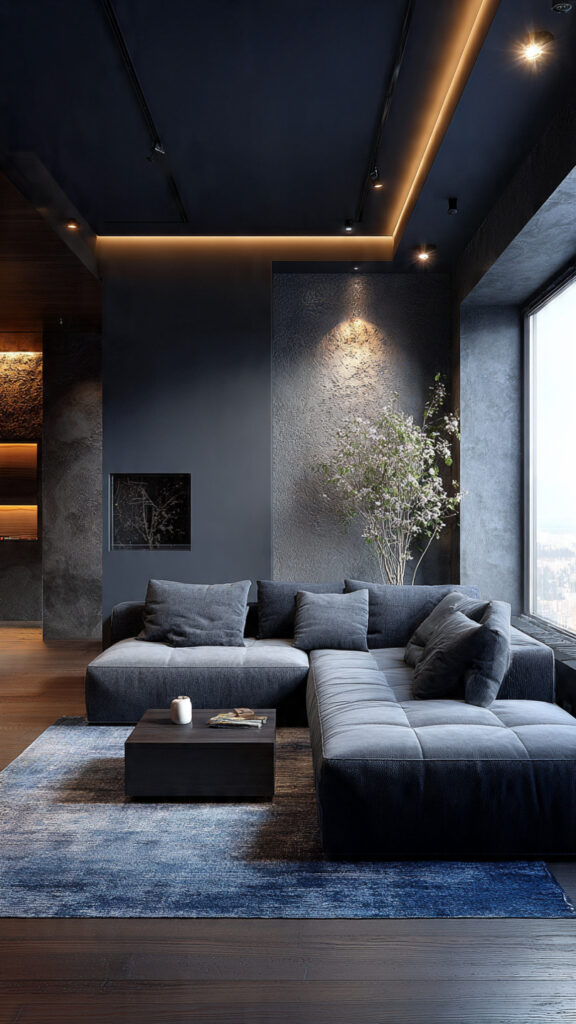
The simple secret: Use color to suggest that you are stepping into a new area.
- Area Rug: Color plays a much bigger role than most people think. These subtle color ideas can visually expand a small living room even further. This is the number 1 zoning tool professional interior designers use! A large, beautiful rug placed directly under the sofa area immediately defines the living room boundary. If you’re not sure how to choose the right rug size, color, or pattern, these simple rug selection rules will save you from common mistakes. It’s like an ID card saying: “This is the official relaxation zone, not a walkway!”
- Accent Wall: If your living area has a distinct wall, paint it a darker color or use patterned wallpaper to create a focal point. The change in color/texture instantly separates this space from the rest of the area.
- Materials: Change the flooring material (if possible). For example: wood flooring for the living area and tiles for the kitchen/dining area. If not, use contrasting furniture materials: Soft upholstered sofa in the living room contrasting with the hard wood or metal surfaces of the dining table.
I once used a hand woven wool rug with a bold geometric pattern for the living room, while the dining area just had the bare wooden floor. Even though they were only 2 meters apart, the difference in feel under foot created a clear separation without any walls.
5. Decorative Partitions
When you genuinely need a physical barrier but still want to preserve the airy flow, turn to smart partition solutions. These aren’t solid drywall; they are functional pieces of art.
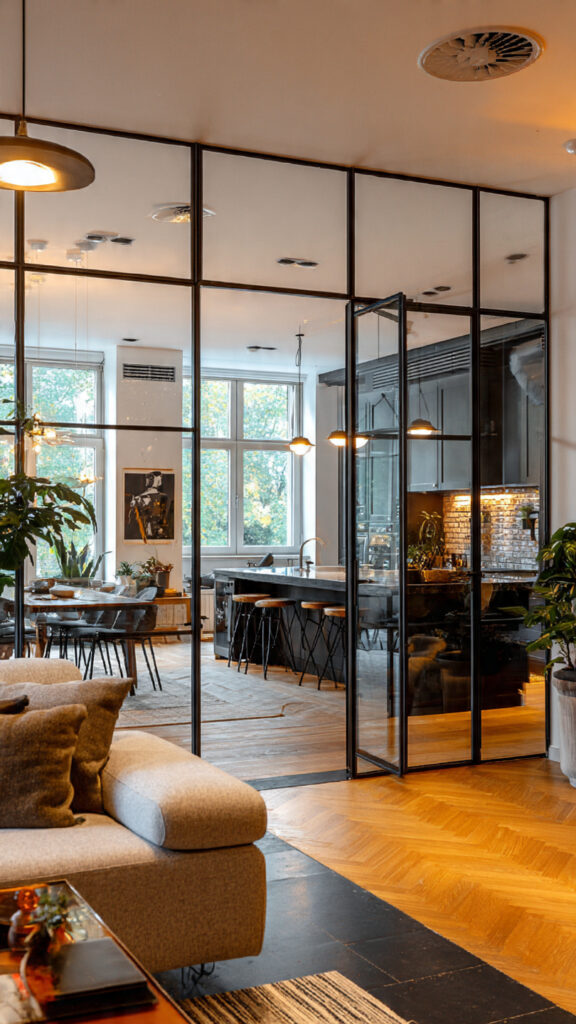
Excellent options for a modern apartment:
- Wooden Slat/Louvred Partition: This is a hot trend right now! Thin vertical wooden slats are placed apart, creating a screen that you can see through. It blocks some visual sight but allows light and air to pass through completely. The result? A clear separation that remains super airy and modern.
- Framed Glass Partition: If you have a slightly higher budget, a glass partition with a black metal frame (industrial or Scandi style) is a fantastic choice. It provides a little bit of sound separation and a complete physical separation (creating a distinct room), but because it is glass, it completely avoids blocking the light, giving an endless sense of space. (You could even write a few funny quotes on it with a dry erase marker if you want to playfully mock someone trying to sneak a peek at the TV from the kitchen!).
- Open Shelving Unit: Unlike a wall mounted bookcase, this is a large shelf that stands in the middle of the room. It allows you to decorate from both sides and creates a “lattice” for light to shine through.
You should choose a partition that has at least 50% transparency (is see through) to ensure your space doesn’t shrink. I suggest avoiding overly solid screens unless you want your room to look like it’s playing a game of “hide and seek” with the light.
6. Separating by Height
If you have the opportunity for a larger renovation, playing with height is a very powerful and impressive strategy for zoning an open space.
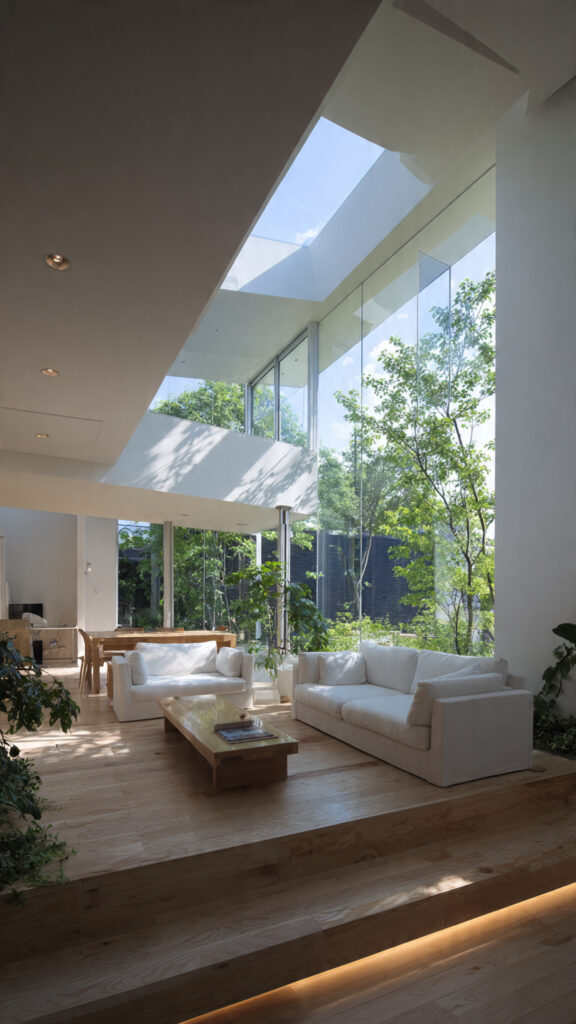
The multi level tactic:
- Raised Platform: Build a raised floor platform about 15-30cm high for the living area. Stepping up a small step is a clear physical signal: “You are entering a new, more important space.” This creates drama and elegance for the living room, completely separating it from the dining/kitchen area.
- Emphasized Ceiling Feature: If you can’t raise the floor, highlight the ceiling instead. Install a dropped ceiling just over the living area, or simply create a cove lighting feature with soft, focused light in this zone.
Why does it feel airy? Because you haven’t put up any walls at all. You are only using vertical space to define boundaries, keeping the horizontal view wide open.
I saw an apartment that used a wooden raised platform for the seating area, and it looked like a cozy “island” in a sea of open space. Guests immediately felt the difference and respected that boundary naturally.
A Friendly Conclusion And Some Sincere Advice
See, my friend, separating a modern and airy living room is not an impossible mission. It just needs a little bit of creative thinking and a few pieces of furniture placed correctly.
Remember, our goal is not to build a labyrinth of walls but to create a subtle separation that makes your apartment feel organized and purposeful. When everything has its place, you’ll find life much easier to breathe. (At least, you’ll know where to find the TV remote!).
Start with the easiest tips like the area rug and rotating your sofa. After that, you can consider a few green plants or strategic lighting.
Still looking for more inspiration? These modern and luxurious small living room ideas will help you refine your space even further. Now, are you ready to transform your chaotic open space into a modern, airy, and orderly apartment? I know you can do it!