

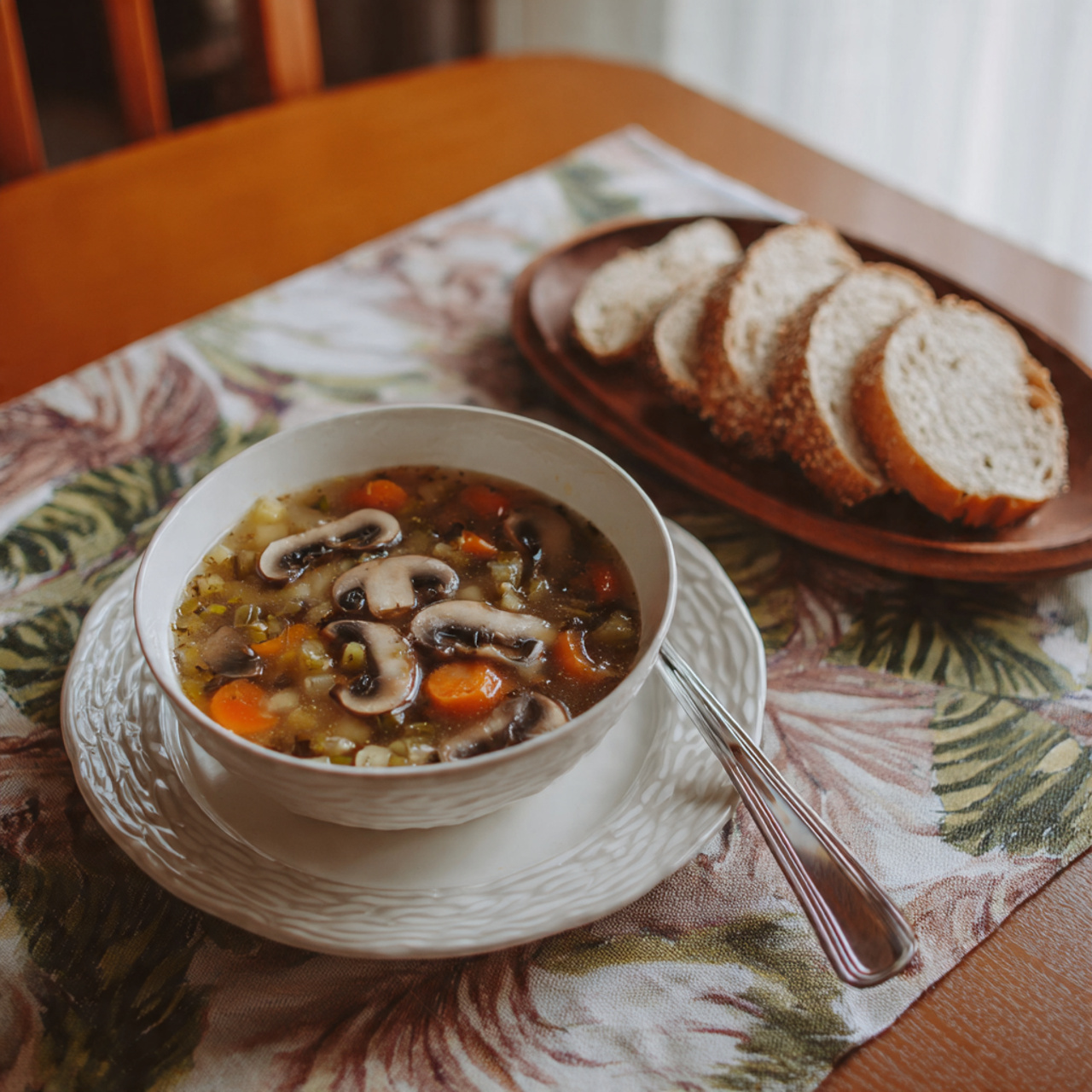

In the relentless rush of modern life, where fast food, industrial seasonings, and haste dominate our tables, seeking a bowl of pure broth is like a pilgrimage back to the very origins of life. Pure Vegetable and Mushroom Soup is more than just an appetizer or a staple of a macrobiotic diet; it is the embodiment of refinement a healing therapy for both body and soul from the inside out.
Imagine a tranquil afternoon in your kitchen, greeted by the warmth radiating from a pot simmering with bubbles as delicate as pearls. It is the magical moment when the crisp, clear sweetness of white radish melds with the deep, soul-stirring aroma of dried shiitake, accented by the vibrant gold of succulent corn kernels. To craft a broth that is “clear as crystal, sweet as morning dew,” a chef requires no complex gadgetry or artificial additives. Instead, what is demanded is the patience to listen to the breath of the ingredients.
1. Ingredient Blueprint: The Trinity of Flavor
To create a broth with profound depth, we coordinate three groups of ingredients: The Foundation (Radishes and Corn for base sweetness), The Umami Body (Dried Shiitake and King Oyster mushrooams for “meat- ike” richness), and The Aromatics (Leeks and Ginger for a sophisticated finish).
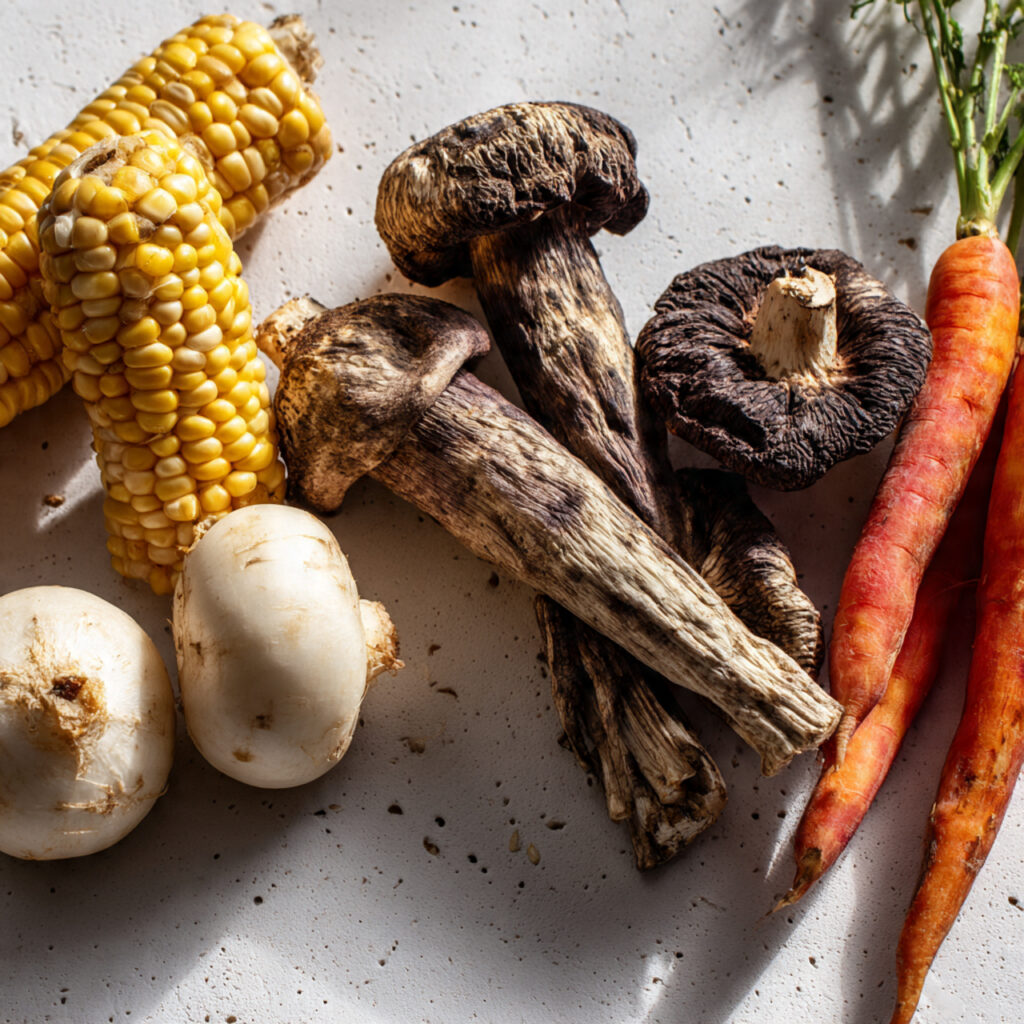
1.1. The Foundation Building the Base Sweetness
-
White Radish and Carrots: Radish provides a cool, crisp sweetness, while carrots offer a deeper sugary note and a warm orange hue.
-
Sweet Corn: Cut into rounds. Do not discard the cobs; the cob is a hidden treasure trove of pure natural sucrose.
-
Lotus Root or Chayote: These provide a light, refreshing finish and ensure the broth remains structurally “clean” without becoming cloudy.
1.2. The Umami Body The Soul of the Soup
This is where we extract “Umami” the fifth taste entirely from plants:
-
Dried Shiitake Mushrooms: An absolute necessity. Once rehydrated, they provide a savory depth and a “meaty” mouthfeel.
-
King Oyster or Button Mushrooms: These provide a succulent, firm texture that mimics the bite of tender protein.
-
Gourmet Tip: To elevate the dish to fine-dining standards, incorporate a small amount of Matsutake or Tiger Milk mushrooms. These varieties introduce an intoxicating fragrance of damp earth and aged wood.
1.3. The Aromatics The Final Sophistication
-
Leeks (Baro Onion): Use the white stalks to sauté, creating a delicate, aromatic oil base.
-
Fresh Ginger: A single thin slice is the key to neutralizing the “cool” nature of the vegetables and balancing the dishs Yin and Yang.
-
Goji Berries: These add a pop of color and a faint, herbal sweetness to the after taste.
2. Nutritional Value: A Restorative “Healing Tonic”
Why is this soup referred to as a “healing broth”?
-
Immunity Boost: The polysaccharides in shiitake and Beta-carotene in carrots strengthen the body’s natural defenses.
-
Detoxification: White radish supports liver and lung function, helping the body eliminate accumulated toxins.
-
Alkalizing Power: This is a highly alkaline dish, helping to neutralize the acidic environment caused by modern diets rich in processed foods.
3. Professional Execution: The Art of Extraction
This is the most critical section, where we distinguish a simple “boiled vegetable water” from a “premium macrobiotic broth.”
Step 1: Activation and Preparation
-
Dried Shiitake: Soak in warm water until soft. Crucial Note: Never discard the soaking water. Filter out any grit and use this “liquid gold” as the foundation of your stock it contains the concentrated essence of Umami.
-
Fresh Produce: Cut into uniform, bite-sized cubes. Cutting them too small will cause them to disintegrate during simmering, clouding the broth.
Step 2: The Searing Technique
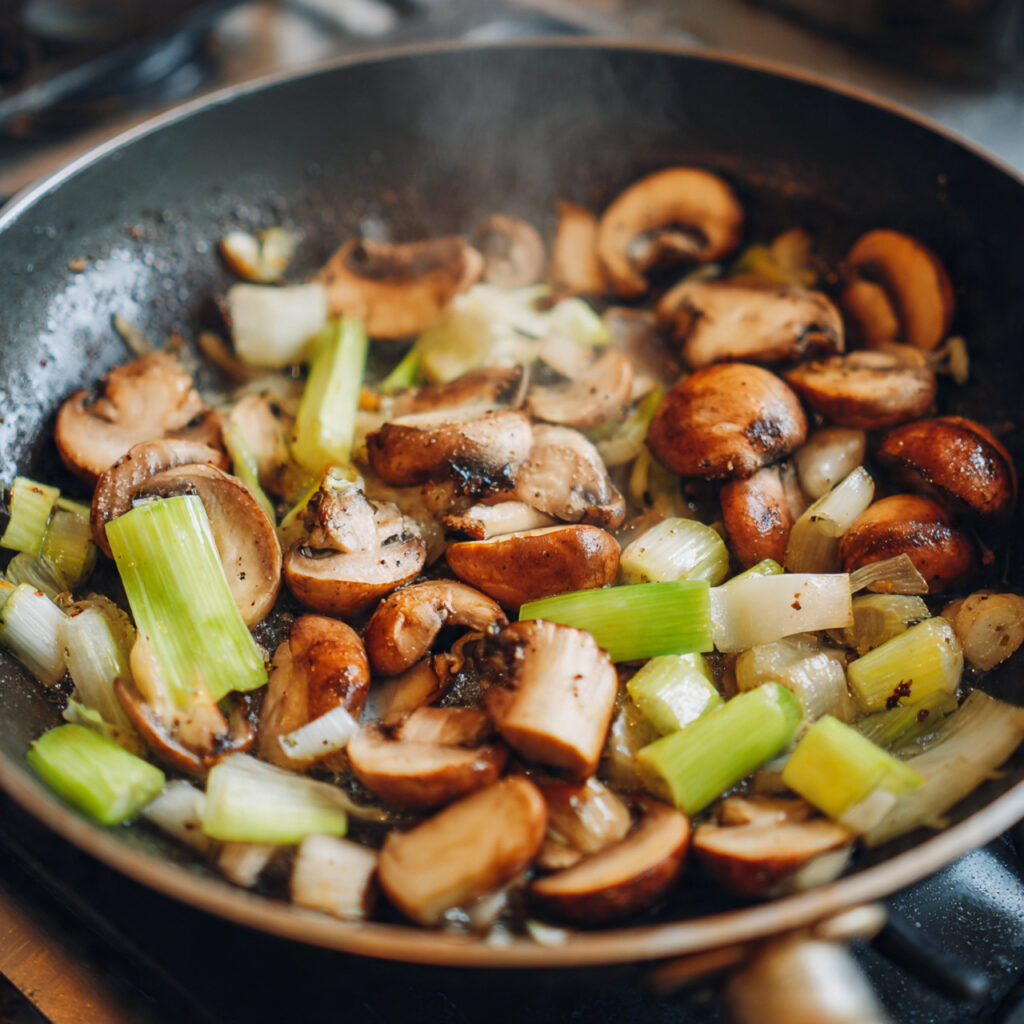
Never drop raw mushrooms directly into boiling water; it leaves them bland and spongy.
-
The Method: Heat a small amount of oil in the pot, sauté the leeks and ginger until fragrant. Add the shiitake and king oyster mushrooms, searing over high heat with a pinch of sea salt for 3 minutes.
-
The Result: High heat causes the amino acids to transform into a much richer flavor profile. Once the mushrooms are slightly charred and fragrant, proceed to the next step.
Step 3: The Master Simmer
Add the filtered soaking liquid and fresh water to the pot. Add the corn, carrots, and radish immediately.
-
The “Languid Simmer” Rule: Bring to a boil once to skim off all foam, then immediately reduce the heat to the lowest setting (low simmer).
-
Ventilation: Do not cover the pot completely. Keeping the lid slightly ajar allows pungent volatile compounds to escape and ensures the broth remains crystal clear.
-
Duration: Simmer for 40 minutes to fully extract the sweetness from the corn cobs and radish cores.
Step 4: Finishing Touches
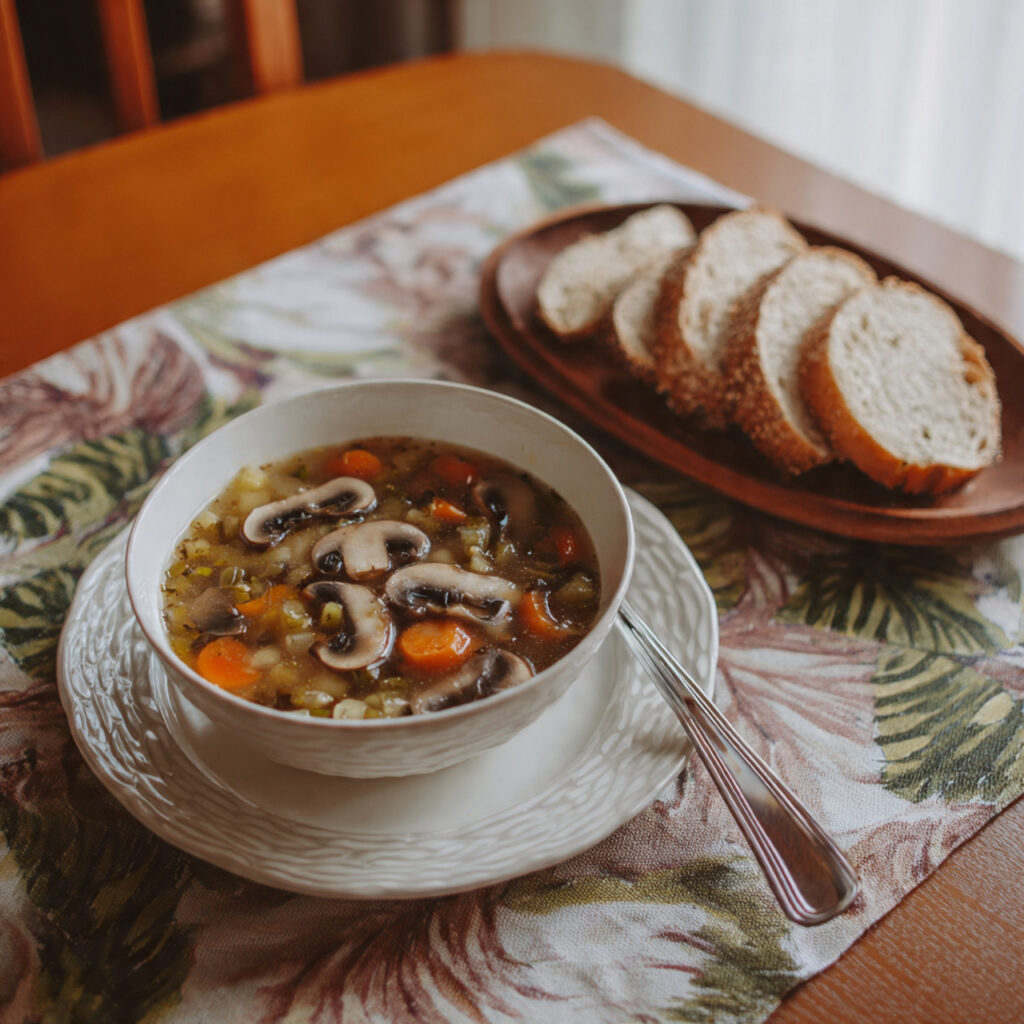
Add the delicate mushrooms (like Enoki or Shimeji) at the very end, as they only require 2–3 minutes to cook. Season only with sea salt and perhaps a small piece of rock sugar if needed. You will find that the natural sweetness is already so potent that no MSG is required.
4. Troubleshooting: Common Pitfalls
-
Cloudy Broth: Caused by boiling too vigorously or failing to skim the foam. The Fix: Always maintain a gentle simmer and use a fine mesh to skim impurities.
-
Pungent “Raw” Smell: Usually due to under-sautéing the radish or mushrooms. The Fix: Ensure the ginger and leeks are sautéed properly to “lock” the flavors.
-
Lack of Depth: Often due to skipping dried shiitake. Fresh mushrooms alone cannot produce the same savory depth as dried ones.
5. Final Thoughts
Cooking a bowl of Pure Vegetable and Mushroom Soup is an act of communication with nature. It teaches us patience waiting for the broth to release its sweetness, and meticulously skimming the surface to achieve clarity. It is a dish that nourishes the body and cradles the soul.
Every spoonful you sip carries not just a flow of abundant vitamins, but also a sense of peace a reminder of the beauty found in life’s simplest things.