
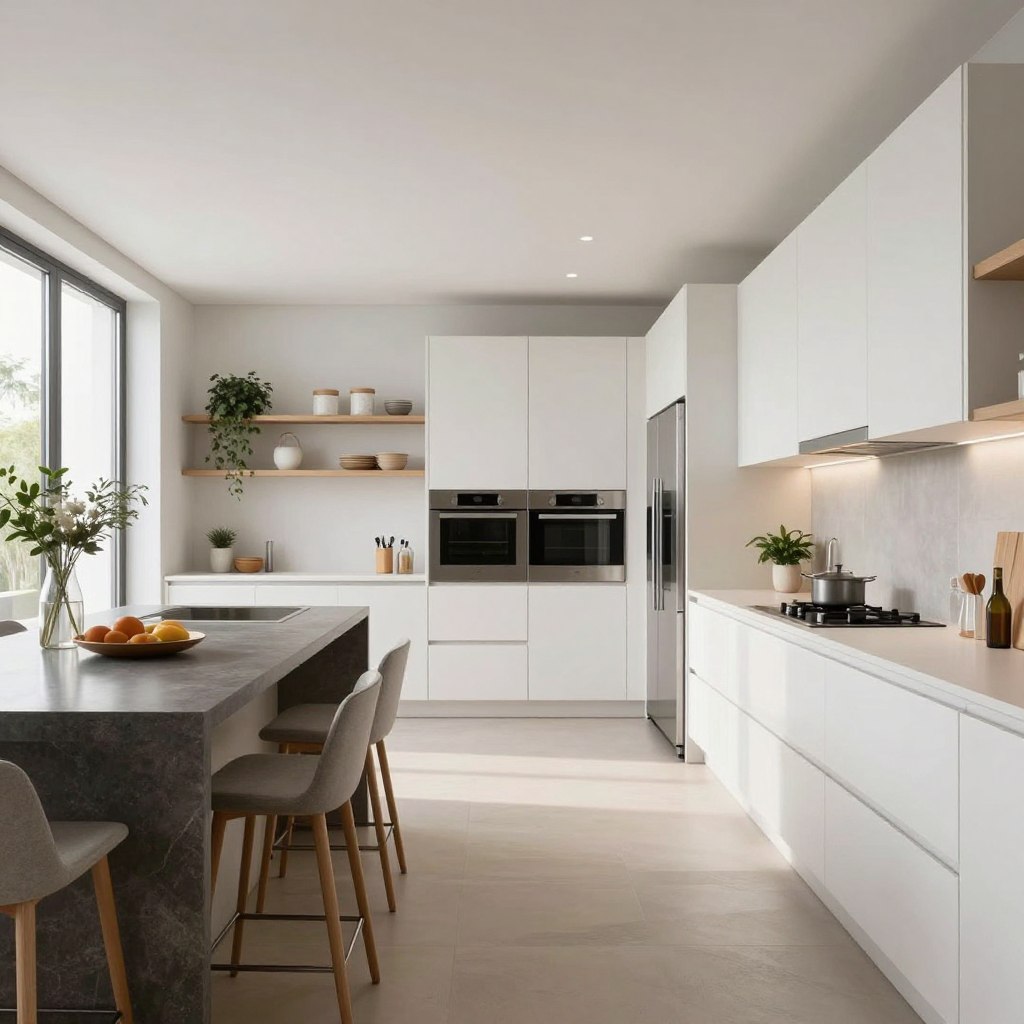

Designing challenging spaces has always been my specialty, and kitchen designs for long narrow kitchens present unique opportunities to create layouts that are both functional and visually striking. When planned correctly, these kitchens can feel open, efficient, and inviting rather than restrictive.
A long, narrow kitchen requires a strategic approach. Without thoughtful planning, the space can easily feel cramped and inefficient. The key lies in establishing a smooth visual flow, optimizing circulation, and making intelligent use of every inch available.
In this guide, you’ll discover practical insights on layout planning, storage optimization, lighting strategies, and material selection. The goal is to help you transform a narrow kitchen into an efficient, stylish space that reflects the best kitchen designs for long narrow kitchens in 2026 and beyond.
Key Takeaways
- Elongated kitchen layouts offer unique design opportunities when planned strategically.
- 2026 trends emphasize personalized spaces with warmth and hidden functionality.
- Proper flow and perception alteration are crucial for avoiding a cramped feeling.
- Every inch of space must be optimized in constrained floor plans.
- A comprehensive approach addresses layout, storage, lighting, and materials.
- Specialized strategies can transform challenging proportions into beautiful, functional rooms.
- The cooking space should evolve into a personal sanctuary tailored to your lifestyle.
Assessing Your Long Narrow Kitchen Space
Measuring your narrow kitchen is more than just numbers. It’s about how you live, cook, and move. This step is key, especially with 2026 trends in mind. The NKBA Kitchen Trends Report shows a need for smarter storage, starting with a true look at your current space.
Designer Grey Joyner notes a trend for ‘warmer’ kitchens. This emotional feel begins in planning, matching your space to your comfort and routine.
How I Measure and Document Kitchen Dimensions
In a narrow kitchen, precision is crucial. A small mistake can mess up the whole narrow kitchen layout. I start with a detailed floor plan, marking every fixed element like walls and doors.
Then, I make elevation drawings for each wall. These show the vertical space, which is key. I also note “pinch points” where space gets tight. Finding these early helps avoid a cramped feel later.
Accurate documentation guides every decision. Below is a table of my favorite tools and their roles in this phase.
| Tool/Method | Primary Use | Key Detail to Record | Why It Matters for Narrow Kitchens |
|---|---|---|---|
| Laser Measure | Overall room dimensions | Length, width, and ceiling height at multiple points | Reveals if walls are perfectly parallel or subtly tapered |
| Traditional Tape Measure | Detailed appliance & cabinet niches | Depth of window sills, protrusion of existing pipes | Ensures new cabinetry fits flush around obstructions |
| Digital Floor Plan App | Creating a scalable digital model | Permanent electrical outlets and light switch locations | Prevents costly appliance placement errors later |
| Photographic Survey | Capturing visual context | Photos from all corners, looking toward the center | Helps visualize sightlines and potential for open feeling |
Identifying Structural Limitations and Opportunities
Many see load bearing walls or fixed plumbing as limits. I see them as chances for a new layout. A load bearing wall can define a galley corridor well. Existing plumbing can guide the best spot for your sink.
Window placement is a big chance. A window at the end of a long wall can be a beautiful focal point. I check the light quality throughout the day. This helps decide on colors and materials.
The best designs don’t fight the architecture; they converse with it. A structural ‘limitation’ is often the start of a kitchen’s unique character.
Don’t overlook overhead obstructions like ductwork or beams. Mapping these ensures your ceiling height cabinetry or lighting plan works. This step turns potential problems into design features.
Understanding Your Cooking Habits and Storage Needs
The 2026 trend is for personalized kitchens. This begins with a honest self-check. Do you cook daily or weekly? Do you need special storage for baking?
I have clients track their kitchen use for a week. Note which tools you use often and which you don’t. This shows your functional zones. The NKBA’s focus on floor to ceiling storage means we must think vertically for every need.
Think about zones beyond cooking. A coffee station, a butler’s pantry for small appliances, or a recycling center are smart. Your bố trí nhà bếp hẹp must solve for your life, not a generic one. This shapes the cabinet layouts, appliance choices, and workflow we’ll plan next.
Planning Your Layout: The Foundation of Success
In my design work, I’ve seen how a good layout can change a small kitchen. Designers say the floor plan is key to the room’s flow. Getting this right is crucial for a small kitchen design solutions.
Step 1: Choosing Between Galley, Single Wall, or L-Shaped Layouts
Choosing the right layout is your first big step. Each layout has its own benefits for narrow kitchens.
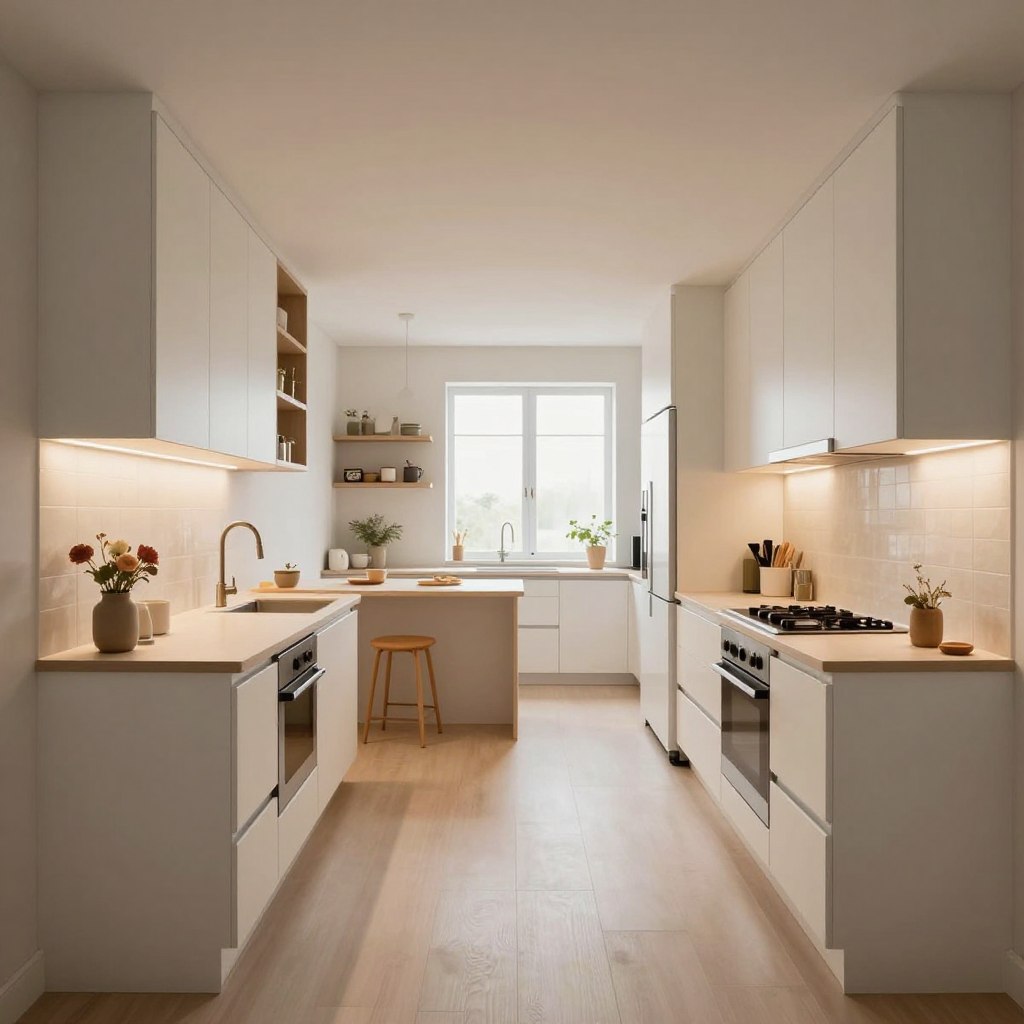
The galley layout has everything on two walls. It’s great for cooks who value efficiency. It’s best for kitchens focused on workflow.
The single wall or “I-shaped” layout puts everything on one wall. This design opens up the other side, fitting the 2026 trend for social kitchens.
The L-shaped layout uses two walls to create a corner. It’s good for defining the kitchen area in open plans. It’s also coming back as people want cozier kitchens.
Step 2: Determining Appliance Placement
Where you put appliances is key in a small kitchen. Bad placement can make the space feel tight.
I start with the fridge. In a galley kitchen, it goes at one end to keep the counter open. For single-wall kitchens, choose integrated or counter-depth models.
The sink and dishwasher go in the middle to save steps. Drawer-style dishwashers are great because they don’t need full door space.
Think carefully about your cooking area. In L-shaped kitchens, the corner is perfect for a slide-in range. For galley kitchens, a sleek induction cooktop saves space.
Step 3: Creating an Efficient Work Triangle in Narrow Spaces
The work triangle is still important, but we adapt it for narrow spaces. In a galley kitchen, it becomes a line or zigzag. Keep the distance between points between 12 and 26 feet.
In single-wall kitchens, the triangle is a compact cluster. Vertical movement is as important as horizontal. Use tall cabinets and wall ovens at eye level.
Designer Becky Shea says:
A well-planned layout always wins because it makes cooking and daily life smoother.
Today, we think about how multiple people will use the kitchen. We plan for “mini triangles” in different zones. This is a smart small kitchen design solutions for 2026.
Your layout should feel natural. Walk through your plan before you finalize it. This careful planning makes your small kitchen functional and beautiful for years.
Implementing Kitchen Designs for Long Narrow Kitchens
Creating a successful narrow kitchen involves three key strategies: vertical expansion, smart cabinetry, and multi-use features. This turns your plan into a real, functional space. I focus on actionable space saving kitchen ideas that tackle the challenges of a long, narrow layout.
How to Maximize Vertical Space Effectively
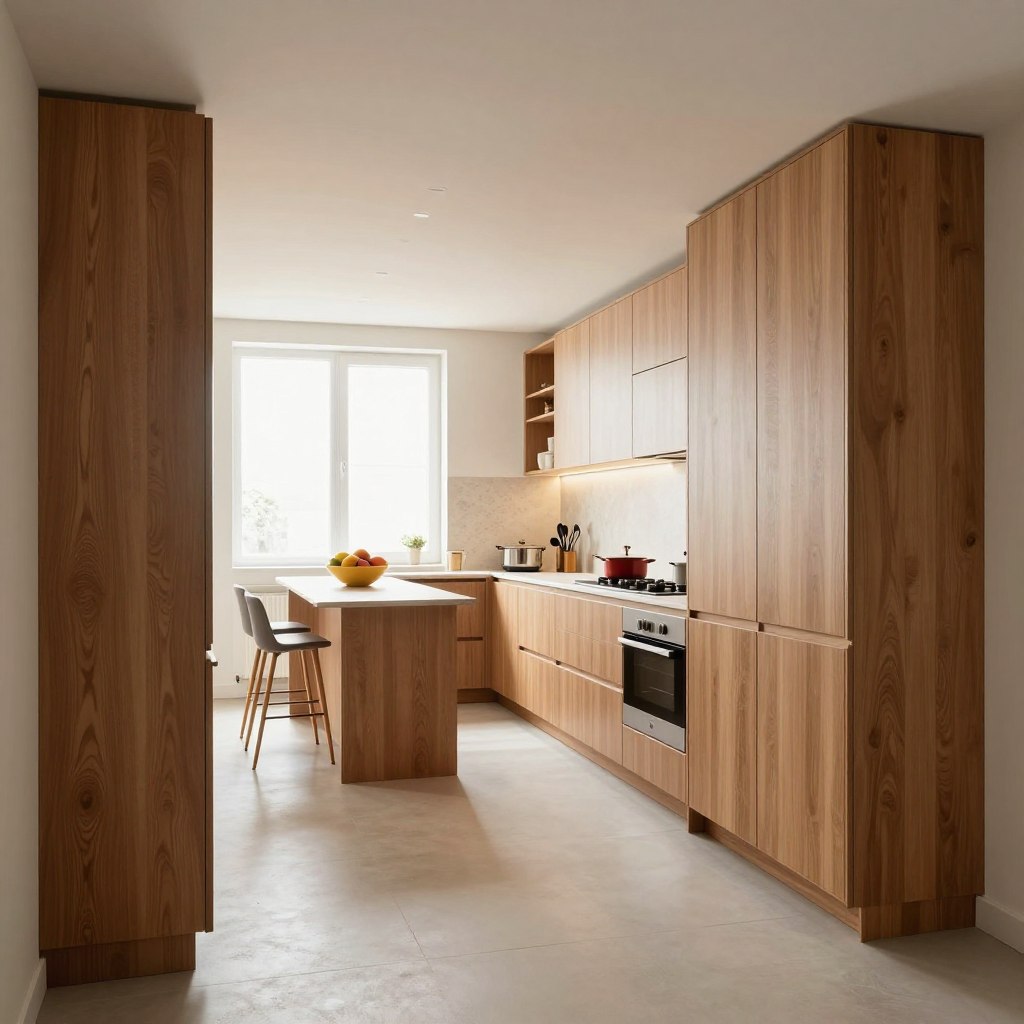
Floor-to-ceiling storage is essential in a narrow kitchen. It makes the space feel taller, balancing out the tightness. The National Kitchen & Bath Association (NKBA) sees a big demand for this solution.
I always suggest cabinets that go all the way to the ceiling. This avoids dust-gathering space above regular cabinets. For the top, glass-front doors are great. They keep the space light and airy, a key space saving kitchen idea.
Designer Denise Merbeth predicts a rise in “hutch cabinets.” They use prime, easy-to-reach vertical space for everyday dishes. Think of them as built in furniture that offers deep storage without taking up floor space.
Selecting Space-Saving Cabinetry and Hardware
The look and hardware of your cabinets are very important. Big handles and fancy details can make a narrow space feel cramped and smaller.
I follow the trend for clean, furniture-like cabinetry, as designer Lauren Lerner suggests. This means choosing slab or shaker-style doors with simple designs. The hardware is where you can save a lot of inches.
Go for integrated finger pulls, touch-latch systems, or recessed handles. These options give a smooth, streamlined look. They also prevent handles from catching clothes or creating visual “speed bumps” along your kitchen’s length.
| Hardware Type | Space-Saving Benefit | Best For 2026 Aesthetics |
|---|---|---|
| Touch Latches / Push-to-Open | Zero protrusion; completely clean facade | Ultra-modern, minimalist kitchens |
| Integrated Finger Pulls (Recessed Channel) | Discreet opening; no added width | Contemporary and transitional styles |
| Flush Mounted Bar Pulls | Minimal projection from cabinet face | Modern industrial and refined rustic |
| Edge Pulls (on the cabinet door bottom) | Hidden from direct view; maintains smooth lines | All styles seeking a seamless look |
Incorporating Multi Functional Elements
In a narrow kitchen, every element should have a purpose. Multi-functionality is a powerful space optimizing idea that adds flexibility.
A stationary island can block the way. My solution is a mobile island on casters. It offers extra prep space and storage when needed and can be rolled away to open the pathway. Another favorite is a fold-down table or shelf attached to a wall or peninsula. It serves as a breakfast bar or extra workspace that disappears when not in use.
To fight countertop clutter, I integrate appliance garages. As Compass realtor Jake Kennedy notes, homeowners want small appliances “accessible but invisible.” A cabinet with a tambour or flip-up door keeps your toaster and coffee maker handy but out of sight, keeping the lines clean.
The demand is for solutions that keep countertops clear. Clients love features that make appliances accessible but invisible, which is a huge selling point.
By using these space-saving kitchen ideas—going vertical, choosing sleek cabinetry, and adding multi-tasking features—narrow kitchens can become efficient and stylish.
Optimizing Storage in Every Available Inch
In 2026, new storage solutions are changing how we use space in small kitchens. The aim is not just to fit things in but to make everything easy to find. This turns a cluttered kitchen into a peaceful and useful space.
Designer Jake Kennedy says,
“Pantries are the new countertops.”
This idea is key. It means focusing on special storage areas to keep countertops clear and work flow smooth.
Step 1: Assessing Your Storage Requirements
I start by doing a detailed check of your storage needs. Empty your cabinets and sort items by how often you use them.
This helps you see what you really need. You might find big appliances you hardly use taking up too much space. Or that your everyday dishes are hidden behind holiday items. This info helps plan your storage.
In a narrow kitchen, this step is even more important. You need to decide carefully what goes in the main cooking area. Many clients choose a butler’s pantry or appliance garage for this reason.
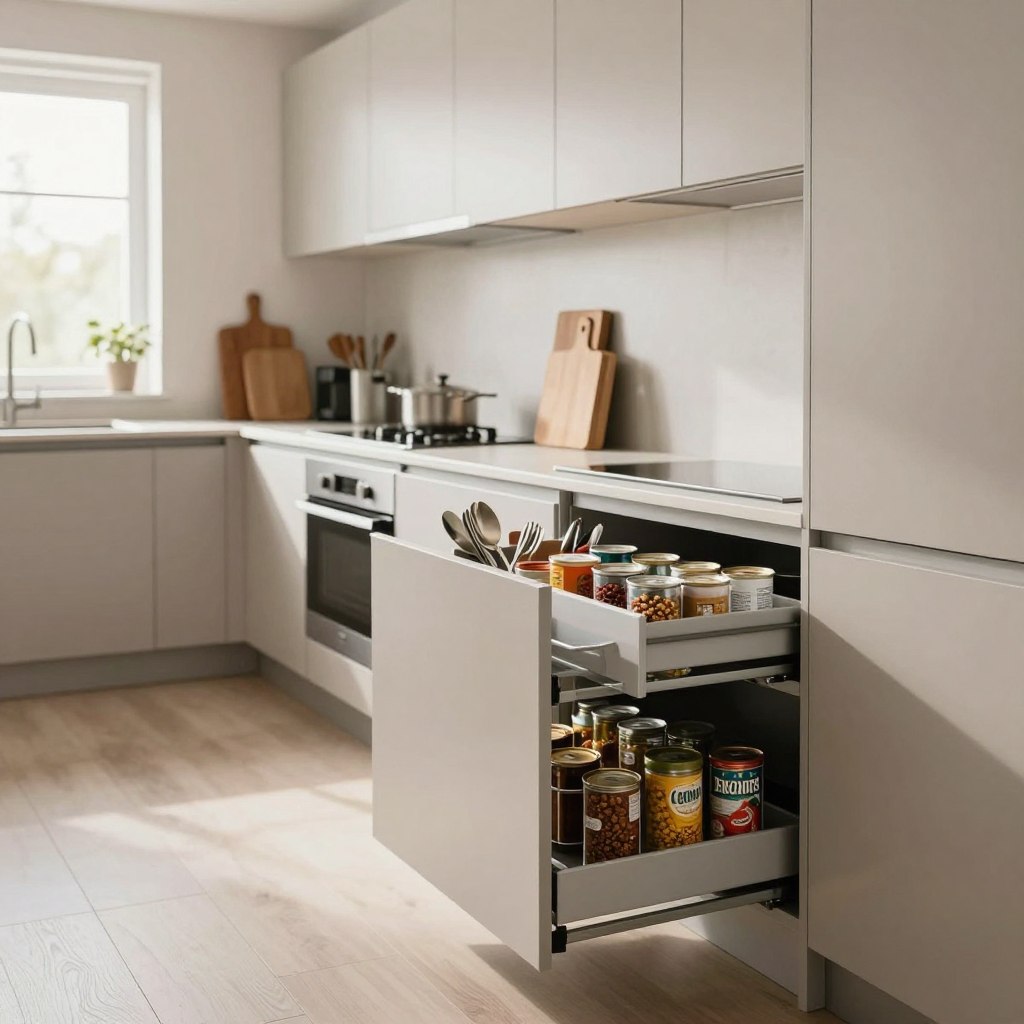
Step 2: Installing Custom Pull-Out Systems
Standard cabinets waste a lot of space, especially in back corners. Custom pull-out systems change this. They make everything easy to see and reach.
I recommend three main systems for narrow kitchens. First, full extension drawer slides for base cabinets. They let you get to the back without straining.
Second, corner carousel units or magic corners. They turn unused corners into useful spots for pots, pans, or cleaning stuff.
Third, tall pull out pantries are very effective. They’re only 12-15 inches wide but can hold a lot of food, spices, and cans. They use wall space well.
Step 3: Utilizing Often Overlooked Spaces
The last step is using spaces people often ignore. Designers have smart ways to make the most of these areas.
The toe kick space under cabinets is great for shallow drawers. They’re perfect for baking sheets, cutting boards, or trays.
The insides of cabinet doors are also valuable. You can put racks there for spices, lids, cleaning stuff, or foil and wrap organizers.
Don’t overlook the area above the refrigerator. A custom cabinet there can be an appliance garage. It keeps your toaster or blender handy but out of sight.
In 2026, I suggest planning for a butler’s pantry or tall pantry cabinet. Designers Lauren Lerner and Sophie Pringle say this keeps the main kitchen tidy and calm.
This special area handles big buys, small appliances, and serving dishes. It’s key for making the most of small kitchen space. Your kitchen stays organized and easy to use for everyday meals.
Creating Illusions of Space with Color and Light
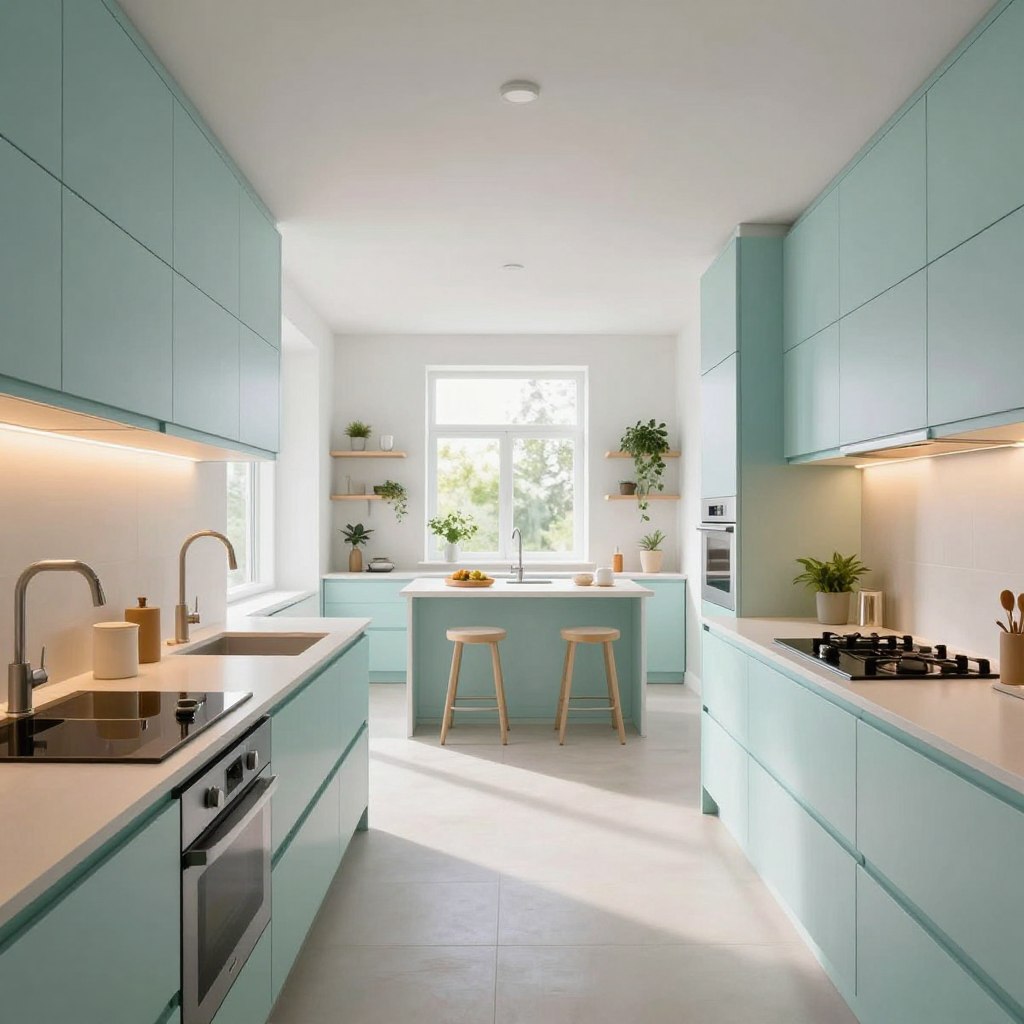
In 2026, narrow kitchen designs will use color and light to create illusions. These elements are key in my design toolkit. They make your kitchen look wider, taller, and more welcoming than it really is.
How to Choose Colors That Expand Your Kitchen Visually
The color trends for 2026 are perfect for small spaces. Designers are moving away from cool grays to softer, earth driven tones. These colors are warm and make spaces feel bigger.
Lauren Lerner says we’re seeing more warm whites, putty, mushroom, taupe, clay, and muted greens. I use these colors to make walls and upper cabinets seem to fade away.
This trick makes your kitchen feel deeper. For lower cabinets or an island, I suggest a darker, richer color from the same earthy family. This adds depth and contrast without making the space feel smaller.
The trick is strategic placement, not covering everything with the same color.
Implementing a Layered Lighting Strategy
Lighting is more than just functional; it’s a design element. In narrow kitchens, a single overhead light creates harsh shadows. My solution is a three layer lighting approach.
First, set up ambient light. I often choose LED coves or linear fixtures instead of recessed ceiling lights. These lights make the ceiling seem higher and eliminate dark spots.
Next, add task lighting. Under-cabinet LED strips are crucial. They light up countertops fully, removing shadows where you cook and prep. For 2026, I recommend dimmable, adjustable strips for the best results.
Finally, add accent lighting. This includes puck lights in glass-front cabinets, toe-kick lighting, or a small pendant over the sink. These layers help zone the space, making it feel wider and more open.
Using Reflective Surfaces Strategically
Every surface in your kitchen can enhance light and make it seem wider. The goal is to reflect light around the room. I choose materials that reflect light well.
Using a high gloss paint on cabinets or walls is a simple yet effective trick. It reflects more light than matte finishes. Glossy subway tiles or large slabs are great for backsplashes.
For a bold look, I sometimes add a mirrored backsplash. This doubles the visual space. Even glossy appliances, like a stainless steel hood, help with this effect.
Remember, the goal is strategic, not overwhelming. Pair glossy backsplashes with matte countertops for balance. Use mirrors on one wall only to avoid a too bright look. When done right, these surfaces enhance your kitchen’s feel, making it seem bigger.
Selecting and Placing Appliances for Narrow Kitchens
Turning a long, narrow kitchen into a functional space is more than just smart cabinets and lights. The right appliances and their placement are key. In my 2026 projects, I see appliance choice as a puzzle piece that must fit perfectly in tight spaces.
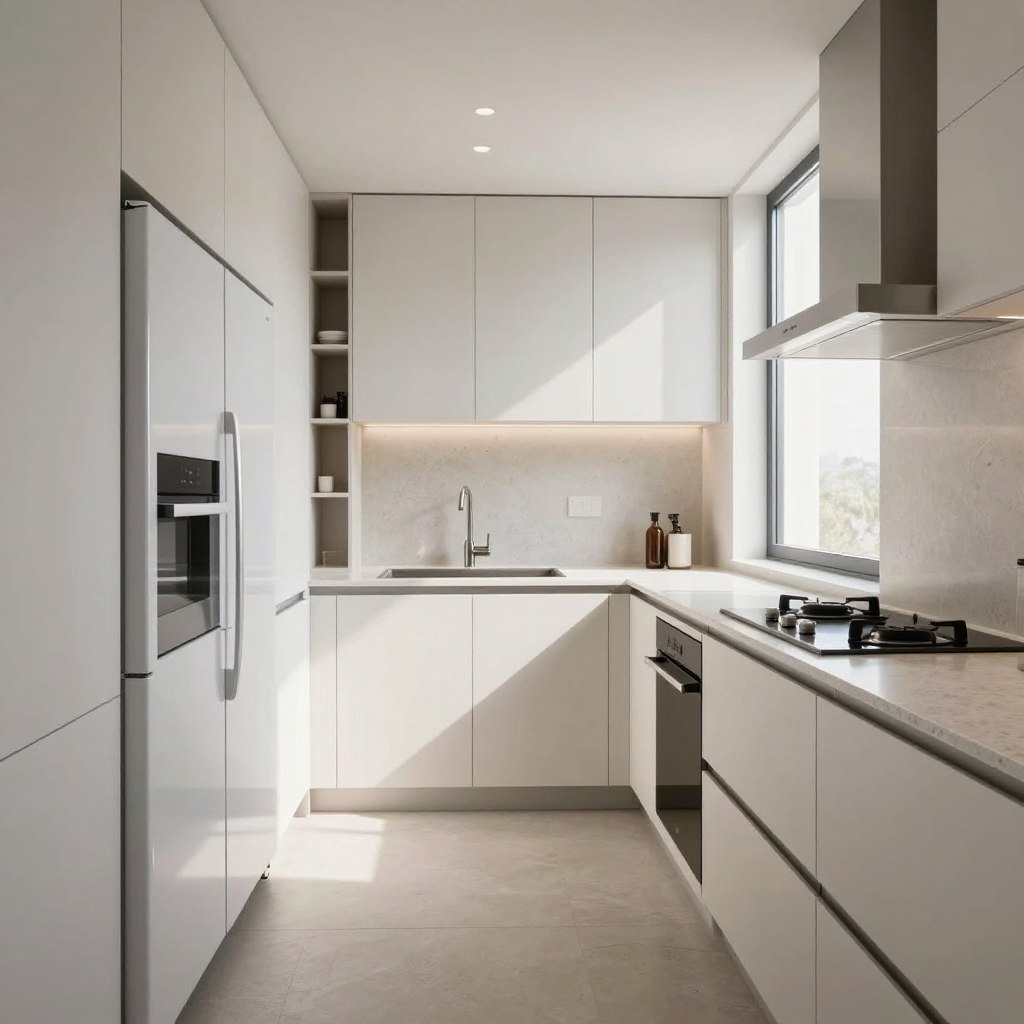
Today, there are amazing solutions for small kitchens. From super-slim fridges to hidden appliances, you have many options. Let me show you how to pick and place the best units for your kitchen.
How to Choose Slimline and Integrated Appliances
When looking for appliances for narrow kitchens, start with size. Avoid big fridges that block the way. Instead, choose counter depth or slimline models that match your cabinets.
Integrated appliances go even further by hiding behind panels. A hidden fridge or dishwasher keeps your kitchen looking clean and wide. Chelsea Bothe of True Caliber Designs says customizing with colorful undercounter beverage centers can make a big statement.
When choosing appliances for 2026, remember these key features:
- Quiet operation: The NKBA says this is a top request. A loud dishwasher or range hood can make a small kitchen feel even smaller.
- Safety technology: Look for leak detection in dishwashers and fridges, and automatic shut-off on induction cooktops.
- Ventilation efficiency: A strong yet quiet range hood is essential for good air in a small cooking area.
Step by Step Guide to Appliance Placement
Right placement makes your narrow kitchen work well. Follow this guide to arrange your major appliances.
Step 1: Anchor the Refrigerator
Put your fridge at one end, away from the oven. This stops heat from mixing and starts your food prep flow. Pick a fridge with doors that open easily.
Step 2: Position the Sink Centrally
The sink should be in the middle. Place it under a window or on the main wall. This cuts down on carrying heavy pots and groceries.
Step 3: Finalize the Cooking Zone
Your cooktop or range goes on the opposite end from the fridge. This makes a clear, efficient work triangle. Choose a cooktop with downdraft ventilation to save cabinet space.
Keep the distance between fridge, sink, and stove under 26 feet. A small triangle is key for efficiency.
Multi Function Appliances I Recommend for 2026
In a narrow kitchen, every appliance must earn its space. Single use gadgets are out. Here are the multi function heroes for 2026.
Combi-Steam Ovens: This unit replaces a traditional oven, steamer, and air fryer. It cooks fast, saves nutrients, and fits in a standard 24-inch space. It’s a big space saver.
Induction Cooktops with Downdrafts: These surfaces heat up quickly and efficiently. They don’t need a big hood. The downdraft system pulls smoke and smells down, keeping your kitchen clear.
Drawer Style Dishwashers: Instead of one big dishwasher, get two 18 inch drawer units. They save water and energy. They’re easy to load and unload without bending.
Column Refrigeration: Use separate fridge and freezer columns instead of one wide fridge. This saves space and lets you place each unit where you need it. Freezer near the back door, fridge near the prep zone.
The trend is toward appliances that do more in less space, with intelligence and quiet operation being key. Homeowners want streamlined functionality without clutter.
My last tip: always check your doorways and paths before buying. That perfect slimline fridge is useless if it can’t get into your kitchen. With careful choice and placement, your appliances will enhance your narrow kitchen.
Designing Effective Countertops and Backsplashes
In 2026, kitchen surfaces in narrow spaces will focus on seamless designs. Your countertop and backsplash are key to making the room look bigger. They are not just for work; they’re the main visual elements.
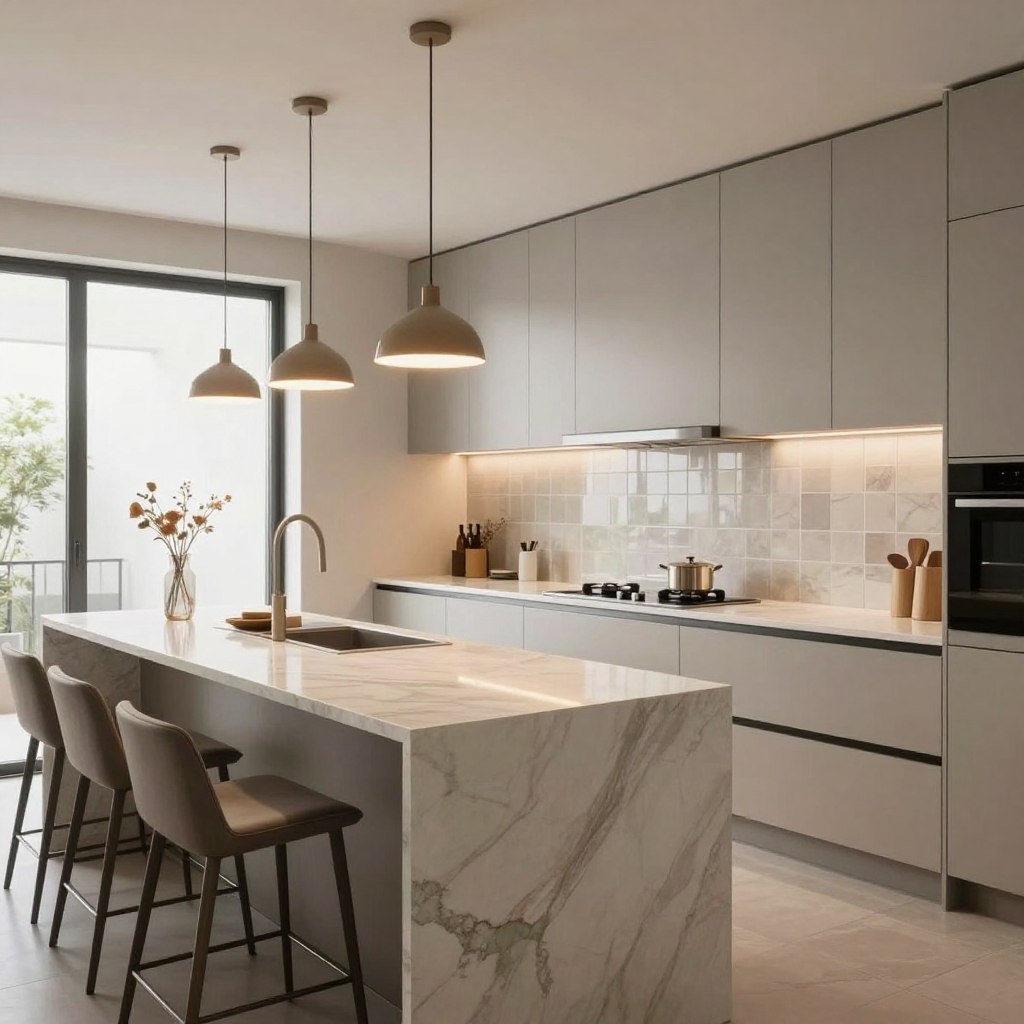
How to Select Materials That Enhance Narrow Spaces
Choosing the right material is crucial. For narrow kitchens, pick materials that are durable, easy to clean, and calm. Light colors are essential for making the space feel airy.
Quartz, quartzite, or light granite are good choices. Natural stone like quartzite is popular for its real look and story. Opt for slabs with subtle veining to avoid making the space feel cramped.
For a modern look, go for matte or honed finishes. They reduce glare and add sophistication. Glossy finishes are better for backsplashes to reflect light.
| Material | Best For Narrow Kitchens Because… | Consideration for 2026 |
|---|---|---|
| Quartz | Non porous, vast selection of uniform light colors, minimal visual noise. | Ideal for the full height backsplash trend due to slab consistency. |
| Quartzite | Natural beauty and durability with unique, subtle movement. | Choose “soft white” or “ice” varieties with linear veining to enhance length. |
| Porcelain Slab | Extremely thin, lightweight, and can be used on both countertop and wall seamlessly. | A top choice for achieving a totally monolithic, space expanding look. |
| Solid Surface | Seamless joins are possible, creating a perfectly continuous surface. | Excellent for integrated sinks in a streamlined long kitchen design ideas. |
Creating Visual Continuity with Your Surfaces
This is where your long kitchen design ideas. can shine. The big trend in 2026 is the full height backsplash. The countertop material goes up the wall, often to the bottom of cabinets.
This approach removes the horizontal break where a different backsplash starts. It makes the space feel longer and more open. The result is a kitchen that looks bigger and more intentional.
If using the same material isn’t possible, match the backsplash tile grout to your countertop. This makes the tile field recede, creating a seamless look.
Backsplash Designs That Add Width Perception
When a full slab isn’t an option, your backsplash tile pattern can trick the eye. Use lines and scale to your advantage.
Here are my top picks for making your kitchen look wider:
- Horizontal Subway Tile: The classic 3″ x 6″ tile laid in a horizontal “running bond” pattern. The long lines draw the eye side-to-side, effectively stretching the walls.
- Large Format Slabs or Tiles: Using a porcelain or stone slab (12″ x 24″ or larger) as a backsplash minimizes grout lines. Fewer lines mean less visual interruption and a calmer, wider looking wall.
- Linear Mosaic Tiles: Select mosaics with glass or metal pieces arranged in distinct horizontal lines. These shiny lines catch the light and reinforce the width enhancing direction.
For any of these options, choose a glossy finish. A reflective backsplash bounces light around the room. This brightens dark corners and makes your narrow kitchen feel bigger.
By carefully selecting materials and using these design strategies, your countertops and backsplash become key elements in your long kitchen. They move beyond mere surfaces to become integral parts of your design.
Choosing Flooring That Complements Your Layout
When clients ask about the most impactful change for a narrow kitchen, I often point downward. The right flooring can make the room look wider and longer. Your floor is the largest surface in the space, making it key for visual tricks.
I look for flooring that changes how we see the space, is durable, and follows current design trends. This approach helps create a better layout.
How to Use Flooring Patterns to Alter Perception
The direction of your flooring is your first big decision. Placing planks or tiles parallel to the longest wall makes the room look longer. This makes a narrow kitchen feel more balanced.
For those fighting the tunnel effect, try a diagonal pattern. Flooring at 45 degrees breaks up straight lines and adds width. It makes the space feel less tight.
A well placed runner rug is also powerful. As Denise Merbeth of the NKBA says, rugs define zones in open plan spaces. In a narrow kitchen, a runner adds comfort and organizes traffic flow.
Selecting Durable Materials for High-Traffic Narrow Kitchens
Narrow kitchens get a lot of foot traffic. You need materials that last and look good. Look for scratch resistance, moisture tolerance, and easy maintenance.
Luxury vinyl plank (LVP) is my top pick for narrow kitchens. It’s durable, waterproof, and looks like wood. Plus, it’s easy to install and change later.
Porcelain tile is long lasting and resists stains. Big tiles with little grout make the space look cleaner. I choose tiles with rectified edges for a seamless look.
Engineered hardwood offers real wood beauty with better stability. It handles kitchen humidity better than solid wood. I recommend finishes with aluminum oxide for extra wear resistance.
| Material | Best For | Durability Rating | Maintenance Level | |
|---|---|---|---|---|
| Luxury Vinyl Plank (LVP) | Active families, moisture prone areas | Excellent | Low (sweep/damp mop) | |
| Porcelain Tile | High-traffic pathways, spill-prone zones | Outstanding | Medium (grout cleaning) | |
| Engineered Hardwood | Warm aesthetic seekers, moderate use | Very Good | Medium (periodic refinishing) | |
| Laminate | Budget-conscious updates, low moisture | Good | Low |
2026 Flooring Trends for Space Optimized Kitchens
Natural, authentic materials are still big in kitchen design. For narrow spaces, choose materials that feel real and enhance the space. Wood is still popular, but the type and cut matter more than ever.
Light, rift cut white oak creates a modern, airy feel. It makes tight spaces look bigger. I recommend it for clients wanting a light, contemporary kitchen.
Warmer walnut tones are also trending. They add coziness to narrow kitchens. The rich color grounds the space, making it feel welcoming.
Textured surfaces hide wear and add interest. Wire brushed finishes, subtle embossing, and matte surfaces reduce scratches. They keep the floor looking good longer than glossy finishes.
Finally, mix materials for function and style. I might use tile in the work zone and wood look LVP elsewhere. This protects vulnerable areas while keeping the look consistent.
Integrating Smart Technology in 2026
In 2026, smart home tech is key for safe, efficient kitchens. The National Kitchen & Bath Association (NKBA) shows how tech helps with safety like leak detection and alerts for power outages. These features make cooking safer and worry-free. For long, narrow kitchens, the right tech can turn limitations into benefits.
I focus on making your daily routine better without adding clutter. The goal is to make everything work smoothly, supporting your efficient kitchen layout. Each device should have a purpose and keep your design looking clean.
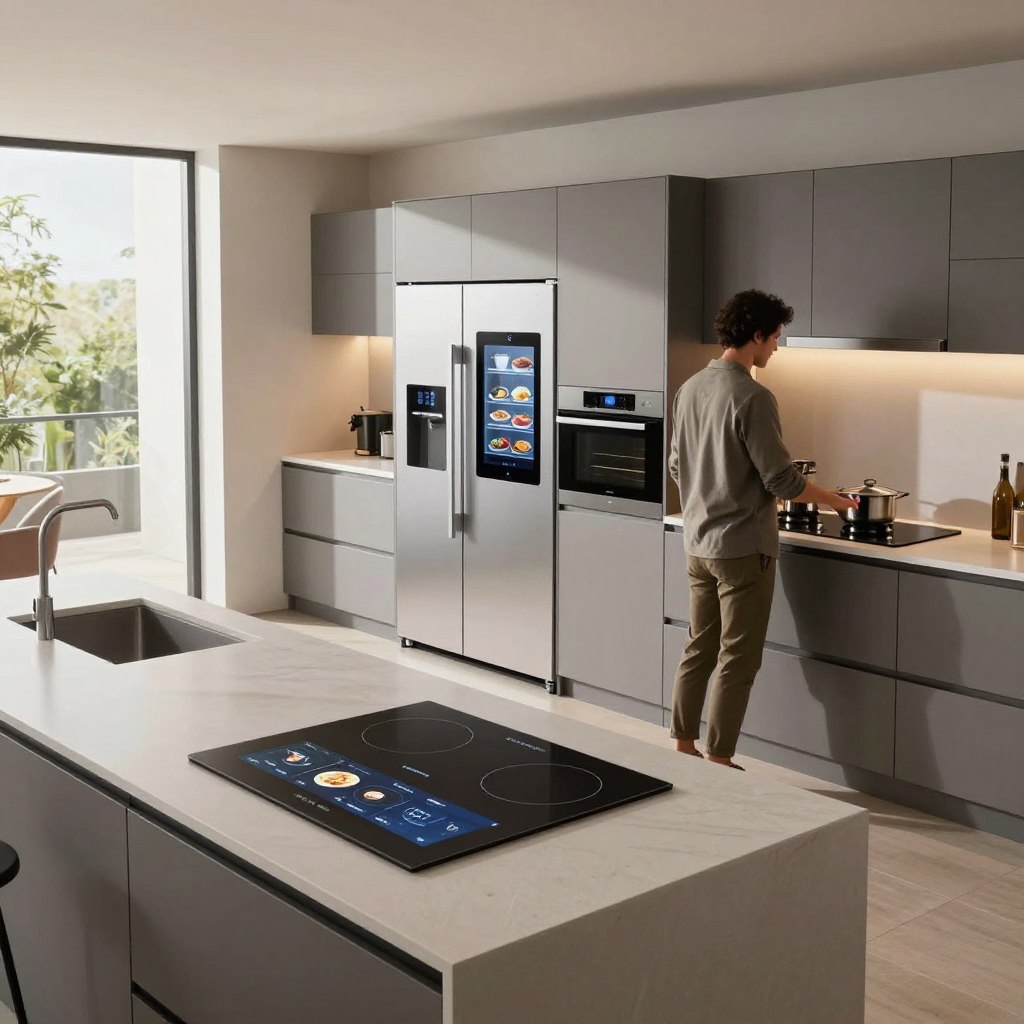
Step 1: Planning Your Smart Kitchen Ecosystem
Start by figuring out what you really need before buying anything. Think about what will make cooking better in a small space. I look at these main areas:
- Lighting control: Systems that change with the time of day or what you’re doing
- Appliance connectivity: Ovens, fridges, and cooktops that talk to each other
- Voice command readiness: Plan where your voice assistant will hear you best
- Safety systems: Water sensors, smoke detectors, and automatic shut offs
Make a simple map of your kitchen. Mark where smart hubs, sensors, and charging spots can go. This helps avoid messy placement that messes up your effective kitchen arrangement. Think about how tech will help your workflow, not get in the way.
Step 2: Selecting Space Saving Smart Appliances
Pick appliances that are smart and don’t take up too much space. Many brands now have slim models with all the smart features. Look for these in 2026:
- Integrated Wi-Fi and Bluetooth: Built right into the appliance, not as extra modules
- Stackable functions: Units that save space by combining functions
- Quiet operation: As the NKBA notes, less noise means a better life
- Energy monitoring: See how much energy you’re using in real time
I suggest starting with your most-used appliances. A smart fridge that tracks what’s inside can help avoid clutter. An induction cooktop with exact temperature control saves energy. Each smart addition should help your space efficient kitchen design.
Step 3: Implementing Voice and App Controls
Use a single hub or voice assistant for all controls. This keeps your phone apps simple. In narrow kitchens, voice commands are especially useful when your hands are full.
Here’s how to set it up:
- Pick your main platform (Amazon Alexa, Google Home, or Apple HomeKit)
- Put a smart speaker in a central spot with good mic range
- Link all compatible devices to your chosen system
- Make routines for common tasks like “morning coffee” or “cleanup mode”
Test the system from different spots in your kitchen. Make sure voice commands work well near water or fans. A well-set-up control system makes your efficient kitchen layout feel easy and responsive.
Hidden Technology Solutions for Streamlined Design
Hide tech to keep your kitchen looking clean. These hidden solutions meet practical needs without being distracting.
My top picks for 2026 include:
- In drawer wireless charging: Charging in utensil drawers for clean counters
- Under cabinet plug strips: Hidden power sources that are easy to reach
- Smart water shut off valves: Automatic leak protection that doesn’t need daily checks
- Motion-activated task lighting: Sensors in cabinet toe kicks
Think about putting a smart water monitor under your sink. It alerts your phone at the first sign of moisture. This meets the NKBA’s safety focus. Such hidden features protect your investment and support your effective kitchen arrangement.
Remember, tech should enhance your design, not overwhelm it. Each smart feature should feel like a natural part of your kitchen’s function. With careful planning, you can create a connected kitchen that’s both advanced and organized.
Working Within Budget Constraints
Budget limits can spark creative ideas in kitchen design, especially in 2026. Having a clear budget helps make better choices. It focuses on what’s important for both function and style.
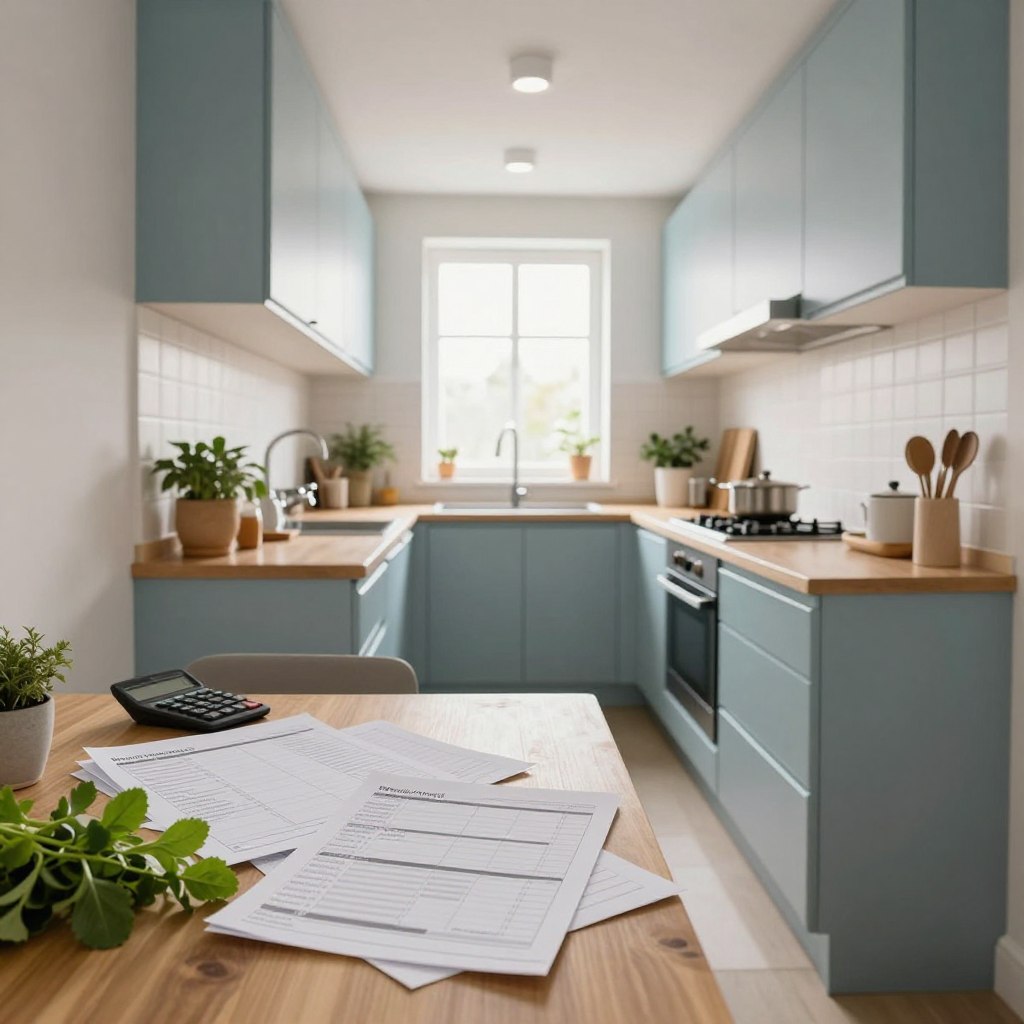
In a long, narrow kitchen, every dollar counts. The goal is to get the most impact without spending too much. I help clients make a plan that fits their dream kitchen.
How to Prioritize Spending in a Narrow Kitchen Remodel
Your first investment should be in the functional layout. This is the kitchen’s foundation. Changing it later is expensive and disruptive.
Next, spend on quality cabinet boxes and strong storage systems. Designer Grey Joyner suggests adding natural wood cabinetry for warmth without a full makeover. This is a smart budget move.
Here is my recommended spending priority order:
- Professional layout planning and measurements
- Durable cabinet boxes and frames
- Custom pull-out storage systems
- Essential plumbing and electrical updates
- Surface materials and decorative elements
Investing in quality storage hardware early is wise. Smooth gliding drawers and sturdy hinges make daily life better. They also protect your cabinets over time.
Cost Saving Strategies I Use in 2026 Projects
Open shelving in select spots saves money. It replaces upper cabinets on one wall. This keeps storage while opening up the space.
Modern laminate countertops look like stone but cost less. I recommend them for clients on a budget.
A simple refresh with paint and new hardware can transform cabinets. This keeps the structure but updates the style.
My favorite 2026 tip is using color drama. Consider a moody, dramatic paint color in a butler’s pantry or accent zone. This creates big visual impact at low cost. It’s a design risk with big rewards.
Where to Splurge and Where to Save
Strategic spending makes your narrow kitchen feel luxurious. Spend on items you use often. Save on decorative elements.
| Category | Splurge Items | Save Items |
|---|---|---|
| Storage Systems | Custom pull outs, drawer organizers, quality hardware | Basic shelf inserts, standard door hinges |
| Surfaces | Durable countertop near sink, quality cabinet boxes | Laminate counters on secondary areas, painted backsplash |
| Appliances | One high performance multi function oven or cooktop | Basic refrigerator, standard dishwasher |
| Lighting | Quality LED task lighting under cabinets | Decorative pendants, basic ceiling fixtures |
| Finishes | One statement material (like natural wood accent) | Paint for walls and cabinets, affordable hardware |
The table above shows clear priorities. Never compromise on items that affect daily workflow. Storage accessibility and task lighting are key.
Save on decorative lighting fixtures and backsplash materials. These can be updated later. Focus your funds on the permanent, functional parts of the space.
Remember, a narrow kitchen remodel succeeds through smart choices. Your budget becomes a tool for creativity. The result is a personalized, efficient space that feels anything but constrained.
Avoiding Common Design Mistakes
Turning a cramped corridor into a beautiful kitchen is all about avoiding a few key mistakes. A long, narrow layout can make every error stand out. By knowing these common pitfalls, you can make your hallway kitchen design feel open and efficient.
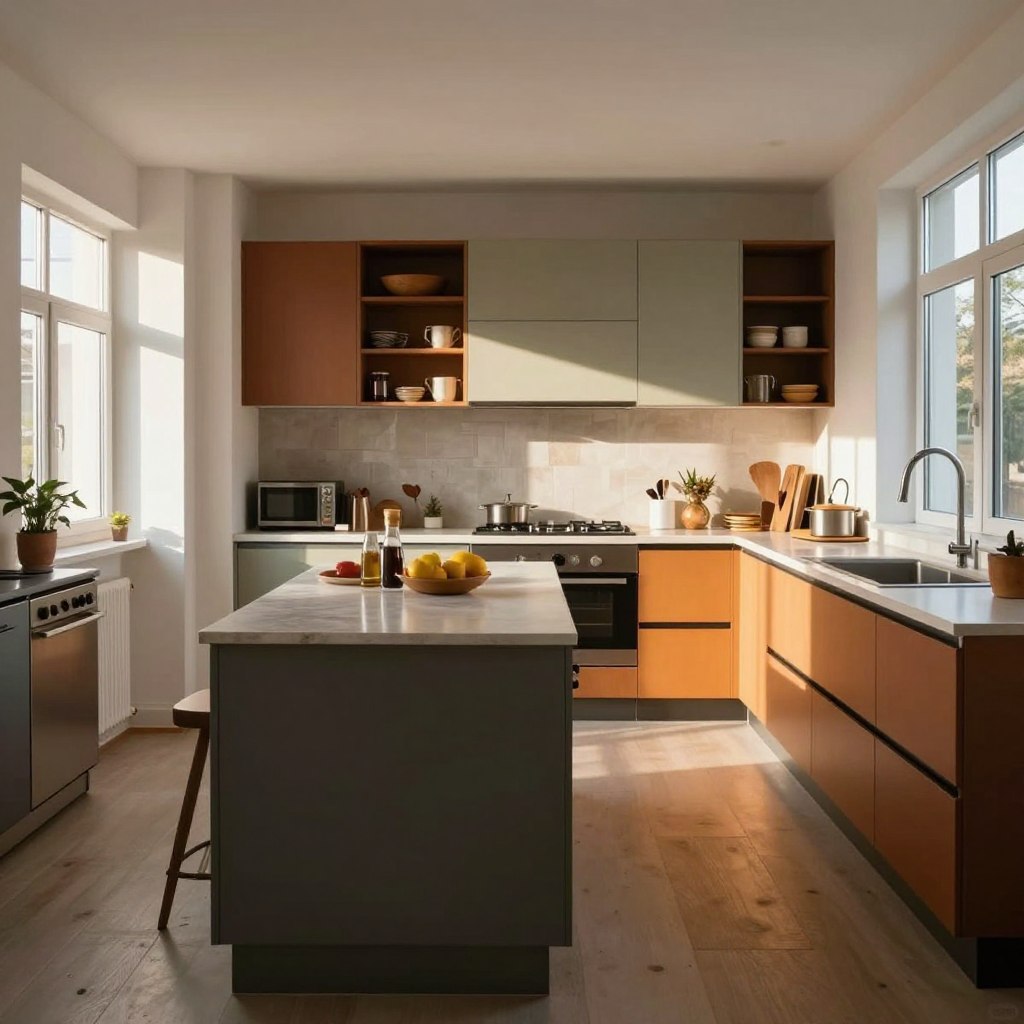
Mistake 1: Overcrowding the Space
It’s natural to want to fill every inch, especially in small spaces. But this can lead to a cluttered and stressful kitchen. Too many big pieces, like an oversized island, can make the room feel cramped.
For 2026, focus on dedicated zones. Plan for a main cleanup area and a separate prep or coffee spot. A butler’s pantry is great for hiding work, keeping countertops clear and the kitchen feeling open.
Mistake 2: Ignoring Traffic Flow
In a narrow kitchen, how you move is key. A layout that blocks the path between sink, fridge, and stove is a big mistake. It makes cooking a hassle.
Always keep a clear path of at least 42 inches. For a single cook kitchen, this is essential. In a pass through kitchen, ensure enough room for two people to move easily. Good flow is invisible when done right, but painfully obvious when it’s wrong.
Mistake 3: Poor Lighting Planning
Using just one ceiling light can make a kitchen feel dark and cave-like. Shadows can make it hard to chop veggies or read recipes. This mistake makes the space feel even tighter.
I use a layered lighting strategy. This includes ambient, task, and accent lights. Undercabinet LED strips light up countertops. Pendant lights over a peninsula define zones. Dimmers control the mood, making the room feel wider and brighter.
Mistake 4: Inadequate Storage Solutions
Standard cabinets often waste space in narrow kitchens. When storage fails, counters get cluttered with small appliances and pantry items. This defeats the goal of a streamlined kitchen.
Custom pull out systems are a game-changer. I choose tall, full height cabinets that use vertical space. Drawers with dividers keep utensils organized. Solutions for blind corners, like swing-out shelves, make the most of every inch. A smart hallway kitchen design sees storage as a key feature, not an afterthought.
Conclusion
A long narrow kitchen is a design challenge. It’s a chance to plan smartly and use the space well. The trick is to work with the space, not against it.
Designing a kitchen in this shape needs careful thought. A galley or single wall layout is often the best choice. The work triangle should be efficient but not too tight.
Every choice, from where you put appliances to the hardware on cabinets, should be thoughtful. It should help with more than one task.
Storage is key in a narrow kitchen. Using vertical space and custom pull-outs helps a lot. Brands like Rev-A-Shelf offer great solutions.
Clever use of corners and toe kick areas adds room. This keeps the kitchen from feeling too small.
The 2026 kitchen trends are all about warmth and personal touches. Natural materials like oak or quartz add texture. LED strips from Philips Hue create a nice atmosphere.
Reflective surfaces and light colors make the kitchen feel wider. This makes the space more inviting.
Smart technology from Samsung or LG should fit right in. Voice controls and apps keep things tidy. The aim is a kitchen that’s both efficient and welcoming.
Your long narrow kitchen can be the heart of your home. Use these strategies to make it efficient and beautiful. It will be a kitchen perfect for 2026 and beyond.
Looking for more inspiration beyond long and narrow layouts? Explore these kitchen design ideas to refine lighting, materials, and color palettes for a truly modern kitchen.
- 10 Stunning Open Concept Kitchen and Living Room Designs for 2026
- 10 Modern Kitchen Colors The “Golden Key” to Elevating Luxury Status
- The Statement Piece: 10 Backsplash Masterpieces Transforming Modern Kitchens into a “Whoa!” Space
- Top 10 Trendy Kitchen Countertop Designs to Instantly Upgrade Your Kitchen
- 10 Open Kitchen Designs to Welcome the Morning Sun Like Never Befor