
In the botanical world, the eggplant is a creature of “multiple personalities.” In its raw state, it is firm, spongy, and slightly bitter. However, once touched by the flame, its cellular structure undergoes a miraculous collapse, transforming the inner flesh into a silky, buttery cream infused with a distinct smokiness.
The dish of Roasted Eggplant with Lemon Tahini Sauce is not merely a recipe; it is a dialogue between Fire (The Charred Eggplant) and Earth (The Sesame Seeds in the Tahini), connected by Air (The Pure Fragrance of Lemon).
1. Material Study: Selecting the Perfect Specimen
To create a world class dish, you must begin by profoundly understanding your “material.”
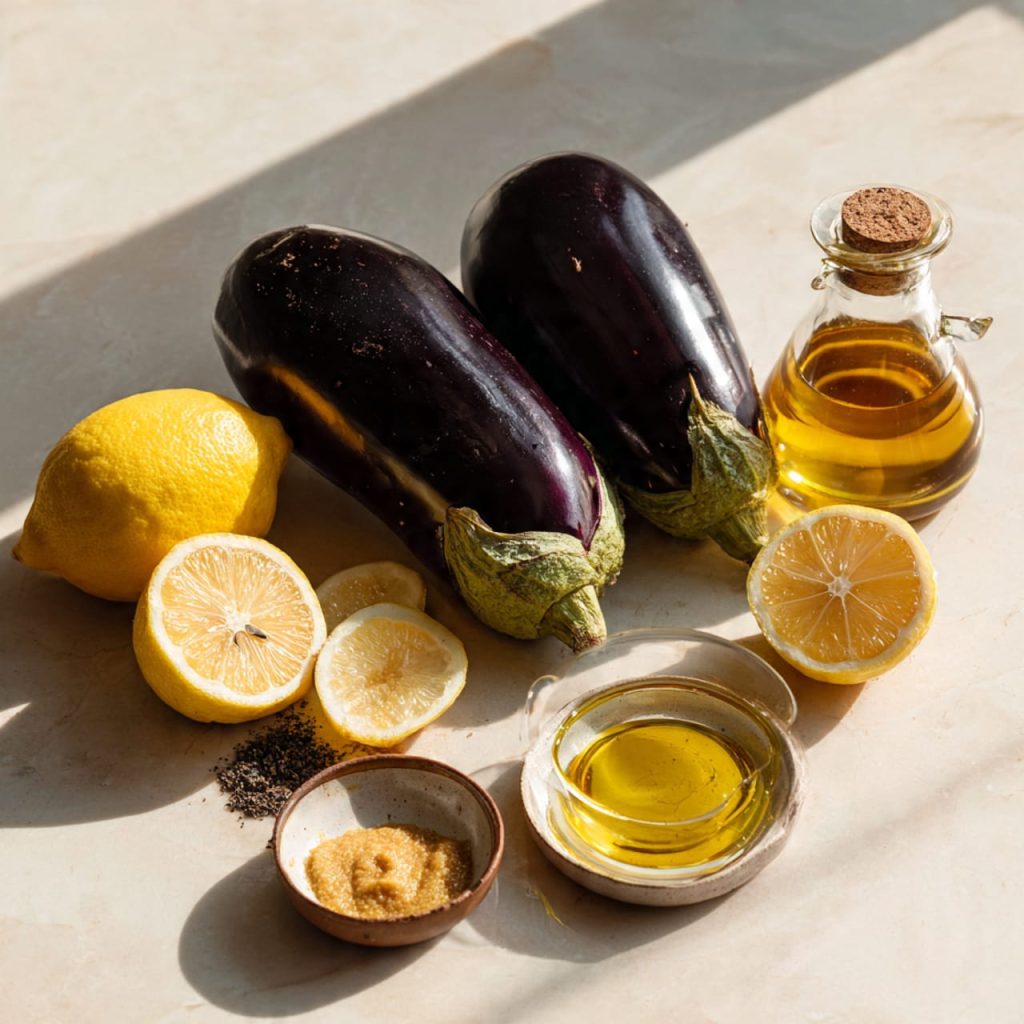
1.1. The Eggplant A “Block of Stone” to be Sculpted
Avoid overly large eggplants. Slender varieties or medium-sized globe eggplants generally contain fewer seeds, possess firmer flesh, and lack intense bitterness.
-
The Test: The skin must be as glossy as lacquer, with a deep purple hue approaching black. When pressed lightly, it should yield with elasticity. If the eggplant is too soft, it has begun to “age,” indicating a bitter, seed heavy interior.
1.2. Tahini The “Fluid Gold” of the Middle East
Tahini is a paste made from finely ground toasted sesame seeds. Premium Tahini should have a fluid consistency, a pale cream color, and a rich nutty aroma without a harsh, burnt after taste.
-
Chef’s Tip: If you cannot find high quality store bought Tahini, toast white sesame seeds until fragrant (but not brown) and blend them with extra virgin olive oil until absolutely smooth.
1.3. Yellow Lemon The “Light” of Flavor
Unlike the sharp, acidic bite of green limes, yellow lemons offer a sophisticated citrus oil aroma and a mellow sweetness. This is the catalyst that cuts through the richness of the Tahini.
2. The Science of Structural Transformation
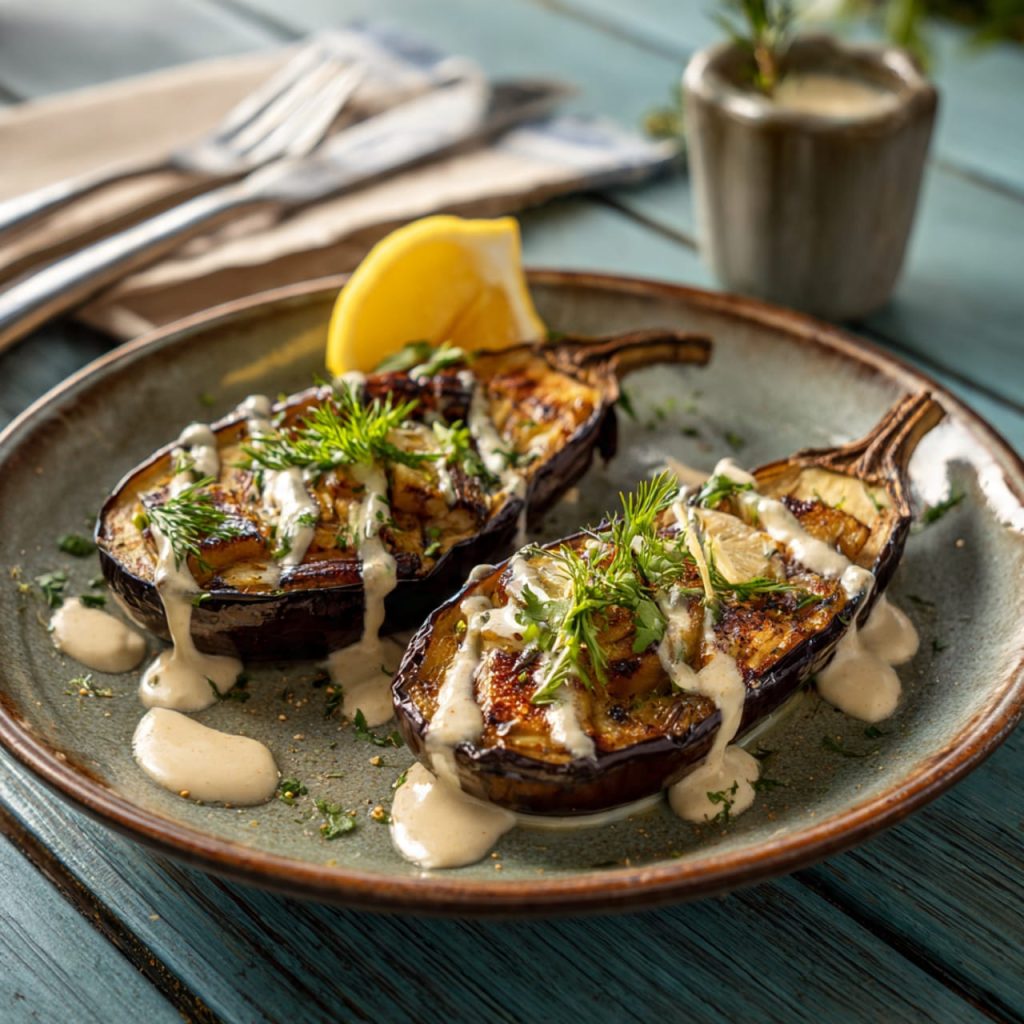
Why is roasted eggplant so addictive?
-
The Maillard Reaction: At high temperatures, the sugars and proteins in the eggplant react to produce that deep, smoky sweetness.
-
Creamy Architecture: Eggplants are porous. Under heat, the air pockets within the flesh collapse, turning the vegetable into a natural “cream” without the need for dairy.
-
Nutritional Value: The skin contains nasunin a potent antioxidant that protects brain cells and manages blood lipid levels.
3. The Execution: A Fusion of Heat and Sauce
Step 1: Surface Treatment
Do not simply slice an eggplant and toss it in the oven. Treat it like a canvas.
-
Sculpting: Halve the eggplant lengthwise. Use the tip of a sharp knife to score a diamond (cross-hatch) pattern into the flesh. Note: Cut deep, but do not pierce the skin.
-
The Brining: Sprinkle sea salt into the gaps and let it rest for 15 minutes. The salt draws out the bitter moisture. Pat dry, then brush generously with extra virgin olive oil. The oil will seep into the cuts, ensuring a velvety texture during roasting.
Step 2: Mastering the Flame
-
The Roast: Place the eggplant cut-side down on a tray lined with parchment paper. Roast at 200°C (400°F) for 25–30 minutes.
-
The Result: The flesh must be deeply caramelized (golden brown), and the skin should appear wrinkled and soft. When touched with a spoon, the interior should be soft enough to “melt.”
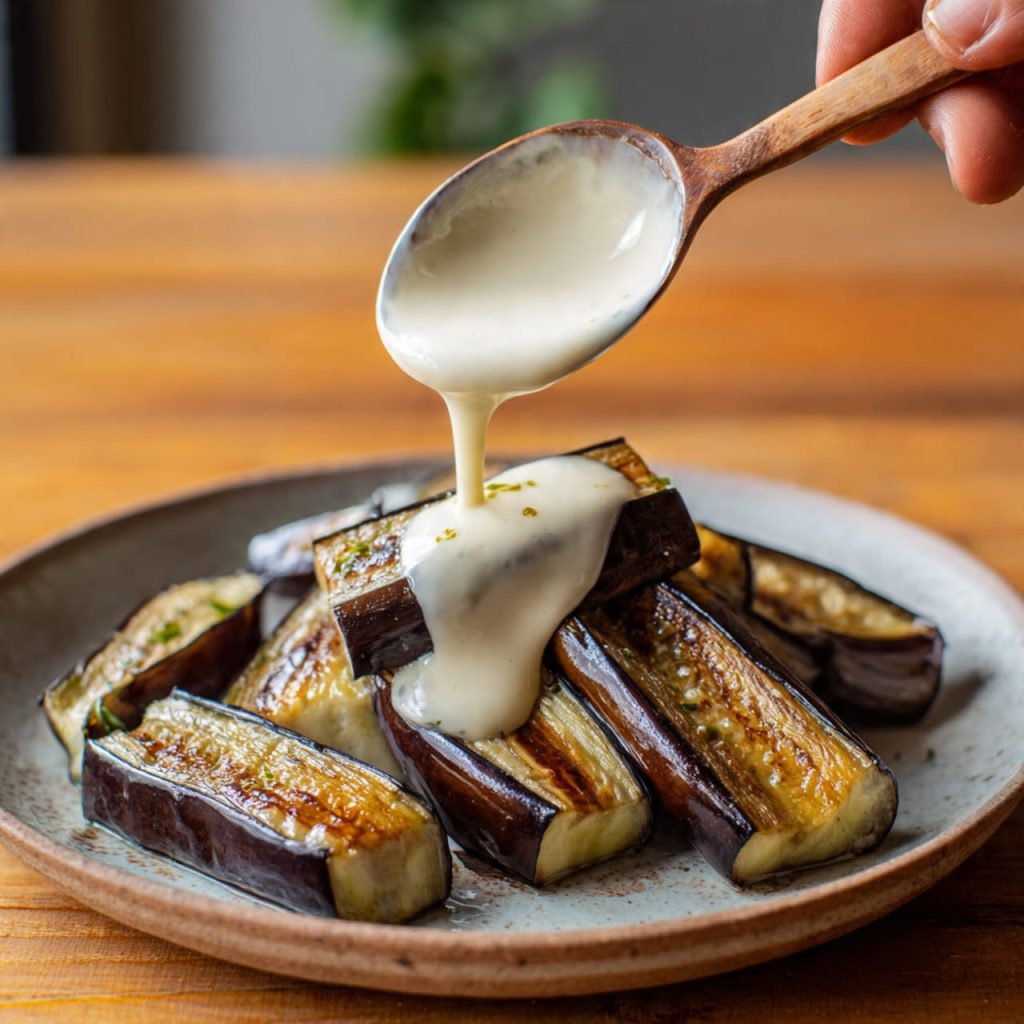
Step 3: Conjuring the Lemon Tahini Sauce
While the eggplant roasts, create the “lacquer” for the dish.
-
The Formula: 3 tbsp Tahini + juice of half a yellow lemon + 1 small clove of minced garlic + a pinch of salt + 1 tsp of maple syrup (to maintain the vegan profile).
-
Emulsification Technique: Initially, the Tahini will “seize” or clump when the lemon juice hits it. Do not panic! Add ice-cold water, one table spoon at a time, whisking constantly. The ice water emulsifies the fats, transforming the paste into a snow-white, silky smooth cream.
Step 4: The Final Composition
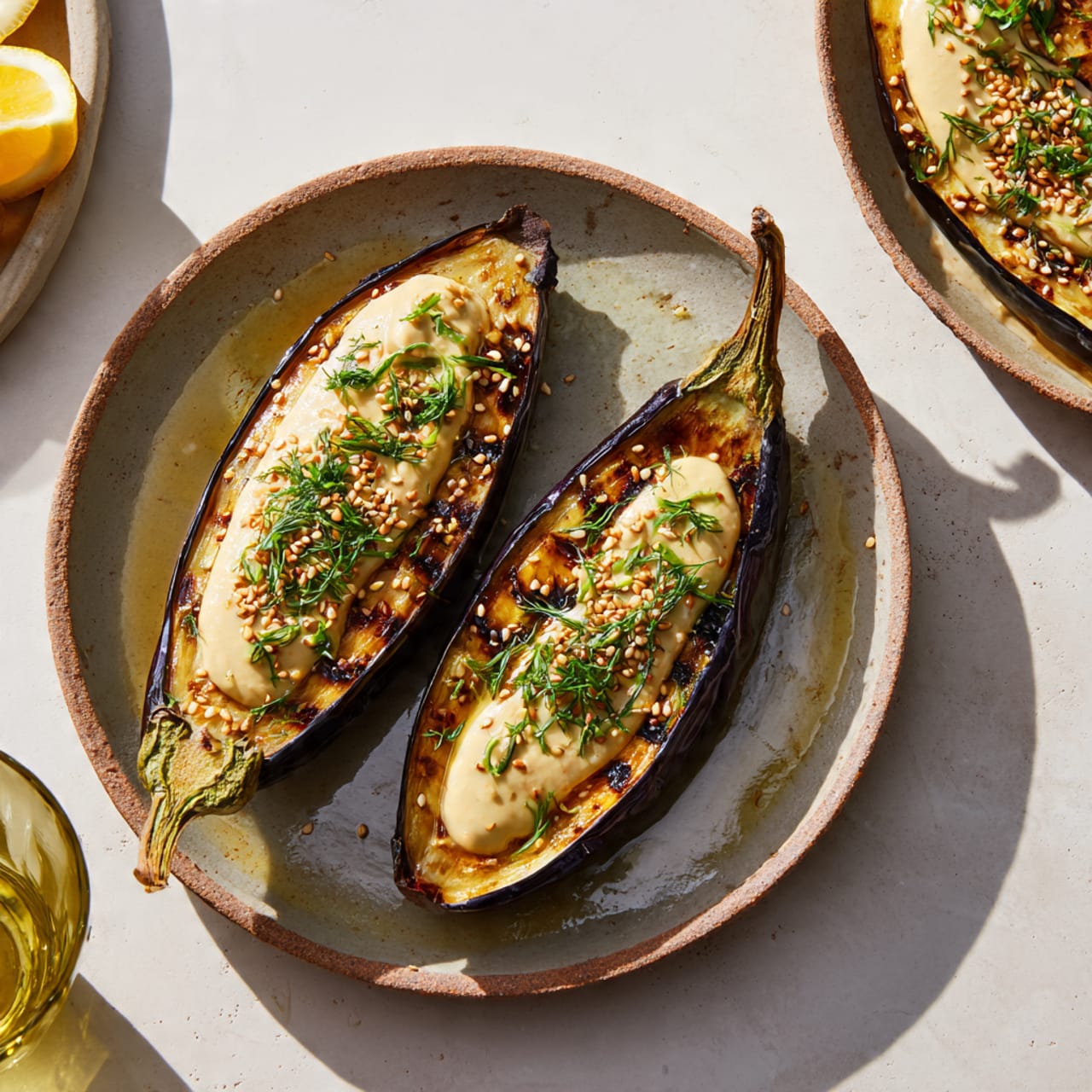
Place the roasted eggplant on a wide plate. Gently press the center with a spoon to create a shallow well.
-
The Drizzle: Pour the Tahini sauce into the center, allowing it to overflow into the diamond-patterned crevices created earlier.
-
The Accents: Garnish with ruby-red pomegranate seeds (for tartness and crunch), fresh mint leaves, and a dusting of Smoked Paprika to amplify the smoky notes.
4. Troubleshooting: Common Pitfalls
-
Tough or Underdone Eggplant: Usually caused by low temperatures or rushing the process. The Solution: The eggplant is only ready when it can be scooped out effortlessly with a spoon. If not, roast for another 5–10 minutes.
-
Bitter Sauce: This results from low-quality Tahini or raw garlic that is too pungent. The Solution: Roast the garlic clove before mincing to mellow its bite, or add a touch more maple syrup to balance the sesame’s bitterness.
-
Flat Flavor: Eggplant requires sufficient salt to unlock its sweetness. The Solution: Season the eggplant before roasting and ensure the sauce is properly salted.
5. Sensory Journey: A Multi faceted Tasting
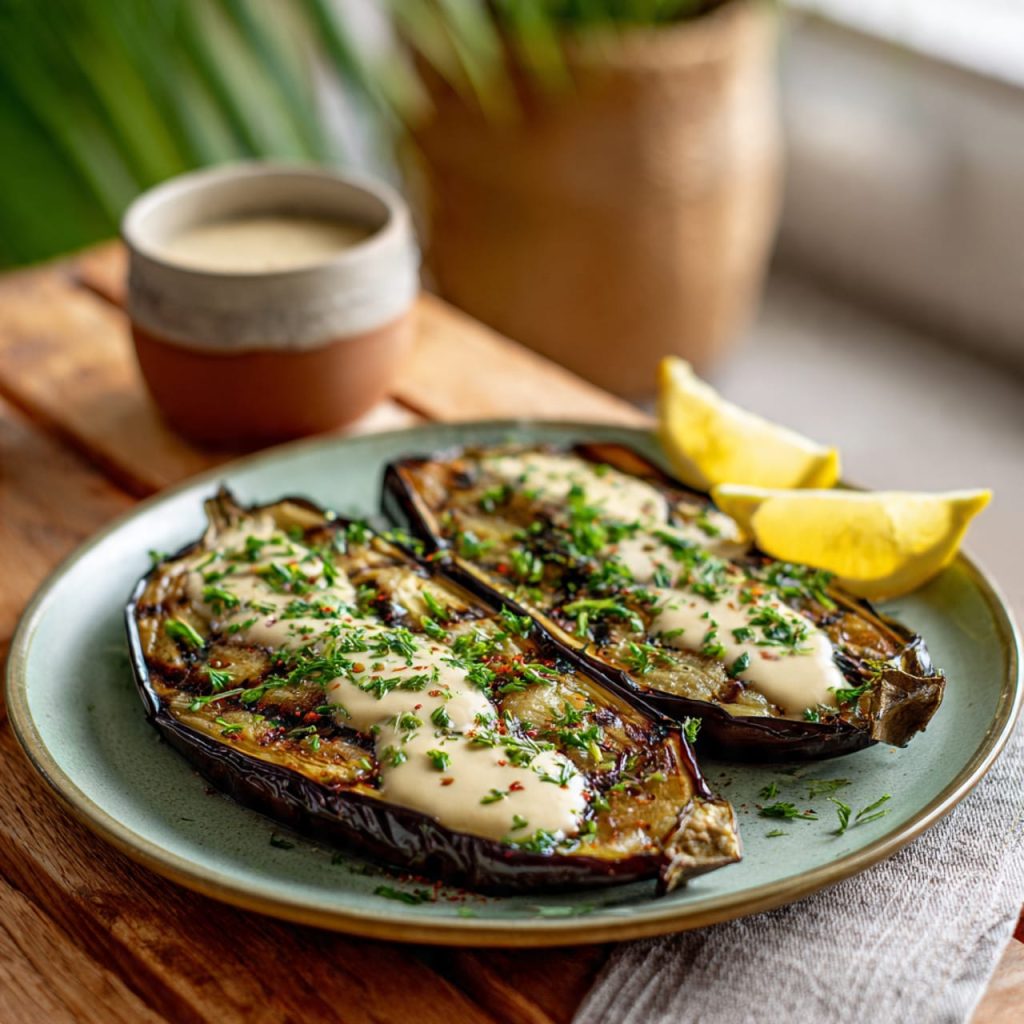
When you take a spoonful of this dish, you experience:
-
Scent: The intense smoke of the roasted flesh mingling with toasted sesame and citrus zest.
-
Taste: The buttery richness of Tahini, the bright acidity of lemon and pomegranate, and the profound sweetness of the caramelized eggplant.
-
Texture: An absolute silkiness that dissolves on the tongue, punctuated by the occasional crunch of a pomegranate seed.
Final Thoughts: The Materiality of Flavor
Cooking Roasted Eggplant with Lemon Tahini Sauce is more than just applying heat. It is a study of how matter changes state under the influence of temperature and acid. From a rustic, humble vegetable, we have refined a masterpiece where simplicity becomes magnificent.
I hope this guide ignites an artistic spark in your kitchen.