
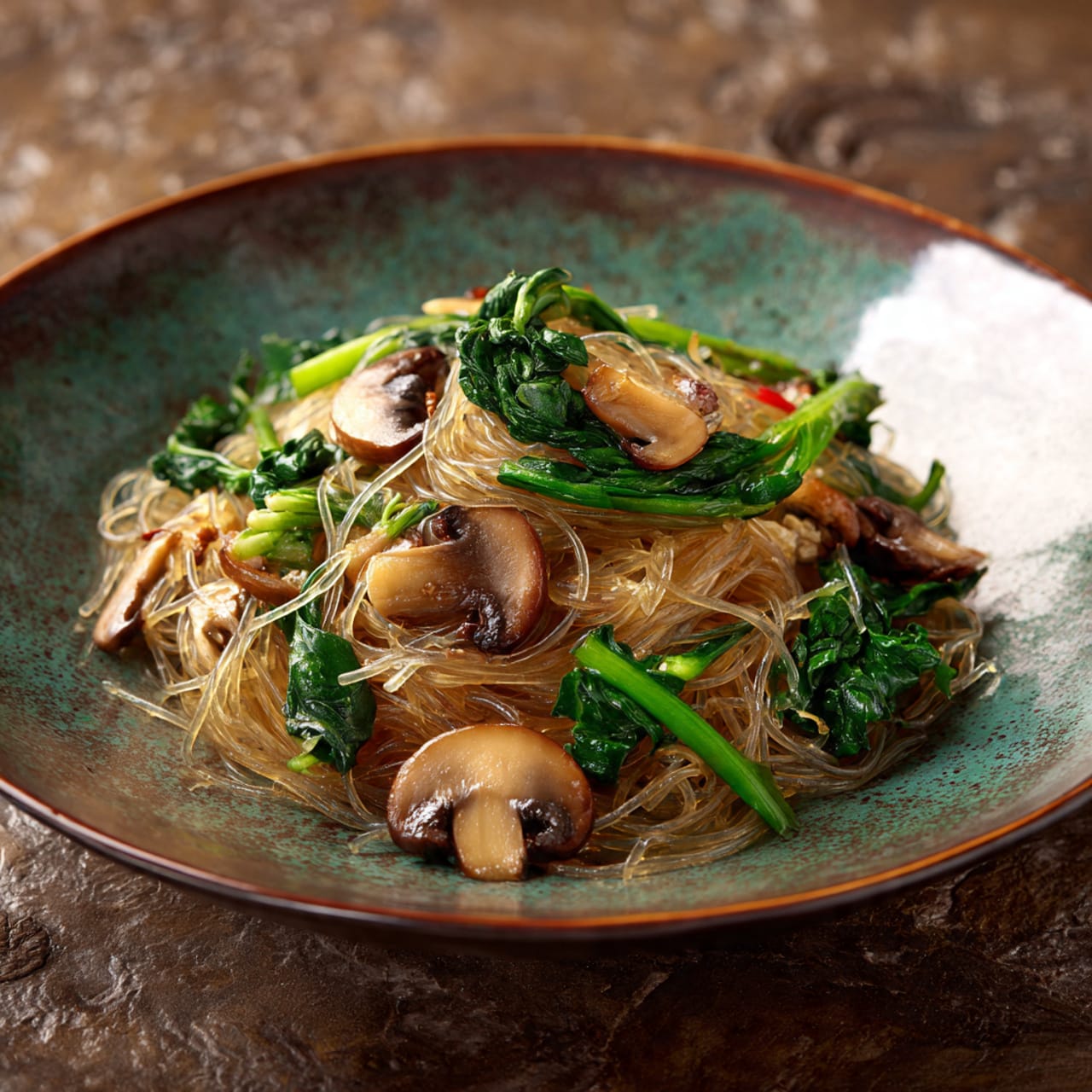
If soup is a warm embrace, then a perfectly executed plate of stir fried noodles is a celebration of texture. Forget those clumpy, oily, or bland noodle dishes you may have encountered at subpar eateries. A world class plate of Stir fried Glass Noodles (Mien Dong) with Mushrooms and Greens must achieve a specific harmony: the noodles should be elastic and glossy yet dry; the mushrooms must be succulent and bursting with Umami; and the greens must remain vibrant and crisp.
To reach this culinary peak, we must think like an engineer and feel like an artist.
1. The Selection Understanding the Nature of Canna Starch
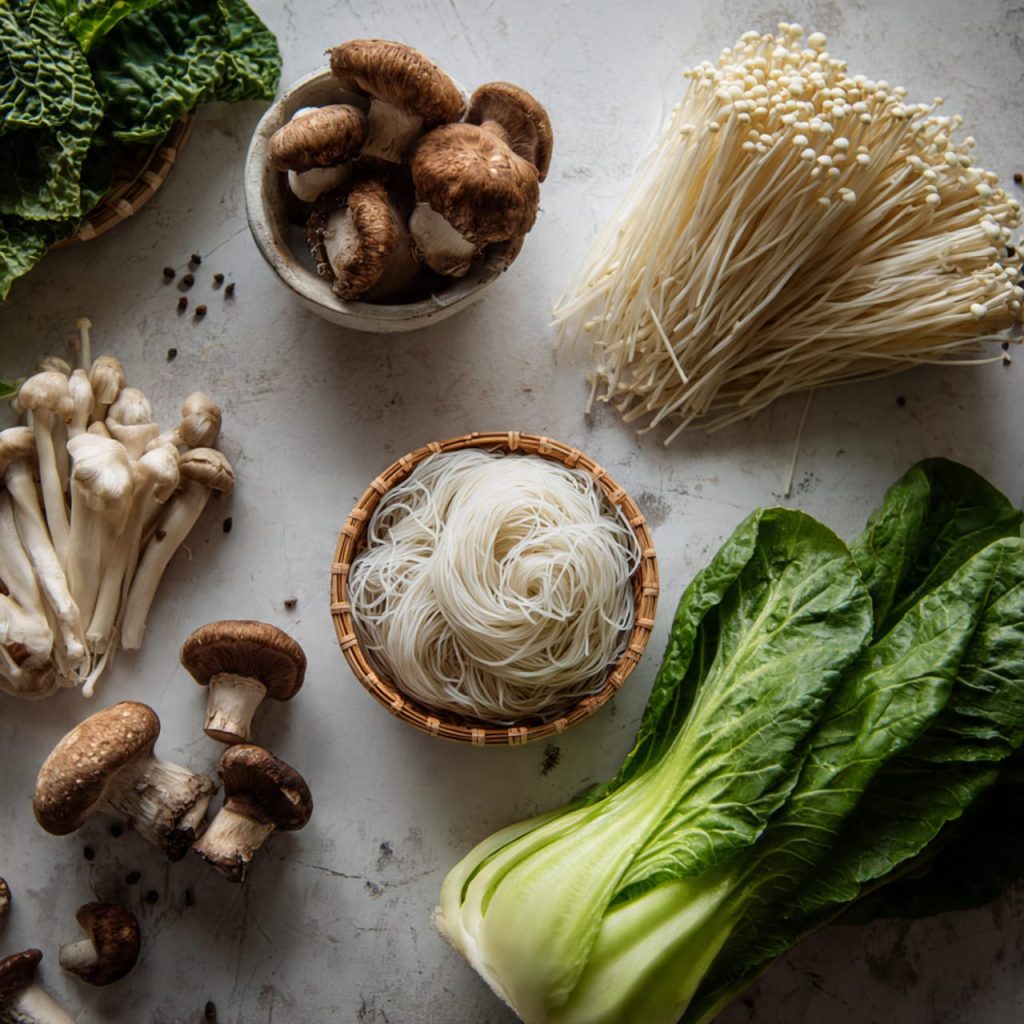
In the vast world of noodles, Glass Noodles (Mien Dong) are a unique entity. Made from canna starch (arrowroot family), they possess a higher heat resistance than mung bean or rice noodles.
-
The Noodles: Look for naturally dried canna noodles that are slightly grey or off-white (avoid bleached varieties). The strands should be tough and difficult to break when dry.
-
The Mushroom Ensemble “The Meat of the Vegetarian”: Do not settle for just one type. Combine Fresh Shiitake (for a deep, earthy aroma), King Oyster Mushrooms (for a meaty, chewy texture), and Wood Ear Mushrooms (for that delightful “crunch” in every bite).
-
The Greens: Bok choy or Choy Sum are the optimal choices. The stems should be succulent, and the leaves must be tender enough to catch the sauce.
Chapter 2: Nutritional Profile Clean Energy from the Earth
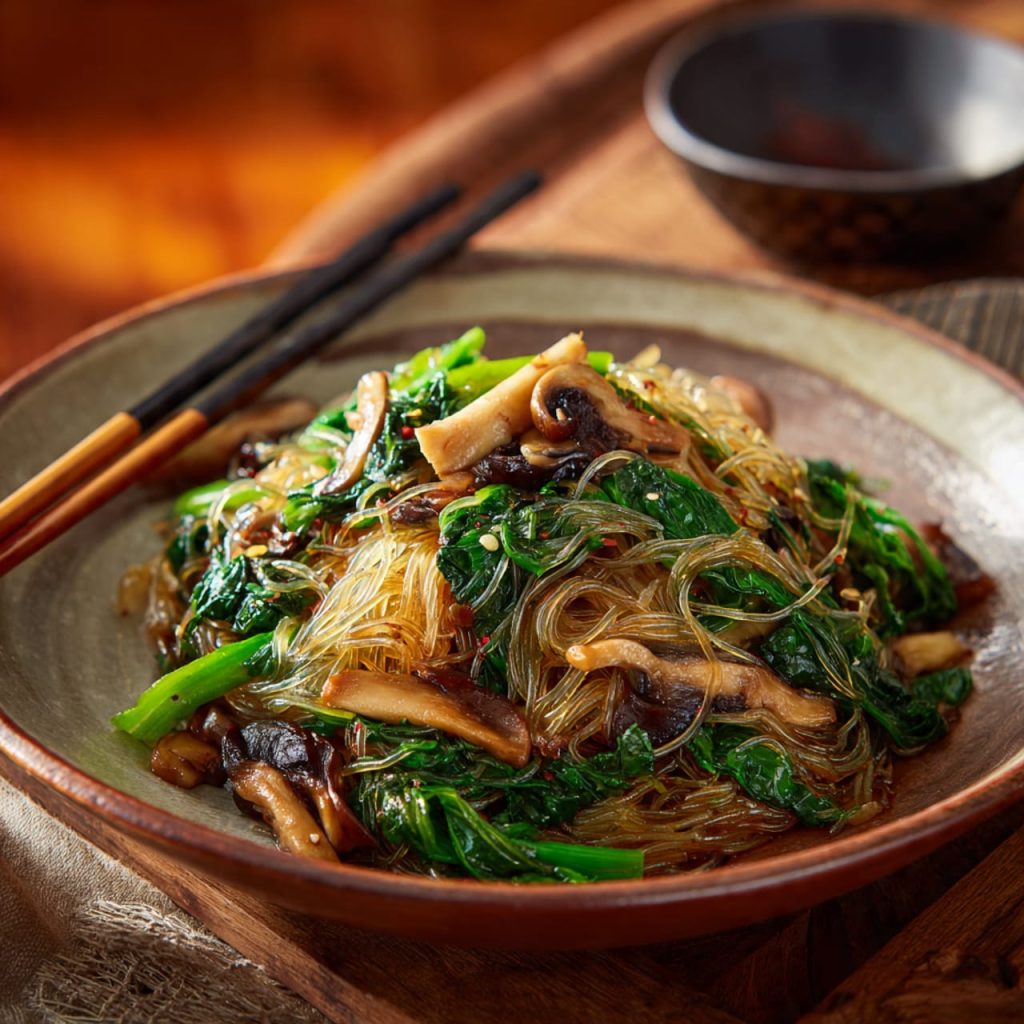
Why is this dish revered by those pursuing a healthy lifestyle?
-
Low Glycemic Index (GI): Canna starch has a high amylose content, meaning it is absorbed more slowly than white rice, preventing sudden blood sugar spikes.
-
Mushroom Power: Mushrooms provide Selenium and antioxidants that protect cells. They are one of the few plant based sources of Vitamin D.
-
Fiber and Chlorophyll: Green vegetables provide essential Calcium and fiber, which “sweep” the digestive tract and promote radiant skin.
-
Naturally Gluten Free: This is a heavenly dish for those with gluten sensitivities or Celiac disease.
3. The Pre treatment Ritual The Physics of Heat and Water
This is the stage where 90% of home cooks fail. Clumpy noodles are the result of poor starch management.
3.1. Soaking: The Art of Patience
Never parboil glass noodles in boiling water if you intend to stir-fry them. Instead, soak them in warm water (50-60°C) for 10-15 minutes. Once the strands are flexible but the core remains slightly firm (al dente), drain them immediately.
-
Chef’s Secret: Once drained, toss the noodles with 1 teaspoon of sesame oil and one egg white (if not strictly vegan) or a dash of soy sauce. This “coating” creates a barrier that prevents the strands from “dating” and sticking together when they hit the high heat of the wok.
3.2. Prepping the Produce
-
Shiitake: Score a cross or floral pattern on the caps to maximize the surface area for heat and sauce.
-
Greens: Separate the stems from the leaves. The stems require more time to cook, while the leaves wilt in a matter of seconds.
4. The “Wok Hei” Technique (The Breath of the Wok)
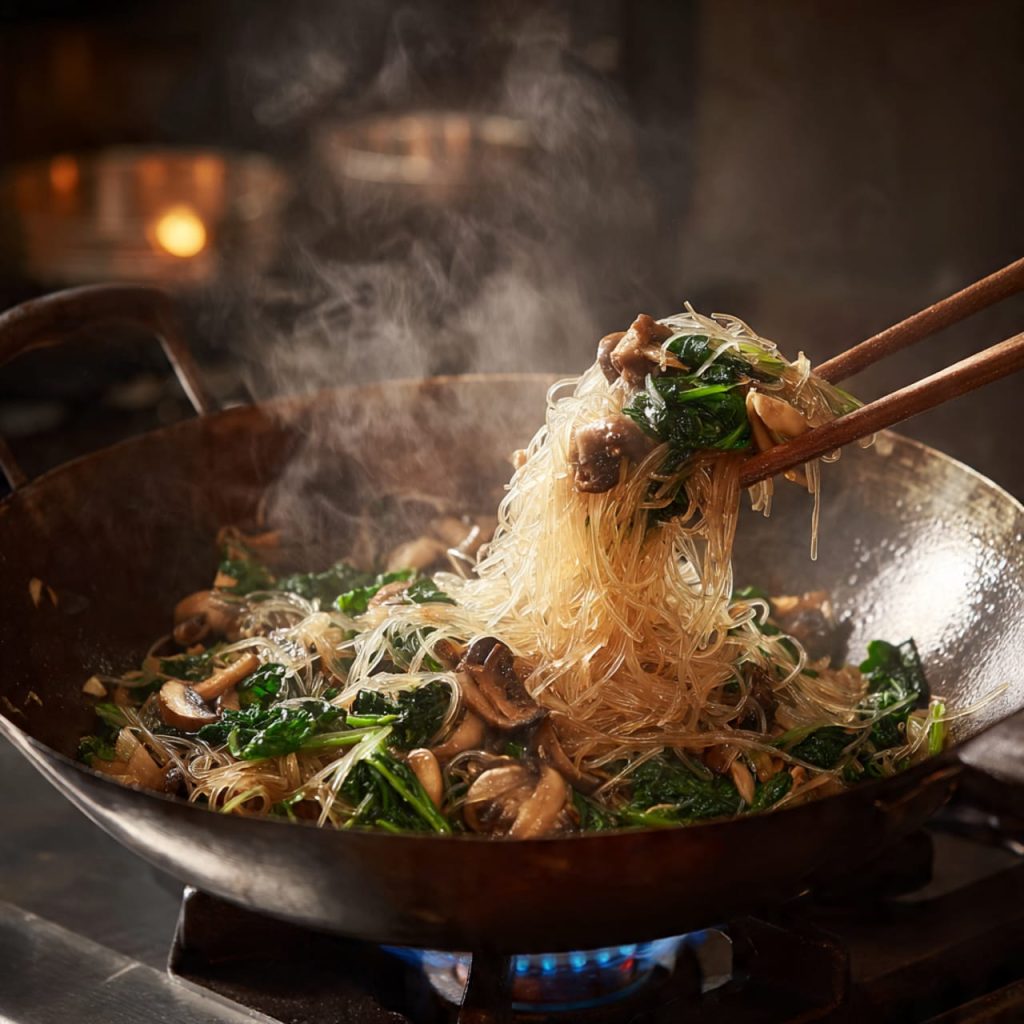
Stir-fried glass noodles are at their best when executed in a carbon steel wok over an intense flame.
Phase 1: Extracting Aromatics
Heat the wok until a thin wisp of smoke appears. Add oil and sauté the white part of leeks (Baro onion) and julienned ginger. Ginger is the “conductor” here it neutralizes the heavy earthiness of the mushrooms and awakens the fragrance of the noodles.
Phase 2: The Umami Sear
Add the mushrooms first. Resist the urge to add salt immediately; salt draws out moisture, which leads to soggy mushrooms. Sauté over high heat until the edges are slightly charred. This concentrates the sugars and creates a smoky aroma reminiscent of grilled meat.
Phase 3: The Greens and the Base Sauce
Add the vegetable stems to the mushrooms. Pour in your sauce mixture: soy sauce, vegetarian oyster sauce, a bit of palm sugar, and white pepper. Adding the sauce now allows the vegetables and mushrooms to absorb the flavor before the “main character” enters the stage.
Phase 4: The Final Fusion
Push the vegetables to the side, add a drop of oil to the center, and drop in the noodles.
-
The Action: Use long chopsticks and a spatula to toss continuously. Lift the noodles high into the air to let steam escape, ensuring they don’t become soggy. If they feel too dry, flick a few drops of mushroom broth into the pan instead of adding more oil.
-
Finally, add the green leaves. The moment they turn a deep, vibrant green and soften, turn off the heat immediately.
5. Troubleshooting Solving Common Issues
-
Mushy Noodles: Caused by soaking in water that was too hot or overcooking in the wok. Solution: Shorten the soaking time next time and always sauté at the highest heat for the shortest duration.
-
Watery Dish: Caused by the vegetables releasing too much liquid. Solution: Lightly pat the greens dry after washing and never cover the wok with a lid during stir frying.
-
Uneven Seasoning: Caused by seasoning the noodles directly. Solution: Always pre mix your sauce and season the vegetables/mushrooms first to create a “flavor bed” for the noodles to absorb.
6. Final Thoughts Wellness in Every Savorful Spoonful
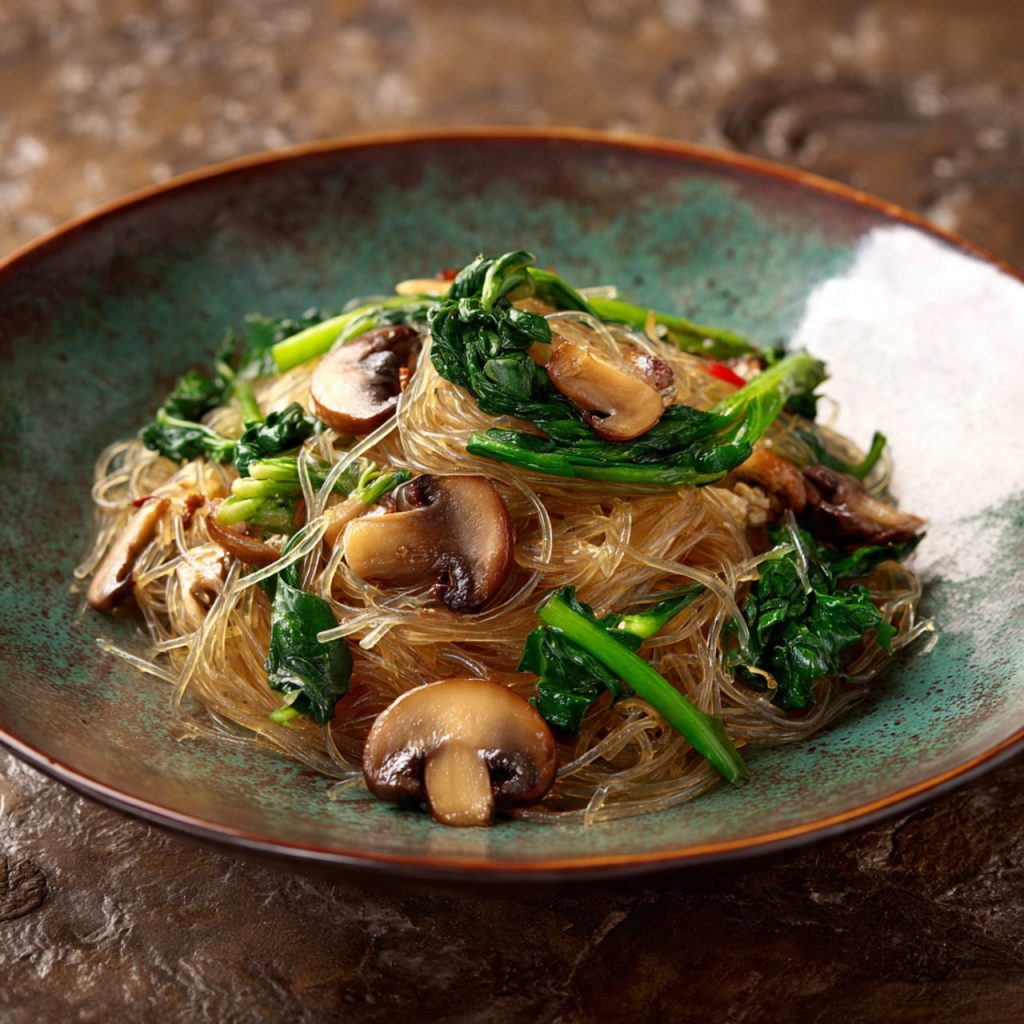
Cooking is more than just assembling ingredients; it is an act of mindfulness a way to nourish our bodies and souls through thoughtful choices. A truly exceptional Stir fried Glass Noodles with Mushrooms and Greens doesn’t rely on heavy artificial flavorings or excessive oil. Instead, it shines through the structural integrity of the starch and the vibrant freshness of the produce.
I hope these insights into the “science of the strand” empower you to master your wok. Remember, the patience you show in prepping the noodles and the speed at which you toss the greens are what truly breathe life into this dish.
Are you ready to hear the sizzle of the wok and create a masterpiece? If you have any questions about the starch science or want to share your culinary success, feel free to drop a comment below. Happy cooking and bon appétit!