

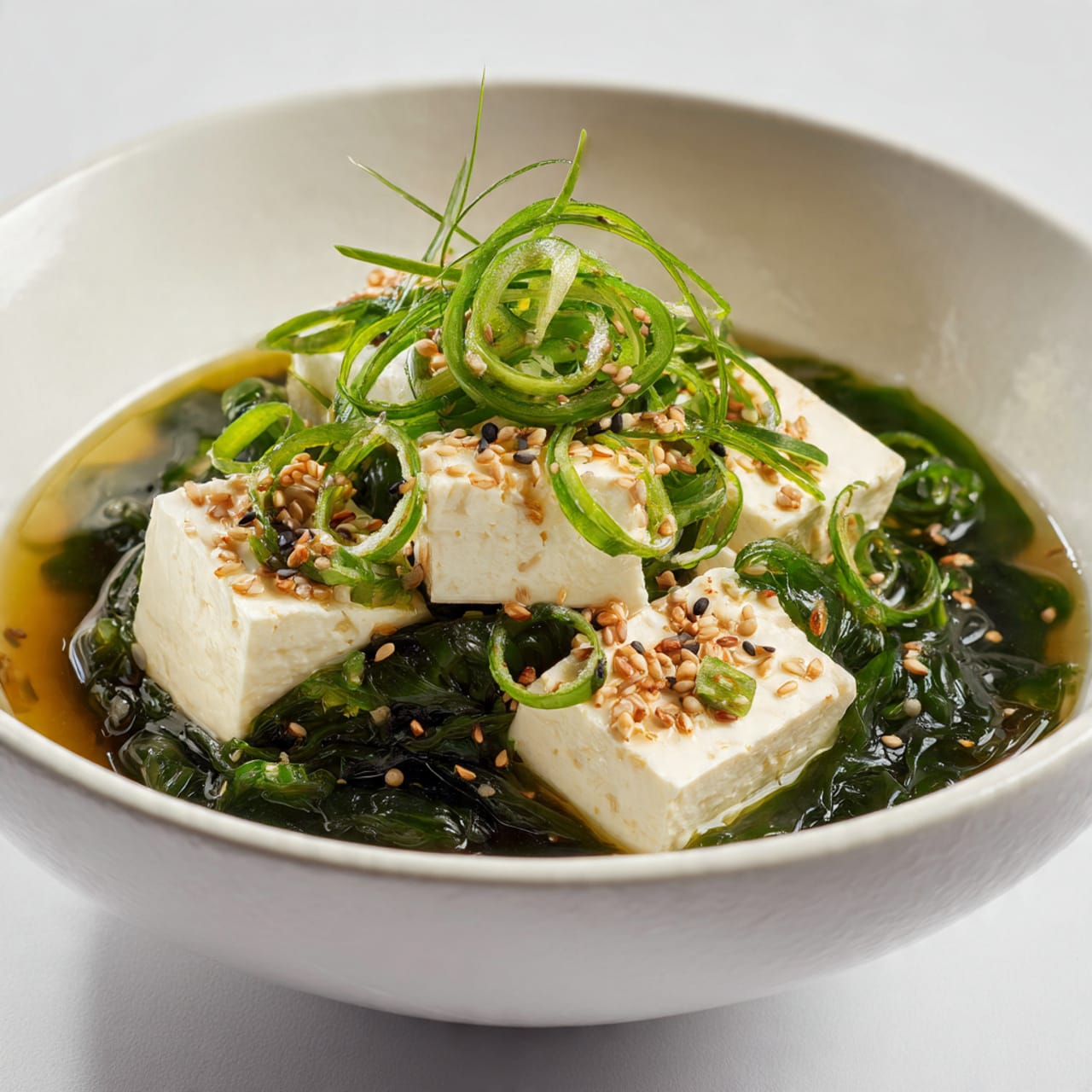
In East Asian cuisine, Seaweed and Tofu Soup is more than just a refreshing dish; it is a “tonic” for health. However, for those following a Gluten free lifestyle, a seemingly simple bowl of soup can harbor hidden gluten from industrial soy sauces or bouillon powders containing wheat fillers.
Today, we will master the Pure Seaweed and Tofu Soup, utilizing professional techniques to extract natural plant-based Umami without any gluten containing additives.
1. Health Benefits: Why is this Soup a “Superfood”?
Beyond its delicate flavor, this soup serves as a powerhouse of nutrients, often referred to as a natural “energy drink” from the ocean.
-
Rich Source of Iodine & Minerals: Seaweed is one of the highest natural sources of Iodine, crucial for supporting thyroid function and regulating metabolism. It also provides Magnesium, Calcium, and Iron for bone health and blood circulation.
-
Perfect Plant-Based Protein: Tofu provides all nine essential amino acids. It is a “clean” protein source cholesterol-free supporting heart health and muscle maintenance without causing digestive heaviness.
-
Detoxification & Digestive Support: The Alginate found in seaweed helps slow fat absorption and aids in flushing toxins. Being gluten free, this soup reduces gut inflammation and bloating, making it ideal for those with Celiac disease or sensitive digestion.
-
Antioxidants & Skin Radiance: The combination of Vitamin C and E in seaweed with isoflavones in tofu creates a powerful antioxidant shield, nourishing the skin from within and slowing the aging process.
2. Curated Ingredients (Serves 4)
To keep the soup elegant yet flavorful, selecting the right ingredients is 80% of the success.
-
The Seaweed: 20g dried seaweed (Korean Miyeok or Japanese Wakame).
-
The Protein: 2 blocks of Silken Tofu (ensure the label is certified Gluten free).
-
The Base: 1.5 liters of filtered water or homemade vegetable stock (simmered from radish, onion, and shiitake mushrooms).
-
Gluten-Free Seasonings:
-
2 tbsp Tamari (natural fermented soy sauce without wheat).
-
1 tsp toasted sesame oil.
-
1 tsp finely minced garlic.
-
Sea salt or Gluten free vegan fish sauce.
-
-
Add ons: Enoki mushrooms or fresh shiitake for extra texture.
3. Professional Execution
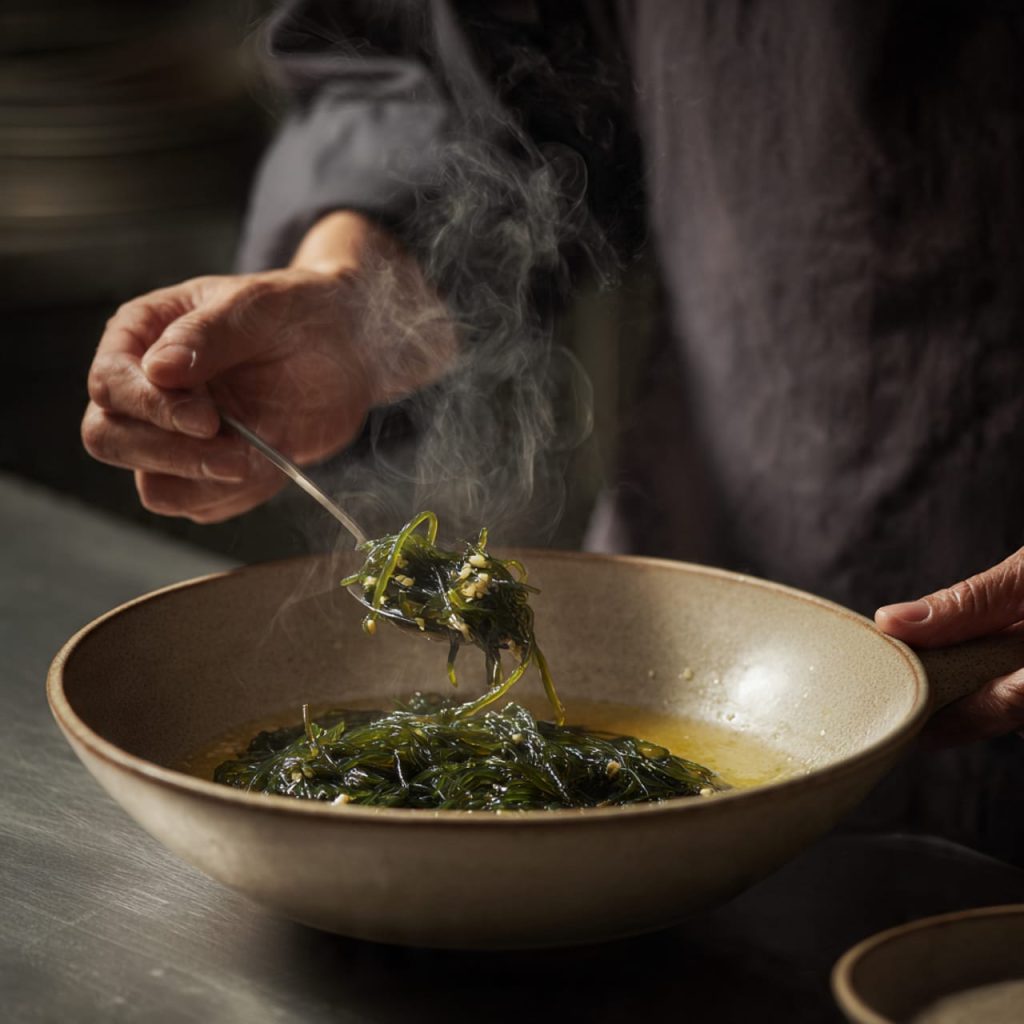
Step 1: Handling the Seaweed Removing “Fishiness” and Activating Flavor
Soak the dried seaweed in cold water for 15-20 minutes until fully expanded.
-
Expert Tip: After squeezing out the excess water, cut the seaweed into bite sized pieces and sauté it with 1 tsp of sesame oil and minced garlic for 2 minutes. This brief searing removes the raw “sea smell” and creates a firmer, more pleasant texture.
Step 2: Crafting the Umami Broth
If you aren’t using pre made stock, create a deep Umami base by boiling water with white radish slices and dried shiitake. Once boiling, remove the vegetables before adding the sautéed seaweed. This ensures a crystal-clear broth with a subtle, natural sweetness.
Step 3: Tofu Technique
Dice the silken tofu into small cubes (approx. 1.5cm).
-
Note: Silken tofu is extremely fragile. Only add it to the pot when the soup has reached a steady boil and you are nearing the end of the cooking process.
Step 4: The “Tamari Touch” and Finishing
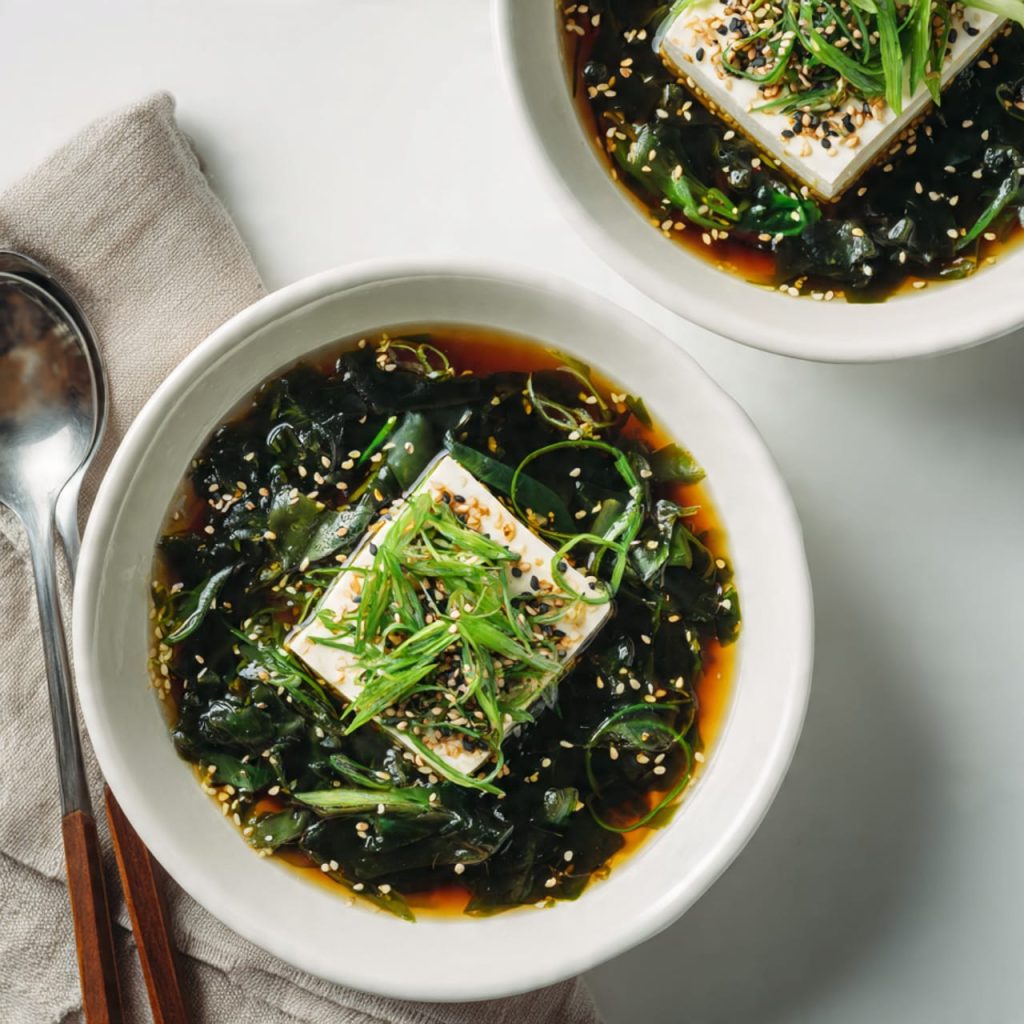
Use Tamari instead of regular soy sauce. Tamari offers a richer, darker profile and gives the broth a beautiful amber hue without the risk of gluten. Finally, add the enoki mushrooms and simmer for another 1-2 minutes until just tender.
4. Common Pitfalls to Avoid (Troubleshooting)
-
Mushy Seaweed: Over soaking or boiling seaweed for too long will destroy its texture. Aim for 5-7 minutes of cooking time once it hits the boiling water.
-
Cloudy Broth: This usually happens from using too much oil during sautéing or adding tofu too early and stirring aggressively. Always stir gently in one direction.
-
Flat Flavor Profile: If you only use salt, the soup will taste one dimensional. The secret lies in the Tamari and the initial Sesame Oil sear to build layers of flavor.
-
Hidden Gluten: Many “instant” stocks or cheap soy sauces contain wheat extract. Always check for “Certified Gluten Free” labels.
5. Serving & Presentation
-
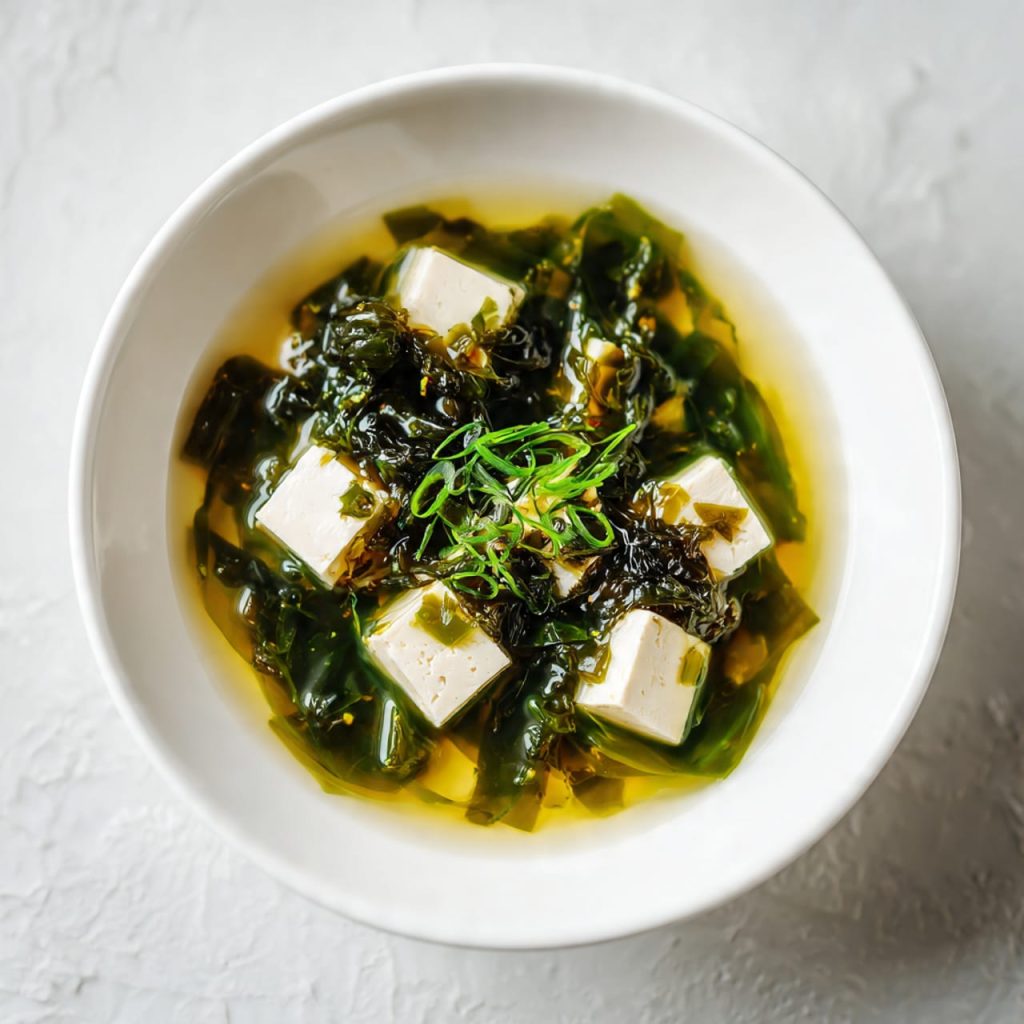
Serving: Pour the soup into white porcelain bowls to highlight the deep green of the seaweed and the pure white of the tofu.
-
Garnish: Top with finely chopped scallions and a pinch of toasted sesame seeds for an extra aromatic kick.
-
Pairing: This soup is an excellent companion to macrobiotic meals, served alongside brown rice or savory braised dishes.
Final Thoughts: Wellness in Every Savorful Spoonful
Cooking is more than just assembling ingredients; it is an act of mindfulness a way to nourish our bodies and souls through thoughtful choices. A truly exceptional Seaweed and Tofu soup doesn’t rely on heavy seasonings or artificial additives. Instead, it shines through the purity of its components and the finesse of the cook’s technique.
I hope these insights empower you to master your gluten-free kitchen, where health and flavor coexist in perfect harmony. Remember, the patience you show in sautéing the seaweed and the gentleness with which you handle the tofu are what truly breathe life into this dish.
Are you ready to head to the kitchen and treat yourself to a warm, revitalizing bowl? If you have any questions about the techniques or want to share your culinary success, feel free to drop a comment below. Happy cooking and bon appétit!