

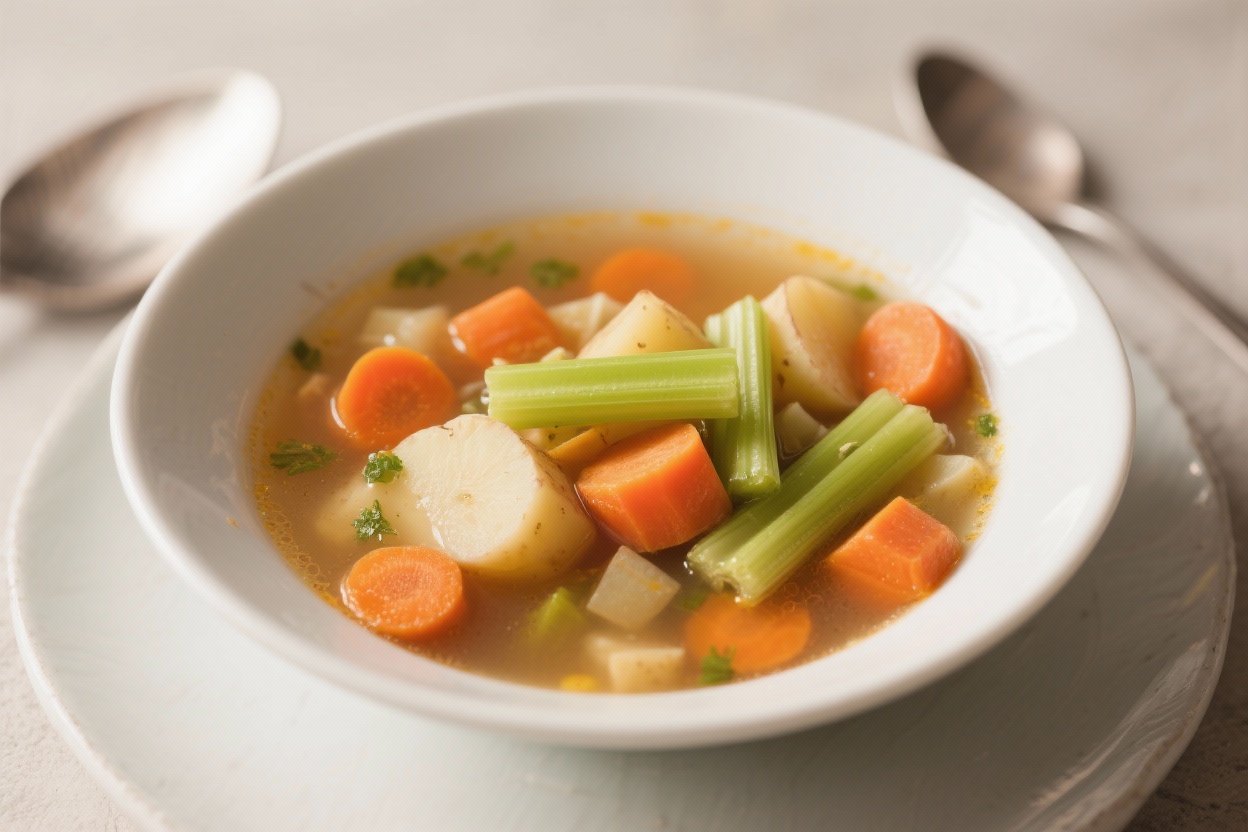
This is the kind of soup that makes the kitchen smell like home. It’s simple, hearty, and gently flavored with everyday vegetables you probably already have. Carrots bring sweetness, potatoes make it comforting, and celery adds that familiar savory note.
A good vegetable broth and a few pantry spices pull it all together. It’s easy to make, flexible, and perfect for a weeknight or a slow Sunday.
Why This Recipe Works
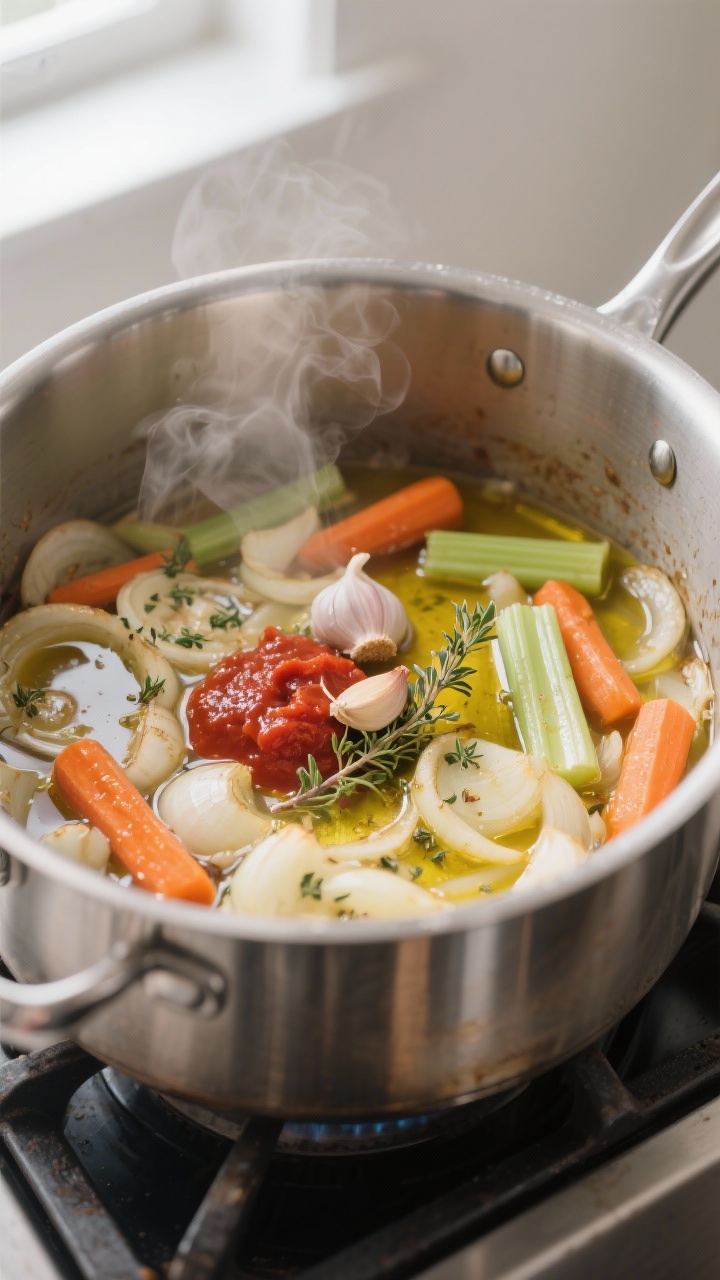
This soup relies on a few humble ingredients treated the right way. Sautéing the vegetables first builds flavor and brings out their natural sweetness.
A mix of chopped vegetables gives a satisfying texture, while a longer simmer softens everything into a cozy bowl without turning it mushy. Using broth rather than water adds depth, and simple seasonings keep the flavors clean and bright. It’s a recipe that’s hard to mess up and easy to love.
Ingredients
- Olive oil: 2 tablespoons
- Yellow onion: 1 medium, diced
- Carrots: 3 medium, peeled and sliced
- Celery: 3 ribs, sliced
- Garlic: 3 cloves, minced
- Russet or Yukon Gold potatoes: 2 medium, peeled and diced
- Tomato paste: 1 tablespoon (optional but adds richness)
- Crushed tomatoes: 1 cup (or 1 large tomato, chopped)
- Vegetable broth: 6 cups, low-sodium
- Bay leaf: 1
- Dried thyme: 1 teaspoon
- Dried oregano: 1/2 teaspoon
- Ground black pepper: 1/2 teaspoon, plus more to taste
- Kosher salt: 1 to 1 1/2 teaspoons, to taste
- Fresh parsley: 2 tablespoons, chopped (for garnish)
- Lemon juice or red wine vinegar: 1 to 2 teaspoons, for finishing
- Optional add-ins: 1 cup green beans, peas, or corn; 1 cup shredded cabbage; 1/2 cup small pasta or cooked beans
Step-by-Step Instructions
- Prep the vegetables. Dice the onion and potatoes.Slice the carrots and celery. Mince the garlic. Keep the pieces fairly uniform so they cook evenly.
- Build the base. In a large pot, heat the olive oil over medium heat.Add onion, carrots, and celery with a pinch of salt. Cook 6–8 minutes, stirring occasionally, until the onion turns translucent and the edges of the vegetables start to soften.
- Bloom the aromatics. Stir in the garlic, thyme, and oregano. Cook 30–60 seconds until fragrant.If using tomato paste, add it now and cook another minute to deepen the flavor.
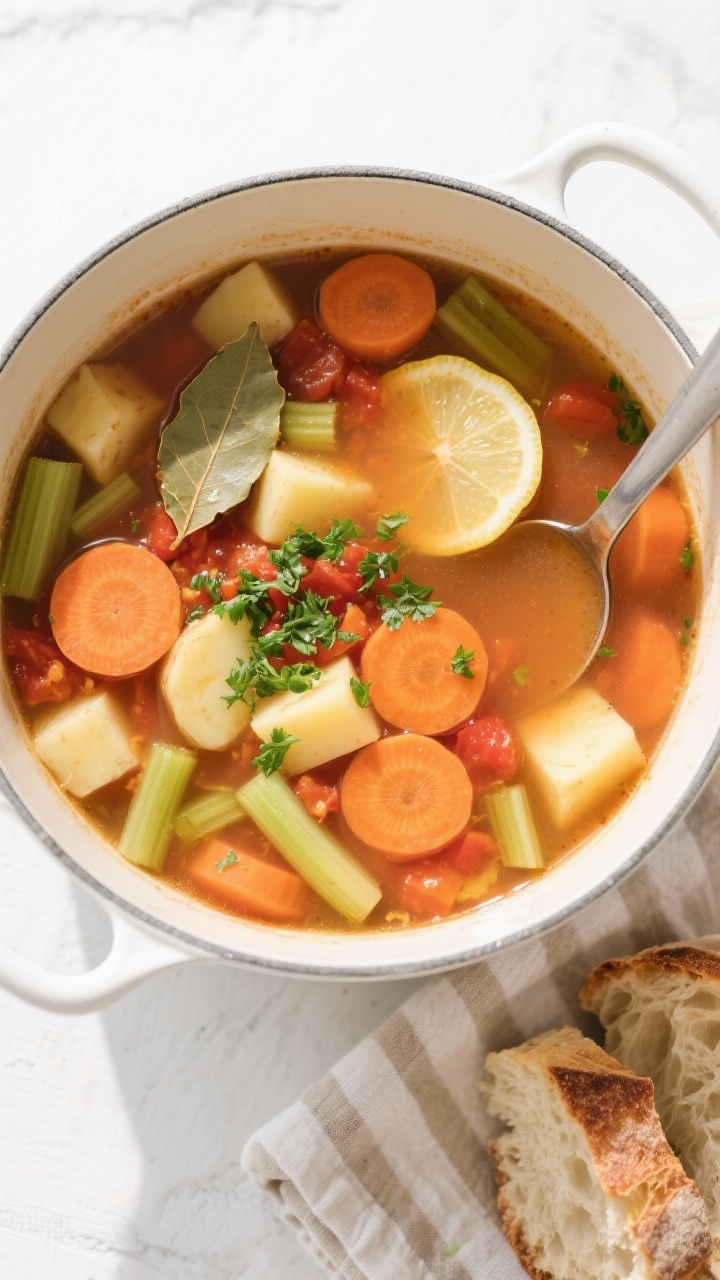
- Add tomatoes and broth. Pour in the crushed tomatoes and vegetable broth. Add the bay leaf and black pepper. Stir to combine.
- Add the potatoes and simmer. Bring the pot to a gentle boil, then lower to a steady simmer. Add the diced potatoes. Cook 20–25 minutes, uncovered, until the potatoes and carrots are tender but still hold their shape.
- Adjust texture and add optional veggies. If you’re adding green beans, corn, peas, or cabbage, stir them in during the last 10 minutes. For pasta, add it during the last 8–10 minutes so it doesn’t overcook.For cooked beans, stir them in during the last 5 minutes to warm through.
- Finish and season. Remove the bay leaf. Stir in lemon juice or vinegar for brightness. Taste and adjust with salt and pepper.Garnish with chopped parsley.
- Rest before serving. Let the soup sit off the heat for 5 minutes. This helps the flavors settle and makes the soup taste more cohesive.
Keeping It Fresh
Stored properly, this soup tastes even better the next day. Cool it to room temperature, then refrigerate in airtight containers for up to 4 days.
The potatoes will continue to absorb liquid, so you may want to add a splash of broth or water when reheating.
For longer storage, freeze in portions for up to 3 months. Leave a little space at the top of containers for expansion. Thaw overnight in the fridge, then reheat gently on the stove, adding a bit of water if it thickens too much.
Tip: If you plan to freeze, consider cooking potatoes until just tender or use waxy potatoes (like Yukon Gold) so they hold their texture better.
Why This is Good for You
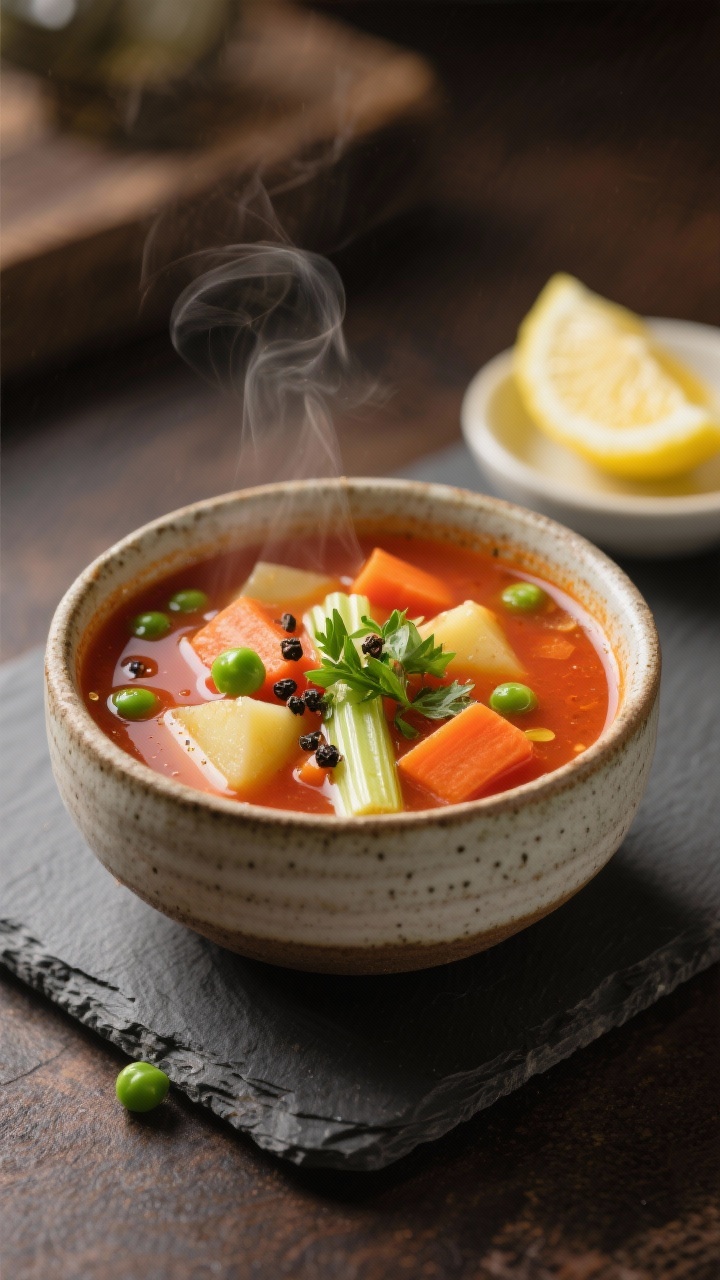
This soup is full of vegetables, which means fiber, vitamins, and minerals in every bowl.
Carrots bring beta carotene for eye health, celery offers antioxidants, and potatoes add potassium and satisfaction. It’s naturally low in fat and can be low in sodium if you use low-sodium broth and season carefully.
It’s also a smart way to eat more plants without feeling like you’re “eating light.” The warm broth and tender vegetables make it filling and comforting, while still being gentle on the stomach.
Pitfalls to Watch Out For
- Overcooking the potatoes: They can fall apart and cloud the broth. Check doneness at 18–20 minutes and pull the soup off the heat when they’re just tender.
- Skipping the sauté: Putting everything straight into the pot with broth makes a flatter-tasting soup.Sautéing the aromatics first adds depth.
- Too little salt: Vegetable soups need proper seasoning to shine. Taste several times, especially at the end, and adjust.
- Adding pasta too early: It will bloat and soak up all the broth. Add near the end and cook until just al dente.
- Boiling too hard: A rolling boil can break down vegetables.Keep it at a gentle simmer.
Recipe Variations
- Hearty Bean Boost: Add 1 can of cannellini or chickpeas (rinsed and drained) in the last 5 minutes for extra protein and creaminess.
- Herb Garden Twist: Swap dried herbs for fresh—use 1 tablespoon fresh thyme or 2 tablespoons fresh basil or dill at the end for a bright finish.
- Spiced Tomato Version: Add 1 teaspoon smoked paprika and a pinch of red pepper flakes with the garlic for a subtle smoky kick.
- Mushroom Umami: Sauté 8 ounces of sliced mushrooms with the onion for a deeper, savory flavor.
- Lemony Spring Soup: Stir in baby spinach or chopped kale in the last 2–3 minutes, plus extra lemon and parsley.
- Barley or Rice: Add 1/3 cup pearl barley (simmer 30–35 minutes) or 1/2 cup cooked rice at the end for extra body.
- Creamy Finish: Blend 1–2 cups of the soup and return it to the pot for a thicker texture, or swirl in a splash of cream or coconut milk.
FAQ
Can I make this in a slow cooker?
Yes. Sauté the onion, carrots, and celery first if you can, then transfer everything to the slow cooker with broth and seasonings. Cook on Low for 6–7 hours or High for 3–4 hours, adding delicate veggies (like peas or spinach) in the last 15–30 minutes.
What’s the best potato for this soup?
Yukon Gold holds its shape well and has a creamy texture.
Russet works too but can break down more easily, which slightly thickens the broth. If you plan to freeze, Yukon Gold is your best bet.
Can I use water instead of broth?
You can, but you’ll need to boost flavor. Add extra aromatics: more onion and garlic, a splash of soy sauce or a spoon of miso, and be generous with herbs and salt.
A parmesan rind (if not strictly vegetarian) adds great depth.
How do I make it gluten-free?
The base recipe is naturally gluten free. Just make sure your broth is certified gluten-free and avoid adding pasta unless it’s a gluten free variety.
How can I thicken the soup without cream?
Blend a cup or two of the soup and stir it back in. You can also mash a few potato pieces with a spoon against the side of the pot.
Both methods add body without dairy.
When should I add frozen vegetables?
Add frozen peas, corn, or mixed veggies in the last 5–7 minutes of simmering so they heat through but keep their color and texture.
Can I add meat?
Yes. Brown diced chicken or turkey sausage before the vegetables, then proceed with the recipe. If using cooked shredded chicken, stir it in during the last 5 minutes to warm through.
How do I make it less salty?
Use low-sodium broth and add salt gradually.
If it ends up too salty, add more unsalted broth or water, then balance with a squeeze of lemon. A small raw potato simmered for 10 minutes can help absorb some salt, but adjusting liquid is more reliable.
Wrapping Up
Classic Homemade Vegetable Soup with Carrots, Potatoes & Celery is comfort in a bowl, made from simple ingredients and a little patience. It’s flexible, budget-friendly, and easy to adapt to what you have.
Keep this recipe handy for chilly nights, busy weeks, or anytime you want a wholesome, satisfying meal with minimal fuss. One pot, a handful of vegetables, and you’re set for cozy, nourishing bowls all week.