

Creating a harmonious bathroom design involves more than just selecting the right tiles; it also requires choosing the perfect rug colors to complement them.
A well coordinated bathroom can elevate the entire ambiance of the space, making it feel more relaxing and inviting. One crucial aspect of achieving this harmony is matching your modern bathroom rug colors with your tile choices.
In this article, we’ll explore 9 effective ways to ensure your bathroom rug and tiles work together seamlessly, creating a cohesive and polished look.
Key Takeaways
- Understand the importance of matching rug and tile colors for a cohesive bathroom design.
- Discover 9 practical methods to harmonize your bathroom rug and tile colors.
- Learn how to create a relaxing and inviting bathroom ambiance.
- Explore tips for selecting the perfect rug colors to complement your tiles.
- Enhance your bathroom’s aesthetic appeal with our expert advice.
The Art of Bathroom Color Coordination
Bathroom color coordination is an art that can elevate the entire ambiance of your bathroom. A well coordinated bathroom design can transform a mundane space into a relaxing oasis. One crucial aspect of this coordination is the matching of rug and tile colors.
Why Rug and Tile Coordination Matters
Coordinating your bathroom rug with your tiles is more than just a design choice; it significantly impacts the overall aesthetic and ambiance of the bathroom. A harmonious combination can create a sense of calm and visual appeal, while a mismatched combination can make the space feel disjointed. The rug and tile coordination matters because it ties together the various elements of the bathroom, creating a cohesive look that is both visually appealing and functional.
Elements of a Cohesive Bathroom Design
A cohesive bathroom design involves several key elements, including color palette, texture, and pattern. The color palette sets the tone for the entire space, while texture adds depth and interest. Patterns, whether on the rug or tiles, can add visual appeal when used thoughtfully. To achieve a cohesive design, it’s essential to balance these elements. For instance, a bold tile pattern can be balanced with a simple, solid-colored rug.
| Design Element | Role in Bathroom Design | Tips for Coordination |
|---|---|---|
| Color Palette | Sets the tone for the bathroom | Choose a palette that complements both rug and tiles |
| Texture | Adds depth and interest | Mix different textures, like soft rugs and hard tiles, for contrast |
| Pattern | Adds visual appeal | Balance bold patterns with simpler designs to avoid overwhelming the space |
1. Monochromatic Magic: Same Color Rugs and Tiles
Monochromatic magic happens when you match your bathroom rugs and tiles with the same color, creating a harmonious and visually appealing space. This design approach can make your bathroom look sleek and modern.
A monochromatic color scheme can simplify the design process, as you’re working with different shades of a single color. However, to avoid a monotonous look, it’s essential to incorporate texture variations and thoughtful design elements.
Creating Depth with Texture Variations
To add depth to your monochromatic bathroom, incorporate different textures through your rugs, tiles, and other decorative elements. For instance, you can pair smooth tiles with a plush rug or add a woven basket for storage.
Using a variety of textures not only adds visual interest but also creates a more inviting and comfortable space. Consider combining matte and glossy finishes, or soft fabrics with hard surfaces.
Best Monochromatic Color Combinations
Some popular monochromatic color combinations for bathrooms include different shades of blue, from pale sky blue to navy. Other options are various tones of green, gray, or neutral colors like beige and white.
| Color | Shade Variations | Design Impact |
|---|---|---|
| Blue | Pale sky blue to navy | Calming and serene |
| Green | Mint to forest | Refreshing and natural |
| Gray | Light gray to charcoal | Sleek and modern |
Avoiding Monotony in Single Color Schemes
To prevent a monochromatic bathroom from feeling monotonous, incorporate different shades and tones of your chosen color. You can also add contrasting elements, like a differently colored grout or decorative accessories.
“The key to a successful monochromatic design is balance. By mixing different textures and shades, you can create a visually interesting space that feels cohesive and harmonious.”
By thoughtfully combining same color rugs and tiles with varied textures and design elements, you can achieve a beautiful and engaging monochromatic bathroom design.
2. Complementary Color Schemes for Bold Contrast

If you’re aiming for a bathroom that stands out, consider using complementary color schemes to create a bold contrast. This approach can elevate your bathroom design from mundane to striking.
Understanding the Color Wheel for Bathroom Design
The color wheel is a fundamental tool in design, helping you understand how colors relate to each other. It’s based on the way colors are perceived by the human eye, with primary colors (red, blue, and yellow) forming the base.
Popular Complementary Pairings for Bathrooms
Some popular complementary color pairings for bathrooms include blue and orange, red and green, and yellow and purple. These combinations can create a vibrant and energetic atmosphere.
Balancing Bold Colors Without Overwhelming the Space
While bold contrast can be visually appealing, it’s crucial to balance these colors to avoid overwhelming the space. One way to achieve this balance is by using the 60-30-10 rule.
| Color Combination | Effect | Tips for Balance |
|---|---|---|
| Blue and Orange | Creates a cool, energetic vibe | Use lighter shades of orange |
| Red and Green | Offers a festive feel | Balance with neutral elements |
| Yellow and Purple | Provides a bright, luxurious look | Use deeper purples to ground yellow |
3. Neutral Rugs for Vibrant Tile Designs
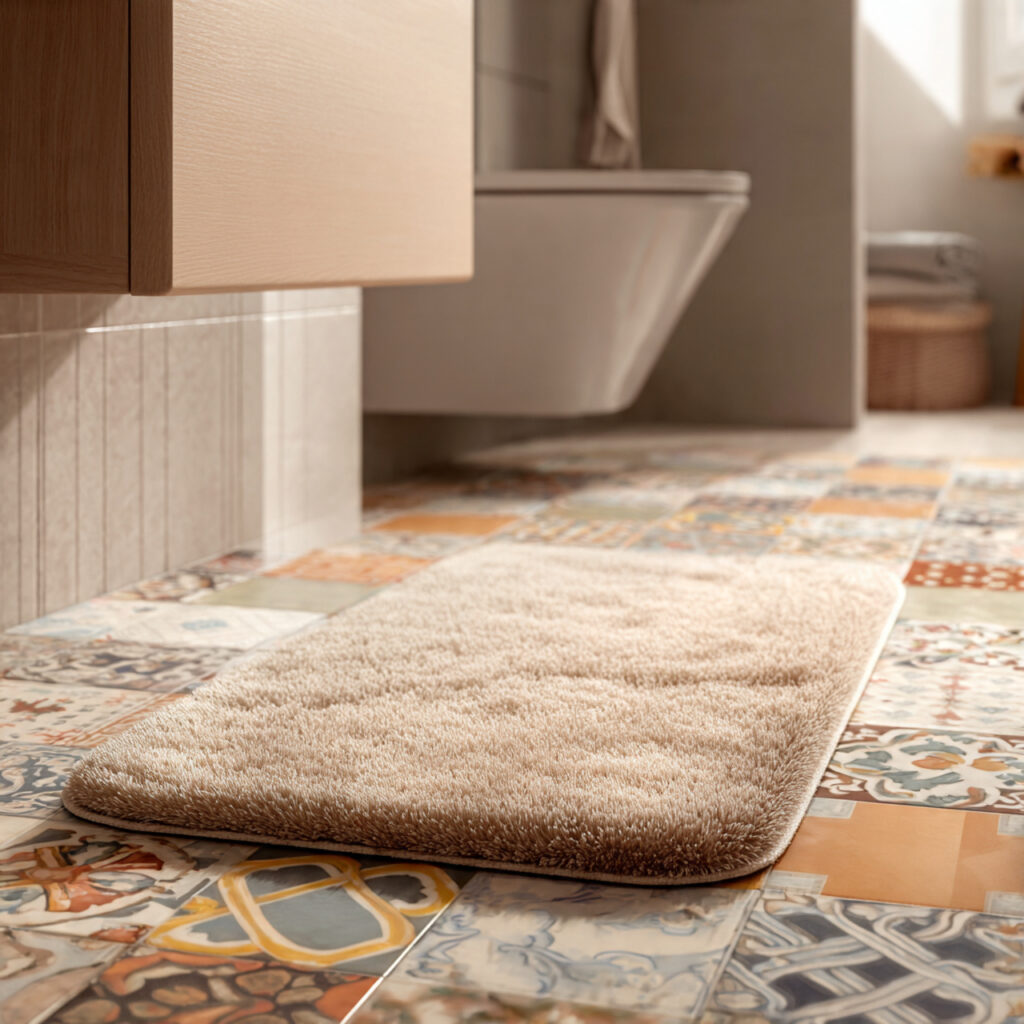
A neutral rug can provide a calm backdrop for the vibrant tiles in your bathroom, preventing the space from feeling overwhelming. Neutral colored rugs are versatile and can complement a wide range of tile designs, from bold patterns to bright colors.
Beige, Gray, and White Rug Options
Beige, gray, and white rugs are excellent choices for bathrooms with vibrant tiles. These neutral shades can help to balance the boldness of the tiles, creating a harmonious bathroom environment. For instance, a beige rug can add warmth to a bathroom with cool toned tiles, while a gray rug can provide a sleek, modern contrast.
How to Add Subtle Texture to Neutral Rugs
Adding texture to a neutral rug can enhance the overall visual interest of your bathroom. Consider rugs with subtle patterns or varying pile heights to add depth. For example, a shaggy gray rug can introduce a cozy element, while a flat weave white rug can contribute a clean, minimalist look.
Maintaining Visual Interest with Neutral Foundations
To maintain visual interest in a bathroom with neutral rugs, consider incorporating other design elements, such as colorful accessories or bold wall decor. This approach allows you to enjoy vibrant tile designs while keeping the rug a neutral foundation. Some popular ideas include:
- Using a statement light fixture
- Incorporating plants or floral arrangements
- Displaying colorful towels or bath mats
By balancing neutral rugs with vibrant tile designs and other decorative elements, you can create a bathroom that is both stylish and inviting.
4. Pattern Play: Mixing Patterns Between Rugs and Tiles
The art of combining different patterns in rugs and tiles is a surefire way to add visual interest to your bathroom. When done correctly, pattern mixing can create a unique and captivating space that reflects your personal style.
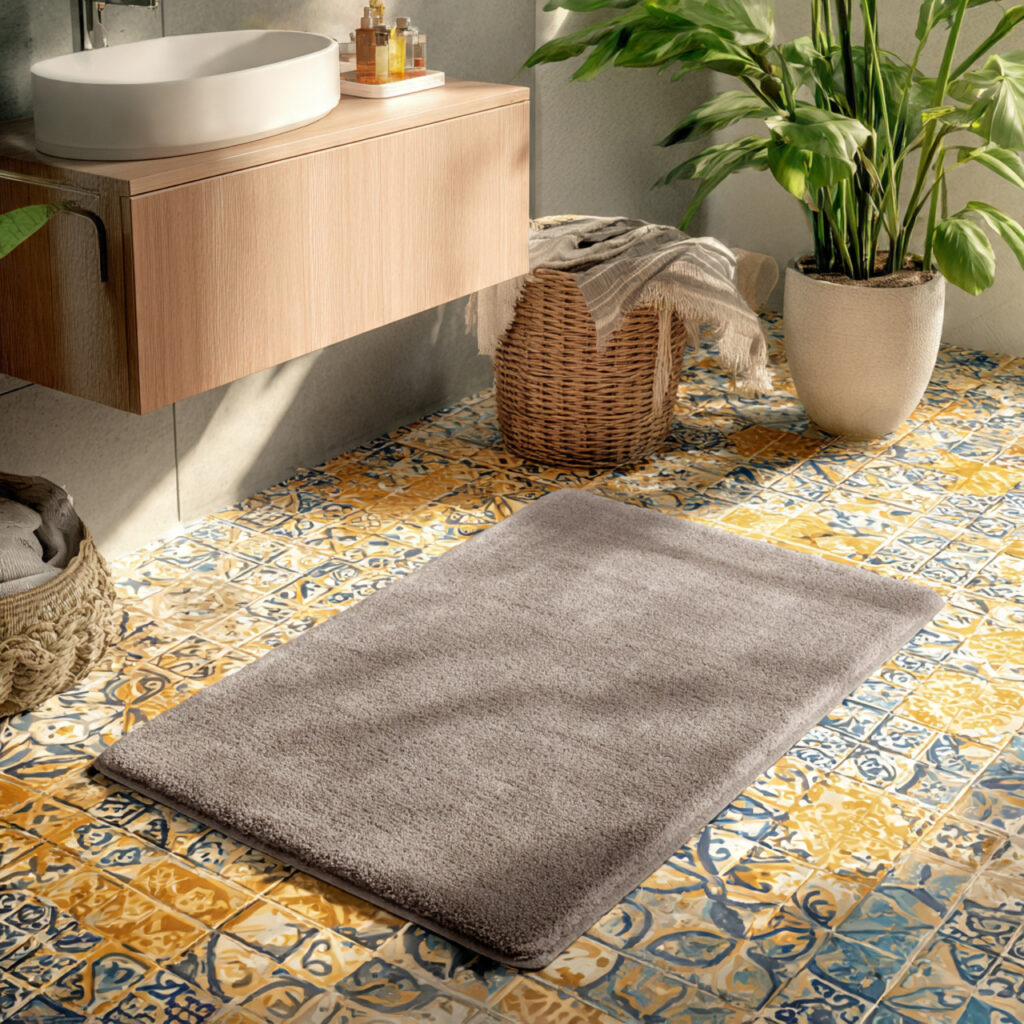
To successfully mix patterns, it’s essential to follow some basic rules. First, consider the scale of the patterns. Combining large scale patterns with smaller ones can create a balanced look. Additionally, choose patterns that share a common color or theme to tie the design together.
Rules for Successful Pattern Mixing
Successful pattern mixing requires a thoughtful approach. Here are some key rules to keep in mind:
- Start with a dominant pattern and balance it with secondary patterns.
- Use a unifying color to tie different patterns together.
- Vary the scale of patterns to add depth and interest.
Scale Considerations for Harmonious Designs
The scale of patterns is crucial in achieving a harmonious design. A large-scale pattern on a tile can be balanced with a smaller-scale pattern on a rug, creating a visually appealing contrast.
| Pattern Type | Scale | Effect |
|---|---|---|
| Geometric | Large | Dramatic Statement |
| Floral | Small | Subtle Accent |
| Abstract | Medium | Balanced Look |
Examples of Successful Pattern Combinations
Some successful pattern combinations include pairing geometric tiles with a floral rug or mixing abstract tiles with a striped rug. The key is to experiment and find a combination that works for your bathroom.
By following these guidelines and considering the scale and theme of your patterns, you can create a bathroom that is both stylish and harmonious.
5. Modern Bathroom Rug Colors for Different Tile Styles
Modern bathroom design often revolves around the harmonious integration of rug colors with various tile styles. The right rug can enhance the beauty of your tiles, creating a cohesive and stylish bathroom.
Matching Rugs with Marble Tiles
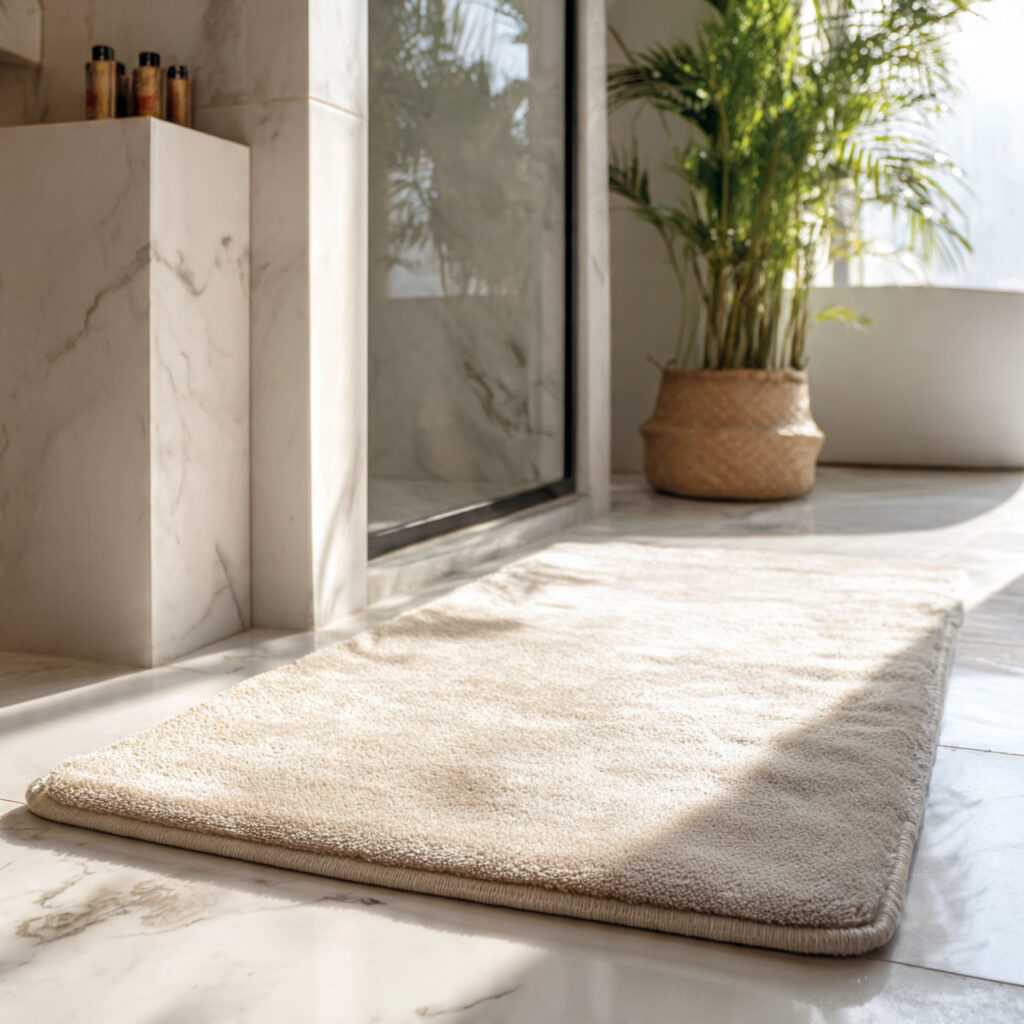
Marble tiles exude luxury and elegance. To complement them, choose a rug that picks up on the subtle veining or dominant colors in the marble. For instance, a white or cream colored rug can beautifully complement white marble tiles, while a rug with gray undertones can enhance the look of gray-veined marble.
Complementing Subway Tiles
Subway tiles are a classic choice for bathrooms. For a modern look, consider a rug that contrasts with the tile color. If you have white subway tiles, a gray or navy blue rug can add a pop of color. For colored subway tiles, a neutral rug can balance the look.
Pairing with Patterned Cement Tiles
Patterned cement tiles are a bold choice and often feature intricate designs. A solid colored rug that picks up on one of the colors in the tile pattern can help ground the space. For example, if your cement tiles have a mix of blues and whites, a blue rug can create a cohesive look.
Coordinating with Wood Look Tile Floors
Wood look tiles offer a warm, natural aesthetic. To complement them, choose a rug that enhances the wood tones. A rug with earthy tones such as beige, brown, or taupe can create a harmonious bathroom environment.
| Tile Style | Rug Color Recommendation |
|---|---|
| Marble Tiles | White, Cream, or Gray |
| Subway Tiles | Contrasting colors like Gray or Navy Blue |
| Patterned Cement Tiles | Solid colors that match the tile pattern |
| Wood-Look Tile Floors | Earthy tones like Beige, Brown, or Taupe |
6. Accent Color Rugs to Highlight Tile Features
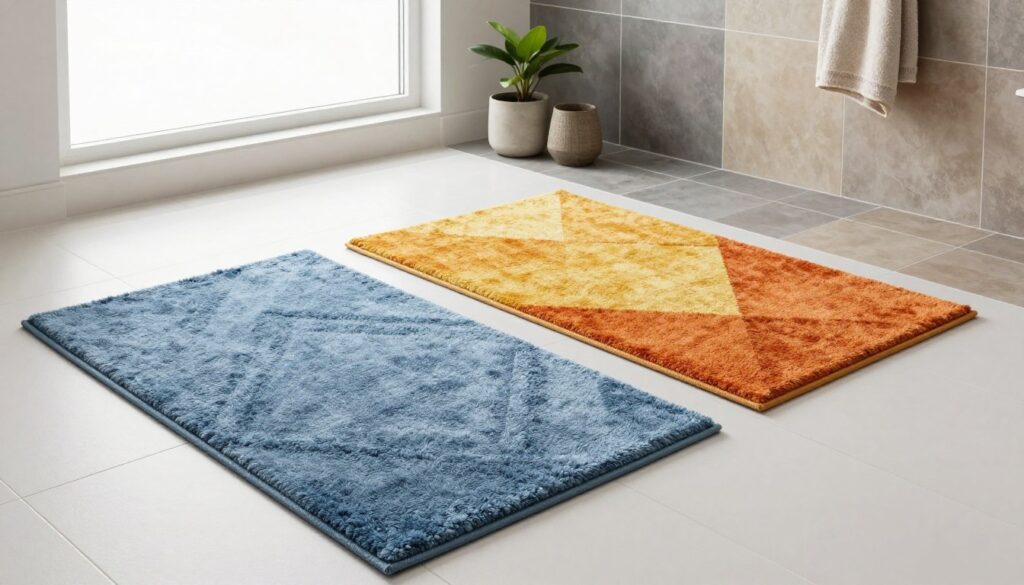
Accent color rugs can dramatically enhance the visual appeal of your bathroom by drawing attention to striking tile features. By carefully selecting a rug color that complements or contrasts with your tiles, you can create a visually appealing space that feels both cohesive and dynamic.
One effective strategy is to pull colors from tile accents or grout to create a harmonious look.
Pulling Colors from Tile Accents or Grout
When choosing an accent color rug, consider the colors present in your tile accents or grout. Selecting a rug that matches or complements these colors can create a cohesive and harmonious bathroom design. For instance, if your tiles have a subtle pattern or a colored grout line, you can pick up on these hues with your rug to create a unified look.
Creating Visual Flow with Strategic Color Placement
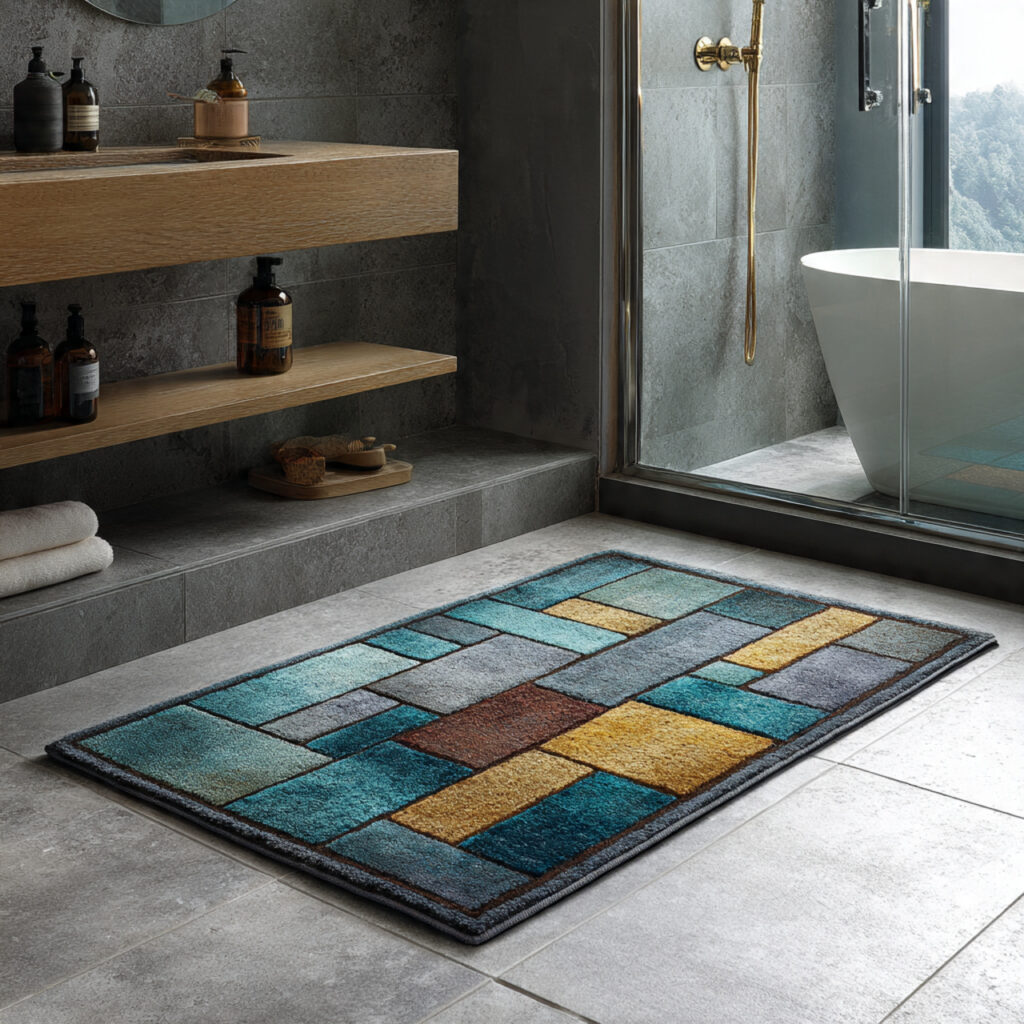
Strategic color placement is key to creating visual flow in your bathroom. By placing an accent color rug in a strategic location, you can draw the eye to specific features, such as a beautifully tiled shower or a decorative tile wall. This technique helps to create a sense of movement and guides the viewer’s eye through the space.
Using Rugs to Tie Together Bathroom Color Schemes
Accent color rugs can also serve as a unifying element in your bathroom’s color scheme. By choosing a rug that incorporates colors from other elements in the bathroom, such as the tiles, countertops, or walls, you can create a cohesive and harmonious design. This approach helps to tie the different components of the bathroom together, resulting in a more polished and put together look.
7. Seasonal Approaches to Bathroom Rug Selection
Adopting a seasonal approach to bathroom rug selection can refresh your space and keep it in tune with the changing times of the year. This method allows you to update your bathroom’s ambiance without undergoing a complete renovation. By choosing rugs that reflect the current season, you can create a dynamic and engaging environment.
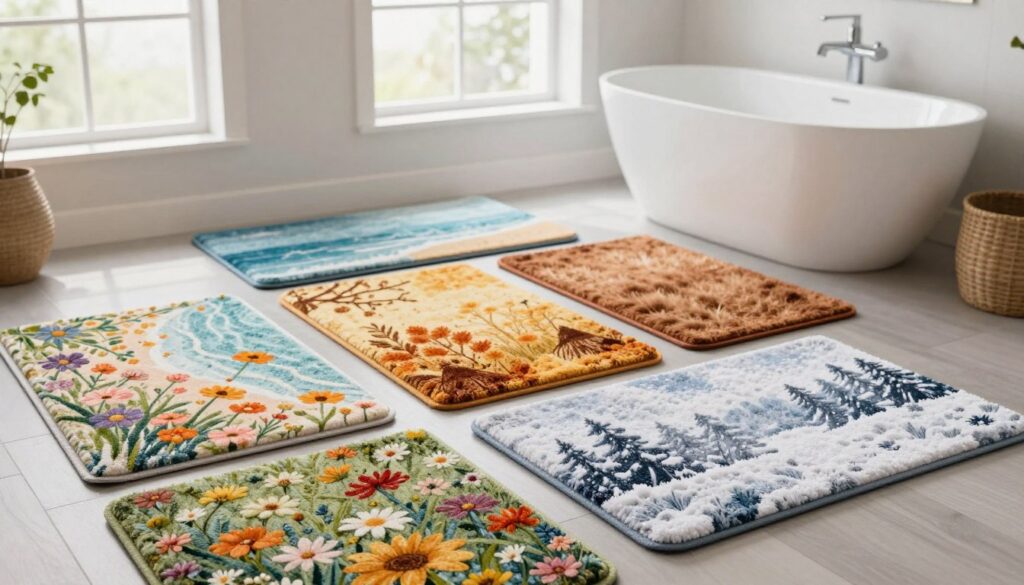
Warm Colors for Fall and Winter
For fall and winter, consider warm colored rugs that evoke a cozy atmosphere. Shades of orange, red, and golden brown can complement the seasonal decor and create a welcoming feel. These warm tones can be particularly appealing in bathrooms with neutral or cool-toned tiles, as they add a layer of warmth and comfort.
Cool and Refreshing Options for Spring and Summer
In contrast, spring and summer call for cool and refreshing colors that can make your bathroom feel like a spa. Blues, greens, and pastel shades can be invigorating and help to create a sense of cleanliness and renewal. These colors work well with white or light-colored tiles, enhancing the bright and airy feel of the bathroom.
Building a Collection of Seasonal Bathroom Rugs
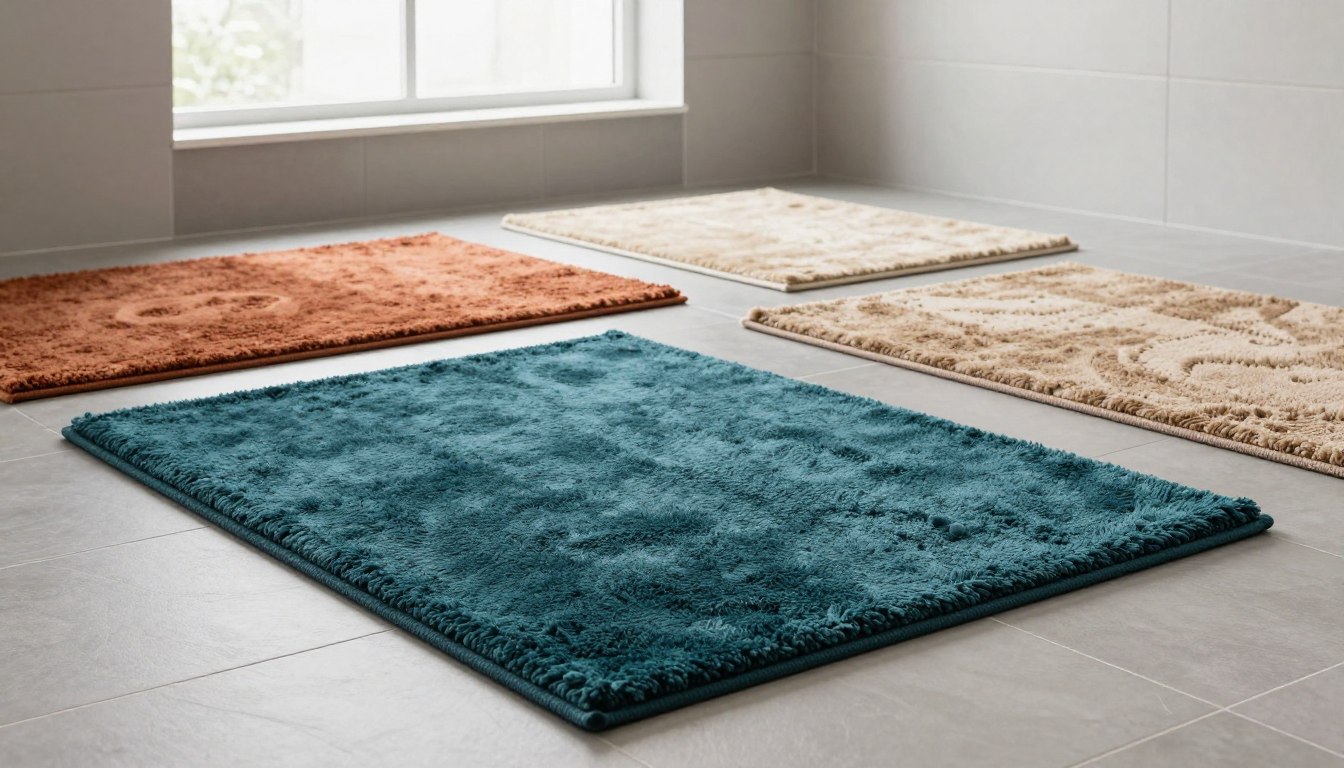
To fully embrace the seasonal approach, consider building a collection of bathroom rugs that can be swapped out throughout the year. This not only keeps your bathroom decor fresh but also allows you to experiment with different colors and patterns. Start with a neutral base rug and add seasonal rugs in complementary colors to create a versatile and dynamic bathroom environment.
8. Texture Contrast: Soft Rugs with Hard Tiles
Soft rugs and hard tiles, when combined thoughtfully, can add depth and interest to your bathroom’s decor. The contrast between these textures creates a visually appealing space that is both inviting and functional.
Material Considerations for Bathroom Durability
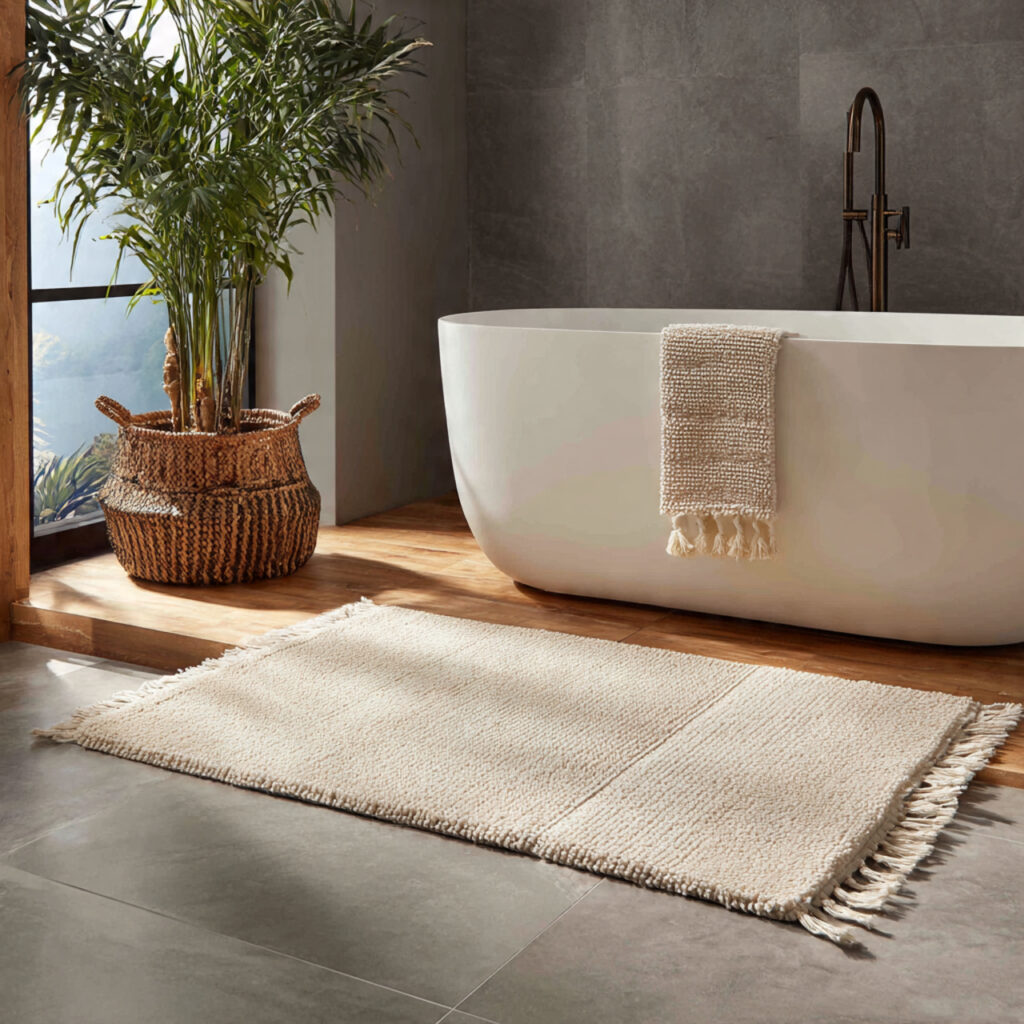
When selecting soft rugs for your bathroom, it’s crucial to consider the material’s durability and resistance to moisture. Materials like cotton, wool, and synthetic fibers have varying levels of absorbency and drying times. For instance, cotton rugs are absorbent and comfortable underfoot but may take longer to dry than synthetic options.
The durability of hard tiles is generally high, but the grout between them can be susceptible to staining and mold. Regular cleaning and proper sealing can enhance their longevity.
Creating Comfort with Textural Elements
Textural elements like soft rugs can significantly enhance the comfort of a bathroom. Placing a rug in front of the sink or near the bathtub can create a cozy feel. The key is to balance the softness of the rug with the hardness of the tiles to avoid overwhelming the space.
Using rugs with different textures, such as plush or flat weaves, can add variety and interest to the bathroom. This variation can help in creating a layered look that is both stylish and comfortable.
Balancing Practicality with Aesthetic Appeal
Balancing the practical aspects of bathroom design with aesthetic appeal is essential. While soft rugs add comfort, they must be maintained regularly to prevent moisture buildup. Hard tiles, on the other hand, are practical but can be cold and hard on the feet.
| Element | Practicality | Aesthetic Appeal |
|---|---|---|
| Soft Rugs | Requires regular maintenance to prevent moisture buildup | Adds comfort and warmth underfoot |
| Hard Tiles | Durable and easy to clean | Can be cold and hard on the feet |
By understanding the strengths and weaknesses of both soft rugs and hard tiles, you can create a bathroom that is both beautiful and functional.
9. Layering Multiple Rugs with Different Tile Zones
Bathrooms with multiple tile zones offer a unique opportunity to experiment with layering rugs for a customized look. This design approach not only adds warmth and texture to the space but also helps in defining different areas within the bathroom.

Defining Bathroom Spaces with Rug Placement
Strategic rug placement can help delineate different zones in the bathroom, such as the area in front of the sink or the space around the bathtub. By placing rugs in these areas, you can create a sense of separation and functionality.
Color Coordination Across Multiple Rugs
Achieving color coordination across multiple rugs requires a thoughtful approach. You can choose rugs that complement the dominant color of your tiles or select a unifying color that ties all the rugs together, creating a cohesive look throughout the bathroom.
Creating Visual Interest with Varied Rug Sizes and Shapes
Using rugs of different sizes and shapes can add visual interest to your bathroom. For instance, a larger rug can be used in the main area, while a smaller, differently shaped rug can be placed in front of the sink or bathtub, creating a layered and dynamic look.
By carefully selecting and placing multiple rugs in a bathroom with different tile zones, you can enhance the aesthetic appeal and functionality of the space, making it more inviting and comfortable.
Conclusion: Creating Your Perfect Bathroom Color Harmony
Achieving a perfect bathroom design is all about creating a harmonious balance between different elements, particularly when it comes to bathroom color harmony. By considering the 9 ways to match modern bathroom rug colors with your tiles, you can create a cohesive and inviting space.
Color coordination is key to a well designed bathroom. Whether you opt for a monochromatic scheme, complementary colors, or a mix of patterns and textures, the right combination can elevate your bathroom’s aesthetic. Experiment with different approaches to find what works best for you and your bathroom’s unique style.
By applying the principles outlined in this article, you can craft a bathroom design that is a true reflection of your personal taste. Don’t be afraid to experiment with new color palettes and textures until you achieve that perfect sense of harmony. With a touch of creativity, your bathroom will transcend its utility to become a relaxing oasis you’ll never want to leave.
To further refine your vision and bring that high end spa feeling home, take a look at these curated inspirations:
The Foundation of Comfort: Explore 15 Modern Bathroom Rug Ideas for Small Spaces: From Round Shapes to Chic Runners to find your perfect underfoot texture.
Timeless Elegance: Elevate your sanctuary with 10 Marble Bathroom Designs to Transform Your Most Sacred Space.
Modern Luxury: Experience the ultimate escape with 7 Open Concept Bathroom Designs to Invite Light and Enhance Relaxation.
Your journey to a more beautiful home starts with a single inspired choice. Which style will you explore next?.