


I believe the heart of a modern apartment is a space that flows well. Merging the kitchen and living room into one area is more than a trend. It’s a smart way to make a small apartment feel bigger and brighter.
Creating an open floor plan isn’t just about removing walls. It’s about making your home feel larger, brighter, and more connected. Whether you love to entertain or just want a more social space, the right open concept kitchen living room layout can change your life.
The magic of a well designed open concept kitchen and living room is its versatility. It can be a cozy spot, a place for parties, or a family center. The best open concept designs are not just pretty; they make your life better. They help you move around easily and feel like you have more space, even in a small apartment.
Unlocking the Potential of Your Open Concept Space
The old home design with rigid walls is outdated. Modern living has changed, moving away from isolated rooms. Open concept kitchen ideas are more than just removing walls. They change how we live, interact, and entertain.
By removing walls, you gain freedom and flexibility. This is something closed off homes can’t offer. It’s a shift towards a more open way of living.
The open concept design focuses on flexibility and space. It removes walls to create a space that adapts to your life. This turns a home into a single, flowing area, unlike separate boxes.
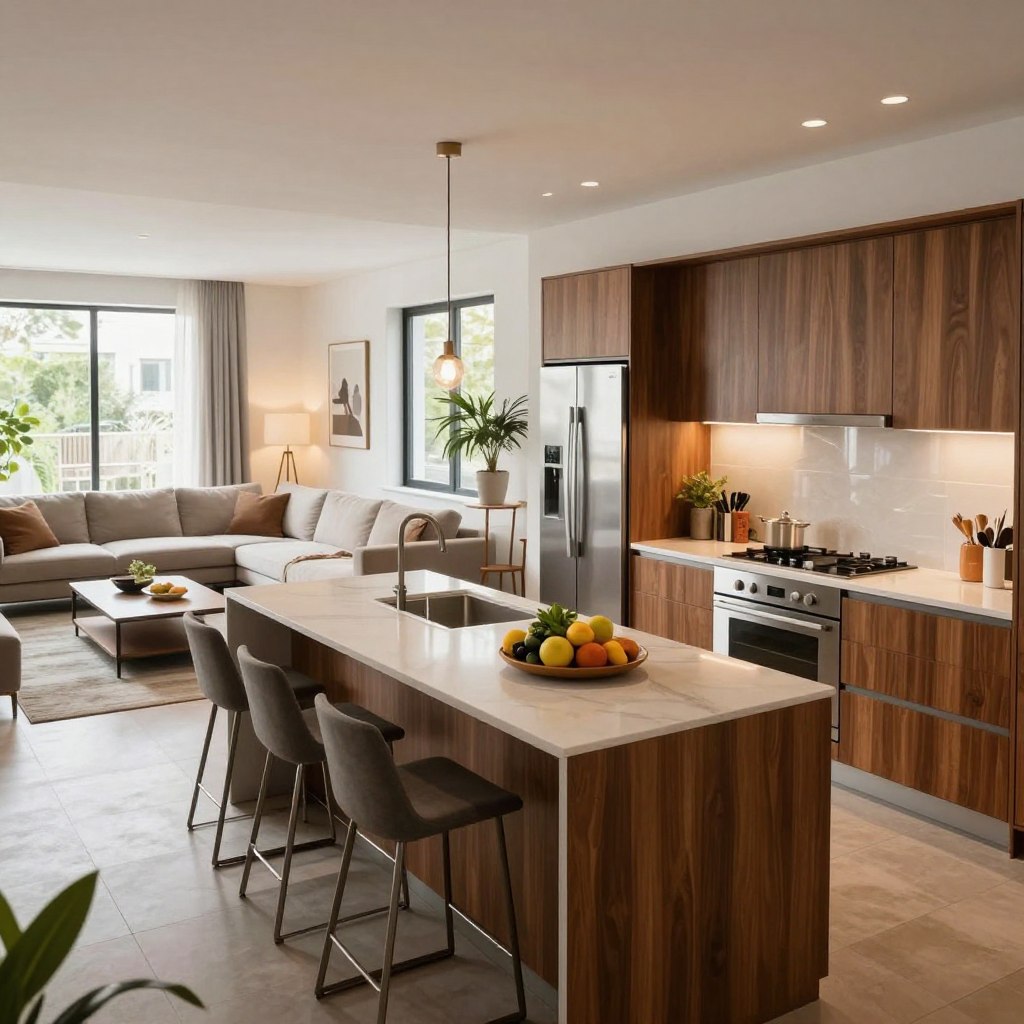
Living in an open concept home changes your lifestyle. You can cook while still being part of the living room conversation. Natural light fills the space, making it feel larger and brighter. This design improves social interaction. The cook is no longer alone. It makes entertaining easy and turns meal prep into a social activity.
This design meets the needs of modern life. Your living room can be a home office or entertainment area. Your kitchen island can be a breakfast bar, homework spot, or party serving area.
The spaciousness is both visual and functional. You feel like you have a larger home without adding square footage. This is achieved by removing barriers.
The best open concept kitchen ideas fit your lifestyle. They grow with your family and adapt to your needs. It turns your home into a dynamic, integrated space where life unfolds openly and brightly.
Open Concept Kitchen Living Room Layouts: The 7 Best Designs for Modern Living
Choosing the right open concept design can change how you live and entertain. The best designs do more than just remove walls they create spaces that flow well. They turn a simple apartment into a beautiful, functional home that fits your lifestyle.
I’ve found seven standout layouts that make the most of open concept living. Each design solves specific challenges, from hosting big groups to using every square foot. These designs are not just pretty; they’re smart solutions for today’s living.
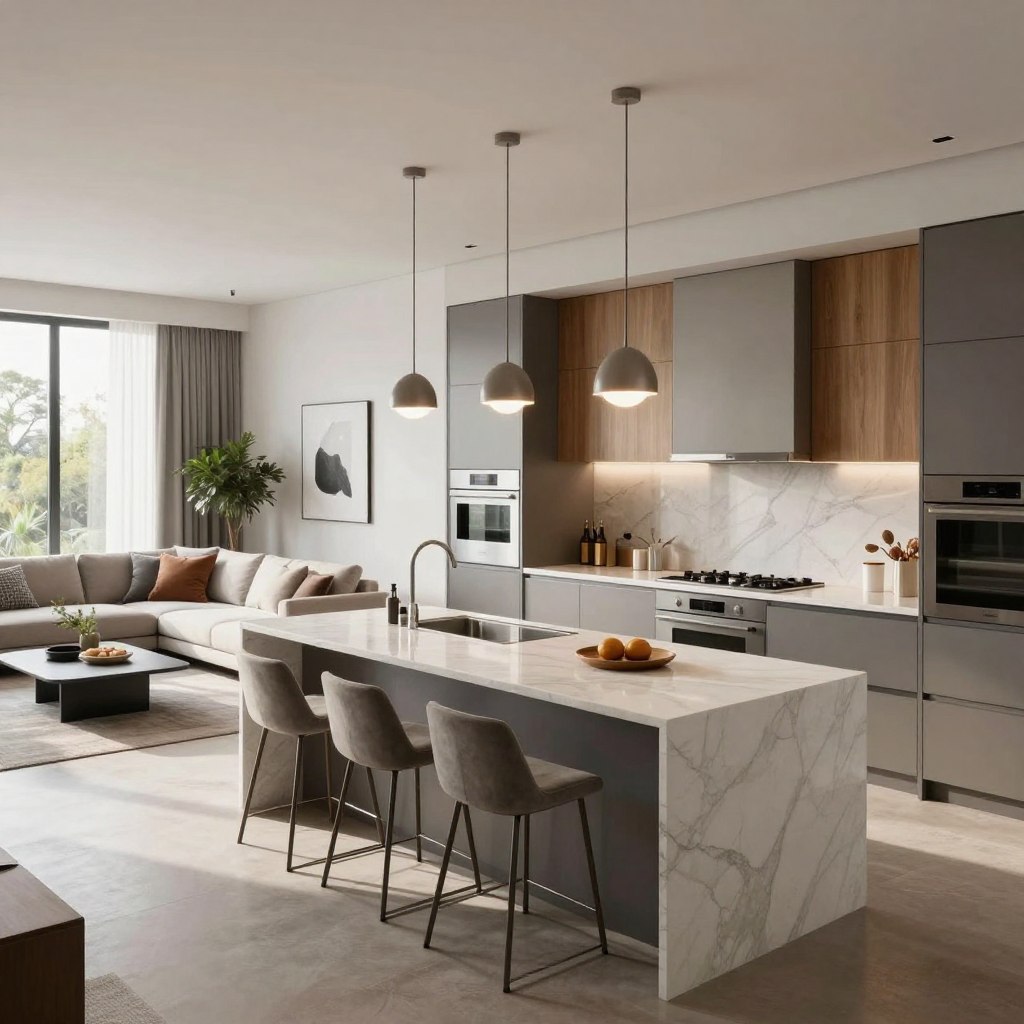
The beauty of these seven designs is their flexibility. Whether you love to entertain or value quiet family time, there’s a layout for you. Each design tackles common apartment living challenges while using every square foot.
Let’s explore these seven best open concept designs that are changing modern apartment living:
The Entertainer’s Dream has an L-shaped kitchen with a peninsula for serving and casual dining. It’s great for those who love hosting dinner parties and casual gatherings.
The Urban Minimalist has a one-wall kitchen with a mobile island. This design is perfect for studio apartments where space is limited.
The Social Hub places the kitchen at the home’s center with an extended island. It’s designed for families who live in their kitchen.
The Family Focused U-Shape creates a work triangle for easy access. It’s perfect for family meals and homework at the counter.
The Biophilic Design includes living walls and natural elements. It brings the outdoors in for a calming, nature-inspired space.
The Smart Home Layout integrates technology seamlessly. It has charging stations and smart appliances for an effortless daily life.
The Multi Level Zoning design uses subtle floor changes and furniture. It creates distinct areas without walls, perfect for studio apartments.
Each of these designs solves a different living challenge. They show that even the most compact apartment can feel spacious and tailored to your lifestyle. The key is choosing a layout that matches how you live.
In the next sections, I’ll dive into each of these best open concept designs in detail. I’ll show you how to implement them in your own space.
1. The Entertainer’s Dream: The Classic L-Shaped Kitchen with Peninsula
The L-shaped kitchen with a peninsula is perfect for modern homes. It blends the kitchen with the living area, creating a hub for cooking and conversation. This design is great for entertainers, offering a flow without walls.

This layout is ideal for social gatherings. The peninsula acts as a natural meeting spot. Guests can chat with the host while enjoying a drink, without blocking the cooking area.
Natural Division Without Walls
The peninsula is a smart divider. It separates the kitchen from the living area without walls. This defines the kitchen zone while keeping the living area open.
Peninsula as a Natural Divider
A peninsula is more open than a wall or island. It separates spaces without blocking flow. This is key for spacious living room ideas, making large areas feel open.
Continuous Counter Space
The L-shape and peninsula offer a long counter. You can prep food, have a serving station, and still have space for people. It’s perfect for cooking and entertaining.
Perfect for Small Gatherings
This layout works well in small spaces. The peninsula is great for breakfast, homework, or small gatherings. It’s functional and intimate for modern living.
Ideal Apartment Size: 600-900 sq ft
This layout is perfect for 600-900 sq ft apartments. It maximizes space without sacrificing openness. It’s ideal for spacious living rooms in smaller homes.
Material Selection for Visual Flow
Choose continuous flooring to unify the space. The same flooring from kitchen to living area creates a seamless look. A single countertop slab and consistent cabinetry finishes tie everything together.
Lighting Strategies for Ambiance
Lighting is crucial for a cohesive look. Use recessed or track lighting for brightness. Add a pendant or pendants over the peninsula for the eating zone. Under-cabinet and toe-kick lighting create a warm, ambient feel for evening gatherings.
2. The Urban Minimalist: One Wall Kitchen with Mobile Island
In small spaces, a one wall kitchen with a mobile island is essential. It’s perfect for studio apartments and compact homes. This design keeps your space tidy and functional.
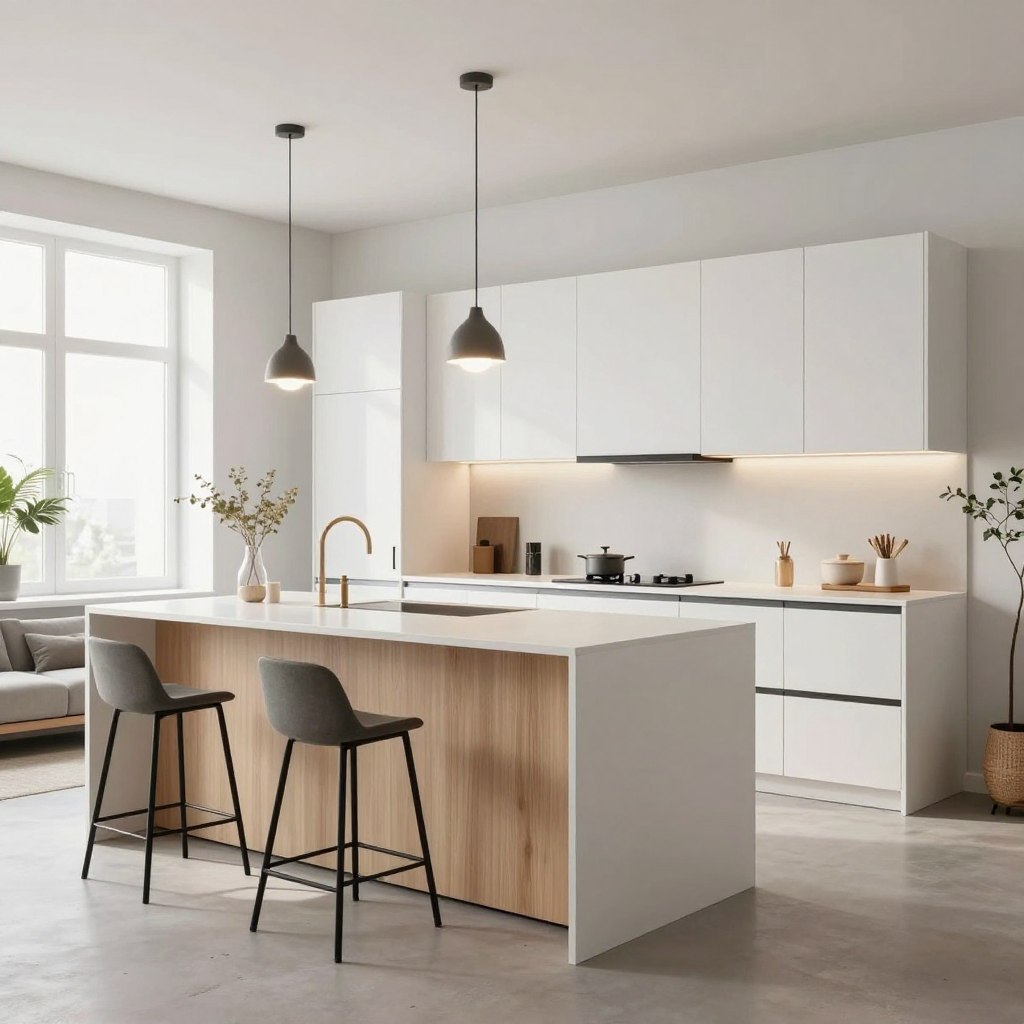
This layout works great for studio apartments. It puts all kitchen items on one wall, saving space. This makes your living area feel bigger and more open.
Movable Island Solutions
The mobile island is key in this design. It can be a prep area, dining table, or bar cart. Roll it away when you need more space, making it super flexible.
Vertical Storage Solutions
Use the walls for storage since you can’t have many base cabinets. Install shelves or tall cabinets that go up to the ceiling. This keeps your counters clear and your mind at ease.
Small Footprint, Big Impact
A one-wall kitchen may be small, but it can be very efficient. A well-planned work triangle makes cooking easy in tight spaces.
Multi-Functional Furniture Solutions
Every piece of furniture should have more than one use. A kitchen island can be a dining table or workspace. A wall-mounted table can be a breakfast bar that folds away.
Hidden Storage Solutions
Minimalism is about smart storage, not less stuff. Choose handle-less cabinets and use kick-plate space for drawers. Magnetic strips and in-drawer organizers help keep things tidy.
Convertible Furniture Options
Choose furniture that can change its purpose. A console table that turns into a dining table, or a desk that folds down, are great options. This makes your space versatile and adaptable.
Good lighting is crucial in a kitchen. It makes the space feel welcoming and functional. Check out our guide to open kitchen lighting for ideas. With smart planning, even small kitchens can be stylish and spacious.
3. The Social Hub: Galley Kitchen with Extended Island
The galley kitchen with an extended island is perfect for modern social living. It’s a great example of how to design open concept spaces for connection. This layout makes cooking, dining, and talking easy and natural.

This setup turns cooking into a shared activity. The galley’s design keeps the cook connected to the living area. Guests can sit at the island, chat, and help with food prep without getting in the way.
Extended Island with Seating
The extended island is the highlight of this design. It works as a breakfast bar, buffet, and workspace. This design creates a dedicated area for eating and socializing without disrupting the room’s flow.
Dedicated Beverage Station
Add a beverage station to the island or a nearby console. A small fridge, wine cooler, or coffee maker with storage turns it into a bar or coffee station. This keeps drinks and guests in the main area, avoiding kitchen congestion. For more tips on designing a functional space, check out efficient home layout resources.
Entertainment Focused Layout
This design is great for hosting. The galley’s work triangle is tucked away, and the island is the center of attention. Guests can enjoy snacks and chat while the host cooks and joins the conversation.
Flow Through Traffic Patterns
A key part of how to design open concept spaces is managing movement. The galley with island layout encourages a flow through pattern. This keeps the kitchen area clear and prevents a crowded feel during parties.
Bar Seating Specifications
Plan your island seating for comfort and function. Use at least 24-26 inches of width per stool and 15-18 inches for legroom. A 10-12 inch overhang ensures guests can sit comfortably without knee bumps.
Lighting for Social Settings
Lighting sets the mood. Use a layered approach with recessed lights for general light, pendants for task lighting, and under-cabinet lights for ambiance. Dimmable fixtures are key for changing the mood from bright to soft.
4. The Family Friendly U-Shaped Kitchen Layout
Designing an open concept space for a family home is all about efficiency, safety, and togetherness. The U shaped kitchen is my top pick for families. It’s not just a classic design; it’s a functional hub for cooking, homework, and daily activities.
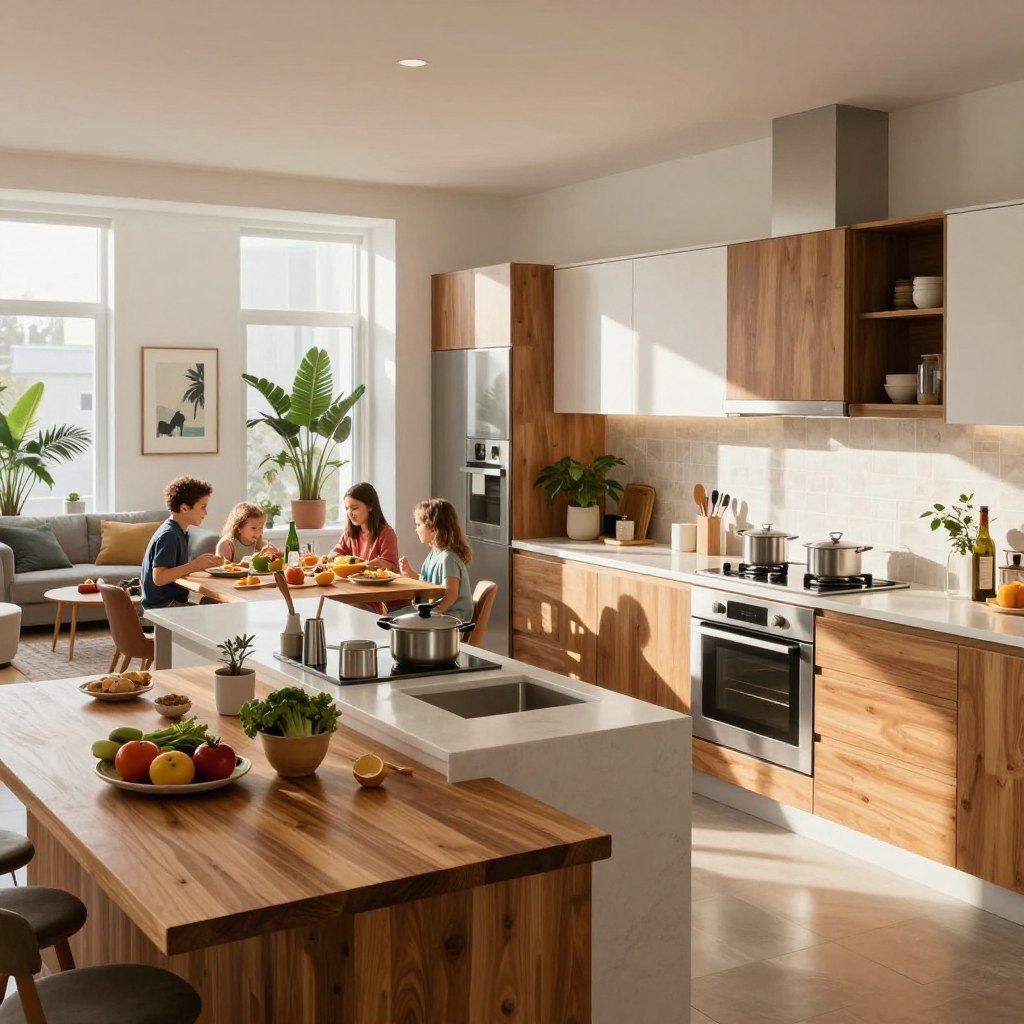
The U shaped design makes for an efficient work triangle. This means you can move easily from fridge to sink to cooktop without crossing paths. It keeps the cooking area safe from the main flow of family traffic.
Ample Counter Space
The U shaped kitchen offers a lot of counter space. You get countertops on three sides, perfect for meal prep, baking, and small appliances. This is great for meal prepping or when many family members are in the kitchen.
Multiple Work Zones
This layout naturally divides into zones. One part is for prep and cooking, another for cleanup, and the base for storage or a coffee station. This zoning helps multiple people work in the kitchen without getting in each other’s way.
Multiple Cooks, One Kitchen
The “too many cooks in the kitchen” problem is solved. With three sides of workspace, two or three people can work comfortably. This layout is perfect for busy families.
Child Friendly Design Elements
Safety and durability are key for families. The U shape creates a secure, semi-enclosed space. You can keep an eye on kids in the living area while cooking, and the layout keeps the cooking zone safe from traffic.
Child Proofing Considerations
When designing a family kitchen, safety is crucial. The U-shape allows for a safe “kid zone” with a play area or small table. You can also place appliances out of reach and use the corner for a lockable cabinet.
Durable Material Selection
Family kitchens need durable materials. Choose quartz or quartzite countertops for stain resistance. For cabinets, thermofoil or laminate finishes are great for wiping clean. These materials are essential for a functional, family friendly kitchen.
The U shaped kitchen is a timeless choice for families. It offers organization, safety, and durability for daily life. It’s one of the most practical open concept kitchen ideas for a busy household.
5. The Biophilic Design: Kitchen with Living Wall Integration
Imagine a kitchen where plants purify the air and the sink view is a lush garden. This is biophilic design in your home. It brings nature into your daily life, nourishing body and soul. It’s a top choice for those wanting a strong nature connection indoors.

Biophilic design blends inside and outside. In open spaces, this means a smooth flow. Use big windows or sliding doors to connect to the patio.
Choose natural materials like wood and stone. This makes your kitchen feel like the outdoors, not a separate space.
Living Wall Installation
A living wall is the main feature. It turns a wall into a green, oxygen making piece. Start with a strong frame, an irrigation system, and a waterproof backing.
Place it where it gets enough light and is easy to care for. It’s a living art piece and air filter.
Maximizing Natural Light
Biophilic design loves light. Keep window treatments simple. Use big windows and maybe a skylight to brighten the space.
Mirrors and glossy backsplashes can also spread light. This makes the area feel bright and connected to the sky.
Air Quality Improvement
Plants in your living wall improve air quality. They filter out bad smells and release oxygen. This makes your kitchen healthier and fresher.
Stress Reducing Environment
Biophilic design is based on science. Being near nature lowers stress and boosts creativity. Greenery and natural materials calm you down.
Your kitchen becomes a place for relaxation, not just cooking. It’s a space for calm and creativity.
Plant Selection Guide
Not all plants do well in kitchens. For living walls, pick hardy, air-purifying plants. Snake plants, pothos, and ferns are good choices.
Culinary herbs like rosemary and thyme are also great. They look good and are useful in cooking.
Lighting for Plant Health
Plants need the right light to grow. If it’s not enough, use LED grow lights. These can be hidden under cabinets or as stylish fixtures.
Timers help light your plants at the right times. This keeps your kitchen a living, thriving space.
6. The Smart Home Integration Layout
Welcome to the future of modern living. The Smart Home Integration layout is for those who love cutting
edge convenience. It makes your daily life better with technology that works quietly in the background. This layout is not just about gadgets; it’s about creating a smart, efficient, and intuitive space. It’s perfect for a spacious living room that’s both intelligent and beautiful.
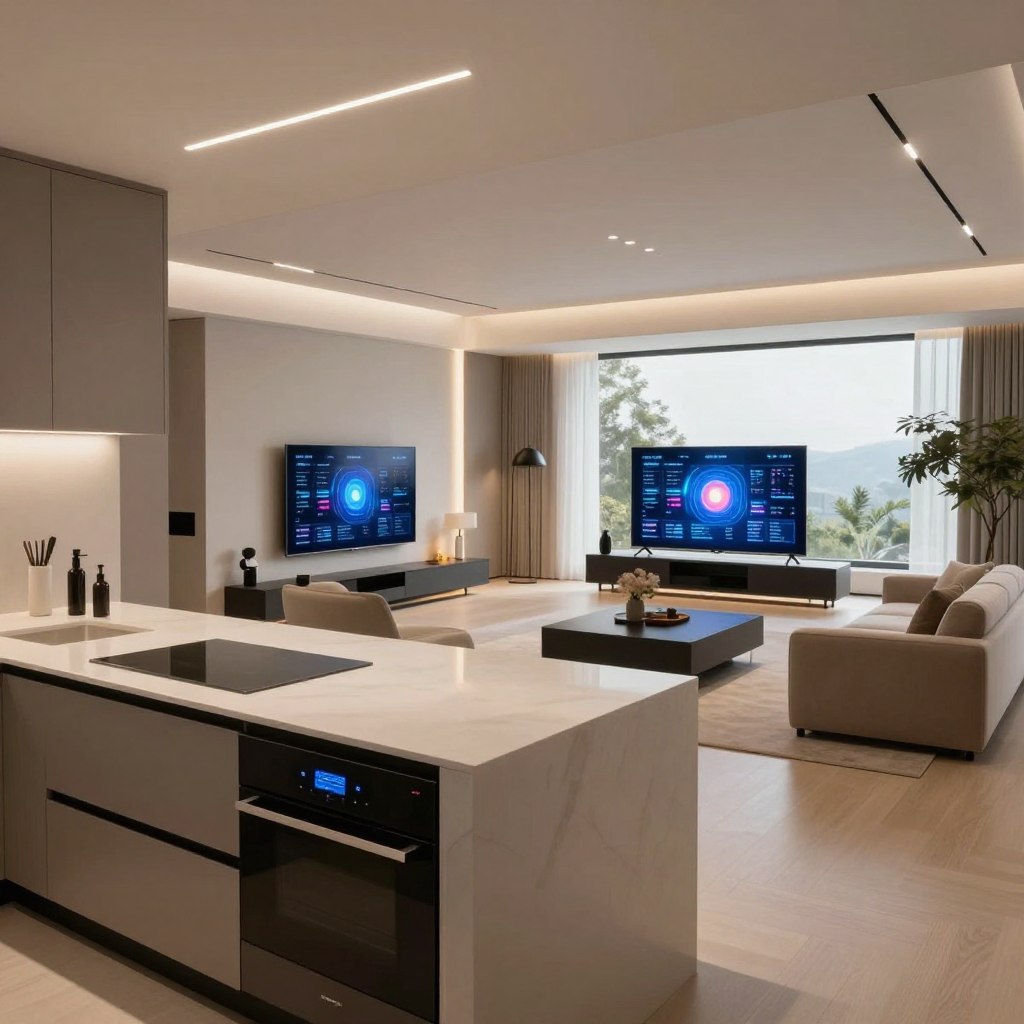
Your kitchen becomes a command center. Imagine an oven you can preheat on your way home or a refrigerator that can create a grocery list for you. These connected appliances make cooking and food management easy and efficient.
Voice Controlled Lighting
No more fumbling for a switch. With a simple voice command or a tap on your phone, you can set the perfect mood. Dim the lights for a movie or brighten the entire spacious living room for a party, all without leaving your seat.
Automated Climate Zones
Why heat or cool the whole home when you’re only using one room? Smart climate zones let you control the temperature in your living area independently. This increases comfort and cuts down on wasted energy.
Seamless Technology Integration
This layout is all about invisible tech. It focuses on a clean, minimalist look. Screens can be disguised as mirrors, and speakers are built into the ceiling. The technology serves you, not the other way around.
Energy Efficiency Focus
Smart homes are efficient homes. Automated systems learn your schedule and adjust heating, cooling, and lighting to match. This reduces your utility bills. Smart plugs and energy-monitoring outlets give you precise control over power usage.
Concealed Wiring Solutions
A clean look is a clean design. All the magic of a smart home should be felt, not seen. Professional installation hides wires for your home theater, speakers, and network within walls or baseboards. This preserves your sleek, open-concept aesthetic.
Future Proofing Your Space
Technology evolves. This layout is built on a scalable system that can be updated. A robust, hidden network hub allows you to add new smart devices, security features, and technologies as they become available. This ensures your home never feels outdated.
7. The Multi Level Zoning Layout
The Multi Level Zoning Layout is the top choice for modern open concept design. It uses elevation, materials, and placement to define spaces without walls. This method makes distinct zones in one flowing space. It’s great for keeping the open feel while defining areas.
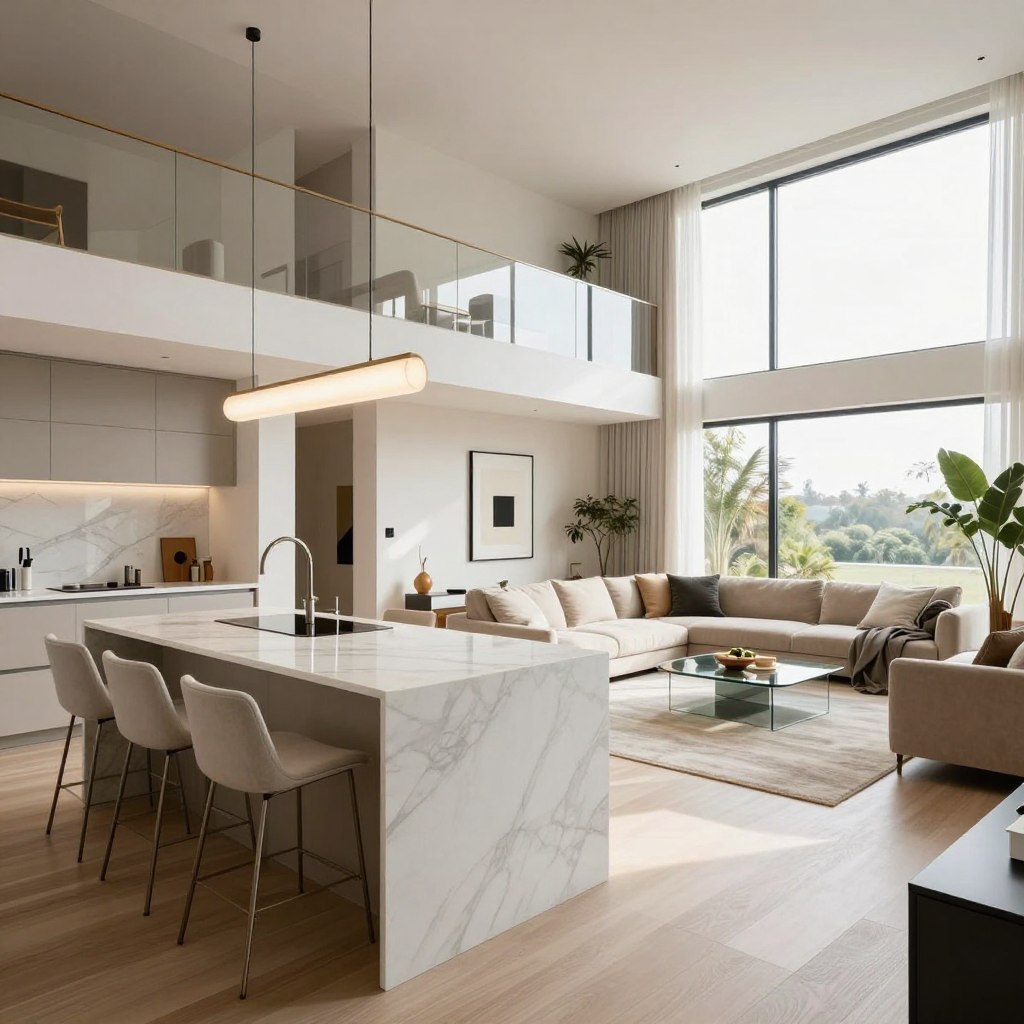
Visual separation makes zones without walls. Area rugs mark conversation areas. Open shelving units and room dividers keep the flow while suggesting separate spaces. Furniture and ceiling heights also help define zones.
Flooring Transitions
Flooring changes signal zone shifts. I use different materials for each area. For example, hardwood in the kitchen and rugs in the living area.
Contrasting floor materials enhance a modern open concept layout. Tile in the kitchen and dining, then wood or carpet in living areas. Even small changes in floor level or texture can mark a zone.
Ceiling Height Variations
Changing ceiling heights adds interest and defines zones. A dropped ceiling in the dining area makes it cozy. A vaulted ceiling in the living area makes it airy. This adds depth and character.
Work From Home Integration
For work from home, a dedicated corner with good lighting is key. Use a room divider or bookshelf to visually separate it. This helps keep work and leisure spaces separate.
Entertainment Zones
For entertainment, I set up zones for different activities. A media area with comfy seating works well with a game or bar area. This setup encourages movement and interaction while keeping activities separate.
Furniture as Room Dividers
Furniture can define zones without walls. A big sofa can separate living and dining areas. Bookcases or console tables can act as subtle dividers. This keeps the open feel while creating distinct areas.
Lighting for Zone Definition
Lighting defines zones. Pendant lights over dining or kitchen islands mark those areas. Track lighting highlights artwork or features. Different lighting temperatures define zones.
This modern open concept layout turns one space into multiple areas. The goal is to define zones while keeping the space flowing. Each zone should feel intentional yet connected to the whole.
Essential Design Principles for Open Concept Success
Creating a successful open concept space is more than just removing walls. It’s about making a space that looks good and works well. You need to blend beauty with function. Here are five key principles to make your open concept space work.
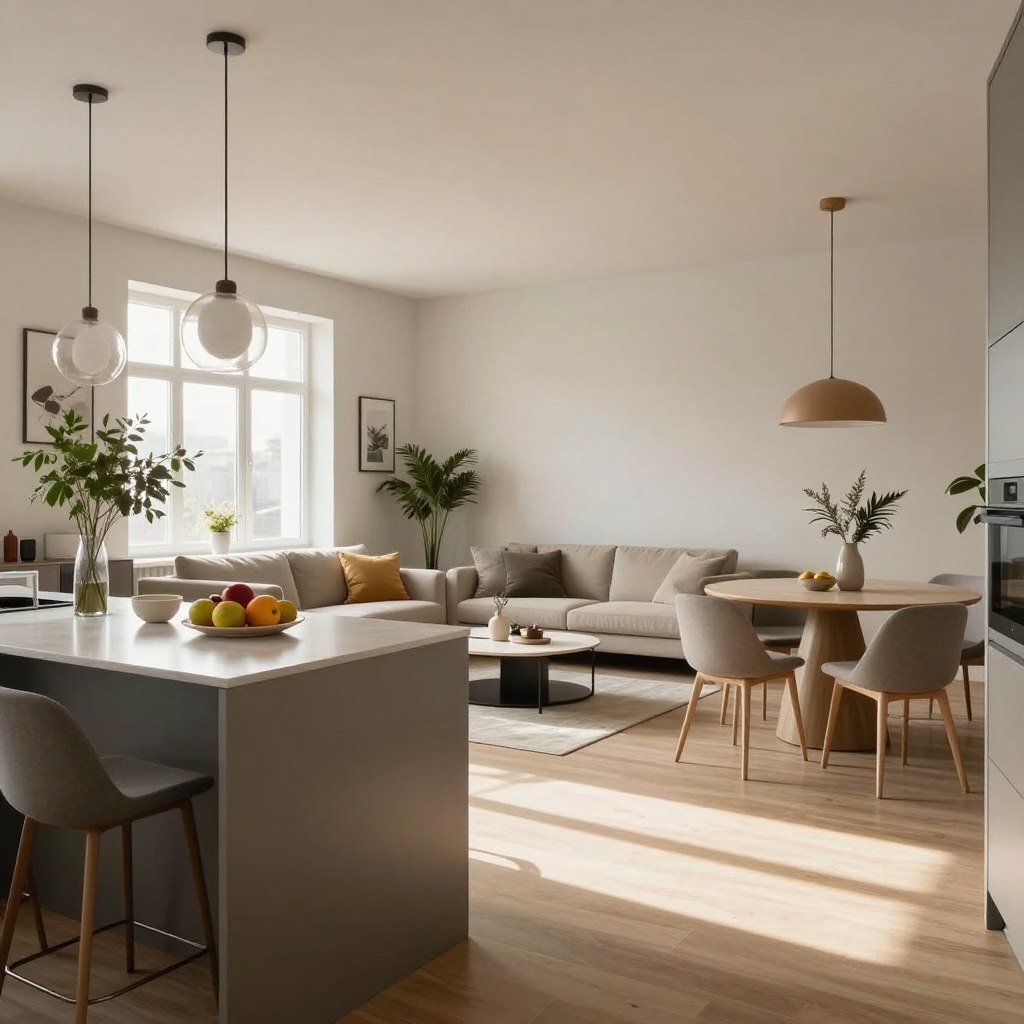
Start with a cohesive color story. Pick a neutral color for walls, floors, and big furniture. Then, add a secondary color for depth and an accent color for interest. This makes your space look unified and guides the eye smoothly.
Material Cohesion
Material choices should match each other. If you have warm oak flooring, use it in your kitchen too. If your kitchen has stainless steel appliances, use that metal in your lighting or hardware. This creates a smooth connection between areas, making your space feel like one big, curated area.
Scale & Proportion
Furniture is crucial in an open concept space. A big sectional can overwhelm a small area, while a tiny loveseat can get lost. Choose furniture that fits well with the space and each other. Think about the “visual weight” of your furniture. A big coffee table can anchor a large area, while a light dining set can keep a dining area open.
For more ideas on kitchen layouts, even in tight spaces, check out kitchen designs without windows.
Flow & Function
An open floor plan needs good flow. Arrange furniture to guide movement without blocking it. Think of your space in activity zones. Paths from the kitchen to the dining table or from the sofa to the kitchen should be clear.
A well-placed area rug can define a seating area without walls. A console table can act as a subtle divider.
Layered Lighting
Lighting is key to bringing an open concept space to life. Avoid a single overhead light. Instead, use ambient, task, and decorative lighting. Start with ambient light from a central fixture or recessed cans. Add task lighting where needed, like over the kitchen island or in a reading nook.
Finally, add accent and decorative lighting, like a floor lamp or under cabinet LED strips. This layered lighting creates the perfect mood for any time, making your space both beautiful and functional.
Common Open Concept Mistakes and How to Avoid Them
Creating the perfect open concept space is a delicate balance. It’s easy to make common mistakes that can ruin the look and feel of a room. The best open concept spaces are well planned to avoid these errors. They are both beautiful and functional.
Oversized Furniture Pitfalls
One big mistake is using furniture that’s too big for the space. A huge sectional or a big armchair can make a room feel small and cluttered. It’s important to choose furniture that fits the room size. Always measure your space and create a floor plan before buying.
Choose furniture with exposed legs to make the room feel lighter. I suggest using multi functional pieces, like an ottoman with storage, to save space and add utility.

A rug that’s too small is another common mistake. A small rug can make furniture look like it’s floating. The right rug size helps anchor your furniture. A good rule is to ensure the front legs of all your primary seating sit comfortably on the rug.
For a living area, a 9’x12′ or larger rug is often needed. It helps define the space and makes it feel grounded.
Insufficient Task Lighting
Using only a central overhead light can make a space feel flat and uninviting. In an open concept, different areas need different lighting. You need dedicated task lighting in work areas, like under cabinet lights in the kitchen or a pendant over a dining table.
In a kitchen, a single ceiling fixture won’t provide enough light for food prep. I plan for a mix of recessed can lights for general light and focused pendants or under cabinet strips for task areas.
Poor Light Layering
This mistake is similar to insufficient task lighting but on a larger scale. Good lighting design uses three layers: ambient, task, and accent. To avoid a flat, one dimensional room, incorporate all three.
Use dimmable recessed lights for ambient light, a statement floor lamp for accent, and directed task lights where you read or work. This layering adds depth, mood, and functionality to your space.
Creating Natural Pathways
In an open plan, you can’t have a “room” with four walls, so you create invisible boundaries. A major mistake is not defining these walkways. People need clear, unobstructed paths to move between areas. Think of a “highway system” with 3 foot wide main “freeways” and smaller “side streets.”
Arrange your furniture to create these natural walkways. Ensure there is a clear, direct path from the main entry to the kitchen or from the living area to a patio door, without forcing people to weave through your conversation area.
Furniture Placement Errors
The two biggest errors are the “wallflower” and the “island.” The “wallflower” error is pushing all your furniture against the walls, creating a cavernous, unwelcoming void in the middle of the room. The “island” error is floating a sofa or chairs in the middle of the space without connecting them to a wall, anchor, or rug, making them look lost. The solution is to create a conversation zone.
Pull your main seating pieces away from the walls to create a cozy, defined zone. An area rug and a coffee table can anchor this zone, creating an intimate area for conversation that still feels connected to the larger space. This is where smart open concept kitchen ideas come to life, by using furniture to define function without building walls.
Budget Friendly Open Concept Solutions
You don’t need a big budget to get the best open concept designs. Smart planning and choices can make your space look luxurious without the high cost. This guide will help you budget wisely, focus on key changes, and find stylish pieces that won’t empty your wallet.
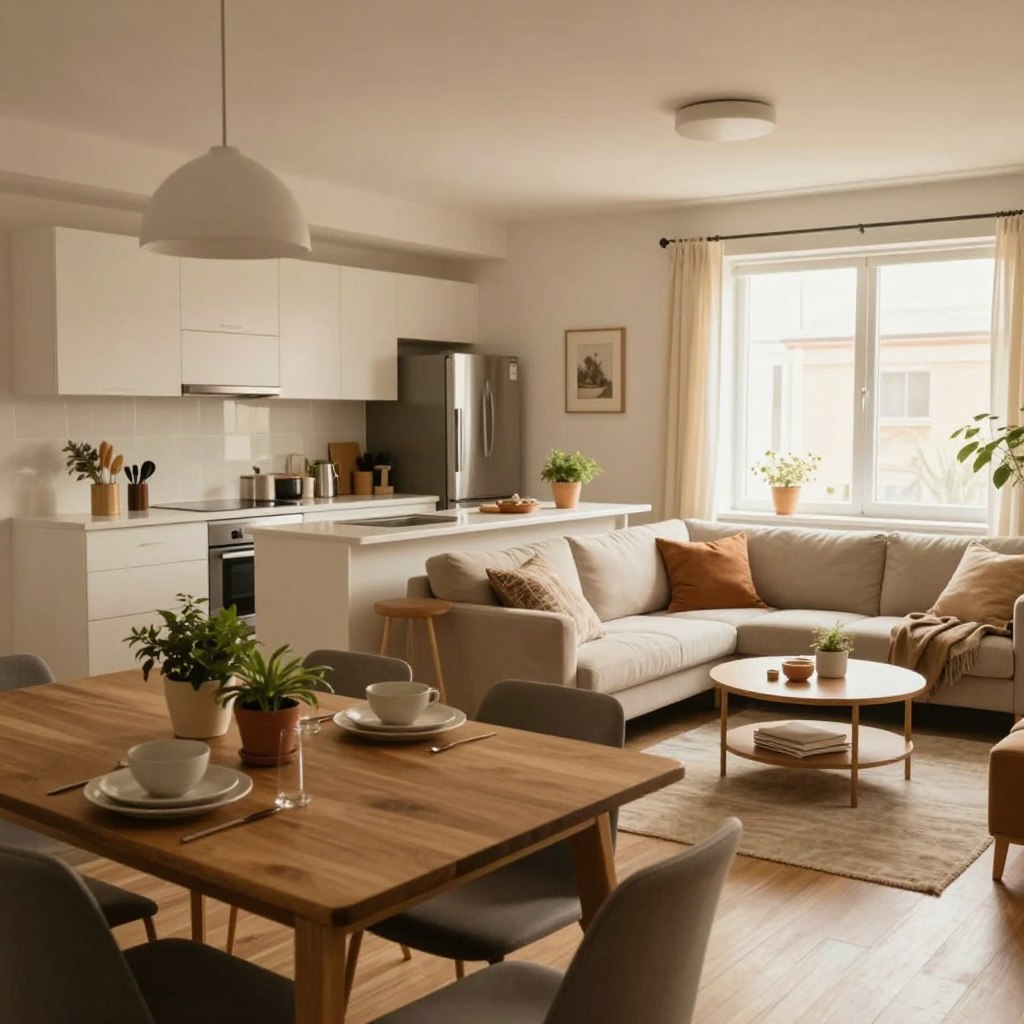
Luxury doesn’t mean only marble and mahogany. The key to an affordable, high end look is in the finish. I suggest using quartz or high quality laminate for countertops, which is elegant but cheaper than stone. For flooring, luxury vinyl plank (LVP) that looks like hardwood or stone is a great choice. It’s durable, affordable, and makes the space look better.
For cabinet doors, a simple shaker style slab in a high gloss or two tone finish can make a budget kitchen look modern and custom.
Budgeting for Key Pieces
When money is tight, focus on what matters most. Spend on items that get used a lot and make a big impact. Invest in a great sofa for the living area. In the kitchen, splurge on a good sink and faucet since they’re used daily.
For lighting, a single, statement pendant over the dining area or island does more than many small, cheap lights.
Weekend Upgrade Projects
You can make a big difference in just one weekend. A fresh coat of paint in a light, neutral color can brighten the whole space. Swapping out old cabinet hardware and lighting fixtures are also quick and affordable upgrades.
Building or installing floating shelves on a key wall adds storage and display space without a big renovation.
Smart Shopping Strategies
Being a smart shopper helps save money on your renovation. Start at outlets, discount home centers, and online for deals on furniture. For open shelving or a feature wall, consider using materials like kitchen designs for narrow spaces for clever solutions. A well placed area rug or large art piece can define a zone without building a wall.
Priority Upgrades
If you’re doing your project in phases, focus on changes that change the space’s feel. Upgrading to a unified flooring throughout the main area is key, as it makes the space look bigger. Next, consider your lighting. Replacing a central fixture with a mix of recessed, pendant, and under-cabinet lighting can change the ambiance.
These foundational upgrades create a professional look that makes everything else you add seem more expensive.
Phased Budget Planning
Doing your project in phases is the most realistic way to get your dream space. Start with a master plan, then break it into affordable phases. Phase 1 could be a cosmetic refresh: paint, hardware, and lighting. Phase 2 might be a new island or flooring upgrade.
Spreading the cost over time lets you save for quality items. This methodical approach ensures every dollar is spent on a piece of the larger, more cohesive vision for one of the best open concept designs for your lifestyle.
Maximizing Small Open Concept Spaces
Turning a small open concept area into a bigger space is an art. It’s about using smart design and solutions. In my home, I’ve found that the key is not just fitting everything in. It’s about making the space feel big, clean, and easy to use.
By making smart design choices, you can make a small space look bigger. This turns a small area into a stylish and useful part of your home. The goal is to use every inch well, making the space feel alive.

Mirrors and glass are key in small spaces. A big mirror on a main wall can make the space look twice as big. It’s not just about hanging a mirror. It’s about placing it to reflect light or a nice view.
Using glass, like in a coffee table or chairs, keeps the space open. This trick makes the area feel less crowded and more open. It’s all about creating the illusion of more space.
Color and Light Manipulation
I start with light, neutral colors for walls and big furniture. This creates a smooth, airy look that makes the space feel bigger. Then, I add color and personality with smaller items.
For lighting, I use a mix of types. Ceiling light is essential, but I also add task and accent lights. This makes the ceiling seem higher and the walls farther apart. It’s a simple trick that works well.
Convertible Pieces
In small spaces, every piece of furniture must be useful. I love multi functional furniture. For example, a storage ottoman that’s also a coffee table and extra seat.
I also have a sofa that turns into a guest bed and a dining table that expands. These pieces are essential in small spaces, offering flexibility without losing style or space.
Hidden Storage Solutions
Clutter is the enemy of a small space. My solution is to create hidden storage for everything. I use space under window seats for toys and pull-out drawers in cabinets.
Using space under beds and sofas with storage containers is also key. Thinking vertically and underneath keeps the floor clear. A clean floor is crucial for a space to feel open.
Wall Mounted Solutions
When space is limited, go up. I mount as much as possible on walls. This includes TVs, speakers, shelves, and desks.
Using floating shelves and wall mounted nightstands frees up floor space. It makes the room feel larger and easier to clean, enhancing openness.
Ceiling Storage Options
The space above us is often overlooked. I use vertical space all the way to the ceiling for storage. This can be high shelves in the kitchen or a lofted storage area.
In homes with high ceilings, a lofted area can double the usable space. It’s a great way to add storage without expanding the footprint.
Maximizing a small space is about clever tricks and efficient design. By using visual illusions, functional furniture, and smart storage, you can create a home that feels open and tailored to your life. Great design is about what you do with the space you have.
Smart Lighting for Open Concept Spaces
Lighting is key in an open concept space. It can change the whole feel of the room. In a modern open concept layout, smart lighting helps create different areas and moods. It makes one big space feel like several rooms.
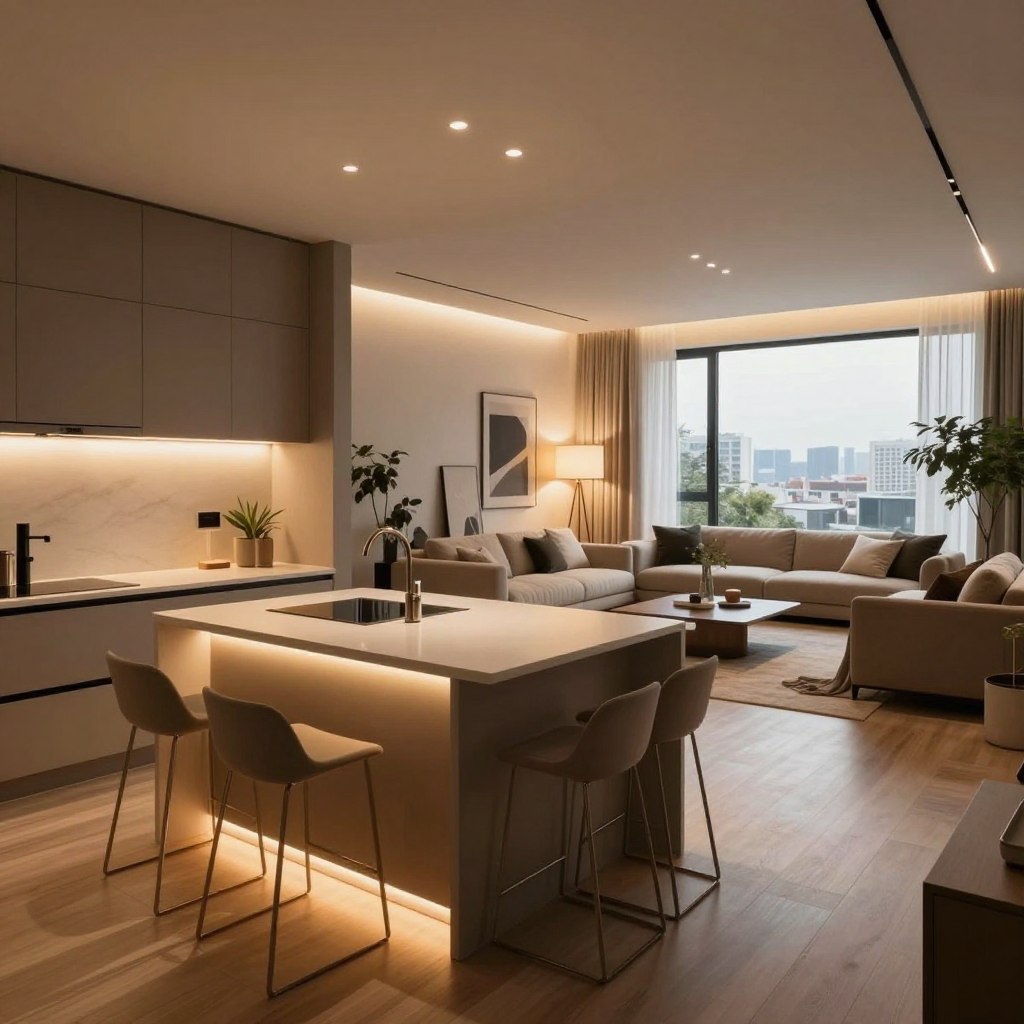
I start with ambient light to brighten the room. For a modern open concept layout, I use dimmable LED panels or recessed can lights. I put them on different dimmer switches for each area. This lets me adjust the lights for different activities.
Task Lighting Solutions
Then, I add task lighting for focused areas. Over the kitchen island, I hang three pendants. For reading or working, I use adjustable floor lamps. The goal is to light up specific areas without disturbing others.
Kitchen Task Lighting
Under cabinet lighting is essential. I install dimmable LED strips under cabinets. This provides perfect light for cooking without shadows. For the island, I choose a statement light or pendants that also serve as decor.
Living Area Ambiance
The living area is for relaxing. I replace harsh lights with floor lamps and wall sconces. I use smart bulbs that change color for different moods. This creates a cozy atmosphere for unwinding.
Automated Scenes
Programming smart lighting is where the magic is. I create scenes like “Morning” and “Movie Night.” With a tap on my phone, I can change the whole room’s mood. It turns a bright room into a cozy theater.
Voice Control Setup
I connect everything with a smart home hub. Saying “Alexa, turn on the dinner party scene” sets the mood. I control all lights with a single command, making the modern open concept layout easy to manage.
Conclusion: Creating Your Perfect Open Concept Space
We’ve looked at seven open concept kitchen living room layouts, from the Entertainer’s Dream to the Smart Home Integration. Each design offers a unique solution for modern living. A successful open concept space balances beauty with daily life needs.
Knowing how to design open concept spaces starts with understanding these core layouts and principles. The secret to success is applying the principles we’ve discussed. Effective zoning, a thoughtful floor plan, and a unified design theme make an open area functional and beautiful.
Your personal approach to designing open concept spaces should reflect your lifestyle and taste. Think about how you move and live in your home. Your perfect open concept space is within reach.
Use the ideas from the L-shaped kitchen with a peninsula, the flexible one wall layout, or the connected galley as inspiration. Remember the key principles: define zones, ensure a smooth flow, and select a cohesive color palette. Begin envisioning your ideal open concept. Sketch your ideas, arrange your furniture, and imagine your life unfolding in this new, beautifully integrated space.