

Creating a harmonious living room involves more than just picking the right furniture; it’s about crafting a space that reflects your personality and style. One effective way to achieve this is by mixing different seating styles, which can add depth and visual interest to your room.
Let’s explore some creative seating arrangements that can transform your living room into a cozy haven.
The Art of Mixing Seating Styles: Why It Works
The art of combining diverse seating options is not just about filling a room; it’s about creating a harmonious and inviting atmosphere. By mixing and matching seating styles, you can add depth and character to your living room.
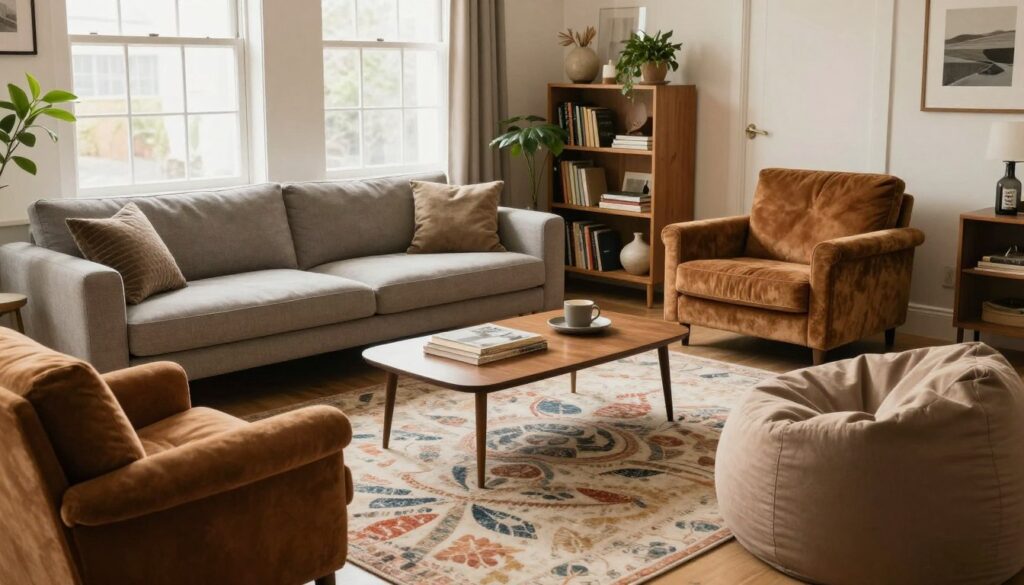
To achieve this, it’s crucial to understand the principles that make mixing seating styles work. Balance, proportion, and texture are key elements in creating a cohesive look. Balance refers to the distribution of visual weight in the room, ensuring that no single piece of furniture overwhelms the space.
Creating Harmony Among Different Seating Options
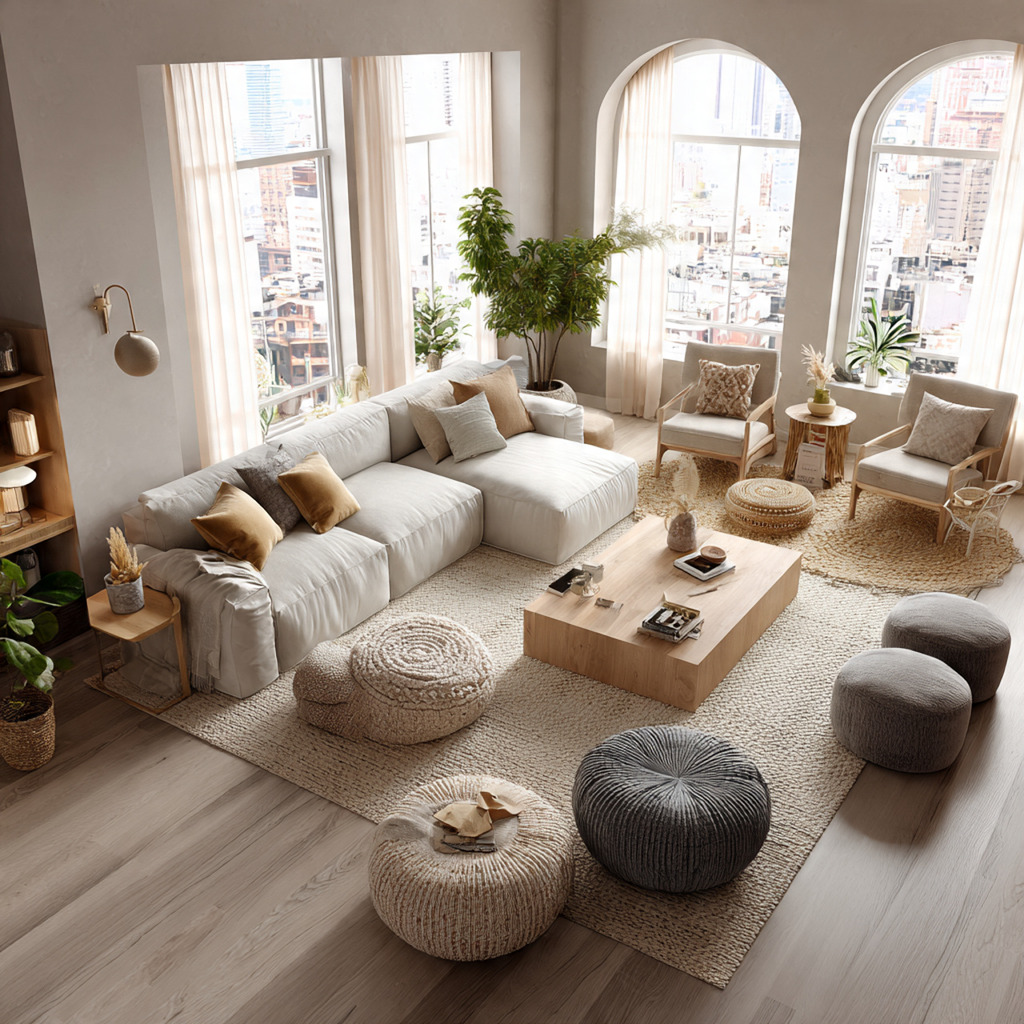
Texture adds another layer of depth to the room. Mixing different textures, such as smooth leather, rough wood, and soft fabric, can enhance the visual interest of the space. For more ideas on how to effectively mix seating in open-plan living areas, you can visit secrets to easy tip for open plan living room.
Idea 1: Contrast Traditional and Modern Seating for Timeless Appeal
Blending traditional and modern seating styles can create a visually appealing and timeless atmosphere in your living room. This eclectic approach to furniture arrangement allows you to showcase your personal style while maintaining a cohesive aesthetic.
The key to successfully mixing traditional and modern seating is to find common ground among the different pieces. This can be achieved by using a unifying color scheme, similar textures, or complementary design elements.
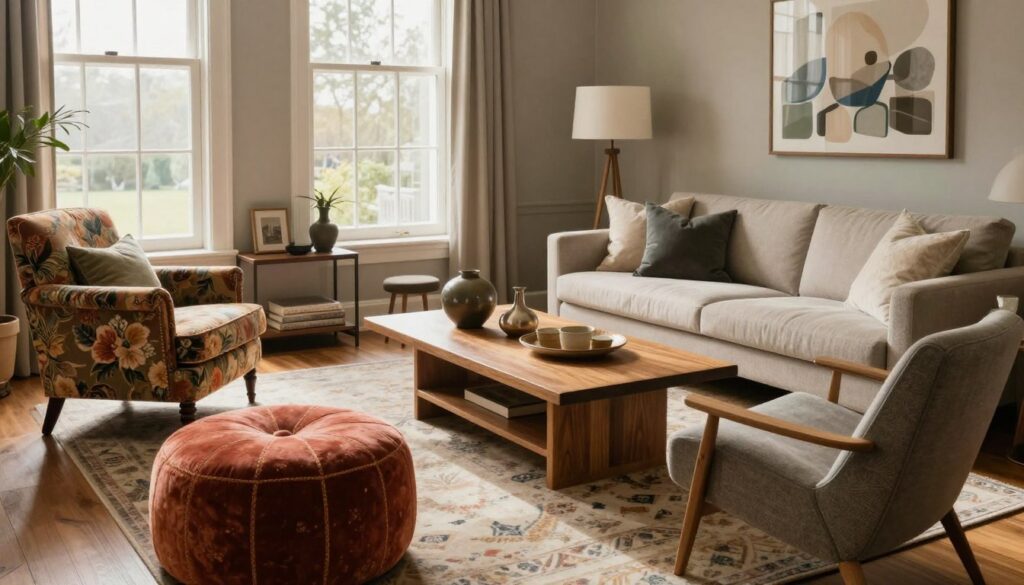
For example, you could pair a traditional wooden armchair with a modern fabric sofa in a coordinating color. Alternatively, you could combine a vintage ottoman with a contemporary chaise lounge, creating an innovative seating combination that adds visual interest to the room.
Idea 2: Create Conversation Zones with Different Seating Heights
Creating a dynamic social space involves more than just placing furniture; it’s about crafting conversation zones that encourage interaction and comfort.
One effective way to achieve this is by incorporating diverse seating options at varying heights. This not only adds visual interest to the room but also caters to different preferences, making the space more inviting.
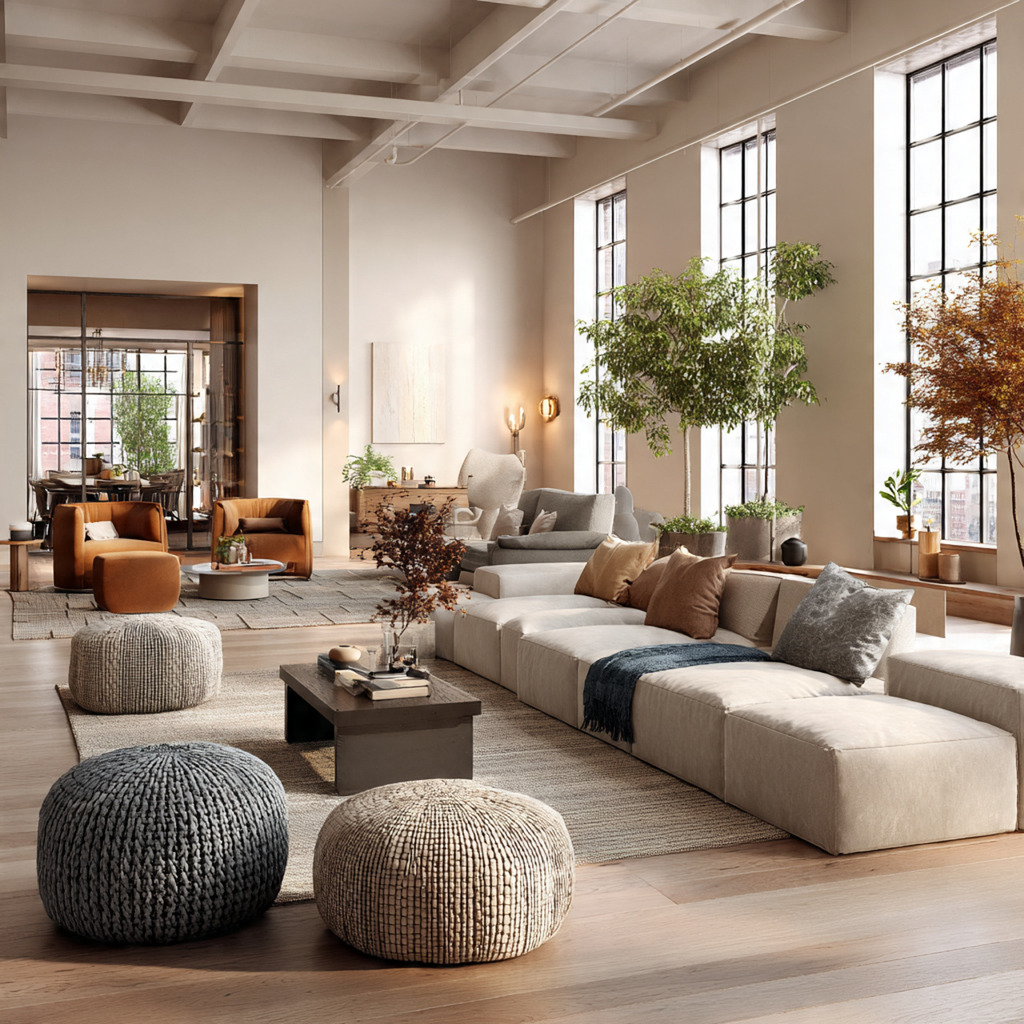
Living room with conversation zones created by mixing low sofas, floor cushions, and higher armchairs to vary seating heights
By thoughtfully mixing seating heights, you can create a creative seating arrangement that not only enhances the aesthetic appeal of your living room but also fosters a welcoming environment conducive to meaningful conversations.
Idea 3: Mix Materials for Rich Textural Contrast
Mixing materials such as leather, fabric, wood, and metal can result in a harmonious balance of textures. For instance, pairing a leather sofa with fabric armchairs and a wooden coffee table can create a cozy and inviting atmosphere. The key is to strike a balance between different textures to avoid overwhelming the space.
A successful combination involves contrasting smooth and rough textures.For example, the smoothness of leather can be beautifully contrasted with the roughness of a woven rattan chair. Similarly, the sleekness of a metal side table can complement the softness of a plush area rug.
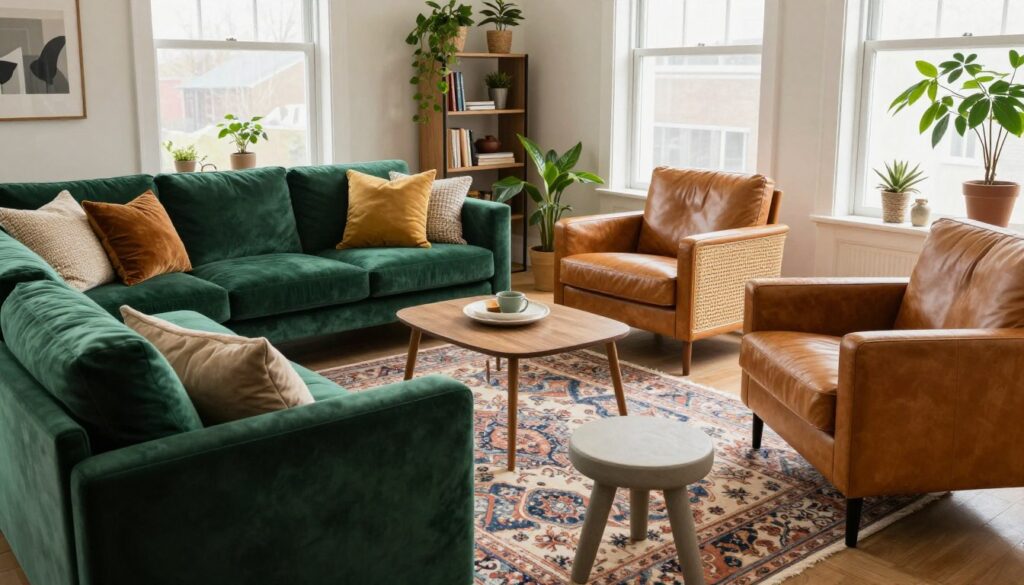
When mixing materials, it’s also essential to consider the color palette to ensure cohesion. You can draw inspiration from modern bathroom rug colors to create a harmonious color scheme in your living room. This will help tie together different seating styles and materials, resulting in a unified aesthetic.
Furthermore, incorporating eclectic seating choices can add character to your living room. Don’t be afraid to mix vintage pieces with modern seating design to create a unique and personalized space.
Ideas4: Mixing Different Seating in Open Floor Plans
Open floor plans have become increasingly popular in modern homes, offering a spacious and airy feel by combining living, dining, and sometimes kitchen areas into one large room. However, this openness can also present a challenge when it comes to defining different spaces within the area.
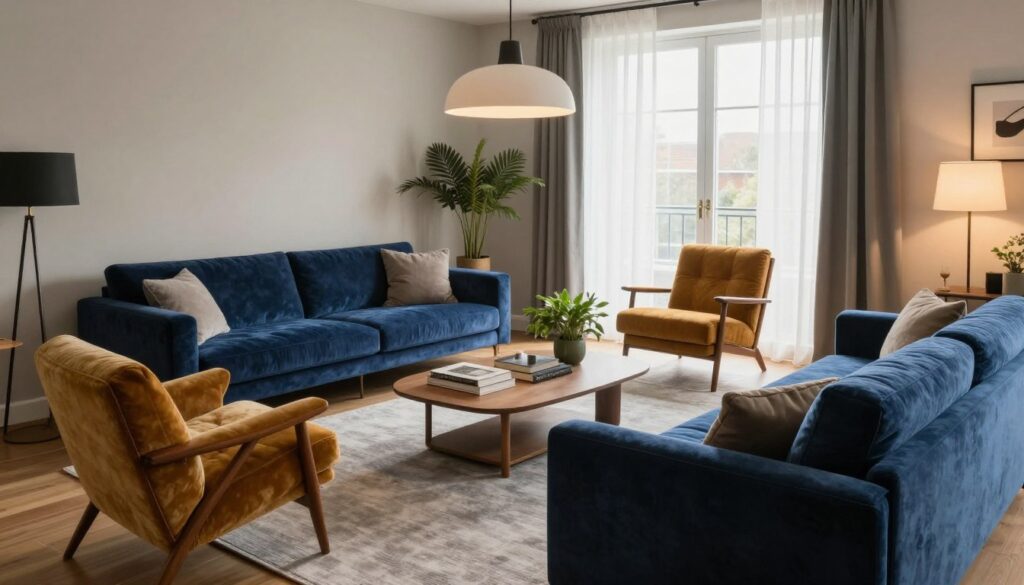
To create distinct areas within an open floor plan, you can use seating arrangements to delineate spaces for different activities. For example, a comfortable sofa and armchair can define a seating area for relaxation, while a dining table and chairs can clearly mark the dining space.
Another strategy is to use seating arrangement inspiration from various design styles. For instance, you could incorporate a modern sofa with sleek lines alongside a vintage armchair, creating an interesting contrast that adds character to the space.
Idea 5: Incorporate Vintage and Antique Pieces Among Contemporary Furniture
You can achieve a truly eclectic look by combining vintage and antique seating with contemporary furniture. This approach not only adds character to your living room but also creates a unique conversation piece.
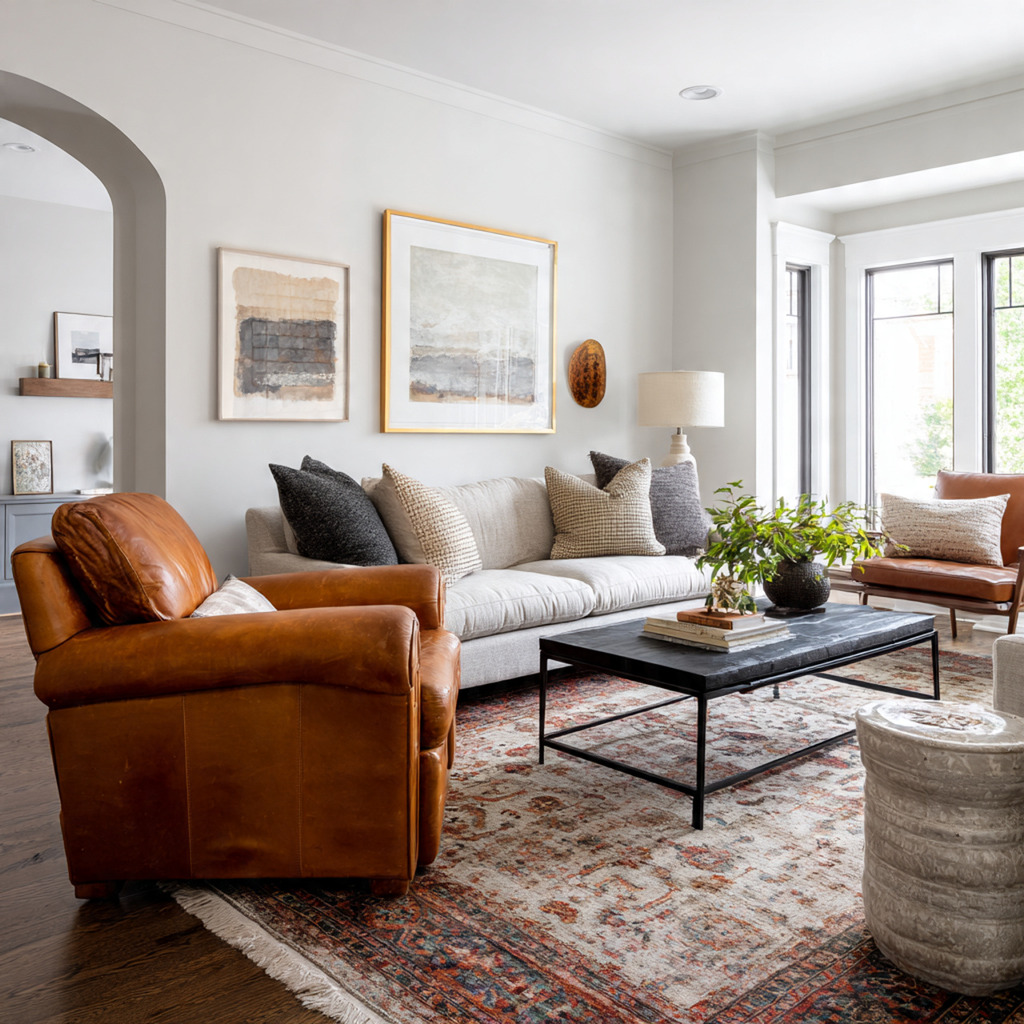
When incorporating vintage and antique pieces, it’s essential to strike a balance between old and new. Start by selecting a statement vintage or antique piece, such as a beautifully restored armchair or a vintage sofa, to be the focal point of your seating arrangement.
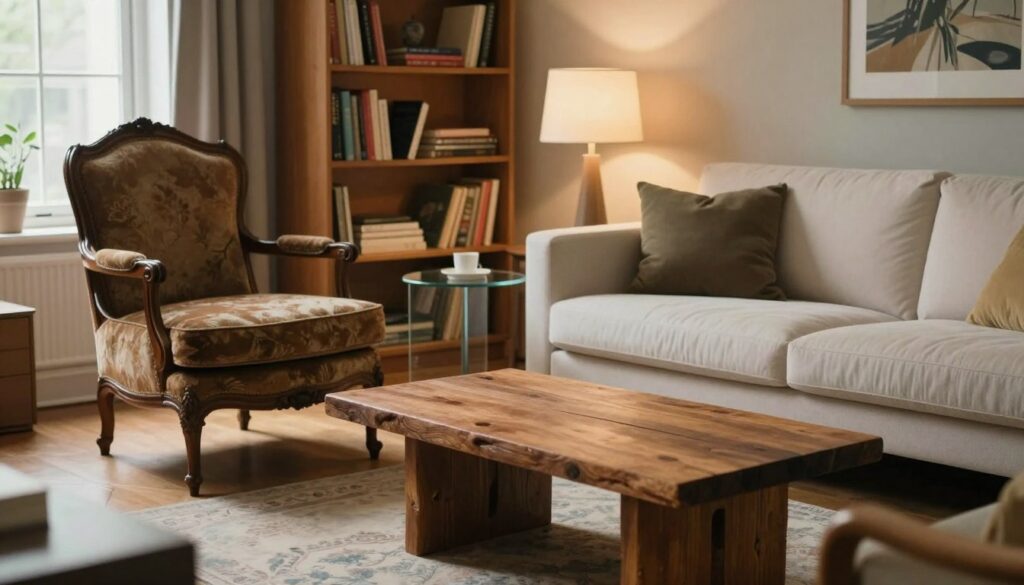
To seamlessly integrate vintage and antique pieces among contemporary furniture, consider the overall aesthetic you want to achieve. For instance, if you’re going for a modern eclectic look, you might pair a vintage armchair with a sleek, contemporary sofa.
Mixing different styles requires a thoughtful approach to cohesion. Use elements like throw pillows, rugs, and wall decor to tie together disparate pieces and create a harmonious atmosphere.
Idea 6: Use Color Theory to Unite Different Seating Styles
A well planned color scheme can seamlessly tie together different seating styles, creating a visually appealing living space. When you mix and match seating styles, the key to a harmonious room is cohesion, and color theory is a powerful tool to achieve this.
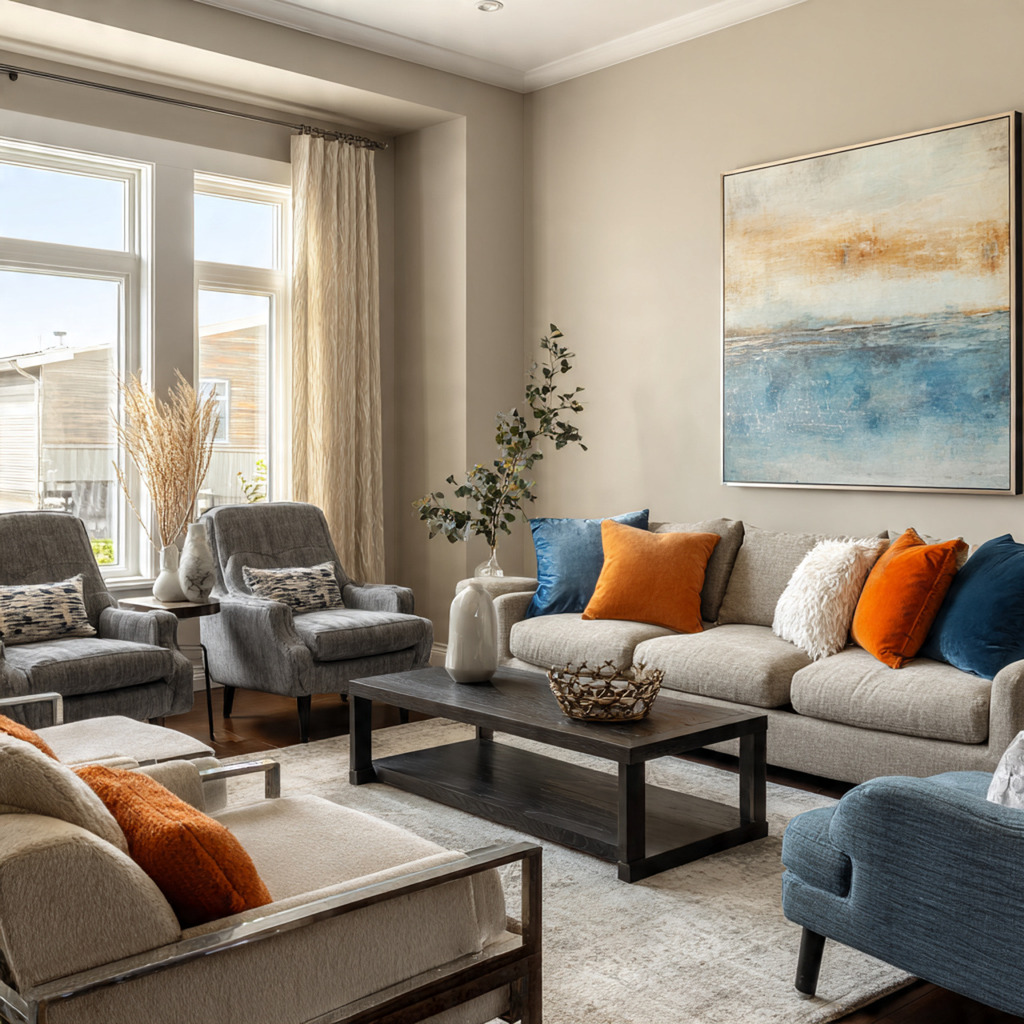
By understanding the basics of color theory, you can create a unified look that ties together disparate seating elements. This involves selecting a palette that complements the various pieces and creates a sense of continuity.
Consider the 60-30-10 Rule: Allocate 60% of the room to the dominant color, 30% to a secondary color, and 10% to an accent color. This rule helps in creating a balanced color scheme that ties together different seating styles.
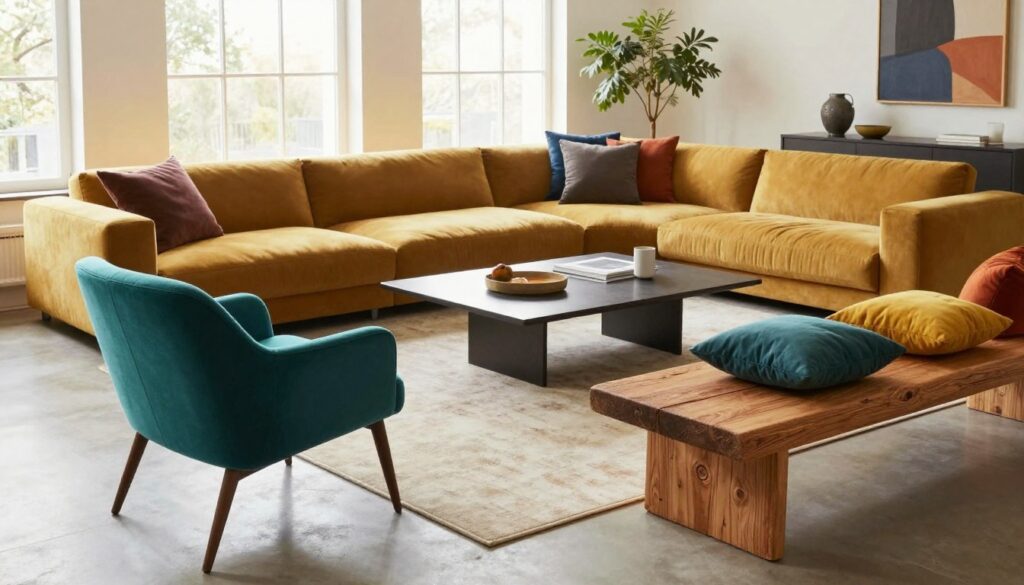
A contemporary living room featuring a creative mix of seating styles, emphasizing color theory to create unity. In the foreground, showcase a sleek mid-century modern chair in vibrant teal next to a rustic wooden bench adorned with colorful cushions. The middle ground presents a plush, oversized sectional couch in a warm mustard hue, complemented by a chic, modern coffee table. In the background, large windows allow natural light to flood the space, enhancing the rich textures and colors. Soft shadows add depth and warmth, creating an inviting atmosphere. Use a wide-angle lens to capture the full scene, ensuring the arrangement feels balanced and visually harmonious. The overall mood is lively yet sophisticated, showcasing innovative design choices that blend various aesthetics seamlessly.
Expert Tips for Successfully Mixing Seating Styles
Successfully blending different seating styles is all about balance and harmony, as these expert tips will demonstrate. To create a cohesive and inviting living space, it’s essential to strike the right balance between different seating options.
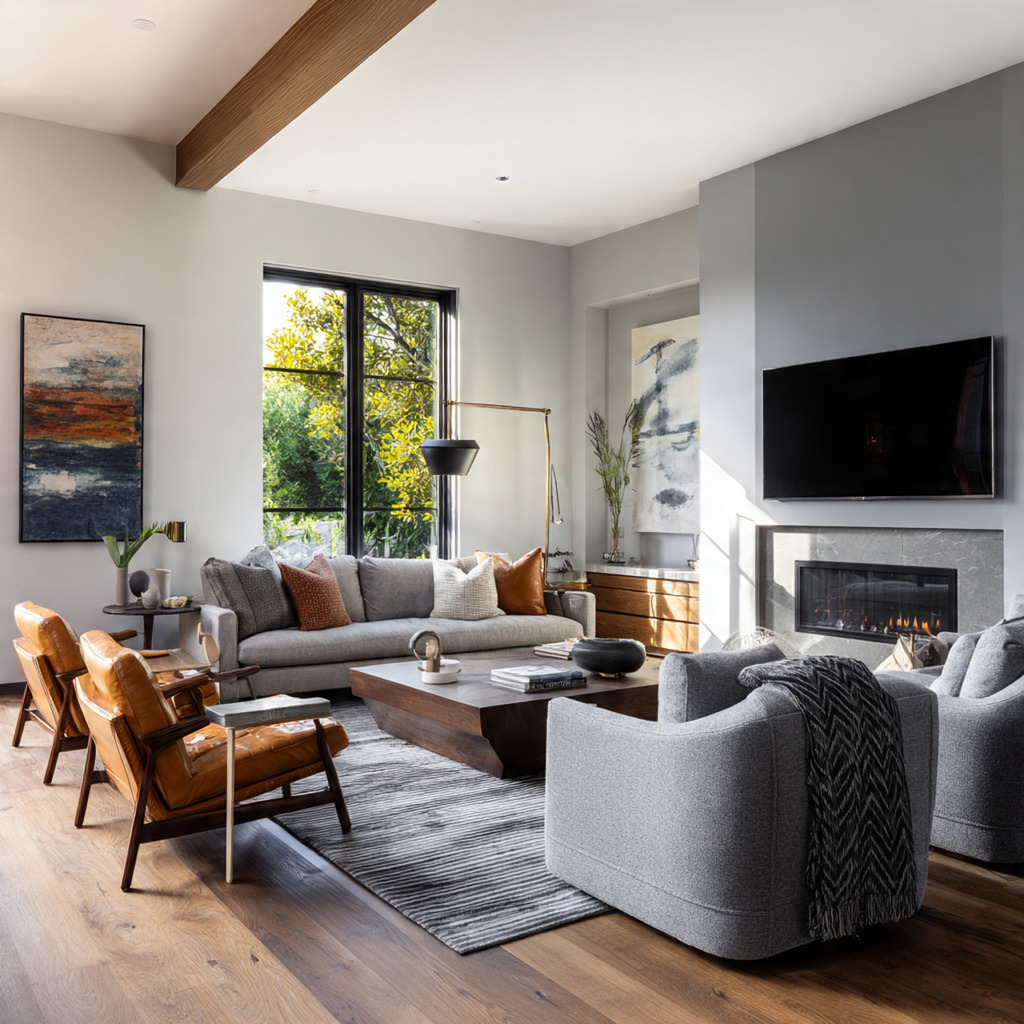
Innovative seating combinations can elevate the aesthetic of your living room. Start by identifying a unifying element, such as a common color or texture, to tie together disparate seating pieces.
For seating arrangement inspiration, consider creating conversation zones within your living room. This can be achieved by mixing seating heights and styles, such as pairing a sleek, low profile sofa with a plush armchair.
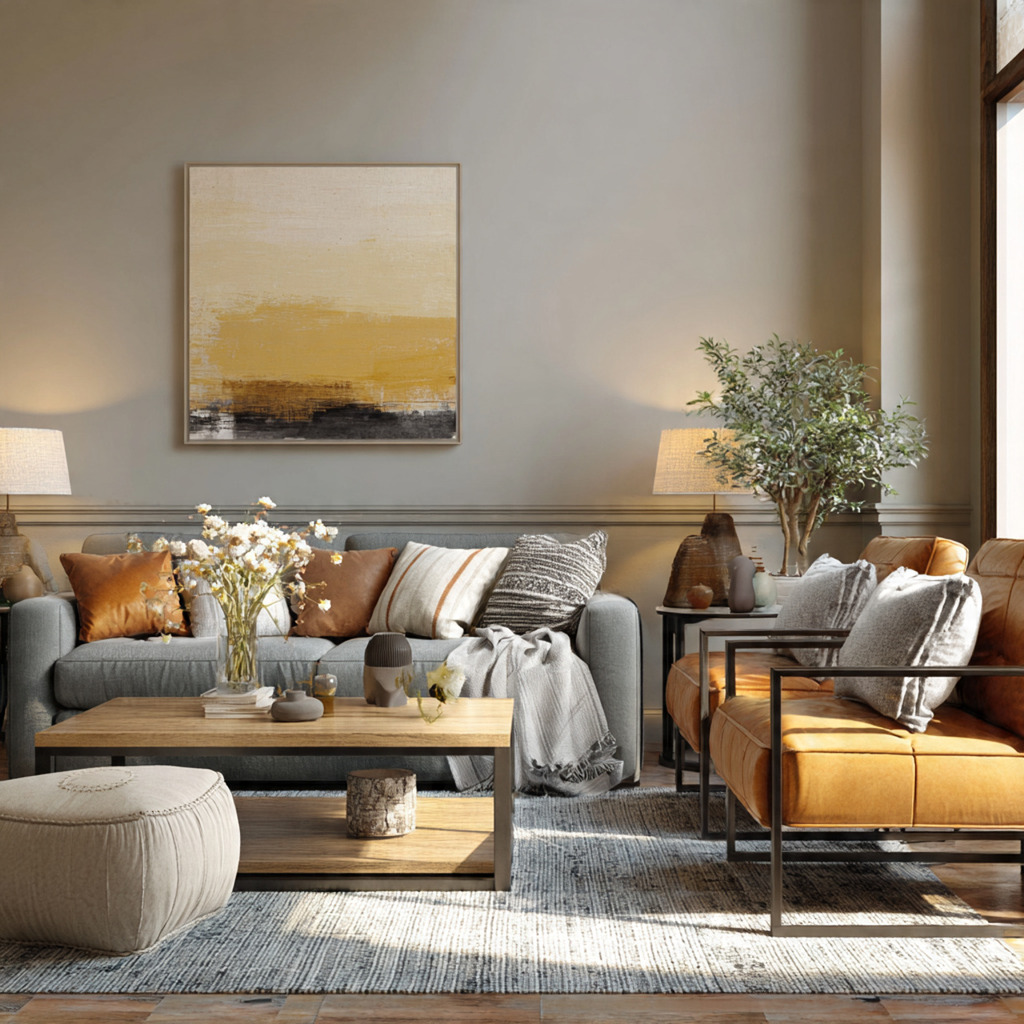
When making eclectic seating choices, it’s crucial to avoid common mistakes like over-accessorizing or neglecting scale. Ensure that your seating arrangement is both functional and visually appealing.
To achieve a harmonious blend of seating styles, consider the 60-30-10 rule: 60% of the room should be a dominant style, 30% a secondary style, and 10% an accent style. This will help create a balanced and cohesive look.
Conclusion: Embracing Eclectic Seating for a Personalized Living Space
Embracing eclectic seating styles can transform your living room into a unique and inviting space. By mixing and matching different seating styles, you can create a modern seating design that reflects your personality and style.
As explored in this article, combining traditional and modern seating, creating conversation zones, and incorporating vintage pieces can add depth and visual interest to your seating layout ideas. The key is to balance different elements while maintaining a cohesive look.
With these tips, you’re empowered to experiment with diverse seating arrangements, crafting a space that is both functional and aesthetically pleasing. Whether you’re working with an open floor plan or a cozy living room, the possibilities for mix and match seating styles are endless, allowing you to create a truly personalized living space.