

Do you feel like your living room is working against you? You’re not alone. Making a small living area feel spacious and stylish is a common challenge. But what if your compact space could be your greatest asset?
My own journey with a small living room started with frustration. I felt boxed in by the four walls and couldn’t see a solution. But then I discovered that the right small living room ideas could completely transform the feel of the space.
This guide is the result of that journey. I’ve learned that a small space isn’t a limitation it’s an opportunity for creative small space decorating. The right approach can make your room feel open, airy, and uniquely yours.
I’ll share clever, real world space saving solutions that actually work. We’ll move beyond just moving furniture and explore smart living room decor choices that create a big impact. You can have a room that is both beautiful and brilliantly functional.
Are you ready to reimagine your compact area? Let’s explore these clever ideas to help you create a living room that feels larger, works smarter, and reflects your personal style.
Introduction: Embracing the Challenge of a Small Living Room
Does your living room feel cramped, like a cluttered closet? You’re not alone. Many of us struggle with small living room ideas that are both stylish and practical. A small space can be a source of stress, turning it into a less than relaxing area.
But here’s the secret: a small living room is not a limitation. It’s a chance for creative, small space living at its best.
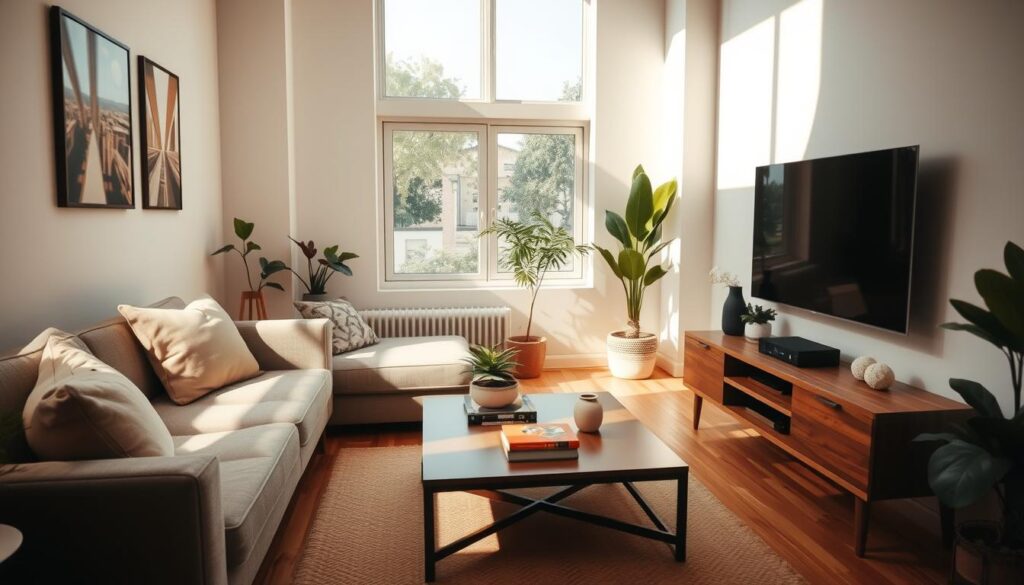
Instead of fighting for space, we can use smart design. This guide is your first step to making your small area work for you. We’ll focus on creating a space that feels intentional, open, and uniquely yours.
The goal is not to hide the room’s size. It’s to celebrate its potential with clever living room decor for small spaces.
Forget the idea that small means cramped or cluttered. A small living room, when designed well, can be the coziest room in your home. The ideas we share are not quick fixes. They are thoughtful, actionable small living room ideas to make the most of every inch.
Small Living Room Decor Idea 1: Multi Functional Furniture
When I moved into my small apartment, I knew every piece of furniture had to do more. That’s when I found the magic of multi-functional furniture. It’s not just about saving space it’s about making your home work as hard as you do.
The right furniture can turn a small living room into a stylish, functional space. It meets all your needs without feeling cluttered.
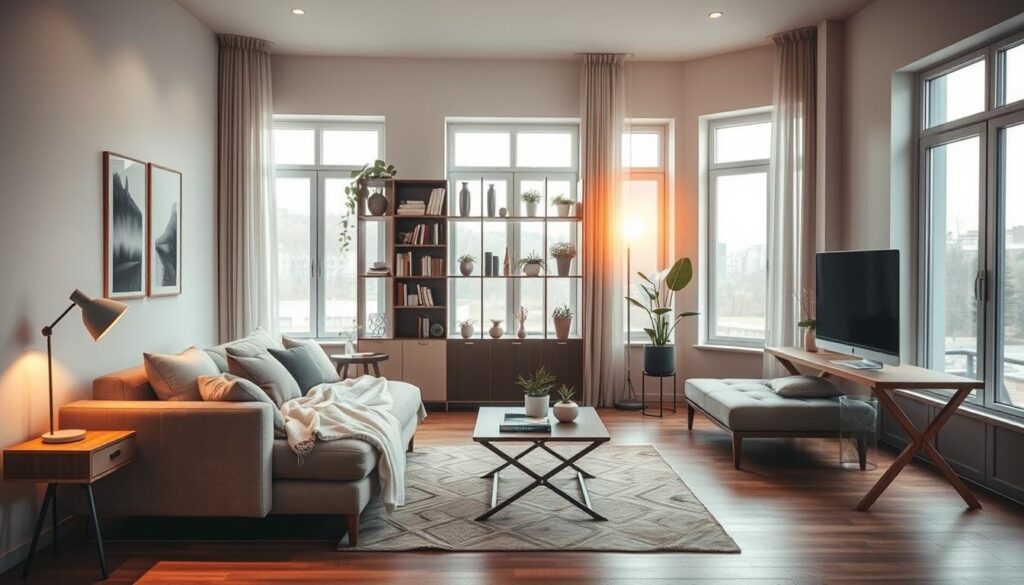
The storage ottoman is a game changer for small spaces. It’s not just for putting your feet up. Mine opens up to reveal space for extra blankets, board games, or throw pillows.
My coffee table is now the heart of my living room. It has a lift top design that reveals hidden storage and adjusts to different heights. It’s perfect for working from the sofa or serving guests. The key is finding pieces that do more than just look good.
Assessing Your Daily Needs
Before buying space saving furniture, I had to think about my daily routines. Did I need a dedicated guest bed, or would a sleeper sofa work? How often did I entertain versus needing a cozy living space?
I made a checklist: How many people live here? How often do we have guests? What do we do in this room? The answers helped me see I needed flexible seating and smart storage.
This led me to a sleeper sofa that changed my living room. By day, it’s comfy for reading or movies. At night, it’s a bed for guests. The right piece can replace a guest room.
Style and Material Considerations
Just because furniture is multi functional doesn’t mean it has to look plain. I look for pieces that are both stylish and practical. For my storage ottoman, I chose a neutral fabric that hides stains and complements my decor.
The materials are crucial. I learned this when a delicate fabric on a bench couldn’t handle daily use. Now, I choose durable materials that can handle multiple functions.
The best multi-functional furniture looks like beautiful, intentional pieces. My coffee table looks stylish but has a secret: hidden storage. It doesn’t scream “I have storage inside!”
Choosing the right materials means thinking about maintenance. Leather or performance fabrics on a sleeper sofa are better than delicate materials for frequent use. The hardware should be solid and smooth for easy use.
When every piece must serve multiple purposes, each choice is an investment in your life. The right multi functional furniture doesn’t just save space it opens up new ways to live in your home.
Idea 2: Strategic Mirror Magic
I’ve found that mirrors are a powerful tool for small living rooms. The right mirror can make your room feel bigger and brighter. It’s not just for checking your look; it’s a smart design choice.

Choosing the right mirror is key. A large, frameless mirror works well for a small living room. It gives a clean look. For something more eye catching, pick a mirror with a unique frame.
For a modern vibe, go for decorative mirrors for living room with shapes like sunbursts or arches. These mirrors can be stunning and make your room feel bigger.
Strategic Placement for Light and Space
Where you put the mirror is crucial. Think like a movie director to get the best light and views. A big mirror opposite a window is a great trick.
This simple move makes your room feel brighter and bigger. If a window isn’t right, use a mirror to reflect something interesting. This creates a window like effect.
A good mirror is more than decoration; it changes how light and space feel. By picking the right mirror and where to put it, you can change your room’s feel quickly and easily.
Idea 3: The Power of a Light and Bright Palette
When working with a small living room, color is my first tool. A light color palette for small rooms makes the space feel larger and more open. Light colors reflect light, making the room feel airy and inviting.
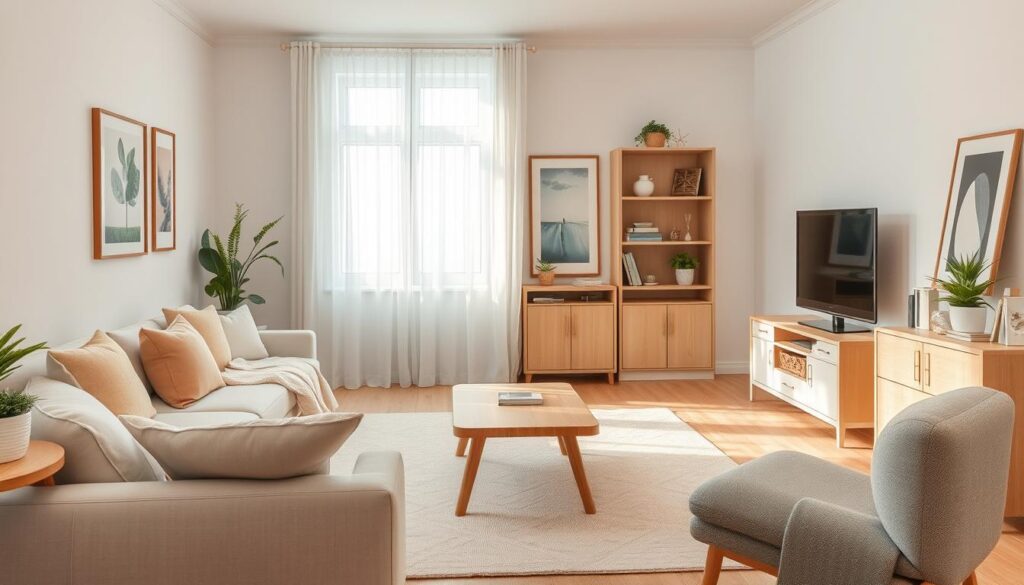
Light colors make walls appear farther away, while dark colors make them seem closer. Painting walls light colors tricks the eye into seeing more space. This is key for making small spaces feel bigger.
But what about avoiding a cold feel? The best paint for small spaces is satin or eggshell. These finishes reflect light well, making the room feel warm and welcoming.
Creating an Accent Wall for Depth
An all-light room might feel flat. That’s where an accent wall idea comes in. Use it to create a focal point and add depth.
Paint one wall a deeper color than the rest. This bold move adds a focal point and creates a layered effect. It makes the room feel more intentional and stylish.
Don’t be afraid of contrast. A light color palette for small rooms with a bold accent wall makes the space feel open and personal. It’s a simple yet powerful trick.
Idea 4: Reaching for the Ceiling
When you don’t have much floor space, you can use the walls and ceiling. They offer a lot of potential for storage and display. By looking at your room in three dimensions, you can make it seem bigger without adding more space.
This approach isn’t just about storing things. It’s a way to design your room differently. It changes how you use and see your space.
Styling Floating Shelves for Function and Form
Vertical storage might make you think of big bookshelves. But the real magic is in mixing things up. Floor to ceiling shelves make your room look taller. They create an illusion that makes your ceilings seem higher.
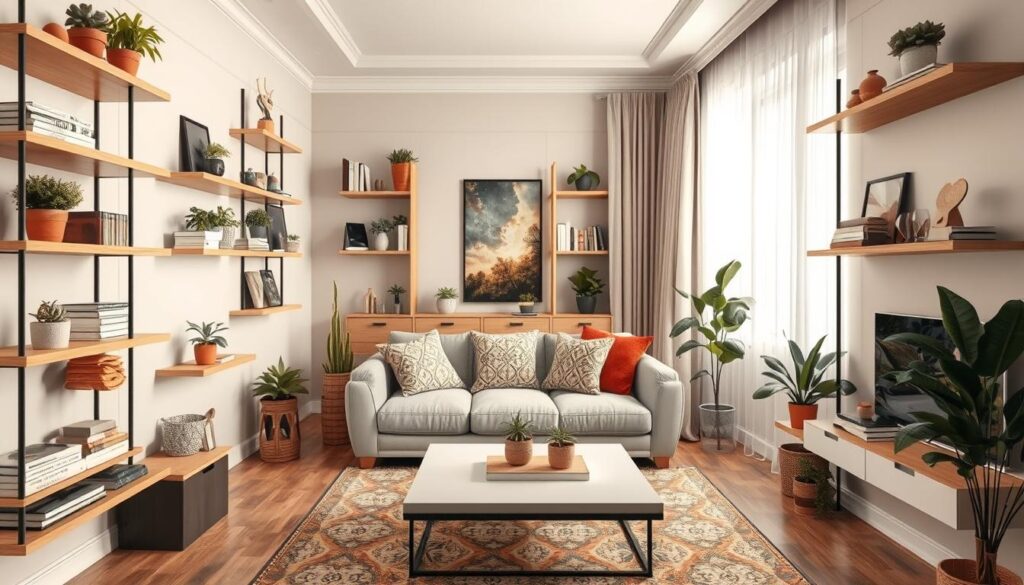
Floating shelves are great for keeping your floor clear. They’re mounted on the wall, so your floor stays open. These shelves are versatile and can hold books, plants, and more.
Using both floor to ceiling shelves and floating shelves is the best idea. Use the tall shelves for less used items or to show off books and art. Then, use the floating shelves for everyday things. This way, your small living room feels bigger and more organized.
Idea 5: The Fold and Stack Strategy

When space is tight, your furniture must work together. The fold and stack strategy is all about picking flexible furniture that shows up when you need it and hides when you don’t. This method turns a room into a calm, open space or a busy, multi use area.
The Magic of Nesting Tables and Stackable Seating
Nesting tables and stackable chairs are the stars of this strategy. A set of nesting side tables can change the game. They can be stored together as one unit for everyday use, then spread out for more space when you have guests.
Stackable chairs work the same way. They can be hidden in a closet or corner until you need them. This turns your living room from a work area to a party spot in no time. The stackable chairs and nesting tables are the ultimate helpers in small spaces, ready to step in when needed.
The beauty of this system is its ability to change. Your living room can be a home office by day, with a nesting table for your laptop and chairs in the corner. At night, pull out the chairs for dinner or a movie. This flexible furniture lets you use your floor space as you wish, changing your room’s purpose easily.
This isn’t just about saving space; it’s about making space. By picking furniture that folds, stacks, and nests, you’re not just decorating. You’re creating a lifestyle of flexibility and freedom. The most dynamic rooms are often the most cleverly designed.
Idea 6: Floating and Wall Mounted Solutions
When floor space is limited, get creative with your walls. The best way to make a room feel bigger is to declutter your living room by removing bulky items from the floor. Floating and wall mounted solutions are your best allies here.
Think of your walls as valuable space, not just for art. Mounting key items frees up the floor, making the room look cleaner and feel larger. This approach is key to a modern, minimalist look that fights clutter effectively.
Mounting Your Media for a Streamlined Look
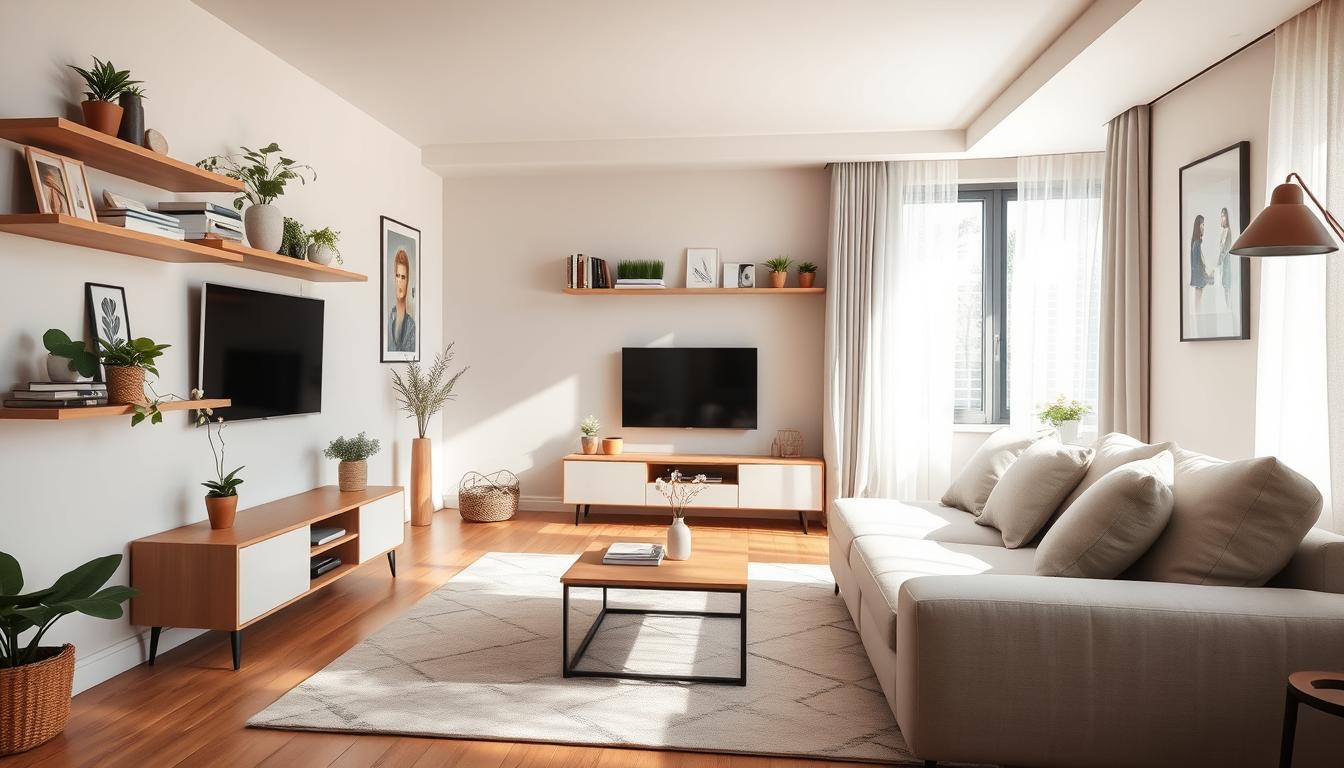
A TV and its media components are often the biggest items in a living room. A wall mounted TV with a slim bracket changes the game. It eliminates the need for a large media console, freeing up space.
For a sleek, built-in look, consider a wall mounted media console or floating shelves. These hold your components without taking up floor space.
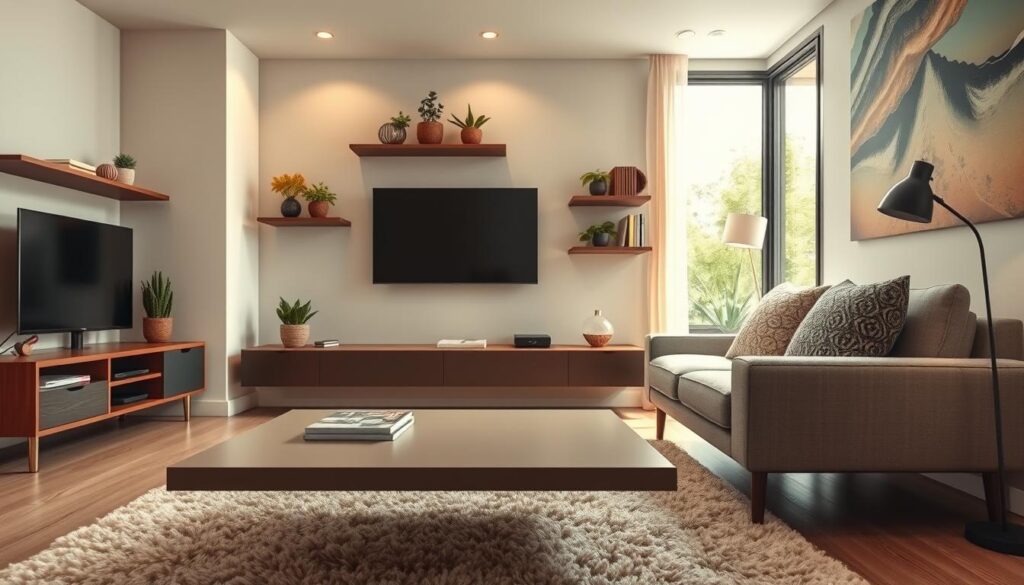
A wall mounted desk can fold down when needed and disappear when not in use. It turns a corner into a workspace without taking up permanent space. This is ideal for a declutter living room where everything has a place.
Floating nightstands, wall mounted sconces, and floating shelves instead of bookcases are all part of this strategy. The aim is to keep the floor clear and continuous. This visual trick makes the room feel more expansive and open.
By decluttering your living room with mounted and floating essentials, you’re not just organizing. You’re designing for the illusion of space. It’s a clean, modern solution that makes any small living room feel open, airy, and carefully curated.
Idea 7: Zoning with Area Rugs
Creating zones in a small living room can seem tricky. But, using area rugs is a clever and stylish way to do it. A well placed area rug does more than just cover the floor. It helps define the space and adds warmth.
Using rugs to zone a space is more than just covering the floor. It creates clear boundaries that show how to use the area. In an open plan room, a big area rug can mark the living area. This separates it from dining or entry spaces without walls.
The Art of Layering Rugs for Texture
Layering rugs adds depth and personality. Start with a big, neutral rug for your main seating area. Then, place a smaller, colorful rug on top. This area rug size guide helps ensure your main rug is big enough for furniture legs.
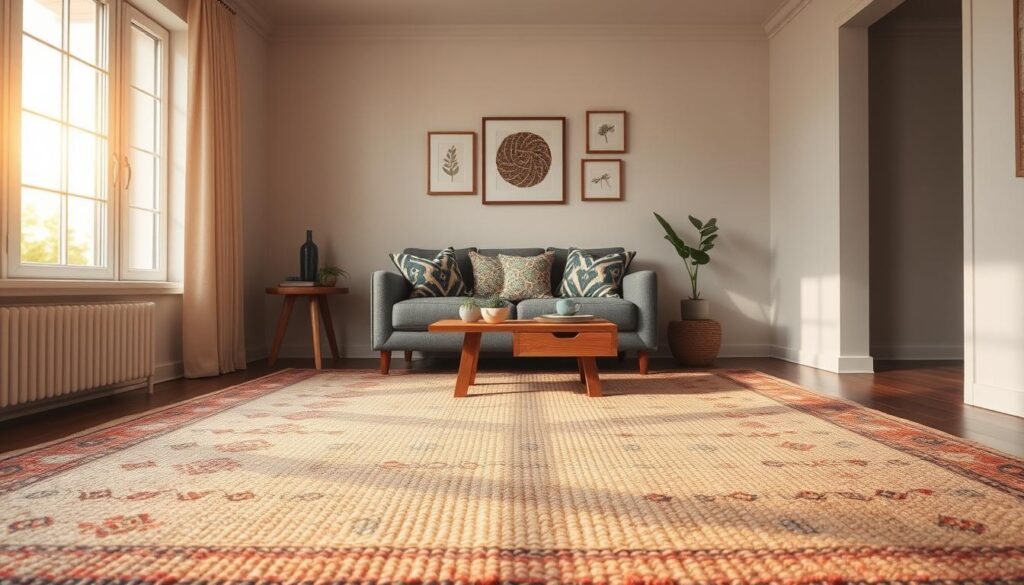
Layering rugs adds texture and creates a focal point. A small, bright rug over a bigger, neutral one draws attention. It defines a zone, like a reading nook. This is a key part of how to layer rugs well.
For small living rooms, choose low pile, flat weave rugs that don’t overwhelm. Natural fibers like jute or flat-weave wool are great for a clean feel. The goal is to define, not block.
To start, measure your space. A good area rug size guide says the rug should be 6-12 inches bigger than your furniture. This makes the room feel larger. A rug that’s too small can make the space feel off.
A well-chosen rug does more than look good. It provides a soft base that makes a small room feel cozy and designed. It’s a simple change with a big impact.
Idea 8: A Layered Lighting Plan
Layered lighting can turn a cramped room into a cozy sanctuary. A single overhead light can make a stylish space feel like a doctor’s waiting room. It can flatten the room, create harsh shadows, and ignore your decor.
In a small living room, the right lighting is key. It makes your space feel larger, more functional, and inviting.
Forget the single overhead light. A layered lighting plan uses different light sources at various heights and intensities. It creates depth and dimension, building an atmosphere from the ground up.
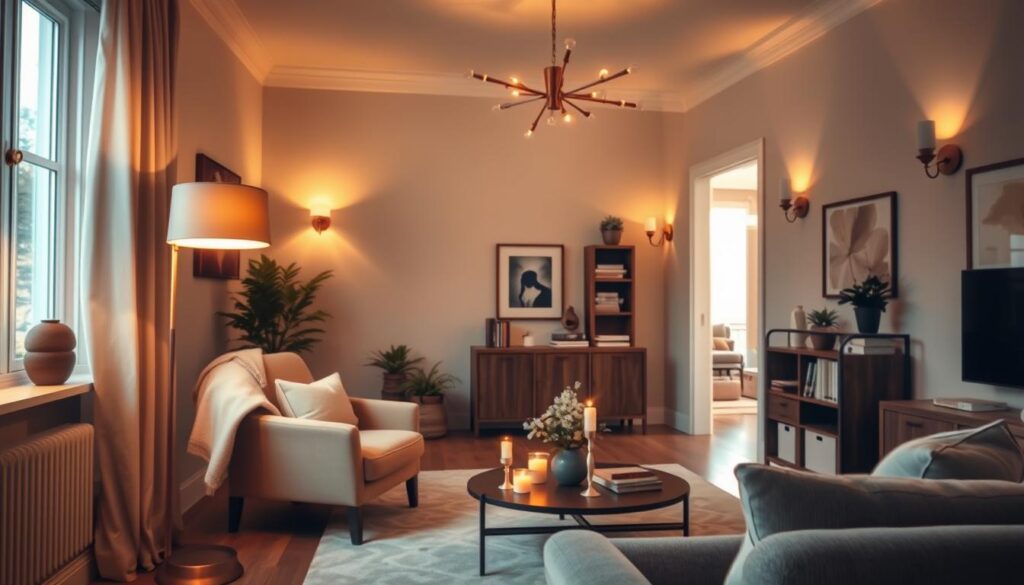
Begin with ambient light. This is the overall illumination that replaces the harsh overhead. A floor lamp with a soft, upward facing shade can make the room feel taller. This is your ambient lighting for living room the foundation of your plan.
Next, add your task lighting. This is the focused light for reading, working, or hobbies. A swing-arm lamp next to your favorite reading chair or a sleek, under cabinet light over a console table are perfect examples. This layer is all about function and creating pools of light exactly where you need them.
Finally, add the accent lighting. This is the jewelry of your lighting plan. Use discreet LED strips to highlight a bookshelf or artwork. A small, well placed picture light or a string of fairy lights in a glass jar can add a magical, twinkling effect. This layer adds personality and draws the eye to your favorite design elements.
This approach to small space lighting is transformative. It allows you to change the mood of the room with a flick of a switch or a tap on a smart home app. You can create a bright, energetic space for gatherings or a soft, cozy glow for movie nights. In a small living room, this control over light and shadow is your best tool for creating a space that feels open, intentional, and perfectly tailored to your mood.
Idea 9: Smart Door Solutions
Interior doors can take up a lot of space in small living rooms. A standard door swinging into the room can use up to 9 square feet. This is a big loss in a room where every inch matters.
Space saving doors can change this. Imagine a sliding panel that moves along the wall instead of a swinging door. This simple switch can free up floor space and make the room more functional.
A barn door for a room divider is a stylish solution. These doors slide on a track above the doorway, using no floor space. They add beauty and character to your wall while being a practical space saving door.
They’re great for dividing a living area from a home office or hiding a media center. This way, you don’t lose valuable floor space.
The Seamless Appeal of Pocket Doors
Pocket doors are the ultimate in space saving and style. Unlike barn doors, they slide into a wall cavity, making them invisible when open. This is the best choice for a minimalist look.
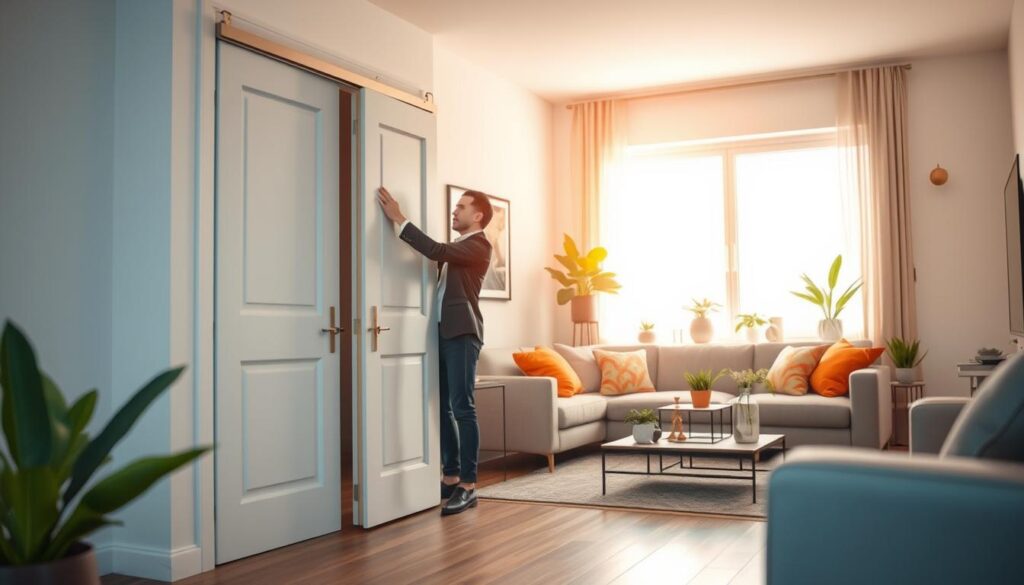
Installing a pocket door is more complex than a barn door. But the result is a door that blends seamlessly into the wall. It creates a smooth transition between rooms and uses every inch of your space.
Whether you pick a barn door’s rustic charm or a pocket door’s sleek look, you’re making a smart choice. Swapping a traditional door for a sliding or pocket door can greatly enhance your room’s flow and function. It shows that sometimes, the best solutions are the ones that get out of the way.
Idea 10: The Invisible Furniture Trend
The Illusion of Space with Glass and Lucite
Choosing the right furniture is key when space is limited. The “invisible furniture” trend helps make rooms feel bigger. It uses pieces that seem to vanish, making the room look more spacious.
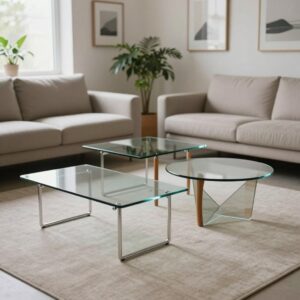
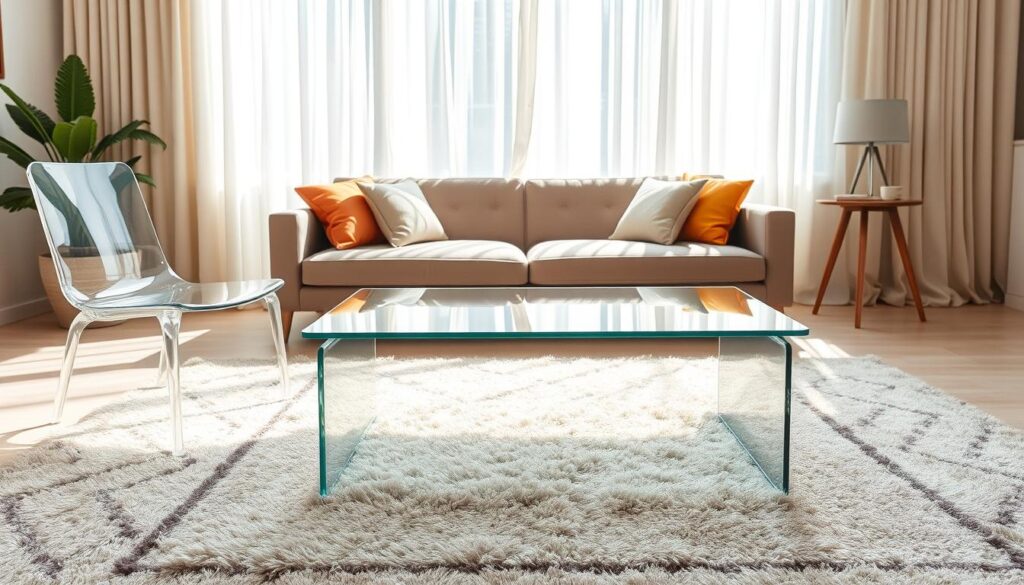
A glass coffee table is a great place to start. Unlike a heavy wooden table, a clear glass coffee table doesn’t divide the room. It lets your eye move freely, making the room feel larger and more connected.
Acrylic furniture changes the game for side tables and chairs. An acrylic chair or table looks substantial but doesn’t weigh down the room. Lucite furniture, like a clear side table or chair, has a similar function but feels ethereal, not blocking light or views.
Don’t overlook vertical space. A etagere bookshelf in glass and metal offers storage without taking up much room. Its open shelves keep the area feeling tidy. This method is about removing clutter, not adding to it.
Using these transparent and reflective items creates a layered, curated look. Light moves freely, making your small living room appear larger and more elegant. The beauty of acrylic furniture and glass is their ability to add function without adding bulk. They bring a clean, modern vibe to any small space, making it feel open and uncluttered.
Idea 11: The Minimal Media Wall
Hiding Wires and Tech for a Clean Look
A media wall that hides more than it shows is key for a small room. A minimalist entertainment center makes a room feel bigger and more thoughtful. It creates a calm, focused spot without the mess of tangled tech.
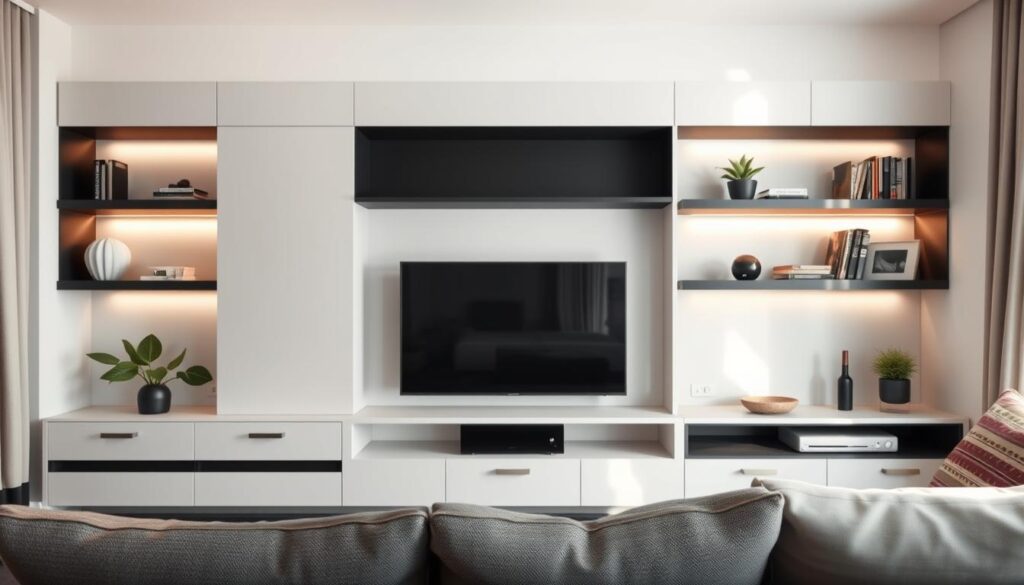
Mounting your TV on the wall is the first step to a clean wall mounted TV setup. It saves floor and surface space. But the real magic is hiding all tech evidence.
To hide TV wires, you need a plan. Use in-wall cable management kits or paintable cord channels. These hide all cables, making your screen seem to float.
Your components shouldn’t be a mess either. I use a low profile media console or floating shelf to hide media components like streaming devices and game consoles. Add a universal remote or smart home system to get rid of extra remotes. This makes your media wall look intentional, not cluttered.
In the end, a minimal media wall is about less is more. By mounting the screen, managing hide TV wires well, and hiding hardware, you make your room feel bigger, more organized, and elegant.
Small Living Room Decor Idea 12: The Convertible Space
When space is tight, one piece of furniture can be a game changer. A convertible space that changes with your needs is amazing. A smart daybed for the living room or a versatile sofa can be your best friend.
A top-notch convertible sofa can turn into a guest bed in seconds. A daybed for the living room is also a lifesaver, offering comfort by day and a place to sleep at night. It’s not just about saving space. It’s about living smart, where every piece does double duty.
The Magic of Nesting Tables with Storage
Every surface should be as flexible as your furniture. That’s where nesting coffee tables come in. I suggest a set that can be used together or apart for different occasions. Look for ones with hidden storage or a lower shelf.
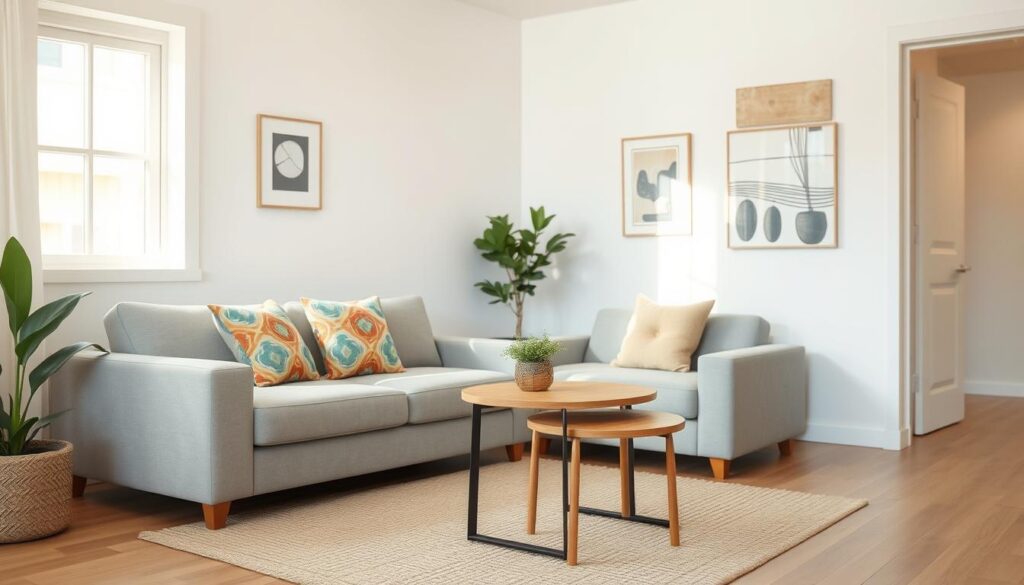
Pairing a convertible sofa with nesting coffee tables makes your living room incredibly versatile. It can host a party, a family movie night, or a cozy evening alone. The beauty of a convertible space is it adapts to your needs, making your small living room feel spacious.
Small Living Room Decor Idea 13: The Cohesive Color Story
Color is key in a small living room. It can make the room feel bigger and more focused. The right colors can guide your eye and create a cozy mood.
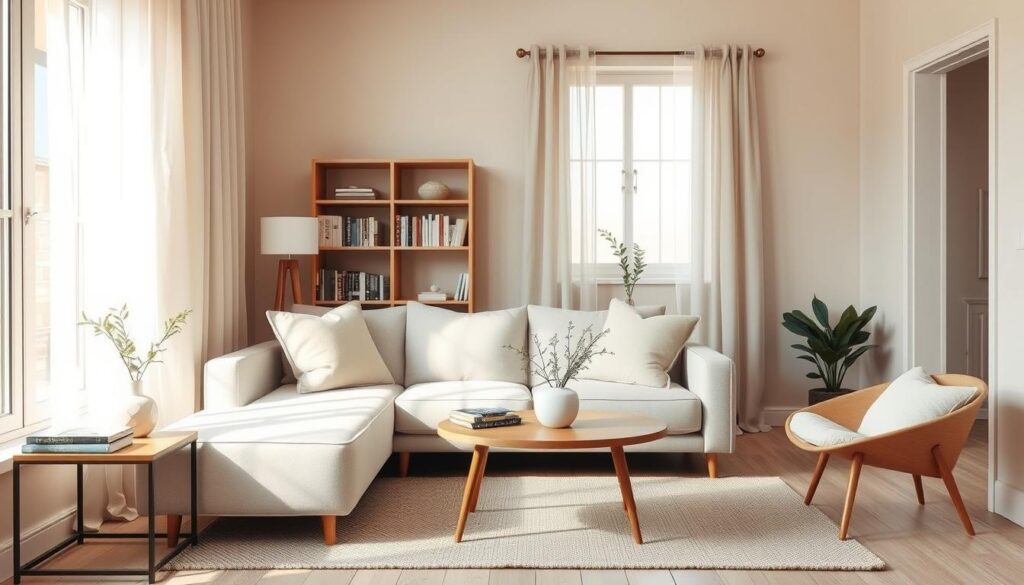
Begin with a neutral color palette. This doesn’t mean your room will be dull. A neutral base of whites, creams, or grays makes the room feel calm and big. It’s like a blank canvas for your personal touches.
For a cohesive look, try a monochromatic living room. This means using different shades of one color. A small room color scheme like various grays or beiges reduces clutter and makes the room feel open.
After setting your neutral base, add color carefully. A bold accent color can add personality without overwhelming the room. Remember, let the neutral color palette make the room feel spacious, and use your accent color to highlight.
Don’t make the mistake of using too many colors in a small space. A cohesive color story with a neutral base and one or two accent colors looks sophisticated. This makes your small living room feel stylish and spacious.
Small Living Room Decor Idea 14: Built Ins and Nooks
The Elegance of Built In Shelving and Cabinetry
When space is tight, the best choice is to go up and into the walls. Custom built ins for small spaces can turn a small living area into something special. They blend in seamlessly, giving a high-end feel that regular furniture can’t.
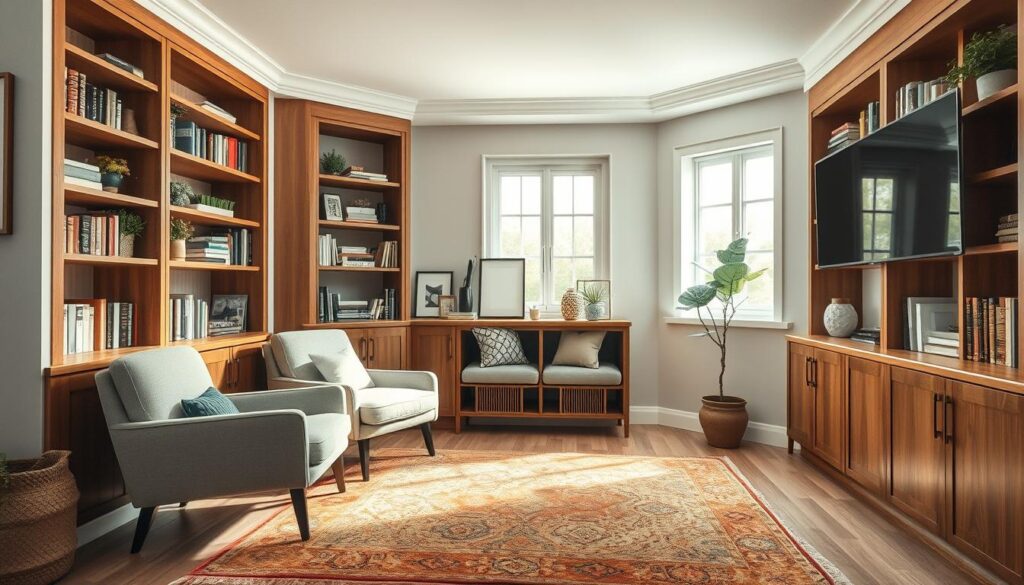
Built-in furniture is the ultimate space-saver. Imagine a wall of built in bookcases that goes all the way up. It offers lots of storage without taking up too much room. Every inch is used, right up to the ceiling, making it easy to clean.
A window seat with storage is another big win. It’s not just for reading; it’s also a smart place to stash things. Seasonal items, extra pillows, or board games can all be hidden away, making the most of unused space.
Investing in custom built ins for small spaces is a smart move. Rooms with custom shelving or hidden storage seats look bigger, more organized, and well-thought-out. It makes the most of every inch.
Even semi-custom options from stores can be made to fit your space perfectly. I tell clients that the long-term benefits and the clean look are worth it. It’s about making your space work best for you.
Idea 15: The Mindful Edit
We’ve seen furniture that changes and shelves that seem to float. We’ve played with light, color, and size. Now, we come to the most powerful idea: the mindful edit. In a small living room, the biggest luxury is having more space, not more stuff.
Decluttering a small space is more than just tidying. It’s about freeing yourself. The first step is to edit ruthlessly. Go through each item and ask: Is it beautiful? Is it useful? Does it make me happy? If not, it must go.

After removing unnecessary items, you’re left with a blank slate. This is where a single focal point shines. In a small room, you can choose one standout piece. It could be a stunning art piece, a bold chair, or a fireplace.
Everything else should support this focal point. Your colors, lighting, and decor should all enhance it. This focus brings order and calm, making your room feel curated, not cluttered.
Creating a Single, Powerful Focal Point
Choosing a focal point is key. Look for the room’s anchor, like a favorite art piece or a textured rug. Once chosen, arrange the room to highlight it. Use lighting to draw attention to it. Keep other decor simple. This is the mindful edit’s magic: making your space feel more intentional and stylish.
Conclusion: Crafting Your Perfect Small Living Room
Your small living room makeover is a journey of creative problem solving. By focusing on smart, multi functional solutions, you can transform a compact area into a stylish and highly functional space.
Your small living room makeover starts with a single step. The final design tips we’ve explored from multi functional furniture to strategic lighting are your toolkit. The goal is to bring it all together into a cohesive space that feels both open and personal.
Begin your transformation by choosing one or two ideas to implement first. A small living room makeover doesn’t have to be overwhelming. Start with a single, high impact change, like a strategic mirror or a new, light reflecting color palette. These final design tips are your starting point for a home that is as functional as it is beautiful.