
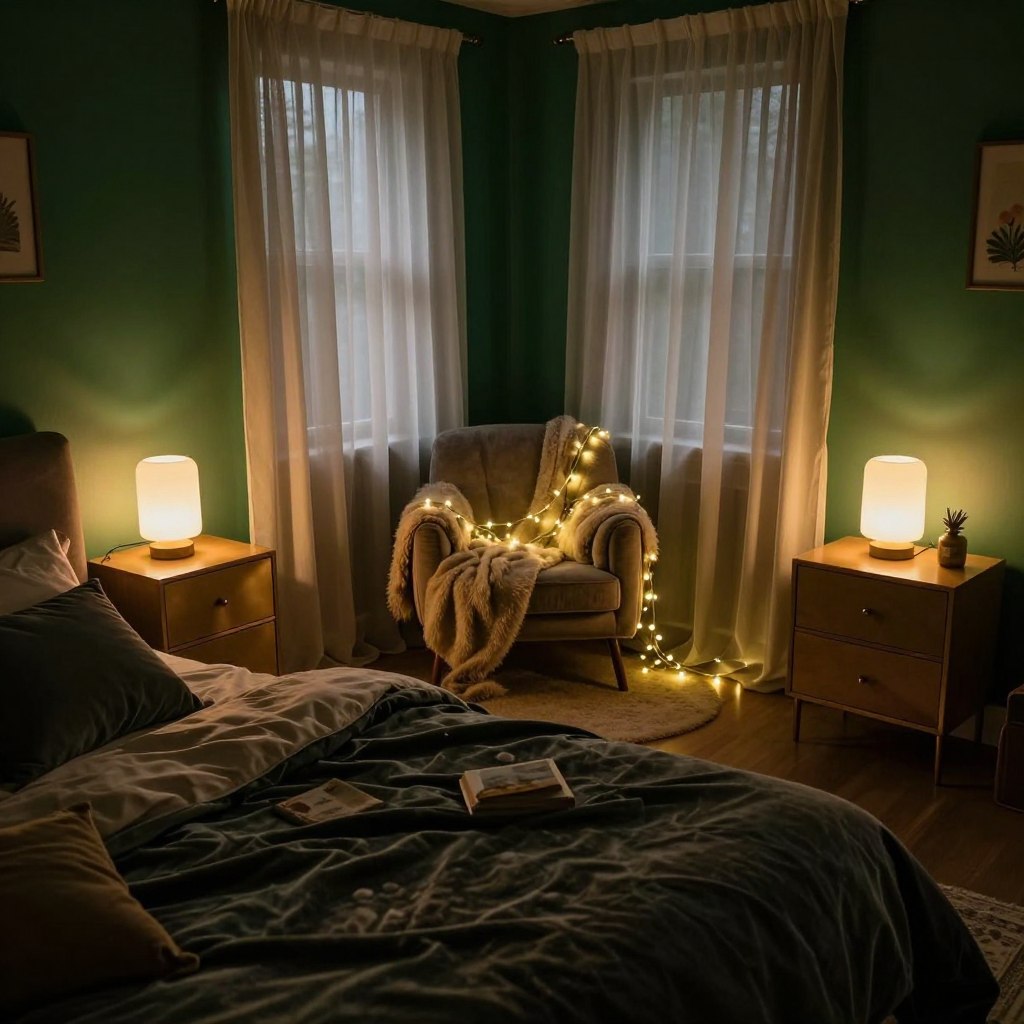

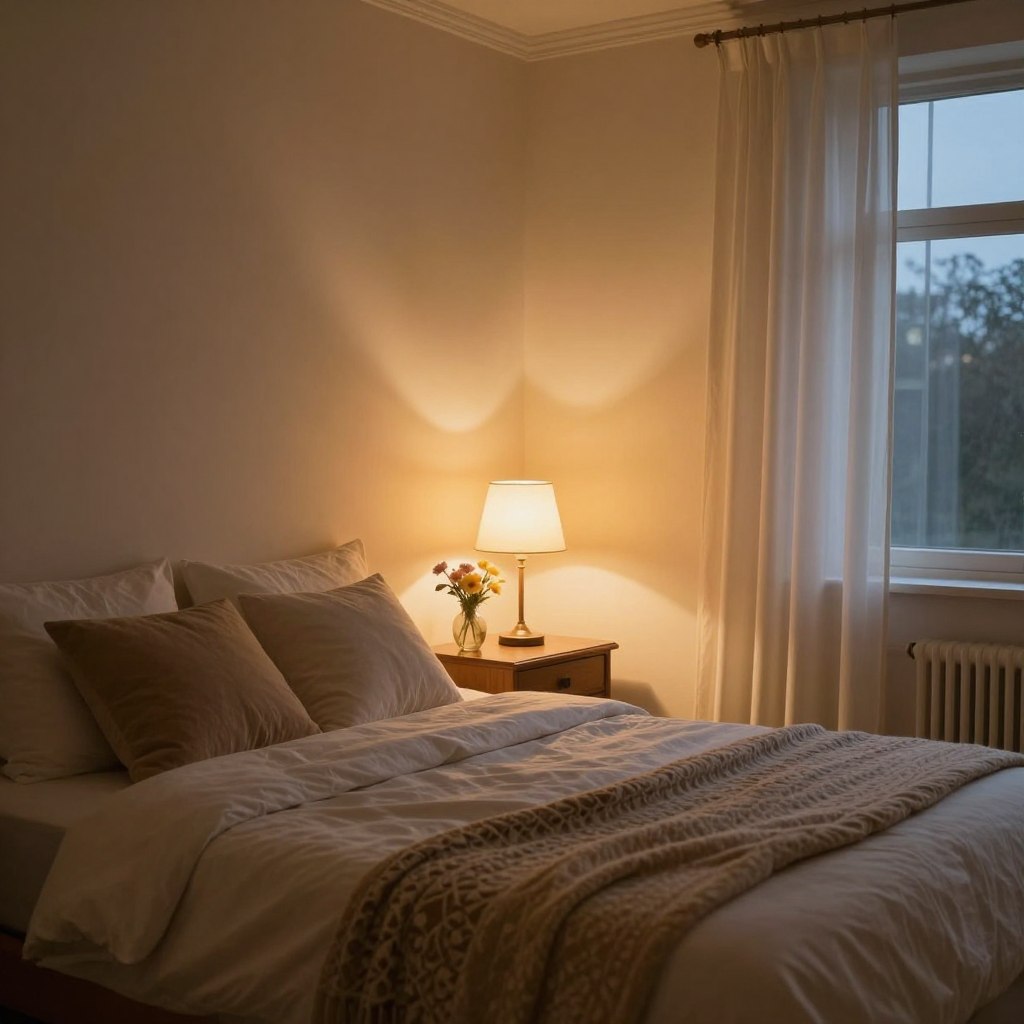
I’ve transformed regular bedrooms into Romantic Moody Bedrooms using LED lights. This guide will share eight practical tips, from LED strips to flameless candles. You’ll learn about design, products, and how to install and maintain them. This way, you can create a cozy bedroom that looks great in any home in the United States.
Using LED lights makes your bedroom feel intimate and calm. They add depth without the danger of real flames. Plus, LEDs save energy and stay cool, making your bedroom safer and more efficient. I’ll also share tips on matching lights with luxurious textiles and colors for a sensual, high-end look.
Key Takeaways
- I’ll show eight actionable LED techniques I used to create a Romantic Moody Bedroom.
- LEDs offer safer, energy-efficient options for intimate bedroom lighting versus candles.
- Smart controls and tunable white fixtures make it easy to shift from bright to dreamy.
- Layering lights with textiles and color choices deepens the cozy bedroom decor effect.
- This guide focuses on realistic setups and simple maintenance for lasting results.
Understanding Mood Lighting for a Romantic Moody Bedroom
The right lighting can make a room feel cozy and intimate. It guides the eye and adds depth. Low light helps people relax together.
Warm, soft light invites closeness and quiet talk. It makes skin and bedding look smooth. Soft shadows and highlights add to the romance.
Why lighting matters for atmosphere and intimacy
I use focused light to highlight special spots, like a reading nook. These spots draw attention without making the room too bright. In a dark room, dim edges make the center feel cozy.
Soft light on faces and fabrics makes them look better. It helps people connect. Warm, low light makes the body relax and makes talking easier.
How LED technology helps create a sensual bedroom atmosphere
LEDs offer control over color and brightness. I choose warm whites or reds for a cozy mood. RGB/RGBW strips add fun colors.
LEDs can be dimmed smoothly, without buzzing. Smart controls make it easy to set the mood. They’re cool to the touch, so they won’t damage fabrics.
Safety, energy efficiency, and long term benefits of LEDs
LEDs use much less power than old bulbs. They last a long time, so you don’t need to replace them often. They’re cool, so they’re safer near fabrics and curtains.
I choose UL-listed and low-voltage systems for safety. Smart, efficient LEDs create a lasting mood. They look great and last a long time.
1. Choosing the Right LED Color Palette for a Romantic Vibe
I start by narrowing the color palette. The right mix sets the mood for a Romantic Moody Bedroom. It makes the space feel special without big changes.
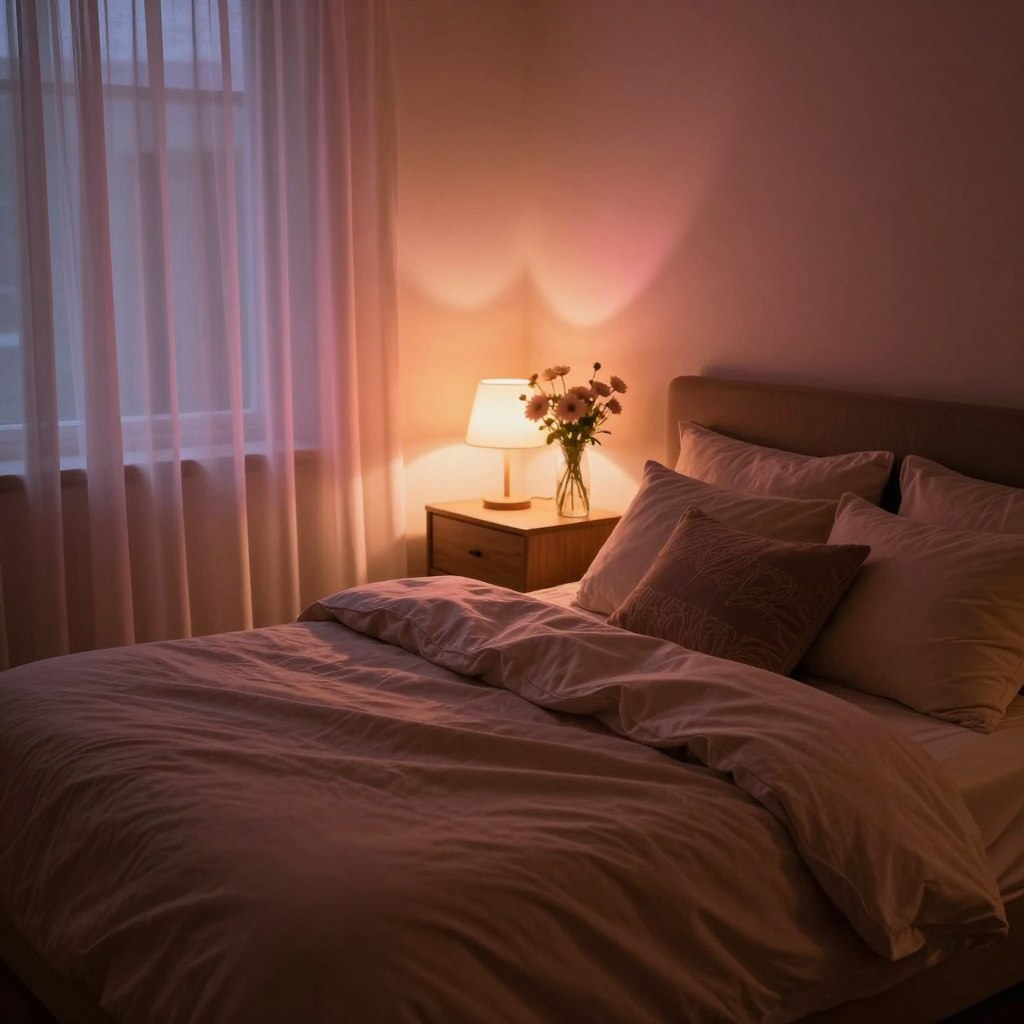
Let’s look at warm and cool colors. The right mix makes the room look good and feel cozy at night.
Warm tones vs. cool tones: creating a dreamy bedroom retreat
Warm tones, like amber and soft pink-amber, feel cozy and flattering. I use 2200K for a candle-like glow and 2700K for a cozy feel.
Cool tones, above 3500K, are more energizing and clear. They’re great for daytime tasks, not for late-night romance. I save harsh blues for the day.
Accent colors that complement an elegant bedroom color scheme
I suggest accents like deep burgundy, muted plum, and soft gold. These colors look great with neutral walls and LED lighting.
Use bold accents like a burgundy throw or teal pillow. They catch LED light without overwhelming the room. Soft gold fixtures reflect warm LEDs, adding depth.
Using color psychology to enhance intimacy and relaxation
Color psychology is key for romance. Warm reds and pinks boost passion but must be muted. I prefer dusty rose or terracotta for a calm intensity.
Soft purples and mauves signal luxury and rest. I use adjustable RGBW strips to adjust colors. This lets me change the mood from relaxed to sensual easily.
2. Soft Cove and Indirect LED Lighting for Cozy Bedroom Decor
I love indirect lighting for a warm and inviting room. It bounces light off ceilings or walls, creating a soft glow. This glow makes the room feel calm and perfect for a cozy bedroom.
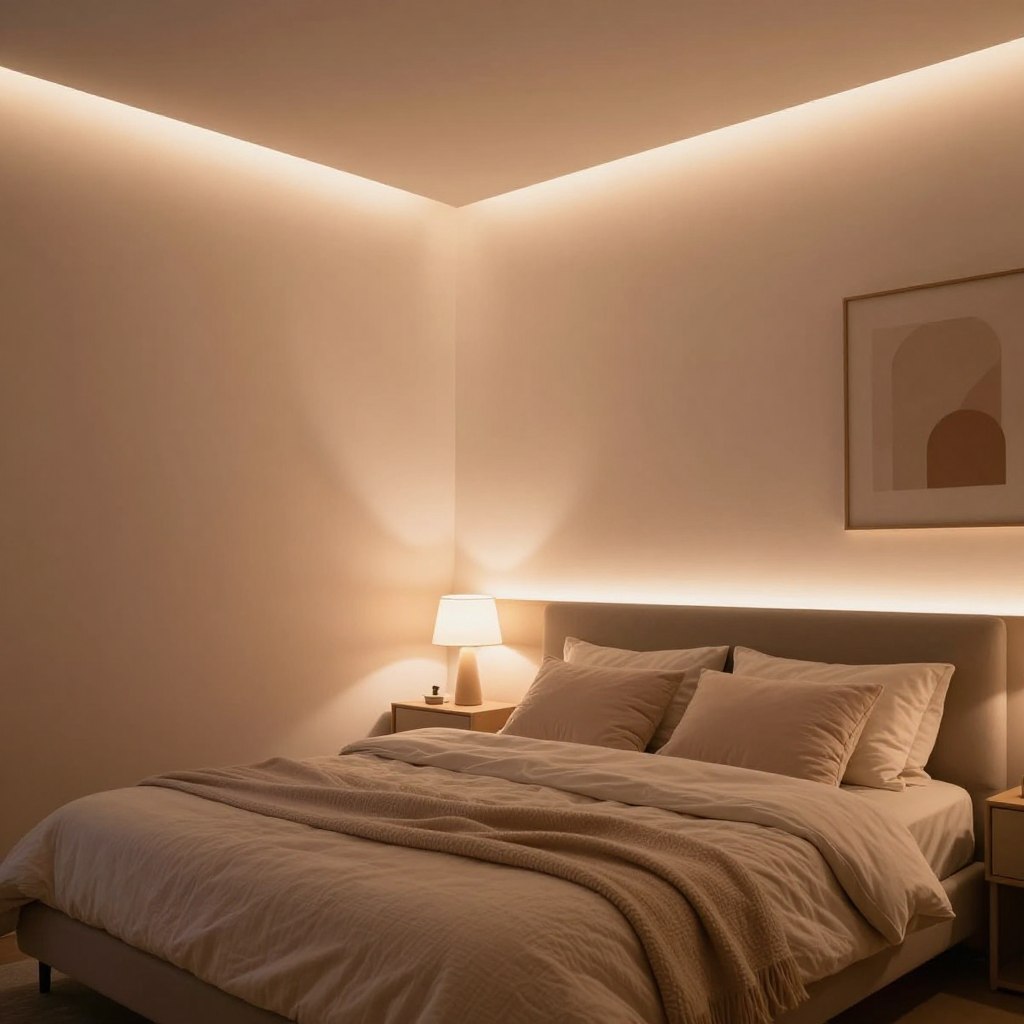
I use cove lighting around tray ceilings to frame the room nicely. Recessed LED channels in crown molding add a clean look. Backlit headboard ledges add depth and a subtle focus.
For shelves, I put strips on the top edge. This highlights the wall beneath without drawing attention to the fixture. I keep strips 1–3 inches from edges to avoid harsh spots.
For deeper coves, I position strips farther back. This ensures a uniform light across the ceiling or wall.
I choose high density LED strips with frosted channels and diffusers. This setup spreads the light evenly and hides dot patterns. Continuous runs and CRI 90+ ensure colors look natural under soft cove lighting.
To achieve a uniform glow, I test at installation. I check for bright spots and adjust strip distance or add diffusers. Dimmers help set the right light level, and warm white tones keep the room cozy and restful.
3. LED Strip Lights Behind Headboards for an Intimate Bedroom Lighting Effect
LED strip lights behind a headboard create a soft glow that frames the bed. This sets a mood without glare. I like installations that hide hardware and wiring for a natural and private feel. It’s perfect for cozy bedroom decor and intimate lighting.
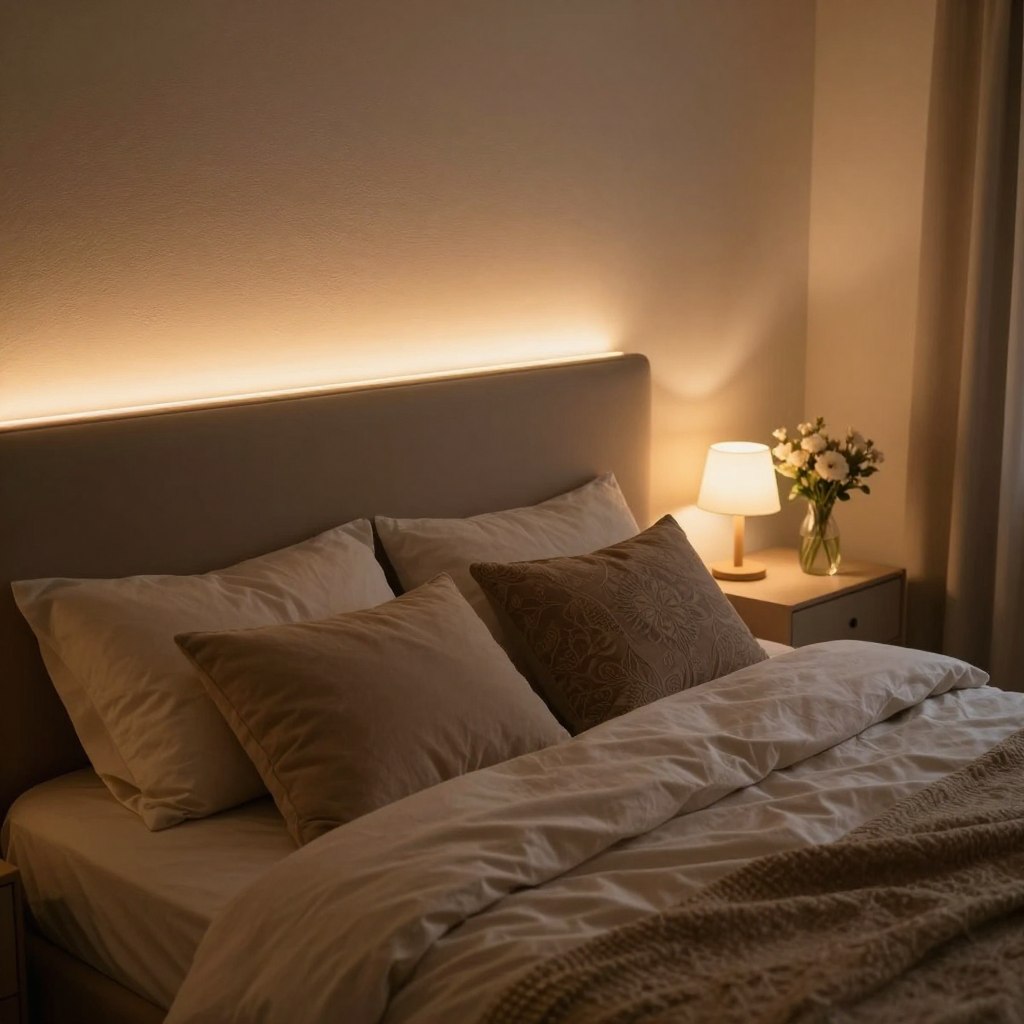
Mounting options and hiding strips for a seamless look
I use three reliable mounting methods: adhesive-backed strips, mounting channels to the headboard, or recessed cavities. For adhesives, I choose 3M VHB or the manufacturer’s tape for a strong hold. I add small clips to prevent sagging and make removal easier.
I route low-voltage DC cabling behind furniture and staple it with clips. I keep the power supply in a bedside cubby or behind the headboard for easy maintenance. Hiding controllers behind the headboard keeps the look clean.
Color and brightness settings that enhance sensual bedroom atmosphere
For a romantic mood, I prefer warm white lights in the 2700K–3000K range at low lumen levels. Warm tones flatter skin and soften textiles. For RGBW strips, I set muted pinks or amber tones between 10–30% brightness to avoid harshness.
I recommend LED strips with CRI 90+ for natural colors and skin tones. This makes bedding and faces appear truer under the light. Small adjustments can change the room’s mood from intimate to relaxed in seconds.
Combining strips with dimmers and smart controls
I pair strips with inline dimmers or smart controllers like Philips Hue Lightstrip or LIFX Z for scenes and smooth transitions. Smart controllers let me schedule warm wake and slow fade to dark scenes that match sleep cycles.
For wiring, I use low voltage DC runs, conceal the power supply behind the headboard, and keep connections tidy. A grounded plug-in power supply or a licensed electrician for hardwired installs improves safety and reliability.
4. Layered Lighting with LEDs for Dark Bedroom Design
I use layered lighting to add depth and purpose to a dark bedroom. Ambient light sets the mood, task layers handle specific needs, and accent fixtures add drama. This keeps the room cozy and lets me control the atmosphere.
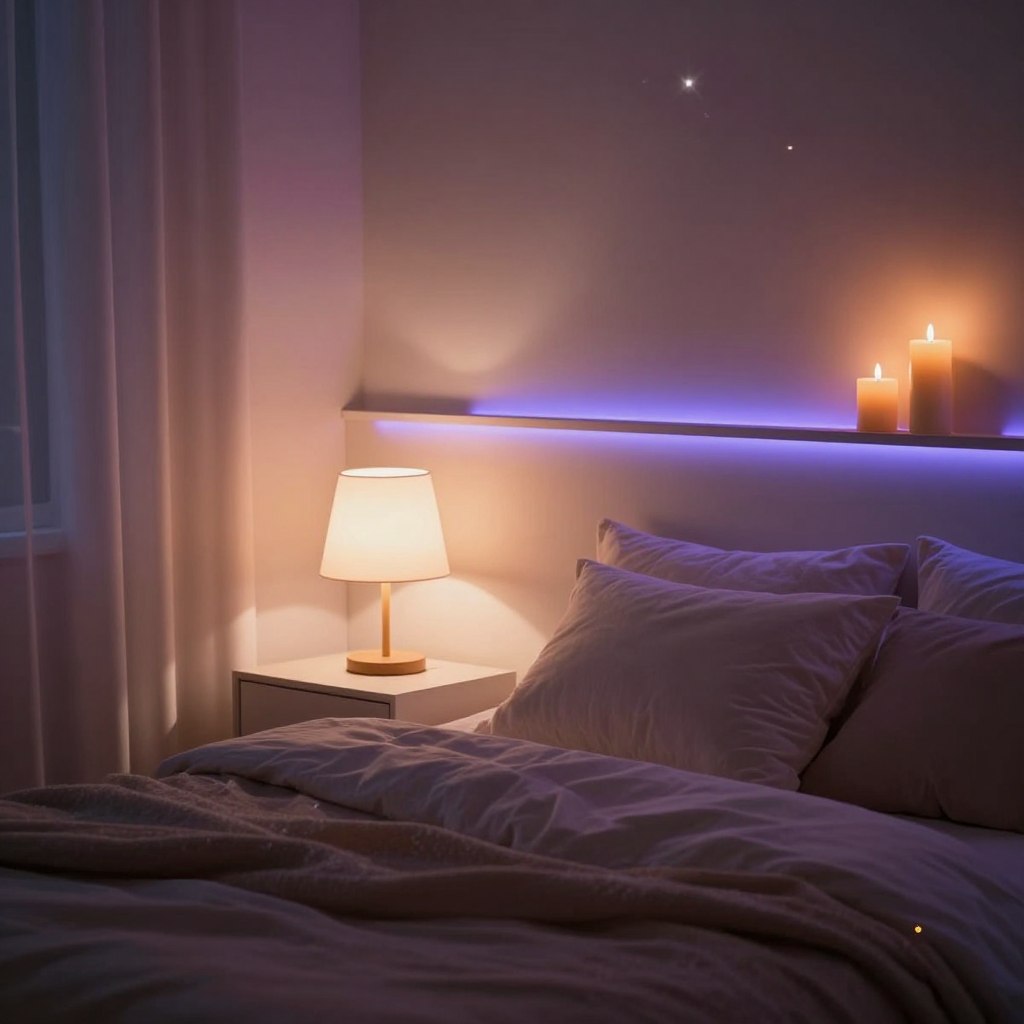
Understanding ambient, task, and accent layers
Ambient lighting is the base light. For a moody space, I aim for 50–150 lux. This keeps the atmosphere soft and inviting.
Task lighting focuses on reading, dressing, or working. I aim for 300–500 lux at reading spots or mirrors. This makes tasks easy on the eyes.
Accent lighting highlights art, textures, and details. Narrow beam LEDs and small spot fixtures create interest without brightening the whole room.
How to balance layers for a cozy yet functional space
I keep ambient light warm and low. Then, I add brighter task fixtures for control. This stops glare and keeps the room usable.
For cozy decor, I choose dimmable sources. This lets me quickly change from practical to intimate lighting.
I group controls for easy management. Smart dimmers or multi-gang switches make it simple to adjust layers.
Examples of fixtures and placement that work well together
Recessed tunable downlights are great for ambient light. Place them evenly across the ceiling to avoid hotspots and ensure a uniform wash.
Adjustable swing-arm wall lamps are perfect for bedside task lighting. Mount them at eye level near the pillow for direct, controllable light.
Narrow-beam spot LEDs or accent strips highlight textured walls, headboards, or artwork. I place them in coves, ledges, and behind headboards for subtle depth.
| Layer | Purpose | Typical Fixtures | Recommended Lux | Placement Tip |
|---|---|---|---|---|
| Ambient | General mood and base illumination | Recessed tunable downlights, cove strips | 50–150 lux | Even spacing, warm tones to keep room moody |
| Task | Reading, dressing, focused activities | Swing arm wall lamps, bedside table lamps, mirror lights | 300–500 lux | Directional fixtures at eye level, dimmable for comfort |
| Accent | Highlight art, textures, architectural features | Narrow beam spot LEDs, LED strips for coves and headboards | Variable, low to medium | Aim at focal points; keep intensity subtle for cozy bedroom decor |
5. LED Candles and Flameless Fixtures to Boost Romance
A few flameless fixtures can transform a room. They create a soft glow without the danger of real flames. This makes for a safe and intimate space.
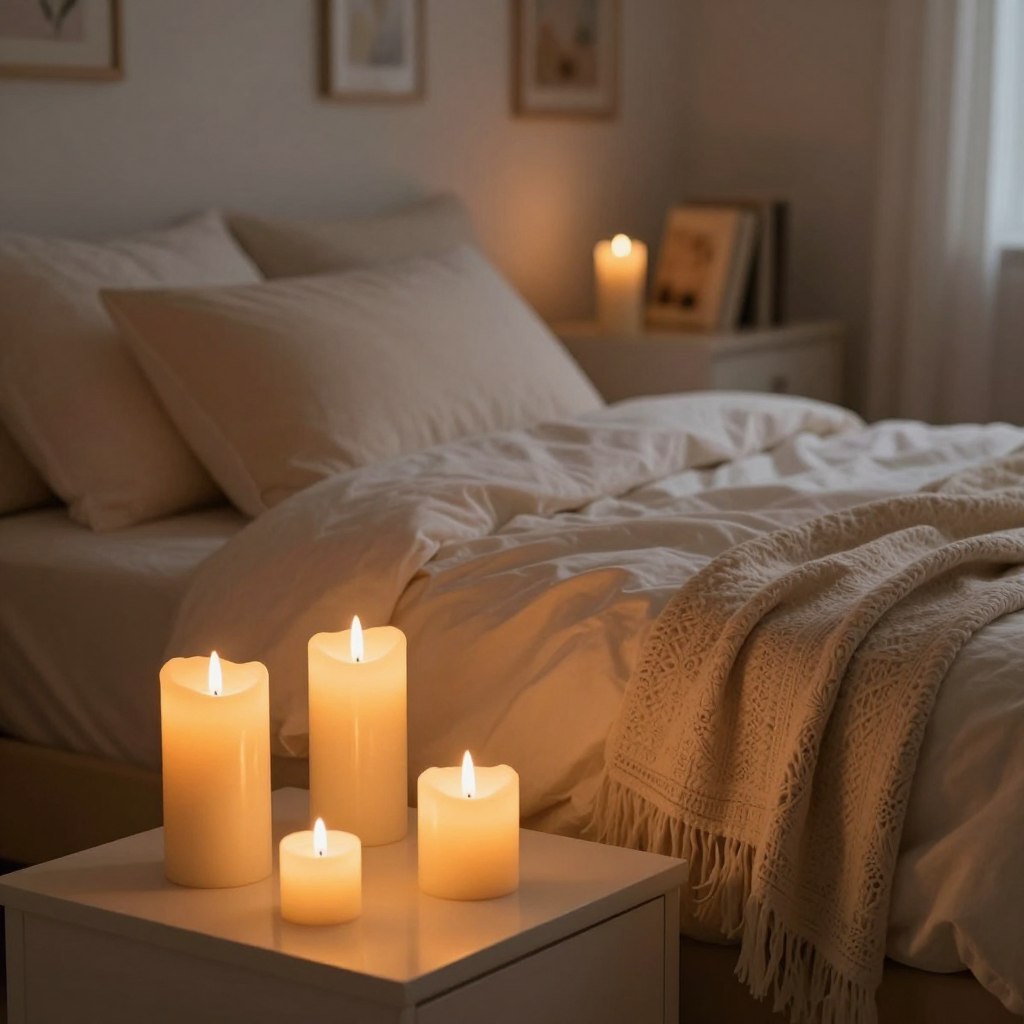
Benefits of flameless LED candles over real flames
Flameless fixtures are safe around fabrics and drapery. They avoid soot, smoke, and the risk of leaving a candle burning. Battery operated ones last long, and plug-in models stay bright all night.
Many designs have flicker modes that look like real flames but are safe. This adds to the cozy feel of your bedroom.
Styling tips using clusters, trays, and mirrored surfaces
Place LED candles in clusters at different heights for depth. I often put them on a tray near the headboard or on a bedside table with books. Mirrored or metallic surfaces make the glow sparkle.
For extra texture, add glass hurricanes and greenery. Yankee Candle’s flameless designs look real. Philips warm LED tea lights are great for adjusting brightness.
Choosing flicker settings and warm hues for realism
Choose warm amber flicker in the 1800K–2000K range for a natural look. Dim the flicker to keep it subtle. Remote or app control makes it easy to adjust without getting up.
6. Smart LED Solutions for Personalized Intimate Bedroom Lighting
I look for easy ways to make a romantic bedroom feel special. Smart LED solutions let you control the lights with just a tap. They offer color, dimming, and timing options for a perfect mood.
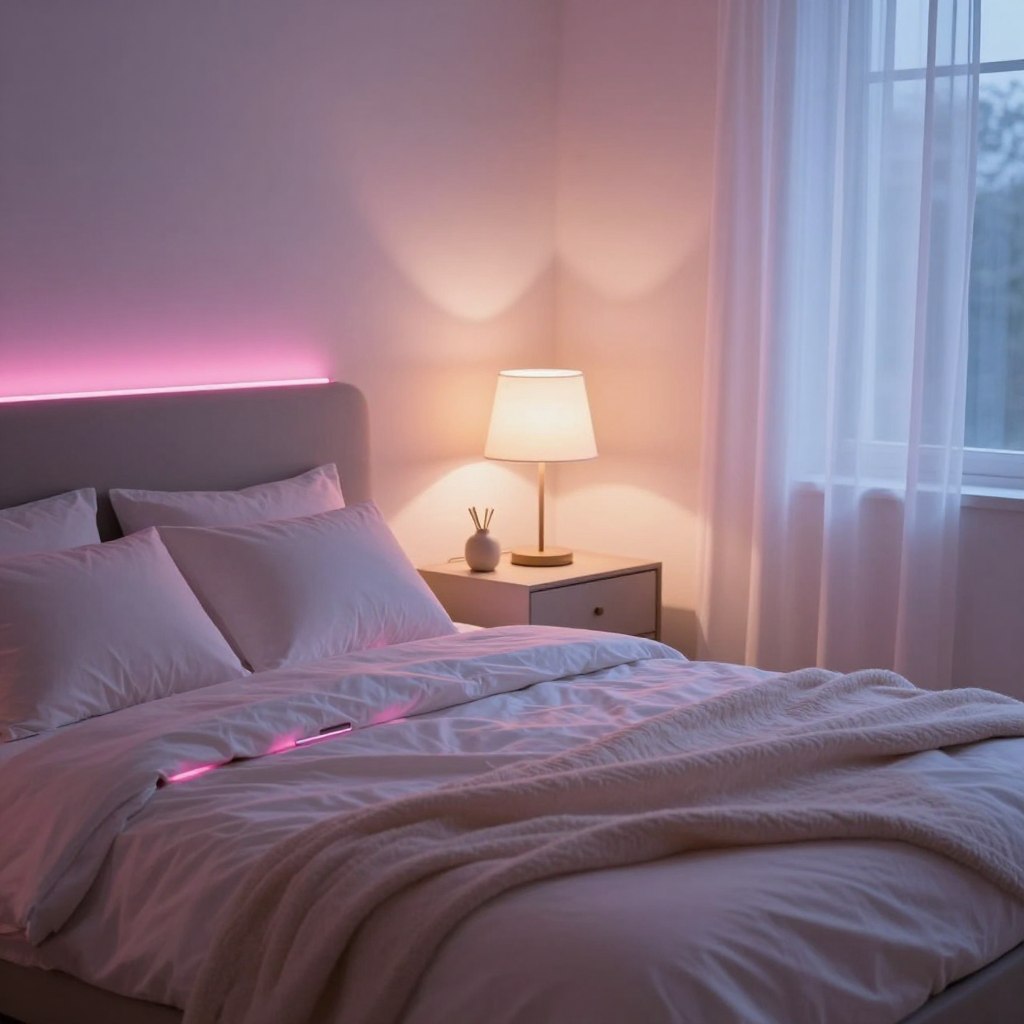
Voice control with Amazon Alexa and Google Assistant makes things easy. Saying “Date Night” can change the lights and play music. Scenes combine bulbs and dimmers for a quick mood change.
I save presets in apps from Philips Hue, LIFX, and Sengled. These apps help me set up gradual light changes for bedtime. Tapping a preset can recreate a favorite mood or help me relax.
I connect scenes to smart plugs and shades for more control. This creates a cozy atmosphere with music and lights. It’s important to keep your smart home safe with strong Wi-Fi and security.
7. Accent Lighting for Art and Textures in a Luxurious Bedroom
A few well placed fixtures can make a room feel like a museum. Accent lighting draws attention to artwork, tufted headboards, and textured walls. This turns a room into a luxurious retreat.
In a romantic moody bedroom, these highlights create intimate focal points. They add depth without being too loud.
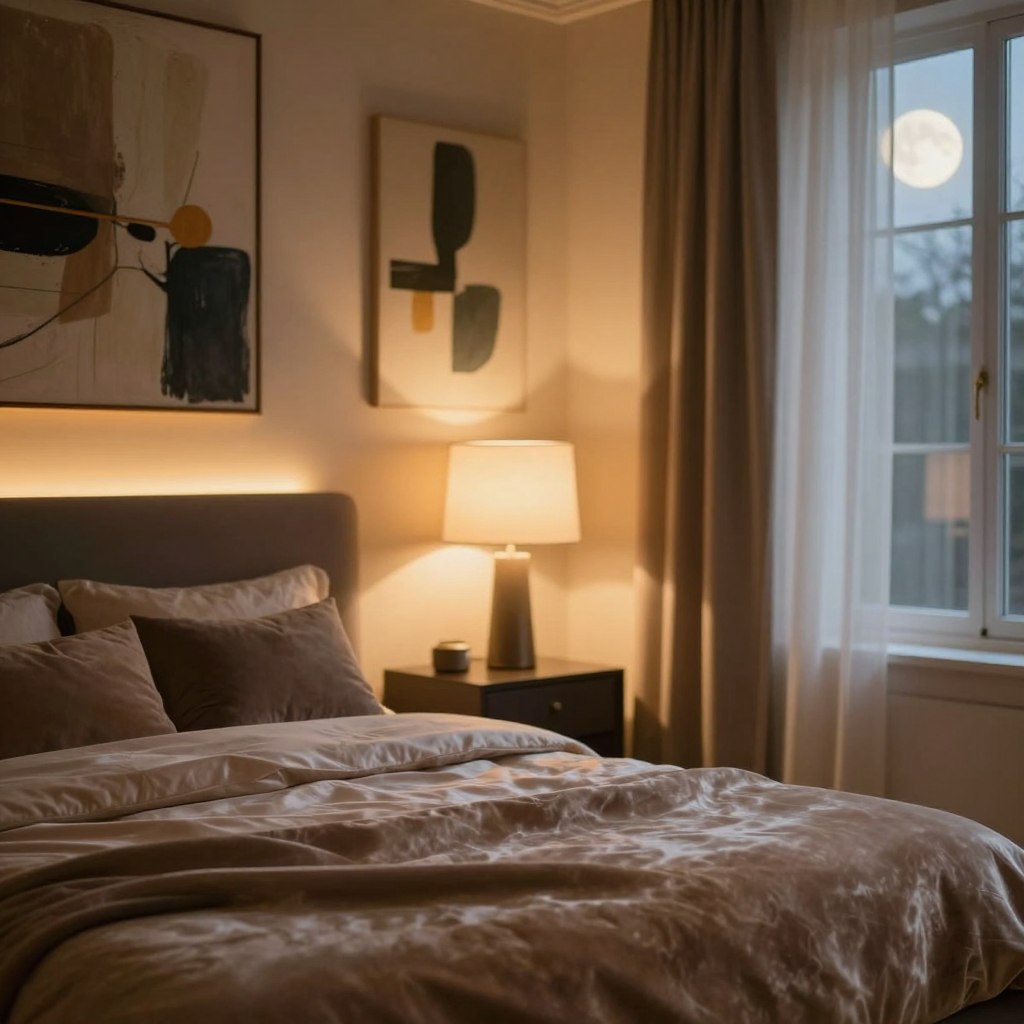
I suggest using narrow-beam spot LEDs with a 15°–30° range for precise control. Adjustable mini track heads and puck lights are great for focusing on specific areas. This way, light can highlight fabric and relief without causing glare.
It’s important to shield reflective surfaces and use barn doors. Positioning fixtures to avoid reflections at eye level is key. Dimmers help adjust the light’s intensity, keeping the room’s colors true under low light.
Low angle accent light brings out the beauty in textiles. Velvet and silk look deeper when lit from the side. Satin shows off its sheen, and tufting adds flattering shadows. High-CRI LEDs ensure that bedding and finishes appear rich and inviting.
Below is a quick comparison to help choose fixtures based on task, beam angle, and recommended use.
| Fixture | Beam Angle | Best For | Mounting Tip |
|---|---|---|---|
| Narrow-spot LED (MR16 style) | 15°–25° | Small artwork, sculptural pieces | Mount 3–4 ft from art; aim slightly downward to reduce glare |
| Adjustable mini track head | 20°–40° | Headboards, textured walls | Use swivel to graze textiles; add shields to control spill |
| Puck light | 30°–60° | Shelves, niches, soft washes | Recess slightly for softer edges; pair with dimmer |
| Linear accent strip | Wide wash | Cove highlights, under-shelf glow | Install low and aim upward to reveal texture |
8. Under Bed and Floor Level LED Lighting for a Dreamy Bedroom Retreat
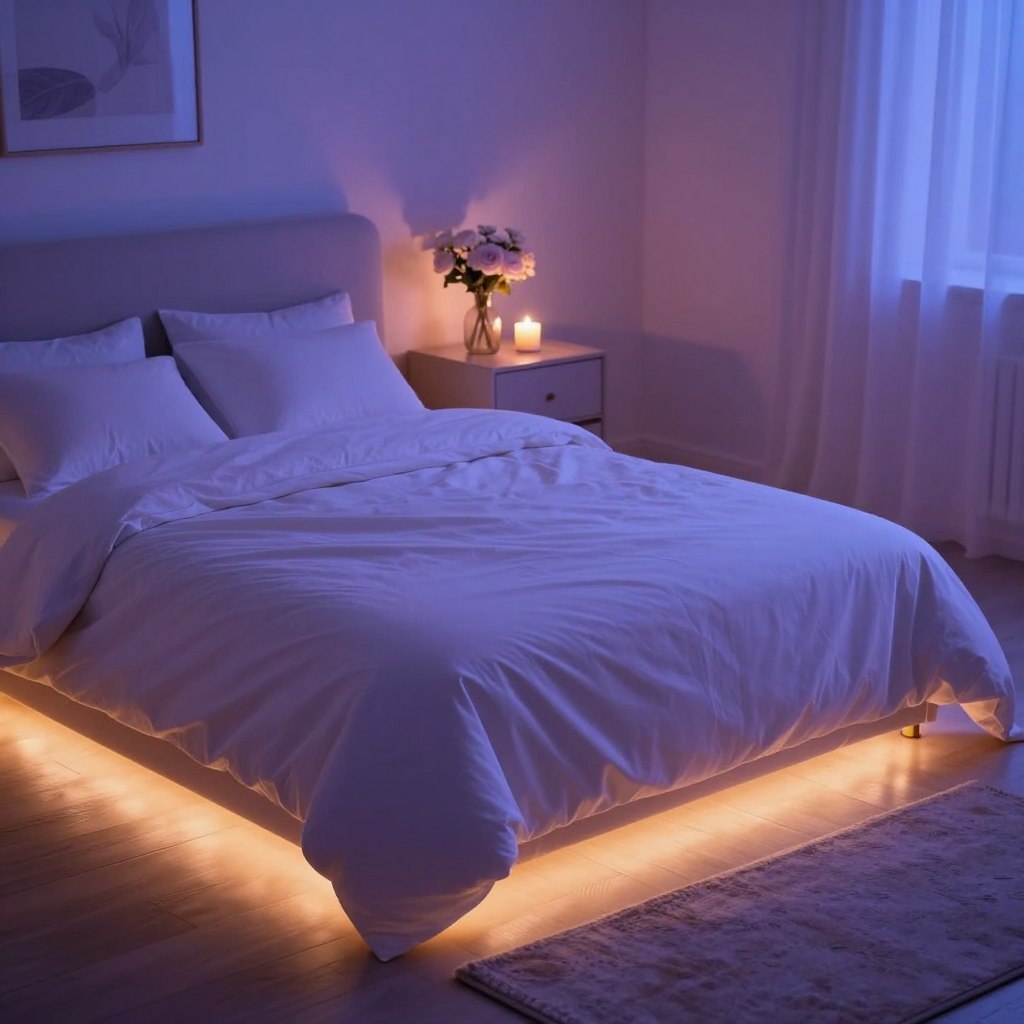
I use subtle floor level LEDs to make a room feel like a dreamy bedroom. Under bed lighting adds a soft glow that makes the bed look better. It also creates a cozy feel without harsh overhead light.
Creating a floating bed illusion
I place continuous LED strips along the bed’s base or platform edge. I hide them behind a frosted diffuser. This diffuser softens the light, making it look like the mattress is floating.
Low level lighting for safe navigation
Low level LEDs act as path lights for safe night-time movement. I choose warm hues and a low output about 5–30 lumens per meter to avoid waking you up. This light supports both safety and mood in cozy bedroom decor.
Materials and adhesives for a long lasting install
For a secure install, I use outdoor grade adhesive backed strips and aluminum channels. Cable clips or 3M VHB tape keep things tidy and reliable. If your room has humidity near windows or an attached bath, pick IP rated strips and sealed connections to prevent moisture damage and prolong life.
- Choose diffused strips for a seamless halo effect.
- Stick to warm tones to maintain a romantic moody bedroom vibe.
- Use channels and quality adhesives to protect your investment.
9. Creating a Sensual Canopy or Curtain Glow with LED Rope Lights
A soft halo behind drapery can turn a bedroom into a romantic space. LED rope lights around a canopy or curtain tracks add depth to fabric. This creates a sensual canopy that invites quiet moments and slow evenings.
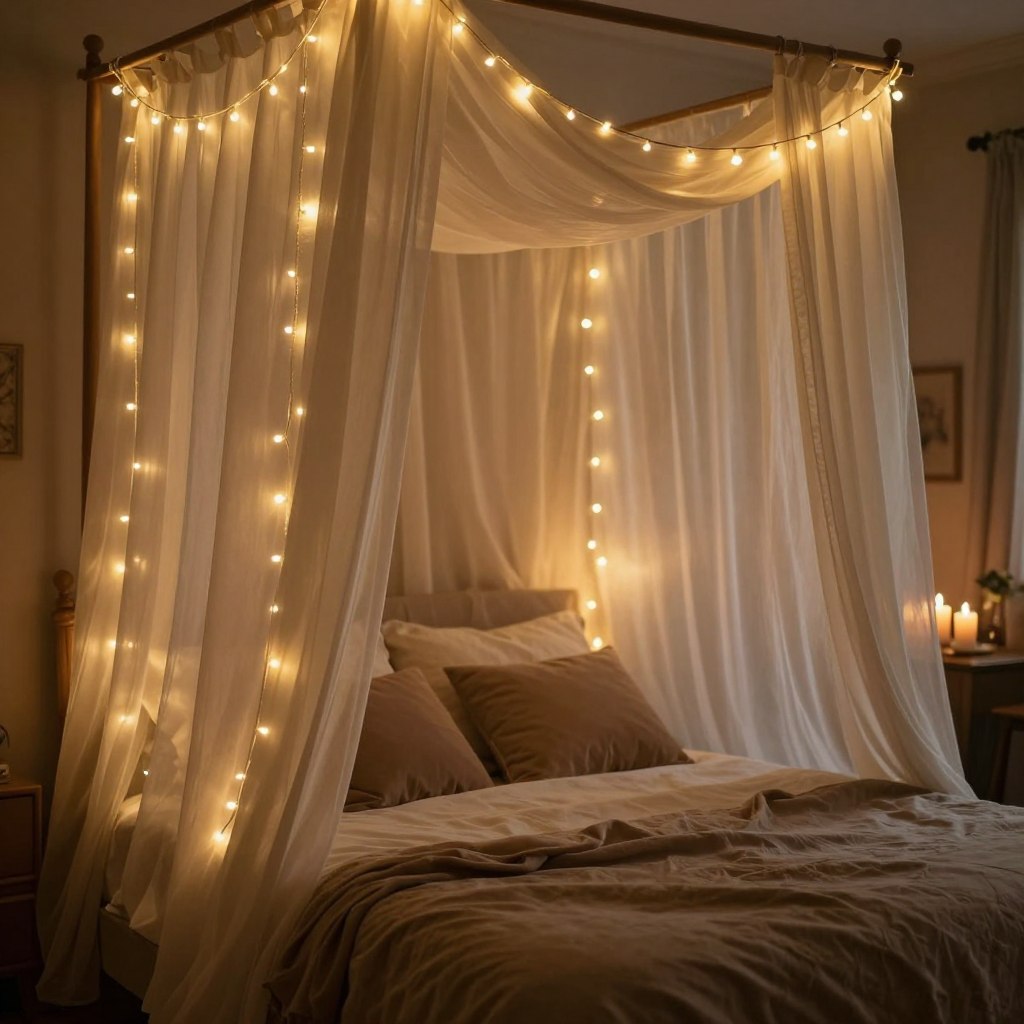
I prefer rope lights with gentle diffusion and warm colors. Dimmable, low lumen options prevent fabrics from looking washed out. Inline dimmers or smart controllers let me adjust the mood with ease.
I use small clips or aluminum channels to attach rope lights. This prevents fabric stress and hides wiring. Clips should be placed every 6–8 inches on canopy frames. For curtain tracks, route the rope inside a shallow channel for even glow.
Layering fabric softens and enriches the glow. I place rope lights behind sheer layers for calm diffusion. Then, I add opaque drapes for contrast. Silk adds a warm sheen, while linen offers textured diffusion. Mixing materials controls light filtration.
For intimacy, I choose warm tones and low brightness. This creates subtle pools of light, not harsh beams. The result is cozy, intimate lighting that feels personal and romantic.
Here is a quick comparison to help pick the right rope-light setup for your canopy:
| Feature | Recommended Option | Why I Choose It |
|---|---|---|
| Light profile | Low profile, flexible rope | Stays hidden, easy to mount on frames and tracks |
| Color temperature | 2200K–2700K warm white | Creates a sensual canopy glow without harshness |
| Diffusion | Frosted tubing or soft diffuser | Prevents hotspots, spreads light evenly behind fabric |
| Control | Dimmable inline or smart controller | Allows precise adjustment for intimate bedroom lighting scenes |
| Fabric pairing | Sheer inner layer + opaque outer drape | Balances soft diffusion with depth and texture |
| Mounting hardware | Clips or aluminum channel | Protects fabric, keeps rope secure and neat |
10. Using Dimmers and Tunable White LEDs for Flexible Atmospheres
I use light like a thermostat for mood. Small changes in brightness and color make a room feel intimate or awake. With dimmable LEDs and tunable white options, I can craft flexible atmospheres that match the hour and the occasion in a romantic moody bedroom.
Dimming range and compatibility considerations
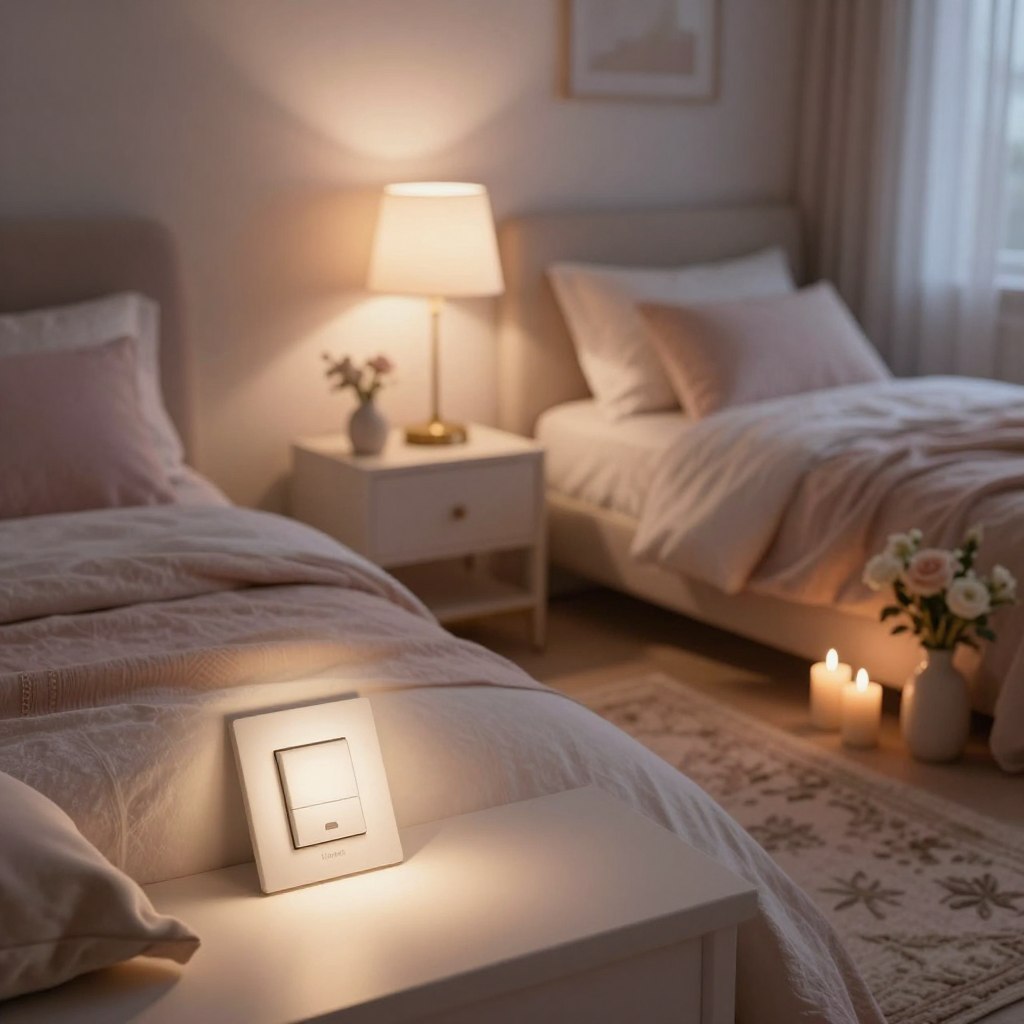
Not every dimmer works with every lamp. For line-voltage fixtures, I recommend TRIAC-compatible dimmers from Lutron or Leviton. Low-voltage LED strips often need the manufacturer-recommended inline dimmer or a dedicated LED driver with dimming output.
Watch for minimum load limits on older dimmer models. Modern LED controllers often use PWM dimming to ensure smooth fades and to avoid buzz or flicker when using dimmable LEDs.
Shifting color temperature for mood
Tunable white means shifting color from warm 2200K to neutral 4000K. I set warmer tones for candlelike evenings that enhance skin tones and soften shadows. Slightly cooler, neutral whites help in the morning for gentle wake ups and practical routines.
Choosing the right Kelvin for each moment makes it easier to move between relaxation and activity without changing fixtures.
Using schedules to move from day to night
My routine runs on smart dimmers and a Hue ecosystem for reliable scheduling. In the morning lights brighten to a neutral white, easing me into the day. Evenings start a warm-down that lowers intensity and nudges color toward amber.
For a date-night mood I trigger a preset transition: gradual dim, shift to warm tunable white, then hold at low output. Automating these steps gives consistent flexible atmospheres that support intimacy and comfort.
11. Accent Mirrors and Reflective Surfaces to Amplify LED Effects
I use mirrors and reflective surfaces to make LED lighting feel richer and larger in a romantic moody bedroom. A well placed mirror can double perceived light and make a small room feel open without raising brightness. I prefer soft, indirect LEDs opposite reflective planes so the glow multiplies gently across the room.
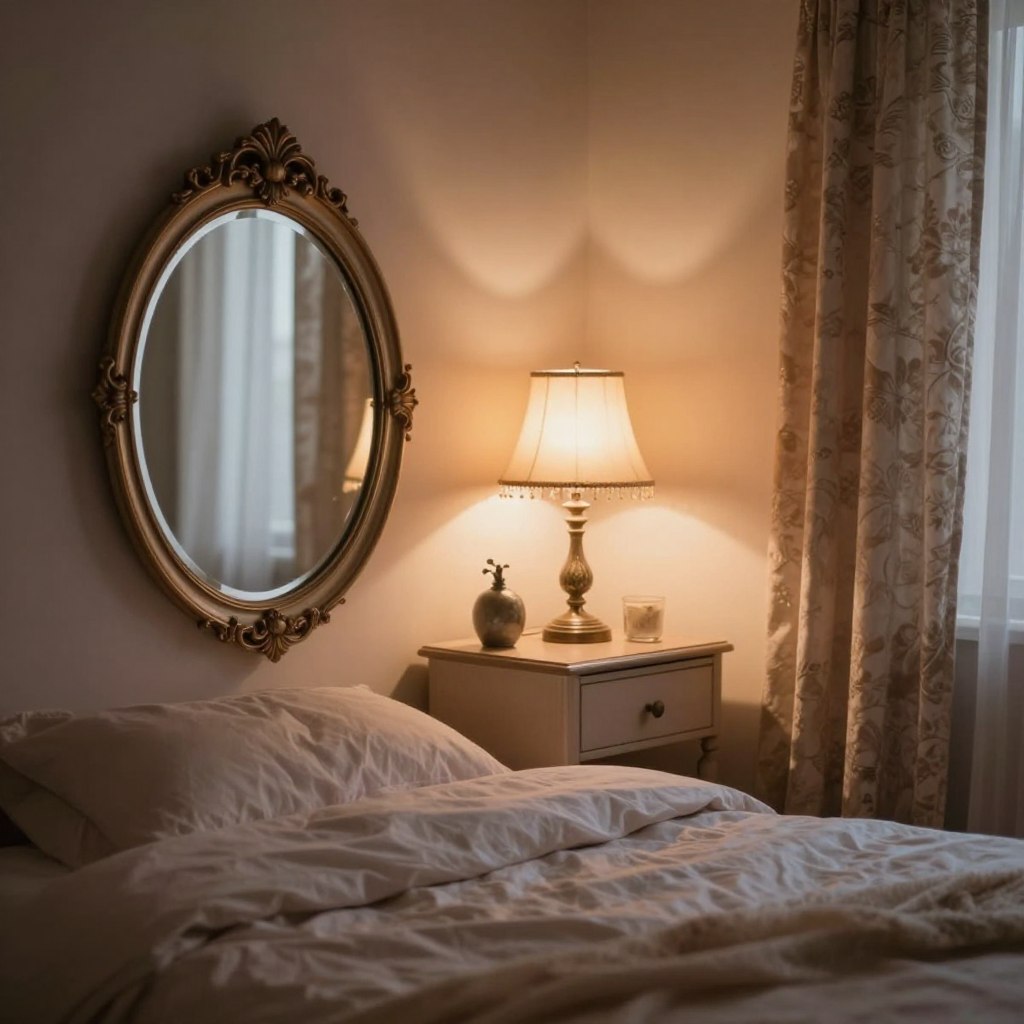
I favor frameless or thin bezel lighted mirrors for a clean, modern look that blends with luxurious bedroom textiles. Mirrored headboard panels and mirrored trays reflecting candle clusters create layered depth. Backlit mirrors give a halo effect that pairs well with velvet, silk, or high-thread-count linens.
I pay close attention to placement to avoid harsh reflections. Position LEDs so reflections form soft pools of light rather than hotspots. Diffusers, warm color temperatures, and low-to-mid dim settings reduce glare and protect the eyes late at night.
Balance is essential. I mix reflective surfaces with matte finishes and tactile fabrics to preserve intimacy. When mirrored elements sit near plush bedding or woven throws, the result reads as curated and cozy instead of clinical.
Below is a compact comparison to help plan mirror and LED pairings for a romantic moody bedroom.
| Reflective Element | LED Pairing | Effect on Space | Best Fabric Complements |
|---|---|---|---|
| Frameless backlit mirror | Warm tunable white strip, dimmable | Soft halo that enlarges wall area | Velvet headboard, linen drapes |
| Mirrored headboard panels | Low intensity LED accents behind panels | Depth behind bed, subtle drama | Silk pillow shams, wool throw |
| Mirrored tray for candles | Flicker LED candles with warm hue | Multiplying points of light, intimate sparkle | Matte ceramic, cotton sateen sheets |
| Polished metallic lamp base | Directional accent LED with diffuser | Targeted reflections without glare | Suede cushions, textured duvet |
Textiles and Furnishings that Enhance LED Romantic Lighting
I test fabrics and finishes in the room before committing. Small changes in texture or color shift how LED light reads. I choose pieces that work with a romantic moody bedroom and an elegant bedroom color scheme to keep the mood intentional.
Choosing luxe bedding and curtains to absorb and diffuse light
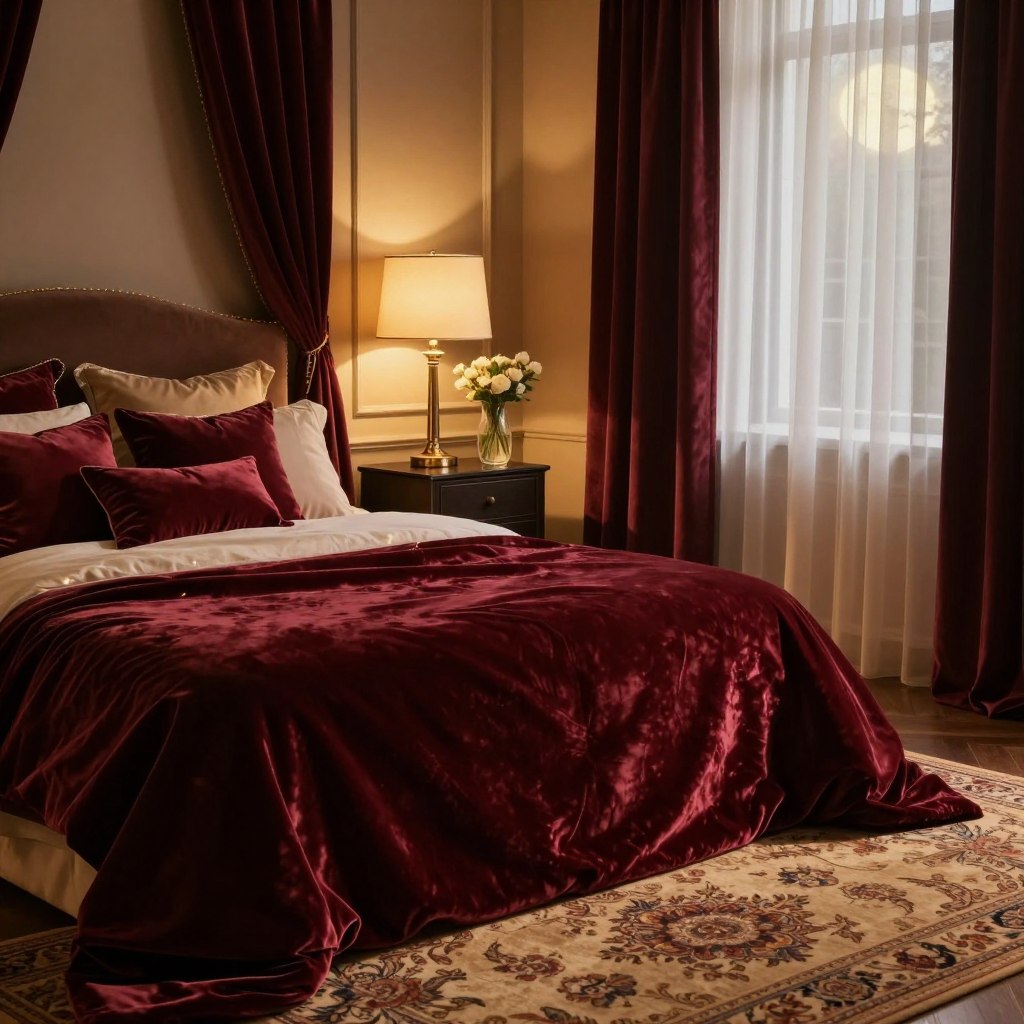
I favor velvet, brushed cotton, silk blends, and heavy linen for bedding and drapery. Velvet soaks up warm glow and creates depth. Silk blends reflect soft highlights that catch the eye. Heavy linen and brushed cotton diffuse light for a matte, flattering finish.
I lean toward warm-toned bedding like ivory, blush, and deep jewel tones when pairing with warm LEDs. Those hues enhance a romantic moody bedroom while supporting an elegant bedroom color scheme.
Cozy bedroom decor picks that work with moody lighting
Textured throw blankets, layered rugs, and an upholstered headboard anchor the bed and soften hard light. I add soft bedside lamps with warm bulbs for layered glow. Stores such as West Elm, Pottery Barn, and Anthropologie have pieces that blend quality and mood ready style.
I pick rugs with low sheen, chunky knit throws, and lamp shades that tame LED intensity. These choices build cozy bedroom decor without competing with the main lighting scene.
How textures change under different LED colors and intensities
Velvet deepens and looks plush under low warm light. Satin and silk show sheen and shimmer when LEDs push toward cooler or brighter settings. Matte weaves and heavy linens keep a steady, warm look without glare.
I always test fabric swatches under my intended LED colors and dim levels. Small sample tests reveal whether luxurious bedroom textiles read rich or flat. That step ensures the room reads as a cohesive romantic moody bedroom and keeps the elegant bedroom color scheme balanced.
| Material | LED Response | Best Use |
|---|---|---|
| Velvet | Deepens under warm low light; rich texture | Headboards, throw pillows, accent upholstery |
| Silk blends / Satin | Shows highlights and sheen with brighter or cooler LEDs | Bedding layers, decorative cushions, drapery accents |
| Brushed cotton | Diffuses glow; soft matte finish | Everyday sheets, duvet covers for cozy bedroom decor |
| Heavy linen | Provides warm, textured look without glare | Curtains, duvet shams, relaxed bed linens |
| Chunky knits / Wool | Adds shadow play and tactile depth under low LEDs | Throws, bedside accessories, layered textures |
DIY Installation Tips and Tools for a Professional Finish
I share simple steps for a DIY job that looks like a pro did it. Making smart choices early saves time and avoids mistakes. This is true for any romantic moody bedroom or dark bedroom design.
Preparing the space and planning light runs
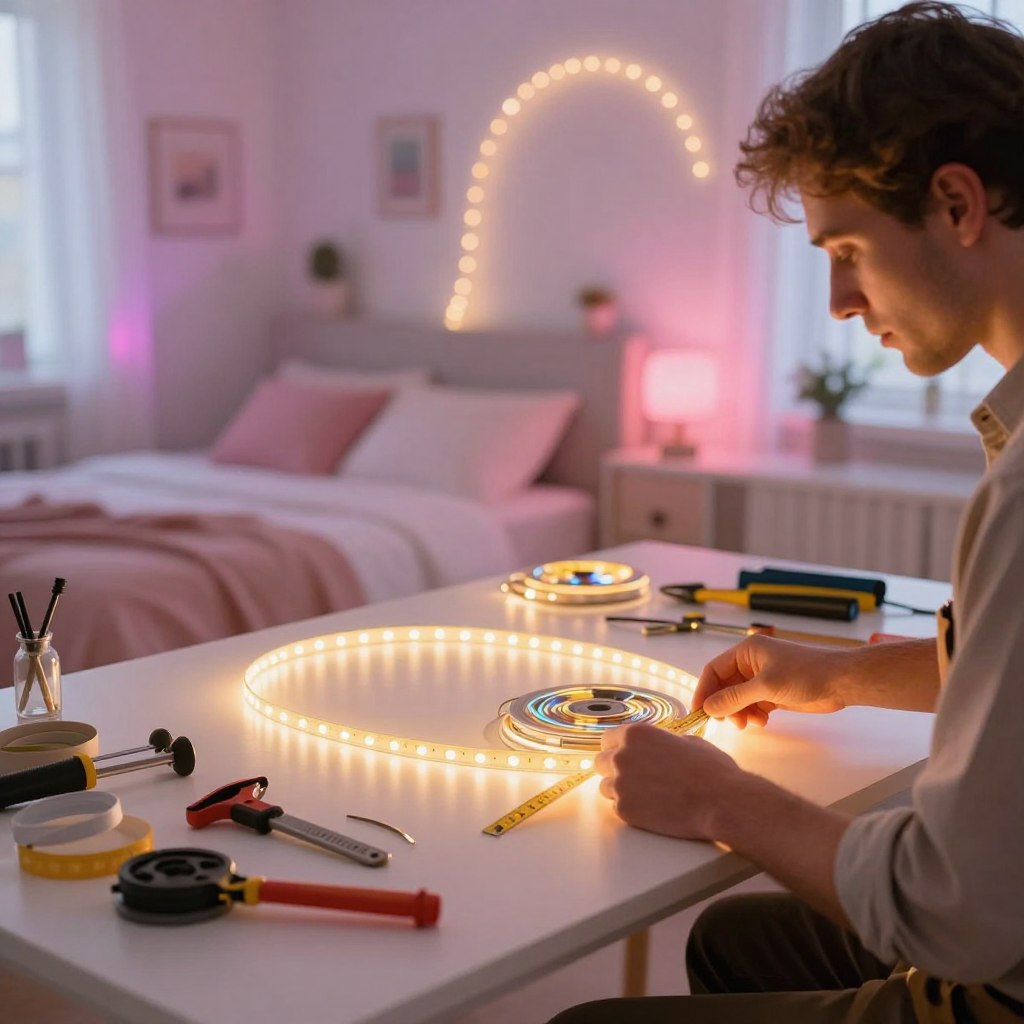
Measure each light run and draw a plan on paper. Note where power and controllers will go. For 12V LED strips, use amplifiers on long runs to avoid voltage drop.
Use painter’s tape to plan placements before sticking anything. This helps see how light will look on headboards, coves, and floors in a romantic moody bedroom.
Essential tools, connectors, and mounting hardware I recommend
Have a multimeter, wire strippers, and a good soldering iron or snap connectors. Use aluminum channels with diffusers for even light. 3M VHB tape ensures a strong bond. Size power supplies 20–30% above the needed load.
Keep cables tidy with clips, heat shrink tubing, and silicone caps. Always wear gloves and eye protection when cutting and soldering. Trust brands like Milwaukee for tools, WAGO or B&Q-rated connectors, and Mean Well power supplies for reliability.
When to call an electrician for permanent LED installs
Get a licensed electrician for line-voltage rewiring, new circuits, or recessed fixtures that need code compliance. If you’re unsure about load calculations or have a complex design, it’s safer to hire a pro.
Call an electrician for any work on household wiring or if a permit is needed. This ensures your work is safe and meets local codes, especially in complex designs.
| Task | DIY or Pro | Recommended Tools/Parts |
|---|---|---|
| Mapping runs and mock-up | DIY | Measuring tape, painter’s tape, sketch pad |
| Long 12V strip runs (>16 ft) | DIY with guidance | Amplifiers, extra power inject points, multimeter |
| Soldering connections | DIY if experienced | Soldering iron, flux, heat-shrink, gloves, eye protection |
| In ceiling fixtures or new circuits | Professional | Licensed electrician, permits, code compliant parts |
| Mounting strips with a clean finish | DIY | Aluminum channels with diffusers, 3M VHB tape, cable clips |
Maintaining Your LED Setup and Troubleshooting Common Issues
I keep my LED installations looking and working their best with simple, regular care. A soft cloth removes dust from fixtures. I wash diffusers gently in warm water with mild detergent and dry them before reassembly.
Good ventilation around drivers and strips prevents heat buildup and extends lifespan. I replace failing strips or power supplies before they fail. This avoids sudden outages in a romantic moody bedroom or when staging intimate bedroom lighting.
Cleaning, replacing, and prolonging lifespan
I follow manufacturer guidelines for expected LED lifespans. I keep original documentation for warranty and replacement part info. When a section dims or shifts color, I swap that run rather than patching with mismatched parts.
I store spare connectors and an extra driver from reputable brands like Philips or LIFX for quick fixes. Regular visual checks catch loose solder joints and adhesive failures early.
Fixing flicker, color mismatch, and connectivity
Flicker often signals an incompatible dimmer or a poor power supply. I test with a recommended LED driver and choose dimmers rated for LEDs to stop most flicker. Color mismatch can come from mixed batches.
I replace strips from the same lot or stick to one manufacturer such as Govee to keep tones uniform. For smart bulbs and strips, I update firmware and verify network settings. Many Wi‑Fi lights prefer 2.4 GHz networks; I switch bands if pairing fails.
If the bridge or hub drops devices, I reboot the hub and router, then re pair the lights. This restores stable intimate bedroom lighting scenes.
Upgrading components over time
I plan upgrades in stages. Moving to higher CRI strips improves skin tones and fabric color in a romantic moody bedroom. Replacing aging power supplies with higher efficiency units reduces heat and improves reliability.
I invest in better controllers such as the Philips Hue Bridge or a Zigbee hub. This expands scene control and ensures longer term compatibility. Keeping a small kit of spare parts drivers, connectors, a roll of matching LED strip lets me perform fast repairs without disrupting the room’s ambiance.
Routine LED maintenance and timely upgrades keep my lighting consistent, safe, and effortlessly romantic.
Conclusion
I’ve shared eight LED tips to make a bedroom romantic and moody. These include soft cove lighting and LED strips behind headboards. You can also use flameless candles and smart systems for a cozy feel.
Remember to dim the lights and keep things clean. This will help your bedroom stay inviting and comfortable.
Start by adding warm tones and layering lights for depth. Choose quality lights to ensure safety and longevity. Even small changes, like a headboard strip or flameless candles, can make a big difference.
Try making one small change this week and see how it changes the mood. Share your findings and build on them slowly. Adding subtle LED lights can quickly turn your bedroom into a luxurious retreat, but lighting is just the beginning of your transformation.
I’m excited to hear how your bedroom transforms! To continue your journey in creating the perfect atmosphere and layout, don’t miss these expert guides:
-
Atmosphere: Deepen the mood with 10 Romantic Bedroom Decor Ideas for a Warm and Intimate Space.
-
Space Optimization: Learn how to balance light and area with 15 Clever Ideas for Small Bedrooms to Create a Cozy and Spacious Feel.
-
Modern Layouts: Master your floor plan with 10 Modern Layout Ideas for Small Bedrooms.
-
Furniture Trends: Finalize your look with 7 Secrets to Selecting and Arranging Modern Bedroom Furniture for 2026.
Ready to create your sanctuary? Let’s keep designing!