

Welcome! If you’re standing in your open concept space wondering where to begin with your walls, you’re in the right place. I’ve been there too, staring at those vast, connected areas that define how we live today.
These combined living and kitchen zones truly are the heart of the home. They’re where we cook Sunday breakfast, host game nights, and unwind after long days. Getting the atmosphere right here matters more than anywhere else.
Choosing a palette for one big, flowing area can feel daunting. But I see it as a fantastic opportunity to express your personality. Moving beyond the “safe” beige or gray can completely transform how your home feels and functions.
In this guide, I’ll walk you through ten inspiring hues that define today’s modern paint color trends for interconnected spaces. I’ve gathered insights from top design experts and paint brands to give you practical, actionable advice you can trust
Key Takeaways
- Open plan living and kitchen areas serve as the central hub for daily life and entertaining.
- Selecting the right wall hues for these connected spaces presents both a challenge and a creative opportunity.
- Moving beyond neutral, safe choices can dramatically transform the feel of your entire home.
- Personal expression through your palette is encouraged to create a space that truly reflects you.
- This guide provides practical inspiration drawn from current design trends and expert insights.
- The upcoming sections will explore ten specific modern color trends suitable for open layouts.
- You’ll receive actionable advice to help you confidently choose and implement your new look.
The Importance of Color in Open Plan Design
Choosing paint colors for an open plan space is a big worry for my clients. They often ask, “Where do I even start?” This is understandable. Your open plan living and kitchen is the heart of your home. It’s where you cook, relax, and gather. It needs colors that make you feel good every time you enter.
Color is my secret for solving the biggest open-plan puzzle: creating definition without walls. A rich, earthy tone on one wall can signal your dining area. A softer, calming hue can make your lounge space cozy. This visual zoning helps the space feel organized, not overwhelming.
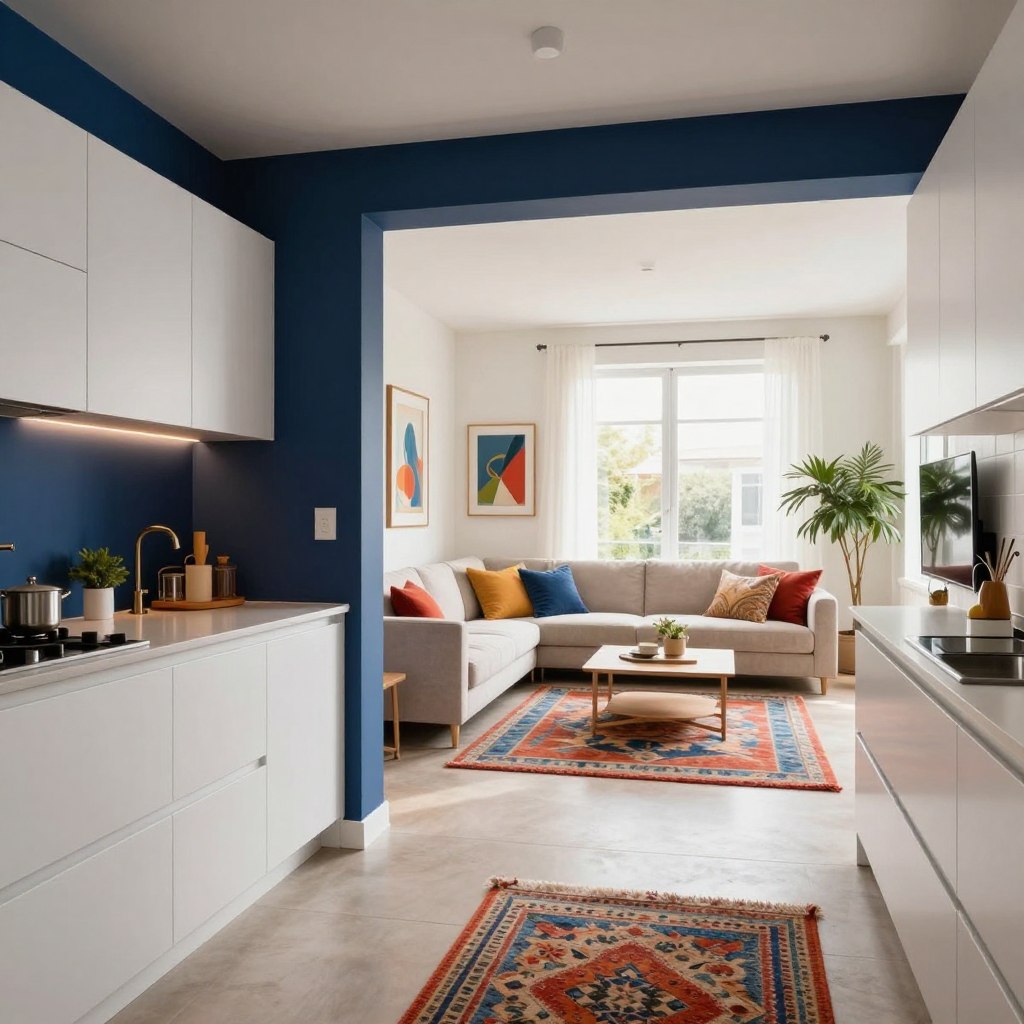
The power of paint is real. Warm colors in a large space can make it feel intimate and inviting. Light, reflective colors in dark corners or north facing walls can make them brighter and happier. Color affects our mood and energy in spaces we use a lot.
I tell clients to see color as a functional design tool, not just decoration. The kitchen, being the most hardworking part of your open plan living and kitchen, benefits from a personality infused palette. It’s where you start and often end your day. The right colors here can make routine tasks more enjoyable.
Embracing color in a multi functional space is worth the initial hesitation. A thoughtful color strategy addresses flow, function, and feeling. It turns a blank canvas into a home that reflects your life and joy. Your space should tell your story, and color is its most powerful voice.
Understanding Modern Paint Color Trends
Wondering what makes paint colors feel modern? Look at the trend of depth, warmth, and intention in popular color schemes. Today, we’re moving away from cool, impersonal grays. Instead, we’re embracing colors that tell stories and set moods.
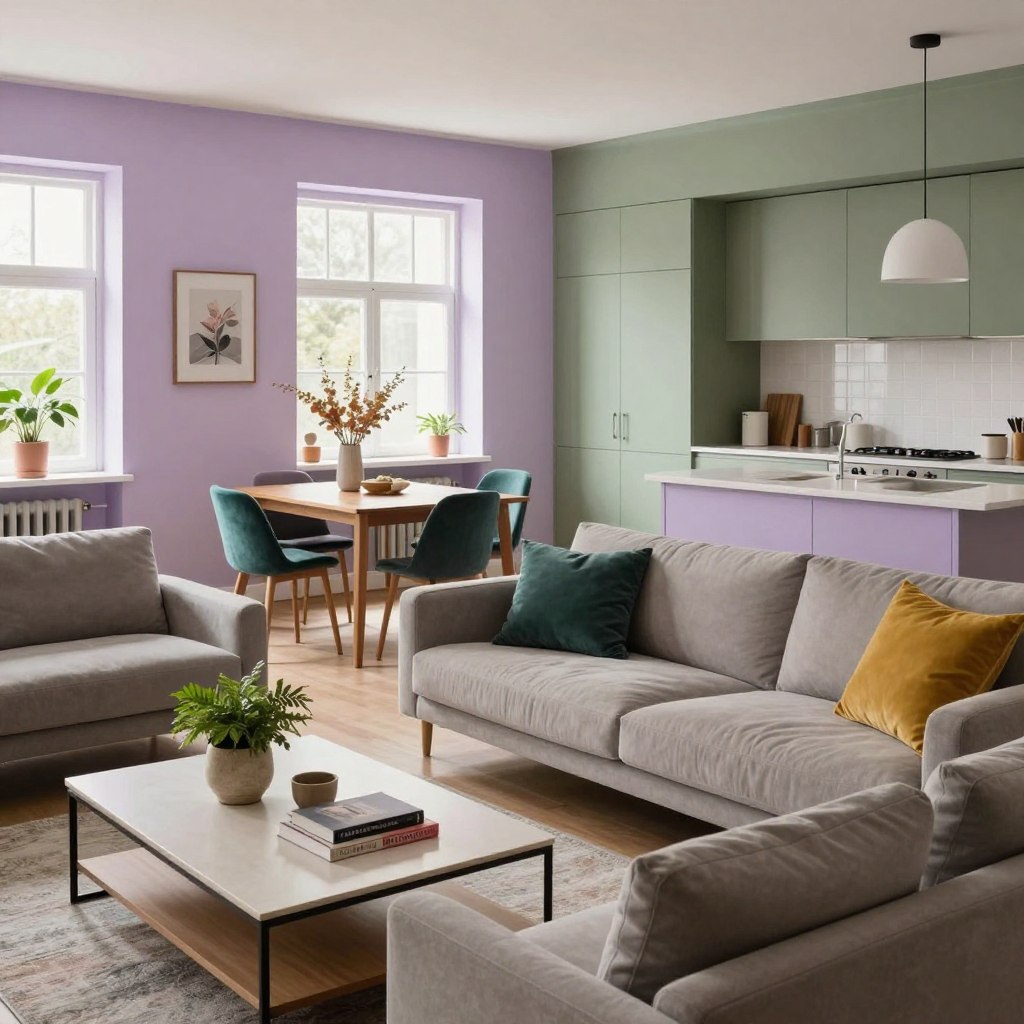
People want comfort, a connection to nature, and to express themselves through color. Homes are becoming sanctuaries. This means colors that feel grounded, soothing, and real. We’re choosing colors with more character and emotional depth.
“Color is no longer just decoration. It’s a way to shape how we feel in a space, to connect rooms visually, and to make a home truly our own.”
Open-plan living spaces need paint colors that define areas without walls. They must create flow and a cohesive feel. The good news? Today’s trends offer a wide range of colors, from bold statements to soft backdrops. All can achieve these goals beautifully.
Let’s compare traditional and modern approaches:
| Aspect | Traditional Approach | Modern Trend (2024) | Why It Works for Open Plan |
|---|---|---|---|
| Neutral Palette | Cool grays, beiges, stark whites | Warm, earthy neutrals, creamy whites, greiges | Creates a cozy, inviting baseline that flows seamlessly. |
| Bold Color Use | Accent walls in isolated rooms | Moody, dramatic full rooms or defined zones | Helps visually separate kitchen, living, and dining areas. |
| Color Inspiration | Following strict style rules | Nature, comfort, personal memory | Results in a unique, layered look that feels authentic. |
| Green & Blue Tones | Primary brights or pastels | Olive, sage, slate blue, deep aqua | Brings the calming outdoors inside, unifying the space. |
| Overall Goal | Making a stylish impression | Creating a feeling of sanctuary and connection | Transforms the entire open area into a cohesive retreat. |
The table shows that today’s latest color trends focus on creating an experience. Whether you prefer nature-inspired greens or deep, moody hues, you can choose what feels right for your life.
In the next sections, I’ll explore ten trends that reflect this modern mindset. Each trend offers a unique way to add warmth, personality, and style to your connected living and kitchen areas. Remember, color is your most powerful tool for designing a home you love.
How to Choose and Test Colors for Your Space
Choosing colors starts with observing, not picking first. I spend time in the space at different times. I see how light moves and where shadows fall. This helps me find the right open concept color schemes.
Natural light is key. A north facing room gets cool, indirect light, making colors seem muted. South facing rooms get warm, golden light, making colors pop. A “middle room” with windows on one side gets less light.
In that darker area, I suggested using mid tones. A rich, warm taupe made that wall cozy and inviting.
Understanding undertones is crucial. Colors like beiges can have pink, yellow, or green undertones. Grays can have blue, purple, or brown undertones. These are important in open concept color schemes where colors meet.
I compare paint colors to fixed elements like flooring and cabinets. I look for undertones that work together. For bright spaces, warm undertones are best.
Defining zones helps with color planning. In one area, we used a deeper shade on cabinets. The dining area got a lighter version. This created a nice separation.
Islands and accent walls are great for adding color. A bold color on an island adds personality. An accent wall behind a sofa defines the living area.
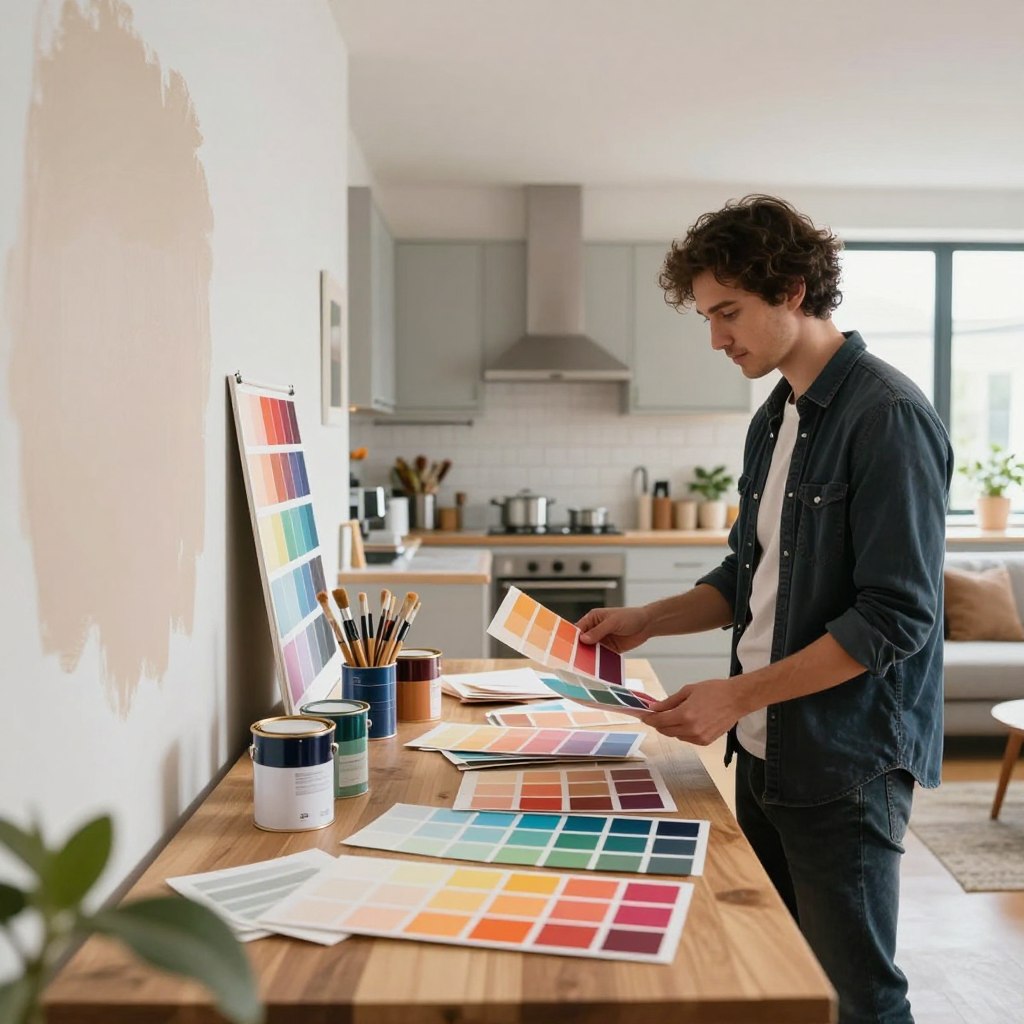
Testing is the most important step. Paint chips are misleading. Store lighting is different from your home’s light. Always test colors properly before deciding.
Here’s how different testing methods compare:
| Testing Method | Pros | Cons | Best For |
|---|---|---|---|
| Paint Chip | Quick, free, many options | Too small, misleading color | Initial inspiration only |
| Small Sample Jar | Shows actual paint finish | Still insufficient surface area | Eliminating worst contenders |
| Large Sample Board | Shows true color mass, tests against fixed elements | Requires more effort to prepare | Serious comparison between finalists |
| Full Wall Section | Shows color in actual context with room light | Creates temporary mess | Final confirmation before full commitment |
I paint sample boards at least 12×12 inches. I place them in different areas and observe them at different times. Color changes a lot throughout the day.
A warm gray might look cold at night. A cheerful yellow might feel overwhelming in the afternoon. Only large samples show these changes.
I move my sample boards around. I check how colors look with cabinets, flooring, and upholstery. This shows if colors work together or clash.
The best way to be sure you’ll love the colour you ultimately choose is to ‘try them on’ with colour samples.
This testing phase might seem tedious, but it saves time and money. A few days of testing can prevent costly mistakes.
When testing, try at least three options: your first choice, a lighter version, and a darker version. Sometimes, a lighter shade works better. Other times, a bolder choice is perfect.
Remember, paint looks different on different surfaces. The same color looks lighter on a large wall than on a small sample board. This is why large samples are so important.
Creating successful open concept color schemes needs careful planning. Observe your light, understand undertones, define zones, and test, test, test. This approach makes choosing colors manageable and leads to colors you’ll love for years.
Trend 1: Warm, Earthy Neutrals
Walking into a room painted with warm, earthy neutrals feels incredibly comforting. These colors are very popular for a good reason. They offer a timeless yet modern feel.
These colors make spaces feel welcoming without being too much. They’re great for showing off your furniture, art, and collections. Shades like “Pashmina” or Benjamin Moore’s “Collingwood OC-28” are perfect. They look great in any light.
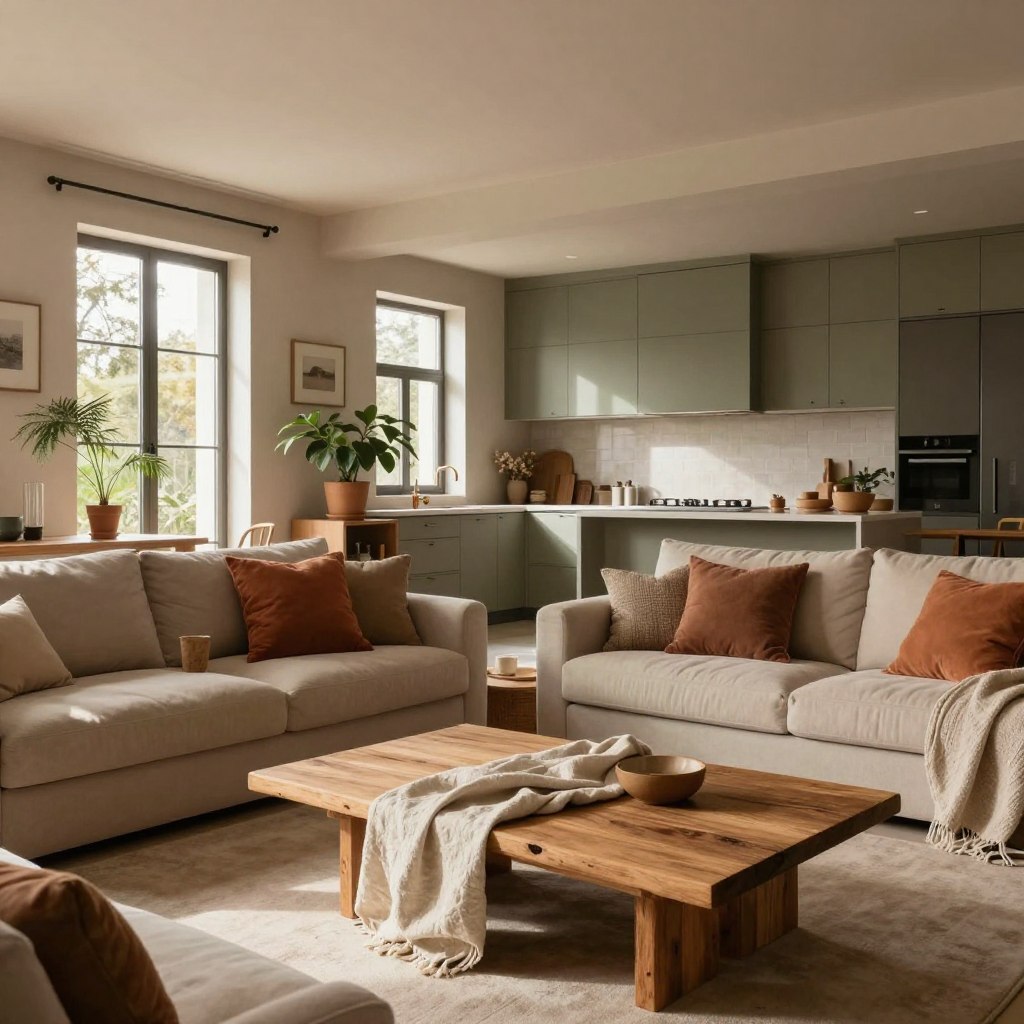
In rooms with little natural light, I suggest colors like “Dune by Bauwerk” or “Taupe 03 by Lick.” They make spaces feel cozy and inviting. These colors add warmth without feeling cold.
Sherwin Williams’ “Agreeable Gray” is another favorite. It’s a versatile greige that works well in different lights. “Edgecomb Gray” offers a light, airy feel with a hint of beige.
“Cracked Pepper” is great for a deeper look. It’s a warm charcoal that’s softer than black. These colors are perfect for open plan layouts. They help different areas blend smoothly.
I recommend using these neutrals on all walls for a unified look. They also look amazing on kitchen cabinets or built-in shelves. Pair them with natural wood, textured fabrics, and metallic accents for a rich, sophisticated space.
The best thing about warm earthy neutrals is how versatile they are. You can easily change your decor with the seasons without repainting. They provide a calm base that lets your personality stand out.
Trend 2: Moody, Dramatic Hues
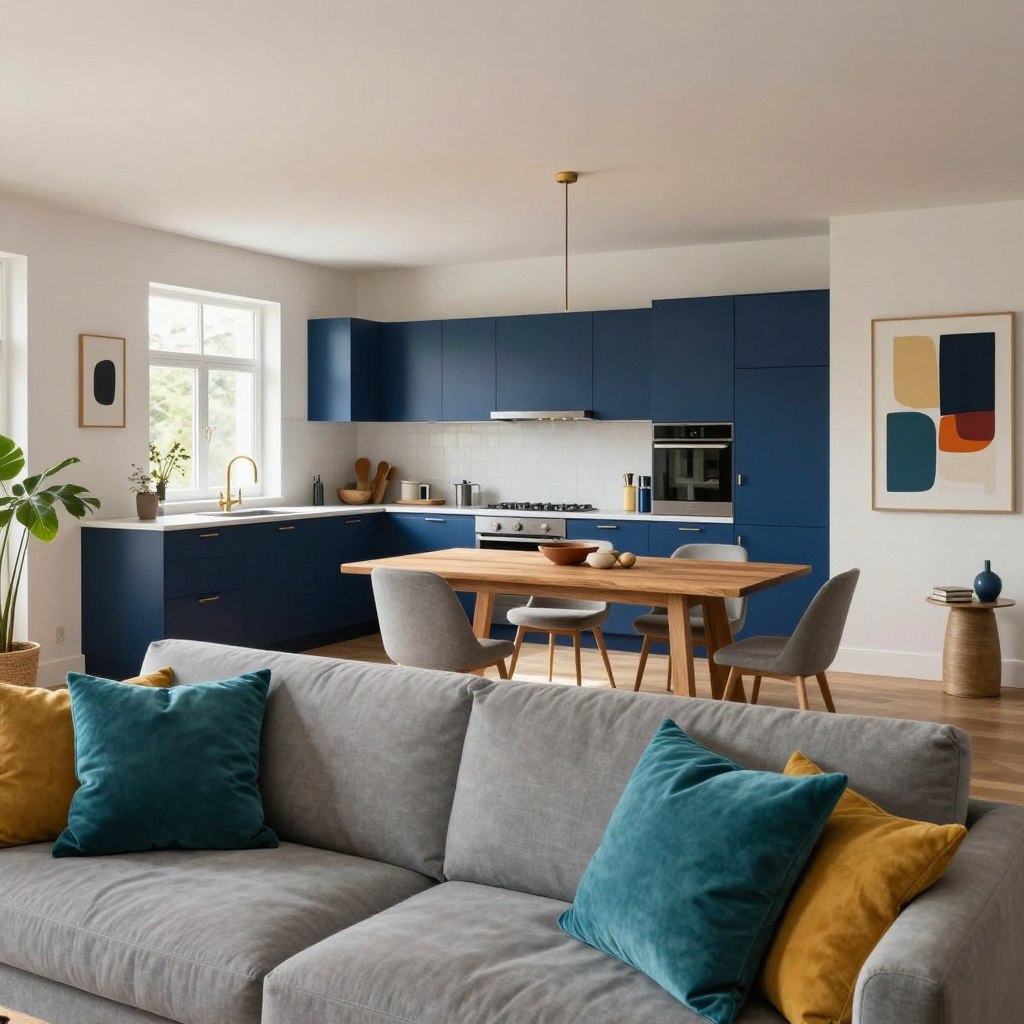
Dark paint colors don’t make a room feel smaller. They can actually make it feel bigger and more welcoming. These moody hues add a touch of luxury and character to open plan spaces. They create interesting areas without using physical barriers.
Imagine painting one wall a deep, inky blue like Benjamin Moore’s Admiral Blue. Or try Farrow & Ball’s Hague Blue, a rich teal that’s both historic and modern. These dramatic colors look great on kitchen islands, built in cabinets, or even ceilings. A dark ceiling can make a room feel cozier and more intimate.
Dark colors aren’t about making a space gloomy. They’re about creating a backdrop that highlights your furniture, art, and light. It’s the ultimate in sophistication.
Here are some of my favorite dark paint choices for a moody atmosphere:
| Color Name | Brand | Key Undertone | Best Use in Open Plan | Light Reflectance Value (LRV) |
|---|---|---|---|---|
| Tricorn Black | Sherwin Williams | True, flat black | Window framing, built-ins | ~3 |
| Hale Navy | Benjamin Moore | Classic navy blue | Feature wall, kitchen island | ~7 |
| Black Evergreen | Behr | Nearly black green | Accent wall, lower cabinets | ~5 |
| Mysterious AF-565 | Benjamin Moore | Deep charcoal | Modern cabinetry, ceiling | ~6 |
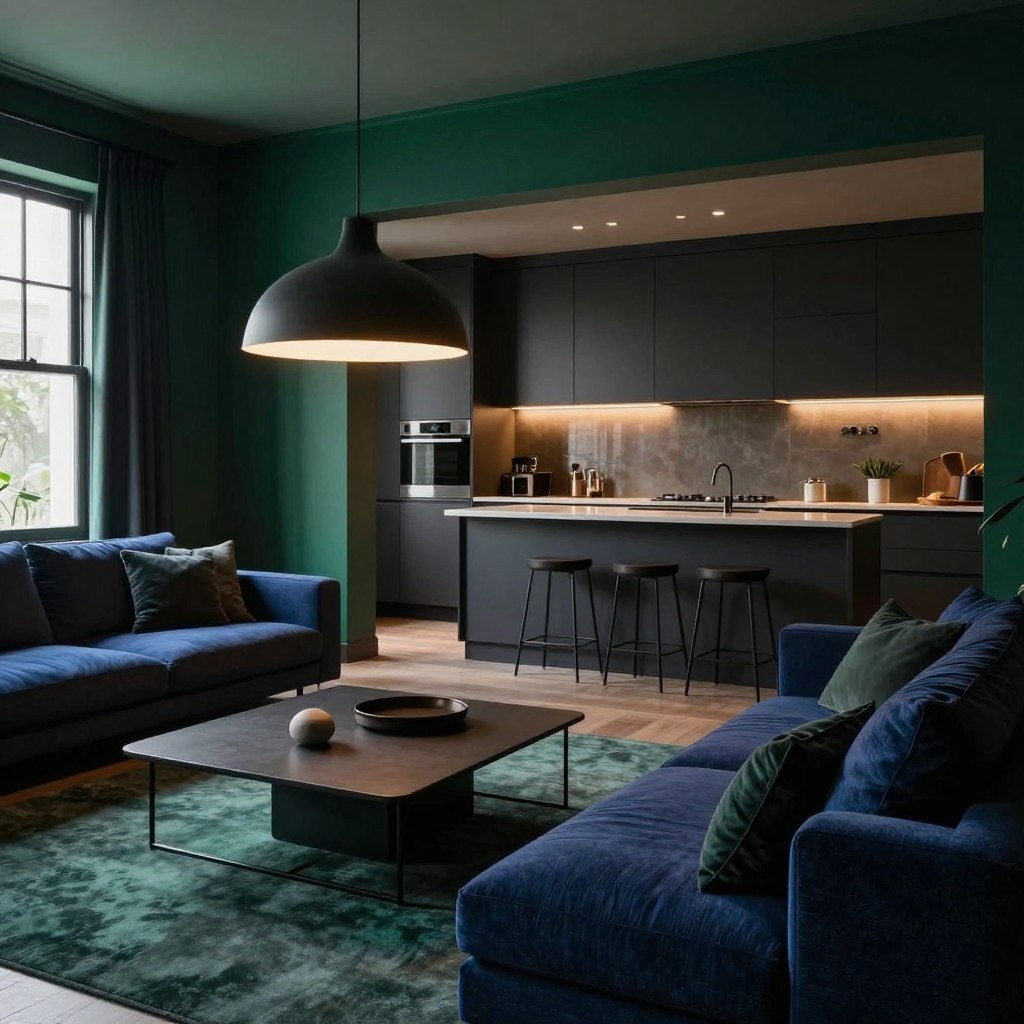
Success with bold shades comes down to balance. Mix your moody hues with natural and artificial light. Use lighter furniture, mirrors, and metallics to reflect light. This contrast avoids a cave like feel and adds depth.
Don’t shy away from dark colors in big rooms. A deep color on a long wall can ground the space and add purpose. It’s a dramatic choice that enhances atmosphere and style.
Trend 3: Soft, Serene Pastels
Today’s pastels are far from the sugary colors of the past. They are sophisticated and serene, perfect for modern homes. These soft colors add light and a calming vibe to any room.
Soft pastels are great for areas meant for relaxation. They create a calm atmosphere in open-plan spaces. Northfacing rooms especially benefit from their ability to reflect light.
Some top picks include Tailor Tack by Farrow & Ball, a fresh yet timeless pink. Evening Skyline by Benjamin Moore is a sophisticated lilac with depth. For a subtle touch, White 06 by Lick and Dimity by Farrow & Ball offer warm whites with a hint of pink.
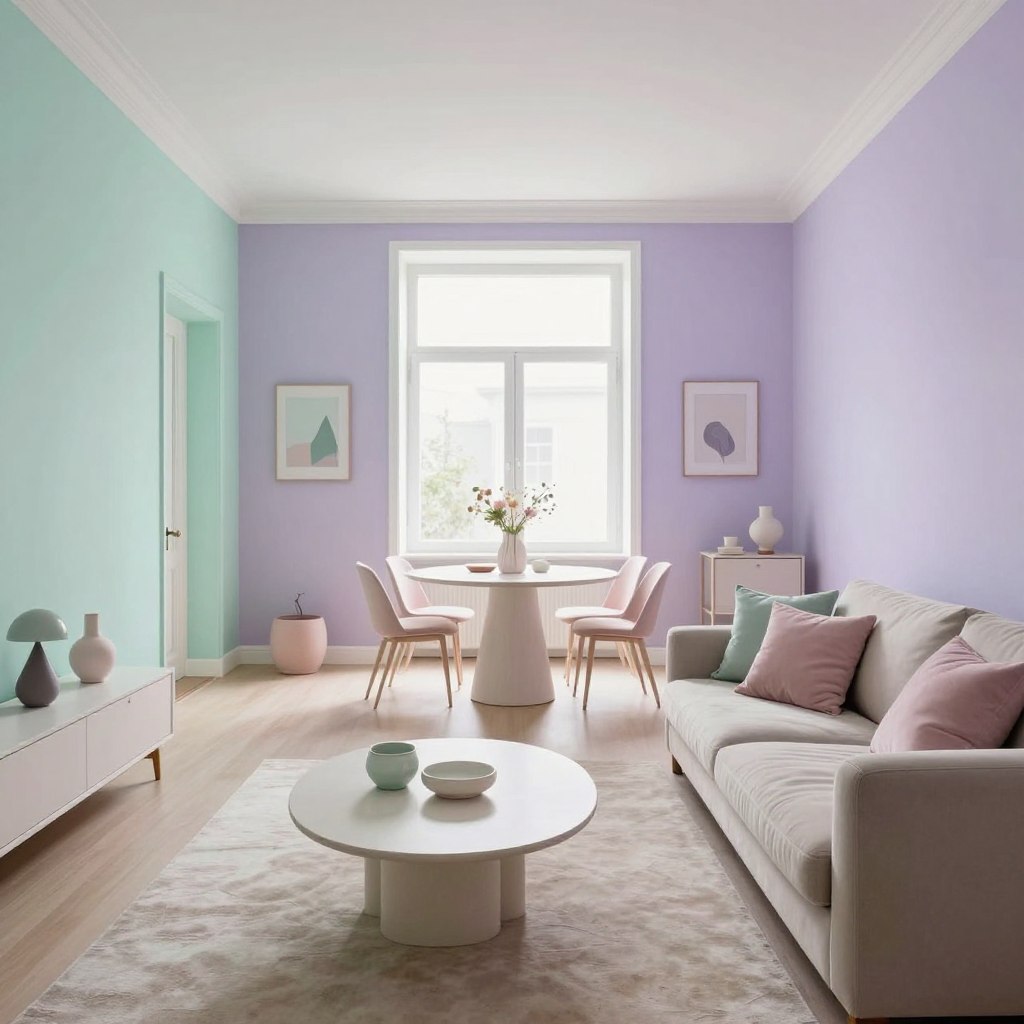
Other favorites include Contented, a soothing greige-pink that’s neutral. Pale Oak is a light warm gray that’s almost invisible. Light Drizzle is a soft blue-green that brings instant calm.
Apply these pastels on large walls for the best effect. Their softness won’t overwhelm a room. Instead, they provide a calm background for furniture and art.
These pastels are incredibly versatile. They look great with natural wood, crisp white, and both light and dark accents. They add peace without losing style.
Trend 4: Bold, Saturated Accents
Imagine walking into your home and feeling a burst of joy. That’s what bold color accents in an open plan space can do. This trend is all about confidence, personality, and fun.
These vibrant paint colors don’t whisper; they shout with happiness. A raspberry pink wall can make you smile, or a lime green kitchen island can energize your morning. A single color can change a room’s mood.

Some top shades include Coral Reef, a pink coral that’s both warm and exciting. Hot Lips is a true, confident red that grabs your attention. Blazing Orange adds sun drenched energy. Use these colors where you want the biggest impact.
Using these hues wisely is key. Paint your kitchen island in bright magenta. Or, make a single accent wall pop with Caliente AF-290, a fiery red orange. Even interior doors or built in cabinets can become stunning with these vibrant paint colors.
I’ve seen it work well in a living room with lime green and magenta accents. Another room used bright pink on architectural details against white walls. The contrast makes the color stand out even more.
The secret to success is balance. Pair bold colors with white, black, or neutral tones. This lets the color shine without overwhelming the space. Think of it as jewelry for your home one spectacular piece that draws all eyes.
When choosing vibrant paint colors, test samples in different lights. What looks bright at noon may feel cozy at dusk. Remember, these colors are meant to bring joy and energy. Don’t be afraid to use their full intensity.
Your vibrant paint colors should feel intentional and exciting. They’re great for defining zones in your open plan or highlighting special architectural features. This trend shows that color, when used boldly, can be the heart and soul of your home.
Trend 5: Nature Inspired Greens
The return of green in home decor is more than a trend. It’s a way to connect with nature through color. These hues bring calm and unity to open plan spaces, making them feel like the outdoors.
Green is soothing to our minds. It symbolizes growth, renewal, and balance. In a space for cooking, relaxing, and socializing, green’s emotional benefits are huge.
“Green is the prime color of the world, and that from which its loveliness arises.”
The variety of green is vast. You can choose from gray greens to deep olives. There’s a perfect shade for every light condition and design.
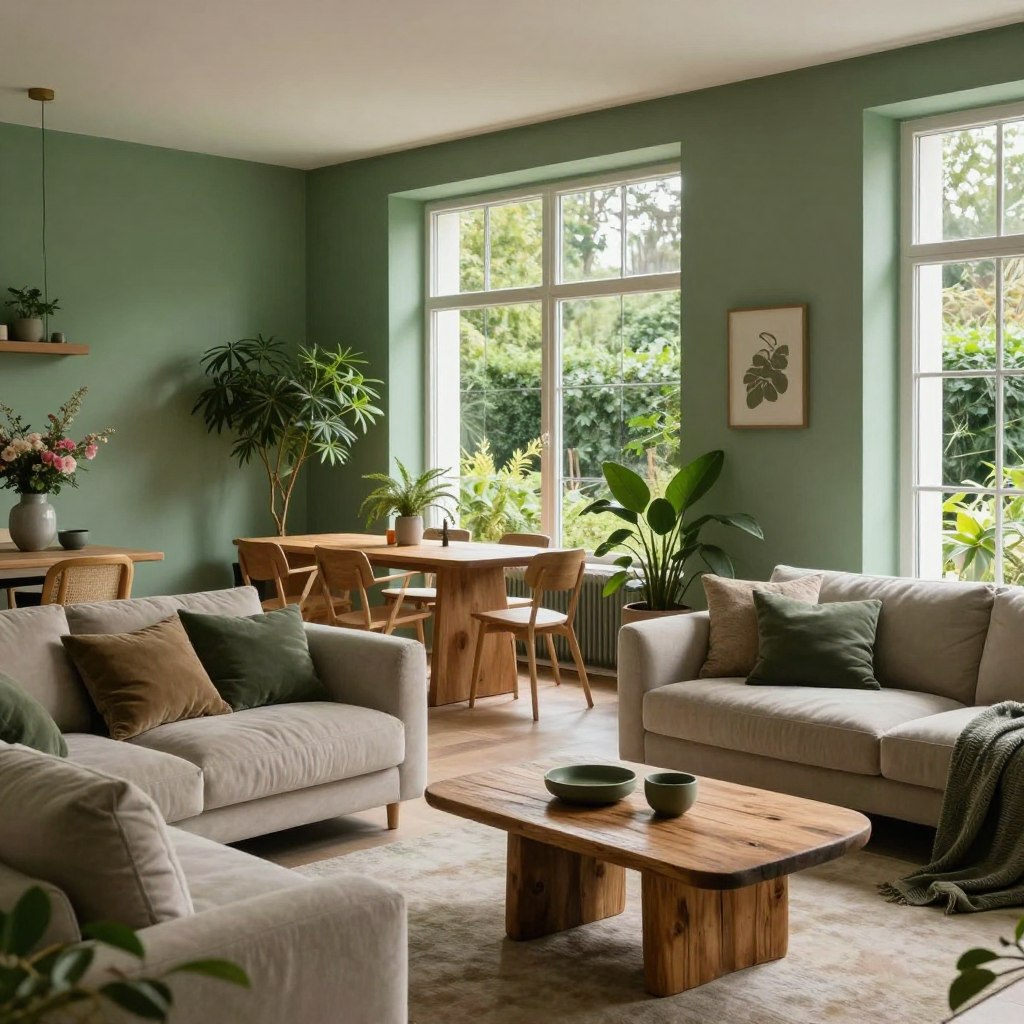
Let’s look at some paints. Evergreen Fog is a top pick. It’s a soft, gray-green sage that’s never cold. It suits both north and south facing rooms.
Guilford Green has a timeless feel. Its subtle gray undertone makes it soft and sophisticated. It’s great for a backdrop that doesn’t overwhelm.
Back to Nature is a mid tone option. It’s a gentle green that feels restorative and fresh. It’s perfect for defining a dining area without a divider.
Where should you use these wonderful greens? They look great on kitchen cabinets for an organic feel. A deep shade like Trailing Vines on a living zone wall adds drama. Even soft green trim can tie spaces together beautifully.
| Paint Color Name | Character & Undertone | Best Use in Open-Plan Space | Lighting Consideration |
|---|---|---|---|
| Evergreen Fog / October Mist | Soothing gray-green sage, versatile | All walls for seamless flow | Works in most natural light |
| Guilford Green | Soft historical green, gray undertone | Accent wall or built in cabinets | Brightens in south facing light |
| Back to Nature | Restorative mid tone green | Zone definition (dining/living area) | Ideal for rooms with ample light |
| Trailing Vines (Dark Olive) | Moody, dramatic, and deep | Focal point or lower cabinets | Best in well lit spaces |
| Raindance (Steely Green) | Cool, crisp, and modern | Kitchen island or ceiling | Complements warm wood tones |
This trend brings harmony to your home. A living area that flows into the kitchen under a green canopy feels like a sanctuary. It’s a simple change with a big impact.
Trend 6: Calming Blues and Aquas
Blue is a timeless favorite in interior design. Today, calming, watery blues are trending for open plan areas. These shades bring peace to busy spaces, offering clarity and a natural feel.
The appeal of blue is unmatched. Benjamin Moore’s Wythe Blue and Woodlawn Blue are classics. The green-tinted Palladian Blue is stunning. Deeper shades like Admiral Blue and Del Mar Blue add a coastal touch to modern homes.

Three shades I love are Sleepy Blue, Palladian Blue, and Starry Night Blue. Sleepy Blue is a soft, gray blue perfect for large walls. It’s calming yet has character.
Palladian Blue is an aqua with a green undertone. It’s light and airy, like ocean sunlight. This shade adds energy without being too much.
Starry Night Blue is a mid blue with gray undertones. It’s dreamy and adds depth while keeping the calming blue feel.
These blues and aquas are great for open plan living room and kitchen color trends. They cool sun-filled spaces and look good with white trim. Adding natural wood adds warmth and texture.
Use lighter blues on main walls and deeper aquas on accent walls or kitchen islands. This creates a flow between areas. It makes your space feel coordinated and well-thought-out.
Choose your shade based on your home’s lighting. North-facing rooms do well with warmer blues. South-facing spaces can handle cooler, clearer blues.
This trend is about harmony. Blues and aquas connect living areas and kitchens. They’re versatile choices for today’s living room and kitchen color trends.
Trend 7: Warm Terracottas and Clays
Warm terracottas and clays bring a cozy, earthy feel to open-plan living. These colors make spaces feel inviting. They’re perfect for kitchens and living rooms where people gather.
Imagine colors like rich ochre or warm orange. These hues make a room feel cozy. A bold red orange like Caliente AF 290 makes a big statement. For a softer look, try muted clay tones.
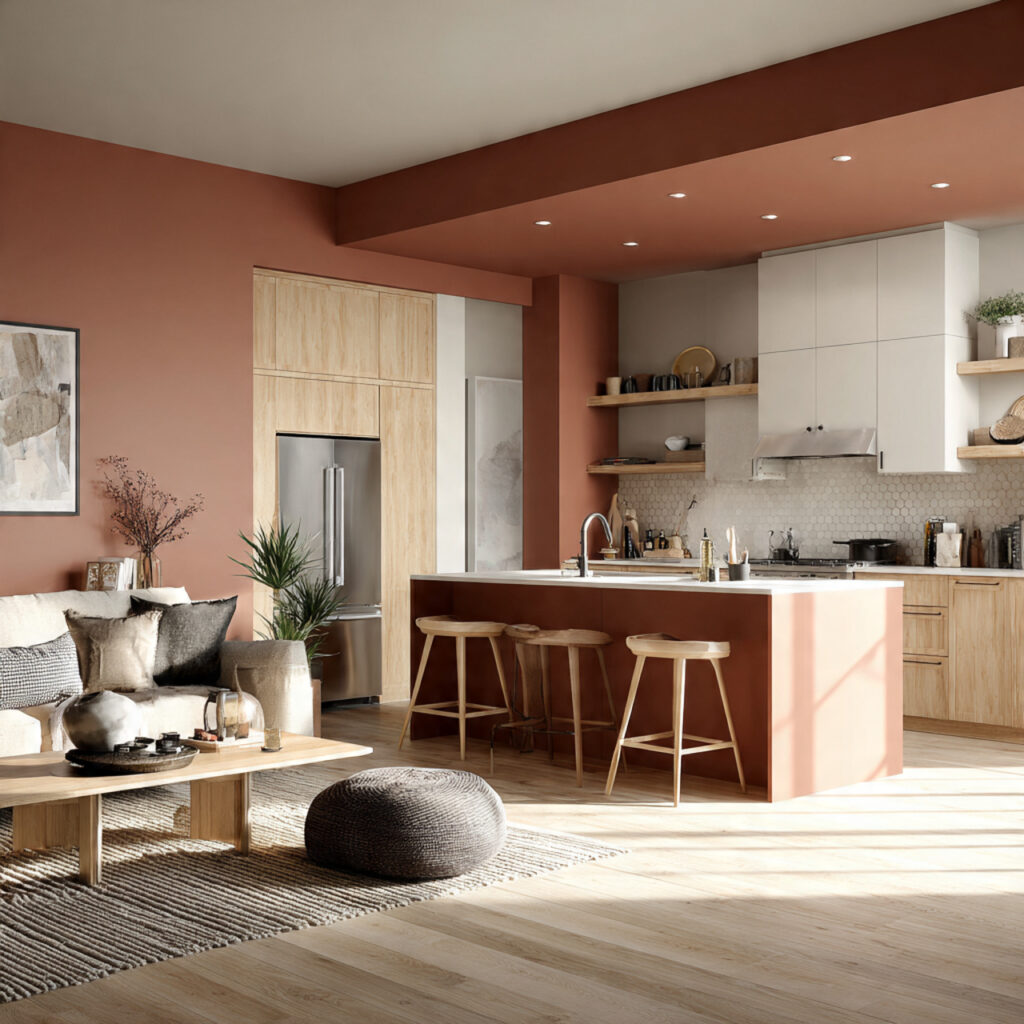
Let’s look at three standout shades. Cavern Clay is a muted terracotta that feels both old and new. Burnt Orange is a vibrant, energetic color. Canyon Dusk has a soft, dusty pinky-clay look.
Adding these colors is simple. Paint an accent wall in your dining area. Use warm clay on lower kitchen cabinets. Pair it with white or light upper cabinets for balance.
Balance is key with these warm colors. They’re rich, so they need cooler elements. Mix terracotta walls with white trim. Use stainless steel or brushed nickel for cool accents. Add navy, gray, or white textiles for contrast.
| Color Name | Description & Mood | Best Use in Open Plan | Pair With These Colors |
|---|---|---|---|
| Cavern Clay | Muted, rich terracotta; feels earthy and timeless | Large accent wall or all walls in a cozy seating area | Creamy white, charcoal gray, natural wood tones |
| Burnt Orange | Spicy, energetic, and saturated; adds vibrant warmth | Lower kitchen cabinets or a statement furniture piece | Deep navy, black, crisp white, brass accents |
| Canyon Dusk | Dusty pink clay hybrid; soft, subtle, and soothing | Entire room color for a uniformly warm, serene feel | Sage green, oatmeal beige, light oak finishes |
This trend celebrates authenticity and connection. Terracotta and clay colors remind us of handmade pottery and sun drenched landscapes. They add character and depth, making your home feel cozier and more personal.
Don’t be afraid to go bold with these warm shades. They can turn a sterile space into a welcoming haven. Start with a small test area to see how the light changes the color. You might just fall in love with the earthy embrace of terracotta.
Trend 8: High Contrast Monochromes
High contrast monochromes are both timeless and modern. They add graphic impact to open-plan spaces. Black and white make any room feel intentional and crisp.
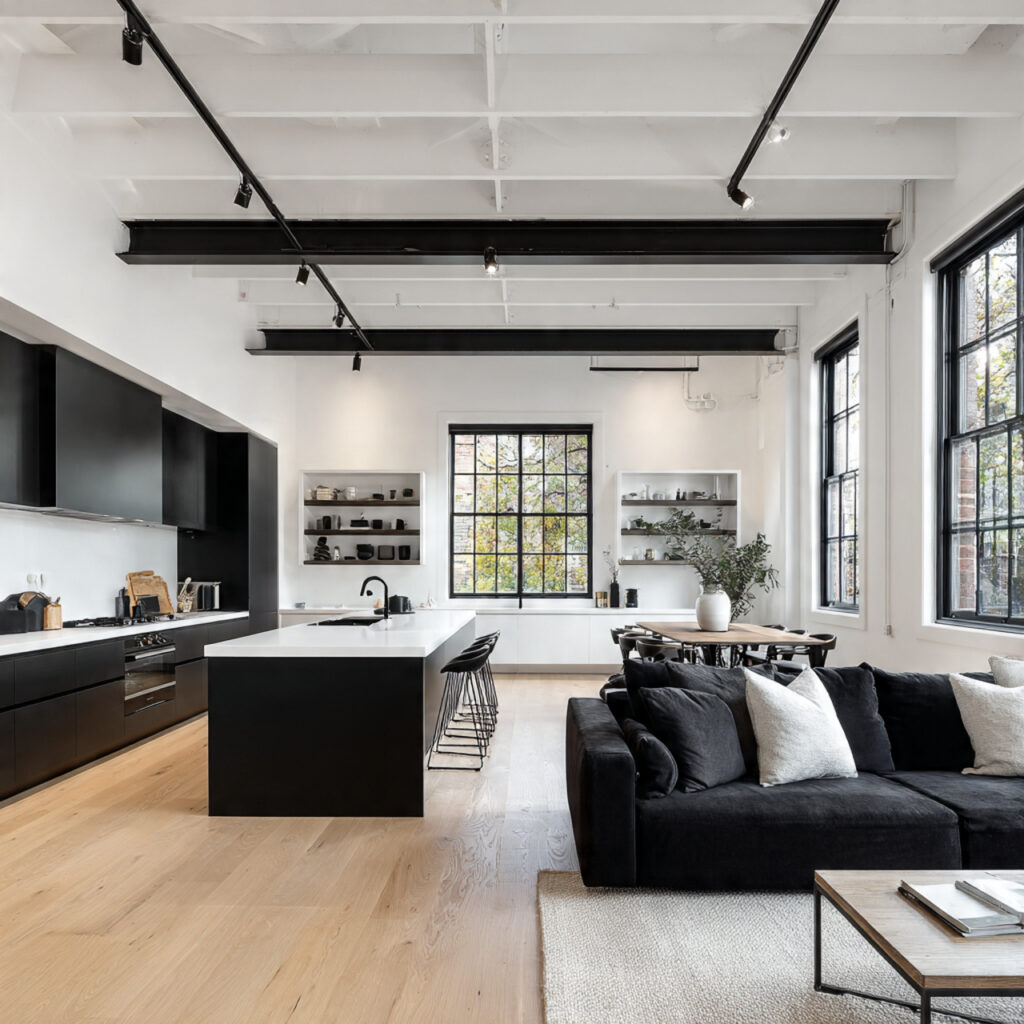
This scheme is graphic and eternal. It adds a sophisticated edge to living and kitchen areas. Your space will look more defined and organized.
Black and white is not just classic; it’s a contemporary statement. It creates zones without physical walls. The contrast guides your eye through the space.
Here are some pairings I recommend:
- Pure White with Iron Ore: A clean white paired with deep black creates stunning contrast.
- Chantilly Lace with Wrought Iron: True white and soft black offer subtle sophistication.
- Ultra Pure White with Black: The ultimate high contrast statement for maximum appeal.
Apply these colors strategically. Use white on walls and ceilings with black on frames. Black on the kitchen island and white on cabinets is dramatic and balanced.
I saw a Brooklyn loft with this black and white combo. It was modern, clean, and stylish. Deep colors like Lucerne AF 530 paired with white elements also work well.
High-contrast monochromes are great for open-plan designs. They define areas while keeping the space open. This trend is versatile for creating spaces that are both contemporary and timeless.
Trend 9: Softened Jewel Tones
Jewel tones are big right now, but they’re not loud. They’re mixed with gray or black to make them more subtle. This makes them feel more sophisticated and cozy.
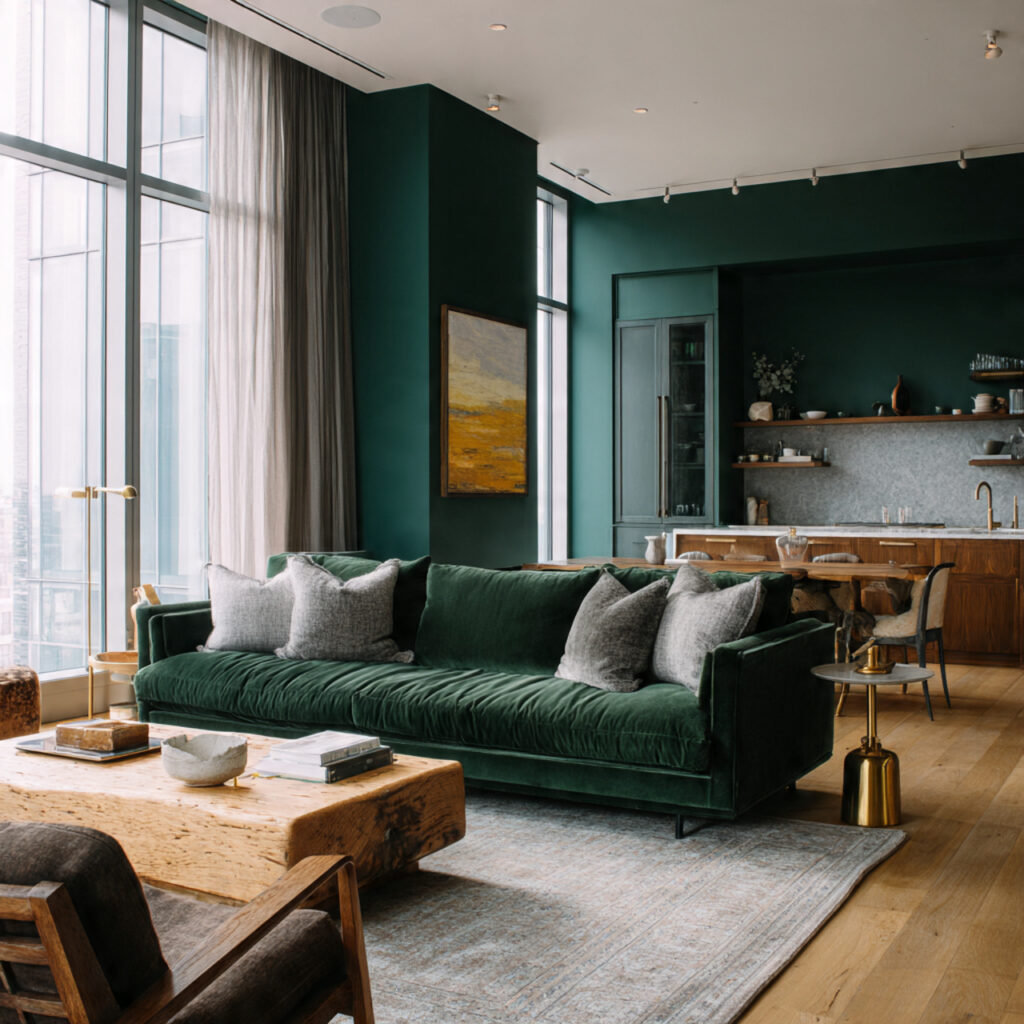
Imagine a deep teal that looks like a stormy sea, not a bright stone. Or a burgundy that feels like velvet and wine, not loud. These trendy paint colors add depth and warmth to big spaces.
Let’s look at some favorites. Raging Sea is a deep blue-green with lots of depth. It brings the ocean’s calm into your home. On a big wall, it’s stunning, feeling both calm and strong.
Mysterious is a dark navy that’s almost black. It’s great for cozying up a dining area or study. This color adds elegance and mystery without being too dark.
Deep Emerald is a rich, shadowy green. It connects your space to nature in a classy way. It’s deep, grounding, and very versatile.
These soft jewel tones define spaces well. In a big room, a deep teal can make a cozy reading spot. A burgundy wall can make your dining area feel special and dramatic.
These colors go well with modern and traditional furniture. They match natural wood, brushed brass, and textured fabrics. Your space will feel special, comfy, and unique.
Try this trend for a touch of elegant drama. It’s a bold choice that shows the most trendy paint colors are also timeless.
Trend 10: Warm, Creamy Whites
The last trend in our color palette journey is a sophisticated take on basics. Warm, creamy whites are not the bright, sterile whites of the past. They have soft yellow, cream, or gray undertones that make your home feel inviting.
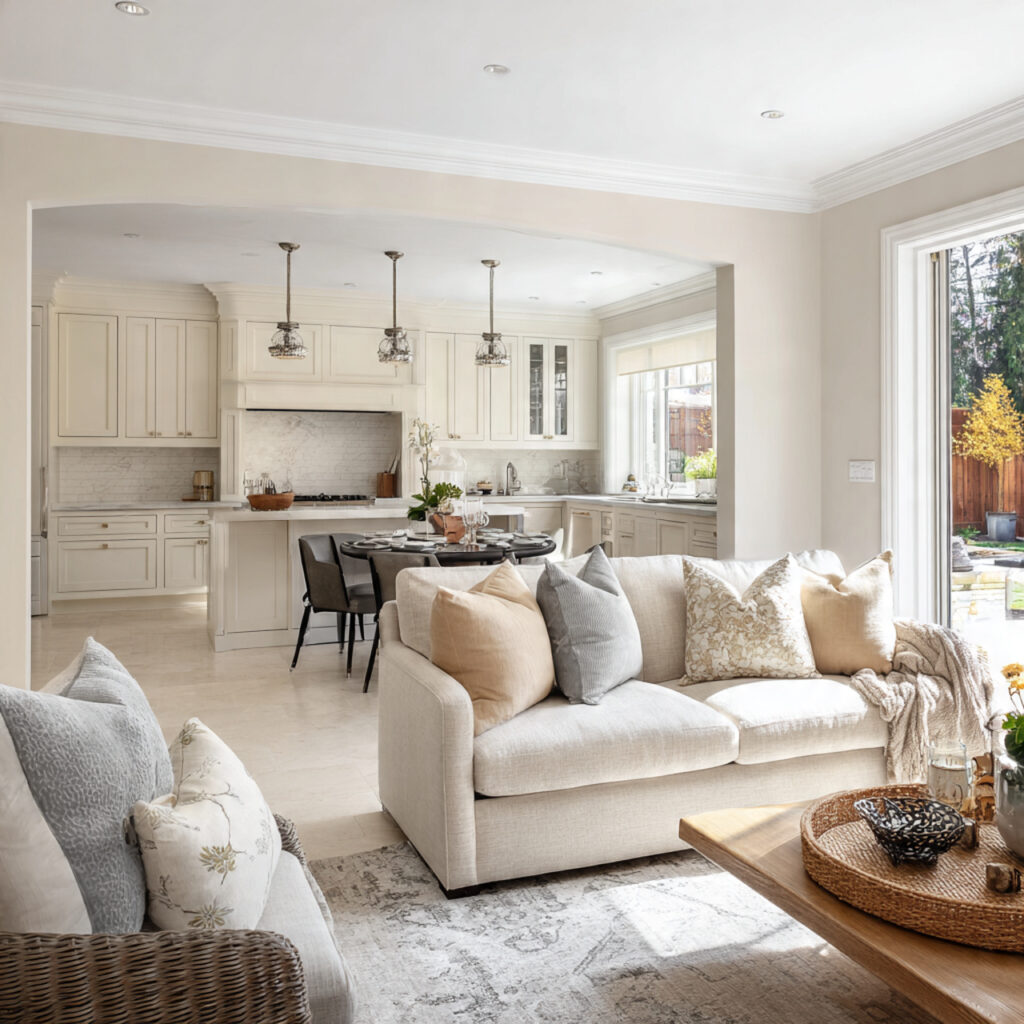
These whites are key for an open-plan space. They serve as a neutral background, letting your furniture and artwork stand out. Using the same warm white on walls and trim makes your home feel connected.
Finding the right warm white can be challenging. Undertones play a big role. Here are some top picks that always look great:
| Paint Color & Code | Brand | Undertone | Best Use |
|---|---|---|---|
| White Dove OC-17 | Benjamin Moore | Soft hint of gray | Walls & trim throughout open spaces |
| Alabaster SW 7008 | Sherwin Williams | Warm, approachable beige | Creating cozy, inviting living areas |
| Swiss Coffee OC-45 | Benjamin Moore | Creamy, warm off-white | Kitchens and dining spaces |
| Pointing No. 2003 | Farrow & Ball | Pale stone with yellow hint | Historical or traditional homes |
| White 03 | Lick | Pure warm white | Modern, minimalist interiors |
Each white has its own unique character. White Dove is a favorite for its versatility. Alabaster adds a warm feel to any room. Swiss Coffee brings a cozy vibe.
These warm whites are the base of many top color palettes. They work well with any trend, from earthy neutrals to bold colors. Their creamy quality adds depth without overwhelming the space.
When testing these colors, check them at different times of day. Morning light highlights yellow undertones, while evening light shows gray notes. This helps you pick the perfect warm white for your lighting.
Adding warm, creamy whites to your color palette brings timeless elegance. They create a harmonious base that makes every other color choice look intentional and sophisticated.
Conclusion
I hope you found these modern paint color trends helpful. They can make your open plan living and kitchen areas perfect. Your personal style should lead every choice.
Remember, practical steps are key. Always think about the natural light in your space. Test large paint samples from brands like Sherwin Williams or Benjamin Moore on your walls. Use color to create zones without walls.
If zoning is something you’re still struggling with, this guide may help: Secrets to Separating a Modern and Airy Living Room Super Easy Tips for a Million Dollar Apartment.
Don’t be scared to mix trends. You can pair a warm, earthy neutral with a bold, saturated accent wall or try a moody hue in a cozy reading nook. Paint is forgiving, and when used correctly, it visually expands space especially in smaller living areas.For more color focused ideas, you may also enjoy: 10 Subtle Colors to Expand a Small Living Room Like Magic.
A fresh coat of paint from Farrow & Ball or Behr can completely transform your home. Combined with thoughtful lighting and layout choices, it can make your open concept kitchen and living room feel unified, calm, or full of energy. If you’re planning a full refresh, take a look at: 10 Modern Kitchen and Living Room Combination Design Ideas You’ll Love.
Trust your instincts. With these trends and tips, you can choose color with confidence. Your beautiful, cohesive, and personal sanctuary is waiting for you.
FAQ
I love the idea of a bold color, but I’m worried it will make my open floor plan feel choppy or smaller. How can I avoid that?
A bold color can make a space feel cozy without closing it off. Try using a vibrant shade on a single focal point, like the kitchen island. This adds personality without overwhelming the space.
Balance is key. Pair the bold color with warm whites on the walls and ceiling. This keeps the space feeling open and airy.
My open plan living room and kitchen doesn’t get a lot of natural light. What are the best paint color trends for a dark space?
In a dark space, choose colors that add warmth and depth. Moody hues like Tricorn Black or Hale Navy can make the space cozy. Soft pastels with warm undertones also reflect light well.
Avoid cool, stark grays or pure whites. They can look flat and cold in low light.
How do I create a cohesive look when using different paint colors in one open space?
Start with a dominant color family for the main walls. Choose a warm, earthy neutral or a calming blue. Then, introduce other colors from the same family for different zones.
For example, use a deeper shade of your wall color on the kitchen island. A complementary green on the dining area’s accent wall works well. A consistent trim color ties everything together.
What’s the biggest mistake people make when choosing paint colors for an open concept home?
Skipping the proper testing phase is a big mistake. Relying on a tiny paint chip is not enough. Color changes with light, especially in an open plan.
Paint large sample boards and view them in different areas at various times. This helps you see how colors interact with your space before committing.
Are accent walls still in style for open floor plans, and where should I place one?
Accent walls are still in style, but the approach has changed. Today, they should have a clear architectural purpose. Place them behind the sofa, by the fireplace, or in the kitchen with the range hood.
Using a moody hue or a bold color here defines the zone. Make sure the color feels integrated, not like an afterthought.
Can I mix multiple modern paint color trends in one space, like terracotta and pastels?
Yes, mixing trends can look great! Let one trend dominate and use the other as an accent. For example, paint your main area in a soft pastel and add terracotta through textiles or furniture.
Or, use a monochrome scheme with a bold color as an accent. The goal is a layered, personal look that doesn’t feel chaotic.
What are the most popular color schemes for open plan living and kitchen areas right now?
Popular schemes focus on warmth and connection. Nature inspired palettes are big, with greens and warm wood tones. Warm neutrals with calming blues are also popular.
High contrast black and white schemes, like Chantilly Lace and Wrought Iron, are timeless. Choose a scheme that matches the mood you want in your home.