

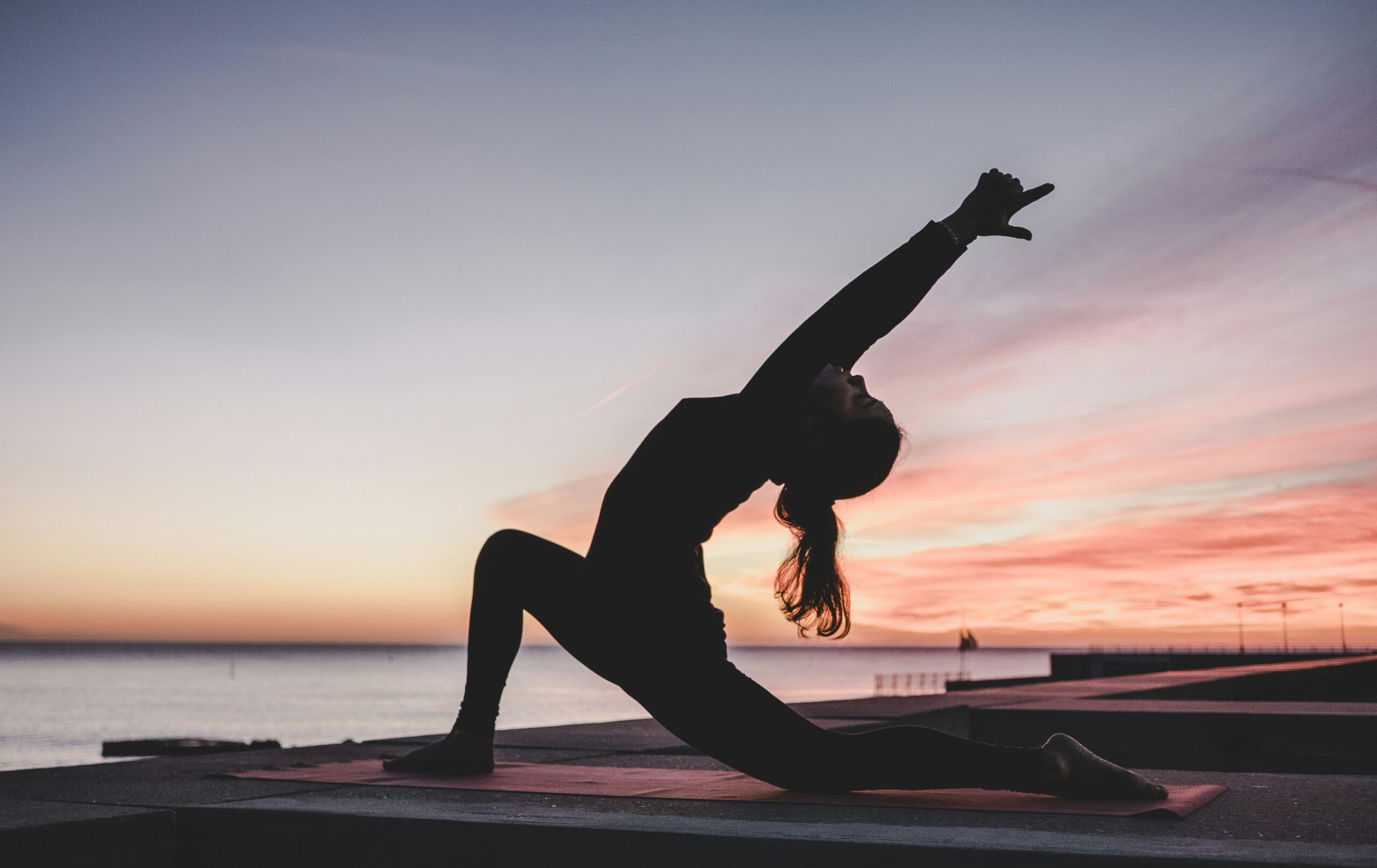

It’s a typical morning, and the alarm rings, pulling you out of a cozy slumber. We’ve all been there, caught between the need to rise and shine and the pull of staying under the covers just a little while longer. Mornings can often feel rushed or leave us running on low energy, a flurry of tasks and to dos awaiting our attention. But what if I told you there’s a way to transform those groggy mornings into vibrant beginnings? Just 10 minutes of morning yoga can do wonders for your mood, focus, and energy levels. It’s a simple promise of peace in the chaos. So join me as I guide you through a rejuvenating morning yoga routine, perfect for everyone, even if you’re just dipping your toes into the world of yoga. This practice requires nothing but your presence and a willingness to start the day with an open heart.
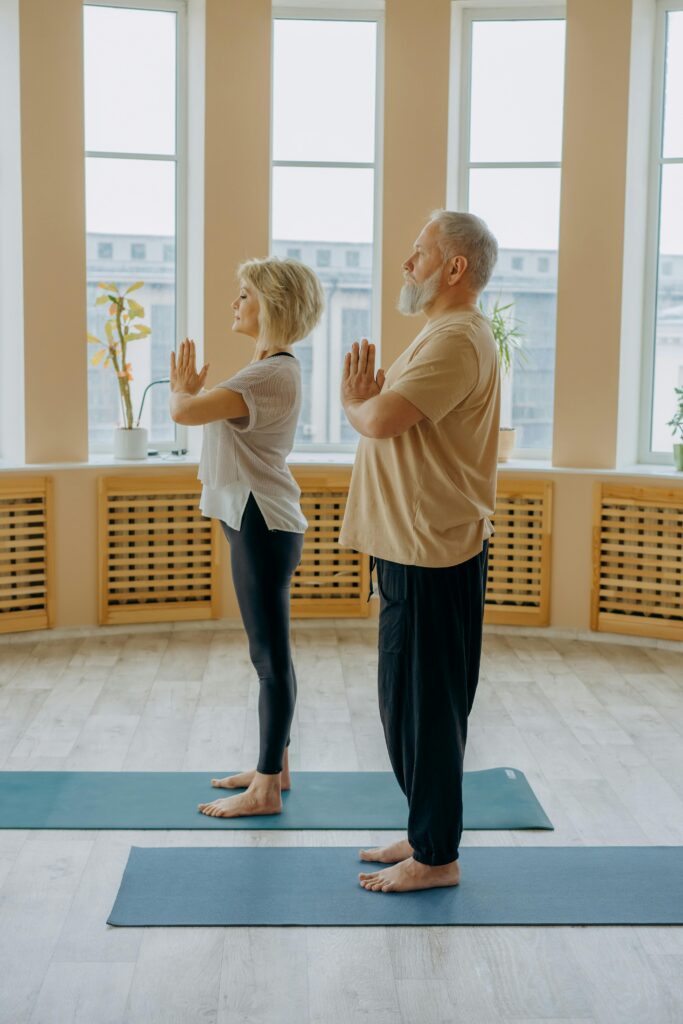
1. Mountain Pose
How to Practice:
-
Start: Stand tall on your mat. Your feet can be together or hip-width apart. Ground your weight evenly across both feet, feeling a strong connection to the earth.
-
Align: Gently engage your thigh muscles to lift the kneecaps. Tuck your tailbone slightly down (avoiding arching your lower back). Open your chest, gently roll your shoulders back and down.
-
Breathe: Take a deep inhale, feeling your body lengthen upward, as if the crown of your head is reaching for the ceiling. As you exhale, relax your face and maintain your focus.
-
Hold: Hold this posture for 5–10 deep breaths. Your arms can hang naturally by your sides, or you can bring your hands to a prayer position at your heart center.
Morning Energy Boost: Tadasana is the foundation of all standing poses. It acts as a powerful “on switch” for your body and mind, helping you establish balance and mindfulness. By focusing on alignment, you immediately correct stiffness from sleep and flood your body with vital energy (Prana) needed to start your day feeling grounded, centered, and fully awake.
Tip for Practice: Imagine you are standing as a strong, immovable mountain. While maintaining this stability, check if you are clenching any part of your body (like your jaw or shoulders). Soften those areas and only hold the strength in your lower body.
2. Cat-Cow Stretch
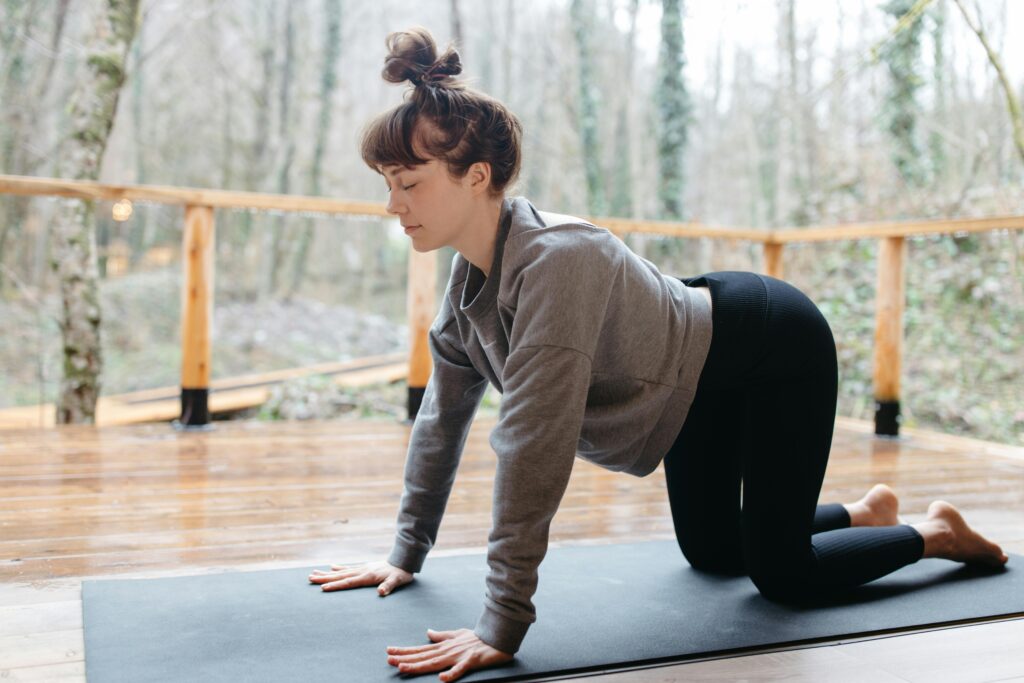
Goal: To gently warm up and lubricate the spine, connecting movement with breath to release morning stiffness and prepare the body for deeper poses.
How to Practice:
-
Starting Position: Begin on all fours (tabletop position), with your hands stacked directly under your shoulders and your knees directly under your hips. Your spine should be long and neutral.
-
Cow Pose (Inhale): Inhale deeply, drop your belly towards the floor, lift your chest, and gently gaze upward. Feel the stretch and opening in the front of your body.
-
Cat Pose (Exhale): Exhale completely, round your back toward the ceiling, tuck your tail bone, and draw your navel in toward your spine. Let your head drop down (chin towards chest).
-
Flow: Continue to flow smoothly between Cat and Cow for 5–10 full breath cycles. Move slowly, allowing the breath to lead the movement.
Morning Energy Boost: This rhythmic, breath synchronized movement is essential for awakening your spine and nervous system. It gently releases the stiffness that accumulates overnight and increases circulation in the spinal fluid, which is vital for energy flow. The dynamic movement acts like an internal massage, preparing your core and back muscles to support you throughout the day.
Tip for Practice: Keep your elbows soft and press firmly into your palms. Focus on initiating the movement from your tail bone first, letting the wave travel slowly up your spine to your neck. Don’t rush; treat this flow as a loving, internal massage for your body.
3. Downward-Facing Dog
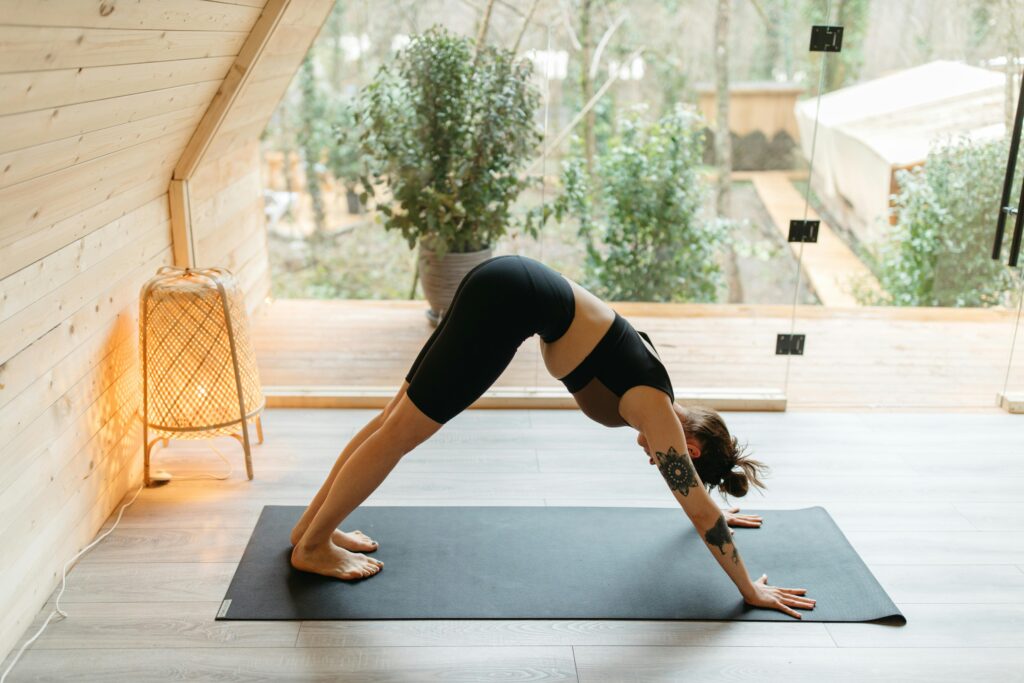
Goal: To fully lengthen the spine, stretch the entire back line of the body (hamstrings and calves), and send an invigorating rush of blood flow to the brain.
How to Practice:
-
Transition: From Cat Cow, tuck your toes under and exhale as you press your hands firmly into the mat, lifting your hips up and back until your body forms an inverted “V” shape.
-
Align: Spread your fingers wide and press equally through your palms. Keep a slight bend in your knees if your hamstrings feel tight the priority is a long, straight spine.
-
Engage: Draw your shoulders away from your ears, and gently rotate your upper arms outward. Let your head hang naturally between your arms.
-
Hold: Hold the pose for 5 deep breaths. Pedal your feet by bending one knee then the other to gently stretch your calves and Achilles tendons.
Morning Energy Boost: This is a powerhouse pose for morning vitality. By inverting your head below your heart, you instantly increase blood circulation to the brain, which boosts mental clarity and chases away morning fog. It’s a full body wake up call that opens the chest, decompressed the spine, and invigorates the nervous system.
Tip for Practice: Focus on pressing your hips high and back rather than trying to get your heels to the floor right away. Think about creating a long diagonal line from your wrists to your hips. Use your deep exhales to sink a little deeper into the stretch and release any stored tension.
4. Cobra Pose
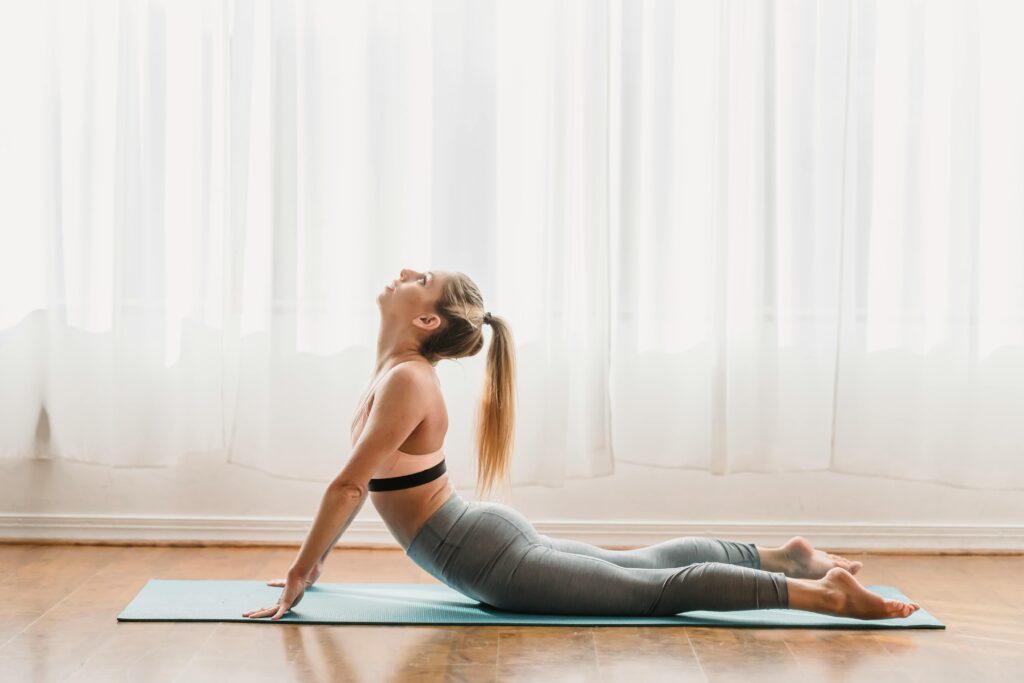
Goal: To gently strengthen the back, open the chest and shoulders, and stimulate the abdominal organs for improved digestion and energy.
How to Practice:
-
Starting Position: Lie flat on your stomach, forehead resting on the mat. Place your palms flat on the mat directly underneath your shoulders, keeping your elbows tucked close to your body.
-
Engage: Press the tops of your feet and your pubic bone firmly into the floor. Engage your leg muscles (quadriceps).
-
Lift (Inhale): Inhale deeply and slowly lift your head and chest off the floor, using primarily the strength of your back muscles. Roll your shoulders back and down. Keep your neck long and avoid craning your chin forward.
-
Hold: Keep a slight bend in your elbows and maintain the lift using minimal pressure on your hands. Hold the pose for 3–5 deep breaths.
-
Release (Exhale): Exhale and gently lower your chest and forehead back down to the mat.
Morning Energy Boost: Cobra Pose is a wonderful heart opener. By lifting your chest, you actively stretch the front of your torso and allow for deeper, more expansive breathing. This increased lung capacity directly translates into greater energy and vitality. It also stimulates the adrenal glands, providing a natural, sustained boost to help you meet the day with enthusiasm.
Tip for Practice: Remember this is a backbend powered by your back muscles, not your hands. Imagine your chest is being pulled forward by an invisible string. Use your hands for light support only. Keep your lower body grounded to protect your lower back.
5. Low Lunge
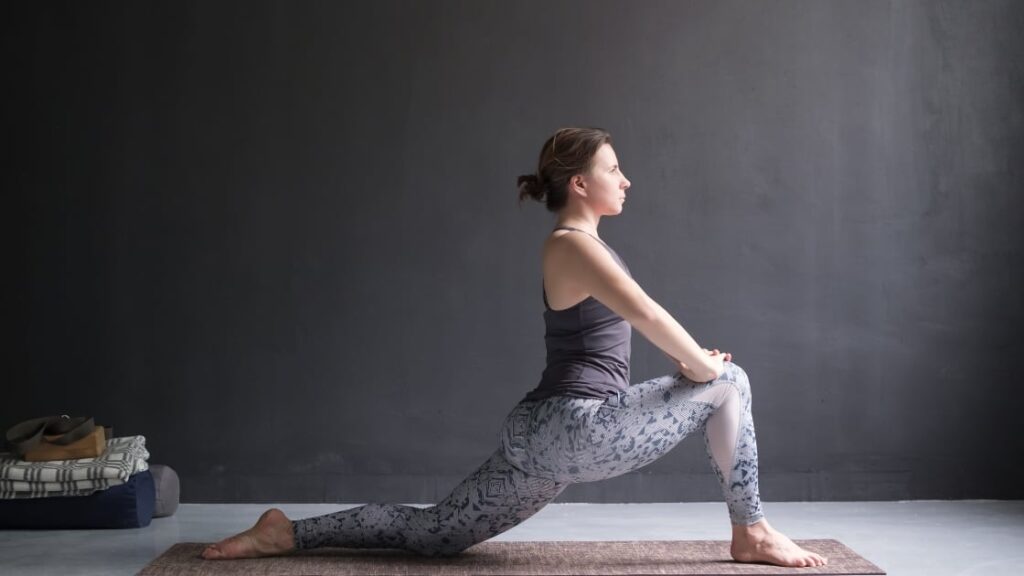
Goal: To deeply stretch the hip flexor (psoas muscle), which often become tight from prolonged sitting, and to ground your energy while building heat in the legs.
How to Practice:
-
Transition: From Downward Facing Dog, step your right foot forward and place it between your hands. Gently lower your back (left) knee to the mat, placing a blanket underneath if needed.
-
Align: Ensure your front knee is stacked directly over your ankle (90 degree angle). Slide your back knee far enough behind you until you feel a comfortable, deep stretch in the front of your left hip.
-
Lift: On an inhale, sweep your arms up toward the ceiling, keeping your shoulders relaxed and down away from your ears. If lifting the arms is too much, keep your hands resting on your front thigh.
-
Hold: Sink your hips gently forward and down to deepen the stretch. Hold the pose for 5 deep breaths.
-
Release: Exhale, bring your hands back to the mat, step back to Downward Dog, and repeat the pose on the opposite side (stepping the left foot forward).
Morning Energy Boost: The hip flexor are often referred to as the “storage space” for stress and emotion. By opening them in the morning, you release physical and energetic tension, allowing for a smoother flow of energy throughout your body. This pose also strengthens your legs, giving you a powerful sense of stability and readiness like you are physically stepping forward with intention into your day.
Tip for Practice: Rather than forcing your hips down, focus on lifting your torso tall and engaging your back glute muscle. This dual action protects your lower back while allowing for a safer, deeper stretch in the front of the hip.
6. Warrior II
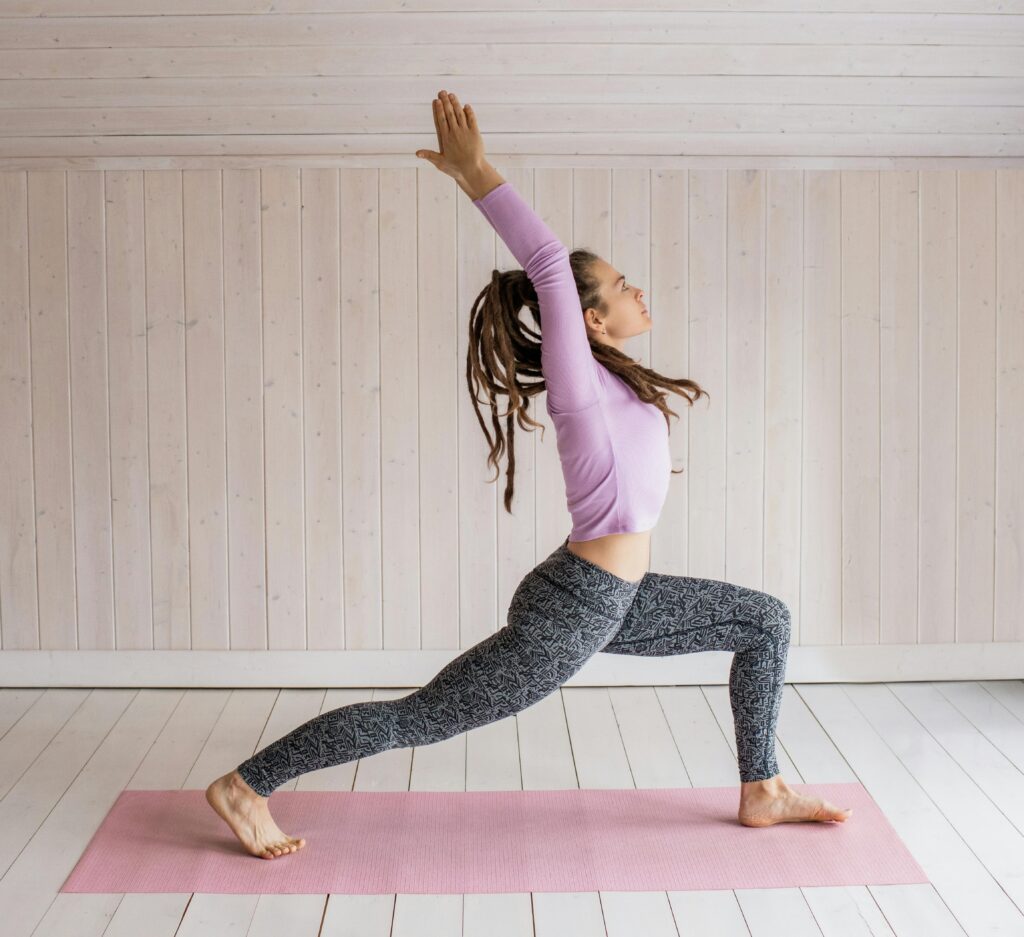
Goal: To build strength and stability in the legs and core, promoting focus, confidence, and courage to tackle the day ahead.
How to Practice:
-
Stance: Step your feet wide apart (about one leg length). Turn your right foot out 90 degrees and slightly angle your left foot in.
-
Bend: Exhale and bend deeply into your right knee, ensuring your knee tracks directly over your ankle (90 degree angle). Keep your back leg strong and straight.
-
Arms: Inhale and extend your arms parallel to the floor, reaching actively from your fingertips in opposite directions. Keep your shoulders relaxed and down away from your ears.
-
Gaze: Turn your head to gaze softly over your front (right) fingertips.
-
Hold: Hold this powerful pose for 5–8 deep breaths. Feel the strength radiating from your core.
-
Release: Straighten your front leg, pivot your feet, and repeat the pose on the opposite side.
Morning Energy Boost: Warrior II is a grounding and empowering pose. By actively engaging the major muscle groups in your legs and core, you create internal heat and increase circulation, chasing away sluggishness. Holding the pose demands focused attention, which strengthens your mental resolve. When you stand in Warrior II, you embody resilience, giving you the mental and physical energy to face any challenge that comes your way.
Tip for Practice: Focus on sinking your hips low while maintaining a lift through your torso. Imagine drawing energy up from the earth through your feet. Keep your front thigh parallel to the floor if possible, and maintain a steady, powerful gaze over your fingertips this helps anchor your mind.
7. Triangle Pose
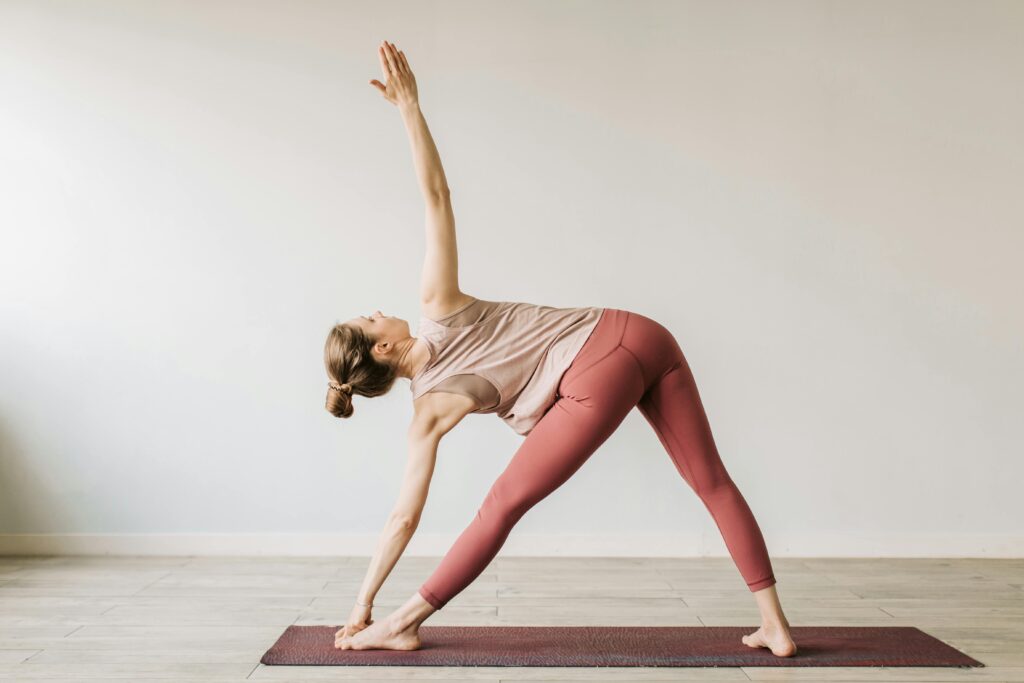
Goal: To stretch the sides of the body, open the hips and shoulders, and stimulate the abdominal organs for detoxification and energy flow.
How to Practice:
-
Stance: From Warrior II, straighten your front (right) leg. Pivot your front foot slightly inward if needed to maintain alignment, but keep the heel-to-arch alignment.
-
Reach: Inhale, lengthen your torso, and on the exhale, reach your right arm forward as far as you can, shifting your hips slightly back.
-
Hinge: Hinge at your right hip. Lower your right hand to your shin, ankle, or the floor (or a block) outside your foot. Extend your left arm straight up toward the ceiling.
-
Align: Stack your top shoulder directly over your bottom shoulder. Imagine your body is perfectly flat against an invisible wall. Keep both legs strong.
-
Gaze: Turn your head to gaze up at your top thumb, or keep your neck neutral by looking forward.
-
Hold: Hold the pose for 5 deep breaths. Inhale to lengthen, exhale to revolve your chest gently upward.
-
Release: Inhale to press into your feet and return to standing. Repeat on the opposite side.
Morning Energy Boost: Triangle Pose is a powerful side body opener. This lateral stretch stimulates the entire nervous system and helps to detoxify and invigorate the liver and kidneys essential for feeling clean and energized in the morning. By opening the chest and shoulders while demanding balance, it brings immediate clarity, grounding your mind while allowing energy to flow freely up the spine.
Tip for Practice: Do not collapse onto your lower hand. The effort should come from your strong legs and your core. Think about creating length from your tail bone all the way through your head, rather than simply bending over. Use your top armas an anchor to help you rotate your upper body open.
8. Child’s Pose
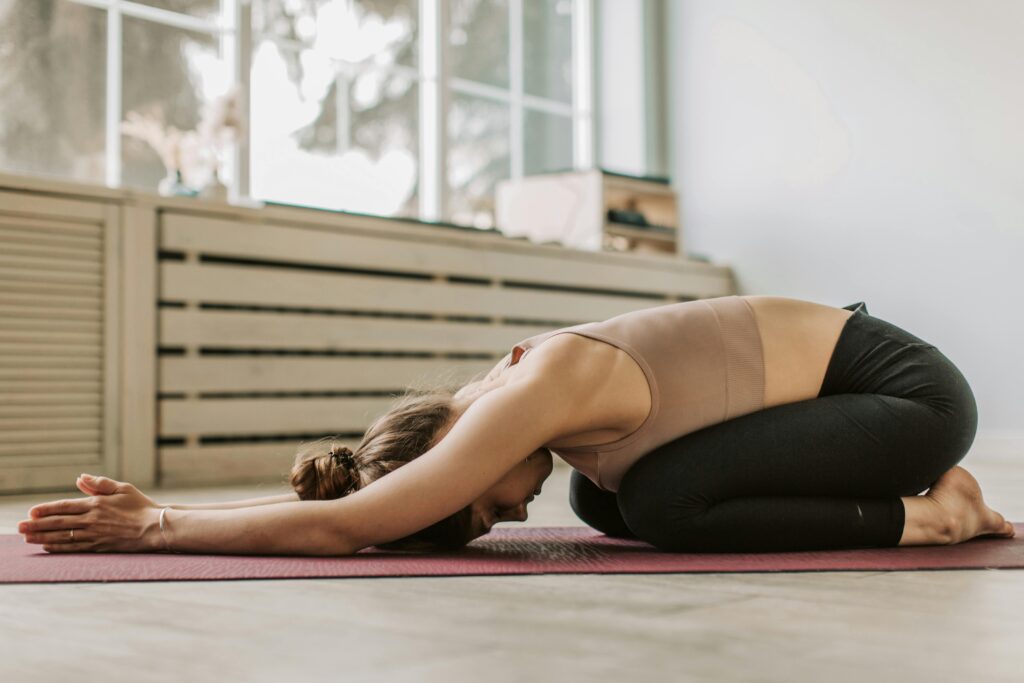
Goal: To gently stretch the hips, thighs, and ankles, and to provide a moment of deep rest and tranquility to ground the nervous system before moving forward.
How to Practice:
-
Start: Kneel on your mat. You can bring your big toes together to touch, and separate your knees wide (Wide Knee Child’s Pose) or keep them hip width apart.
-
Fold: On an exhale, fold your torso down between your thighs (or over them, if knees are together). Reach your arms straight out in front of you, or rest them alongside your body with your palms facing up.
-
Rest: Allow your forehead to rest fully on the mat or on a block. Release any tension in your neck and shoulders.
-
Hold: Hold the pose for 5–10 slow, deep breaths. Feel your abdomen resting on your thighs and sense the gentle compression in your hips.
Morning Energy Boost: While this is a resting pose, it’s strategically placed to prevent burnout. After the intense standing and strengthening poses (Warrior II and Triangle), Child’s Pose acts as a recharge button. It calms the mind, encourages deep abdominal breathing (which soothes the nervous system), and gently stretches the lower back. This brief moment of surrender conserves and restores your energy, ensuring you move into the final poses feeling balanced and composed, not depleted.
Tip for Practice: If your forehead doesn’t comfortably reach the floor, stack your fists on top of each other and rest your forehead there, or use a block. Focus on sending your breath into your lower back and hips. This pose is a sanctuary allow yourself a full moment of calm and stillness.
9. Seated Spinal Twist
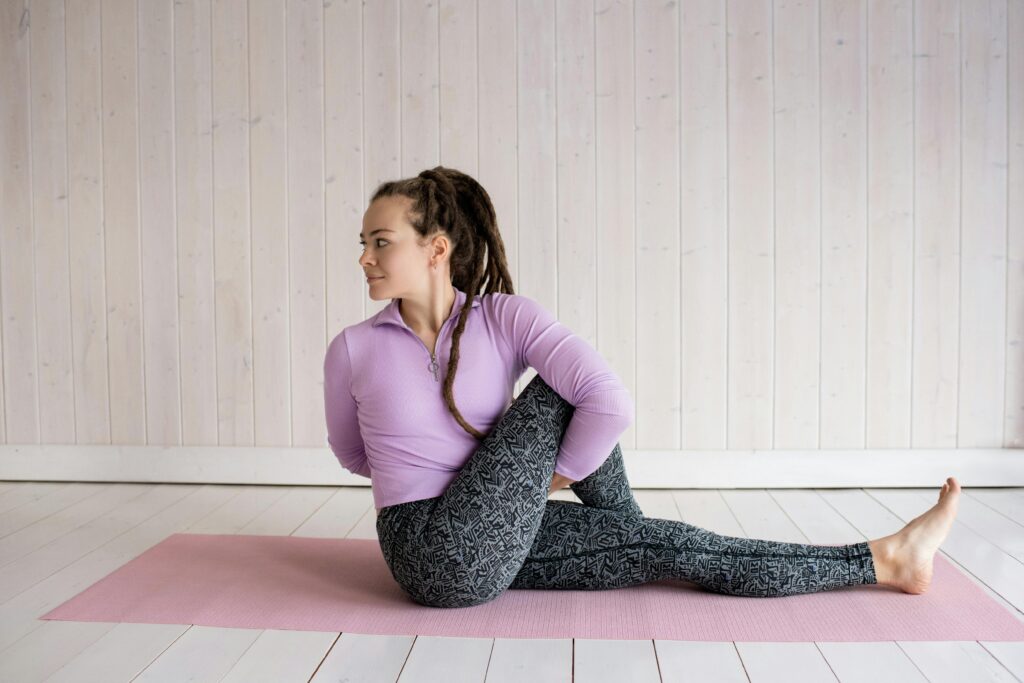
Goal: To gently wring out tension from the spine, stimulate the internal organs for improved digestion, and release any lingering stress.
How to Practice:
-
Start: Sit tall on your mat with both legs extended straight in front of you (Dandasana).
-
Bend: Bend your right knee and place your right foot flat on the floor, either inside or outside your left thigh. Keep your left leg extended or bend it to tuck your foot next to your right hip (advanced variation).
-
Twist (Inhale/Exhale): Inhale to lengthen your spine. As you exhale, twist your torso to the right. Hug your right knee with your left arm, or place your left elbow outside your right knee for a deeper leverage. Place your right hand on the floor behind you (like a kickstand).
-
Align: Keep both sit bones grounded. Use the inhale to grow taller and the exhale to twist gently deeper. Gaze softly over your right shoulder.
-
Hold: Hold the twist for 5 deep breaths.
-
Release: Inhale to gently unwind and return to center. Extend both legs and repeat the twist on the opposite side.
Morning Energy Boost: Twisting poses are often called “detoxifiers” in yoga. By applying gentle compression to your abdominal organs during the twist, you help stimulate digestion and elimination key processes for internal cleansing and feeling light and energetic. Spinal twists also dramatically increase circulation around the vertebral column, releasing tension held in the back and promoting a feeling of mental clarity and calm.
Tip for Practice: Always lengthen your spine before you twist. Never force the twist; the goal is not to see how far you can turn, but to feel a uniform wringing sensation throughout the length of your spine. Use your breath as your guide: inhale to create space, exhale to rotate.
10. Easy Meditation with Deep Breathing
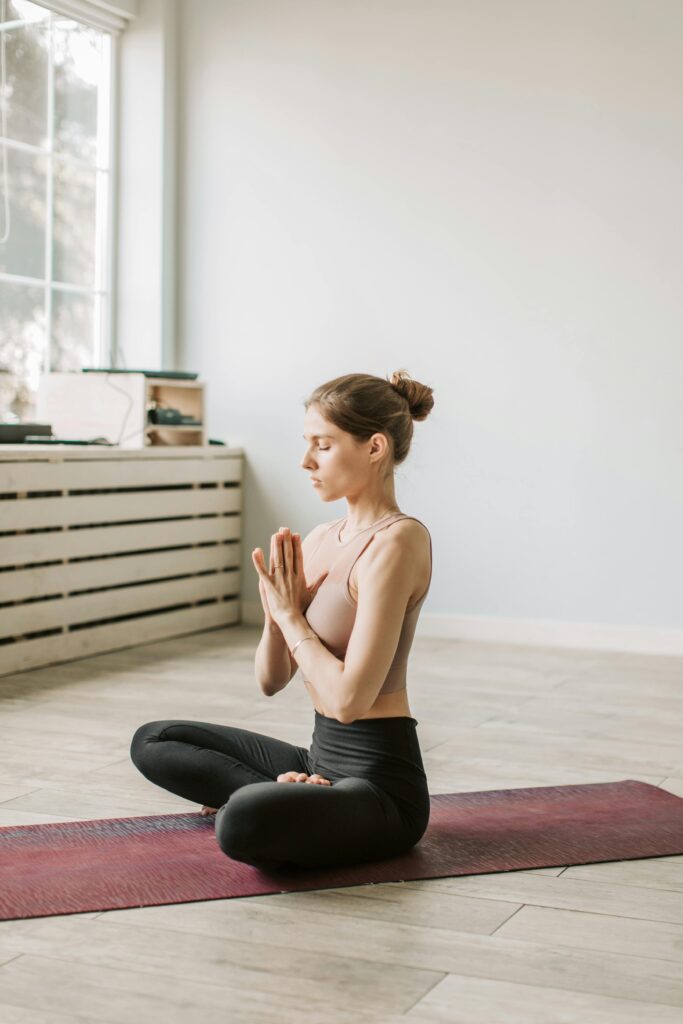
Goal: To fully integrate the physical energy generated by the preceding poses, calm the nervous system, and set a clear, positive intention for the day.
How to Practice:
-
Settle In: Sit comfortably on the floor in an easy cross-legged position (Sukhasana). If your hips are tight, sit on the edge of a folded blanket or block to elevate your hips above your knees.
-
Posture: Ensure your spine is tall and straight (like you did in Tadasana). Gently roll your shoulders back and down. Rest your hands on your knees, palms facing up (to receive energy) or down (to feel grounded).
-
Breathe: Close your eyes softly. Begin to take slow, deep, conscious breaths (Pranayama). Inhale fully, expanding your belly and chest. Exhale completely, drawing your navel slightly in toward your spine to push out all the stale air.
-
Focus: For the last minute, simply observe your breath without trying to change it. Then, set a simple intention for your day (e.g., “I will be patient,” or “I will approach my work with joy”).
-
Hold: Stay seated for 1–3 minutes.
Morning Energy Boost: This final step is the most crucial for integrating the benefits of the entire practice. Deep breathing maximizes oxygen flow to your bloodstream and brain, resulting in sustained mental clarity and physical energy. By taking a few moments of stillness and setting an intention, you shift your energy from simply doing to being starting your day from a place of mindfulness, centeredness, and purpose, rather than immediate reaction.
Tip for Practice: Don’t worry about clearing your mind completely. When thoughts arise, simply acknowledge them without judgment, and gently redirect your attention back to the sensation of your breath. End your practice by bringing your hands to a prayer position at your heart, sealing your intention.
To bring everything together, try setting this practice as a 10–15 minute simple yoga flow. Begin with Mountain Pose and smoothly transition through to the Easy Meditation Pose, holding each pose for a few breath cycles. For a truly enriching experience, consider playing some calming, soft music in the background. To make your practice effortless, keep your yoga mat ready by your bed. After finishing, take a moment for gratitude, acknowledging the simple joys and the day ahead. Remember, it’s about consistency rather than perfection allow this yoga practice to grow with you.