

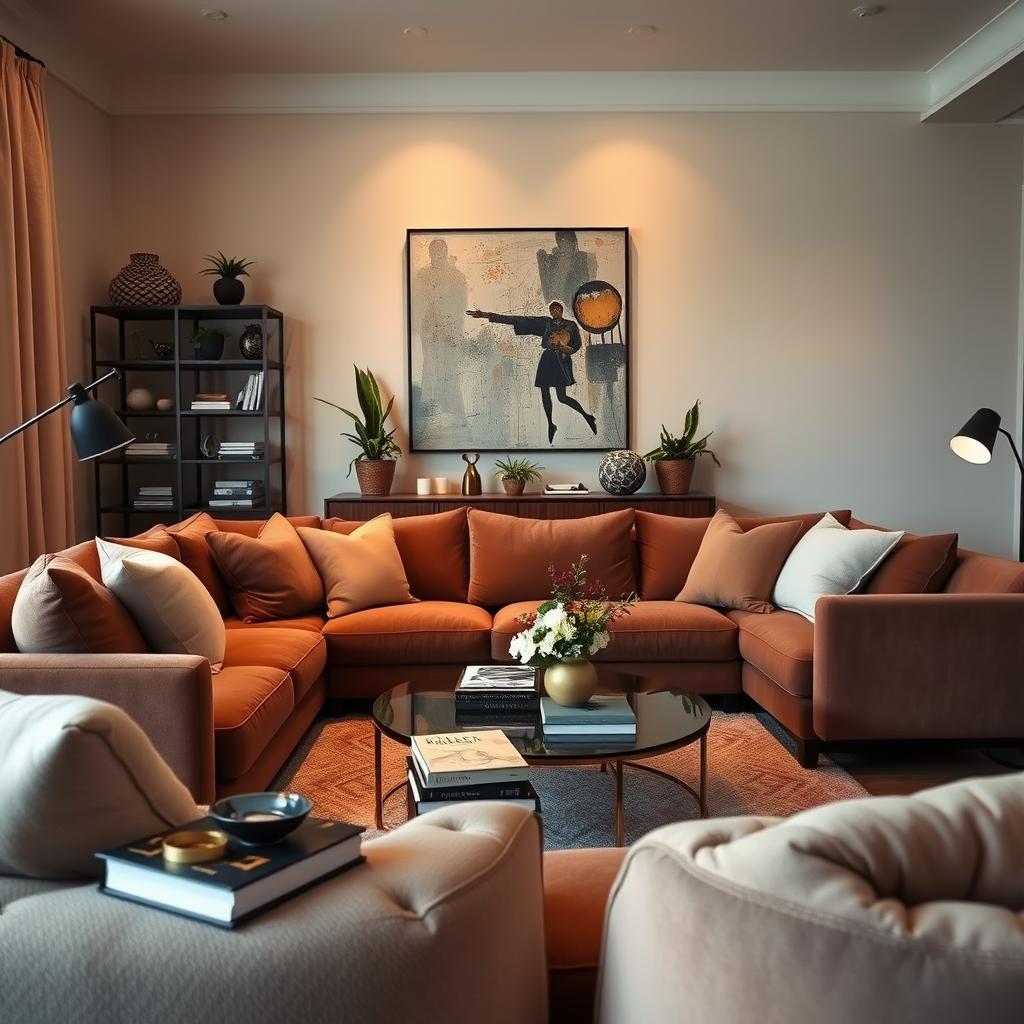

Does your living space feel like a cozy cave? If your living area lacks natural light, you’re not alone. Many of us struggle with designing a room that feels dark or closed in.
But I’m here to tell you that a windowless or dim space isn’t a design flaw. It’s a unique opportunity. A chance to create something special.
A lack of sunlight can spark incredible creativity. It makes us think outside the box and design with purpose. It’s not about hiding a problem; it’s about embracing your space’s unique character.
In this guide, I’ll share ten brilliant strategies to transform your space. We’ll look at clever lighting, strategic color choices, and smart furniture placement. These ideas show that great living room decor doesn’t need sunlight.
Forget the idea that a room without windows is a design dead end. Let’s turn your space into a bright, intentional sanctuary. We’ll do it one genius idea at a time.
Introduction: Embracing the Challenge of a Dark Living Room
A living room without natural light is not a flaw it’s a chance to be creative. It’s a blank canvas for design. We can make a room that feels cozy and personal.
First, we need to change how we think. Instead of wanting sunlight, we can love the cozy feel of a dark room. This is our chance to brighten living room spaces with smart design choices. We use color, texture, and mirrors to add light.
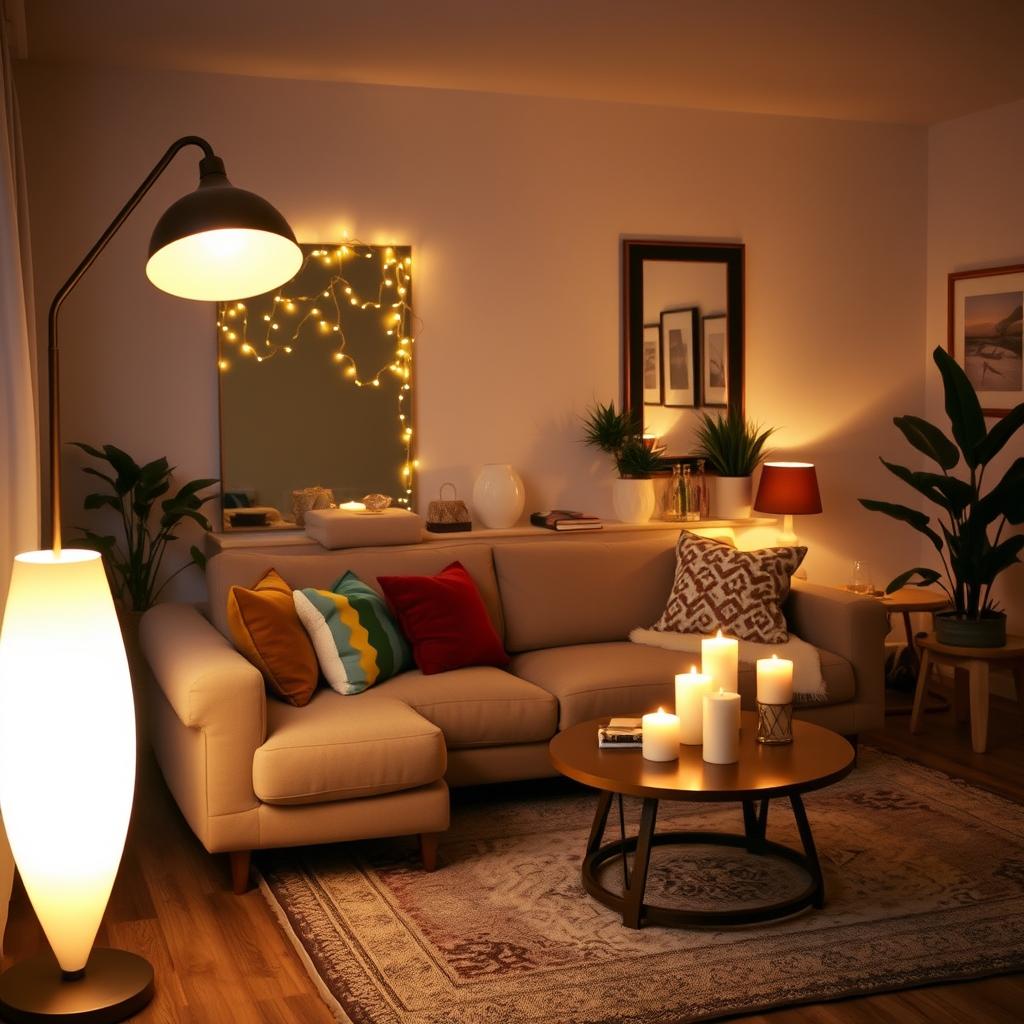
Imagine designing a cozy den. Without a view, every choice we make is important. Our lighting, furniture, and decor are the stars of the show. We aim to create a space that feels welcoming and intentional.
This design approach is not about fixing a problem. It’s about making something special. We’re not trying to fake a sunny day. We’re creating a space that feels warm and uniquely yours. Let’s see how to make this challenge a strength.
Why Natural Light Matters in Living Room Design
Light is the heart of a room. It’s not just about being bright. It shapes a space, sets the mood, and brings it to life. A cozy living room often has soft, natural light.
But what if there’s not enough sunlight? Then, knowing how light works becomes key to good design.
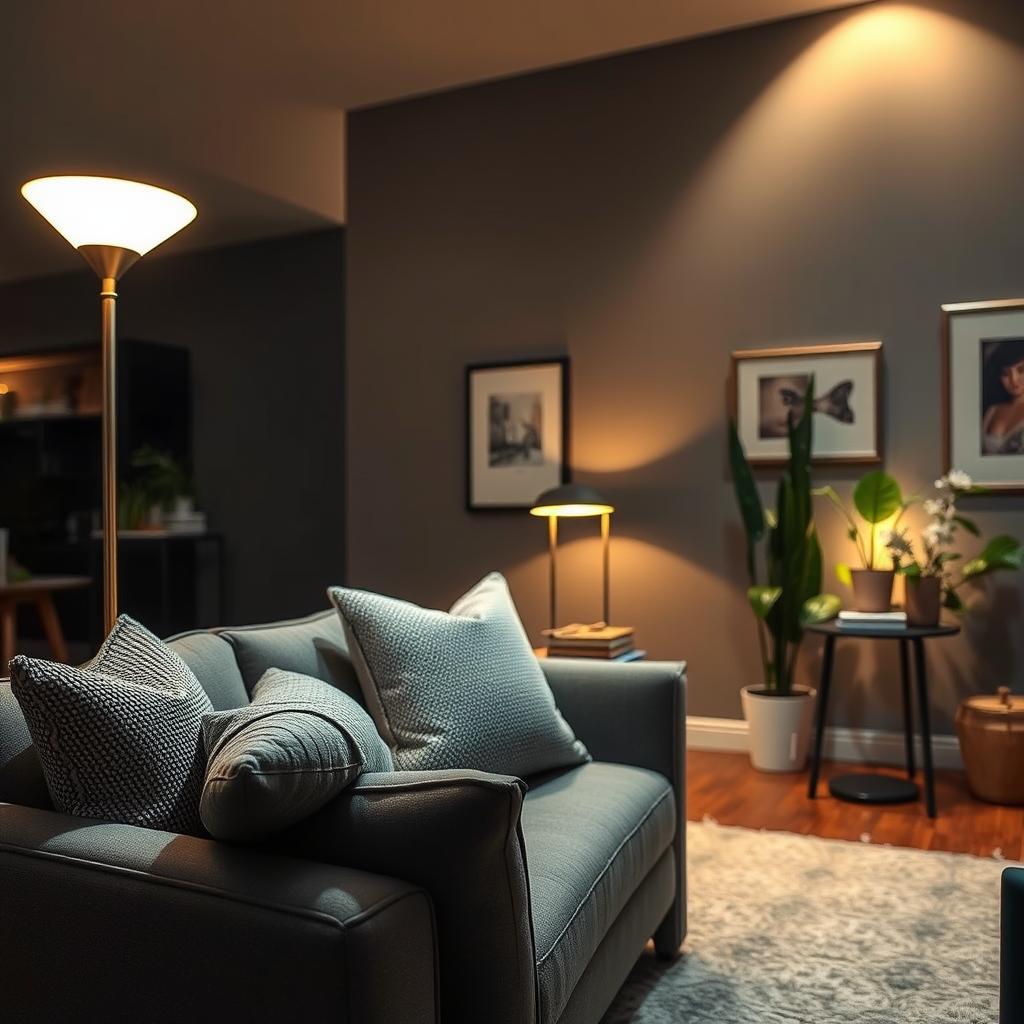
Light does more than just help us see. It shapes space, adds depth, and guides our attention. In bright rooms, light itself is a decoration. It makes colors pop, textures inviting, and rooms feel bigger.
Without natural light, rooms lose this lively feel. Colors seem dull, and textures less inviting. That’s when artificial lighting ideas become crucial.
The Challenge of a Light Starved Room
A room with little light faces a big challenge. Shadows deepen, corners seem dark, and the room feels smaller. It’s not just dim; it’s about the light quality.
Without daylight’s soft glow, rooms can feel harsh under the wrong artificial lighting. We need to add the right kind of light. Light that lifts the mood and opens up the space.
Our design solutions start with understanding this problem. We aim to create a new, beautiful light. Clever artificial lighting ideas and smart design can turn a dark space into a bright, welcoming place.
Living Room Decor No Natural Light: Embracing the Challenge
Many think a room without windows is a design dead end. But I see it as a blank canvas. The challenge of living room decor with no natural light is a chance to create your own atmosphere. It lets you move beyond the sun’s schedule and make a space that feels cozy and personal.
Don’t try to fake the sun. The goal isn’t to make a sun-drenched room. Instead, see the lack of windows as a chance to create a unique atmosphere. Use light, color, and texture to build a mood that’s all your own.
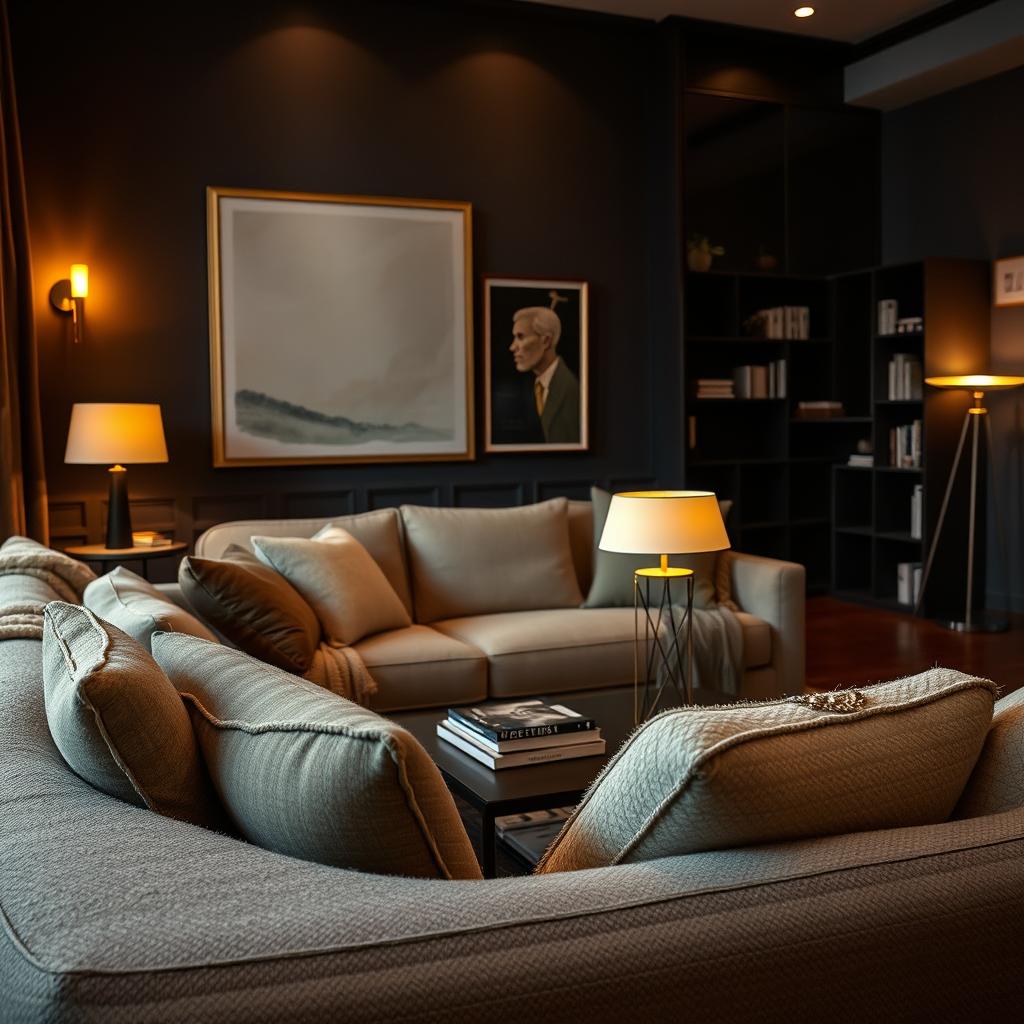
This change in thinking is key. Instead of missing sunlight, you become the master of your room’s ambiance. You control every light, shadow, and reflective surface. This forces a more thoughtful design, making your space feel more curated and personal.
Decorating a living room without natural light isn’t about faking it. It’s about embracing coziness, drama, or modern style. It’s about creating a beautiful, functional space that doesn’t need sunlight. Let’s see the potential for a unique and atmospheric room instead of a limitation.
Idea 1: Master the Art of Layered Lighting
In a room without windows, light is key. It’s not just for seeing; it’s a design tool. Layered lighting is the best way to fight darkness and make a space lively and welcoming.
Forget harsh overhead lights. Instead, think of your lighting in three layers. Each layer works together to banish shadows and make your space beautiful and functional.
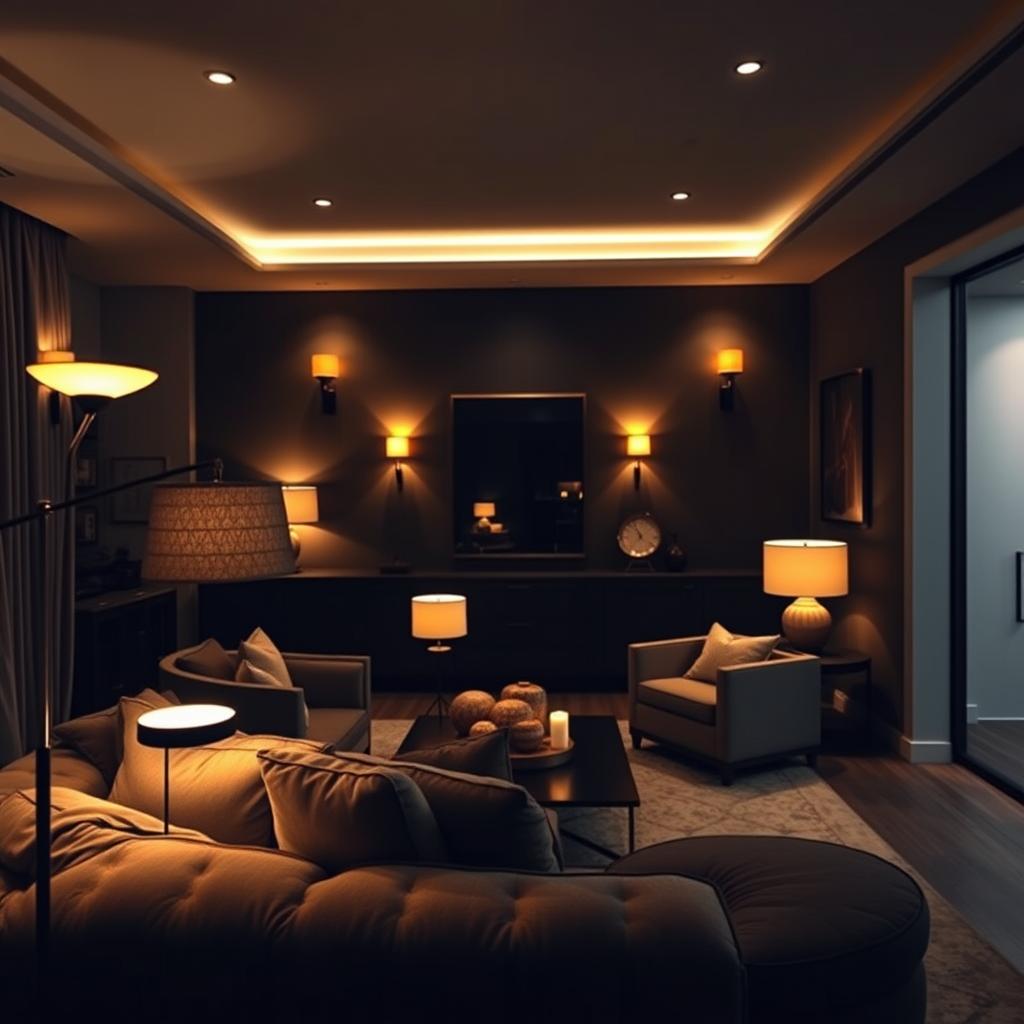
Ambient lighting is like the room’s “sunlight.” It’s the base layer that lights up the room. It makes sure there are no dark spots and gives a comfortable light everywhere.
For a modern look, use several, low-wattage lights. Think of using recessed downlights or pendant lights. This way, you avoid harsh light and get a natural, flattering glow.
Task Lighting for Function and Focus
Task lighting is for specific activities. It’s all about being useful and precise. It gives you bright light for reading, working, or hobbies.
Table lamps, desk lamps, or floor lamps are essential here. A floor lamp with an adjustable arm is great. It lets you direct light exactly where you need it.
Accent Lighting for Drama and Depth
Accent lighting adds drama and personality to your room. It’s what makes a room feel special and curated. Use it to highlight art, walls, bookshelves, or architectural features.
Imagine a picture light above a painting or LED strips in a bookcase. These lighting solutions don’t just light up; they create interest and sophistication.
Understanding Color Temperature (Warm vs Cool)
Choosing the right color temperature is important. Color temperature is measured in Kelvins (K). Lower numbers (2700K-3000K) give a warm, yellow light, perfect for living rooms and bedrooms.
For a room with no natural light, warm light (2700K-3000K) is best. It’s cozy and inviting, like a sunset. This warm light is flattering and comfortable for living spaces.
Smart Bulbs and Dimmers for Total Control
Smart bulbs and dimmers control your room’s mood and function. With a tap on your phone, you can change the room’s atmosphere. From bright and energizing to dim and ambient for movie nights.
Smart bulbs let you change brightness and color. Dimmers fine-tune the light levels. This control makes a dark room dynamic and multi-functional at your fingertips.
Idea 2: Deploy a Fleet of Mirrors
Mirrors are more than just decorations; they are tools to brighten a room. They catch and scatter light, making a space feel alive. By placing mirrors wisely, you can transform a dark area into a bright one.
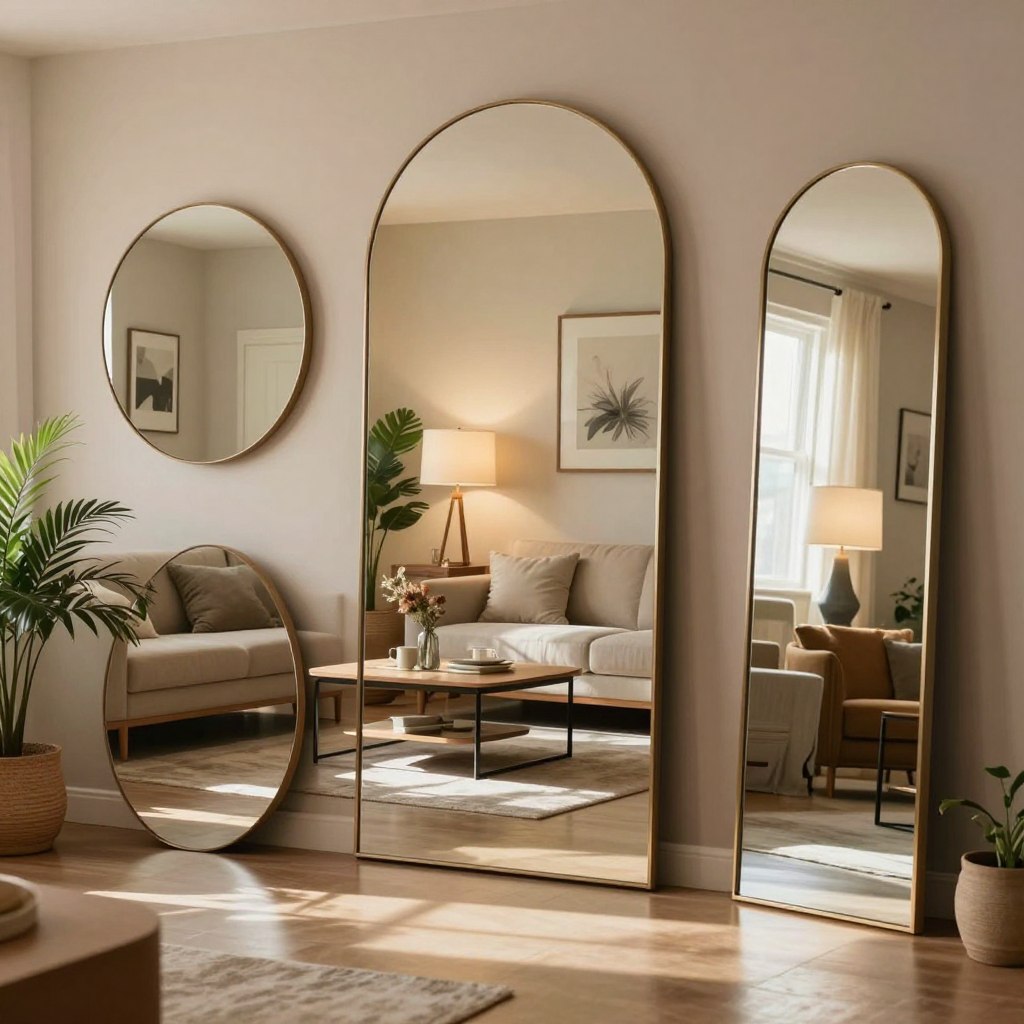
The key to using mirrors for natural light simulation is to think like a pool player. Place a large mirror opposite your brightest light source. This doubles the light’s impact, making your room brighter.
Creating the Illusion of Windows
No window? No problem. A large mirror can make a room feel like it has windows. Hang a big mirror on a wall without windows. It reflects the lit parts of the room, adding depth and life.
Large Statement Mirrors as Focal Points
A big statement mirror can be the room’s centerpiece. Choose an unusual shape or frame to make a statement. Place it on a main wall to reflect the whole room, making it feel larger and brighter.
Mirrored Furniture and Reflective Accents
Mirrors aren’t just for walls. Furniture and decor with mirrors can also brighten a room. A mirrored side table or a glass-topped coffee table can act as a light source. Even small, reflective items can add to the brightness.
Using mirrors is all about strategy. You’re not just decorating; you’re making a room brighter. Each mirror adds to the overall brightness, making the space feel more alive.
Idea 3: Paint Your Way to a Brighter Space
Color is key to making a dark living room brighter. Paint isn’t just color; it reflects light, making a room feel airy. The right light paint colors change how we see space and light, even without windows.
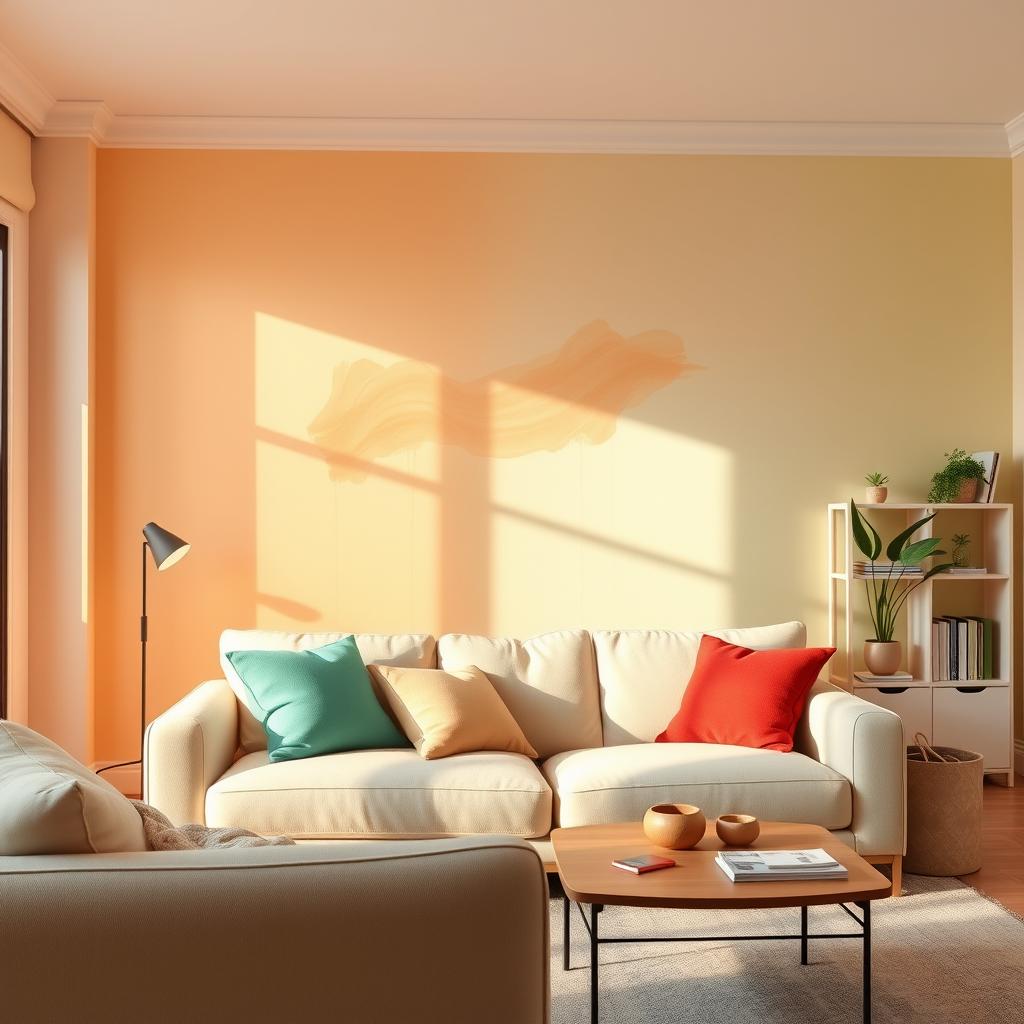
Don’t think you need to paint everything white. Look for paint with a high Light Reflectance Value (LRV). An LRV of 70 or higher is best for dark rooms. Cool tones like pale grays and soft blues work well. They make walls seem farther away and reflect more light.
Why Satin and Semi Gloss Finishes Are Key
The sheen of your paint matters a lot. A satin or semi gloss finish is essential for dark rooms. These finishes reflect light better than flat finishes, making the room brighter.
The Power of a Light Colored Ceiling
Don’t overlook your ceiling. Painting it a bright white or a pale wall color makes a room feel taller and brighter. It reflects light, making the room feel more open.
Using Trim and Molding to Your Advantage
Pay attention to architectural details. Painting trim and molding in semi gloss or high gloss white adds sharp lines that reflect light. This contrast makes the room feel more defined and bright.
Choosing the right light paint colors and finishes is all about reflection and perception. By picking high LRV, cool toned paints with satin or semi-gloss sheen, you’re not just painting walls. You’re creating a system to capture and spread light, turning a dark space into a bright, welcoming area.
Idea 4: The Reflective Power of Metallics and Glass
Let’s explore how reflection can change dark rooms. Paint and lighting are key, but reflective light reflecting decor is a game changer. It’s not just about shine; it’s about using physics to enhance light.
Every metallic frame, glass surface, or mirrored piece acts like a tiny satellite. They bounce light around the space. This makes modern, luxurious small living rooms feel bigger and brighter.
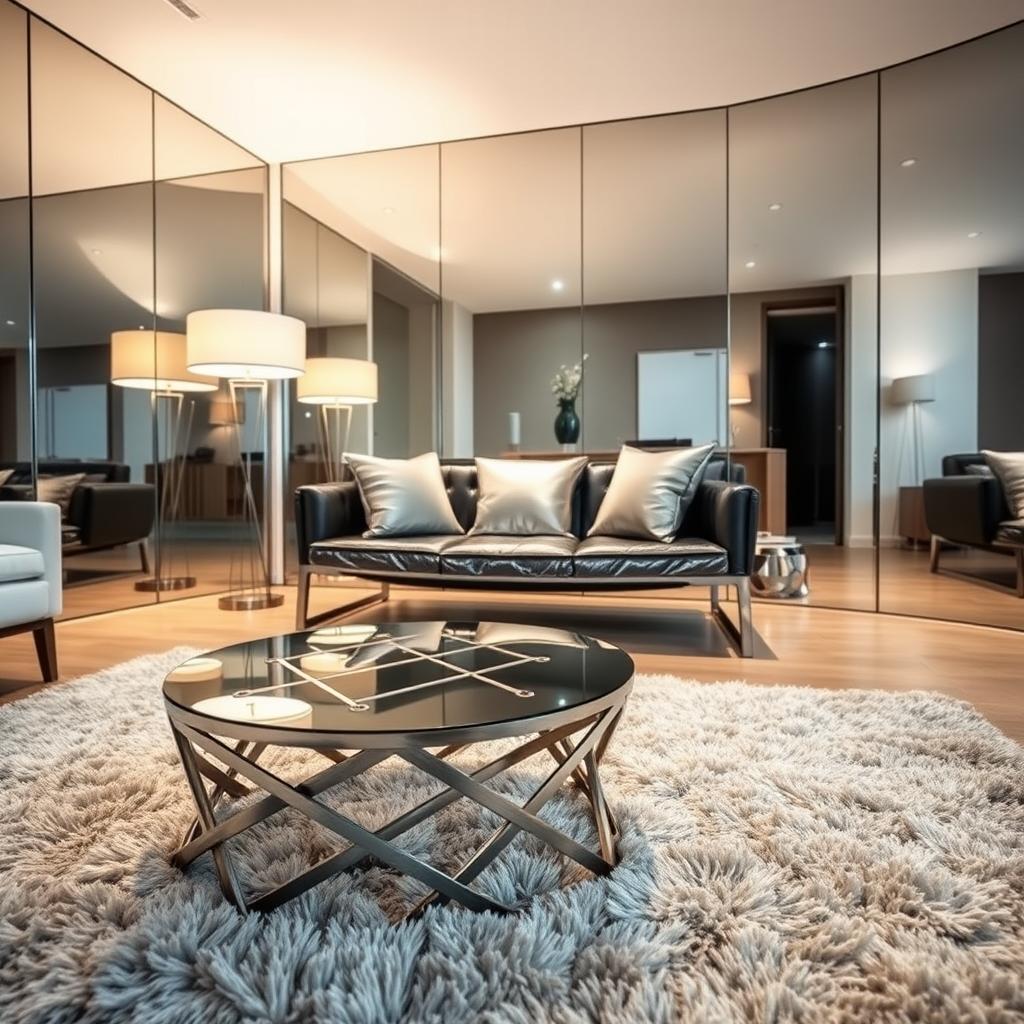
Think of metals as light conductors, not just accents. A matte gold picture frame or brass bookends catch and scatter light. Chrome or polished nickel on curtain rods or chair legs create a subtle shimmer.
The key is in the finish. A polished brass lamp base or chrome floor lamp can fight gloom. This makes your light reflecting decor work for you all day.
Metallic Decor and Accessories
You don’t need a big renovation. Start with small, strategic changes. Brass candlesticks, a hammered metal bowl, or a metallic tray can brighten the room.
Even a gold leaf picture frame or copper bookends can reflect light. It’s about creating a network of reflective moments that brighten the room.
Glass Coffee Tables and Acrylic Furniture
A dark wood coffee table can make a room feel heavy. Swap it for a glass-top table or one with a metal and glass base. This lets light and sightlines travel freely, making the space feel larger.
Acrylic or lucite furniture, like a ghost chair, is a great choice for dark rooms. These pieces take up visual space without feeling heavy, keeping the room airy.
Open Shelving and Glass Cabinetry
Closed, solid front cabinets can feel heavy. Replacing a solid upper cabinet door with a glass front or using open shelves in a glossy finish lightens the look. What you store there becomes part of the decor, and glass or reflective backing amplifies any available light.
Choosing metallics and glass is more than decoration; it’s a design strategy. By using reflective light reflecting decor, you’re not just decorating. You’re installing a network of tiny reflectors that push back shadows and make your living room feel bright.
Idea 5: Choose Furniture That Doesn’t Weigh the Room Down
In a small or dark living room, every piece of furniture matters. Heavy or bulky decor can make the room feel cramped. The trick is to make the room look bigger and brighter.
Choosing furniture that looks light can help. This makes the room feel more open, even without natural light. It’s a key part of small living room decor, where every choice counts.
The Illusion of Space with Raised Furniture
Using furniture with legs is a simple yet effective trick. Sofas, chairs, and tables with visible legs make the room look lighter. This allows light to pass through and makes the room feel bigger.
Instead of a solid sofa base, choose one with exposed legs. This makes the furniture less heavy-looking. It’s a great way to avoid the problem of a dark living room feeling too heavy.
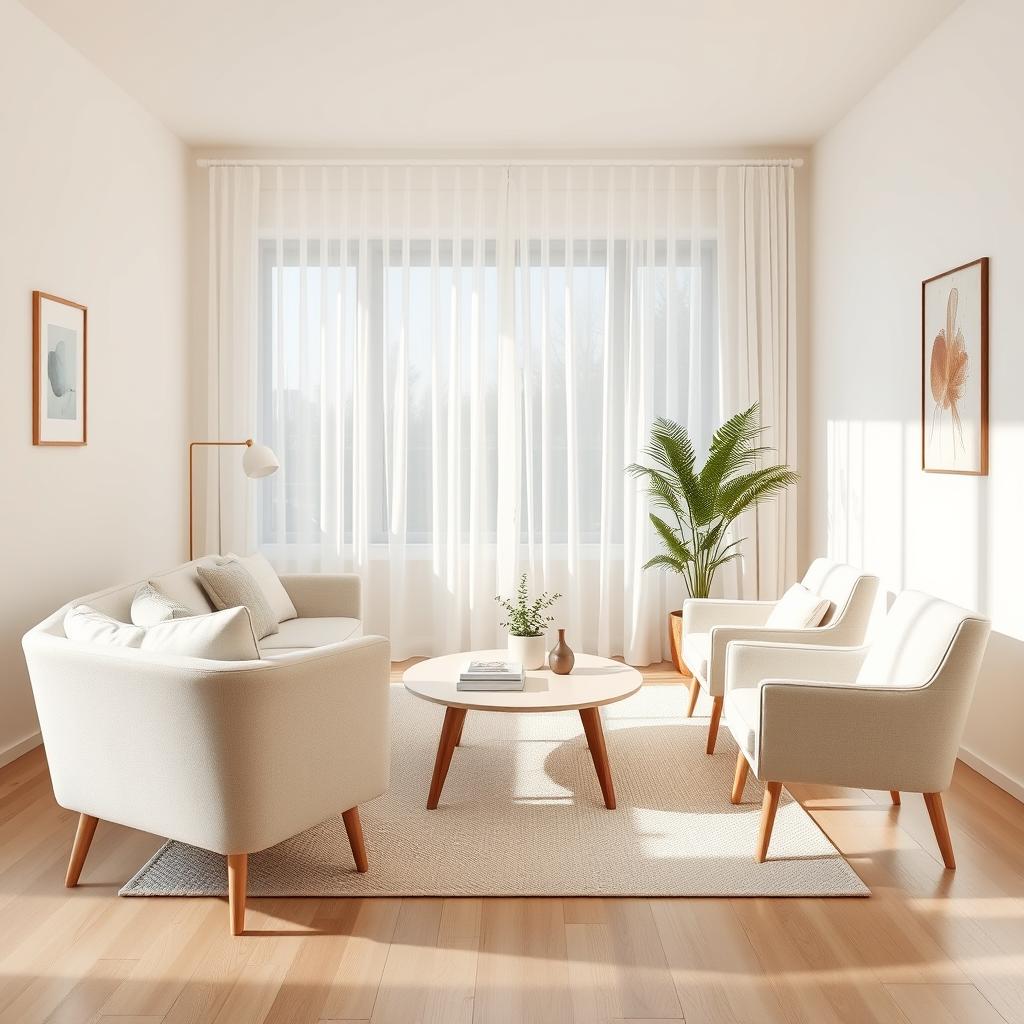
For even more lightness, use transparent or translucent materials. A glass or acrylic coffee table or ghost chairs can change the room. They let light pass through, making them seem to disappear.
In a small or dark room, this is a smart small living room decor trick. These pieces add function without taking up too much space. They act as art that doesn’t compete for space.
Choosing a Light Colored or Light Reflecting Rug
A rug can greatly affect the room’s feel. A dark rug can make a room feel heavy. Instead, choose a light colored rug like cream, gray, or beige.
A rug with a sheen or light reflective weave is even better. This choice will make the room feel brighter and more open. It’s a simple small living room decor trick that works wonders.
How a Large Rug Can Define and Brighten
Using a large rug in a small room might seem counterintuitive. But it can actually make the room feel bigger. Make sure the rug is big enough for the legs of your main seating.
This creates a unified area that grounds the furniture. A large, light colored rug will reflect more light than a dark floor. It makes the room feel bigger and brighter.
By choosing light and airy furniture, you can overcome the heaviness of a dark room. It’s not just about the furniture, but how it fits in the space. The goal is to create a room that feels open, bright, and uncluttered. Smart small living room decor is about creating an illusion of space and light.
Idea 6: Bring in Life with Low Light Plants
Even the darkest rooms can be brightened with the right plants. They add texture, color, and life that artificial decor can’t. For a cozy living room decor, plants are unbeatable.
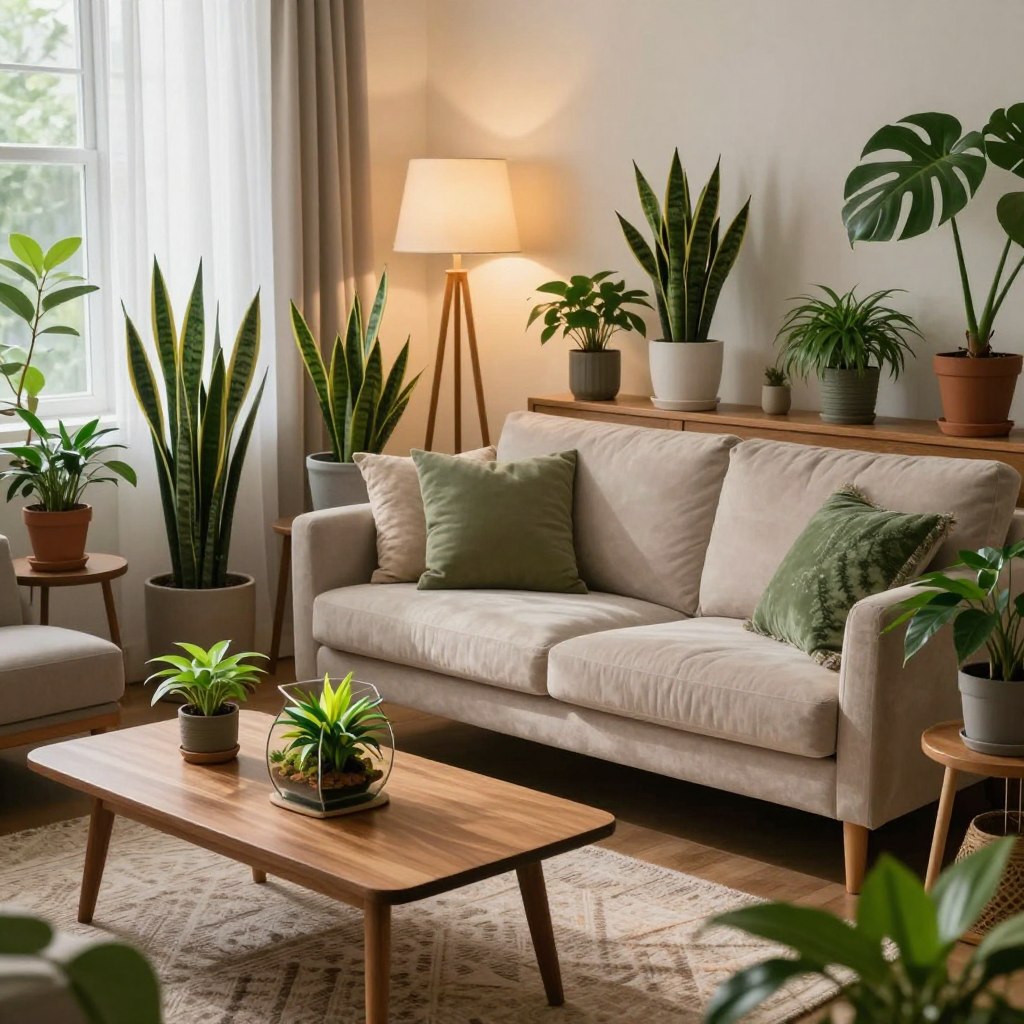
The Snake Plant and ZZ Plant are top choices for low-light spaces. They’re easy to care for and can thrive in little light. These plants are perfect for busy people.
Pothos and Philodendron
Pothos and Philodendron are great for a lush look. They’re easy to care for and can grow in dim light. Pothos grows fast, and Philodendrons add a romantic touch.
Plants with Glossy Leaves for Reflection
Plants with shiny leaves, like Rubber Plants and Chinese Evergreen, reflect light. This makes dark rooms feel brighter. It’s a natural way to brighten your space.
Using Faux Plants Strategically
If your room is very dark or you’re not good with plants, faux plants are a smart choice. Use them to add texture and life. Mix them with real plants for a full look.
Real or faux plants bring life to your space. They make your room feel warm and welcoming. This is key for a cozy living room decor that feels alive.
Idea 7: Create a Powerful Focal Point
In a living room with little natural light, a strong focal point is key. It gives the eye a beautiful place to land. This makes the whole space feel purposeful and cozy living room decor.
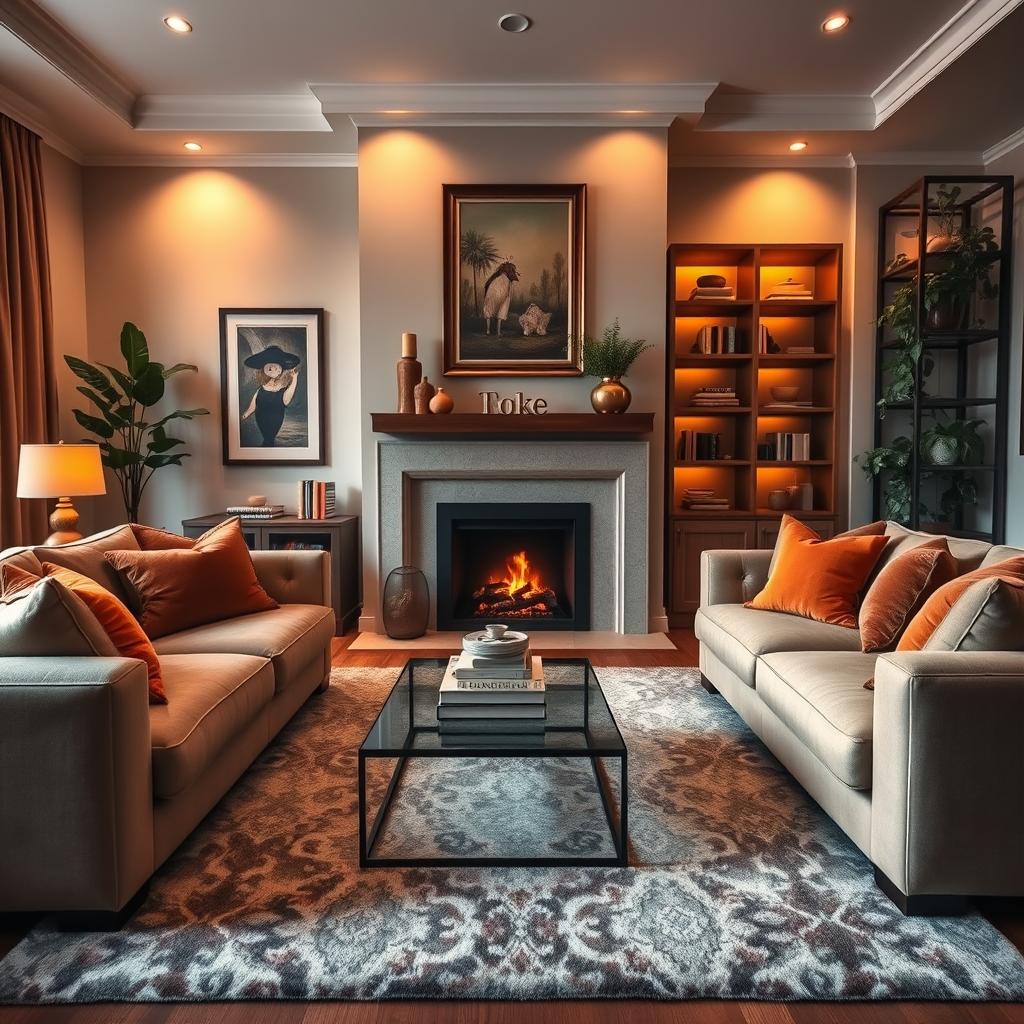
A single accent wall can make a big difference. Pick a wallpaper with a light, reflective pattern or a soft, warm color. This immediately draws the eye and makes the wall feel brighter. It’s a simple trick that adds depth and a cozy focal point without needing a major renovation.
Creating a Gallery Wall with Light Frames
A gallery wall is great for a cozy living room decor theme. Use light-colored, thin, or metallic frames. Arrange them around a central, larger piece of art. This collection becomes the star, pulling the room together and adding personal, layered interest.
Layering Light Around the Focal Point
Your focal point needs to be seen. Layer your lighting. Use a directed picture light for a piece of art. Add a small, stylish floor lamp or a pair of sconces on either side of a console table. This layered, warm light makes your focal point the star of your cozy space.
Using Art and Sculpture to Draw the Eye
Don’t just think flat. A striking sculpture, a tall vase, or a unique floor lamp can be a powerful focal point. These pieces add dimension and become instant conversation starters. In a cozy living room decor scheme, a single, bold sculptural piece can be more effective than a cluttered collection.
Remember, the goal is to create a single, compelling visual destination. This strategy gives your dark living room a clear purpose and a powerful sense of cozy personality.
Idea 8: Master the Art of Window Dressing (Even Without a View)
Even without a view, your windows can still be a highlight. How you dress them can change the room’s light quality. Treating windows thoughtfully can make a room feel brighter and more intentional.
Diffusing and Softening Artificial Light
Using window treatments as light sources is a great idea. Place lamps or sconces by the window and hang a light, gauzy curtain. This creates a soft glow, making the window seem like a light source.
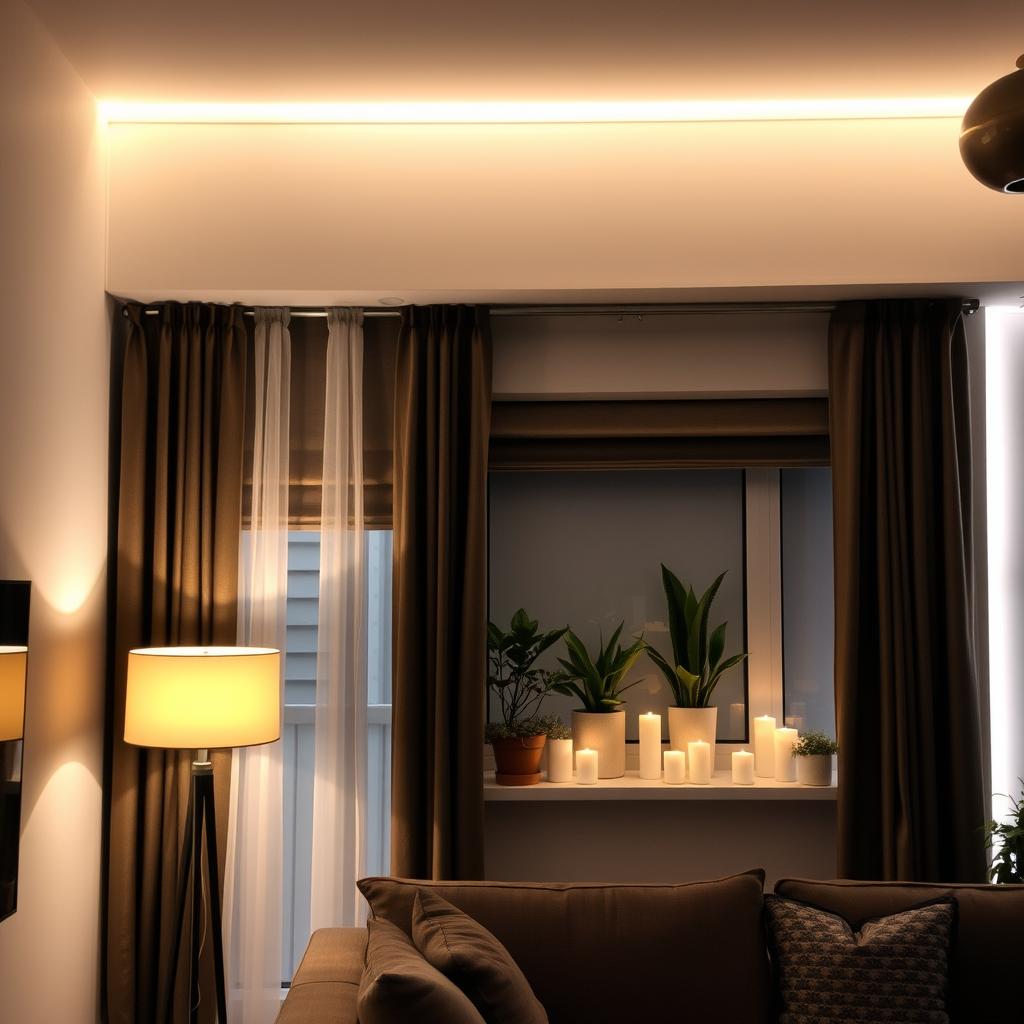
Choose sheers that are translucent, not transparent. Look for “voile,” “sheer linen,” or “silk look” fabrics. They scatter light well, avoiding harsh shadows and creating a soft glow.
Clean Lines of Roman or Roller Shades
Roller or Roman shades offer a modern, clean look. A light-filtering roller shade can soften harsh light. This is a simple way to enhance ambiance without changing the room’s structure.
Concealing Hardware with a Valance
Hardware can look out of place in a clean aesthetic. A valance or cornice box hides the curtain rod, giving a polished look. It frames the lit fabric, enhancing the illusion of a light source.
Viewing your window as a canvas for light is powerful. It’s not just dressing a window; it’s adding a soft, architectural light fixture. This makes the room feel brighter and more open.
Idea 9: Make a Statement with a Light Fixture
In a dark room, your light fixture must do more than just light up. It must become the room’s new sun. This single element can change the mood and function of your living room. It’s not just a light source; it’s a piece of art that sets the tone.
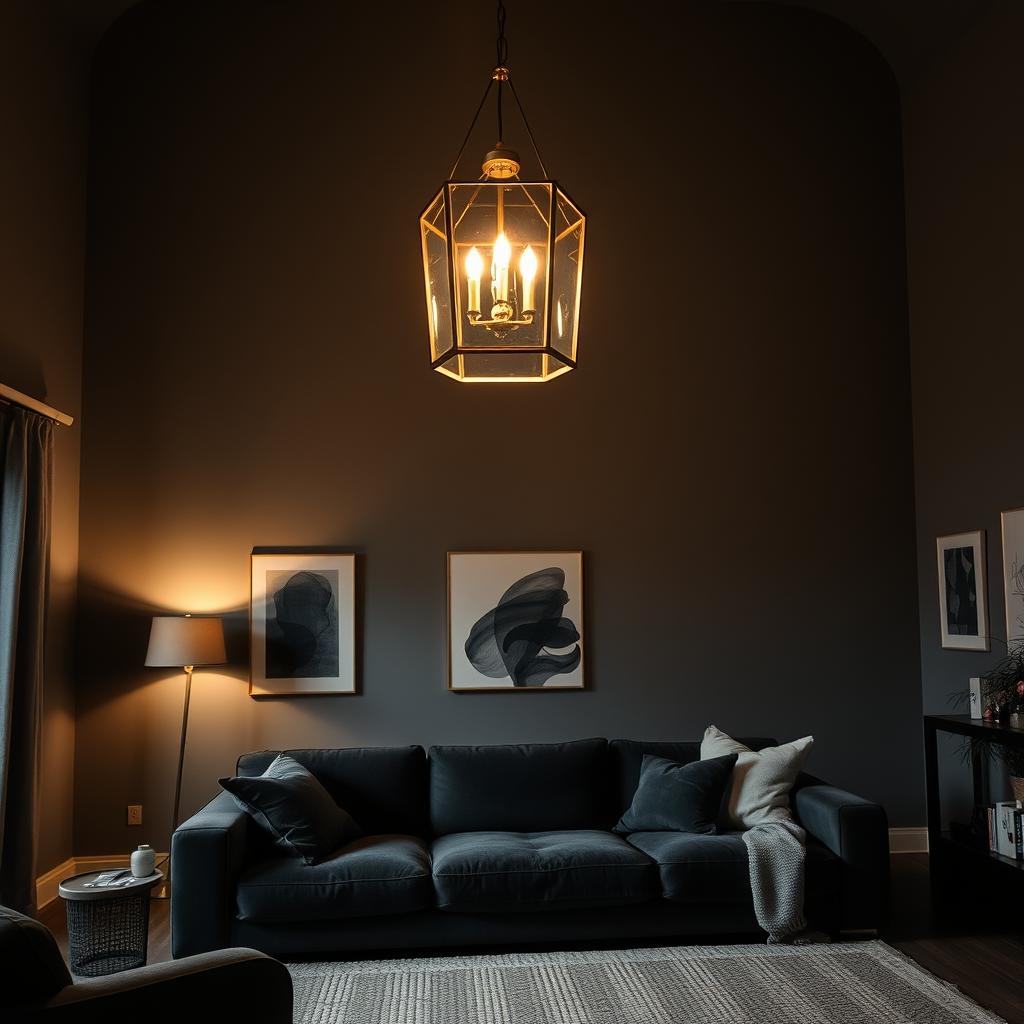
Choose a fixture that shines in all directions. Look for designs with reflective surfaces like polished metals, crystal, or mirrored glass. These materials bounce light around, making the room feel bigger and more open.
Think about a multi armed chandelier with metallic or crystal elements. These tiny mirrors scatter light across your ceiling and walls. This makes your space brighter and more lively.
The Importance of Dimmable, Multi Source Lights
In a room without windows, a harsh overhead light is bad for mood. Dimmable fixtures are key for both mood and function. A single, multi armed chandelier with individual dimmers for each arm gives you total control.
This lets you have bright light for tasks and soft light for relaxing. This is a key principle of lighting solutions for dark spaces.
Pendant Lights for Task and Atmosphere
Don’t just hang a pendant light. Use three small pendants at different heights over a sofa or console. This creates a beautiful element and provides layered, glare free light.
For reading nooks, a bold pendant with a metallic or glossy interior shade focuses light where you need it. This creates a cozy, personal light pocket.
Wall Sconces to “Wash” Walls with Light
This is a game-changer for dark rooms. Install sconces on either side of a sofa or artwork. They cast a gentle glow that makes walls appear to recede.
This “wall washing” technique eliminates harsh shadows in corners. It makes the room feel more expansive. For a cohesive look, use the same finish on your sconces and main fixture, like effective bedroom lighting.
Your statement fixture is more than a light source. It’s the room’s jewelry. Choose one that reflects your style and uses reflective materials to maximize your lighting solutions in a room that craves brightness.
Idea 10: Use Texture and Fabric to Your Advantage
I think texture is key to making a bright room feel cozy. In dark spaces, the right fabrics and textures add warmth and interest. It’s about the feel, not just the look.
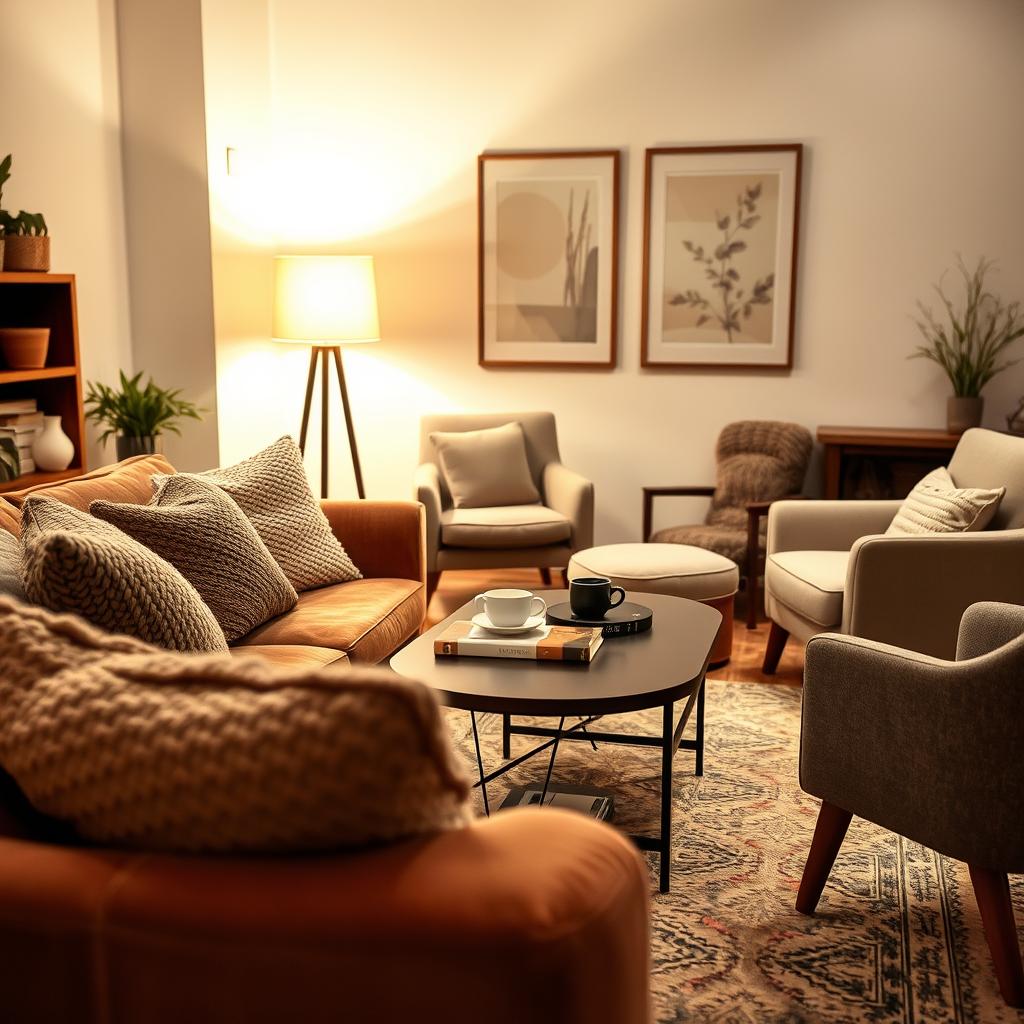
Choosing the right fabric for your furniture is important. Opt for light materials like linen, cotton, or linen-cotton blends. These fabrics make furniture feel airy and don’t block light.
A cream colored linen sofa, for example, reflects light better than dark velvet. This makes it feel less heavy and more welcoming.
The Sheen of Silk and Satin
Adding silk or satin brings luxury and light reflection. A silk pillow or satin throw adds a touch of glamour. Even a little bit can make a big difference.
Plush Rugs and Throws for Coziness
Plush rugs and throws are where the magic happens. A light-colored rug adds warmth and feels great underfoot. Add a wool throw or chunky blanket for extra comfort.
The contrast between the rug and blanket is amazing. It’s all about creating layers of comfort you can see and feel.
Mixing Weaves to Catch the Light
Mixing textures is okay. Try a bouclé throw pillow with a jute rug. The different textures play with light, adding depth and character.
This mix makes a room feel lived-in and inviting. It’s the essence of cozy living room decor.
Your fabric and texture choices can turn a dark room into a cozy retreat. It’s the final touch that makes a room truly cozy.
Idea 11: The Power of a Strategic Mirror Gallery
Let’s dive into creating a stunning mirror gallery wall. It’s more than just hanging mirrors. It’s about using light and reflection in a smart way. A well-planned mirror gallery can turn a dark room into a bright, multi dimensional space.
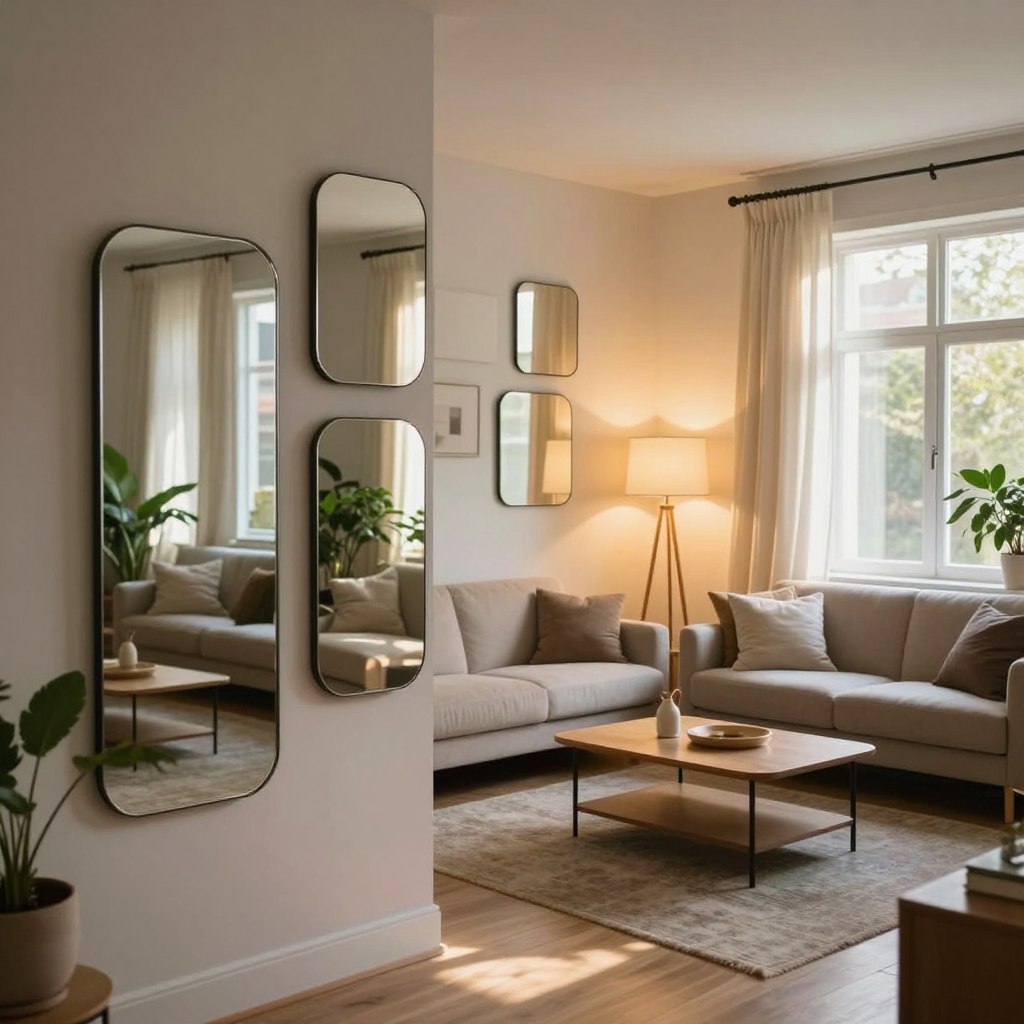
Think of mirrors as pieces of a light puzzle. The magic comes from mixing them. Pair a big sunburst mirror with smaller, geometric ones for contrast. This mix of sizes and shapes scatters light in many ways.
This isn’t just for looks. It’s a smart design choice. Each mirror acts as a light portal, catching and casting light. This turns a wall into a dynamic, light-scattering feature.
Arranging for Maximum Light Reflection
Where you place your mirrors matters a lot. Don’t hang them randomly. Place them opposite light sources like windows or lamps. This creates a “light chain reaction.”
A mirror opposite a window catches direct light. A mirror on a perpendicular wall bounces that light deeper. Angle some mirrors to direct light to dark corners or art. This thoughtful arrangement makes a room feel open and airy.
Lacquered Furniture and High Gloss Finishes
Furniture can also help reflect light. A glossy console table or sideboard acts like a reflective pool. These pieces scatter light softly, adding shine without harsh reflections.
Choosing furniture with glass or mirrored elements can also enhance light. A glossy coffee table works with your mirror gallery to make a space feel bigger and brighter.
Metallic Wallpapers and Tiles
Consider a feature wall for a big impact. A metallic wallpaper or metallic or glass tile section can reflect light broadly. This creates a soft, ambient glow in the room.
For more ideas on using light and space, check out these clever small living room decor ideas.
By combining mirrors, reflective furniture, and finishes, you’re not just decorating. You’re engineering light. This creates a network of reflective surfaces that simulate natural light, making even dark rooms bright and inviting.
Idea 12: Embrace Smart Lighting Technology
Smart lighting can change how you light up your space when natural light is scarce. It’s not just about turning lights on with your phone. It’s about creating an intelligent lighting ecosystem that fits your life. For rooms without natural light, this tech is a big change, making your space perfect at any time.
It’s also energy-efficient and a great artificial lighting option. You can set your lights to mimic the sun’s natural cycle. This creates a dynamic space that supports your health and daily routine.
Smart lighting’s biggest plus is mimicking the sun’s cycle. Instead of harsh overhead light, it simulates daylight. I start my day with a soft, warm glow, like a sunrise.
This gentle wake-up is better than a harsh alarm or cold light. It’s more pleasant.
As the day goes on, the light gets brighter and cooler, like midday. This isn’t just for looks; it helps your body’s natural rhythm. By evening, the lights get warmer and dimmer, signaling it’s time to relax.
This natural light cycle is a key artificial lighting idea for a healthy room without windows.
Voice and App Control for Convenience
Smart tech is all about ease. With a voice command or a tap on your phone, you control your room’s lighting. I can ask for a “movie night” scene, and the lights dim.
I can also set a “Good Morning” scene that brightens over 15 minutes. This control is great for different activities. You can have bright light for reading or soft light for movies.
Adjusting your lighting is as easy as asking for it.
Motorized Shades for Light Control
While focusing on artificial light, smart lighting works with your window treatments. If your room has a window, smart shades are a game changer. You can set them to open at dawn and close at sunset.
This integration makes your artificial and natural light work together. On sunny days, the shades let in natural light, and your smart lights dim. When it’s dark, the system creates the perfect light for your space.
Smart Plugs for Lamps and Accent Lights
You don’t need to replace all your bulbs to start with smart lighting. Smart plugs are an easy and affordable way to begin. I use them to make my favorite lamps smart.
Now, I can set my reading lamp to turn on at 6 PM or control several lamps as one in my app. This is a great artificial lighting idea for adding mood lighting. You can mix smart bulbs with smart-plug-controlled lamps for a beautiful effect.
Smart lighting is more than just convenience; it’s about controlling your space. It lets you create the perfect atmosphere anytime, making a dark room feel alive and welcoming. Your living room can be bright and lively with just a tap or voice command.
Idea 13: Accessorize with Reflective Decor
The magic in brightening a dark living room lies in the details. Accessories with reflective surfaces are key. They catch and bounce light, making spaces feel lighter. Let’s explore how to use them effectively.
For instant sparkle, I choose crystal and metallic accessories. A crystal bowl or a brass tray does more than hold items. They reflect light from lamps and fixtures, scattering it around.
I place metallic trays on dark tables or shelves for contrast. Even small mercury glass vases or brass bookends can brighten dim corners. Choose polished or mirrored finishes to reflect light, not matte finishes which absorb it.
Using Candles and Candleholders for a Warm Glow
Candlelight is powerful in brightening dark rooms. But I use reflective candleholders for more impact. Polished metal, mirrored glass, or mercury glass holders amplify the flame’s glow.
I cluster candleholders on a mirrored tray for a focal point. This radiates light in all directions. Placing this against a mirror multiplies the light, creating a cozy yet bright effect.
Creating Vignettes with Reflective Objects
I see my reflective accessories as a team. I never leave one piece alone. Instead, I create small arrangements, or vignettes, with metallic frames, crystal bookends, and brass figurines.
I place these vignettes where they catch the eye from across the room. This creates a visual journey of light, making the space feel more dynamic and spacious.
The Rule of Three for a Balanced Look
I arrange my reflective decor using the “Rule of Three.” This principle makes objects look balanced and pleasing when grouped in odd numbers. I group a silver tray, a small metallic box, and a crystal bud vase together.
This creates harmony and prevents any piece from standing out too much. The rule also applies to heights. Using a tall, medium, and low object creates depth and a professional look.
These shiny details are the room’s jewelry. They don’t just hold items; they actively participate in the lighting scheme. With lamps and mirrors, they ensure no corner of your living room is dark.
Common Mistakes to Avoid in a Dark Living Room
Turning a dark space into a bright one is about what you avoid as much as what you add. A few decorating mistakes can make a dark living room even darker. I’ve seen people struggle to brighten their rooms, held back by simple errors. Let’s cover the big ones so you can quickly achieve a bright result.
One big mistake is using only one harsh overhead light. This creates harsh shadows and unflattering glares, making the room feel like a spotlight is always on you. It doesn’t make the room bright; it just creates a harsh light pool. The room feels stark, uncomfortable, and not cozy at all.
Choosing the wrong color palette is another major error. A dark, dramatic paint color might seem cozy, but it can make a room feel like a cave. Dark colors absorb light, making walls feel like they’re closing in. Instead, pick light, reflective colors for walls and ceiling to bounce light around the room.
Furniture choices often lead to problems. Heavy, oversized, and dark furniture can make a room feel smaller and swallow light. A big, dark leather sofa can feel like a black hole in a dim room. Choose furniture with exposed legs, light colors, and a light, airy feel to keep the room from feeling heavy.
Many forget to layer their lighting. A single light source is bad for a bright room. Use multiple lights at different heights a floor lamp in a corner, a table lamp on a console, and a picture light over art. This creates a warm, inviting glow that brightens the whole space.
Don’t overlook the power of reflection. Shiny, reflective surfaces like metallic finishes on side tables, a glass coffee table, or a large mirror can bounce light around the room. Avoiding these mistakes is the quickest way to brighten your living room and make it welcoming.
By avoiding these common errors, you’re not just decorating; you’re using light, color, and space to transform a challenging room. The goal is not to fight the lack of natural light but to use clever design to brighten your living room into a space that feels intentionally lit and inviting.
Budget Friendly Brightening Tips
You don’t need a big renovation or a huge budget to brighten a small living room decor space. Smart, strategic tweaks can make a big difference without costing much. I’ll share my top tips for making your space feel brighter and more open without spending a lot.
Paint is a powerful, affordable change. Choose a high-quality, light-colored paint to make your room feel larger and brighter. You don’t have to paint the whole room. A single wall in a light color can make a big impact. It’s a quick and easy project.
Think about your lamps too. Swapping dark shades for light ones can make a big difference. This small change lets more light through, making your room feel brighter. Use warm white LED bulbs to get more light without adding more fixtures.
Thrift stores are great for finding unique items. A large, second-hand mirror can double the light in your room. Look for mirrors at thrift stores, yard sales, and online. They can add light and style to your small living room decor without breaking the bank.
Changing how you arrange your furniture can also help. Moving a sofa a few inches or using a glass coffee table can make your room feel more open. The goal is to let light travel further through your space.
These small changes are about being smart, not hard. Focus on affordable solutions like paint, light, and furniture arrangement. With a few clever tweaks, you can brighten your small living room decor without spending a lot.
Conclusion: Your Bright, Beautiful, and Light Filled Living Room Awaits
Your living room without natural light is a chance to get creative. Use layered lighting, mirrors, and light colors to make it feel open and personal. The key is to work with the dark, not against it.
You have everything you need to light up your space. You know how to mix different lights and use mirrors and shiny surfaces. Choose light furniture and window treatments to make the room brighter. Your goal is a space that looks designed, not dull.
Transforming your dark living room is a fun project. Start with something small, like a new lamp or a light rug. Your room is a blank canvas. It’s ready for your special touch to make it shine.